
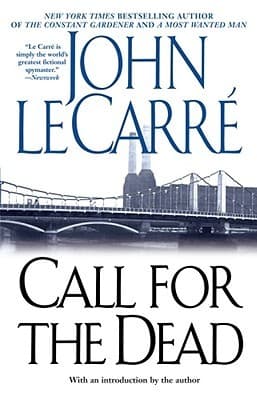
Synopsis
Covers the whole plot, including the ending.
- Difficulty
- Medium
- Pacing
- Moderate
- Mood
- Atmospheric, Suspenseful, Melancholy, Thought-provoking
- Read it if
- You enjoy classic spy thrillers with intricate plots, moral ambiguity, and deep character studies over explosive action. Perfect for those who appreciate a slow-burn mystery set against the backdrop of the Cold War.
- Skip it if
- You prefer fast-paced, high-octane spy novels with clear-cut heroes and villains, or if you dislike political intrigue and espionage that focuses more on tradecraft and psychology than physical confrontation.
Call for the Dead Plot Summary
Covers the whole plot, including the ending.
The Apparent Suicide of Samuel Fennan
George Smiley, an intelligence officer with 'The Circus' (British Secret Service), investigates the apparent suicide of Samuel Fennan, a Foreign Office official. The day before, Smiley had conducted a routine security interview with Fennan due to an anonymous letter alleging communist sympathies, clearing him. Fennan's death, ruled a suicide by the police, includes a note stating his career was over and he couldn't continue. However, Smiley finds several problems, particularly the note's generic phrasing and the fact that Fennan had just been cleared. He also learns from Fennan's widow, Elsa, that Samuel had made a mysterious phone call just before his death, leading Smiley to suspect murder.
Initial Investigation and Doubts
Smiley begins a quiet investigation, starting with the local police, particularly Inspector Mendel. Mendel believes it is a suicide, but Smiley's careful nature notices details. He revisits Elsa Fennan, who recounts Samuel's odd behavior and a strange phone call, but she seems to hide information. Smiley then speaks to Bill Fairly, a colleague who conducted the initial security check on Fennan, and learns more about the anonymous tipster, a man named "Mast" who has provided similar tips before. Smiley's growing unease about the 'suicide' comes from the lack of a proper police investigation and the quick closure of the case.
The Phone Call and the Theatre
Smiley's persistence leads him to discover that Fennan had received a phone call from a public booth and made arrangements to meet someone at a theatre. He deduces that Fennan was not alone on the night of his death. This goes against the suicide theory. Smiley confronts Elsa again, asking her about the phone call and her husband's activities. She eventually admits that Samuel had been meeting someone, a woman, and reveals that she had found a theatre ticket stub in his pocket. This new information strengthens Smiley's belief that Fennan was murdered and that the suicide was staged.
The Identity of Elsa Fennan
As Smiley investigates, he uncovers Elsa Fennan's past. She is a German immigrant with a history of communist sympathies during her youth in Germany. This makes her a person of interest. Smiley learns that she had been interned during the war and had connections to East German intelligence figures. This background changes how he sees her husband's alleged communist activities and her own behavior after his death. Smiley begins to suspect that Elsa is not just a grieving widow but is involved, perhaps even planning, the events surrounding Samuel's death.
The Role of Dieter Frey
Smiley's investigation into Elsa's past leads him to Dieter Frey, a man she knew in Germany who was a communist and a known operative for East German intelligence. Frey was an old friend of Elsa's, and Smiley suspects he is the 'Mast' who anonymously tipped off The Circus about Samuel Fennan. Smiley realizes that the anonymous tip was a way to bring Samuel under scrutiny, making his subsequent 'suicide' more believable. He believes Frey and Elsa are working together, using Samuel as a pawn in a larger espionage game. This connection provides a motive for murder and a possible explanation for the staged suicide.
The Confrontation at the Theatre
Smiley, with Mendel's help, sets a trap. He arranges for Elsa to meet him at the theatre where Samuel was supposed to meet his contact. Smiley uses his knowledge of Elsa's past and her connection to Dieter Frey to get her to reveal the truth. He confronts her with the evidence he has gathered, including her history with Frey and the problems in her story. Elsa, under pressure, begins to talk, hinting at the true nature of Samuel's death and her involvement. The tension builds as Smiley waits for the arrival of the actual killer, whom he believes is Dieter Frey.
The Arrival of Dieter Frey
As planned, Dieter Frey arrives at the theatre. He acts like a concerned friend, but Smiley sees through his act. Frey's presence confirms Smiley's theory: Frey is the 'Mast' and the planner of the plot. The confrontation escalates, and Frey, realizing he's been exposed, tries to escape. A struggle happens, and Frey, cornered by Smiley and Mendel, shows his true nature as a ruthless intelligence operative. He admits to manipulating Samuel and staging his death to create a diversion and discredit The Circus. The pieces of the puzzle come together.
The Truth Revealed and The Escape
Under interrogation, Frey confesses to murdering Samuel Fennan. He explains that Samuel, a conscientious but naive man, had discovered Frey's true intentions and was about to expose him. To silence him and create a propaganda win, Frey killed him and staged the suicide, using Elsa's past connections and Samuel's cleared status to make the story seem real. Frey then attempts a desperate escape, leading Smiley and Mendel on a chase through the streets of London. The pursuit ends in a tense confrontation where Frey, rather than being captured, makes a final, desperate move.
The Bridge and the Aftermath
The chase ends on a bridge. Cornered by Smiley and Mendel, Frey makes a final, defiant act. Rather than surrender, he jumps to his death, choosing suicide over capture and exposure. The case is officially closed, confirming Frey as the murderer and Samuel Fennan as an unwitting victim. While the truth is uncovered, the outcome is bittersweet for Smiley. He thinks about the human cost of espionage and the moral problems of his profession. The incident leaves a lasting impression on him, further solidifying his cynical yet ethical approach to the world of spies.
Smiley's Reflection and the Cost of Espionage
In the aftermath, George Smiley returns to his quiet life, but the Fennan case stays with him. He thinks about the tragic manipulation of Samuel Fennan, the wasted life of Dieter Frey, and Elsa's involvement. The experience reinforces his understanding of the deception in the espionage world and the personal sacrifices required of those involved. He acknowledges the grim reality that even when justice is served, the scars remain. The investigation, while successful in uncovering the truth, shows the moral compromises and personal betrayals that define the shadowy realm he inhabits.
Principal Figures
George Smiley
Protagonist
A meticulous, unassuming intelligence officer with a keen intellect.
George Smiley is a veteran British Secret Service agent, characterized by his quiet demeanor, academic intelligence, and profound understanding of human nature. He is often underestimated due to his unremarkable appearance and reserved personality, but possesses an exceptionally sharp mind and a relentless dedication to truth. Smiley is deeply ethical, despite working in a morally ambiguous world, and is driven by a sense of justice and a desire to understand the underlying motives of people. His personal life is marked by the infidelity of his wife, Ann, which adds a layer of melancholic introspection to his character.
Relationships: Ann Smiley (Estranged wife, frequently unfaithful); Samuel Fennan (Victim, Smiley cleared him before his death); Inspector Mendel (Police colleague, initially skeptical but becomes a valuable ally); Dieter Frey (Antagonist, old acquaintance and rival from Smiley's past)
Samuel Fennan
Victim
A Foreign Office official whose apparent suicide sparks Smiley's investigation.
Samuel Fennan is a conscientious but somewhat naive Foreign Office official. He is initially cleared by Smiley of communist sympathies, only to be found dead the next day in an apparent suicide. Fennan is portrayed as a man of routine and integrity, making his sudden death suspicious. He becomes an unwitting pawn in a larger espionage plot, caught between his past and the manipulations of others. His death serves as the catalyst for the entire narrative, highlighting the vulnerability of ordinary individuals caught in the machinations of intelligence agencies.
Relationships: Elsa Fennan (Wife, complicit in his murder); George Smiley (Investigator who cleared him); Dieter Frey (His killer and manipulator)
Elsa Fennan
Supporting
Samuel Fennan's widow, with a mysterious past and hidden agenda.
Elsa Fennan is Samuel's German-born widow. She initially appears as a grieving wife but quickly reveals a complex and evasive nature. Her past includes a period of communist sympathy in Germany and a connection to Dieter Frey. She is complicit in the cover-up of her husband's murder, acting under Frey's influence, though her motivations are a mix of fear, past loyalty, and perhaps a twisted sense of self-preservation. Her character embodies the moral compromises and lingering loyalties that often define the lives of those touched by espionage.
Relationships: Samuel Fennan (Husband, whom she betrays and allows to be murdered); Dieter Frey (Former lover and handler, with whom she conspires); George Smiley (Her interrogator and eventual exposer)
Dieter Frey
Antagonist
A ruthless East German intelligence operative and former associate of Elsa Fennan.
Dieter Frey is the primary antagonist, a cunning and ruthless East German intelligence operative. He is a charismatic but dangerous figure from Elsa Fennan's past, a committed communist who uses people as pawns in his ideological battles. Frey orchestrated Samuel Fennan's murder and staged it as a suicide to discredit the British Secret Service and achieve a propaganda victory. He is intelligent, manipulative, and utterly without remorse, embodying the cold, calculating nature of espionage. His past connection with Smiley adds a personal dimension to their conflict.
Relationships: Elsa Fennan (Former lover and accomplice); Samuel Fennan (His victim); George Smiley (His old acquaintance and ultimate adversary)
Inspector Mendel
Supporting
A pragmatic police inspector who assists Smiley in his unofficial investigation.
Inspector Mendel is a seasoned police officer initially assigned to the Fennan 'suicide' case. He is practical and initially accepts the official suicide ruling but gradually becomes convinced by Smiley's meticulous reasoning and evidence. Mendel serves as Smiley's loyal and increasingly effective ally, providing practical support and police resources when Smiley's official channels are closed. He represents the pragmatic, grounded world of conventional law enforcement contrasted with the shadowy, complex world of intelligence.
Relationships: George Smiley (Colleague and later trusted partner); Samuel Fennan (Victim in his initial police case)
Bill Fairly
Supporting
A colleague of Smiley's who conducted the initial security check on Fennan.
Bill Fairly is a younger, more conventional intelligence officer who conducted the initial security check on Samuel Fennan based on the anonymous tip. He is competent but lacks Smiley's depth of insight and experience. Fairly provides Smiley with crucial background information about the 'Mast' anonymous tipster, helping Smiley connect the dots. He represents the bureaucratic side of 'The Circus,' adhering to procedures, but is ultimately overshadowed by Smiley's intuitive and unconventional investigative approach.
Relationships: George Smiley (Colleague); Samuel Fennan (Subject of his security check)
Ann Smiley
Mentioned
George Smiley's often-absent and unfaithful wife.
Ann Smiley is George Smiley's estranged wife, whose infidelity is a recurring source of personal pain and reflection for Smiley. Though she does not appear physically in the narrative, her absence and Smiley's thoughts about her profoundly influence his character, adding a layer of melancholy and world-weariness. Her relationship with Smiley highlights his personal struggles and provides insight into his emotional depth, serving as a constant reminder of the betrayals and complexities in his private life, mirroring the professional betrayals he encounters.
Relationships: George Smiley (Husband, frequently betrayed)
Mast
Mentioned
The anonymous tipster who initiated the security check on Samuel Fennan.
'Mast' is the pseudonym used by the anonymous tipster who sent the letter alleging Samuel Fennan's communist sympathies. This character is revealed to be Dieter Frey, who used the tip as a calculated move to bring Fennan under scrutiny, thereby making his subsequent 'suicide' more credible. The 'Mast' persona is a plot device that sets the initial events in motion, demonstrating Frey's manipulative intelligence and his ability to work within the system to achieve his objectives.
Relationships: Samuel Fennan (Subject of his false accusation); Dieter Frey (His true identity)
Themes & Insights
The Nature of Deception and Betrayal
Deception is central to espionage, appearing in various forms. Samuel Fennan is deceived by his wife, Elsa, and by Dieter Frey, who plans his murder under the guise of an ideological mission. Elsa betrays her husband out of past loyalties and fear. Smiley himself, while seeking truth, operates within a system built on secrecy and manipulation. The novel constantly questions what is real and what is staged, blurring lines between friend and enemy, and showing the personal and professional betrayals in the spy's life. Ann Smiley's infidelity further shows this theme on a personal level for George.
“He was surrounded by lies, not the simple, clear-cut lies of children, but the subtle, sophisticated lies of grown men who had learned the art of self-deception.”
Moral Ambiguity in Espionage
Le Carré explores the ethical grey areas of intelligence work. Smiley, despite his personal integrity, must navigate a world where murder is disguised as suicide and personal relationships are used for political gain. The lines between right and wrong are constantly blurred, as characters like Dieter Frey believe their actions, however ruthless, are justified by ideology. The novel suggests that even those who seek to uphold justice, like Smiley, must operate within a system that demands moral compromises, leaving them with unease and the heavy burden of consequence. The 'Circus' is a bureaucratic entity often more concerned with appearances than truth.
“The truth, like all good things, was far more complicated than the simple lie.”
Identity and The Past's Enduring Influence
Characters' pasts shape their present actions and motivations. Elsa Fennan's youthful communist ties in Germany and her relationship with Dieter Frey dictate her involvement in the plot. Frey is driven by his communist ideology formed in his youth. Smiley, too, thinks about his own past experiences and the impact of his wife Ann's infidelities, which color his perception of human nature. The novel shows how historical loyalties, ideological commitments, and personal histories are not easily shed and can resurface with tragic consequences, making it difficult for characters to escape their former selves.
“The past was never dead. It wasn't even past.”
The Mundanity of Evil
Unlike glamorous spy thrillers, 'Call for the Dead' portrays evil not as grand villainy but as a cold, bureaucratic, and often ordinary process. The initial security check on Fennan is routine, and his murder is carefully staged to appear as a common suicide. Dieter Frey, while intelligent, is not a theatrical villain but a pragmatic operative. The 'Circus' itself is a place of paperwork and internal politics. This theme shows how subtle and effective evil can be when it operates within the ordinary, making it harder to detect and confront, and emphasizing Smiley's quiet, intellectual heroism in recognizing the cracks in the ordinary facade.
“It was the sheer ordinariness of the evil that chilled him.”
Plot Devices & Literary Techniques
The 'Suicide' Note
A crucial piece of false evidence that initially misleads the investigation.
The suicide note found beside Samuel Fennan's body is a key plot device. Its generic, uncharacteristic phrasing for Fennan immediately raises George Smiley's suspicions, making him question the official ruling. The note is later revealed to be a carefully crafted piece of deception by Dieter Frey, designed to cement the impression of suicide and close the case quickly. Its artificiality serves as the first major clue that unravels the conspiracy, prompting Smiley's deeper investigation and highlighting the meticulous nature of the deception at play.
The Anonymous Tip ('Mast')
The initial catalyst for the security check and a key part of the larger scheme.
The anonymous letter from 'Mast' alleging Samuel Fennan's communist sympathies is the inciting incident that sets the entire plot in motion. It leads to Smiley's initial interview with Fennan and the subsequent clearing of his name, which ironically makes Fennan's later 'suicide' more plausible. This device is later revealed to be a calculated manipulation by Dieter Frey, who used it to bring Fennan under official scrutiny, thereby setting the stage for the murder and its cover-up. It exemplifies the long-game planning and insidious nature of the espionage tactics employed by the antagonists.
Smiley's Personal Life (Ann's Infidelity)
A recurring background element that adds depth to Smiley's character and themes of betrayal.
Though Ann Smiley never appears, her frequent infidelity and George's melancholic reflections on their marriage serve as a crucial background plot device. It deepens Smiley's character, explaining his world-weariness and his profound understanding of betrayal and human weakness. This personal suffering often mirrors the professional betrayals he encounters, reinforcing the novel's themes of deception and the emotional toll of a life steeped in secrets. It provides a human, vulnerable dimension to the otherwise stoic and intellectual spy, making him more relatable and complex.
The Theatre as a Meeting Place
A symbolic location for clandestine meetings and a focal point for the climactic confrontation.
The theatre where Samuel Fennan arranged to meet his contact becomes a significant plot device. It initially provides a concrete lead for Smiley, allowing him to unravel the 'suicide' narrative. Symbolically, a theatre is a place of performance and illusion, perfectly mirroring the deceptive nature of the espionage plot. It becomes the stage for the climactic confrontation between Smiley, Elsa, and Dieter Frey, where the truth is finally unmasked. The setting underscores the idea that appearances can be deceiving and that life, much like a play, can be meticulously choreographed for hidden purposes.
Call for the Dead Quotes
“A desk is a dangerous place from which to watch the world.”
“The secret services are the only real measure of a nation's political health, the only real expression of its subconscious.”
“He had never been able to reconcile the demands of his profession with the demands of his humanity.”
“The more identities a man has, the more they express the person they conceal.”
“Loyalty is a fine quality, but in excess it fills political graveyards.”
“The worst thing you can do to a man is to make him feel he's not needed.”
“Intelligence work has one moral law—it is justified by results.”
“The secret of successful interrogation is to listen, not to talk.”
“In our world, the past is always present.”
“Fear is the most corrosive of emotions.”
“The truth is rarely pure and never simple.”
“A man's conscience is his own affair; the service has no use for it.”
“The most successful lies are those that contain a grain of truth.”
“We are all prisoners of our own experience.”
Quiz
10 questions on the plot and the characters. Each answer comes with a short explanation.
Question 1
What is George Smiley's profession in 'Call for the Dead'?
- Foreign Office diplomat
- British Secret Service agent
- Scotland Yard detective
- Private investigator
Show answer
B. British Secret Service agent George Smiley is introduced as a British Secret Service agent in this first novel of John le Carré's series, which establishes his career in intelligence.
Question 2
Why was Samuel Fennan under investigation by Smiley's department?
- For leaking classified documents to the press
- For alleged Communist Party activities
- For embezzling government funds
- For spying for a foreign power
Show answer
B. For alleged Communist Party activities Fennan, a Foreign Office employee, was investigated for suspected Communist Party ties, which was a routine security check during the Cold War era depicted in the novel.
Question 3
What does Smiley find puzzling about Fennan's apparent suicide?
- The timing, as Smiley had just cleared him of suspicion
- The lack of a suicide note
- Fennan's history of mental illness
- Evidence of forced entry at the scene
Show answer
A. The timing, as Smiley had just cleared him of suspicion Smiley is puzzled because he had just informed Fennan that the investigation was over and his file would be closed, making the suicide note claiming his career was finished seem inconsistent.
Question 4
What key detail in Fennan's suicide note raises Smiley's suspicions?
- It was typed, not handwritten
- It mentioned specific classified information
- It stated his career was finished, contradicting Smiley's reassurance
- It was signed with an alias
Show answer
C. It stated his career was finished, contradicting Smiley's reassurance The note says Fennan's career was over, but Smiley had just told him the investigation was closed, suggesting the suicide might not be genuine and prompting Smiley to dig deeper.
Question 5
Which character assists Smiley in his investigation and becomes a recurring figure in le Carré's novels?
- Peter Guillam
- Alec Leamas
- Karla
- Control
Show answer
A. Peter Guillam Peter Guillam is introduced as Smiley's assistant in this novel and appears in subsequent books, serving as a loyal colleague in the Secret Service.
Question 6
What theme is central to 'Call for the Dead', as reflected in Smiley's investigation of Fennan?
- The glamour of espionage
- The moral ambiguity and bureaucracy of intelligence work
- The thrill of international travel
- The importance of family loyalty
Show answer
B. The moral ambiguity and bureaucracy of intelligence work The novel explores themes of moral ambiguity and bureaucratic inefficiency in espionage, as Smiley navigates a system where routine checks can lead to tragic consequences and hidden truths.
Question 7
How does Smiley's personal life, particularly his marriage, influence his character in this novel?
- It makes him more reckless in his investigations
- It is largely absent, as he is fully dedicated to his work
- It adds depth, showing his vulnerability and loneliness
- It provides comic relief through domestic scenes
Show answer
C. It adds depth, showing his vulnerability and loneliness Smiley's troubled marriage to Lady Ann Sercomb is hinted at, contributing to his introspective and lonely nature, which contrasts with his professional diligence and adds emotional depth to his character.
Question 8
What is the significance of the title 'Call for the Dead' in the context of the plot?
- It refers to a phone call Fennan made before his death
- It is a code phrase used by spies in the novel
- It describes Smiley's summons to investigate the case
- It symbolizes the inevitability of death in espionage
Show answer
A. It refers to a phone call Fennan made before his death The title alludes to a crucial phone call Fennan allegedly made before his death, which becomes a key piece of evidence that Smiley investigates to uncover the truth behind the apparent suicide.
Question 9
Which plot twist reveals that Fennan's death was not a simple suicide?
- Smiley discovers Fennan was murdered by a foreign agent
- Fennan fakes his death to escape his debts
- The suicide note is proven to be a forgery by handwriting analysis
- Fennan's wife confesses to killing him in a fit of rage
Show answer
A. Smiley discovers Fennan was murdered by a foreign agent As Smiley investigates, he uncovers that Fennan was actually murdered, likely by agents involved in espionage, turning the case from a routine suicide into a complex conspiracy.
Question 10
How does 'Call for the Dead' establish the tone for le Carré's later espionage novels?
- By focusing on high-action sequences and gadgetry
- Through its realistic, gritty portrayal of bureaucratic espionage and moral complexity
- By emphasizing romantic subplots over spy craft
- With a satirical take on government incompetence
Show answer
B. Through its realistic, gritty portrayal of bureaucratic espionage and moral complexity The novel sets the tone for le Carré's oeuvre by depicting espionage as a world of shadows, bureaucracy, and ethical dilemmas, rather than glamorous adventure, establishing the realistic and introspective style he is known for.
Call for the Dead FAQ
What is 'Call for the Dead' about?
The novel follows British Secret Service Agent George Smiley as he investigates the apparent suicide of Samuel Fennan, a Foreign Office employee who had just been cleared of suspicion regarding Communist Party activities. Smiley becomes suspicious when Fennan leaves a suicide note claiming his career was finished, leading Smiley to uncover a complex espionage plot involving East German intelligence and personal betrayals.
Why should I read 'Call for the Dead'?
This novel introduces George Smiley, one of literature's most compelling intelligence officers, and establishes le Carré's signature style of realistic, morally complex espionage fiction. It offers a masterclass in slow-burn tension and psychological depth, contrasting sharply with the glamorous spy thrillers of its time through its focus on bureaucratic procedures and human vulnerability.
What is the background/setting of 'Call for the Dead'?
Set in early Cold War London during the late 1950s, the story unfolds against a backdrop of postwar austerity and growing East-West tensions. The action moves between government offices, modest suburban homes, and the shadowy corridors of British intelligence, reflecting the novel's theme that espionage often occurs in ordinary places rather than exotic locations.
What are the most memorable quotes?
Key quotes include Smiley's observation about intelligence work: 'The more identities a man has, the more they express the person they conceal.' Another significant line comes when Smiley reflects on betrayal: 'Loyalty is a quality that gets lost in the translation between intention and action.' These encapsulate the novel's themes of identity and moral ambiguity.
What writing style does the author use?
Le Carré employs a precise, understated prose style that emphasizes procedural detail and psychological nuance over action. His descriptions are economical yet evocative, particularly in depicting Smiley's methodical thought processes and the drab, bureaucratic world of British intelligence. The dialogue is often elliptical, requiring readers to infer meaning from what remains unsaid.
What minor details add significant meaning?
Fennan's meticulously kept diary, which Smiley discovers contains coded entries, becomes crucial evidence that the suicide was staged. Another telling detail is the condition of Fennan's home - its excessive neatness suggests someone had searched it before the police arrived. Smiley's own shabby appearance and forgotten umbrella at crime scenes subtly reinforce his underestimated nature.
What are some subtle foreshadowing moments?
Early scenes showing Fennan's nervousness during his security interview foreshadow his involvement in something beyond routine investigation. The mention of Fennan's wife Elsa having lived in Germany before the war subtly hints at her later-revealed connections. Smiley's initial dismissal of minor inconsistencies in Fennan's story plants seeds for the conspiracy he eventually uncovers.
What unexpected character connections exist?
Elsa Fennan, Samuel's widow, is revealed to have been a former lover of Dieter Frey, an East German intelligence officer who becomes Smiley's primary antagonist. Mendel, the retired police detective who assists Smiley, turns out to have investigated Frey years earlier during the war. These connections create a web of personal and professional histories that drive the plot.
What are unspoken character motivations?
Smiley is driven not just by professional duty but by personal guilt over potentially mishandling Fennan's case and a need to prove his worth after his wife Ann's infidelity. Elsa Fennan's actions are motivated by both ideological commitment to communism and lingering personal feelings for Dieter Frey. Dieter Frey himself operates from a mix of political conviction and personal vendetta against Western intelligence.
What psychological complexities do characters exhibit?
Smiley demonstrates remarkable emotional restraint while internally wrestling with self-doubt and betrayal trauma. Elsa Fennan maintains a convincing facade of grieving widow while secretly coordinating espionage activities. Dieter Frey shows how ideological commitment can coexist with personal affection, creating moral contradictions that ultimately prove fatal. Each character navigates conflicting loyalties and compromised principles.
What are the major emotional turning points?
The discovery that Fennan's suicide was staged marks Smiley's transition from routine investigator to determined pursuer of truth. Smiley's confrontation with Elsa Fennan, where he pieces together her deception, creates intense psychological tension. The final confrontation between Smiley and Dieter Frey at the steelworks becomes emotionally charged by their shared history and Frey's revelation about Elsa's true role.
How do relationship dynamics evolve?
Smiley's relationship with his superior Maston deteriorates as Smiley pursues leads Maston wants buried. The professional respect between Smiley and Mendel deepens into genuine partnership. Most significantly, Smiley's understanding of Elsa Fennan transforms from sympathy for a widow to recognition of a skilled adversary, while his dynamic with Dieter Frey moves from intellectual curiosity to mortal confrontation.
Which parts remain ambiguous or open-ended?
The exact nature of Elsa Fennan's feelings - whether her actions were primarily ideological or emotionally driven - remains ambiguous. The novel doesn't fully resolve whether Fennan was a willing participant or manipulated victim in the espionage plot. Smiley's personal life, particularly his marriage to Ann, is referenced but left largely unexplored, creating narrative space for future novels.
What are controversial scenes or decisions?
Smiley's decision to withhold information from his superiors and conduct an unofficial investigation raises questions about professional ethics. The scene where Smiley essentially entraps Elsa Fennan through psychological manipulation rather than concrete evidence challenges conventional police procedure. Dieter Frey's final actions, which blend personal and political motives, continue to spark debate about his true character.
'Call for the Dead' ending explained: how it ends & what it means
The novel concludes with Smiley confronting Dieter Frey at a steelworks, where Frey falls to his death during their struggle. Elsa Fennan is revealed as Frey's accomplice and arrested. The ending signifies that personal loyalties and ideological convictions often lead to destruction in the espionage world. Smiley solves the case but gains little satisfaction, establishing the moral ambiguity that characterizes le Carré's later work.
What makes Smiley different from other fictional spies?
Unlike James Bond-style action heroes, Smiley is middle-aged, physically unimpressive, and operates through intellect and patience rather than violence or charm. His success comes from understanding human psychology and bureaucratic systems. His personal vulnerabilities, including his troubled marriage, make him more relatable and morally complex than typical spy protagonists.
How does the novel establish le Carré's espionage themes?
The book introduces key le Carré themes: the moral compromises of intelligence work, the psychological toll of deception, the bureaucratic pettiness that often drives national security, and the idea that the most dangerous betrayals are personal rather than political. It establishes the 'Circus' (MI6) as an institution where personal and professional lives dangerously intersect.
About the author
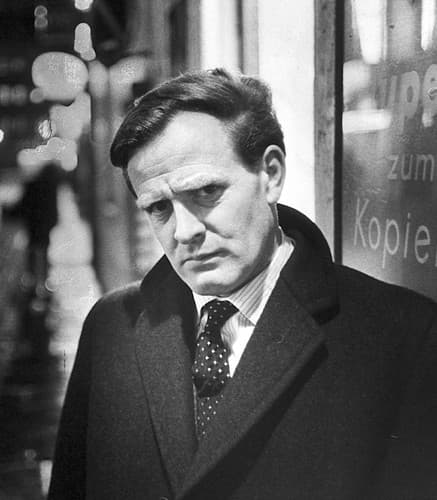
David John Moore Cornwell, better known by his pen name John le Carré, was a British and Irish author, best known for his espionage novels, many of which were successfully adapted for film or television. "A sophisticated, morally ambiguous writer", he is considered one of the greatest novelists of the postwar era. During the 1950s and 1960s he worked for both the Security Service (MI5) and the Secret Intelligence Service (MI6).
Similar books
- The Spy Who Came in from the Cold
John le Carré
4.1 (77k) average on GoodreadsThrillerAnother classic le Carré novel featuring George Smiley, known for its realistic portrayal of espionage and moral complexity.
- Tinker Tailor Soldier Spy
John le Carré
4.1 (107k) average on GoodreadsFictionA quintessential George Smiley novel, showcasing le Carré's mastery of intricate plots and character-driven espionage.
- The Scarlatti Inheritance
Robert Ludlum
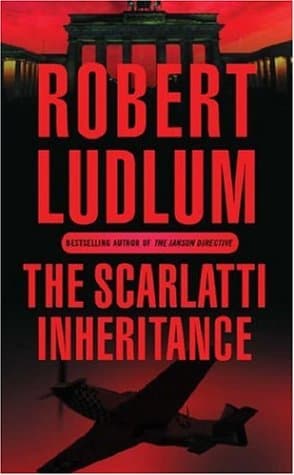
3.9 (13k) average on GoodreadsThrillerLudlum's The Scarlatti Inheritance (1971) exemplifies the high-octane, intricate conspiracy thriller, featuring globe-trotting plots, relentless action, and protagonists with almost superhuman capabilities. Call for the Dead, in contrast, is a more cerebral, introspective novel. It builds tension through meticulous investigation and character interaction rather than explosive set pieces, with Smiley's humanity and fallibility standing in stark opposition to Ludlum's often invincible heroes.
- Angels & Demons
Dan Brown
3.9 (2.7M) average on GoodreadsThrillerA Harvard symbologist races through Rome's ancient sites, deciphering cryptic clues to unmask the Illuminati and stop a vengeful plot to destroy the Vatican with a stolen antimatter weapon.
- Gone Girl
Gillian Flynn
4.1 (2.3M) average on GoodreadsThrillerA wife's sudden disappearance on her fifth anniversary reveals a web of lies and psychological warfare, exposing the secrets within a seemingly perfect marriage.
- The Girl on the Train
Paula Hawkins
3.9 (2.1M) average on GoodreadsThrillerA woman’s fascination with a seemingly perfect couple she watches from her daily train commute leads her into a dark investigation when she witnesses something that shatters their idyllic image.





Enjoyed the summary?
A summary gives you the shape of the book. The book itself has the detail, the examples and the voice.
Find Call for the Dead on AmazonAs an Amazon Associate, BookBrief earns from qualifying purchases. How we're funded