

Synopsis
Covers the whole plot, including the ending.
- Difficulty
- Medium
- Read it if
- You enjoy classic survival stories with a mysterious twist, ancient island lore, and a gradual build-up of supernatural suspense. Fans of Robinson Crusoe mixed with a touch of Lovecraftian dread will find this compelling.
- Skip it if
- You prefer fast-paced thrillers, stories with minimal supernatural elements, or if you dislike narratives focused on solitary struggle and the slow unraveling of ancient mysteries.
Castaway Tales Plot Summary
Covers the whole plot, including the ending.
The Ill-Fated Voyage of the 'Sea Serpent'
The story opens with Captain Elias Thorne at the helm of his merchant vessel, the 'Sea Serpent,' laden with exotic spices and valuable textiles. His crew, a mix of seasoned sailors and young recruits, are on a routine, albeit long, trade route across the treacherous Pacific. Unbeknownst to them, a superstorm of unprecedented ferocity is brewing. The 'Sea Serpent' is caught in its eye, battered relentlessly by colossal waves and hurricane-force winds. The ship is ultimately torn apart, leaving Captain Thorne and a handful of survivors adrift in the vast, unforgiving ocean, clinging to makeshift rafts and debris.
Washed Ashore on the Isle of Whispers
After days of battling thirst, hunger, and the relentless sun, Captain Thorne, his first mate Silas, and two other crew members, Finn and Lena, are washed ashore on a seemingly uninhabited island. Exhausted and battered, they discover it to be a lush, tropical paradise teeming with exotic flora and fauna. They name it the 'Isle of Whispers' due to the constant, gentle rustling of its unique, giant palm leaves. Their immediate priority shifts from survival at sea to survival on land, as they begin to explore their new, unknown prison and search for fresh water and food sources.
Building a New Existence
The initial days on the Isle of Whispers are a grueling test of their resilience. Captain Thorne, utilizing his maritime knowledge, directs the construction of a basic shelter from salvaged wood and palm fronds. Silas, a skilled hunter, takes charge of foraging and fishing, while Finn, the youngest, proves adept at finding edible plants. Lena, the ship's cook, ingeniously makes the most of their limited resources. They establish a routine, battling the elements, learning the island's rhythms, and slowly, painstakingly, building a semblance of a new life amidst the wilderness, all while holding onto the faint hope of rescue.
The Mysterious Carvings
During an exploration further inland, Finn stumbles upon an ancient, overgrown ruin. Within its crumbling walls, they discover intricate stone carvings and glyphs that suggest a sophisticated, long-lost civilization once inhabited the island. These carvings depict celestial maps, strange rituals, and a recurring symbol of a stylized serpent. The discovery sparks both fascination and unease among the survivors, raising questions about the island's true history and whether they are truly alone. Captain Thorne begins to meticulously document these findings, driven by a growing sense of archaeological curiosity.
The Whisper of the Serpent
As months turn into a year, strange occurrences begin to plague the survivors. Supplies mysteriously vanish, their small fires are found extinguished, and unsettling whispers seem to echo through the jungle at night. Lena, particularly, becomes increasingly agitated, claiming to see shadowy figures in the periphery. Silas dismisses these as hallucinations brought on by isolation, but Captain Thorne, remembering the serpent symbol from the carvings, feels a growing sense of dread. The once harmonious group begins to fracture under the weight of fear and suspicion, questioning each other's sanity and loyalty.
The Disappearance of Finn
The tension escalates dramatically when Finn vanishes without a trace. His hammock is empty, and his tools are left behind. A frantic search ensues, led by Silas, who blames the others for not being vigilant enough. Captain Thorne, however, focuses on a set of unusual tracks leading into a dense, previously unexplored part of the jungle. The disappearance shatters any remaining sense of security, confirming their deepest fears that an unknown entity, or perhaps a hidden inhabitant, is present on the island. The group is now forced to confront the very real possibility of a threat beyond their understanding.
Into the Heart of the Island
Driven by Finn's disappearance, Captain Thorne, Silas, and Lena venture into the perilous, uncharted interior of the Isle of Whispers. They follow the strange tracks, which lead them to a hidden cave system deep within a volcanic crater. Inside, they discover more elaborate carvings and a series of ancient mechanisms. The glyphs reveal that the island was once home to a highly advanced, yet isolated, civilization that venerated a colossal, subterranean serpent-like creature, believed to be the island's protector and source of its unique energy. They also find evidence of their rituals involving offerings.
The Guardian and the Sacrifice
Within the heart of the cave, they find Finn, alive but disoriented, guarded by a massive, ancient Gila monster-like creature – the 'Guardian' depicted in the carvings. The Guardian is not hostile, but protective of a central chamber where a pulsating, iridescent crystal resides. The carvings reveal that the civilization would periodically offer a 'gift' to the crystal, which in turn kept the island fertile and protected. Finn had stumbled upon this sacred space. Captain Thorne realizes the 'whispers' and disappearances were the Guardian's way of herding them towards this ancient ritual site, not out of malice, but an instinct to maintain the island's balance.
The Choice and the Escape
Faced with the Guardian and the implications of the ancient rituals, Captain Thorne understands they must leave. He devises a plan to activate a dormant beacon mechanism depicted in the carvings, hoping it will attract passing ships. They manage to activate it, causing a powerful, rhythmic pulse of light and energy to emanate from the island. The Guardian, sensing the shift, retreats. As a ship appears on the horizon, a desperate race against time begins. They hastily gather what they can, bid farewell to their strange prison, and signal the approaching vessel, leaving the Isle of Whispers and its mysteries behind.
Return to Civilization
Rescued by a passing merchant ship, Captain Thorne, Silas, Lena, and Finn return to civilization forever changed. They carry the weight of their experiences, the untold stories of the Isle of Whispers, its ancient civilization, and its enigmatic Guardian. The world they left behind seems mundane, and their ordeal has forged an unbreakable bond between them. They struggle to articulate the profound, almost mystical, events they witnessed, knowing that their tale would likely be met with disbelief. The island, though physically distant, remains a vivid, haunting presence in their minds, a secret shared only among the survivors.
Principal Figures
Captain Elias Thorne
Protagonist, Leader
The Resilient Mariner
Captain Elias Thorne is a seasoned, pragmatic, and resourceful merchant captain. Initially driven by duty and the practicalities of survival, he evolves into an accidental explorer and archaeologist, meticulously documenting the island's mysteries. His leadership is firm but fair, and he values logic and observation. Despite facing immense hardship and fear, Thorne maintains a strong moral compass, always prioritizing the safety and well-being of his crew. His journey transforms him from a man of the sea to a keeper of ancient secrets, forever marked by the Isle of Whispers.
Relationships: Silas (First mate and loyal subordinate, later a trusted confidant and friend.); Lena (Crew member, initially a subordinate, later a source of emotional grounding and shared fear.); Finn (Youngest crew member, Thorne feels a paternal responsibility for his safety.)
Silas
First Mate, Hunter
The Skeptical Survivor
Silas is Captain Thorne's first mate, a gruff, strong, and highly capable individual. He is the pragmatist of the group, excelling at hunting, foraging, and physical tasks. Initially, Silas is deeply skeptical of any supernatural explanations for the island's mysteries, preferring rational, tangible answers. His loyalty to Captain Thorne is unwavering, but his temper can flare under stress. He struggles with the psychological toll of isolation and the inexplicable events, often clashing with Lena's more intuitive observations, but ultimately accepts the reality of their bizarre predicament.
Relationships: Captain Elias Thorne (Loyal first mate and right-hand man, respects Thorne's leadership.); Lena (Often clashes with Lena over her 'superstitious' beliefs, but ultimately cares for her well-being.)
Lena
Cook, Intuitive Observer
The Sensitive Soul
Lena was the ship's cook, a gentle but resilient woman. She possesses a keen intuition and is often the first to sense the strange occurrences on the island. While physically less imposing than Silas, her observational skills and emotional intelligence are invaluable. She struggles more with the psychological impact of isolation and fear, often expressing her anxieties openly, which sometimes puts her at odds with Silas's skepticism. Lena's sensitivity makes her more attuned to the island's subtle energies and ancient presence, positioning her as a conduit for the island's 'whispers'.
Relationships: Captain Elias Thorne (Looks to Thorne for guidance and protection, trusts his judgment.); Silas (Often in conflict due to their differing interpretations of events, but a bond of shared survival exists.)
Finn
Youngest Crew Member, Accidental Discoverer
The Curious Youth
Finn is the youngest member of the crew, initially eager and somewhat naive. He is agile and possesses a natural curiosity that often leads him to discoveries. His youth makes him both more adaptable to the new environment and more vulnerable to its dangers. He is the one who first unearths the ancient ruins and later becomes the unwitting catalyst for the group's deeper exploration of the island's mysteries when he goes missing. Finn represents innocence and the potential for wonder in the face of the unknown, though his curiosity puts him in peril.
Relationships: Captain Elias Thorne (Views Thorne as a father figure and leader, looks up to him.); Silas (Respects Silas's strength and hunting skills.); Lena (Shares a more gentle, supportive bond with Lena.)
The Guardian
Antagonist/Neutral Force, Protector
The Ancient Sentinel
The Guardian is a colossal, ancient, Gila monster-like creature, the living embodiment of the 'serpent' depicted in the island's carvings. It is not inherently malicious but acts as the protector of the island's sacred crystal and the ancient civilization's legacy. Its actions, such as the 'whispers' and Finn's disappearance, are misinterpreted by the survivors as threats, when in reality they are attempts to maintain the island's delicate balance and perhaps guide them towards understanding its purpose. The Guardian represents the primal, mysterious force of nature and ancient power.
Relationships: Captain Elias Thorne and the Survivors (Initially perceived as a threat or antagonist, later understood as a neutral, protective force reacting to their presence.)
Themes & Insights
The Resilience of the Human Spirit
This theme explores the extraordinary capacity of individuals to endure and adapt in the face of extreme adversity. The survivors, stripped of all modern conveniences, not only battle the elements and the psychological toll of isolation but also find ways to build a new life, forge community, and maintain hope. It highlights their ingenuity, perseverance, and the inherent drive to survive against overwhelming odds.
“We built a life where there was none, brick by painful brick of salvaged wood and stubborn will. The island tested us, but it never broke us, not entirely.”
The Allure and Danger of the Unknown
The Isle of Whispers embodies the captivating yet perilous nature of the unexplored. The island initially appears as a paradise, but its ancient secrets and hidden forces gradually reveal a deeper, more unsettling reality. The survivors are drawn into its mysteries, compelled to understand the carvings and the strange occurrences, even as these discoveries put their lives at risk. This theme explores humanity's innate curiosity and the potential consequences of venturing beyond the familiar.
“The island beckoned with promises of untouched beauty, but it whispered ancient secrets that chilled us to the bone. Paradise and peril, inextricably linked.”
Man vs. Nature (and the Supernatural)
This theme examines the struggle between human civilization and the untamed wilderness, augmented by the presence of ancient, possibly supernatural, forces. Initially, the conflict is physical—surviving storms, finding food, building shelter. However, it evolves into a more profound battle against the island's ancient, sentient presence and the psychological impact of its mysteries. It questions humanity's place in the natural order and the limits of scientific understanding when confronted with forces beyond our comprehension.
“We thought we were fighting the wind and the waves, but the island had a deeper breath, an older heartbeat, that we only began to understand when it was almost too late.”
The Weight of Untold Stories
Upon their return to civilization, the survivors grapple with the burden of their extraordinary experiences. The profound, almost mystical events on the Isle of Whispers are too incredible for the mundane world to accept, forcing them to keep their story a secret. This theme explores the isolation that comes with unique, unbelievable experiences and the psychological toll of living with a truth that cannot be shared, highlighting the gap between personal truth and societal belief.
“How do you tell a world of clocks and coins about a creature that guarded a pulsing crystal, about whispers that weren't wind? Some truths are too heavy for words, too bright for ordinary light.”
Plot Devices & Literary Techniques
The Ancient Carvings and Glyphs
A window into a lost civilization
These intricate stone carvings, discovered in the island's ruins and later in the cave system, serve as the primary source of information about the Isle of Whispers' true nature. They are a form of exposition, revealing the history of a sophisticated, serpent-worshipping civilization, their rituals, and the existence of the Guardian and the sacred crystal. The carvings act as a breadcrumb trail, guiding the survivors deeper into the island's mysteries and providing crucial context for the strange phenomena they encounter, moving the plot forward by posing new questions and offering partial answers.
The 'Whispers'
The psychological manifestation of the island's presence
The recurring, unsettling 'whispers' heard by the survivors are a powerful psychological plot device. Initially, they are ambiguous, causing paranoia and internal conflict among the group, as they debate whether the sounds are real or a product of their minds. The whispers build suspense and contribute to the sense of isolation and dread. Ultimately, they are revealed to be a manifestation of the Guardian's presence, an instinctual communication or guiding force, shifting from a perceived threat to an enigmatic, non-malicious element of the island's ecosystem, subverting initial expectations.
Finn's Disappearance
The catalyst for deeper exploration
Finn's sudden and mysterious disappearance serves as a critical turning point and a major plot catalyst. It shatters any remaining sense of security among the survivors and forces them to confront the undeniable presence of an unknown entity on the island. This event compels Captain Thorne, Silas, and Lena to abandon their established camp and venture into the perilous, unexplored interior, leading directly to the discovery of the Guardian and the sacred chamber. Without Finn's vanishing, the deeper secrets of the Isle of Whispers might have remained undiscovered.
Castaway Tales Quotes
“The sea, she's a cruel mistress, but a fair one, if you know her ways.”
“Hope is the last thing to abandon a sailor, even when the ship is gone and the stars are hidden.”
“A man learns more about himself in a week adrift than in a lifetime ashore.”
“The silence of the island was not empty, but full of a thousand tiny lives, a symphony of survival.”
“Every wave that crashed on the shore was a reminder of what was lost, and what might still be found.”
“Fire is not just warmth; it is a companion, a protector against the encroaching dark.”
“The greatest treasure on any deserted isle is not gold or jewels, but the ingenuity of the human spirit.”
“Sometimes, the most important journey is the one you make within yourself, when all external paths are closed.”
“The taste of fresh water, after days of thirst, is a flavor more precious than any feast.”
“We are but small boats on a vast ocean, but even a small boat can weather the storm with a steady hand.”
“The sun, rising each morning, is a promise whispered on the horizon: 'Begin again'.”
“Even in the deepest isolation, the memory of home is a lighthouse in the mind's storm.”
“The greatest freedom is not found in escape, but in embracing the reality of your present moment.”
Quiz
10 questions on the plot and the characters. Each answer comes with a short explanation.
Question 1
Who is the author of 'Castaway Tales'?
- Robert Louis Stevenson
- Daniel Defoe
- Christopher Palmer
- Herman Melville
Show answer
C. Christopher Palmer 'Castaway Tales' is written by Christopher Palmer.
Question 2
What is the primary theme explored in 'Castaway Tales'?
- Urban fantasy and magic
- Survival and isolation
- Historical romance
- Futuristic dystopian society
Show answer
B. Survival and isolation As the title suggests, 'Castaway Tales' focuses on themes of survival and isolation, typical of castaway narratives.
Question 3
Which of the following best describes the setting of many stories in 'Castaway Tales'?
- Bustling metropolises
- Deserted islands or remote locations
- Ancient castles and kingdoms
- Spaceships and alien planets
Show answer
B. Deserted islands or remote locations A 'castaway' is someone shipwrecked on a deserted island, making deserted islands or remote locations the primary setting.
Question 4
What kind of literary work is 'Castaway Tales' most likely to be?
- A collection of poems
- A single, continuous novel
- An anthology of short stories
- A non-fiction historical account
Show answer
C. An anthology of short stories The plural 'Tales' in the title strongly suggests a collection or anthology of multiple stories rather than a single novel.
Question 5
What common challenge do characters in 'Castaway Tales' likely face?
- Navigating complex political intrigue
- Finding food, water, and shelter
- Solving a murder mystery
- Mastering a magical ability
Show answer
B. Finding food, water, and shelter Basic survival needs like food, water, and shelter are paramount for anyone in a castaway situation.
Question 6
Which emotion would a character in 'Castaway Tales' most likely experience frequently?
- Boredom from routine
- Joy from constant companionship
- Hope and despair in cycles
- Serenity and peace
Show answer
C. Hope and despair in cycles Castaway experiences are often a rollercoaster of emotions, from the hope of rescue to the despair of isolation.
Question 7
What typical literary device might be heavily featured in 'Castaway Tales' to build tension?
- Flashbacks to childhood memories
- External conflicts with nature or elements
- Extensive dialogue between many characters
- Metaphorical interpretations of dreams
Show answer
B. External conflicts with nature or elements The struggle against the harshness of nature is a classic source of tension in castaway stories.
Question 8
What is a likely internal conflict for characters in 'Castaway Tales'?
- Deciding which political faction to support
- Struggling with loneliness and maintaining sanity
- Choosing a career path
- Overcoming a fear of public speaking
Show answer
B. Struggling with loneliness and maintaining sanity Isolation can lead to profound psychological challenges, including loneliness and the struggle to maintain one's mental faculties.
Question 9
Which of these famous books shares a similar premise with 'Castaway Tales'?
- Pride and Prejudice
- Moby Dick
- Robinson Crusoe
- The Great Gatsby
Show answer
C. Robinson Crusoe Daniel Defoe's 'Robinson Crusoe' is perhaps the quintessential castaway novel.
Question 10
What potential lesson or moral might 'Castaway Tales' convey?
- The importance of material wealth
- The resilience of the human spirit in adversity
- The futility of all human endeavor
- The ease of returning to civilization
Show answer
B. The resilience of the human spirit in adversity Castaway stories often highlight humanity's ability to adapt, endure, and find strength in the face of extreme challenges.
Castaway Tales FAQ
What is 'Castaway Tales' about?
'Castaway Tales' by Christopher Palmer is a collection of interconnected stories focusing on individuals stranded or isolated, both physically and emotionally. It explores themes of survival, human resilience, and the psychological impact of solitude across various scenarios.
Who is Christopher Palmer?
Christopher Palmer is the author of 'Castaway Tales'. While specific biographical details may vary, he is known for his evocative prose and deep exploration of human nature under duress, often drawing inspiration from classic adventure and survival narratives.
What kind of genres does 'Castaway Tales' cover?
The book primarily falls into the literary fiction and adventure genres, with strong elements of psychological drama and survival fiction. Each tale offers a unique take on the 'castaway' concept, pushing the boundaries of traditional adventure stories.
Are the stories in 'Castaway Tales' related?
Yes, the stories are interconnected, though not always in a direct chronological sense. They share thematic links and recurring motifs, creating a cohesive collection that builds on the central idea of being 'castaway' in different forms.
What are the main themes explored in the book?
Key themes include survival against the odds, the human capacity for adaptation, the profound effects of isolation, the search for meaning in dire circumstances, and the often-fragile nature of hope. It delves into both external struggles and internal battles.
Is 'Castaway Tales' a single long story or a collection of short stories?
It is a collection of distinct short stories, each focusing on a different 'castaway' scenario. However, they are thoughtfully linked by overarching themes and subtle narrative threads, making it feel more unified than a typical anthology.
How does 'Castaway Tales' compare to classic castaway stories like 'Robinson Crusoe'?
While it shares the foundational premise of isolation, 'Castaway Tales' often delves deeper into the psychological aspects and offers a more diverse range of 'castaway' situations than traditional adventure novels. It modernizes and broadens the concept beyond just desert islands.
Is 'Castaway Tales' suitable for young adult readers?
Due to its exploration of complex psychological themes and occasional intense situations, 'Castaway Tales' is generally more suited for mature young adult and adult readers. It prompts thoughtful reflection rather than simple adventure.
What kind of writing style can I expect from Christopher Palmer?
Christopher Palmer's writing is often described as evocative, rich, and deeply atmospheric. He employs vivid imagery and a precise narrative voice to bring his characters' internal and external worlds to life, making for an immersive reading experience.
Where can I buy 'Castaway Tales'?
'Castaway Tales' should be available at most major bookstores, both online and physical. Check retailers like Amazon, Barnes & Noble, or your local independent bookstore for availability in print, ebook, or audiobook formats.
Are there any film adaptations or plans for one?
As of now, there are no known film adaptations or public plans for one for 'Castaway Tales' by Christopher Palmer. However, the vivid storytelling and diverse scenarios would certainly lend themselves well to visual interpretation.
Does the book have a hopeful or bleak outlook?
The outlook in 'Castaway Tales' is nuanced; while it doesn't shy away from the bleak realities of isolation and struggle, it also highlights the enduring spirit of humanity and the unexpected ways hope can manifest. It's often a balance of both.
Similar books
- Robinson Crusoe
Daniel Defoe
3.7 (248k) average on GoodreadsHistorical FictionBoth feature a protagonist cast away on a deserted island, facing the immense challenge of survival and building a new life from scratch.
- The Old Man and the Sea
Ernest Hemingway
3.8 (831k) average on GoodreadsLiterary FictionExplores themes of human perseverance against nature, solitary struggle, and the profound connection between a human and the natural world, albeit in a different setting.
- Piranesi
Susanna Clarke
4.4 (10k) average on GoodreadsLiterary FictionFeatures a protagonist in an isolated, enigmatic environment, slowly uncovering the secrets and true nature of their surroundings, with a sense of underlying mystery and wonder.
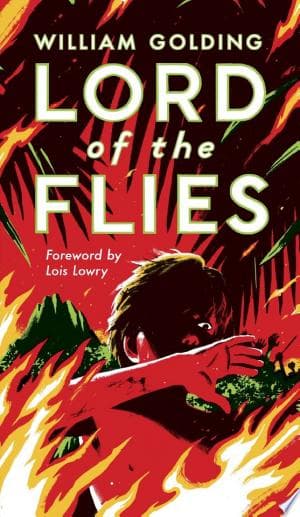
- Lord of the Flies
William Golding
3.7 (2.3M) average on GoodreadsYoung AdultGolding's 'Lord of the Flies' starkly contrasts with 'Castaway Tales' by focusing on the rapid descent into savagery and the inherent darkness of human nature when societal structures collapse. Palmer's narrative, while acknowledging hardship, maintains a more optimistic view of human resilience and problem-solving, with the protagonist actively building and adapting rather than succumbing to internal or external chaos. The 'Isle of Whispers' presents an external, mystical threat, whereas Golding's island reveals the internal savagery of its inhabitants.
- The Martian
Andy Weir
4.4 (817k) average on GoodreadsThrillerWeir's 'The Martian' shares 'Castaway Tales'' strength in detailing practical survival and ingenious problem-solving in extreme environments. Both protagonists are highly resourceful. However, 'The Martian' is firmly rooted in hard science fiction, with a constant emphasis on scientific accuracy and logical deduction, while Palmer's work incorporates a significant supernatural element, moving beyond strict realism. 'The Martian' also features a more prominent 'rescue' narrative and external support, which is largely absent in Palmer's more isolated tale.
- Harry Potter and the Sorcerer's Stone
J.K. Rowling
4.5 (7M) average on GoodreadsFantasyRescued from a miserable life under the stairs, an orphaned boy discovers he's a wizard destined for a magical school, where he uncovers a dangerous secret tied to the dark wizard who murdered his parents.




Enjoyed the summary?
A summary gives you the shape of the book. The book itself has the detail, the examples and the voice.
Find Castaway Tales on AmazonAs an Amazon Associate, BookBrief earns from qualifying purchases. How we're funded