
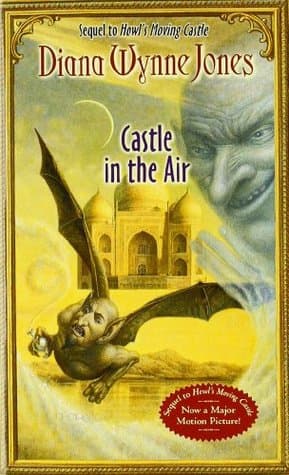
Synopsis
Covers the whole plot, including the ending.
- Difficulty
- Easy
- Pacing
- Moderate
- Mood
- Whimsical, Romantic, Adventurous, Humorous
- Read it if
- You enjoy whimsical, interconnected fairytales with charming characters and a sense of adventure, especially if you liked 'Howl's Moving Castle'.
- Skip it if
- You prefer hard fantasy with strict magic systems and no lighthearted romance.
Castle in the Air Plot Summary
Covers the whole plot, including the ending.
Abdullah's Contentment and the Arrival of the Magic Carpet
Abdullah, a young and rather unsuccessful carpet seller in Zanzib, Rashpuht, spends his days happily daydreaming, often imagining himself as a prince. He lives a quiet life with his three aunts, who constantly complain about his lack of ambition. One day, an old man approaches Abdullah in the marketplace and insists on selling him a worn, ordinary-looking carpet for a very low price. Despite his doubts and the carpet's poor appearance, Abdullah feels he must buy it. He brings it home, not knowing its true nature, and puts it in his small, dusty shop.
The First Flight and the Enchanted Garden
That very night, as Abdullah sleeps on his new carpet, it suddenly flies, carrying him high above Zanzib. It takes him to a beautiful, enchanted garden with exotic plants and a palace. There, he meets a stunning young woman who says she is Princess Flower-in-the-Night, daughter of the Sultan of the North. They spend a magical evening together, falling deeply in love in the garden. Princess Flower-in-the-Night shares that a powerful djinn holds her captive in this garden, visiting her every morning. Abdullah, completely smitten, promises to return for her.
The Princess's Disappearance and Abdullah's Despair
Abdullah returns to the enchanted garden the next night, eager to see Princess Flower-in-the-Night again. But his joy quickly turns to horror when a huge, terrifying djinn suddenly appears, snatches the princess, and vanishes with her. Abdullah is left alone and heartbroken, having seen her abduction. Overwhelmed by sadness and a feeling of helplessness, he vows to rescue her, even though he has no idea where the djinn took her or how he could face such a powerful being. He now understands the real danger his beloved is in.
The Journey Begins and the Encounter with the Soldier
Determined to find his princess, Abdullah flies north on his magic carpet toward Ingary, the land Princess Flower-in-the-Night mentioned. He has no specific destination but follows his gut. During his journey, he meets a gruff, armed soldier named Jamal, who has been separated from his group. Jamal, at first suspicious of Abdullah and his flying carpet, eventually agrees to travel with him, thinking Abdullah might be a spy or at least helpful. Jamal shares his own story of being a deserter and offers a more realistic view to Abdullah's romantic quest, though he remains doubtful of the princess and djinn story.
The Talking Cat and the Unstable Castle
Their journey leads them to a strange, constantly moving castle in the sky. As they get closer, they find a small, black cat with an unusually smart look. To Abdullah's surprise, the cat begins to speak, revealing itself to be a very opinionated and somewhat cynical creature. The talking cat, which later says it is a royal cat from Ingary, warns them about the dangers of the castle, which seems unstable and often changes its location and inside layout. Despite the warnings, Abdullah, believing his princess might be inside, decides they must enter.
Inside the Castle: Caliph and a Strange Dog
Inside the ever-shifting castle, Abdullah, Jamal, and the talking cat meet a Caliph who claims to be the rightful ruler of Ingary, currently in exile. This Caliph is a rather showy figure, constantly complaining about his fate and wanting attention from a royal audience. They also meet a large, shaggy dog named Midnight, who seems like a normal, if somewhat lazy, pet. However, the talking cat seems to have a special understanding with Midnight, hinting that the dog is smarter than he looks. The castle's layout is confusing, with doors leading to unexpected places and rooms appearing and disappearing.
The Genie and the Princesses
Abdullah eventually confronts a powerful, but somewhat clumsy, genie inside the castle. This genie is responsible for the castle's constant changes and is holding several princesses captive, not just one. To Abdullah's dismay, he finds not only a Princess Flower-in-the-Night but also a Princess Violet-in-the-Dawn and others, all claiming to be his beloved. This causes great confusion and doubt for Abdullah, as he struggles to identify the true princess among the identical-looking captives. The genie, meanwhile, seems to be controlled by another, more powerful being.
The Caliph's True Identity and the Wizard's Scheme
Through various clues and the talking cat's insights, it turns out that the theatrical Caliph is actually the missing Wizard Suliman, a powerful sorcerer hiding his true identity. He planned the abduction of the princesses and the creation of the castle in the air as part of a complex scheme involving the King of Ingary and the royal family. Suliman's goal is to gain power and resolve an old magical debt or curse. The multiple princesses are a result of his magic, meant to confuse and distract. The talking cat and the dog Midnight also have bigger roles than first thought.
Unraveling the Deception and the True Princess
With help from Jamal, the talking cat, and the increasingly active dog Midnight, Abdullah begins to understand the truth. They realize that the princesses are all magically changed forms of one person, and the true Princess Flower-in-the-Night is the one whose personality shows through the magical disguise. It becomes clear that the wizard's magic is not perfect, and small hints can reveal the real person. Abdullah, using his memories of their enchanted evening, tries to tell which princess truly has the spirit of the woman he loves, a difficult task because of the wizard's powerful spells.
The Confrontation and the Wizard's Defeat
The group confronts Wizard Suliman, who, despite his powerful magic, is shown to be somewhat unskilled and prone to drama. A magical battle follows, with Abdullah's magic carpet, Jamal's unexpected courage, and the combined magic of the talking cat and dog playing important roles. It turns out that the talking cat is actually the powerful Witch of the Waste, and the dog Midnight is the King of Ingary, both under Suliman's spell. Their combined magical strength, once freed, is too much for Suliman, who is finally defeated, though not without causing much magical chaos in the castle.
The Princess Revealed and the Wedding
With Wizard Suliman defeated, the magic on the princesses breaks, revealing the true Princess Flower-in-the-Night. She is indeed the Princess of Ingary, and her abduction was part of a larger plan to unite the kingdoms and fulfill a magical prophecy. The King of Ingary and the Witch of the Waste also return to their true forms. Abdullah, no longer a simple carpet merchant but a hero, is finally reunited with his beloved. Their love, tested by magic and deception, proves true. The story ends with a joyful wedding, where Abdullah, now recognized as a prince, marries Princess Flower-in-the-Night, uniting the kingdoms of Rashpuht and Ingary.
Principal Figures
Abdullah
Protagonist
A humble carpet merchant whose daydreams lead him on a grand adventure.
Abdullah is a young, imaginative carpet seller from Zanzib, Rashpuht, who prefers daydreaming about being a prince to actual commerce. He is kind-hearted, somewhat naive, and deeply romantic, instantly falling in love with Princess Flower-in-the-Night. Despite his initial lack of courage and practical skills, his determination to rescue his princess drives him to face formidable magical challenges. He possesses an innate goodness and a strong moral compass.
Relationships: Princess Flower-in-the-Night (deeply in love, fated partners); Jamal (reluctant travel companion, eventually friend); Aunts (nagging guardians, source of gentle exasperation)
Princess Flower-in-the-Night
Love Interest / Deuteragonist
The beautiful and mysterious princess abducted by a djinn, the object of Abdullah's quest.
Princess Flower-in-the-Night is the enchanting daughter of the Sultan of the North (later revealed as the King of Ingary). She is beautiful, intelligent, and possesses a quiet strength. Initially appearing vulnerable as a captive, she is revealed to be resilient and spirited. She quickly falls in love with Abdullah, recognizing his pure heart. Her true identity and the circumstances of her abduction are central to the plot's mystery, and she plays a key role in the magical prophecy.
Relationships: Abdullah (deeply in love, fated partners); King of Ingary (Midnight) (father); Witch of the Waste (Talking Cat) (guardian/aunt figure)
Jamal
Supporting
A gruff, practical soldier who becomes Abdullah's reluctant travel companion.
Jamal is a pragmatic and cynical soldier from Ingary, initially a deserter from his regiment. He is a man of action, preferring direct solutions to magical complexities. His gruff exterior hides a loyal and courageous heart. He provides a grounded, common-sense perspective to Abdullah's fantastical quest, often questioning the magical occurrences but ultimately proving to be a brave and reliable ally. He is skilled with weapons and provides physical protection for the group.
Relationships: Abdullah (reluctant travel companion, eventually friend)
The Talking Cat (Witch of the Waste)
Supporting / Mentor
A cynical, intelligent black cat who is secretly a powerful witch.
Initially appearing as a sarcastic and opinionated black cat, this character is revealed to be the powerful Witch of the Waste, a significant figure in the land of Ingary. She is highly intelligent, magically adept, and provides crucial insights and magical assistance to Abdullah. Her cynicism often masks a deep concern for the well-being of the royal family and the stability of Ingary. She is a powerful magical force, capable of great spells and transformations, though she often complains about her current feline form.
Relationships: Abdullah (guide/ally); King of Ingary (Midnight) (long-time friend and confidante); Wizard Suliman (magical rival)
Midnight (King of Ingary)
Supporting
A large, shaggy dog who is secretly the enchanted King of Ingary.
Midnight initially appears as a lazy, shaggy dog found within the castle, seemingly a simple pet. However, he is revealed to be the King of Ingary, enchanted into dog form by Wizard Suliman. Despite his canine appearance, he retains his royal dignity and intelligence, communicating subtly with the Witch of the Waste. He is powerful in his true form and plays a crucial role in the final confrontation with Suliman, representing the rightful authority and magical strength of Ingary.
Relationships: Witch of the Waste (Talking Cat) (long-time friend and confidante); Princess Flower-in-the-Night (father)
Wizard Suliman (The Caliph)
Antagonist
A powerful but theatrical wizard who orchestrated the abduction of the princess and the castle's magic.
Wizard Suliman is the primary antagonist, though he is more bumbling and theatrical than truly evil. He is a powerful sorcerer with a complex magical scheme involving the Ingarian royal family and a prophecy. He initially appears as a dramatic, self-pitying Caliph in exile, but his true identity as a wizard is revealed. He is responsible for the enchanted castle, the multiple princesses, and the transformations of the King and Witch. His motivations are tied to a magical debt or family curse, making him a complex figure rather than purely malicious.
Relationships: Abdullah (adversary); King of Ingary (Midnight) (magical rival/captor); Witch of the Waste (Talking Cat) (magical rival/captor)
The Djinn
Mentioned / Minor Antagonist
A powerful magical being who abducts Princess Flower-in-the-Night.
The Djinn is a terrifying, gigantic magical entity who snatches Princess Flower-in-the-Night from Abdullah's enchanted garden. He serves as the initial, formidable obstacle in Abdullah's quest, representing raw magical power. While seemingly an independent antagonist, he is later revealed to be under the control or influence of Wizard Suliman, making him a tool in the wizard's larger scheme. He is more of a magical force than a character with personal motivations.
Relationships: Wizard Suliman (controlled by)
Abdullah's Aunts
Mentioned
Abdullah's three nagging but well-meaning aunts.
Abdullah's three aunts are minor characters who appear at the beginning of the story. They are constantly nagging Abdullah about his lack of ambition and his daydreaming, urging him to be more practical and prosperous. While they care for him, their constant complaints highlight Abdullah's initial contentment with his simple life and serve as a contrast to the grand adventures he embarks upon. They represent the mundane reality Abdullah leaves behind.
Relationships: Abdullah (family, nagging guardians)
Themes & Insights
The Power of Daydreams and Imagination
Abdullah's initial happiness comes from his rich inner world of daydreams, where he imagines himself as a prince. This theme shows how imagination, far from being a distraction, can be a strong force for shaping reality and driving ambition. His daydreams of heroism and romance directly inspire his quest to rescue Princess Flower-in-the-Night, proving that his internal world can lead to external action. The magical parts of the story, like the flying carpet and enchanted garden, blur the lines between his imagined world and the reality he experiences, suggesting that imagination can unlock real magic.
“For Abdullah was a daydreamer, and he was content with his life and his daydreams until, one day, a stranger sold him a magic carpet.”
Love and True Identity
The mystery of the multiple princesses makes Abdullah look past outward appearances to find the true Princess Flower-in-the-Night. This theme explores the idea that true love recognizes a person's core, not just their outside form. Abdullah's strong love and his memories of their first enchanted meeting are key to identifying his beloved among magical deception. It highlights a connection that goes beyond physical change and magical disguise, showing that true identity is in character and spirit, not just looks.
“He knew her. There was no mistaking her. It was the way she looked at him, the way her mouth curved.”
Appearance vs. Reality
Many characters and objects in the story are not what they seem. The magic carpet looks old but is magical; the Caliph is Wizard Suliman; the talking cat is the Witch of the Waste; and the shaggy dog is the King of Ingary. Even the enchanted garden and the castle in the air change, defying stable reality. This theme explores how outward appearances can be misleading and how true nature is often hidden under layers of magic or disguise. It encourages the reader, and Abdullah, to look deeper and question what they see, revealing the hidden truths that drive the story.
“It was a very ordinary-looking carpet, rather old and worn. Abdullah was quite surprised when it flew.”
The Nature of Magic and Prophecy
Magic in 'Castle in the Air' is powerful but often unpredictable, and even skilled wizards like Suliman can be somewhat clumsy. The story explores the chaotic and often funny side of magic, where spells can go wrong or have unexpected results, leading to transformations and changing realities. The plot is also driven by a prophecy about uniting kingdoms, suggesting a larger magical destiny. This theme shows magic as a force that shapes fate but is also subject to human (and non-human) will and even comedic error, making it both grand and personal.
“Magic is a tricky business. It never quite goes the way you expect.”
Plot Devices & Literary Techniques
Magic Carpet
A tattered carpet that provides magical transportation and enables Abdullah's quest.
The magic carpet is the catalyst for Abdullah's adventure. Initially appearing as a mundane, worn item, its true magical nature is revealed when it spontaneously flies. It serves as Abdullah's primary mode of transport, allowing him to travel vast distances and reach the enchanted garden and later the castle in the air. Beyond its practical function, it symbolizes the sudden entry of magic into Abdullah's ordinary life and represents the power of unexpected opportunities and the fulfillment of his daydreams.
Enchanted Garden
A beautiful, magically secluded garden where Abdullah first meets and falls in love with the princess.
The enchanted garden is the setting for Abdullah's initial romantic encounter with Princess Flower-in-the-Night. It is a place of ethereal beauty and magical seclusion, existing outside normal time and space, accessible only by magic. It serves as a symbol of pure, unadulterated love and idyllic romance, contrasting sharply with the dangers and deceptions that follow. The garden establishes the profound connection between Abdullah and the princess, making her subsequent abduction all the more devastating and fueling his determination.
Shifting Castle in the Air
A mysterious, constantly changing castle that serves as the primary setting for the second half of the story.
The castle in the air is a central plot device, a magical construct created by Wizard Suliman. Its constantly shifting rooms, unpredictable layouts, and changing locations create a sense of disorientation and challenge for Abdullah and his companions. It serves as a prison for the princesses and the enchanted King and Witch, and its instability reflects the chaotic nature of Suliman's magic. The castle's labyrinthine quality adds to the mystery and allows for various encounters and revelations as the characters navigate its magical complexities.
Magical Disguises/Transformations
Spells that alter the appearance of characters, concealing their true identities.
This device is crucial to the plot's central mystery and the theme of appearance versus reality. Wizard Suliman's magic transforms the King of Ingary into a dog, the Witch of the Waste into a cat, and creates multiple identical princesses. These disguises serve to confuse the protagonists, conceal the true nature of the antagonists, and heighten the challenge of identifying the real Princess Flower-in-the-Night. The breaking of these spells is integral to the resolution, revealing hidden truths and restoring order.
Castle in the Air Quotes
“The trouble with being a good person is that you tend to think everyone else is too.”
“It was impossible to tell where the sky ended and the sea began, because both were the same dazzling, impossible blue.”
“Being a hero wasn't about being strong or brave. It was about knowing what you wanted and going for it, even if it meant being a bit of a fool.”
“He had always thought that if you were good, good things would happen to you. But life, he was finding, was not quite so straightforward.”
“There are some things in life you just have to believe, even if they don't make sense.”
“It's always the quiet ones you have to watch out for.”
“He had wanted a princess, and he had found one, even if she was a little bit more complicated than he had imagined.”
“Sometimes the most ordinary things are the most extraordinary, if you just know how to look.”
“Magic, he was discovering, was not always neat and tidy. Sometimes it was quite messy indeed.”
“You can't always choose your adventures, but you can choose how you react to them.”
“He felt as if he had stepped out of a story and into another, far more confusing one.”
“Love, it seemed, was a much more powerful and complicated spell than any wizard could weave.”
“Even the greatest heroes start somewhere, usually with a great deal of confusion and a small amount of courage.”
“It was a strange feeling, to be both completely lost and completely found at the same time.”
Quiz
10 questions on the plot and the characters. Each answer comes with a short explanation.
Question 1
What is Abdullah's profession at the beginning of the story?
- A baker
- A carpet dealer
- A spice merchant
- A tailor
Show answer
B. A carpet dealer Abdullah is introduced as a young and not very prosperous carpet dealer in the city of Zanzib.
Question 2
What gift does a stranger sell Abdullah that changes his life?
- A magical lamp
- A flying broomstick
- A magic carpet
- A talking parrot
Show answer
C. A magic carpet The story explicitly states that a stranger sold Abdullah a magic carpet, which then flew him to an enchanted garden.
Question 3
What is the name of the princess Abdullah falls in love with?
- Princess Jasmine
- Princess Scheherazade
- Princess Flower-in-the-Night
- Princess Sunset-at-Dawn
Show answer
C. Princess Flower-in-the-Night Abdullah meets and falls in love with the 'beauteous princess Flower-in-the-Night' in the enchanted garden.
Question 4
Who snatches the princess away from Abdullah in the enchanted garden?
- A powerful sorcerer
- A wicked djinn
- A jealous vizier
- A rival prince
Show answer
B. A wicked djinn The princess is snatched away 'by a wicked djinn' right under Abdullah's nose.
Question 5
What is the primary motivation for Abdullah's quest after losing the princess?
- To gain riches and fame
- To prove his worth to his family
- To rescue his princess
- To explore new lands
Show answer
C. To rescue his princess The synopsis clearly states, 'Abdullah sets off to rescue his princess' after she is taken.
Question 6
Where is the city of Zanzib located?
- Far to the north of Ingary
- In the desert lands of Parsa
- Far to the south of the land of Ingary, in the Sultanates of Rashpuht
- Near the eastern coast of the Great Sea
Show answer
C. Far to the south of the land of Ingary, in the Sultanates of Rashpuht The first sentence specifies its location: 'Far to the south of the land of Ingary, in the Sultanates of Rashpuht, there lived in the city of Zanzib...'
Question 7
What two things does Abdullah primarily rely on to rescue his princess?
- His sword and his courage
- His magic carpet and his wits
- His wealth and his charm
- His loyal friends and his strength
Show answer
B. His magic carpet and his wits The synopsis states he has 'only his magic carpet and his wits to help him' on his quest.
Question 8
What is Abdullah's general disposition before he acquires the magic carpet?
- Ambitious and restless
- Discontent and melancholic
- Content with his life and daydreams
- Fearful and reclusive
Show answer
C. Content with his life and daydreams The description notes he 'loved to spend his time daydreaming. He was content with his life and his daydreams until, one day, a stranger sold him a magic carpet.'
Question 9
The title of the book, 'Castle in the Air,' most likely hints at what aspect of the story?
- The physical setting of a flying fortress where the princess is held captive.
- Abdullah's initial tendency for daydreaming and building fantasies, which later become real challenges.
- A magical structure that appears and disappears unpredictably throughout the narrative.
- A metaphorical representation of the princess's unattainable social status.
Show answer
B. Abdullah's initial tendency for daydreaming and building fantasies, which later become real challenges. Given Abdullah's initial characterization as a daydreamer who is 'content with his life and his daydreams,' the title 'Castle in the Air' strongly alludes to his fantastical thoughts and the way his life then literally takes him into a world of magic and adventure, making his 'castles in the air' a reality.
Question 10
The introduction states that Abdullah's kingdom is 'Far to the south of the land of Ingary.' What does this connection imply about the book's broader universe?
- It suggests the story is a standalone narrative with no ties to other works.
- It places 'Castle in the Air' within the same fictional world as Diana Wynne Jones's 'Howl's Moving Castle' (which is set in Ingary).
- It indicates that Ingary is a rival kingdom to the Sultanates of Rashpuht.
- It is a geographic detail with no further narrative significance.
Show answer
B. It places 'Castle in the Air' within the same fictional world as Diana Wynne Jones's 'Howl's Moving Castle' (which is set in Ingary). 'Castle in the Air' is a direct sequel to 'Howl's Moving Castle,' and the mention of Ingary explicitly links the two stories within the same magical world, even if the primary setting shifts to the Sultanates of Rashpuht.
Castle in the Air FAQ
What is the central conflict that sets Abdullah's adventure in motion?
Abdullah, a humble carpet merchant, acquires a magic carpet that transports him to an enchanted garden where he meets and falls deeply in love with Princess Flower-in-the-Night. Their budding romance is tragically interrupted when she is abducted by a wicked djinn, forcing Abdullah to embark on a quest to rescue her.
Who is Princess Flower-in-the-Night and what is her initial role in the story?
Princess Flower-in-the-Night is the beautiful and initially somewhat mysterious princess whom Abdullah encounters in the enchanted garden. She quickly captivates Abdullah, becoming the primary motivation for his perilous journey after her abduction by the djinn.
What role does the magic carpet play in Abdullah's early adventures?
The magic carpet is Abdullah's primary means of transport and escape, allowing him to travel to the enchanted garden and later embark on his quest across various lands. It is a crucial tool, though its magic is sometimes unpredictable, adding to the challenges he faces.
Who are the key antagonists Abdullah faces in his quest to rescue the princess?
Abdullah primarily faces the wicked djinn, who abducts Princess Flower-in-the-Night. He also encounters other dangerous figures, including bandit chiefs and formidable soldiers, who pose obstacles to his progress and often try to exploit or capture him.
How does 'Castle in the Air' connect to the world of 'Howl's Moving Castle'?
'Castle in the Air' is set in the same magical universe as 'Howl's Moving Castle,' specifically linking the Sultanates of Rashpuht to the land of Ingary. Characters like Howl, Sophie, Calcifer, and even the Witch of the Waste make appearances, revealing that the flying castle Abdullah encounters is indeed Howl's.
What is the true identity of the old woman who accompanies Abdullah for a time?
The old woman who frequently appears and offers Abdullah cryptic advice and assistance is revealed to be Sophie Hatter from 'Howl's Moving Castle.' Her magical ability to transform into an elderly woman, even when young, is a key characteristic from her own story.
How does the djinn's true nature relate to other magical beings in the series?
The djinn who abducts the princess is actually a powerful fire demon, similar in nature to Calcifer, Howl's fire demon. This connection highlights the shared magical ecology of the world and the diverse forms that such entities can take, often bound by contracts or desires.
What is the significance of the cat that often follows Abdullah?
The cat is revealed to be Howl Jenkins Pendragon in one of his many animal forms, specifically observing and subtly influencing Abdullah's journey. His presence hints at his protective nature and his involvement in the larger magical conflicts unfolding.
How does Abdullah's initial passivity and daydreaming evolve through his journey?
Abdullah begins as a content daydreamer, somewhat passive in his life. His quest to rescue Princess Flower-in-the-Night forces him to become resourceful, courageous, and proactive, challenging his assumptions about himself and the world. He develops from a dreamer into an active hero.
Discuss the psychological impact of repeated losses and disappointments on Abdullah.
Abdullah endures numerous setbacks, including the princess's repeated abductions, the loss of his possessions, and encounters with deceitful characters. These experiences test his resilience, often pushing him to despair, yet they ultimately strengthen his resolve and reveal his deep commitment to Flower-in-the-Night.
How does the theme of identity, particularly mistaken identity, play out for Abdullah?
Abdullah is frequently mistaken for other individuals, particularly a powerful prince or the legendary 'Sultan of Zanzib.' These mistaken identities force him to adapt, sometimes to his advantage, sometimes to his peril, highlighting the fluid nature of perception and status in the story.
What is the nature of Abdullah's love for Princess Flower-in-the-Night, and how does it develop?
Abdullah's love for Flower-in-the-Night begins as an idealized, almost fairytale romance. Through their separation and his arduous quest, his love matures into a deep, enduring commitment, demonstrating his loyalty and the depth of his feelings beyond mere infatuation.
To what extent is Abdullah's journey a metaphor for personal growth and finding one's true potential?
Abdullah's journey is a profound metaphor for personal growth. He starts as an ordinary, unambitious individual and, through facing immense challenges, discovers inner strength, courage, and resourcefulness he never knew he possessed, ultimately fulfilling a destiny far grander than his initial dreams.
How does the book blend traditional Arabian Nights tropes with modern fantasy elements?
'Castle in the Air' skillfully weaves classic Arabian Nights elements like genies, magic carpets, sultans, and enchanted gardens with modern fantasy sensibilities, including its connections to a larger magical universe and characters with more complex motivations than traditional archetypes.
What commentary does the story offer on the nature of wishes and desires?
The story subtly comments on how wishes can be misinterpreted or lead to unexpected consequences, especially through the djinn's actions and the fulfillment of various characters' desires. It suggests that true happiness often comes not from granted wishes, but from hard-won achievements and genuine connections.
Discuss the significance of the 'castle in the air' itself as a symbol within the narrative.
The 'castle in the air' symbolizes both the unattainable dreams Abdullah initially chases and the magical, yet sometimes chaotic, reality of the larger world. It represents aspiration, the intersection of different realms, and ultimately, the home that is built through love and shared experience rather than just magic.
In what ways does the ending provide a satisfying resolution while also connecting to the broader magical world?
The ending provides a satisfying romantic resolution for Abdullah and Flower-in-the-Night, bringing their long quest to a happy conclusion. Simultaneously, it firmly integrates their story into the larger narrative of Ingary and its magical inhabitants, reinforcing the interconnectedness of Diana Wynne Jones's fantasy universe.
About the author
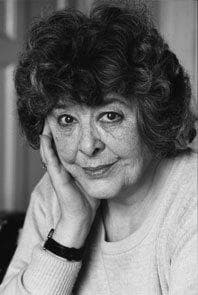
Diana Wynne Jones was a celebrated British author renowned for her witty and imaginative fantasy novels for children and young adults. Her most famous works include "Howl's Moving Castle," "Dark Lord of Derkholm," and "Chrestomanci" series. Jones's writing is characterized by its intricate plots, quirky characters, and clever use of magic, earning her critical acclaim and a dedicated readership.
Similar books
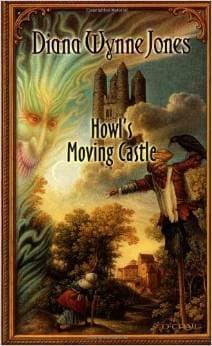
- Howl's Moving Castle
Diana Wynne Jones
4.3 (216k) average on GoodreadsFantasyShares the same author's distinctive charming, magical style and interconnected world.
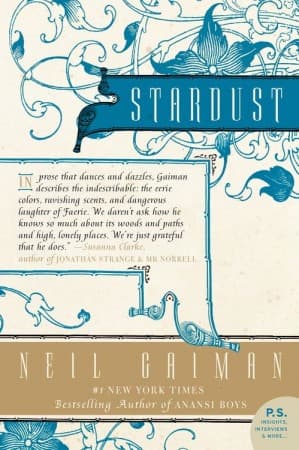
- Stardust
Neil Gaiman
4.1 (359k) average on GoodreadsFantasyOffers a whimsical, romantic quest narrative with a similar fairytale feel and magical encounters.
- Harry Potter and the Sorcerer's Stone
J.K. Rowling
4.5 (7M) average on GoodreadsFantasyRescued from a miserable life under the stairs, an orphaned boy discovers he's a wizard destined for a magical school, where he uncovers a dangerous secret tied to the dark wizard who murdered his parents.
- The Hunger Games
Suzanne Collins
4.3 (6.4M) average on GoodreadsFantasyIn a future where children fight to the death on live television, Katniss Everdeen volunteers for the arena, turning a death sentence into a fight for survival and a spark of rebellion.
- 1984
George Orwell
4.2 (3.1M) average on GoodreadsPoliticsIn a future where surveillance and thought control are absolute, a man's search for truth clashes with the Party, showing that hope can be a form of rebellion.
- Divergent
Veronica Roth
4.2 (2.9M) average on GoodreadsFantasyIn a society divided by virtues, a sixteen-year-old's difference from the norm starts a rebellion that threatens her world.




Enjoyed the summary?
A summary gives you the shape of the book. The book itself has the detail, the examples and the voice.
Find Castle in the Air on AmazonAs an Amazon Associate, BookBrief earns from qualifying purchases. How we're funded