

Synopsis
Covers the whole plot, including the ending.
- Difficulty
- Hard
- Pacing
- Variable
- Mood
- Dark, Melancholy, Psychological, Experimental, Tragic
- Read it if
- You are looking for a challenging, deeply psychological literary experience that explores themes of decay, memory, and the American South.
- Skip it if
- You prefer linear narratives, straightforward plots, or find non-chronological, stream-of-consciousness writing frustrating.
The Sound and the Fury Plot Summary
Covers the whole plot, including the ending.
April Seventh, 1928: Benjy
The novel begins on April 7, 1928, from the viewpoint of Benjamin 'Benjy' Compson, a 33-year-old man with a severe intellectual disability. His story is a stream of consciousness, without a clear timeline, moving between current sensory experiences and strong memories, mostly about his sister Caddy. Benjy's caregivers, young Luster and older Dilsey, try to manage him. He is fixated on Caddy's smell, her muddy childhood clothes, and the golf course that now covers the Compson pasture. Key memories include Caddy comforting him, her losing her virginity, and her eventual removal from the family. The story jumps between these moments, often triggered by sounds, sights, or smells, showing the family's decline through his innocent, yet deeply felt, view.
June Second, 1910: Quentin
This section, set on June 2, 1910, is told by Quentin Compson, Benjy's older brother, on his last day at Harvard before he dies by suicide. Quentin is obsessed with Caddy's lost virginity and the idea of southern honor and purity, which he believes Caddy and the Compson family have ruined. He tries to confess a made-up incestuous relationship with Caddy to his father, who dismisses it. Throughout the day, Quentin walks around Cambridge, meeting various people, including an Italian girl he tries to protect, and thinking about his father's cynical ideas about time and women. His mind constantly replays talks with Caddy and his father, leading to his decision to drown himself, unable to connect his ideals with the harsh reality of his family's breakdown.
April Sixth, 1928: Jason
The third section, dated April 6, 1928, is told by Jason Compson III, the most practical and cruel of the brothers. Jason resents his whole family, especially Caddy, for what he sees as a betrayal that cost him a banking job, and his mother, Caroline, for her constant complaints and favoritism. He has taken over as head of the house, managing the family's small finances and using Caddy's illegitimate daughter, also named Quentin, who lives with them. Jason regularly takes the money Caddy sends for her daughter, using it for his own investments. His story shows a cynical, hateful view, full of racist comments and contempt for everyone around him. He is always frustrated by his niece's rebellious behavior and the money she costs, while secretly making money from her.
April Eighth, 1928: Dilsey
The last section, set on April 8, 1928, switches to an outside narrator, focusing mainly on Dilsey Gibson, the Compson family's Black cook and head of the Black servants. This day is Easter Sunday, and Dilsey, with her family and Benjy, attends a powerful church service. The story shows Dilsey's strong faith, resilience, and compassion, a sharp contrast to the Compsons' moral decay. Meanwhile, Miss Quentin, Caddy's daughter, finally runs away, stealing the money Jason has saved, including funds Caddy sent for her. Jason discovers the theft and frantically chases her, but fails. The Compson home is left in more disorder, while Dilsey continues her duties, a sign of lasting strength and dignity amid the family's complete collapse.
Benjy's Childhood Memories
Throughout Benjy's section, his broken memories often focus on his sister Caddy in their childhood. He remembers times of comfort and safety, especially when Caddy would calm him, even when he was upset by the smell of rain or the sound of the swing. The image of Caddy with her muddy clothes, playing in the stream, appears often, symbolizing her early innocence and her later wrongdoing. These early memories are placed next to later ones where Caddy is more distant or absent, highlighting Benjy's unchanging need for her and the family's inability to give him steady care and affection after she left.
Quentin's Obsession with Purity and Honor
Quentin's section shows his deep mental pain from his sister Caddy's promiscuity and the perceived loss of family honor. He believes in a Southern code of chivalry and purity that he feels Caddy has broken, and he cannot accept this with the truth of her actions. His desperate efforts to make Caddy confess to incest, or to cleanse her through violence, show his inability to handle his family's decay and his own identity. His inner thoughts are full of philosophical ideas about time, morality, and the pointlessness of human effort, all to explain his coming suicide as an escape from an unbearable reality.
Jason's Financial Manipulation and Cruelty
Jason's story shows his constant cynicism and his planned cruelty towards his family members. He sees the Compson name as a burden and a shame, and he is determined to get whatever money he can from the situation. His main target is Miss Quentin, whose support money, sent by Caddy, he regularly takes and uses for his own stock market bets. He justifies his actions by saying he is simply getting back money lost due to Caddy's past behavior. His interactions with his mother, his siblings, and the Black servants are all marked by his sharp sarcasm, hatred of people, and a deep-seated resentment that drives all his actions.
Miss Quentin's Rebellion and Escape
Miss Quentin, Caddy's illegitimate daughter, lives under the harsh control of her grandmother, Caroline, and especially her uncle, Jason. She is shown as wild, rebellious, and defiant, often skipping school and having secret relationships. Her escape on Easter Sunday is the peak of her long-held desire for freedom from the suffocating and abusive Compson home. She steals the money Jason has saved, including what was rightfully hers from Caddy, and leaves with a carnival worker. Her flight represents a desperate act of self-preservation and a rejection of the cycles of decay and despair that define the Compson family.
Dilsey's Enduring Faith and Resilience
Dilsey's section highlights her role as the moral strength of the Compson home. Despite the constant abuse and neglect from the white family members, she remains steady in her duties and her faith. Her presence at the Easter Sunday service is a powerful moment, contrasting the spiritual renewal she feels with the spiritual emptiness of the Compsons. The sermon, with its message of the first and the last, deeply affects her. She embodies lasting dignity, love, and compassion that stands against the Compsons' self-destruction. Her actions and thoughts suggest a way to redemption, even as the Compsons fall further into ruin.
The Compson Family's Decline
Across all four sections, the main idea of the Compson family's decline is clearly shown. From their loss of land (the pasture becoming a golf course), to their financial ruin, and most importantly, their moral and spiritual decay, the family is a shadow of its former self. Mr. Compson's cynical ideas, Mrs. Compson's constant complaints and self-pity, Caddy's promiscuity, Quentin's suicide, Benjy's institutionalization, and Jason's greed all add to this irreversible decline. The once-proud Southern aristocratic family becomes a broken, self-destructive group, unable to adjust to or escape changing times, leaving only the lasting strength of Dilsey and her family as a sign of survival.
Principal Figures
Benjamin 'Benjy' Compson
Protagonist
The mentally disabled youngest Compson brother, whose narrative is a stream of fragmented memories.
Benjy is a 33-year-old man with severe intellectual disabilities, formerly named Maury. His perspective is a non-linear stream of consciousness, driven by sensory input like smells, sounds, and familiar objects, which trigger vivid memories, particularly of his sister Caddy. He is innocent and incapable of malice, but his distress over changes, especially Caddy's absence and the transformation of the family's land, is palpable. He relies entirely on his caretakers for survival.
Relationships: Caddy Compson (Deeply attached to and comforted by her, especially her scent.); Dilsey Gibson (Cared for by her; she provides his primary comfort and stability.); Luster (His young caretaker, often frustrated by Benjy but ultimately protective.)
Quentin Compson
Protagonist
The eldest Compson brother, obsessed with honor, purity, and the past, who ultimately commits suicide.
Quentin is a sensitive, intellectual, and highly neurotic Harvard student. He is profoundly tormented by his sister Caddy's promiscuity and his family's decline, feeling a crushing responsibility to uphold an idealized Southern code of honor and purity. His narrative is dense with philosophical musings, particularly on time, morality, and the futility of human action. His inability to reconcile his ideals with the perceived moral decay around him leads him to despair and ultimately suicide.
Relationships: Caddy Compson (Obsessed with her purity and virginity; a complex mix of love, possessiveness, and revulsion.); Mr. Compson (Seeks his father's guidance but is often disillusioned by his cynical philosophy.); Mrs. Compson (Feels neglected and misunderstood by his mother.)
Jason Compson III
Antagonist
The cynical, misogynistic, and greedy third Compson brother, who exploits his family.
Jason is the most practical, yet also the most cruel and embittered of the Compson brothers. He resents his entire family, particularly Caddy, for a perceived betrayal that he believes cost him a banking job. He is driven by greed and a desire for control, systematically stealing money sent by Caddy for her daughter, Miss Quentin. His worldview is characterized by cynicism, misanthropy, and racist attitudes. He sees himself as a victim of his family and the world, and takes pleasure in the suffering of others.
Relationships: Miss Quentin (Abuses and exploits her, stealing her money and resenting her existence.); Caddy Compson (Holds a deep, enduring grudge against her for perceived slights.); Mrs. Compson (Manipulates her mother's hypochondria for his own benefit.)
Candace 'Caddy' Compson
Supporting
The only Compson daughter, whose promiscuity and banishment are central to the family's decay.
Caddy is the central, albeit absent, figure around whom much of the novel's action and memory revolves. She is the object of Benjy's innocent affection, Quentin's tormented obsession, and Jason's bitter resentment. As a child, she is nurturing and protective of Benjy. As she grows older, her sexual promiscuity and out-of-wedlock pregnancy lead to her banishment from the family. She symbolizes the lost purity and honor of the Compson family, yet also a spirit of defiance and a tragic victim of circumstance.
Relationships: Benjy Compson (His primary source of comfort and love.); Quentin Compson (His obsession and the catalyst for his despair.); Miss Quentin (Her illegitimate daughter, whom she tries to support from afar.)
Dilsey Gibson
Supporting
The Compson family's long-suffering black cook and matriarch, a symbol of resilience and faith.
Dilsey is the Compson family's black cook and the true matriarch of the household. She is a figure of immense strength, resilience, and unwavering faith, who embodies a moral compass that the Compsons utterly lack. Despite the neglect, abuse, and racism she endures, she remains steadfast in her duties, caring for Benjy and providing what little stability exists in the decaying household. She serves as a stark contrast to the self-destructive Compsons, representing survival, dignity, and enduring love.
Relationships: Benjy Compson (His primary caretaker and source of comfort.); Compson Family (general) (Serves and cares for them despite their neglect and abuse.); Her own family (Versh, Luster, Frony) (A loving and guiding matriarch to her children and grandchildren.)
Miss Quentin (Caddy's Daughter)
Supporting
Caddy's rebellious and defiant illegitimate daughter, who eventually escapes the Compson household.
Miss Quentin is Caddy's illegitimate daughter, named after her uncle Quentin, and lives with the Compsons under the oppressive care of her grandmother, Caroline, and the cruel manipulation of her uncle, Jason. She is rebellious, defiant, and seeks freedom from the suffocating environment. She often skips school, dates older men, and eventually steals the money Jason has hoarded (including her own support money) to run away. She represents a continuation of Caddy's 'fallen' status in the Compson's eyes, but also a fierce desire for self-determination.
Relationships: Jason Compson III (His victim; she resents and defies his control and theft.); Caddy Compson (Her mother, from whom she receives support, though it is intercepted.); Mrs. Compson (Her grandmother, who is cold and critical towards her.)
Mrs. Caroline Compson
Supporting
The hypochondriac, self-pitying mother of the Compson children.
Mrs. Compson is a perpetually sickly and self-pitying woman who uses her supposed ailments to manipulate her children and demand sympathy. She openly favors Jason and disdains Benjy and Caddy, blaming them for the family's misfortunes. Her weakness and emotional neglect contribute significantly to the children's psychological damage. She is deeply concerned with appearances and uses her 'sickness' as a shield against the realities of her decaying family.
Relationships: Jason Compson III (Favors him and relies on him, though he often manipulates her.); Benjy Compson (Disdains and neglects him, blaming him for her suffering.); Caddy Compson (Rejects and condemns her for her behavior.)
Mr. Jason Compson II (Father)
Supporting
The cynical, alcoholic father of the Compson children, whose nihilistic philosophy influences Quentin.
Mr. Compson is the intellectual, yet deeply cynical and alcoholic, patriarch of the Compson family. He offers his children a nihilistic philosophy that emphasizes the futility of life and the unimportance of time, particularly influencing Quentin. He is detached and passive, failing to intervene effectively in his children's lives or prevent the family's decline. His intellectualism provides a veneer for his emotional weakness and resignation.
Relationships: Quentin Compson (His intellectual confidant, though his cynical advice contributes to Quentin's despair.); Mrs. Compson (His wife, whom he tolerates but does not truly engage with.); Caddy Compson (Seems to have a detached affection for her, but cannot save her from societal judgment.)
Themes & Insights
The Decline of the American South
The Compson family's decay reflects the post-Civil War decline of the aristocratic American South. Their loss of land, financial problems, and moral breakdown show wider societal changes and the inability of old Southern families to adapt. The Compson pasture being sold for a golf course, for example, symbolizes the loss of old values and the arrival of modern life. Quentin's focus on past honor and his father's cynical acceptance both speak to a society dealing with a lost golden age and a grim future, unable to connect its romanticized past with its harsh present.
“Because no battle is ever won he said. They are not even fought. The field only reveals to man his own folly and despair, and victory is an illusion of philosophers and fools.”
Time and Memory
Faulkner's novel explores how time and memory are personal, especially through the stream-of-consciousness narratives. Benjy's section blends past and present, showing how memory is not a straight line but a flowing, sensory experience. Quentin's section is a desperate fight against time, as he tries to stop or undo Caddy's perceived fall, believing that 'the past is never dead. It's not even past.' Jason, in contrast, tries to control and use time for money, while Dilsey exists in a more steady, spiritual time. The novel suggests that for some, the past is a burden that shapes and distorts the present.
“I was in time again, after a long time. I was in time again, after a long time. I was in time again.”
Loss of Innocence and Purity
Lost innocence, mainly shown through Caddy, is central to the Compson family's tragedy. Caddy's muddy clothes as a child, followed by her sexual activity and illegitimate pregnancy, symbolize the permanent loss of an ideal purity. Quentin's whole story is a desperate, failed attempt to keep or bring back Caddy's virginity and, by extension, the family's honor. Benjy's constant search for Caddy's comforting smell represents an innocent, unchanging longing for a lost state. The family's inability to deal with Caddy's actions drives much of their internal conflict and ultimately their breakup.
“I could smell the honeysuckle at the gate. My little sister said. She smelled like trees.”
Family Dysfunction and Decay
The Compson family shows deep dysfunction and moral decay. The mother, Caroline, is a complaining, self-pitying person who openly favors one child and ignores others. The father, Mr. Compson, is a cynical alcoholic who offers no moral guidance. The children—Benjy's disability, Quentin's suicide, Caddy's banishment, and Jason's greed and cruelty—all show the damaging effects of their upbringing and the problems within the family structure. The novel depicts a family unable to talk, support each other, or escape their inherited burdens, leading to an unavoidable fall into ruin.
“I give it to you not that you may remember time, but that you might forget it now and then for a moment and not spend all your breath trying to conquer it.”
Race and Class in the South
The novel looks at the complex issues of race and class in the early 20th-century American South, mainly through the relationship between the white Compson family and their Black servants, the Gibsons. Despite the Compsons' decline, they still hold a place of racial and social power, which Jason often abuses with his racist comments and treatment of Dilsey and her family. However, the Gibsons, especially Dilsey, are shown to have more moral strength, resilience, and dignity than their employers. They become the lasting force, while the white aristocratic family falls apart, subtly questioning the foundations of Southern society.
“I've seed de first en de last. I seed de beginning en now I see de endin'.”
Plot Devices & Literary Techniques
Stream of Consciousness
A narrative technique that mimics the unfiltered thoughts, feelings, and memories of a character.
Faulkner extensively uses stream of consciousness, particularly in the Benjy and Quentin sections. This device allows the reader direct access to the characters' inner minds, blurring the lines between past and present, and presenting thoughts in a non-linear, associative manner. For Benjy, it highlights his sensory-driven perception and his inability to distinguish time. For Quentin, it reveals his tormented, obsessive internal monologues and his struggle with abstract philosophical concepts, making the reader experience their psychological states directly rather than through external narration.
Multiple Perspectives/Unreliable Narrators
The story is told from the limited, often biased, viewpoints of different characters.
The novel is divided into four sections, each largely told from the perspective of a different character (Benjy, Quentin, Jason) or focused on a specific character (Dilsey). This allows Faulkner to present a multifaceted and often contradictory account of the same events, challenging the reader to piece together the 'truth.' Each narrator is unreliable due to their mental state, personal biases, or limited understanding. This technique underscores the subjective nature of reality and memory, and forces the reader to actively engage in interpreting the Compson family's history.
Symbolism and Motif
The use of recurring objects, images, or ideas to represent deeper meanings.
Faulkner employs rich symbolism throughout the novel. Caddy's muddy drawers symbolize lost innocence and moral transgression. The Compson pasture, sold for a golf course, represents the family's loss of land and status, and the encroachment of modernity on the Old South. Clocks and watches symbolize the characters' relationship with time, particularly Quentin's futile attempts to control or escape it. The honeysuckle scent is a recurring motif associated with Caddy and memory, while fire and water are often linked to destruction and purification, respectively. These symbols deepen the thematic resonance of the narrative.
Non-Linear Narrative Structure
The story is not told in chronological order, jumping between different time periods.
The novel's structure is deliberately fragmented and non-chronological. The first three sections are set on different days and years (1928, 1910, 1928) and are deeply interwoven with flashbacks, particularly in Benjy and Quentin's narratives. This disjointed structure mirrors the fragmented minds of the characters and the dislocated nature of memory. It also forces the reader to actively construct the timeline of the Compson family's decline, emphasizing that the past is constantly intruding upon and shaping the present, making it an inescapable force.
The Sound and the Fury Quotes
“I give you the mausoleum of all hope and desire; it's rather ugly, but quite indestructible.”
“Clocks slay time... Time is dead as long as it is being clicked off by little wheels; only when the clock stops does time come to life.”
“It was not a crying moment. There was no time for crying. I had to think of my children.”
“I wasn't crying. I wasn't crying. I was just smelling the honeysuckle.”
“Nonsense. The only thing you can get from a woman is a child or a venereal disease.”
“Because no battle is ever won he said. They are not even fought. The field only reveals to man his own folly and despair, and victory is an illusion of philosophers and fools.”
“And so I am not crying because I am not crying.”
“You can't just be a Compson. You have to be a Compson and do something.”
“I could smell the bright cold air and the smell of the cloth and the smell of the trees and the smell of the fire.”
“It's not when you realize that nothing can help you—religion, pride, anything—it's when you realize that you don't need any aid.”
“And then I saw that my shadow was not that of a man but of a boy.”
“I have seen the end of it, and it is not a pretty sight.”
“The past is not dead. It is not even past.”
“Dilsey, the only one of them that ever had any sense.”
Quiz
10 questions on the plot and the characters. Each answer comes with a short explanation.
Question 1
Which of the Compson brothers narrates the first section of 'The Sound and the Fury'?
- Quentin
- Jason
- Benjy
- Dilsey
Show answer
C. Benjy The first section of the novel is narrated by Benjy Compson, characterized by his stream-of-consciousness, non-linear perspective.
Question 2
What significant event is Benjy's birthday often associated with in his narrative?
- The death of his father
- Caddy's wedding
- His castration
- Quentin's departure for Harvard
Show answer
C. His castration Benjy's castration, which occurs due to his inappropriate behavior towards schoolgirls, takes place on his birthday, marking a significant and traumatic event in his life.
Question 3
Which Compson character commits suicide by drowning?
- Jason Compson III (the father)
- Quentin Compson
- Benjy Compson
- Mrs. Compson
Show answer
B. Quentin Compson Quentin Compson, tormented by his sister Caddy's promiscuity and his own puritanical ideals, drowns himself in the Charles River.
Question 4
What object does Quentin Compson associate with the passage of time and his impending suicide?
- A photograph of Caddy
- His father's watch
- A specific type of flower
- A letter from home
Show answer
B. His father's watch Quentin's father gives him his watch, telling him it is a 'monument to the futility of all experience.' Quentin obsessively breaks the crystal and removes the hands, trying to stop time.
Question 5
Which character is primarily concerned with maintaining the family's social standing and financial solvency, often through morally questionable means?
- Dilsey Gibson
- Mrs. Compson
- Jason Compson IV
- Quentin Compson
Show answer
C. Jason Compson IV Jason Compson IV is the pragmatic, cynical, and cruel brother who tries to control the family's finances and reputation, often at the expense of others, especially Caddy's daughter, Miss Quentin.
Question 6
What is the central thematic concern of Quentin Compson's section of the novel?
- The decline of the Southern aristocracy
- The corruption of money and power
- The burden of the past and the impossibility of escaping time and morality
- The resilience of the human spirit in the face of adversity
Show answer
C. The burden of the past and the impossibility of escaping time and morality Quentin's narrative is consumed by his obsession with Caddy's virginity, the family's honor, and his inability to reconcile with the passage of time and the decay of traditional Southern values, leading to his despair.
Question 7
How does Benjy primarily identify Caddy throughout his section?
- By her scent of trees
- By her distinctive laugh
- By the color of her dress
- By the sound of her singing
Show answer
A. By her scent of trees Benjy consistently associates Caddy with the smell of trees, especially when she is pure, and notes the absence of this scent as she loses her innocence.
Question 8
What is the role of Dilsey Gibson in the Compson household?
- She is the family's distant cousin and confidante.
- She is the matriarch who controls the family's finances.
- She is the long-suffering, loyal black servant who holds the family together.
- She is a neighbor who frequently intervenes in their affairs.
Show answer
C. She is the long-suffering, loyal black servant who holds the family together. Dilsey is the steadfast and compassionate black cook and servant who acts as a moral center and provides the only consistent source of care and stability for the decaying Compson family.
Question 9
The novel's title, 'The Sound and the Fury,' is an allusion to a soliloquy from which Shakespearean play?
- Hamlet
- Othello
- Macbeth
- King Lear
Show answer
C. Macbeth The title comes from Macbeth's soliloquy in Act 5, Scene 5: 'It is a tale / Told by an idiot, full of sound and fury, / Signifying nothing,' which reflects the novel's themes of meaninglessness and the fragmented narratives.
Question 10
What is the primary narrative technique employed in the first three sections of 'The Sound and the Fury'?
- Omniscient third-person narration
- Epistolary (through letters)
- Stream of consciousness
- Linear, chronological storytelling
Show answer
C. Stream of consciousness Faulkner famously uses stream of consciousness in the sections narrated by Benjy, Quentin, and Jason to convey their unfiltered thoughts and perceptions, often jumping between past and present without clear transitions.
The Sound and the Fury FAQ
What is the central premise of 'The Sound and the Fury'?
'The Sound and the Fury' chronicles the decline of the Compson family, a once-aristocratic Southern family, through the early 20th century. The narrative explores their financial ruin, moral decay, and the psychological impact on its members, particularly focusing on their relationship with the elusive Caddy Compson.
Why is the novel divided into four sections, and what is the significance of each date?
The novel is divided into four sections, each dated: April 7, 1928 (Benjy), June 2, 1910 (Quentin), April 6, 1928 (Jason), and April 8, 1928 (Dilsey). These dates signify the different narrative perspectives and their respective timelines, with Benjy's chapter demonstrating his timeless perception, Quentin's his past obsession, Jason's his present cynicism, and Dilsey's an objective, timeless perspective.
Who is Benjy Compson, and what makes his narrative unique?
Benjy Compson is the youngest Compson sibling, a mentally disabled man whose narrative opens the novel. His stream-of-consciousness chapter is unique for its non-linear structure, abrupt shifts in time, and sensory-driven memories, providing a fragmented yet deeply emotional insight into the family's past, particularly his attachment to Caddy.
What is the primary conflict in Quentin Compson's section?
Quentin Compson's section, set on the day of his suicide, is primarily driven by his agonizing obsession with his sister Caddy's lost virginity and the family's crumbling honor. He struggles with an idealized Southern past, his own moral code, and the perceived corruption of modernity, leading to his ultimate despair.
How does Jason Compson contribute to the family's downfall?
Jason Compson actively contributes to the family's downfall through his bitter cynicism, greed, and emotional abuse. He embezzles funds sent for Caddy's daughter, Miss Quentin, and manipulates his family members, embodying the moral decay and self-interest that have consumed the Compsons.
What is the symbolic significance of Caddy's muddy drawers in Benjy's section?
Caddy's muddy drawers, a recurring image in Benjy's section, symbolize her loss of innocence and the beginning of her sexual awakening, which Benjy, in his non-verbal way, perceives as a significant change. For Benjy, Caddy's scent and appearance are inextricably linked to his sense of order and comfort, and the mud signifies a disruption of that purity.
How does Faulkner use italics to signal shifts in Benjy's narration?
Faulkner uses italics in Benjy's section to signal abrupt shifts in time and memory, transitioning from present observations to past events without conventional narrative cues. These italicized passages often represent vivid flashbacks triggered by sensory input, allowing the reader to distinguish between different moments in Benjy's fragmented consciousness.
What is the significance of the broken watch in Quentin's chapter?
The broken watch Quentin inherits from his grandfather, which he deliberately breaks again, symbolizes his futile attempt to stop time and prevent Caddy's loss of innocence and the family's decline. It represents his inability to escape the past and his ultimate surrender to despair as he prepares for his suicide.
What role does Dilsey play in the novel, particularly in the final section?
Dilsey, the Compson family's African American servant, serves as a moral compass and a figure of unwavering resilience and love amidst the family's chaos. In the final section, her steadfast faith and enduring patience provide a stark contrast to the Compsons' despair, offering a glimmer of hope and continuity.
How does Benjy's mental state influence the reader's understanding of the Compson family's past?
Benjy's fragmented and sensory-driven narrative, devoid of judgment or linear causality, offers an unfiltered, primal perspective on the Compson family's past. While difficult to decipher, it reveals the raw emotional impact of events like Caddy's departure and the recurring themes of loss and change, unburdened by adult interpretation.
Analyze Quentin's psychological struggle with honor and virginity.
Quentin's psychological struggle is rooted in an idealized Southern code of honor, where female virginity is paramount to family reputation. His obsession with Caddy's sexuality becomes intertwined with his own identity and his inability to reconcile the purity of his sister with the perceived corruption of the world, leading to his profound despair and suicidal ideation.
How does Jason's cynicism and materialism reflect a broader societal shift?
Jason's cynicism and ruthless materialism reflect a broader societal shift in the American South from a decaying aristocratic idealism to a more pragmatic, self-serving modernism. His focus on financial gain and his disdain for traditional values embody a pragmatic, yet morally bankrupt, response to the family's decline and the changing economic landscape.
What psychological impact does Caddy's absence have on her brothers?
Caddy's absence has a profound and distinct psychological impact on each of her brothers: Benjy is inconsolable and fixated on her memory, longing for her comforting presence; Quentin is driven to despair and suicide by his inability to protect her honor; and Jason's resentment and bitterness are fueled by his perception of her as a source of family disgrace and financial burden.
Is 'The Sound and the Fury' ultimately a pessimistic or optimistic novel?
While often perceived as pessimistic due to the Compson family's tragic decline and the pervasive themes of loss and despair, the novel's final section, centered on Dilsey, offers a counterpoint. Her enduring faith, resilience, and capacity for love introduce a subtle element of hope and continuity, suggesting the possibility of spiritual survival despite human folly.
How does the non-linear narrative structure enhance the novel's themes?
The non-linear narrative structure, particularly the stream of consciousness, enhances the novel's themes by mirroring the fragmented nature of memory, the subjective experience of time, and the psychological decay of the Compson family. It forces the reader to actively piece together the story, immersing them in the characters' inner turmoil and reflecting the chaos of their lives.
What is the 'sound and the fury' referred to in the title, and how does it relate to the novel?
The title, 'The Sound and the Fury,' is an allusion to Macbeth's soliloquy, where life is described as 'a tale told by an idiot, full of sound and fury, signifying nothing.' This relates to the novel by reflecting Benjy's incomprehensible narrative, the chaotic and ultimately meaningless lives of the Compsons, and the pervasive sense of despair and futility that defines their existence.
Can Caddy Compson be considered a tragic figure, despite her limited direct presence?
Yes, Caddy Compson can be considered a tragic figure. Despite her limited direct presence in the narrative, her actions and their consequences drive much of the plot and the psychological torment of her brothers. She is a victim of societal expectations, family dysfunction, and her own impulses, ultimately leading to her ostracization and a life of uncertainty.
How does Faulkner use the setting of Jefferson, Mississippi, to comment on the American South?
Faulkner uses the fictional setting of Jefferson, Mississippi, as a microcosm to comment on the broader decline of the American South. The decaying Compson mansion and the family's lost grandeur symbolize the fading glory of the Old South, while the characters' struggles with tradition, race, and modernity reflect the region's complex historical and social transformations.
About the author
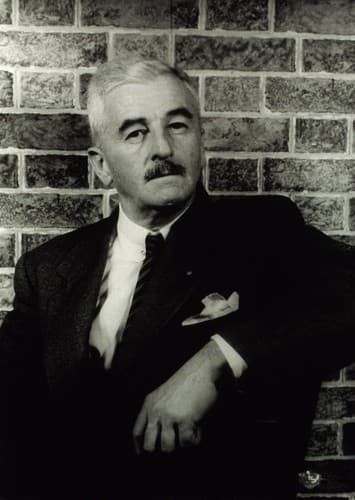
William Cuthbert Faulkner was an American writer known for his novels and short stories set in the fictional Yoknapatawpha County, based on Lafayette County, Mississippi, where Faulkner spent most of his life. A Nobel laureate, Faulkner is one of the most celebrated writers of American literature and often is considered the greatest writer of Southern literature.
Similar books
- Ulysses
James Joyce
3.7 (111k) average on GoodreadsLiterary FictionBoth use extensive stream-of-consciousness and experimental narrative techniques.
- As I Lay Dying
William Faulkner
3.7 (137k) average on GoodreadsLiterary FictionAnother Faulkner novel with multiple narrators and a focus on Southern family decay and grief.
- The Old Man and the Sea
Ernest Hemingway
3.8 (831k) average on GoodreadsLiterary FictionA Cuban fisherman's long struggle with a giant marlin becomes a story of endurance and dignity, now retold for young adults with illustrations, phonetic guides, and writing prompts in Traditional Chinese.
- One Hundred Years of Solitude
Gabriel García Márquez
4.1 (753k) average on GoodreadsLiterary FictionThrough the multi-generational story of the Buendía family, a mythical town deals with the repeating patterns of time, love, and solitude, as the extraordinary mixes with the ordinary.
- The Goldfinch
Donna Tartt
3.9 (720k) average on GoodreadsLiterary FictionHaunted by a tragic explosion and clutching a stolen Dutch masterpiece, a young orphan navigates the opulent drawing rooms of New York and the gritty underbelly of the art world, desperately seeking connection and redemption amidst a life spiraling into crime and obsession.
- Little Fires Everywhere
Celeste Ng
4.1 (713k) average on GoodreadsLiterary FictionIn Shaker Heights, an artist and her daughter move in, and their free-spirited lives clash with a rule-bound matriarch, revealing hidden conflicts beneath a perfect surface.






Enjoyed the summary?
A summary gives you the shape of the book. The book itself has the detail, the examples and the voice.
Find The Sound and the Fury on AmazonAs an Amazon Associate, BookBrief earns from qualifying purchases. How we're funded