
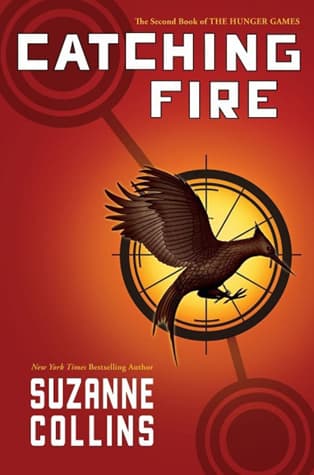
Synopsis
Covers the whole plot, including the ending.
- Difficulty
- Medium
- Pacing
- Fast
- Mood
- Suspenseful, Desperate, Revolutionary, Heartbreaking
- Read it if
- You enjoyed 'The Hunger Games' and want to see the stakes raised dramatically with a more complex political landscape and a fight for survival against an even more ruthless Capitol.
- Skip it if
- You prefer standalone stories or are looking for a lighthearted read, as this book is the second in a trilogy and deals with heavy themes of rebellion and oppression.
Catching Fire Plot Summary
Covers the whole plot, including the ending.
The Victory Tour and President Snow's Threat
Six months after the 74th Hunger Games, Katniss Everdeen is back in District 12. She struggles with post-traumatic stress disorder and the fake nature of her relationship with Peeta Mellark. Before the Victory Tour begins, President Snow visits her. He reveals he knows her berries stunt was an act of defiance, not love. He threatens to harm her family and Gale Hawthorne if she doesn't convince the districts, and him, that her actions came purely from love for Peeta. Snow warns her that her defiance has started rebellions in the districts, and only a convincing performance on the tour can stop it, hinting at serious consequences if she fails.
A Faltering Performance and Public Unrest
Katniss and Peeta, joined by Haymitch Abernathy and Effie Trinket, start the Victory Tour. In District 11, Katniss’s tribute to Rue and Thresh is met with an elderly man and woman making a forbidden three-finger salute. Peacekeepers publicly execute them. This event confirms Snow's warnings about the rebellion and Katniss's unintended role as its symbol. Despite their efforts, Katniss and Peeta struggle to show a real romance, especially as Katniss is conflicted between her feelings for Peeta and Gale. The tour only seems to increase the unrest.
The Quell Announcement and Despair
Upon returning to District 12, Katniss learns that Gale has been publicly whipped by a new Head Peacekeeper, Romulus Thread, for poaching. She steps in, getting whipped herself before Haymitch and Peeta arrive to help. This incident further shows the Capitol's control. Soon after, President Snow announces the 75th Hunger Games will be a Quarter Quell, a special edition held every 25 years with unique, brutal rules. For this Quell, tributes will be chosen from past victors, meaning Katniss must return to the arena.
Training and New Alliances
Katniss and Peeta are the only two victors from District 12, so they are both chosen for the 75th Hunger Games. In the Capitol, they meet other victors, many of whom are older, more experienced, and resentful of being forced back into the arena. Katniss and Peeta train separately but observe each other and their potential competitors. During private sessions, Katniss impresses the Gamemakers with her hanging dummy display, while Peeta paints a portrait of Rue. They begin to form alliances with other tributes like Finnick Odair and Johanna Mason, though trust is difficult.
The Interview and Peeta's 'Pregnancy'
During their televised interviews with Caesar Flickerman, Katniss wears a wedding dress that Cinna changes into a mockingjay. Peeta, in a desperate attempt to protect Katniss and gain sympathy, announces that Katniss is pregnant. This causes an uproar among the Capitol audience and even the other victors, leading to calls for the Games to be canceled. The Gamemakers are visibly shaken, but President Snow refuses to stop the Quell, showing his cruelty and determination to punish Katniss.
The Arena and its Perils
Cinna is brutally beaten by Peacekeepers in front of Katniss just before she enters the arena, a traumatic sight meant to break her spirit. The arena is a circular island surrounded by water, with a central Cornucopia. Haymitch’s advice to find allies is important. Katniss, Peeta, and Finnick Odair quickly form an alliance, navigating the dangerous environment. They soon discover the arena is like a clock, with a new, deadly threat released in each section every hour, including poisonous fog, blood rain, and aggressive jabberjays mimicking loved ones' screams.
Navigating the Clock Arena
The alliance, now including Beetee and Wiress from District 3, and Mags from District 4, works to understand the arena's clock mechanism. They endure the hourly events, such as the poisonous fog that Mags sacrifices herself to save Peeta from, and the aggressive monkeys. Wiress, with her sharp memory, helps them map the arena's deadly schedule. However, trust remains fragile, especially with Johanna Mason, who is openly hostile towards Katniss, and Finnick, whose past actions are unclear. Katniss constantly worries about Peeta's safety.
The Plan and the Betrayal
Beetee, a technological genius, plans to use the arena's lightning strike at midnight to destroy the force field around the arena, ending the Games. The group heads to the lightning tree, but their plan is disrupted by attacks from other tributes, including the Careers. During the chaos, Wiress is killed. Johanna Mason seemingly attacks Katniss, knocking her out and cutting out her tracker. Katniss, disoriented and alone, realizes a larger plan is happening, but isn't sure who to trust.
The Arena's Destruction and Rescue
Katniss, following Beetee's instructions and remembering Haymitch's cryptic advice, uses her bow and an arrow to send the lightning strike into the force field, shattering it and causing the arena to explode. She is knocked unconscious. She wakes up in a hovercraft, where she finds Haymitch, Finnick, and Plutarch Heavensbee, the Head Gamemaker. Haymitch reveals that many of the tributes were part of a secret plan to break them out of the arena, organized by the rebellion. Peeta, however, was captured by the Capitol.
The Revelation and District 13
Haymitch explains that the rebellion has been growing for years. Their goal was to extract Katniss, the symbol of the Mockingjay, to lead it. Many of the victors, including Beetee, Finnick, and Johanna, were part of the plan, though not all. Katniss is devastated to learn Peeta was left behind and is now in the Capitol's hands. She also discovers that Gale is safe, but District 12 has been completely destroyed by the Capitol in retaliation for the rebellion. The hovercraft is heading to District 13, a supposedly defunct district, which is actually the center of the rebellion.
Catching Fire Characters
Katniss Everdeen
Protagonist
The reluctant symbol of rebellion and victor of the 74th Hunger Games.
Katniss is a fiercely protective and resourceful young woman from District 12. Haunted by the trauma of the 74th Games, she struggles with PTSD, guilt, and the weight of being a symbol she never intended to be. Her primary drive is to protect her loved ones, particularly her sister Prim and Peeta. She is observant, skilled with a bow, and possesses an innate sense of justice, though she often acts impulsively. She is constantly torn between her genuine affection for Peeta and her deep connection with Gale.
Relationships: Peeta Mellark (Fiance/Co-victor, complex romantic and protective bond); Gale Hawthorne (Best friend, hunting partner, unacknowledged romantic tension); Primrose Everdeen (Younger sister, her primary motivation and reason for living); Haymitch Abernathy (Mentor, complex and often antagonistic but ultimately protective); President Snow (Antagonist, a manipulative and threatening adversary)
Peeta Mellark
Co-protagonist/Love Interest
Katniss's co-victor and the 'boy with the bread' who genuinely loves her.
Peeta is kind, artistic, and deeply empathetic, often using his words and charm to navigate difficult situations. He genuinely loves Katniss and tries to protect her, even at his own expense. He is a skilled baker and artist, able to camouflage himself effectively. While physically less imposing than Katniss, his emotional strength and strategic thinking are crucial. He understands the Capitol's games and uses public perception to their advantage, often taking the emotional lead in their fabricated romance.
Relationships: Katniss Everdeen (Fiance/Co-victor, complex romantic and protective bond); Haymitch Abernathy (Mentor, respectful and cooperative relationship)
Gale Hawthorne
Supporting Character/Love Interest
Katniss's best friend and hunting partner, fiercely independent and rebellious.
Gale is strong, loyal, and deeply principled. He shares Katniss's disdain for the Capitol and is more openly rebellious, advocating for direct action and resistance. He is skilled at hunting and trapping, providing for his family and Katniss's. His love for Katniss is evident, but he struggles with her forced romance with Peeta. He represents the growing fire of rebellion within the districts, often expressing views that align with revolutionary ideals, even before Katniss fully embraces them.
Relationships: Katniss Everdeen (Best friend, hunting partner, unacknowledged romantic tension); Haymitch Abernathy (Distant acquaintance, not a close bond)
Haymitch Abernathy
Supporting Character/Mentor
The cynical, alcoholic mentor to Katniss and Peeta, a former victor himself.
Haymitch is a complex character, initially appearing as a drunken, sarcastic mess. However, beneath his hardened exterior lies a cunning strategist and a deeply protective mentor. He understands the Capitol's games better than anyone and uses his cynicism to mask his care for Katniss and Peeta. He is instrumental in guiding them through the psychological warfare of the Games and the political maneuvering of the Capitol. He is a key figure in the underground rebellion, working to save Katniss.
Relationships: Katniss Everdeen (Mentor, complex and often antagonistic but ultimately protective); Peeta Mellark (Mentor, respectful and cooperative relationship); Effie Trinket (Colleague, often bickering but with underlying respect)
President Coriolanus Snow
Antagonist
The tyrannical and manipulative President of Panem.
President Snow is the ruthless dictator of Panem, maintaining control through fear, oppression, and the annual Hunger Games. He is cunning, observant, and extremely intelligent, quickly seeing through Katniss's defiance. His primary goal is to suppress any form of rebellion and preserve the Capitol's power. He is not above using psychological torture, public executions, and threats against loved ones to achieve his objectives. He views Katniss as a personal threat and is determined to break her spirit.
Relationships: Katniss Everdeen (Antagonist, a manipulative and threatening adversary)
Effie Trinket
Supporting Character
The upbeat and image-conscious escort for District 12.
Effie is a Capitol citizen devoted to following rules and maintaining appearances. She is enthusiastic about the Hunger Games, initially oblivious to their cruelty, but her experiences with Katniss and Peeta begin to change her perspective. She is meticulous about schedules and protocol, yet she genuinely cares for her tributes, particularly Katniss and Peeta. Her loyalty and affection become more apparent as the story progresses, showing a crack in the Capitol's facade of indifference.
Relationships: Katniss Everdeen (Escort, growing bond of affection); Peeta Mellark (Escort, growing bond of affection); Haymitch Abernathy (Colleague, often bickering but with underlying respect)
Finnick Odair
Supporting Character/Ally
The charming and formidable victor from District 4, known for his trident skills.
Finnick is a handsome and charismatic victor, initially appearing as a flirtatious and somewhat arrogant Capitol darling. However, he is a complex character burdened by his past as a victor and the Capitol's exploitation. He is incredibly skilled with a trident and is a powerful ally in the arena. He proves to be loyal and protective, especially towards Mags and later Katniss and Peeta. He is a key player in the rebellion's plan to extract Katniss.
Relationships: Katniss Everdeen (Ally, initially distrusted but later a loyal friend); Peeta Mellark (Ally); Mags (Mentor/Friend, deeply protective bond)
Johanna Mason
Supporting Character/Ally
The sarcastic and aggressive victor from District 7.
Johanna is a fierce and outspoken victor, known for her axe skills and her open defiance of the Capitol. She is sarcastic, confrontational, and initially hostile towards Katniss, masking her own pain and trauma. Despite her abrasive personality, she is a shrewd survivor and a valuable ally. She plays a crucial role in the rebellion's plan, demonstrating her loyalty and cunning in the arena. Her anger is a direct response to the Capitol's cruelty.
Relationships: Katniss Everdeen (Ally, initially hostile but later a crucial partner); Peeta Mellark (Ally)
Plutarch Heavensbee
Supporting Character/Rebel
The new Head Gamemaker with a hidden agenda.
Plutarch is the calculating and seemingly jovial Head Gamemaker who replaces Seneca Crane. He appears to be a loyal servant of the Capitol, but he is secretly a key figure in the rebellion. He subtly communicates with Katniss, providing clues and guidance, and orchestrates the events of the Quarter Quell to facilitate the rebellion's plans. He is intelligent, resourceful, and capable of playing a long game to achieve his revolutionary goals.
Relationships: Katniss Everdeen (Secret ally, manipulates events to help her); Haymitch Abernathy (Co-conspirator in the rebellion)
Cinna
Supporting Character
Katniss's kind and rebellious stylist.
Cinna is Katniss's stylist, known for his elegant and understated designs. Unlike other Capitol citizens, he is kind, gentle, and genuinely cares for Katniss, acting as a calming presence and a confidante. He subtly incorporates rebellious symbols into Katniss's outfits, most notably the Mockingjay dress, making a powerful statement against the Capitol. His quiet defiance and loyalty make him a beloved figure, and his brutal treatment by Peacekeepers is a stark reminder of the Capitol's cruelty.
Relationships: Katniss Everdeen (Stylist, close friend and confidante)
Catching Fire Themes
The Power of Symbolism and Propaganda
The novel explores how symbols, especially the Mockingjay, can start and keep a rebellion going, often beyond the control of those who create them. President Snow uses propaganda to keep control, while the rebels use Katniss's image to inspire hope. Katniss's act of defiance with the berries in the 74th Games, and later her wedding dress changing into a Mockingjay during interviews, are strong images that spread quickly. They show how one symbol can unite an oppressed population and become a sign of hope for change. The Capitol's attempts to counter this with its own propaganda only show its growing ineffectiveness.
“A spark is fine, as long as it’s contained. But if it’s allowed to spread, it will burn us all to the ground.”
The Dehumanizing Nature of War and Oppression
Catching Fire clearly shows the emotional and physical cost of war and the Capitol's oppressive rule. The trauma of the Games appears as PTSD in Katniss, Peeta, and Haymitch. The public executions in District 11, Gale's public whipping, and Cinna's brutal beating show the Capitol's casual cruelty and its use of fear to control people. The Quarter Quell itself is meant to break the spirits of the victors, forcing them to kill each other again. This highlights how the Capitol reduces human lives to entertainment and tools of control, taking away their dignity. This theme shows the cost of living under tyranny.
“What I need is to get away from these people. To get away from the Games. To get away from the Capitol. To get away from everything.”
Love, Sacrifice, and Loyalty
The complex mix of love, sacrifice, and loyalty is central to the story. Katniss's strong love for Prim drives her actions, while Peeta's constant love for Katniss leads him to make many sacrifices, including his 'pregnancy' announcement and his willingness to die for her in the arena. The forced romantic story between Katniss and Peeta becomes a real, if complicated, bond. Characters like Mags and Cinna also show strong loyalty and make great sacrifices for others or for the cause. These acts highlight the human ability for selflessness even in extreme danger and betrayal, forming important bonds within the new rebellion.
“I wish I could freeze this moment, right here, right now, and live in it forever.”
The Blurred Lines Between Reality and Performance
Throughout the book, Katniss and Peeta must constantly perform a romantic story for the Capitol, blurring the lines between their true feelings and what is expected of them. Their public displays of affection are acts, yet they also deepen their real emotional connection. The entire Victory Tour is a performance, and the Quarter Quell itself is a televised show. This constant performance makes it hard for Katniss to know her true emotions and for the audience (both in Panem and the reader) to know what is real. This theme explores the emotional cost of living a public lie and how it can change personal identity and relationships.
“It’s not enough to be good anymore. You have to be good at being seen.”
The Nature of Choice and Free Will
Despite being forced into impossible situations, characters in Catching Fire constantly deal with their choices and the illusion of free will. Katniss feels trapped by President Snow's threats and the Quarter Quell, yet she consistently makes choices that defy the Capitol, even if subconsciously. The victors are forced into the arena, but their alliances and actions within it are their own, often working toward a greater goal of resistance. The rebellion itself is a collective choice to fight for freedom, contrasting with the Capitol's complete control over its citizens' lives. This theme questions how much control individuals truly have when living under an oppressive regime and when they choose to reclaim it.
“You never get a choice, do you? Just different ways to die.”
Plot Devices & Literary Techniques
The Quarter Quell
A special, more brutal edition of the Hunger Games held every 25 years.
The Quarter Quell serves as the primary conflict driver, raising the stakes dramatically by forcing past victors, including Katniss and Peeta, back into the arena. It's a cruel twist designed by President Snow to break Katniss and crush any hope of rebellion. This device not only ensures Katniss's return to the Games but also introduces a new cast of formidable, experienced tributes who become crucial allies and adversaries, expanding the world and the scope of the rebellion.
The Mockingjay Pin
A symbol of rebellion and hope against the Capitol.
Originally a simple trinket from District 12, the Mockingjay pin evolves into the powerful symbol of the rebellion. It is subtly incorporated into Katniss's outfits by Cinna and becomes synonymous with her defiance. Its visual representation on screen, particularly during the interview where Katniss's wedding dress transforms into a Mockingjay, serves as a rallying cry for the districts and a direct challenge to the Capitol's authority. It symbolizes resistance, hope, and the unexpected power of a single individual.
The Clock Arena
A meticulously designed arena with hourly, timed dangers.
The 75th Hunger Games arena is a crucial plot device, functioning as a giant clock with distinct, timed sections, each unleashing a specific deadly threat (e.g., poisonous fog, blood rain, jabberjays). This unique design adds immense pressure and strategic complexity, forcing the tributes to understand its patterns to survive. It also serves as a metaphor for the Capitol's calculated control, and its eventual destruction by Katniss symbolizes breaking free from that control.
The Love Triangle
The romantic tension between Katniss, Peeta, and Gale.
The love triangle is a significant element, creating emotional conflict for Katniss and adding layers to her character. It serves multiple purposes: as a public facade for the Capitol, a source of genuine emotional turmoil for Katniss, and a reflection of her divided loyalties and desires. Peeta represents safety and kindness, while Gale embodies passion and rebellion. This dynamic complicates Katniss's journey and highlights the personal sacrifices she must make amidst a larger political struggle.
The Victory Tour
A mandatory tour for victors to visit all districts, used by the Capitol for propaganda.
The Victory Tour is a pivotal plot device that exposes Katniss and Peeta to the simmering unrest in the districts. It forces them to confront the real-world consequences of their actions in the previous Games and witness the brutal enforcement of Capitol rule. Intended by President Snow as a means to suppress rebellion, it inadvertently fuels it further by showcasing Katniss as a symbol of hope and defiance, setting the stage for the Quarter Quell and the larger uprising.
Catching Fire Quotes
“Happy Hunger Games! And may the odds be ever in your favor.”
“I can see now that you're a lot more than just a dress.”
“You'll never be able to look at them the same way again. Never be able to forget what they are.”
“The hardest part is not losing yourself.”
“If we burn, you burn with us!”
“My job is to make you desirable, not to make you into a bride.”
“I wish I could freeze this moment, right here, right now, and live in it forever.”
“A small part of me, the part that's always a little hungry, wants to be jealous of her.”
“You just have to be yourself. And yourself is a lot more than you think.”
“It's the only way I can get through this. To remember that I'm not doing it for myself.”
“This is not a game. This is real.”
“You're a victor, Katniss. You're supposed to be an inspiration.”
“My last memory of him is his smile.”
“The idea that there's a place for me where I can be safe, where I can be myself, is almost too much to bear.”
“I realize the answer to who I am is not in the Capitol, but here, in the woods.”
Quiz
10 questions on the plot and the characters. Each answer comes with a short explanation.
Question 1
What significant event occurs at the beginning of 'Catching Fire' that forces Katniss and Peeta back into the arena?
- They volunteer for the 75th Hunger Games to save their loved ones.
- President Snow announces the Quarter Quell, requiring former victors to compete.
- Haymitch is too ill to compete, and Katniss and Peeta are chosen as replacements.
- The districts demand a rematch between the previous year's victors.
Show answer
B. President Snow announces the Quarter Quell, requiring former victors to compete. President Snow announces the 75th Hunger Games will be a Quarter Quell, and the twist for this year is that tributes will be chosen from the existing pool of victors.
Question 2
During the Victory Tour, what message does Katniss try to subtly convey to the people in the districts?
- That she and Peeta are genuinely in love.
- That the Capitol is benevolent and fair.
- That a rebellion is brewing and they should prepare.
- That she regrets her actions in the previous Games.
Show answer
C. That a rebellion is brewing and they should prepare. Despite President Snow's threats, Katniss's actions and words during the Victory Tour inadvertently (and sometimes intentionally) spark hope and unrest, signifying a potential rebellion.
Question 3
Who is the new Head Gamemaker for the 75th Hunger Games (the Quarter Quell)?
- Seneca Crane
- Plutarch Heavensbee
- Tigris
- Cinna
Show answer
B. Plutarch Heavensbee Plutarch Heavensbee replaces Seneca Crane as the Head Gamemaker, a position he uses to secretly aid the rebellion.
Question 4
What significant item does Cinna design for Katniss's interview dress that reveals a hidden message?
- It transforms into a mockingjay.
- It features the symbols of all twelve districts.
- It glows in the dark, symbolizing hope.
- It is made from the same fabric as Peeta's suit.
Show answer
A. It transforms into a mockingjay. During her interview, Katniss's wedding dress, designed by Cinna, dramatically transforms into a mockingjay, a symbol of rebellion, before the entire Capitol audience.
Question 5
Which of the following tributes from District 3 is known for his technological expertise?
- Beetee
- Wiress
- Finnick Odair
- Thresh
Show answer
A. Beetee Beetee, a victor from District 3, is known as 'Volts' due to his expertise with electronics and wiring, which proves crucial in the arena.
Question 6
What is the primary purpose of the 'force field' surrounding the arena in the 75th Hunger Games?
- To prevent tributes from escaping.
- To generate the various environmental hazards.
- To provide a clear boundary for the cameras.
- To project images and holograms into the sky.
Show answer
A. To prevent tributes from escaping. The force field is a critical security measure designed to keep tributes contained within the arena, as Katniss discovers when she attempts to test its boundaries.
Question 7
What secret alliance is formed among several tributes in the arena, unbeknownst to Katniss for a time?
- An alliance to protect Peeta at all costs.
- An alliance to overthrow the Gamemakers and escape.
- An alliance to target the strongest career tributes first.
- An alliance to find the safest part of the arena and wait.
Show answer
B. An alliance to overthrow the Gamemakers and escape. Many of the victors, including Finnick, Beetee, Wiress, Johanna, and others, are secretly working together under the guidance of Haymitch and Plutarch Heavensbee to protect Katniss and break out of the arena.
Question 8
Why does Peeta propose marriage to Katniss during their pre-Games interview?
- He genuinely wants to marry her before the Games.
- To gain sympathy from the Capitol audience and sponsors.
- To fulfill a promise he made to Haymitch.
- To distract from Katniss's rebellious interview dress.
Show answer
B. To gain sympathy from the Capitol audience and sponsors. Peeta's public proposal is a strategic move to portray them as star-crossed lovers and garner maximum sympathy from the Capitol, hoping to make them too popular to kill easily.
Question 9
What is the significance of the 12-hour clock structure of the arena in the 75th Hunger Games?
- It allows the Gamemakers to precisely time the tributes' movements.
- It symbolizes the cyclical nature of the Hunger Games.
- Each 'hour' represents a different, recurring environmental hazard.
- It dictates the schedule for food drops and sponsor gifts.
Show answer
C. Each 'hour' represents a different, recurring environmental hazard. The arena is designed like a clock, with each 'hour' sector unleashing a specific, repeating hazard (e.g., blood rain, killer monkeys, poisonous fog, tidal waves).
Question 10
How does 'Catching Fire' conclude, leaving Katniss's fate uncertain?
- Katniss and Peeta are rescued and return to District 12.
- Katniss is captured by the Capitol, and Peeta escapes.
- Katniss destroys the arena and is rescued by rebels, but Peeta is captured by the Capitol.
- The Games are abruptly ended by President Snow, declaring no victor.
Show answer
C. Katniss destroys the arena and is rescued by rebels, but Peeta is captured by the Capitol. Katniss shoots an arrow into the force field, destroying the arena. She is then rescued by a hovercraft from District 13, but learns that Peeta and Johanna have been captured by the Capitol.
Catching Fire FAQ
What is the primary conflict Katniss faces at the beginning of 'Catching Fire' after surviving the 74th Hunger Games?
Katniss is forced to maintain the illusion of being madly in love with Peeta Mellark to appease President Snow and prevent the Capitol from punishing her family and District 12. Her act of defiance with the berries in the previous Games has sparked unrest, making her a symbol of rebellion she never intended to be.
Why does President Snow visit Katniss personally before the Victory Tour, and what is his ultimatum?
President Snow visits Katniss to warn her that her berry stunt was perceived as an act of rebellion, not desperation, and has ignited hope in the districts. He demands she convince everyone, including himself, that her actions were solely out of love for Peeta, or face dire consequences for her loved ones and her district.
What is the significance of the Mockingjay pin in 'Catching Fire' beyond being Katniss's token?
The Mockingjay pin evolves into a powerful symbol of rebellion and hope for the oppressed districts against the Capitol. It represents Katniss herself and the growing defiance, becoming an iconic image associated with the burgeoning uprising across Panem.
What is the Quarter Quell, and how does it dramatically change the rules for the 75th Hunger Games?
The Quarter Quell is a special edition of the Hunger Games held every 25 years with unique, often brutal, twists. For the 75th Games, the rule is that tributes will be reaped from the existing pool of victors from each district, forcing Katniss and Peeta back into the arena.
How does Peeta's public marriage proposal to Katniss during the Victory Tour serve their larger goal?
Peeta's public marriage proposal is a desperate attempt to solidify their 'star-crossed lovers' narrative and convince the Capitol, especially President Snow, that their love is genuine. They hope it will quell the rumors of rebellion and protect their families, despite Katniss's internal conflict.
What is the 'nut' Haymitch mentions to Katniss and Peeta, and how does it relate to the other tributes in the Quarter Quell?
The 'nut' Haymitch refers to is the core strategy or weakness of each opposing victor tribute in the arena. He advises Katniss and Peeta to observe and understand these 'nuts' to identify potential allies or exploit vulnerabilities, implying there's more to their opponents than meets the eye.
What is the true purpose of Plutarch Heavensbee's 'time-telling' watch, and how does it subtly hint at the rebellion?
Plutarch Heavensbee's watch, which he shows Katniss, displays a Mockingjay that disappears at midnight, then reappears. This is a subtle signal to Katniss, indicating that he is part of the rebellion and that she is crucial to their plans, hinting at a larger conspiracy at play.
How does the arena for the 75th Hunger Games uniquely function as a weapon against the tributes?
The arena is designed like a clock, with a different, deadly threat occurring in each 'slice' of the clock face at specific hourly intervals. This systematic and predictable cycle of dangers, from blood rain to jabberjays, is meant to disorient and psychologically torture the tributes, making escape nearly impossible.
What is the significance of the force field around the arena and its vulnerability?
The force field around the arena is a crucial element, not just for containment, but also for its symbolic representation of the Capitol's control. Its vulnerability, discovered by Beetee and exploited by Katniss, becomes the key to breaking free from the Games and initiating the wider rebellion.
How does Katniss's internal struggle between her feelings for Peeta and Gale evolve throughout the book?
Katniss's internal struggle intensifies as she's forced to publicly embrace Peeta while her heart aches for Gale. The constant threat of the Capitol's retribution makes her realize the depth of her connection to both, but the Quarter Quell forces her to make choices that blur the lines of her affections and priorities.
Discuss the psychological impact of the Victory Tour on Katniss and Peeta.
The Victory Tour is a psychological torment for Katniss and Peeta, forcing them to relive their trauma while performing a fabricated love story. Katniss feels immense guilt for the unrest she's caused and the sacrifices others make, while Peeta struggles with the deception and Katniss's emotional distance.
How does Katniss's role as the 'Mockingjay' affect her sense of identity and agency?
Katniss's reluctant role as the 'Mockingjay' strips her of personal agency, as she becomes a symbol manipulated by both the Capitol and the rebels. She struggles with the burden of expectation, feeling like a pawn in a larger game, which deeply challenges her sense of self and purpose.
What psychological toll do the Jabberjays take on Katniss in the arena?
The Jabberjays inflict severe psychological torture on Katniss by mimicking the screams of her loved ones, particularly Prim and Gale. This manipulation preys on her deepest fears, causing immense distress and momentarily paralyzing her with grief and helplessness within the arena.
Was Katniss truly in love with Peeta when she volunteered for the Quarter Quell, or was it purely strategic?
Katniss's decision to save Peeta in the Quarter Quell is complex. While she deeply cares for him and feels a profound sense of responsibility, her 'love' is intertwined with strategic thinking, the desire to protect him, and a recognition of his unique ability to connect with people. It's a mix of genuine affection and a pragmatic understanding of their intertwined destinies.
To what extent were Haymitch's actions and advice throughout the book truly for Katniss's benefit, versus the rebellion's?
Haymitch's actions were dual-purpose. While he genuinely cares for Katniss and Peeta, his primary objective, especially leading up to and during the Quarter Quell, was to protect Katniss as the symbol of the rebellion and ensure her survival for the larger cause. His advice often served both individual and collective goals.
Could the rebellion have succeeded without Katniss's unwitting spark, or was it an inevitable outcome?
While the seeds of rebellion were always present due to the Capitol's oppression, Katniss's defiance with the berries provided the crucial, galvanizing spark. Her actions transformed simmering discontent into active hope and a unified cause, suggesting the rebellion would have been much harder, if not impossible, to ignite without her.
Was President Snow's decision to hold a Quarter Quell with victors a brilliant move or a fatal miscalculation for the Capitol?
President Snow's decision was a fatal miscalculation. While intended to crush hope by forcing beloved victors to kill each other, it instead united them and the districts against the Capitol. It backfired spectacularly, providing the rebels with a perfect opportunity to extract Katniss and ignite the revolution.
What is the moral ambiguity of the rebels' decision to keep their plans from Katniss and Peeta until the very end?
The rebels' decision to keep Katniss and Peeta in the dark, especially about the extraction plan, is morally ambiguous. It protected the secret, but also subjected them to immense psychological torment and genuine fear of death, exploiting their trauma for the greater good without their full consent.
About the author

Suzanne Collins is an American author and television writer. She is best known as the author of the young adult dystopian book series The Hunger Games.
Similar books
- Divergent
Veronica Roth
4.2 (2.9M) average on GoodreadsFantasyFeatures a dystopian society, a strong female protagonist, and a rebellion against an oppressive system.
- The Maze Runner
James Dashner
4.0 (1.1M) average on GoodreadsFantasyInvolves young protagonists trapped in a deadly environment, uncovering a larger conspiracy.
- Red Rising
Pierce Brown
4.3 (248k) average on GoodreadsFantasyExplores a rigid class system, a protagonist who infiltrates the elite, and a violent uprising.
- Uglies
Scott Westerfeld
3.9 (560k) average on GoodreadsFantasyWesterfeld's Uglies series offers a more philosophical and drawn-out examination of societal control, beauty standards, and conformity. While Catching Fire focuses on overt political oppression and rebellion, Uglies explores more subtle forms of control through body modification and psychological conditioning. Uglies allows for a slower burn in character development and world-building, which Catching Fire sometimes sacrifices for the sake of plot momentum and immediate political urgency.
- Harry Potter and the Sorcerer's Stone
J.K. Rowling
4.5 (7M) average on GoodreadsFantasyRescued from a miserable life under the stairs, an orphaned boy discovers he's a wizard destined for a magical school, where he uncovers a dangerous secret tied to the dark wizard who murdered his parents.
- The Hunger Games
Suzanne Collins
4.3 (6.4M) average on GoodreadsFantasyIn a future where children fight to the death on live television, Katniss Everdeen volunteers for the arena, turning a death sentence into a fight for survival and a spark of rebellion.





Enjoyed the summary?
A summary gives you the shape of the book. The book itself has the detail, the examples and the voice.
Find Catching Fire on AmazonAs an Amazon Associate, BookBrief earns from qualifying purchases. How we're funded