
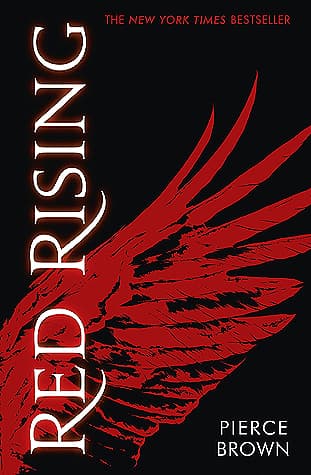
Synopsis
Covers the whole plot, including the ending.
- Difficulty
- Medium
- Pacing
- Fast
- Mood
- Gritty, Intense, Violent, Hopeful, Dark
- Read it if
- You love epic, action-packed sci-fi with gladiatorial combat, political intrigue, and a compelling underdog story. Perfect for fans of 'Hunger Games' meets 'Game of Thrones' in space.
- Skip it if
- You prefer softer science fiction, dislike violence, or are turned off by morally grey protagonists and a dystopian setting.
Red Rising Plot Summary
Covers the whole plot, including the ending.
The Promise of a Better World Shattered
Darrow is a Helldiver, one of the lowest caste Reds, who mines helium-3 deep beneath the surface of Mars. He believes his grueling work, along with that of his wife Eo and their community in Lykos, is terraforming Mars for future generations. Despite the harsh conditions and the constant threat of cave-ins, they hold onto the dream of a free surface world. Darrow's rebellious spirit often clashes with the authorities, particularly the ruthless ArchGovernor of Mars, Nero au Augustus. During a forbidden celebration, Darrow and Eo are caught. While Darrow is flogged, Eo sings a forbidden song about freedom, a defiant act that leads to her public hanging. Her last words, urging Darrow to 'live for more,' ignite a burning rage and a desire for revenge within him.
The Truth of the Society
Following Eo's execution, Darrow is consumed by grief and attempts to hang himself to join her. He is rescued by a group of rebels known as the Sons of Ares, led by the mysterious 'Ares.' They reveal the shocking truth: Mars was terraformed centuries ago. Humanity lives in opulent cities on the surface, ruled by the Golds and the color-coded Society. The Reds, along with other low-colors, are slaves, exploited for their labor under the guise of an ongoing terraforming project. This revelation shatters Darrow's world and fuels his desire for vengeance against the Society that betrayed his people and murdered his wife. He agrees to join the Sons of Ares' audacious plan to infiltrate the Golds.
Transformation and Infiltration
To infiltrate the Society, Darrow must undergo a drastic transformation. He is taken to the Sons of Ares' hidden facility where he is surgically altered by the Peerless Scarred, Mickey. His Red physique is reshaped, bone density increased, muscles enhanced, and even his eye color changed to gold. He endures agonizing procedures and intensive training to adopt the mannerisms, language, and knowledge of a Gold. This process is physically and psychologically grueling, forcing Darrow to abandon his identity and embrace the very people he despises. After his transformation, Darrow is given a new identity: Darrow au Andromedus, son of a minor Gold house, and is prepared to enter the Institute.
Arrival at the Institute
Darrow arrives at the Institute, a prestigious and brutal training academy on Luna where young Golds are tested for leadership. He is sorted into House Mars, one of twelve houses, each named after a planet. His initial social interactions are awkward, as he struggles to suppress his Red instincts and fully embody his Gold persona. He quickly makes enemies, particularly with Julian, a kind but naive Gold from House Minerva, and Cassius au Bellona, a proud and skilled warrior from House Mars. Darrow finds himself in a cutthroat environment where alliances are fleeting and violence is common, realizing the Sons of Ares' mission is far more dangerous than he anticipated.
The Game of Houses Begins
The Institute's true test begins: a simulated war on a vast, isolated valley, where each House must conquer and control the territory of the others, using resources, strategy, and combat. The goal is to become Primus of the Institute by controlling the most territory and uniting the Houses. Darrow initially struggles, seen as weak by his peers. When Julian is killed in a skirmish, Darrow is blamed by Cassius, fueling a bitter rivalry. Darrow realizes he must adapt quickly and embrace the brutality of the Golds to survive and advance the Sons of Ares' mission, forming an uneasy alliance with the cunning and ambitious Sevro au Barca and his 'Howlers'.
Rise to Power and Strategic Alliances
Darrow, adopting the moniker 'Reaper,' begins to outmaneuver his opponents. He and Sevro, leading the Howlers, capture the citadel of House Mars and establish a base. Darrow shows a ruthless pragmatism and strategic brilliance previously unseen. He conquers House Pluto and subjugates its Primus, Roque, earning his loyalty through respect and force. He also forms an alliance with Antonia, the Primus of House Ceres. His leadership style, a blend of intimidation and genuine care for his followers, begins to set him apart from the other Golds, drawing both admiration and fear from his peers. He learns to play the political game of the Golds.
Clash with House Minerva and the Jackal
Darrow's growing power attracts the attention of the most formidable Houses. He engages in a fierce war with House Minerva, led by the cunning and brutal Titus. Darrow eventually defeats Titus, only to discover Titus was actually a disguised Red, also infiltrated by the Sons of Ares, but driven mad by the process. This revelation deeply disturbs Darrow, showing the psychological toll of his mission. He also encounters the enigmatic and terrifying Adrius au Augustus, known as the Jackal, Primus of House Pluto (after Roque's initial capture) and the ArchGovernor's son, who proves to be a master manipulator and strategist, posing a grave threat to Darrow's ambitions.
The Betrayal and the Iron Rain
Cassius, still grieving Julian and convinced Darrow is responsible, orchestrates a brutal betrayal. He captures Darrow and hands him over to the Jackal, who tortures Darrow and executes many of his followers in a devastating 'Iron Rain' attack. Darrow barely escapes with his life, thanks to the unexpected intervention of Mustang, Primus of House Apollo, and the sister of the Jackal. Mustang, impressed by Darrow's leadership and disturbed by her brother's cruelty, agrees to a fragile alliance. Darrow, humbled but resolute, realizes he needs more than just brute force to defeat the Jackal and unite the Houses.
Uniting the Houses and Final Conflict
With Mustang and Roque's unwavering support, Darrow begins to rally the remaining scattered Houses against the Jackal. He uses a blend of strategic brilliance, psychological warfare, and inspiring leadership. He exposes the Jackal's cruelty and manipulative tactics, convincing other Primuses, including the formidable Victra au Julii of House Ceres, to join his cause. The final conflict is a massive, brutal siege against the Jackal's stronghold. Darrow confronts Cassius, and during their duel, reveals the truth about Julian's death and Titus's identity, partially reconciling with him.
Victory and the Weight of Leadership
Darrow finally defeats the Jackal, securing his victory as Primus of the Institute. He is hailed as a hero by the other students and by the Society, who see him as a promising new leader. He is given the laurel and the title of Praetor. However, Darrow's victory is bittersweet. He has achieved his immediate goal, but the weight of his deception, the sacrifices made, and the knowledge of his true mission press heavily upon him. He has become the very thing he swore to destroy, a Gold among Golds, and must now navigate the treacherous political landscape of the Society to fulfill Eo's dream and the Sons of Ares' ultimate goal of revolution.
Red Rising Characters
Darrow au Andromedus (formerly Darrow of Lykos)
Protagonist
A Red Helldiver transformed into a Gold, seeking vengeance and revolution.
Darrow begins as a passionate and skilled Red Helldiver, deeply in love with his wife, Eo. He is driven by a strong sense of community and loyalty to his people, enduring harsh conditions for a perceived greater good. Eo's execution shatters his world, revealing the Society's lies and igniting a fierce desire for vengeance. His transformation into a Gold is agonizing, forcing him to shed his identity and embrace the mannerisms of his oppressors. At the Institute, he proves to be a brilliant strategist, a charismatic leader, and a formidable warrior, capable of both ruthless pragmatism and inspiring loyalty. He struggles with the moral compromises of his mission, constantly battling between his Red heart and his Gold exterior.
Relationships: Eo (Wife, inspiration for his rebellion); Sevro au Barca (Loyal friend and ally); Cassius au Bellona (Rival turned reluctant ally); Mustang (Virginia au Augustus) (Ally, intellectual equal, love interest); Roque au Fabii (Loyal lieutenant)
Eo of Lykos
Supporting
Darrow's wife, whose sacrifice ignites his rebellion.
Eo is Darrow's spirited and idealistic wife, a Red of Lykos. She possesses a fiery passion for freedom and a deep belief in a better future, even in the bleak conditions of the mines. Her defiant act of singing a forbidden song and her subsequent public execution are the catalyst for Darrow's entire journey. Her last words, 'Live for more,' become Darrow's mantra and the driving force behind his mission. Though she appears only briefly, her memory and ideals profoundly shape Darrow's motivations and moral compass throughout the book, representing the hope and injustice that fuels the Sons of Ares.
Relationships: Darrow au Andromedus (Husband, source of inspiration)
Sevro au Barca
Supporting
Darrow's loyal, eccentric, and deadly second-in-command.
Sevro is a small, wild, and incredibly dangerous Gold, known for his unpredictable behavior, his 'Howler' mask, and his loyalty. Initially a loner and an outcast, he is drawn to Darrow's unconventional leadership. He is ruthless in combat, fiercely protective of his friends, and possesses a sharp, cynical wit. Sevro is one of Darrow's most trusted allies at the Institute, proving instrumental in many victories. He is the son of Fitchner, the Proctor of House Mars, though this is not revealed until later books. His loyalty to Darrow is unwavering, offering a crucial emotional anchor amidst the treachery of the Golds.
Relationships: Darrow au Andromedus (Best friend and loyal lieutenant); Fitchner (Father (secretly))
Cassius au Bellona
Supporting
A proud and skilled Gold warrior, Darrow's initial rival.
Cassius is a proud, honorable, and highly skilled warrior from one of the most prestigious Gold families, House Bellona. He initially befriends Darrow but becomes his bitter enemy after Darrow is implicated in the death of his brother, Julian. He is driven by a strong sense of family loyalty and honor, making him a formidable opponent. Despite his antagonism, Cassius possesses a moral code that sets him apart from more villainous Golds like the Jackal. His journey is one of grief, misunderstanding, and eventually, a complex reconciliation with Darrow, as he learns the deeper truths of the Institute's cruel game.
Relationships: Darrow au Andromedus (Rival, later uneasy ally); Julian au Bellona (Younger brother (deceased))
Mustang (Virginia au Augustus)
Supporting
An intelligent and empathetic Gold, the Jackal's twin sister and Darrow's ally.
Mustang is the Primus of House Apollo and the twin sister of Adrius, the Jackal. Unlike her brother, Mustang is highly intelligent, empathetic, and possesses a strong sense of justice and fairness. She is a brilliant tactician and strategist, often seeing through the manipulations of others. She initially observes Darrow with curiosity and suspicion but comes to respect and admire his leadership and unconventional methods. She forms a crucial alliance with Darrow, providing him with vital strategic insight and moral support, proving to be one of his most valuable allies against the Jackal. She represents a more honorable facet of Gold society.
Relationships: Darrow au Andromedus (Ally, intellectual equal, love interest); Adrius au Augustus (The Jackal) (Twin brother, enemy)
Adrius au Augustus (The Jackal)
Antagonist
The ArchGovernor's son, a psychopathic and brilliant manipulator.
Adrius, known as the Jackal, is the Primus of House Pluto and the son of Nero au Augustus, the ArchGovernor of Mars. He is a chillingly intelligent and utterly psychopathic individual, characterized by his extreme cruelty, cunning, and manipulative nature. He sees the Institute game as an opportunity for absolute power and delights in psychological torture and calculated brutality. The Jackal is Darrow's primary antagonist at the Institute, embodying the worst aspects of Gold society's decadent and ruthless elite. His actions force Darrow to confront the true darkness within the Society he aims to dismantle.
Relationships: Mustang (Virginia au Augustus) (Twin sister, rival); Nero au Augustus (Father)
Roque au Fabii
Supporting
A poetic and loyal Gold, Darrow's second lieutenant.
Roque is a thoughtful, poetic, and somewhat melancholy Gold, initially the Primus of House Pluto. He is a skilled strategist and warrior, but his gentle nature often puts him at a disadvantage in the brutal world of the Institute. After Darrow defeats him, Roque pledges his loyalty and becomes one of Darrow's most trusted lieutenants, often providing a voice of reason and a moral compass. He respects Darrow's leadership and unconventional methods, valuing honor and strategy over pure brutality. His unwavering loyalty is a testament to Darrow's ability to inspire devotion even among his former enemies.
Relationships: Darrow au Andromedus (Leader and friend)
Fitchner
Supporting
Proctor of House Mars and a covert member of the Sons of Ares.
Fitchner is the Proctor (instructor) of House Mars at the Institute. He appears to be a gruff, cynical, and detached overseer, but he is secretly a high-ranking member of the Sons of Ares. He is responsible for guiding Darrow's infiltration, subtly manipulating events to aid Darrow's rise. He is also Sevro's father, though this is a carefully guarded secret. Fitchner represents the hidden hand of the Sons of Ares within the Society, demonstrating their deep reach and long-term planning. His true motivations and identity are slowly unveiled, revealing a complex character with a deep commitment to the cause.
Relationships: Darrow au Andromedus (Mentor/Handler); Sevro au Barca (Son (secretly))
Nero au Augustus
Antagonist
The ArchGovernor of Mars and the Jackal's father.
Nero au Augustus is the ArchGovernor of Mars, a powerful and ruthless figure within the Society. He is the ultimate authority figure on Mars and a symbol of the oppressive Gold rule that Darrow seeks to overthrow. He is a cunning politician and a formidable leader, though his pride and arrogance are evident. He is the father of both Adrius (the Jackal) and Virginia (Mustang), and his actions and influence deeply affect their lives and the events at the Institute. He represents the entrenched power structure that Darrow must ultimately face.
Relationships: Adrius au Augustus (The Jackal) (Son); Mustang (Virginia au Augustus) (Daughter)
Red Rising Themes
Identity and Self-Discovery
Darrow's journey is about the loss and forging of identity. He is forced to abandon his Red self, undergoing a painful physical and psychological transformation to become a Gold. This process blurs the lines of who he truly is, as he must internalize the values and behaviors of his enemies. He constantly grapples with his true nature versus his manufactured persona, fearing he might lose himself in the process. His struggle shows the fluidity of identity and the impact of environment and circumstance on self-perception, as he strives to remain true to Eo's memory while becoming a ruthless Gold leader.
“I would have lived in peace. But my enemies brought me war.”
Rebellion and Revolution
The premise of 'Red Rising' is built upon the concept of rebellion against an oppressive, hierarchical society. Darrow's transformation is not for personal gain but to ignite a revolution from within. The Sons of Ares represent the underground resistance, and Darrow becomes their spearhead. The narrative explores the moral complexities of rebellion, including the necessity of violence, deception, and the sacrifices required. Eo's initial act of defiance and her plea to 'live for more' is the core philosophical underpinning for the entire movement, urging Darrow to fight not just for revenge, but for a fundamental change in the social order.
“Break the chains. Live for more.”
Class Warfare and Social Hierarchy
The Society is structured by a color-coded caste system, where Golds rule supreme and Reds are at the bottom. The book vividly portrays the stark contrast between the opulent lives of the Golds and the brutal exploitation of the low-colors. Darrow's initial belief in the 'greater good' of terraforming is shattered by the revelation of this extreme social injustice. The Institute itself is a microcosm of this class warfare, where Golds are trained to dominate and control, reinforcing the idea that inherent superiority dictates social standing. The narrative critiques the corruption and cruelty of such a system, where power is concentrated in the hands of a few.
“Man is a social animal, but he is also a predatory animal.”
Leadership and Morality
Darrow's journey is a study in leadership, exploring different facets of what it means to lead. He learns to inspire loyalty, make impossible strategic decisions, and command respect through both force and charisma. However, he constantly grapples with the moral implications of his actions, such as the violence he must commit, the lies he must tell, and the lives he must sacrifice. He struggles with the line between necessary ruthlessness and becoming the very monster he despises. His leadership style evolves from a desperate survivor to a calculated commander, always weighed against the memory of Eo's ideals and the ultimate goal of freedom.
“You do not follow me because I am the strongest. You follow me because I am the leader.”
Love and Loss
The emotional core of the novel is Darrow's love for Eo and the devastating loss he experiences. Her death is the event that propels him into his mission of vengeance and revolution. Throughout his trials at the Institute, the memory of Eo and their shared dreams serve as both his greatest pain and his most powerful motivation. This theme explores how grief can be transformed into a driving force, and how the memory of loved ones can sustain one through immense hardship. It also hints at the possibility of new connections, like his growing bond with Mustang, even amidst the backdrop of war and deception.
“I would have lived in peace. But my enemies brought me war.”
Plot Devices & Literary Techniques
The Color-Coded Caste System
A rigid societal hierarchy dictating status and function.
This is the primary world-building and societal structure of the book. Humanity is divided into genetic castes, each assigned a specific color and role (e.g., Golds are rulers, Reds are miners, Pinks are pleasure servants). This system is a powerful symbol of oppression and injustice, driving the entire conflict. Darrow's mission to infiltrate the Golds directly challenges and exposes the inherent unfairness and brutality of this hierarchy, revealing it to be a tool of control rather than a natural order.
The Institute's Game
A simulated war as a proving ground for Gold leadership.
The Institute's 'game' is a massive, real-time simulation of warfare and governance, where young Golds compete for dominance. It functions as a crucible for Darrow, forcing him to rapidly develop leadership, strategic, and combat skills. More importantly, it mirrors the larger political landscape of the Society, teaching Darrow the ruthless tactics and intricate power plays he will need to navigate in the real world. It also serves as a critical plot device for character development, alliances, and betrayals among the rising generation of Golds.
The Sons of Ares
A clandestine rebel organization challenging the Society.
The Sons of Ares are the underground resistance movement that recruits Darrow. They provide the exposition about the Society's lies and orchestrate Darrow's transformation and infiltration. They serve as a constant, unseen influence, subtly guiding Darrow and reminding him of his true mission. Their existence highlights the possibility of hope and organized resistance against overwhelming power, and their methods, though sometimes morally ambiguous, are justified by their ultimate goal of freedom for all colors.
Darrow's Transformation (The Carving)
A radical surgical and psychological alteration.
The 'Carving' is the series of surgical procedures Darrow undergoes to become a Gold. This is a pivotal plot device, physically and psychologically reshaping him. It symbolizes the extreme sacrifices required for revolution and the blurring of identity. It allows Darrow to literally walk among his enemies, but also forces him to internalize their ways, creating constant internal conflict. The pain and agony of the carving underscore the depth of his commitment and the brutality of the world he inhabits.
Eo's Song and 'Live for More'
A symbolic mantra fueling Darrow's motivation.
Eo's forbidden song and her dying words, 'Live for more,' serve as a powerful symbolic motif throughout the book. The song represents the suppressed desire for freedom and truth among the low-colors, while her final plea becomes Darrow's personal mantra and the core philosophical drive behind his rebellion. It reminds him that his fight is not just for vengeance but for a better, more just future, preventing him from succumbing entirely to the ruthless pragmatism required of a Gold.
Red Rising Quotes
“I would have lived in peace. But my enemies brought me war.”
“Man cannot be freed by the same injustice that enslaved it.”
“Break the chains.”
“I am the Reaper and death is my shadow.”
“The measure of a man is not how much he suffers in the test, but how he endures.”
“We are not our birth. We are our actions.”
“In war, the enemy is the enemy. In peace, the enemy is the friend who stabs you in the back.”
“I live for the dream that my children will be born free.”
“The worlds are built on a lie.”
“Fear is the mind-killer. But I am the mind.”
“We are the tide. And the tide cannot be turned.”
“Gold is not the color of the sun. It is the color of greed.”
“I am not a man of words. I am a man of action.”
“The only way to kill a legend is to stop believing in it.”
Quiz
10 questions on the plot and the characters. Each answer comes with a short explanation.
Question 1
What is Darrow's original caste in the Society?
- Gold
- Red
- Blue
- Silver
Show answer
B. Red Darrow is a Red, the lowest caste in the Society, who works as a miner on Mars believing they are terraforming the planet for future generations.
Question 2
What does Darrow discover about Mars that shatters his worldview?
- That Mars is uninhabitable
- That Reds are being phased out
- That humanity already lives on the surface in cities
- That Golds are planning to abandon Mars
Show answer
C. That humanity already lives on the surface in cities Darrow learns that Mars was terraformed generations ago and that vast cities exist on the surface, revealing that Reds are slaves rather than pioneers.
Question 3
What does Eo tell Darrow he must do after saying 'I live for you'?
- Forget about her
- Live for more
- Lead a rebellion
- Escape to the surface
Show answer
B. Live for more In their conversation, Eo urges Darrow to 'live for more' than just her, inspiring him to seek greater purpose, which becomes a driving force after her death.
Question 4
Why does Darrow infiltrate the Institute?
- To become a Gold leader
- To bring down the Society from within
- To find a new home for Reds
- To win fame and wealth
Show answer
B. To bring down the Society from within After learning the truth about Mars and losing Eo, Darrow joins a rebellion and undergoes transformation to infiltrate the Institute as a Gold, aiming to destroy the Society's oppressive system.
Question 5
What is the primary motivation for Darrow's actions after Eo's death?
- Revenge against the Golds
- A longing for justice and memory of lost love
- Desire for power
- Fear of punishment
Show answer
B. A longing for justice and memory of lost love The book states that Darrow is 'inspired by a longing for justice, and driven by the memory of lost love,' combining his ideals with personal loss to fuel his rebellion.
Question 6
What do Reds believe they are doing on Mars?
- Building weapons for the Society
- Mining resources for trade
- Terraforming the planet for future generations
- Preparing for an invasion
Show answer
C. Terraforming the planet for future generations Reds work as miners under the false belief that they are making Mars livable for humanity, a lie perpetuated by the Golds to keep them enslaved.
Question 7
Which of these best describes the Institute?
- A school for all castes
- A proving ground for Golds to compete for power
- A prison for rebellious Reds
- A research facility for terraforming
Show answer
B. A proving ground for Golds to compete for power The Institute is where the Gold caste trains its next generation of leaders through brutal competition, and Darrow infiltrates it to undermine the Society.
Question 8
What does Darrow sacrifice to become a Gold?
- His memories
- His physical strength
- Everything, including his identity and past
- His loyalty to the Reds
Show answer
C. Everything, including his identity and past Darrow undergoes a radical physical and psychological transformation, sacrificing his old life and identity to pass as a Gold, highlighting the extreme measures he takes for the rebellion.
Question 9
How does the Society maintain control over the Reds?
- Through military force alone
- By offering them rewards for loyalty
- With a false narrative of terraforming Mars
- By integrating them into Gold culture
Show answer
C. With a false narrative of terraforming Mars The Golds deceive Reds into believing their mining work is for a noble cause (terraforming), which keeps them compliant and unaware of their enslavement, a key element of the book's critique of oppression.
Question 10
What internal conflict does Darrow face as he infiltrates the Golds?
- Whether to trust other Reds
- Balancing his Red identity with becoming a Gold
- Choosing between love and duty
- Deciding if the Institute is worth it
Show answer
B. Balancing his Red identity with becoming a Gold Darrow struggles with losing his original self and adopting Gold traits, fearing he might become like the oppressors he aims to destroy, which is central to his character arc.
Red Rising FAQ
What is 'Red Rising' about?
'Red Rising' follows Darrow, a Red miner who believes he's helping terraform Mars for humanity's future, only to discover his people are enslaved by the ruling Gold caste. After his wife Eo's execution inspires him, he undergoes radical physical transformation to infiltrate the Golds' Institute, where he must compete brutally to undermine Society from within.
Why should I read 'Red Rising'?
The book combines gripping sci-fi action with profound social commentary, featuring a relentless underdog story where Darrow's transformation from oppressed miner to revolutionary infiltrator creates intense moral complexity. Its brutal competition at the Institute serves as both thrilling survival narrative and sharp critique of power structures.
What is the background/setting of 'Red Rising'?
Set in a future color-coded society on Mars where Reds like Darrow mine underground believing they're terraforming the planet, while Golds rule from luxurious surface cities. The Institute serves as the primary setting where Gold youth compete in deadly games to determine future leadership positions.
What are the most memorable quotes?
Eo's declaration 'I live for the dream that my children will be born free' establishes the revolutionary theme, while her final words to Darrow—'Then you must live for more'—become his driving motivation. Darrow's realization 'I am the Reaper' marks his full transformation into the weapon against Gold society.
What writing style does the author use?
Pierce Brown employs visceral first-person narration from Darrow's perspective, creating immediate intensity during action sequences while allowing deep access to his psychological transformation. The prose shifts from poetic during emotional moments to brutally direct during Institute battles, mirroring Darrow's own evolution.
What minor details add significant meaning?
The color symbolism extends beyond caste names—Reds wear dust-covered rags while Golds display literal gold implants. Darrow's carved wooden wolf, a gift from Eo, becomes his secret talisman representing his true identity. The 'howlers' battle cry connects back to mining terminology, showing how Darrow's Red past informs his Gold persona.
What are some subtle foreshadowing moments?
Eo's red scarf, which she wears during her protest execution, later appears as a symbol in Darrow's visions. Early descriptions of Mars' 'sky' being artificial hint at the terraforming deception. Darrow's natural leadership among Reds foreshadows his ability to command Golds at the Institute despite his supposed inferiority.
What unexpected character connections exist?
Mustang (Virginia au Augustus) initially appears as just another Gold competitor but develops a complex relationship with Darrow that transcends caste lines. The Jackal (Adrius au Augustus) and Mustang being siblings creates political tension Darrow exploits. Darrow's friendship with Sevro, who suspects his true identity, becomes crucial to his survival.
What are unspoken character motivations?
Darrow's revolution is driven not just by justice but by survivor's guilt over Eo's death and need to validate her sacrifice. Mustang participates in Institute games not for power but to understand Gold society's flaws from within. The Jackal's cruelty stems from deep insecurity about living in his sister's shadow despite his intelligence.
What psychological complexities do characters exhibit?
Darrow struggles with maintaining his Red identity while perfecting his Gold performance, creating internal conflict about whether he's becoming what he hates. Cassius au Bellona's honor code conflicts with his family loyalty, making him both antagonist and tragic figure. Roque's poetic nature masks calculating ambition that emerges during key betrayals.
What are the major emotional turning points?
Eo's execution shatters Darrow's worldview and provides his revolutionary purpose. His physical transformation into a Gold causes profound identity crisis. Winning his first major victory at the Institute brings not triumph but horror at his capacity for violence. Discovering Mustang's true allegiance creates conflicted hope amid betrayal.
How do relationship dynamics evolve?
Darrow and Mustang's relationship evolves from strategic alliance to genuine connection that challenges caste prejudices. Darrow and Sevro progress from mutual suspicion to brotherhood based on shared outsider status. Darrow's relationship with Cassius deteriorates from respectful rivalry to bitter enmity after key betrayals at the Institute.
Which parts remain ambiguous or open-ended?
The full extent of the Sons of Ares' organization and their long-term plans beyond Darrow's mission remains unclear. Whether Gold society can be reformed or must be completely destroyed is deliberately unresolved. The nature of Darrow and Mustang's future relationship hangs in balance as the Institute concludes.
What are controversial scenes or decisions?
Darrow's brutal tactics at the Institute, including manipulating friendships and committing violence, raise questions about whether he's becoming as ruthless as the Golds. Eo's choice to sacrifice herself through protest execution divides readers on whether it was noble martyrdom or abandonment. The physical transformation process that makes Darrow appear Gold sparks debates about identity erasure.
'Red Rising' ending explained: how it ends & what it means
Darrow wins the Institute by outmaneuvering the Jackal and revealing his true identity to select allies, earning a position in Gold society to continue his revolution. The ending means he's successfully infiltrated the enemy but must now navigate the complexities of Gold politics while maintaining his cover, setting up his larger mission to dismantle Society from within.
What philosophical questions does the book raise?
The novel explores whether oppressive systems can be changed from within or require complete destruction, and whether revolutionary violence compromises moral standing. It questions if identity is inherent or performative through Darrow's transformation, and examines whether ends justify means in Darrow's increasingly ruthless strategies.
How does the color hierarchy function beyond surface symbolism?
Each color caste has specific physiological enhancements—Golds receive superior strength and cognitive implants while Reds are kept physically limited. The hierarchy extends to language patterns, with Golds using Classical references while Reds speak practical miner dialect. Social mobility is biologically enforced through genetic engineering rather than just social prejudice.
What makes the Institute competition uniquely brutal?
The Institute eliminates traditional rules of war, allowing psychological manipulation, betrayal, and extreme violence as valid strategies. Participants form 'houses' that must conquer territory while managing internal politics, creating layers of conflict. The games test not just physical prowess but capacity for ruthless leadership and strategic sacrifice.
About the author

Pierce Brown is an American author known for his work in the science fiction genre. He is best recognized for the "Red Rising" series, which includes the titles "Red Rising," "Golden Son," "Morning Star," and "Iron Gold." His writing often explores themes of power, rebellion, and societal structures.
Similar books
- The Hunger Games
Suzanne Collins
4.3 (6.4M) average on GoodreadsFantasyFeatures a dystopian society, a protagonist forced into a deadly game for survival, and themes of rebellion.
- Ender's Game
Orson Scott Card
4.3 (1.1M) average on GoodreadsFantasyA young protagonist is trained in a brutal academy to become a leader, using strategy and manipulation.
- Dune
Frank Herbert
4.2 (766k) average on GoodreadsFantasyExplores complex political systems, a chosen hero rising against an oppressive empire, and intricate world-building.
- The Dispossessed
Ursula K. Le Guin
4.2 (88k) average on GoodreadsPoliticsWhile both address societal structures and revolution, Red Rising prioritizes action, personal vengeance, and a visceral experience of overthrowing oppression. The Dispossessed offers a more philosophical, academic, and socio-economic exploration of different political systems, with less emphasis on high-octane thrills.
- Harry Potter and the Sorcerer's Stone
J.K. Rowling
4.5 (7M) average on GoodreadsFantasyRescued from a miserable life under the stairs, an orphaned boy discovers he's a wizard destined for a magical school, where he uncovers a dangerous secret tied to the dark wizard who murdered his parents.
- 1984
George Orwell
4.2 (3.1M) average on GoodreadsPoliticsIn a future where surveillance and thought control are absolute, a man's search for truth clashes with the Party, showing that hope can be a form of rebellion.




Enjoyed the summary?
A summary gives you the shape of the book. The book itself has the detail, the examples and the voice.
Find Red Rising on AmazonAs an Amazon Associate, BookBrief earns from qualifying purchases. How we're funded