
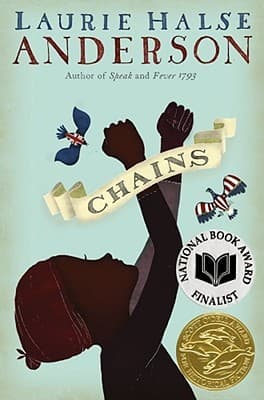
Synopsis
Covers the whole plot, including the ending.
- Difficulty
- Medium
- Pacing
- Moderate
- Mood
- Gritty, Historical, Resilient, Hopeful, Suspenseful
- Read it if
- You enjoy historical fiction set during the American Revolution, particularly from an underrepresented perspective, and stories about resilience and the fight for freedom.
- Skip it if
- You prefer lighthearted stories or are sensitive to themes of slavery, abuse, and intense injustice.
Chains Plot Summary
Covers the whole plot, including the ending.
The Promise and the Betrayal
In January 1776, thirteen-year-old Isabel and her younger sister, Ruth, are enslaved in Newport, Rhode Island. Their owner, Miss Mary Finch, dies, and her will states that Isabel and Ruth are to be freed. However, Miss Finch's nephew, Robert Finch, ignores the will and quickly sells the girls to the Locktons, a wealthy Loyalist couple from New York City. Isabel, fiercely protective of Ruth, tries to assert their freedom, but Robert threatens her. The Locktons, especially Madam Lockton, immediately show their cruel authority, making it clear that Isabel and Ruth will live as servants in a city on the brink of war.
Arrival in New York and Meeting Curzon
Isabel and Ruth travel by ship to New York City, a busy center for Loyalist and Patriot activity. When they arrive, they are put to work in the Locktons' large house. During an errand, Isabel meets Curzon, a slave belonging to the Patriot Bellingham family. Curzon, wearing a red hat, asks Isabel to spy for the Patriots. He explains that the Locktons are Loyalists with connections to British officers and that their house could be a good source of information. Isabel hesitates, as her main concern is Ruth's safety and their freedom, not politics.
The Locktons' Treasonous Activities
While serving Madam Lockton, Isabel overhears conversations and sees suspicious activities that confirm Curzon's suspicions about the Locktons' Loyalist ties. She discovers that Master Lockton is involved in a plan to assassinate General George Washington, who is expected in New York. Isabel realizes how serious this is and sees a chance to use this information for her and Ruth's freedom, so she decides to act. She slips away from the Locktons' house and reports the plot to Colonel Regan, a Patriot officer. He first dismisses her because she is a slave, but eventually takes her seriously.
The Failed Assassination Plot
Isabel's information about the assassination plot proves important. Colonel Regan and the Patriots raid a tavern where the conspirators, including Master Lockton, are meeting. The plot is stopped, and several men are arrested, though Master Lockton escapes immediate capture by pretending to be ill and hiding in a chest. Isabel, despite her vital help, receives no recognition or promise of freedom from the Patriots. Instead, she is sent back to the Locktons, who are angry and suspicious, though unaware of her direct involvement. This incident makes Isabel more cynical about the Patriots' promises.
Ruth's Seizure and Madam Lockton's Cruelty
Ruth, who has always been frail, has a severe epileptic seizure. Madam Lockton, who is superstitious and cruel, believes Ruth's illness is a sign of demonic possession. She becomes afraid of Ruth and treats her with extreme scorn and fear, believing Ruth is a danger to the household. Isabel, seeing her sister suffer and Madam Lockton's terrible reaction, feels helpless and angry. This event is a turning point, strengthening Isabel's hatred for Madam Lockton and her resolve to protect Ruth at all costs, even if it means defying her owners.
Ruth's 'Sale' and Isabel's Punishment
Driven by her fear and hatred, Madam Lockton decides to sell Ruth, sending her to a plantation in the Caribbean. She tells Isabel that Ruth has gone to live with a family in the country, but Isabel knows this is a lie, recognizing the signs of her sister being sold. Devastated and enraged by being separated from her only family, Isabel confronts Madam Lockton. Her defiance leads to a brutal punishment: Madam Lockton has Isabel publicly branded on the cheek with the letter 'I' for 'Insolence.' This extreme cruelty leaves Isabel physically and emotionally scarred, but also strengthens her resolve to escape.
The British Occupation of New York
The Revolutionary War grows more intense, and British forces launch a major attack on New York City. The Battle of Long Island results in a British victory, and the city falls under British occupation. The Locktons, as Loyalists, welcome the British, and their house becomes a center for British officers. Isabel, now bearing her brand scar, observes the changing city. The British promise freedom to any slave who deserts a Patriot master, which gives Isabel a glimmer of hope, though she remains enslaved to Loyalist owners. The city is chaotic, full of soldiers, prisoners, and refugees.
Isabel's Continued Spying and Help for Curzon
Despite her earlier disappointment with the Patriots, Isabel continues to gather information from the Locktons' house, passing it to Curzon, who now works for the Patriot cause. However, the British eventually capture Curzon and imprison him in the Provost Dungeon. Isabel, feeling a bond with him and remembering his earlier help, begins to secretly bring food and messages to Curzon and other Patriot prisoners, risking her own safety. She uses her errands for the Locktons as cover, showing her growing courage and cleverness in the face of danger.
The Fire and Isabel's Escape Plan
A large, uncontrolled fire breaks out in New York City, destroying much of the wooden city. The Locktons' house is spared, but the chaos of the fire gives Isabel an unexpected chance. Seeing the city in disarray and the authorities busy, Isabel realizes this is her opportunity to escape. She carefully plans her departure, gathering what few supplies she can. The fire represents the destructive nature of war, but also the possibility for new beginnings and the breaking of old structures, mirroring Isabel's desire to break free from her own chains.
The Escape with Curzon
Executing her plan during the fire's confusion, Isabel forges a pass using Master Lockton's signature and a blank paper. She goes to the Provost Dungeon, where she convinces the guards to release Curzon, claiming he is needed for a task by Master Lockton. With Curzon, weak and ill, in tow, Isabel takes a small boat, leaving the burning city behind. They row across the river, heading for Patriot-held New Jersey, determined to find Ruth and finally claim their freedom. The journey is dangerous, but Isabel's resolve is firm.
Chains Characters
Isabel Finch (later Gardener)
Protagonist
A thirteen-year-old enslaved girl fighting for her and her sister's freedom.
Isabel is intelligent, resilient, and fiercely protective of her younger sister, Ruth. Orphaned and betrayed, she navigates the treacherous landscape of the Revolutionary War in New York City, using her wits and courage to survive. Initially driven by the promise of freedom and then by the desire to protect Ruth, she develops a strong moral compass and a deep understanding of justice, even when others fail to uphold it. She carries the weight of her past, including the branding, but it only hardens her resolve.
Relationships: Ruth (Younger sister, her primary motivation and source of love.); Madam Lockton (Cruel, abusive owner and antagonist.); Curzon (Fellow enslaved person, confidant, and eventual partner in escape.); Colonel Regan (Patriot officer she tries to help, who ultimately betrays her trust.)
Ruth Finch
Supporting
Isabel's younger sister, vulnerable and prone to seizures.
Ruth is Isabel's younger sister, a quiet and often frightened child. She suffers from epilepsy, which in the 18th century is misunderstood as a sign of demonic possession. Her vulnerability and innocence make her a target for Madam Lockton's cruelty and are the primary motivation for all of Isabel's actions. Ruth represents the fragility of childhood and the devastating impact of slavery on the most defenseless. Her presence, even after her 'sale,' remains a powerful driving force for Isabel.
Relationships: Isabel (Older sister, protector, and caregiver.); Madam Lockton (Abuser who fears and sells her.)
Madam Anne Lockton
Antagonist
Isabel and Ruth's cruel, Loyalist mistress.
Madam Lockton is a wealthy, self-absorbed, and deeply cruel Loyalist woman from New York City. She embodies the worst aspects of the slave-owning class, viewing her enslaved people as property to be controlled and abused. Her vanity, paranoia, and superstition (especially concerning Ruth's epilepsy) fuel her brutality. She is the direct cause of much of Isabel's suffering, including the branding, and represents the oppressive system Isabel is fighting against. She is more concerned with social status and appearances than human decency.
Relationships: Isabel (Owner and abuser.); Ruth (Owner, fears and sells her.); Master Lockton (Husband, with whom she has a complex, often tense relationship.)
Master Elihu Lockton
Supporting
Isabel and Ruth's Loyalist master, involved in a plot against Washington.
Master Lockton is Madam Lockton's husband, a wealthy merchant and staunch Loyalist. He is less overtly cruel than his wife but is equally self-serving and complicit in the institution of slavery. He is involved in a secret plot to assassinate General Washington, highlighting his political allegiance and willingness to engage in treason. He is often portrayed as calculating and manipulative, frequently trying to control his wife and maintain his social standing. His character represents the political and economic forces at play during the war.
Relationships: Isabel (Owner, uses her labor.); Madam Lockton (Wife, often tries to assert dominance over her.)
Curzon Bellingham
Supporting
An enslaved Patriot boy who befriends and helps Isabel.
Curzon is an enslaved boy who belongs to a Patriot family, the Bellinghams. He is distinctive for his red hat and his forthright, intelligent demeanor. Curzon is an early ally to Isabel, encouraging her to spy for the Patriots and offering her guidance in the dangerous world of wartime New York. He is brave, loyal, and committed to the Patriot cause, believing that a Patriot victory will bring freedom for enslaved people. His capture and imprisonment highlight the dangers faced by all those caught in the conflict, regardless of their allegiances.
Relationships: Isabel (Friend, fellow enslaved person, and partner in escape.); Colonel Regan (Servant to his family, works for the Patriot cause.)
Colonel Regan
Supporting
A Patriot officer who initially dismisses Isabel's warnings.
Colonel Regan is a Patriot officer whom Isabel approaches with information about the plot against General Washington. Initially dismissive of Isabel because of her status as an enslaved girl, he eventually acknowledges her intelligence. However, he fails to uphold his implied promise of freedom for her service, sending her back to the Locktons. He represents the hypocrisy of some Patriots who fight for freedom for themselves but deny it to others. He later shows some remorse but is ultimately ineffective in helping Isabel.
Relationships: Isabel (Beneficiary of her intelligence, but ultimately fails her.)
Grandfather
Supporting
An old enslaved man who offers wisdom and hope to Isabel.
Grandfather is an elderly enslaved man who works on the docks and offers Isabel wisdom and guidance. He is a source of quiet strength and spiritual insight, reminding Isabel of the importance of remembering her true name and the inner strength she possesses. He tells her that the 'river' (the journey to freedom) is waiting for her and emphasizes that a person's true identity is not defined by their chains. He represents the resilience and enduring spirit of enslaved people and the power of oral tradition.
Relationships: Isabel (Mentor and source of spiritual guidance.)
Sarah
Supporting
A kind enslaved woman in the Lockton household.
Sarah is an enslaved cook in the Lockton household. She is a compassionate and practical woman who offers Isabel small acts of kindness and support, such as sharing food and advice. She represents the quiet solidarity that often existed among enslaved people, offering a maternal figure to Isabel in a harsh environment. Her presence provides a stark contrast to Madam Lockton's cruelty, showing that humanity can persist even in oppressive circumstances.
Relationships: Isabel (Fellow enslaved person, offers comfort and practical help.)
Chains Themes
The Nature of Freedom
The novel explores freedom not just as a physical state but also as an internal, spiritual condition. Isabel's journey shows that political freedom (for the Patriots) does not automatically mean personal freedom for enslaved people. The Patriots fight for their own liberty from Britain, yet many deny freedom to their own enslaved people. Isabel learns that true freedom means controlling one's destiny, even if it requires defying society and risking one's life. This is clear when she reclaims her name, 'Isabel Gardener,' and finally escapes, understanding that her spirit is not bound by slavery or the brand on her cheek.
“A name is a person's first possession. It's the only thing that can't be stolen.”
Identity and Self-Worth
Isabel's struggle for identity is central to the novel. Stripped of her name (called 'Sal Lockton' by her owners) and marked with a 'brand' of 'Insolence,' she fights to keep her sense of self. Grandfather's wisdom about names and the 'river' helps her understand that her worth is inherent, not defined by her enslavers. Her refusal to accept the name 'Sal' and her eventual reclaiming of 'Isabel Gardener' are strong acts of self-affirmation. The internal battle to preserve her dignity and humanity against dehumanizing treatment is a constant theme, ending in her courageous escape.
“The chains that held us were forged of fear and indifference, not iron.”
Hypocrisy and Betrayal
The novel shows the deep hypocrisy of a society fighting for liberty while also supporting slavery. The Patriots, who champion 'freedom' and 'rights,' repeatedly betray Isabel's trust and deny her the very liberty they seek for themselves. Colonel Regan's failure to grant Isabel freedom after she provides important information is a key example. The Locktons' betrayal of Miss Finch's will sets up Isabel's initial enslavement. These betrayals force Isabel to rely only on herself and to question the true motives of both Loyalists and Patriots, seeing that neither side is truly just in its treatment of enslaved people.
“Melancholy held me hostage, and the chains of my past clinked in the darkest corners of my mind.”
Resilience and Resistance
Isabel shows incredible resilience when faced with constant adversity. Despite abuse, separation from her sister, and the constant threat of violence, she never gives up hope for freedom. Her acts of resistance range from subtle defiance (like refusing the name 'Sal') to open rebellion (spying, attempting to escape, freeing Curzon). Her inner strength allows her to endure the branding and the emotional pain of Ruth's 'sale.' The novel shows how enslaved people found various ways to resist oppression, both openly and by preserving their inner spirit, ultimately leading to Isabel's successful escape.
“My name is Isabel. I am not Sal. I am Isabel.”
Plot Devices & Literary Techniques
The Branding Iron
A physical mark of Isabel's enslavement and defiance.
The branding iron, used to mark Isabel's cheek with an 'I' for 'Insolence,' serves as a powerful symbol of dehumanization, ownership, and the brutality of slavery. It is a physical manifestation of Madam Lockton's cruelty and the system's attempt to strip Isabel of her identity. However, Isabel transforms this mark of shame into a symbol of her resilience and defiance. The brand becomes a constant reminder of what she is fighting against, fueling her resolve for freedom rather than breaking her spirit.
The River
A recurring metaphor for freedom, passage, and spiritual journey.
The river (specifically the water surrounding Manhattan) functions as a potent metaphor throughout the novel. Grandfather tells Isabel that 'the river is waiting,' signifying a path to freedom and a spiritual journey beyond the confines of slavery. It represents the boundary between oppression and potential liberty, a physical barrier that must be crossed to reach a new life. Isabel's eventual escape by boat across the river is the literal fulfillment of this metaphor, symbolizing her passage from bondage to self-liberation and the start of her quest to find Ruth.
Miss Finch's Will
The initial catalyst for Isabel's journey and a symbol of broken promises.
Miss Finch's will, which explicitly grants Isabel and Ruth their freedom, is the inciting incident of the novel. Its betrayal by Robert Finch immediately establishes the injustice and arbitrary nature of slavery, regardless of legal documents. The will represents a broken promise and highlights how the legal system often failed to protect enslaved people. It sets Isabel's core motivation for seeking freedom and underscores the theme of betrayal, as the very document meant to free her becomes the first instance of her rights being denied.
The Red Hat
A distinctive identifier for Curzon and a symbol of Patriot allegiance.
Curzon's red hat serves as a simple yet effective plot device for identification and symbolism. It makes him recognizable to Isabel and to the reader, marking him as a distinct character. More importantly, the red hat initially signals his allegiance to the Patriot cause, as it's a color associated with the rebel soldiers (though often confused with British redcoats). It becomes a subtle symbol of the choices and risks taken during wartime, and later, even in prison, it signifies his enduring spirit and connection to the fight for liberty, both political and personal.
Chains Quotes
“My name is Isabel, not girl.”
“A tiny rebellion sparked in my chest. If I was going to be a slave, I would be a spy.”
“The world was a large cage, and we were all trapped inside.”
“Curzon had said that a person’s name was like a tree, with roots that grew deep and branches that reached for the sky. He said that my name was a strong tree, and that it would not be easily cut down.”
“Melancholy held me hostage, and the only chains I felt were the ones around my heart.”
“The library was a dangerous place. It was a place where people could think.”
“A person cannot steal what is not theirs to begin with.”
“Fire and water, earth and air. We are all made of the same stuff. We are all connected.”
“My body was a cage, but my mind was free.”
“Words are like seeds. They grow into thoughts, and thoughts grow into actions.”
“Hope is a powerful thing. It can make you do things you never thought possible.”
“I was a ghost, a shadow, a whisper in the wind. But I was still here. And I would not be forgotten.”
“No matter how many chains they put on my body, they could not chain my spirit.”
“The truth has a way of coming out, no matter how hard you try to bury it.”
Quiz
10 questions on the plot and the characters. Each answer comes with a short explanation.
Question 1
What is the name of Isabel's younger sister, whom she tries to protect throughout the novel?
- Angelica
- Ruth
- Sarah
- Hannah
Show answer
B. Ruth Isabel's younger sister is named Ruth, and Isabel is fiercely protective of her, especially after their enslavement by the Locktons.
Question 2
Upon the death of their original owner, what was supposed to happen to Isabel and Ruth according to their former master's will?
- They were to be sold to a new owner in Boston.
- They were to be granted their freedom.
- They were to be sent to live with a distant relative.
- They were to become indentured servants for seven years.
Show answer
B. They were to be granted their freedom. Isabel and Ruth were promised their freedom in their original owner's will, but this promise was cruelly ignored by Robert Finch, who instead sold them to the Locktons.
Question 3
Which city do the Locktons take Isabel and Ruth to, which serves as the primary setting for most of the novel?
- Philadelphia
- Boston
- New York City
- Williamsburg
Show answer
C. New York City The Locktons move Isabel and Ruth to New York City, which is a bustling hub during the Revolutionary War and the main setting for the story.
Question 4
What is the name of the slave boy who encourages Isabel to spy for the Patriots?
- Thomas
- Caleb
- Curzon
- Benjamin
Show answer
C. Curzon Curzon, a slave wearing a distinctive red hat, is the one who first approaches Isabel and suggests she spy on the Loyalist Locktons for the Patriot cause.
Question 5
Why does Madam Lockton eventually sell Ruth?
- Ruth tried to run away from the Locktons.
- Madam Lockton believed Ruth was possessed by a demon due to her seizures.
- The Locktons needed money to pay for their passage back to England.
- Ruth accidentally broke a valuable family heirloom.
Show answer
B. Madam Lockton believed Ruth was possessed by a demon due to her seizures. Madam Lockton, ignorant and superstitious, interprets Ruth's epileptic seizures as a sign of being possessed by a demon and sells her out of fear and disgust.
Question 6
What does Isabel do with the seeds from the common milkweed plant that she carries with her?
- She uses them to trade for food on the black market.
- She plants them in a small garden outside the Lockton house.
- She keeps them as a reminder of her mother and a symbol of hope for freedom.
- She grinds them into a powder to use as a medicinal remedy.
Show answer
C. She keeps them as a reminder of her mother and a symbol of hope for freedom. The milkweed seeds are a cherished possession from her mother, symbolizing endurance, resilience, and the hope that Isabel will one day find her freedom, just as the seeds will eventually fly free.
Question 7
What physical mark does Madam Lockton inflict upon Isabel as punishment for seeking help from the Patriots?
- She cuts off Isabel's hair.
- She brands Isabel's cheek with the letter 'I' for 'insolence'.
- She breaks Isabel's arm.
- She forces Isabel to wear a heavy iron collar.
Show answer
B. She brands Isabel's cheek with the letter 'I' for 'insolence'. As a brutal punishment for trying to seek freedom by reporting the Locktons' Loyalist plot, Madam Lockton has Isabel branded on the cheek with the letter 'I'.
Question 8
How does Isabel ultimately manage to escape from New York City with Curzon?
- She hides them both on a British supply ship leaving the harbor.
- She disguises herself as a British soldier and Curzon as her prisoner.
- She uses a stolen pass and rows them across the river in a small boat.
- They sneak out through a secret tunnel under the city walls.
Show answer
C. She uses a stolen pass and rows them across the river in a small boat. Isabel takes a stolen pass from Colonel Regan, frees Curzon from prison, and then rows them across the freezing river in a small boat, heading for freedom.
Question 9
What is the significance of the name 'Sal Lockton' that Isabel sometimes uses?
- It is the name her mother gave her before she was enslaved.
- It is the name Madam Lockton forces upon her, symbolizing her loss of identity and freedom.
- It is a nickname given to her by Curzon as a term of endearment.
- It is the name she uses when spying to protect her true identity.
Show answer
B. It is the name Madam Lockton forces upon her, symbolizing her loss of identity and freedom. Madam Lockton insists on calling Isabel 'Sal' as a way to strip her of her personal identity and reinforce her status as property, a common practice among slave owners to dehumanize enslaved people.
Question 10
What is the primary internal conflict Isabel faces throughout the novel regarding her loyalties?
- Whether to support the British or the French in the wider war.
- Whether to prioritize her own safety or to help other enslaved people.
- Whether to remain loyal to her abusive owners or seek freedom with the Patriots, who themselves own slaves.
- Whether to stay in New York or travel to a different colony.
Show answer
C. Whether to remain loyal to her abusive owners or seek freedom with the Patriots, who themselves own slaves. Isabel struggles with who to trust; the Loyalists are her direct enslavers, but the Patriots, despite fighting for liberty, often still uphold slavery, making her quest for personal freedom a complex and morally ambiguous journey.
Chains FAQ
What is the central conflict Isabel faces throughout the novel?
Isabel's central conflict is her desperate struggle for freedom for herself and her sister, Ruth, after their enslaver, Miss Mary Finch, dies. Despite being promised manumission, they are illegally sold to the cruel Lockton family, forcing Isabel to navigate the treacherous landscape of the Revolutionary War while constantly seeking an escape from bondage.
Who are the Locktons, and why are they significant antagonists?
The Locktons, Madam and Master Lockton, are Isabel and Ruth's new enslavers in New York City. They are significant antagonists because of their extreme cruelty, exemplified by Madam Lockton's brutal branding of Isabel, and their Loyalist sympathies, which place Isabel in a dangerous position when she begins spying for the Patriots.
How does Curzon influence Isabel's journey?
Curzon, a slave working for the Patriot Colonel Regan, introduces Isabel to the possibility of gaining freedom by spying for the American cause. He acts as her initial contact and guide within the Patriot network, planting the seed of resistance and offering a glimmer of hope that ties her loyalty to the promise of liberty.
What 'unthinkable event' happens to Ruth, and how does it impact Isabel?
The 'unthinkable event' is Madam Lockton's decision to sell Ruth, claiming she is 'simple-minded' and a burden, after brutally beating Isabel. This act shatters Isabel's spirit and her primary reason for enduring, shifting her sole focus from protecting Ruth to seeking vengeance and her own freedom at any cost.
What role does the setting of New York City during the Revolutionary War play in the narrative?
New York City during the Revolutionary War serves as a dynamic and dangerous backdrop, reflecting Isabel's own internal turmoil. The city's shifting control between Patriots and Loyalists, its crowded streets, and the constant threat of violence mirror Isabel's precarious position and her desperate search for a safe haven.
What is the significance of the scar Isabel receives from Madam Lockton?
The scar, an 'I' branded on Isabel's cheek by Madam Lockton, is a symbol of ownership, dehumanization, and Madam's cruelty. However, Isabel reclaims its meaning, viewing it as a mark of her identity and resilience, ultimately signifying 'Isabel' and her fight for individuality rather than 'Insolence' as Madam intended.
How do Isabel's conversations with Grandfather, the old slave at the Tea Water Pump, provide subtle guidance?
Grandfather offers Isabel subtle but profound guidance through his parables and wisdom, particularly his advice about choosing a 'path' and finding the 'river' of her own destiny. He helps her understand the importance of internal freedom and the power of her own will, even in dire circumstances.
What is the implied fate of the Locktons at the end of the book, and how is it hinted at?
The implied fate of the Locktons is their eventual downfall and loss of wealth, hinted at by the British occupation leading to the confiscation of Loyalist property and the general chaos of war. While not explicitly stated, their position becomes increasingly precarious as the war progresses, suggesting their ultimate ruin.
How does Isabel's internal monologue, particularly her 'ghosts' and 'chains,' evolve throughout the story?
Initially, Isabel's internal 'chains' are the physical bonds of slavery and the emotional burden of protecting Ruth. Her 'ghosts' are memories of her parents and Miss Mary Finch. As the story progresses, she learns to shed the mental chains of obedience and fear, transforming her internal landscape to one of defiance and self-determination.
Discuss the psychological impact of betrayal on Isabel, specifically regarding her trust in the Patriots.
Isabel experiences profound psychological impact from the Patriots' betrayal when they fail to honor their promise of freedom after she provides crucial intelligence. This betrayal deepens her cynicism, making her realize that neither side of the war truly cares about her liberty, forcing her to rely solely on herself.
How does the loss of Ruth affect Isabel's identity and motivations?
The loss of Ruth profoundly alters Isabel's identity, shifting her from a caregiver and protector to an individual driven by personal freedom and a desire for justice. Her motivations become less about collective survival and more about her own emancipation, fueling her courage and resourcefulness.
How does Isabel's understanding of 'freedom' change from the beginning to the end of the novel?
At the beginning, Isabel equates freedom with legal manumission papers. By the end, her understanding evolves to encompass internal liberation—the freedom of spirit, the ability to make her own choices, and the power to define herself, regardless of official documents. She realizes true freedom is an internal state as much as an external one.
Is Isabel's decision to escape with Curzon primarily an act of altruism or self-preservation, and why?
Isabel's decision to escape with Curzon is primarily an act of self-preservation, driven by her immediate need to flee the Locktons and the dangers of New York. While she cares for Curzon, her core motivation is securing her own liberty, and bringing him along is a pragmatic choice that aligns with her escape plan.
How does the author use the motif of 'chains' metaphorically throughout the book, beyond physical bondage?
Beyond literal shackles, the author uses 'chains' to represent the psychological burdens of fear, obedience, and societal expectations that restrict Isabel. These metaphorical chains include the Locktons' control, the Patriots' unfulfilled promises, and Isabel's own internal struggles, which she actively works to break throughout her journey.
To what extent is Madam Lockton a product of her time, and to what extent is her cruelty uniquely her own?
Madam Lockton's ownership of slaves and her expectations of their subservience are products of the era's social norms. However, her extreme sadism, relish in inflicting pain, and psychological torment of Isabel and Ruth, such as the branding and selling of Ruth, suggest a unique, deeply personal cruelty that transcends typical societal attitudes.
What does the ending, with Isabel rowing towards unknown territory, signify about her future?
The ending signifies Isabel's embrace of an uncertain but self-determined future, free from the direct control of others. It suggests that her journey for complete freedom is ongoing, but she now possesses the agency and resilience to navigate it, representing hope and the continuous struggle for liberty.
How do Isabel's interactions with Lady Seymour differ from her experiences with other white characters?
Lady Seymour offers Isabel a rare glimpse of kindness and genuine concern, providing food, shelter, and even an attempt to buy her freedom. Unlike the Locktons or the indifferent Patriots, Lady Seymour treats Isabel with a degree of humanity, making her a complex, morally ambiguous figure who challenges Isabel's perception of white society.
What is the significance of Isabel changing her name to 'Isabel Gardner' at the end?
Changing her name to 'Isabel Gardner' is a powerful act of self-reclamation and a declaration of her new identity as a free individual. 'Gardner' symbolizes growth, nurturing, and the possibility of cultivating her own future, shedding the identity imposed by her enslavers and embracing her chosen self.
About the author

Laurie Halse Anderson is an American author known for her impactful young adult fiction. Her notable works include "Speak," which addresses themes of trauma and recovery, "Wintergirls," exploring issues of eating disorders, and "Chains," a historical novel set during the American Revolution. Anderson's writing often tackles difficult subjects and has received significant recognition in the literary community.
Similar books
- Fever 1793
Laurie Halse Anderson
3.9 (106k) average on GoodreadsChildren'sAnother historical fiction by the same author, focusing on a young girl's struggle for survival during a historical crisis.
- Copper Sun
Sharon M. Draper
4.3 (13k) average on GoodreadsHistorical FictionExplores the harrowing journey and resilience of an enslaved African girl in historical America.
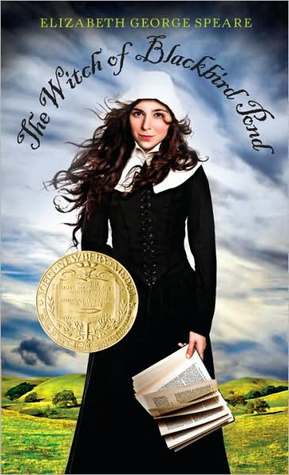
- The Witch of Blackbird Pond
Elizabeth George Speare
4.0 (135k) average on GoodreadsChildren'sBoth books feature young women navigating challenging colonial environments. However, Speare's novel is set earlier (17th century Puritan New England) and focuses on themes of social ostracization and religious intolerance. Chains, in contrast, directly confronts the institution of slavery and the immediate impact of the Revolutionary War on enslaved populations, a dimension not explored in The Witch of Blackbird Pond.
- Harry Potter and the Sorcerer's Stone
J.K. Rowling
4.5 (7M) average on GoodreadsFantasyRescued from a miserable life under the stairs, an orphaned boy discovers he's a wizard destined for a magical school, where he uncovers a dangerous secret tied to the dark wizard who murdered his parents.
- The Hobbit, or There and Back Again
J.R.R. Tolkien
4.3 (2.9M) average on GoodreadsFantasyA comfort-loving hobbit named Bilbo Baggins is whisked away by a mischievous wizard and a band of dwarves on an unexpected journey to reclaim stolen treasure from a fearsome dragon, discovering courage and a magical ring along the way.
- Harry Potter and the Goblet of Fire
J.K. Rowling
4.6 (2.6M) average on GoodreadsFantasyA bewildered Harry Potter, underage and thrust into a deadly Triwizard Tournament, must brave dragons, mermaids, and a resurgent dark magic to survive a year that will forever alter the wizarding world.





Enjoyed the summary?
A summary gives you the shape of the book. The book itself has the detail, the examples and the voice.
Find Chains on AmazonAs an Amazon Associate, BookBrief earns from qualifying purchases. How we're funded