
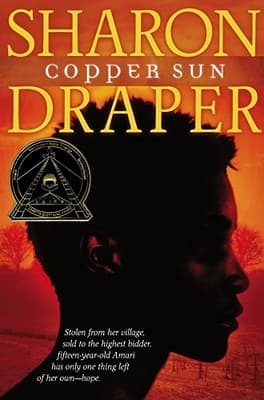
Synopsis
Covers the whole plot, including the ending.
- Difficulty
- Medium
- Pacing
- Moderate
- Mood
- Heartbreaking, Resilient, Hopeful, Historical
- Read it if
- You're interested in a powerful, unflinching, and ultimately hopeful story of survival and resilience during slavery, told from a young protagonist's perspective.
- Skip it if
- You prefer to avoid graphic depictions of violence, sexual assault, and the brutal realities of slavery.
Copper Sun Plot Summary
Covers the whole plot, including the ending.
The Attack on Ziavi Village
Fifteen-year-old Amari lives a content life in the village of Ziavi, Ghana, with her family and her beloved fiancé, Besa. Her days are filled with traditional tasks, storytelling, and the anticipation of her upcoming marriage. One afternoon, while preparing for a celebration, the village is suddenly attacked by pale-skinned men, accompanied by Ashanti warriors, who set fire to homes and brutally murder the villagers. Amari witnesses her parents' horrific deaths and is captured, along with Besa and her younger brother, Kwasi. She is forced on a death march towards the coast, enduring starvation, thirst, and the constant threat of violence, as her once idyllic world collapses around her.
The Middle Passage and Arrival in Sullivan's Island
Amari, along with hundreds of other captured Africans, is forced onto a slave ship, a horrifying vessel they call 'the death boat.' The conditions below deck are unspeakable: overcrowding, disease, stench, and the constant cries of despair. She experiences the trauma of the Middle Passage, witnessing death, starvation, and the brutal treatment of her fellow captives. Besa, her fiancé, is on the same ship but they are kept apart. Upon arrival at Sullivan's Island, South Carolina, the survivors are 'cleaned' and prepared for auction, a humiliating process that strips them of their remaining dignity before being paraded before potential buyers.
The Auction and Purchase by Clay
At the slave auction in Charles Town, Amari is displayed like an animal. She is poked, prodded, and inspected. She sees Besa sold to a different owner, their last connection severed. Amari is ultimately purchased by a wealthy plantation owner, Mr. Percival Derby, for his seventeen-year-old son, Clay, as a birthday present. Clay immediately asserts his ownership with a cruel kiss. Amari is then transported to the Derby plantation, 'Derbytown,' a vast and imposing estate where she is introduced to the harsh realities of plantation life and the brutal hierarchy that governs it.
Life at Derbytown and Meeting Polly
At Derbytown, Amari is given the name 'Myna' by Clay and assigned to work in the kitchen under Teenie, an older enslaved woman, and her young son, Tidbit. She quickly learns the strict rules and the severe punishments for disobedience. Here, she meets Polly, a fourteen-year-old white indentured servant who works as a housemaid and teaches Amari English. Polly, initially prejudiced, slowly begins to see Amari as a person rather than property. Amari also experiences Clay's escalating cruelty, including sexual assaults, and witnesses the harsh treatment of the field slaves, including the brutal whipping of Noah, Teenie's husband.
Isabelle's Arrival and Mr. Derby's Demands
Mr. Derby brings his new, much younger wife, Isabelle, to Derbytown. Isabelle is beautiful but equally cruel and self-centered. She immediately takes a dislike to Amari and Polly, often finding ways to belittle and punish them. Mr. Derby, obsessed with having a male heir, pressures Isabelle. Amari's life becomes increasingly difficult, caught between Clay's demands, Isabelle's jealousy, and Mr. Derby's tyrannical control. Teenie and Tidbit offer Amari some comfort and guidance, teaching her the ways of survival on the plantation and sharing stories of resistance and hope.
The Tragic Birth and Clay's Cruelty
Isabelle gives birth to a mixed-race baby, revealing her affair with Noah, Teenie's husband. Enraged, Mr. Derby brutally murders Noah in front of everyone. He then demands that Clay kill the infant by smashing its head against a tree. Clay, despite his usual cruelty, hesitates. When he refuses, Mr. Derby orders Amari to do it. Amari, horrified, refuses, which enrages Mr. Derby further. In a fit of uncontrolled rage, Mr. Derby then orders Clay to kill Amari, Polly, and Tidbit to cover up the scandal. Clay, seemingly wanting to spare them, instead gives them a gun, some supplies, and a head start, instructing them to escape.
The Escape from Derbytown
Following Clay's unexpected decision, Amari, Polly, and Tidbit flee Derbytown under the cover of night. Their destination is Fort Mose, a Spanish settlement in Florida known as a sanctuary for escaped slaves. The journey is immediately fraught with danger and uncertainty. They must navigate the wilderness, evade slave catchers, and ration their meager supplies. Polly, initially resentful of Tidbit, begins to develop a maternal bond with the young boy, while Amari draws upon her inner strength and knowledge of nature, a legacy from her African upbringing, to guide them through the treacherous landscape.
Challenges on the Road to Fort Mose
As they travel south, the trio encounters various challenges. They face hunger, thirst, and the constant threat of wild animals. They meet a kind old woman who offers them shelter and food, but also encounter dangerous individuals, including a group of white men who attempt to capture them. They learn to trust their instincts and rely on each other. Polly's initial prejudice against Amari and Tidbit slowly dissolves, replaced by a deep bond of friendship and mutual dependence. Amari's resilience and Polly's resourcefulness become crucial for their survival as they push forward towards their elusive freedom.
Arrival at Fort Mose and New Beginnings
After weeks of arduous travel, Amari, Polly, and Tidbit finally reach Fort Mose, a small, fortified settlement near St. Augustine, Florida. They are greeted by the community of free Africans, Native Americans, and other escaped individuals. Here, they find a sense of belonging and safety they have never known. Amari begins to heal from her traumas, finding solace in the community and the promise of a life free from the brutalities of slavery. Polly, too, finds her place, realizing that her indentured status is a form of bondage and embracing a future where she can choose her own path. Tidbit finds a new family.
Building a Future in Fort Mose
In Fort Mose, Amari, Polly, and Tidbit begin to build new lives. Amari finds a respected place in the community, sharing her knowledge and skills. She slowly starts to envision a future where she can truly be free and perhaps even find love again. Polly, now free from her indenture, becomes an integral part of the Fort Mose community, contributing her literacy and organizational skills. Tidbit thrives in the safe environment, surrounded by caring adults. The community at Fort Mose represents not just physical freedom, but also the reclamation of dignity, identity, and the hope for a self-determined future, a stark contrast to the horrors they left behind.
Principal Figures
Amari
Protagonist
A fifteen-year-old Ashanti girl stolen from her home and forced into slavery.
Amari is a resilient and courageous fifteen-year-old girl from the Ashanti tribe in Ghana. Initially innocent and full of life, her world is shattered when her village is attacked, and she is captured and enslaved. Despite enduring unimaginable horrors—the Middle Passage, brutal treatment, and sexual assault—Amari maintains an incredible inner strength and a fierce will to survive. She is observant, learns quickly, and adapts to her new circumstances while never forgetting her heritage. Her journey is one of profound loss, but also of growing resilience, self-discovery, and an unwavering pursuit of freedom.
Relationships: Besa (Fiancé, separated by slavery); Polly (Close friend and fellow escapee); Tidbit (Adopted younger brother figure, fellow escapee); Teenie (Mentor and maternal figure on the plantation); Clay Derby (Cruel owner's son and abuser)
Polly
Supporting
A fourteen-year-old white indentured servant who befriends Amari.
Polly is a fourteen-year-old white girl from London, indentured to the Derby family for fourteen years. Initially prejudiced and resentful of her own servitude, she gradually sheds her biases as she witnesses Amari's suffering and experiences the harsh realities of plantation life alongside her. Polly is intelligent, literate, and resourceful, making her an invaluable companion on the escape journey. Her initial cynicism gives way to empathy and a deep loyalty to Amari and Tidbit. She represents the blurring of lines between different forms of bondage and the potential for human connection across racial divides.
Relationships: Amari (Close friend and fellow escapee); Tidbit (Young boy she cares for, fellow escapee); Mr. Derby (Harsh master); Isabelle Derby (Cruel mistress)
Tidbit
Supporting
A five-year-old enslaved boy, Teenie's son, who escapes with Amari and Polly.
Tidbit is Teenie's five-year-old son, a cheerful and resilient boy who endures the horrors of slavery with a remarkable spirit. He forms a close bond with Amari and Polly, becoming like a younger brother to them. Despite his young age, he understands the dangers of their situation and exhibits courage during their escape. His innocence highlights the profound injustice of slavery, as even children are subjected to its brutalities. Tidbit's presence provides a source of hope and motivation for Amari and Polly during their arduous journey, and his survival symbolizes the possibility of a better future.
Relationships: Teenie (Mother); Noah (Father); Amari (Older sister figure, fellow escapee); Polly (Older sister figure, fellow escapee)
Clay Derby
Antagonist
The cruel, entitled son of Mr. Derby, who 'owns' Amari.
Clay Derby is the seventeen-year-old son of Percival Derby, and Amari's 'owner.' He is depicted as spoiled, entitled, and profoundly cruel, reflecting the dehumanizing effects of the slave system on slaveholders. He frequently abuses Amari, both physically and sexually, and delights in asserting his power. However, he shows a flicker of humanity when ordered to kill Isabelle's baby and later when he allows Amari, Polly, and Tidbit to escape, suggesting a complex character, though his actions are primarily driven by self-preservation and a twisted sense of familial loyalty rather than genuine compassion.
Relationships: Mr. Derby (Abusive father); Amari (Enslaved property, victim of his abuse); Isabelle Derby (Stepmother)
Mr. Percival Derby
Antagonist
The wealthy, brutal owner of Derbytown plantation.
Mr. Percival Derby is the tyrannical and utterly ruthless owner of Derbytown plantation. He embodies the absolute power and moral corruption of the slaveholding class. Driven by a desire for wealth, status, and a male heir, he treats his enslaved people and even his own family members as property to be controlled and exploited. His cruelty is extreme, culminating in the murder of Noah and the order to kill Isabelle's baby, Amari, Polly, and Tidbit. He represents the systemic evil of slavery and its devastating impact on both the enslaved and the enslavers.
Relationships: Clay Derby (Son, whom he manipulates and abuses); Isabelle Derby (Young wife, whom he controls); Amari (Enslaved property, victim of his cruelty); Teenie (Enslaved cook); Noah (Enslaved field hand, murdered by him)
Teenie
Supporting
An older enslaved woman and cook at Derbytown, mother to Tidbit.
Teenie is an older enslaved woman who works as a cook in the Derby household. She is a pragmatic and resilient survivor, hardened by years of servitude but still possessing a deep well of compassion. She acts as a surrogate mother and mentor to Amari, teaching her about plantation life, survival strategies, and the importance of holding onto hope and one's heritage. Her love for her son, Tidbit, is fierce, and she endures immense pain, including the murder of her husband, Noah, to protect him. Teenie represents the strength and wisdom passed down through generations of enslaved people.
Relationships: Tidbit (Son); Noah (Husband, murdered by Mr. Derby); Amari (Mentee, surrogate daughter); Polly (Fellow worker, friend)
Besa
Mentioned
Amari's fiancé from her village, also captured and enslaved.
Besa is Amari's fiancé from the village of Ziavi. He is depicted as handsome and kind. He is captured alongside Amari during the attack on their village and endures the Middle Passage with her, providing a brief, fleeting comfort. However, they are separated at the slave auction, and Amari never sees him again. Besa represents Amari's lost past, her stolen innocence, and the profound personal cost of the transatlantic slave trade. His memory serves as a painful reminder of what Amari lost but also fuels her desire for freedom and a life she can call her own.
Relationships: Amari (Fiancé)
Isabelle Derby
Supporting
Mr. Derby's young, cruel, and self-centered second wife.
Isabelle Derby is Mr. Derby's young, beautiful, but equally cruel and self-absorbed second wife. She is initially presented as a figure of high society, but her true nature is revealed through her petty vindictiveness towards Amari and Polly. Her affair with Noah and the subsequent birth of their mixed-race child trigger the climactic events that lead to the trio's escape. Isabelle represents the hypocrisy and moral decay within the slaveholding elite, as well as the societal pressures and constraints placed upon white women within that system.
Relationships: Mr. Derby (Husband); Clay Derby (Stepson); Noah (Lover); Amari (Enslaved servant, object of her jealousy)
Noah
Supporting
Teenie's husband and Tidbit's father, a field slave at Derbytown.
Noah is Teenie's husband and Tidbit's father, a strong and quiet field slave at Derbytown. He is a loving father and husband, deeply connected to his family. His affair with Isabelle Derby, though brief, results in a child and becomes the catalyst for the novel's most brutal act of violence. Noah's subsequent murder by Mr. Derby is a stark illustration of the absolute power slave owners wielded over the lives and bodies of enslaved people, and the devastating consequences for those who dared to defy the rigid racial and social codes of the time.
Relationships: Teenie (Wife); Tidbit (Son); Isabelle Derby (Lover)
Themes & Insights
Loss of Innocence and Identity
Amari's journey is a profound exploration of lost innocence and the struggle to maintain identity in the face of dehumanization. Her vibrant African heritage is stripped away through capture, the Middle Passage, and the renaming upon arrival in America. She must constantly fight to remember her true name, her family, and her traditions. The book vividly portrays how slavery attempts to erase individuality and culture, forcing Amari to forge a new identity rooted in resilience and the hope for freedom, rather than passively accepting the one imposed upon her.
“My name is Amari,' she whispered to the darkness, a tiny flame of defiance against the vast, cold night. 'I am from Ziavi.”
The Brutality and Dehumanization of Slavery
The novel unflinchingly depicts the horrific realities of the transatlantic slave trade and plantation life. From the violent capture and death march, to the unspeakable conditions of the slave ship, and the constant physical and psychological abuse on the Derby plantation, Draper spares no detail. The institutionalized dehumanization is evident in the auctions, the renaming of enslaved people, the casual violence, and the forced sexual exploitation. This theme emphasizes the profound cruelty and injustice of the system, highlighting its devastating impact on human dignity and life.
“They were not people to him. They were property. He owned them, body and soul, and he could do whatever he wanted with them.”
Resilience and the Will to Survive
Despite enduring unimaginable suffering, Amari, Polly, and Tidbit demonstrate remarkable resilience and an unwavering will to survive. Amari draws upon her inner strength and the lessons from her African upbringing, while Polly finds unexpected courage and resourcefulness. Their arduous journey to Fort Mose is a testament to the human spirit's capacity to endure hardship, find hope in despair, and fight for a better future. This theme is central to the narrative, showing that even in the darkest circumstances, the desire for life and freedom can persist.
“Hope was a small, fragile thing, but it was all Amari had left. And she held onto it with all her might.”
Friendship and Unexpected Alliances
A key theme is the formation of unlikely friendships and alliances across racial and social divides. The bond between Amari, a captured African, and Polly, a white indentured servant, is initially fraught with prejudice but evolves into a deep, loyal friendship. Their shared experiences of oppression, though different, forge a powerful connection. The inclusion of Tidbit solidifies their unit, demonstrating how shared suffering can transcend societal barriers and lead to profound human connection and mutual support, which is essential for their survival and escape.
“We got each other,' Polly said, her voice soft. 'And that's more than some folks got.”
The Pursuit of Freedom and Self-Determination
The ultimate goal for Amari and her companions is freedom—not just physical liberation from chains, but the freedom to define their own lives and futures. Fort Mose represents this elusive dream, a place where they can reclaim their dignity, build a community, and live without the constant threat of violence and ownership. The journey itself is an act of self-determination, a deliberate choice to risk everything for the chance at a life on their own terms, highlighting the fundamental human right to liberty and autonomy.
“Freedom. It was a word that hummed in her blood, a song whispered by the wind.”
Plot Devices & Literary Techniques
First-Person Perspective (Amari's)
Allows intimate access to Amari's thoughts and experiences.
The story is primarily told from Amari's first-person perspective, immersing the reader directly into her experiences, emotions, and suffering. This narrative choice creates a powerful sense of empathy and immediacy, allowing the reader to witness the horrors of slavery through the eyes of a young girl who experiences it firsthand. It highlights her internal struggle to maintain her identity and hope, making her journey of survival and self-discovery deeply personal and impactful.
The Journey as Metaphor
The physical journey mirrors the characters' internal transformations.
The physical journey from Africa to America, and then the escape to Fort Mose, serves as a powerful metaphor for Amari's (and Polly's) internal transformation. Each stage of the journey represents a different trial and a step in her development, from the loss of innocence during the capture, to the resilience forged during the Middle Passage, and finally to the hope and self-discovery found on the path to freedom. The arduous physical journey parallels the emotional and psychological journey of reclaiming one's humanity.
Symbolism of Names
Names represent identity, ownership, and resistance.
The changing of names holds significant symbolic weight. Amari's original name connects her to her heritage and identity. Being given the name 'Myna' by Clay is an act of dehumanization and ownership, an attempt to strip her of her past. Her internal struggle to remember and reclaim 'Amari' symbolizes her resistance against the erasure of her self. Conversely, Polly's full name, 'Polly Robert,' signifies her indentured status, marking her as property until she, too, reclaims her autonomy.
The 'Copper Sun' Motif
A recurring image symbolizing the passage of time, enduring beauty, and hope.
The image of the 'copper sun' appears periodically throughout the narrative, particularly when Amari reflects on her past in Africa or looks towards the future. It symbolizes the relentless passage of time, the beauty of her lost homeland, and a persistent, albeit sometimes faint, glimmer of hope. Even in the darkest moments, the memory of the sun (or the promise of a new dawn) represents a connection to life, warmth, and the possibility of a brighter future beyond the present suffering.
Copper Sun Quotes
“I will not cry. I will not cry. I will not cry. I will not cry.”
“The ocean was a giant beast, a hungry mouth that swallowed ships whole.”
“Hope was a tiny spark, easily extinguished, but it was there, somewhere.”
“They took everything from me. Everything. But they cannot take my mind. They cannot take my spirit.”
“A human being should not have to beg for the right to live.”
“The chains were not just on their bodies, but on their souls.”
“He said I was a good investment. Like a horse, or a cow. Not a person.”
“Sometimes, silence was the loudest scream.”
“Freedom was not a gift to be given, but a right to be taken.”
“The past was a heavy blanket, suffocating them all.”
“Love was a dangerous thing in this new world, a weakness that could be exploited.”
“The color of their skin did not determine the content of their hearts.”
“Every step was a prayer. Every breath was a wish.”
“To be truly free, one had to free their mind first.”
Quiz
10 questions on the plot and the characters. Each answer comes with a short explanation.
Question 1
What is Amari's home village called before she is captured?
- Ashanti
- Edo
- Ewe
- Yoruba
Show answer
C. Ewe Amari's village is identified as Ewe, a place where she lived a peaceful life before the slave traders arrived.
Question 2
Who is the plantation owner who buys Amari in the Carolinas?
- Mr. Derby
- Mr. Clay
- Mr. Sullivan
- Mr. Beaumont
Show answer
A. Mr. Derby Amari is bought by Mr. Derby, the cruel plantation owner, and given to his son, Clay, as a birthday present.
Question 3
What is the name of the indentured servant who escapes with Amari?
- Fiona
- Polly
- Lydia
- Sarah
Show answer
B. Polly Polly is the young white indentured servant who, despite initial prejudices, forms a bond with Amari and escapes with her.
Question 4
What significant event provides Amari with the opportunity to escape from the plantation?
- A fire breaks out in the main house.
- Mr. Derby's son, Clay, is killed.
- Mrs. Derby's baby is born, leading to a distraction and chaos.
- A slave uprising occurs among the other enslaved people.
Show answer
C. Mrs. Derby's baby is born, leading to a distraction and chaos. The birth of Mrs. Derby's mixed-race child, and the subsequent violent reaction from Mr. Derby, creates the chaos and opportunity Amari and Polly need to flee.
Question 5
What is the ultimate destination Amari and Polly are seeking for sanctuary?
- Charleston, South Carolina
- Fort Mose, Florida
- Abolitionist safe house in Virginia
- A ship bound for England
Show answer
B. Fort Mose, Florida Amari and Polly are headed to Fort Mose, Florida, a Spanish colony known as a haven for escaped enslaved people.
Question 6
Who is Teenie's son, who also lives on the Derby plantation and shares a close bond with Amari?
- Noah
- Tidbit
- Cato
- Mingo
Show answer
B. Tidbit Tidbit is Teenie's young son, who becomes like a little brother to Amari and is an important part of her journey and motivation.
Question 7
What significant item does Amari carry with her from her home village, symbolizing her past and hope?
- A small wooden bird carving
- A copper bracelet given by her fiancé
- A piece of woven cloth from her mother
- A tribal necklace
Show answer
B. A copper bracelet given by her fiancé Amari keeps a copper bracelet, a gift from her fiancé, Kwasi, as a tangible link to her past and a symbol of enduring hope.
Question 8
What is the primary theme explored through Amari's journey from Africa to America and her subsequent escape?
- The pursuit of wealth and social status.
- The power of revenge and retribution.
- The indomitable human spirit's quest for freedom and dignity.
- The complexities of inter-tribal warfare in Africa.
Show answer
C. The indomitable human spirit's quest for freedom and dignity. The entire narrative centers on Amari's unwavering desire for freedom, her resilience in the face of unimaginable cruelty, and her fight to reclaim her human dignity.
Question 9
How does Amari's relationship with Polly evolve throughout their arduous journey?
- They remain distant and mistrustful of each other.
- Polly eventually betrays Amari for her own gain.
- They overcome initial prejudices to form a strong bond of friendship and mutual reliance.
- Amari becomes Polly's protector, and Polly remains entirely dependent.
Show answer
C. They overcome initial prejudices to form a strong bond of friendship and mutual reliance. Initially, Polly harbors racist views, but through shared hardship and their common goal of freedom, they develop a deep, supportive friendship, breaking down racial and social barriers.
Question 10
What is the significance of the title 'Copper Sun' in relation to Amari's journey?
- It refers to the color of the sunset over the Atlantic Ocean during the Middle Passage.
- It symbolizes the burning heat of the Carolina sun on the plantation.
- It represents the warmth and hope of Amari's African homeland, a memory that sustains her through darkness.
- It is a literal description of the sun's appearance during a specific event in the story.
Show answer
C. It represents the warmth and hope of Amari's African homeland, a memory that sustains her through darkness. The 'copper sun' often refers to the African sun, a powerful image of Amari's lost home, her heritage, and the enduring hope that guides her through her suffering and toward freedom.
Copper Sun FAQ
What is Copper Sun about?
Copper Sun follows the harrowing journey of fifteen-year-old Amari, a beautiful Ewe girl from Ghana, who is brutally captured by slave traders after her village is destroyed and her family murdered. She endures the horrific Middle Passage and is sold into slavery on a South Carolina plantation, eventually escaping with an indentured servant named Polly and a young child named Tidbit, seeking freedom in Fort Mose, Florida.
Why should I read Copper Sun?
You should read Copper Sun for its powerful and unflinching portrayal of the transatlantic slave trade and its devastating impact, told through the eyes of a resilient young protagonist. It offers a deeply emotional and educational experience, highlighting themes of survival, friendship, and the enduring human spirit in the face of unimaginable cruelty, while also providing a glimpse into the historical haven of Fort Mose.
What is the background/setting of Copper Sun?
The story begins in a peaceful Ewe village in present-day Ghana, West Africa, in 1738, before shifting to the brutal conditions of a slave ship during the Middle Passage. The majority of the narrative is set on the Derby plantation in Charles Town, South Carolina, and later chronicles Amari's perilous journey through the American South to the Spanish colony of Fort Mose, Florida, a real-life sanctuary for escaped slaves.
What are the most memorable quotes from Copper Sun?
One memorable quote is Amari's internal mantra, "I am Amari. I am an Ewe. I am alive." Another poignant line comes from Polly, reflecting on their shared humanity despite their different statuses: "We ain't so different, you and me." These quotes encapsulate the themes of identity, resilience, and unexpected kinship.
What writing style does Sharon M. Draper use in Copper Sun?
Sharon M. Draper employs a direct, evocative, and often visceral writing style in Copper Sun. She uses vivid imagery to convey both the beauty of Amari's African homeland and the horrors of slavery, balancing moments of profound suffering with glimpses of hope and resilience. The narrative is primarily told from Amari's perspective, allowing readers deep insight into her thoughts and emotions.
What minor details add significant meaning in Copper Sun?
The copper sun earrings Amari's mother gives her, and later the small piece of copper she keeps, serve as powerful symbols of her heritage, memory, and enduring spirit. Also, the simple act of Amari learning to read from Polly, despite the immense danger, highlights the transformative power of education and the subtle acts of rebellion that can occur even in oppressive systems.
What are some subtle foreshadowing moments in Copper Sun?
Early in the story, the mention of the Ewe people's peaceful nature but also their knowledge of neighboring tribes' conflicts subtly foreshadows the vulnerability of Amari's village to the slave traders. Another moment is the initial, almost dismissive way Mr. Derby views his son, Clay, hinting at Clay's inherent cruelty and lack of empathy that will later manifest in horrific ways towards Amari.
What unexpected character connections exist in Copper Sun?
The most unexpected connection is the deep bond that forms between Amari, a kidnapped African slave, and Polly, a white indentured servant. Despite their vastly different backgrounds and initial prejudices, their shared oppression and desire for freedom forge an unbreakable friendship, defying the racial and social barriers of their time. The connection they form with Tidbit, a young slave child, also creates an unconventional family unit.
What are unspoken character motivations in Copper Sun?
Polly's initial haughtiness and desire to distance herself from Amari stem from her own deep-seated fear and insecurity about her indentured status, fearing she might be perceived as no better than a slave. Similarly, Teenie's protective, almost motherly, attitude towards Amari is driven by her own past losses and a desire to shield the young girl from the worst cruelties she has already endured.
What psychological complexities do characters exhibit in Copper Sun?
Amari exhibits profound psychological resilience, moving from the trauma of losing everything to developing an incredible will to survive and protect others. Polly grapples with her own prejudices and class distinctions, undergoing a significant transformation as she learns empathy and solidarity. Even characters like Clay Derby show a disturbing complexity, driven by entitlement and a lack of moral compass, yet still seeking his father's approval.
What are the major emotional turning points in Copper Sun?
A major emotional turning point is Amari's realization that she is pregnant with Clay Derby's child, which initially plunges her into despair but ultimately hardens her resolve to escape and secure a future for her unborn child. Another is when Polly, after witnessing Amari's strength and suffering, truly commits to their escape, shedding her prior self-interest for a deeper bond of loyalty and friendship.
How do relationship dynamics evolve in Copper Sun?
The relationship between Amari and Polly evolves from initial mistrust and class-based animosity to one of profound friendship, mutual respect, and sisterly love, becoming the emotional core of the story. Amari's relationship with Besa, her betrothed, tragically ends, forcing her to redefine love and companionship. Her relationship with Mrs. Derby is complex, shifting from a perceived protector to a source of betrayal, highlighting the moral compromises of slave owners.
Which parts of Copper Sun remain ambiguous or open-ended?
While Amari, Polly, and Tidbit reach Fort Mose, the long-term stability and safety of their new lives remain somewhat open-ended. The novel concludes with their arrival, implying a hopeful future, but the challenges of establishing a new life in a fledgling, racially integrated community and the constant threat of recapture are hinted at, leaving readers to imagine their continued struggle and success.
What are controversial scenes or decisions in Copper Sun?
The scene where Amari is forced to witness Besa's brutal punishment and then is raped by Clay Derby is undeniably controversial due to its graphic depiction of violence and sexual assault. This decision by the author is impactful, aiming to realistically portray the horrific realities faced by enslaved women, but it can be very difficult for readers, particularly within a young adult context.
Copper Sun ending explained: how it ends & what it means
The novel ends with Amari, Polly, and Tidbit successfully reaching Fort Mose, Florida, a Spanish-controlled settlement that offered freedom to escaped slaves. They are welcomed into the community, and Amari finds a sense of belonging and hope for a new beginning, particularly for her unborn child. The ending signifies the triumph of the human spirit, the power of friendship, and the possibility of freedom and self-determination even after unimaginable suffering.
About the author

Sharon M. Draper is an American author known for her contributions to children's and young adult literature. Her notable works include "Out of My Mind," "Stella by Starlight," "Copper Sun," "Blended," "Romiette and Julio," and "November Blues," which often explore themes of identity, resilience, and social issues. Draper has received multiple awards for her writing, reflecting her impact in the field.
Similar books
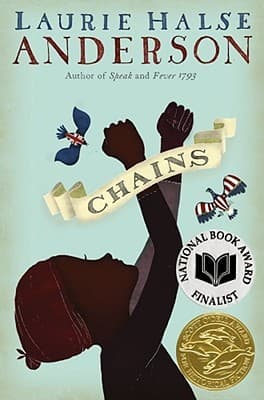
- Chains
Laurie Halse Anderson
4.1 (47k) average on GoodreadsChildren'sExplores a young enslaved girl's struggle for freedom during the American Revolution.
- The Underground Railroad
Colson Whitehead
4.0 (290k) average on GoodreadsLiterary FictionFeatures a harrowing escape from slavery and the journey to perceived freedom.
- To Kill a Mockingbird
Harper Lee
4.3 (4.5M) average on GoodreadsHistorical FictionIn the 1930s Jim Crow South, Harper Lee writes about racial injustice, moral growth, and the quiet courage of a lawyer father, Atticus Finch, as seen through his young daughter's eyes.
- The Great Gatsby
F. Scott Fitzgerald
3.9 (3.8M) average on GoodreadsHistorical FictionIn the opulent Roaring Twenties, a mysterious millionaire's lavish parties hide his desperate, tragic pursuit of a lost love, exposing the emptiness within the American Dream.
- Pride and Prejudice
Jane Austen
4.3 (3M) average on GoodreadsHistorical FictionIn a society focused on status and money, Elizabeth Bennet navigates love and pride, challenging Mr. Darcy and social expectations to find true affection.
- Angels & Demons
Dan Brown
3.9 (2.7M) average on GoodreadsThrillerA Harvard symbologist races through Rome's ancient sites, deciphering cryptic clues to unmask the Illuminati and stop a vengeful plot to destroy the Vatican with a stolen antimatter weapon.





Enjoyed the summary?
A summary gives you the shape of the book. The book itself has the detail, the examples and the voice.
Find Copper Sun on AmazonAs an Amazon Associate, BookBrief earns from qualifying purchases. How we're funded