
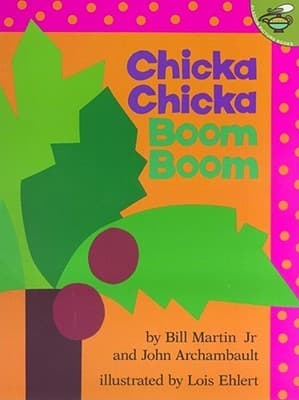
Synopsis
Covers the whole plot, including the ending.
- Difficulty
- Easy
- Pacing
- Fast
- Mood
- Playful, Energetic, Educational, Whimsical
- Read it if
- You want a fun, rhythmic way to introduce the alphabet to young children and enjoy repetitive, musical storytelling.
- Skip it if
- You are looking for a complex plot or character development, or dislike rhyming books.
Chicka Chicka Boom Boom Plot Summary
Covers the whole plot, including the ending.
The Alphabet's Bold Plan
The story starts with the lowercase letter 'a' telling 'b', and 'b' telling 'c', that they will meet at the top of a tall coconut tree. This challenge quickly spreads among the other letters. 'd', 'e', and 'f' join in, followed by 'g', all wanting to climb. The excitement builds as more letters decide to participate in this ascent, setting the stage for an adventure.
A Growing Crowd
As the first letters begin their climb, 'h', 'i', 'j', and 'k' follow, and 'lmnop' (often read quickly as one unit) also make their way up. The tree, empty at first, starts to fill with the colorful, energetic letters. 'qrs' and 'tuv' continue the steady stream, each letter adding to the increasing weight and activity on the tree's branches. The tree becomes quite crowded with all the lowercase letters determined to reach the top.
The Last Ones Arrive
The last of the lowercase letters, 'w', 'x', 'y', and 'z', enthusiastically join the others, completing the full alphabet's climb. Now, all twenty-six lowercase letters are nestled within the branches of the coconut tree, from its base to its top. The tree is completely full, packed with the entire alphabet, leading to a precarious situation as the weight becomes significant.
Chicka Chicka Boom Boom!
With all twenty-six lowercase letters now crammed onto its branches, the coconut tree groans under the weight. The branches sway and bend, unable to hold the alphabetical burden. Suddenly, with a resounding 'Chicka Chicka Boom Boom!', the tree gives way, and all the letters tumble down in a heap at the base of the tree. This dramatic collapse is the climax of the letters' daring adventure.
Parents to the Rescue
After the big 'Boom Boom!', the uppercase 'mama' and 'papa' letters, along with their 'aunts' and 'uncles', rush to the scene. They appear concerned for their lowercase children, who are scattered and bruised at the bottom of the tree. Their arrival shows a shift from the letters' independent adventure to a moment of parental care and comfort as they begin to pick up and dust off their little ones.
Dusting Off and Bandaging
The concerned uppercase letters carefully help their lowercase counterparts. They dust them off, one by one, checking for injuries. 'Mama A' hugs 'little a', 'Papa P' helps 'little p', and 'Uncle S' helps 'little s'. Some letters have bandages, such as 'e' with a stubbed toe, 'f' with a loose tooth, and 'm' and 'n' with a scraped knee. This shows the tenderness and care of the parental figures.
A New Challenge for 'A'
As the sun sets and the moon begins to glow, most of the letters are tucked away, recuperating from their fall. However, 'little a', still full of energy and determination, wants another try. Despite the previous mishap and the warnings from the others, 'little a' whispers, 'Dare double dare, you can't catch me!', and begins to climb the coconut tree once more. This hints at the cyclical nature of adventure and resilience.
Chicka Chicka Boom Boom Characters
Lowercase Letters (a-z)
Protagonists
The adventurous young alphabet eager to climb a coconut tree.
The twenty-six lowercase letters are the central figures of the story. They are depicted as small, energetic, and somewhat mischievous children, driven by a collective desire to climb the tall coconut tree. Each letter is distinct in its shape and color, contributing to the vibrant visual appeal. Their ambition to reach the top leads to the central conflict and subsequent tumble. Despite their fall, they show resilience and a playful spirit, particularly 'little a' at the end.
Relationships: Uppercase Letters (children to parents/aunts/uncles)
Uppercase Letters (A-Z)
Supporting
The caring parental figures who rescue and comfort the lowercase letters.
The uppercase letters represent the adult, responsible figures in the story. They appear after the 'Chicka Chicka Boom Boom!', rushing to the aid of their fallen lowercase counterparts. They are shown to be nurturing and comforting, dusting off the little letters, helping with their bumps and bruises, and ensuring their safety. Their presence provides a sense of security and resolution after the chaotic fall, emphasizing themes of family and care.
Relationships: Lowercase Letters (parents/aunts/uncles to children)
Coconut Tree
Setting/Antagonist (passive)
The tall tree that serves as both the goal and the obstacle for the letters.
The coconut tree is a prominent, dynamic element in the story, acting as both the desired destination and the ultimate cause of the letters' downfall. Initially depicted as tall and strong, it symbolizes a challenge or a goal. As more letters climb, it visibly bends and groans, personifying its struggle under the increasing weight. Its eventual collapse is the pivotal event, making it a passive antagonist that cannot sustain the letters' ambition.
Little 'a'
Minor Protagonist
The adventurous lowercase letter who initiates the climb and is the first to try again.
Little 'a' is notable for being the first letter to announce its intention to climb the coconut tree, setting the entire adventure in motion. It is also the very last character seen at the end of the book, whispering a dare and beginning to climb the tree again, despite the previous fall. This highlights 'little a's' persistent, adventurous, and perhaps slightly mischievous spirit, embodying resilience and the cyclical nature of childhood play.
Relationships: Lowercase Letters (fellow climbers); Mama A (child to parent)
Chicka Chicka Boom Boom Themes
Adventure and Exploration
The story is about the lowercase letters' adventurous spirit and their decision to explore the height of the coconut tree. Their journey up the tree, driven by a simple challenge, shows the thrill of discovery and pushing boundaries. This theme is clear from 'a told b, and b told c' to the last scene where 'little a' dares to climb again, showing a continuous quest for new experiences.
“A told b, and b told c, 'I'll meet you at the top of the coconut tree.'”
Consequence and Resilience
The story illustrates what happens when there is over-ambition and overcrowding. The 'Chicka Chicka Boom Boom!' moment happens because too many letters are on the tree, leading to their fall and subsequent bumps and bruises. However, the letters, especially 'little a', show resilience by being ready to try again. This theme teaches that while actions have consequences, there is always a chance to recover and learn, or in this case, to simply try again with new energy.
“Chicka chicka BOOM! BOOM! All the letters fell out of the coconut tree.”
Family and Nurturing
The arrival of the uppercase 'mama' and 'papa' letters, along with 'aunts' and 'uncles', introduces the theme of family support and nurturing. After the chaotic fall, these larger, adult letters gently care for their smaller, injured children, dusting them off, hugging them, and putting bandages on their scrapes. This shows the comforting and protective role of family figures in times of distress, providing security and love after a dangerous adventure.
“Mama A and Papa P and Uncle S came to help their little 'dears'.”
Learning and Repetition
The book supports learning the alphabet through its repetitive structure and visual representation of each letter. The entire alphabet is presented twice – once in their adventurous climb and again as they are picked up and identified by their uppercase counterparts. The rhythmic, rhyming text also helps with memorization. 'Little a' climbing again suggests that learning, like play, often involves repetition and trying until it is mastered.
“Next from the pile, all the letters came out, each one a different shape and about.”
Plot Devices & Literary Techniques
Personification
Giving human qualities to inanimate letters and a tree.
The most prominent plot device is personification, where the letters of the alphabet are imbued with human-like characteristics. They talk, climb, fall, get bruised, and express emotions like ambition and resilience. The coconut tree also 'groans' and 'bends' under the weight, giving it a sense of agency and responsiveness to the letters' actions. This device makes the abstract concept of the alphabet relatable and engaging for young readers, transforming letters into active characters in a story.
Repetition and Rhyme
Rhythmic, rhyming text used to create a memorable and engaging narrative.
The book heavily relies on repetition, particularly the phrase 'Chicka Chicka Boom Boom!', and a consistent rhyming scheme. This creates a strong, musical rhythm that is highly engaging for young children. The repetitive listing of the letters as they climb and fall reinforces alphabet recognition. This device not only makes the story fun to read aloud but also aids in memorization and language development, making the alphabet an active participant in a song-like narrative.
Cumulative Plot
Adding elements one by one to build tension and then a climax.
The story employs a cumulative plot structure where letters are added one by one to the coconut tree, gradually building tension. Each new letter joining the climb increases the visual and narrative weight on the tree, leading inevitably to the 'Chicka Chicka Boom Boom!' climax. This progressive addition makes the eventual fall feel both surprising and logical, mirroring how a physical load would build up until a breaking point, creating a clear cause-and-effect narrative for young audiences.
Visual Storytelling
Illustrations integral to conveying plot and character.
The vibrant and expressive illustrations are crucial to the storytelling, often conveying as much information as the text, or more. The visual depiction of each letter, their movement up the tree, the tree's bending, and the heap of letters at the bottom are essential for understanding the plot. The distinct personalities of the letters and their 'injuries' are primarily conveyed through the artwork. This device makes the book highly accessible and engaging for pre-readers, allowing them to follow the narrative visually.
Chicka Chicka Boom Boom Quotes
“A told B, and B told C, 'I'll meet you at the top of the coconut tree.'”
“Chicka chicka boom boom! Will there be enough room?”
“Here comes H up the coconut tree.”
“Skit skat skoodle doot. Flip flop flee.”
“M is looped. N is stooped. O is twisted alley-oop.”
“Still the chicka chicka boom boom!”
“A is out of bed.”
“The whole alphabet up the—Oh, no!”
“Chicka chicka... BOOM! BOOM!”
“Next time won't you sing with me?”
“Look who's coming! It's black-eyed P, Q, R, S, and loose-tooth T.”
“Whee! said D to E F G, 'I'll beat you to the top of the coconut tree.'”
“Chicka chicka rock rock, chicka rock rock chicka boom!”
Quiz
10 questions on the plot and the characters. Each answer comes with a short explanation.
Question 1
What do the lowercase letters plan to do at the beginning of the story?
- Have a picnic under the coconut tree
- Meet at the top of the coconut tree
- Play hide-and-seek in the garden
- Form a line in alphabetical order
Show answer
B. Meet at the top of the coconut tree The story starts with the famous line: 'A told b, and b told c, "I'll meet you at the top of the coconut tree."' This sets the main plot in motion as all the letters decide to climb the tree.
Question 2
What happens to the coconut tree as more letters climb it?
- It grows taller to accommodate them
- It begins to groan and bend under the weight
- It starts to bloom with colorful flowers
- It remains perfectly straight and strong
Show answer
B. It begins to groan and bend under the weight As described in the book, the palm tree that was 'standing straight and tall on the first page begins to groan and bend under its alphabetical burden' as all 26 lowercase letters climb up.
Question 3
How many lowercase letters are featured in the story?
- 20
- 24
- 26
- 30
Show answer
C. 26 The book description specifies 'The 26 characters in this rhythmic, rhyming baby book are a lowercase alphabet with attitude,' representing all the letters of the English alphabet.
Question 4
What falls off the tree first before the letters tumble down?
- The leaves
- The coconuts
- The branches
- The trunk
Show answer
B. The coconuts According to the book description, 'First the coconuts fall off, then ('Chicka chicka... BOOM! BOOM!') all the letters also end up in a big heap underneath.'
Question 5
What is the repeated phrase that gives the book its title?
- Chicka Chicka Boom Boom
- Coconut Tree Trouble
- Alphabet Antics
- Letter Landslide
Show answer
A. Chicka Chicka Boom Boom The title 'Chicka Chicka Boom Boom' comes from the onomatopoeic phrase used in the story to describe the sound of the letters falling from the tree, as shown in the description: 'Chicka chicka... BOOM! BOOM!'
Question 6
Which letter starts the chain of communication about climbing the tree?
- Letter a
- Letter b
- Letter c
- Letter z
Show answer
A. Letter a The opening line is 'A told b, and b told c,' indicating that lowercase 'a' initiates the plan to meet at the top of the coconut tree, which then spreads through the alphabet.
Question 7
Where do all the letters end up after falling from the tree?
- Scattered across the yard
- In a neat pile by the trunk
- In a big heap underneath the tree
- Back in alphabetical order
Show answer
C. In a big heap underneath the tree The description states that after the 'Chicka chicka... BOOM! BOOM!' all the letters 'end up in a big heap underneath' the coconut tree.
Question 8
What literary device is prominently used throughout the book to make it engaging for children?
- Alliteration
- Rhyme and rhythm
- Metaphor
- Hyperbole
Show answer
B. Rhyme and rhythm The book description calls it a 'rhythmic, rhyming baby book,' highlighting how rhyme and rhythm are key features that make the story fun and memorable for young readers.
Question 9
What might be a central theme suggested by the letters' adventure?
- The importance of following rules
- The consequences of overcrowding or pushing limits
- The value of individual achievement
- The need for careful planning
Show answer
B. The consequences of overcrowding or pushing limits While the book is primarily fun, the plot shows how the letters' plan to all climb the tree leads to it bending and eventually collapsing, suggesting themes about what happens when too many try to fit in one place or when limits are exceeded.
Question 10
How does the book personify the alphabet letters?
- By giving them human jobs
- By showing them with 'attitude' and the ability to communicate and climb
- By dressing them in clothes
- By having them live in houses
Show answer
B. By showing them with 'attitude' and the ability to communicate and climb The description says the letters are 'a lowercase alphabet with attitude' and shows them talking ('A told b') and climbing the tree, giving them human-like qualities to make the alphabet more relatable and engaging for children.
Chicka Chicka Boom Boom FAQ
What is 'Chicka Chicka Boom Boom' about?
The book follows the 26 lowercase letters of the alphabet as they race up a coconut tree, chanting 'I'll meet you at the top of the coconut tree.' Their collective weight causes the tree to bend and eventually collapse with a 'Chicka chicka... BOOM! BOOM!', sending all the letters tumbling into a heap. The story concludes with the bruised letters being comforted by their uppercase 'parents' as they vow to climb again another day.
Why should I read 'Chicka Chicka Boom Boom'?
It's a beloved children's classic that makes learning the alphabet fun through its infectious rhythm, playful rhymes, and vibrant illustrations. The personified letters with their adventurous spirit and humorous mishap engage young readers while reinforcing letter recognition in a memorable, entertaining way.
What is the background/setting of 'Chicka Chicka Boom Boom'?
The story unfolds around a single coconut tree, which starts straight and tall but becomes the chaotic centerpiece as the letters climb it. The setting is minimalistic, focusing entirely on the tree and the ground beneath it, emphasizing the action and the letters' interactions.
What are the most memorable quotes?
Key quotes include the iconic line, 'A told b, and b told c, 'I'll meet you at the top of the coconut tree,'' and the rhythmic climax, 'Chicka chicka... BOOM! BOOM!' which captures the tree's collapse. The ending also features the reassuring, 'Skinned-knee d and stubbed-toe e, patched-up f and black-eyed g,' highlighting the letters' injuries.
What writing style does the author use?
Bill Martin Jr. employs a catchy, rhythmic, and rhyming style that mimics a chant or song, making it easy for children to recite along. The text is repetitive and playful, with onomatopoeia like 'BOOM! BOOM!' adding excitement, while the personification of letters gives them lively, childlike personalities.
What minor details add significant meaning?
The use of lowercase letters for the adventurous 'children' and uppercase letters for the comforting 'parents' subtly teaches letter cases. Additionally, the specific injuries described—like 'skinned-knee d' and 'black-eyed g'—add humor and relatability, making the letters feel like real kids after a playground mishap.
What are some subtle foreshadowing moments?
Early on, the tree is shown 'standing straight and tall,' but as more letters climb, it begins to 'groan and bend,' hinting at the impending collapse. The line 'probably seemed like a good idea' also foreshadows the chaotic outcome, suggesting the letters' plan is overly ambitious.
What unexpected character connections exist?
The letters are portrayed as a close-knit group or 'gang,' with a initiating the climb and others eagerly following. After the fall, the uppercase letters (like A, B, C) appear as parental figures, tenderly caring for their lowercase counterparts, reinforcing family-like bonds within the alphabet.
What are unspoken character motivations?
The lowercase letters are driven by a sense of adventure and peer pressure, as a's challenge sparks a chain reaction. Their desire to reach the top reflects childhood curiosity and the thrill of climbing, while the uppercase letters' later intervention shows a protective, nurturing instinct without explicit dialogue.
What psychological complexities do characters exhibit?
The letters display childlike impulsivity and recklessness, ignoring the tree's limits in their excitement. After the fall, they show resilience and a hint of stubbornness, as even bruised and bandaged, they whisper about trying again, highlighting a blend of vulnerability and determination.
What are the major emotional turning points?
The emotional arc shifts from excitement during the climb to tension as the tree bends, then shock and chaos at the 'BOOM! BOOM!' collapse. It resolves into comfort and relief as the uppercase letters tend to the injured, ending on a hopeful note with the lowercase letters' whispered plans to climb again.
How do relationship dynamics evolve?
Initially, the lowercase letters act as competitive peers egging each other on. After the fall, their dynamic becomes more supportive, with shared injuries fostering camaraderie. The introduction of uppercase letters shifts the focus to a caregiver-child relationship, adding depth to the alphabet's familial portrayal.
Which parts remain ambiguous or open-ended?
The book leaves ambiguous whether the letters will actually attempt the climb again or if it's just playful bravado. It also doesn't specify why the uppercase letters weren't involved initially, leaving their role open to interpretation as parents, guardians, or simply older versions of the letters.
What are controversial scenes or decisions?
Some readers might debate if the letters' reckless climb promotes unsafe behavior, though it's generally seen as a humorous cautionary tale. The depiction of injuries like 'black-eyed g' could be viewed as overly dramatic for a children's book, but it's often interpreted as lighthearted and relatable.
'Chicka Chicka Boom Boom' ending explained: how it ends & what it means
The story ends with the uppercase letters comforting the injured lowercase letters after their fall, bandaging them up as they sleep. The final lines reveal the lowercase letters whispering about climbing the tree again, symbolizing resilience, learning from mistakes, and the endless cycle of childhood adventure and curiosity.
About the author
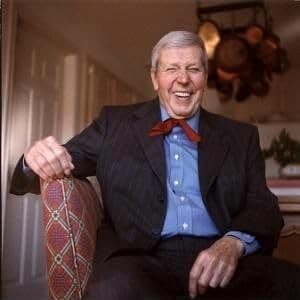
Bill Martin Jr. was a prolific American educator and author of over 300 children's books. He is best known for the beloved "Brown Bear, Brown Bear, What Do You See?" and the rhythmic "Chicka Chicka Boom Boom." His work frequently focused on themes of learning, friendship, and the joy of language, making him a significant figure in early childhood literature.
Similar books
- Harry Potter and the Sorcerer's Stone
J.K. Rowling
4.5 (7M) average on GoodreadsFantasyRescued from a miserable life under the stairs, an orphaned boy discovers he's a wizard destined for a magical school, where he uncovers a dangerous secret tied to the dark wizard who murdered his parents.
- The Hobbit, or There and Back Again
J.R.R. Tolkien
4.3 (2.9M) average on GoodreadsFantasyA comfort-loving hobbit named Bilbo Baggins is whisked away by a mischievous wizard and a band of dwarves on an unexpected journey to reclaim stolen treasure from a fearsome dragon, discovering courage and a magical ring along the way.
- Harry Potter and the Goblet of Fire
J.K. Rowling
4.6 (2.6M) average on GoodreadsFantasyA bewildered Harry Potter, underage and thrust into a deadly Triwizard Tournament, must brave dragons, mermaids, and a resurgent dark magic to survive a year that will forever alter the wizarding world.
- Harry Potter and the Order of the Phoenix
J.K. Rowling
4.5 (2.5M) average on GoodreadsFantasyIn a year of oppressive secrets and the threat of Voldemort, Harry Potter and Dumbledore's Army secretly train for war, shown through Jim Kay and Neil Packer's dark illustrations.
- The Lightning Thief
Rick Riordan
4.3 (2M) average on GoodreadsFantasyThrust into a world of mythological monsters and divine treachery, an ordinary boy discovers he's the son of Poseidon and must embark on a perilous quest across modern America to prevent an Olympian war.
- The Giver
Lois Lowry
4.1 (1.8M) average on GoodreadsFantasyIn a world where everyone is the same, a young boy named Jonas learns about true memory, forcing him to see the cost of his community's peaceful ignorance.






Enjoyed the summary?
A summary gives you the shape of the book. The book itself has the detail, the examples and the voice.
Find Chicka Chicka Boom Boom on AmazonAs an Amazon Associate, BookBrief earns from qualifying purchases. How we're funded