
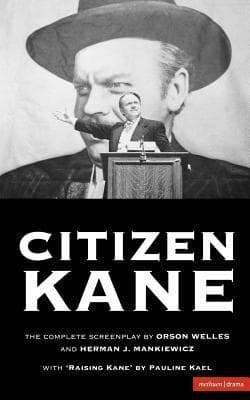
Synopsis
Covers the whole plot, including the ending.
- Difficulty
- Medium
- Pacing
- Variable
- Mood
- Melancholy, Introspective, Grandiose, Enigmatic
- Read it if
- You're fascinated by character studies of powerful, complex individuals, enjoy non-linear narratives, and appreciate stories with a sense of mystery and psychological depth.
- Skip it if
- You prefer straightforward, chronological plots or dislike ambiguous endings where not all questions are explicitly answered for the protagonist.
Citizen Kane Plot Summary
Covers the whole plot, including the ending.
The Death of a Tycoon and a Mysterious Last Word
The film begins with Charles Foster Kane, an old and very rich newspaper owner, dying alone in his huge, unfinished Florida home, Xanadu. He whispers "Rosebud" as he dies, dropping a snow globe that breaks. A newsreel then quickly shows Kane's public life: how he rose from a simple start to become a powerful newspaper owner, his political goals, his two marriages, and his later years living alone. The newsreel leaves many questions about Kane's private life and "Rosebud" unanswered. This makes the editor, Rawlston, tell reporter Jerry Thompson to find out what it means.
Searching for Meaning at Thatcher's Library
Jerry Thompson starts by going to the Thatcher Memorial Library to read the private writings of Walter Parks Thatcher, Kane's strict and rich guardian. From Thatcher's view, we learn about Kane's childhood in Colorado. In 1870, young Charles is playing in the snow while his mother, Mary Kane, gives his guardianship to Thatcher, a banker. This happens after a gold mine is found on her land. She wants him raised well, away from his abusive father. Charles is taken from his home, crying, and sent to live with Thatcher. This event deeply affects him and makes him dislike authority and want control for the rest of his life.
The Newspaper Wars and Emily Norton
Thompson then talks to Mr. Bernstein, Kane's former general manager and closest helper. Bernstein tells about Kane's early career. After becoming an adult and getting his money, Kane buys the struggling New York Inquirer. He buys it not for money, but to use it to show corruption and help ordinary people, which Thatcher does not like. He works with loyal staff like Bernstein and Jed Leland. Kane marries Emily Norton, the niece of a U.S. President. Their marriage starts well but soon gets difficult because of Kane's constant work, his public campaigns, and his growing self-centeredness. Their marriage becomes a struggle of wills.
Political Ambition and a Fateful Affair
Jed Leland, Kane's former best friend and theater critic, gives the next part of the story. He talks about Kane's growing political aims, which lead to his run for governor of New York. Kane looks set to win, but his affair with Susan Alexander, a young singer he met, is made public by his political rival, Boss Jim Gettys. The scandal happens just before the election, forcing Kane to choose between his political career and Susan. He refuses to leave Susan, loses the election, and upsets his wife and the public. This ends his political hopes.
Susan's Opera Career and Kane's Control
Thompson finds Susan Alexander Kane, now an older, alcoholic woman who runs a nightclub. She reluctantly tells about her life with Kane, especially his strong desire to make her a famous opera singer, even though she had no talent or interest. Kane builds her an opera house, hires the best teachers, and uses his newspapers to promote her. Susan suffers from stage fright and public jokes. Her bad debut and later shows highlight Kane's inability to accept failure and his need to control those he loves. This makes both of them more isolated.
The Decline of a Marriage and Xanadu's Isolation
Susan describes how their marriage slowly got worse. After her opera career failed, they went to Xanadu, Kane's huge, unfinished estate filled with art and items from all over the world. Life at Xanadu was hard and lonely for Susan. Kane became more distant and controlling. She tries to kill herself and eventually leaves Kane, unable to stand the loneliness and his controlling ways. Her leaving leaves Kane completely alone in Xanadu's large rooms, surrounded by his belongings but without real human connection.
Raymond's Final Observations
Thompson interviews Raymond, Kane's butler at Xanadu, who gives a detached view of Kane's last, lonely years. Raymond remembers Kane becoming more reclusive and his habit of always sorting through his many belongings, as if looking for something. He tells about when Kane, angry after Susan leaves, breaks up her room, but stops when he finds a small snow globe, like the one he dropped when he died. Raymond says Kane often talked about 'Rosebud' but never said what it meant, suggesting it was something he lost.
The Unanswered Question
After interviewing everyone close to Kane, Jerry Thompson finishes his search. He meets with the other reporters, saying that 'Rosebud' is still a mystery. He thinks it was probably a missing part of a puzzle, something Kane lost or never had, and that no single word could define such a complex man. The reporters leave Xanadu, still confused by the rich man's last word, thinking about how mysterious lives are and how hard it is to sum them up with one symbol.
The Revelation of Rosebud
As the reporters leave Xanadu, the camera moves through the large piles of Kane's old belongings being burned. A sled is thrown into the fire. On its old surface, the word 'Rosebud' is clear. This is the sled young Charles Foster Kane was playing on when his mother gave him to Walter Thatcher. The sled, a sign of his lost childhood and the only real love and safety he knew, burns. Its secret meaning is shown only to the audience, showing the film's main idea of a man looking for something he lost when he was very young.
Principal Figures
Charles Foster Kane
Protagonist
A wealthy and powerful newspaper magnate driven by a need for control and affection.
Kane is a complex, enigmatic figure, introduced as a powerful, controversial media baron who dies alone in his colossal estate. Orphaned from his family at a young age, he inherits a vast fortune, which he uses to build a newspaper empire, pursuing populist ideals and political power. Despite his public persona as a champion of the common man, Kane is deeply insecure, driven by a profound need for love and control, which ultimately alienates those closest to him. His life is a tragic pursuit of something he lost in childhood, culminating in isolation and regret.
Relationships: Mary Kane (Mother who sent him away); Walter Parks Thatcher (Strict, wealthy guardian); Mr. Bernstein (Loyal general manager and confidant); Jed Leland (Best friend and drama critic, later estranged); Emily Norton Kane (First wife, niece of a U.S. President); Susan Alexander Kane (Second wife, aspiring opera singer)
Jerry Thompson
Supporting
The inquisitive reporter tasked with uncovering the meaning of 'Rosebud.'
Thompson is the catalyst for the film's narrative structure. He is a relatively anonymous reporter for a newsreel company, assigned the seemingly impossible task of discovering the meaning behind Charles Foster Kane's last word, 'Rosebud.' His journey to interview Kane's closest associates forms the framework through which Kane's life is revealed. Thompson is persistent but ultimately objective, serving as the audience's surrogate in piecing together the fragments of Kane's life. He acknowledges the limitations of his investigation, concluding that no single word can define a man.
Relationships: Rawlston (His editor, who assigns him the task); Mr. Bernstein (Interviewee); Jed Leland (Interviewee); Susan Alexander Kane (Interviewee); Raymond (Interviewee)
Mr. Bernstein
Supporting
Kane's loyal and pragmatic general manager, a witness to his early career.
Mr. Bernstein is Charles Foster Kane's longest-serving and most loyal employee, starting as a clerk and rising to general manager of the New York Inquirer. He is pragmatic, astute, and unfailingly devoted to Kane, even after their professional relationship ends. Bernstein provides a clear, unsentimental, yet affectionate perspective on Kane's early, ambitious years, his newspaper crusades, and his first marriage. He represents the unwavering loyalty Kane inspired in some, despite his flaws, and offers insight into Kane's character through specific anecdotes and observations.
Relationships: Charles Foster Kane (Loyal general manager and confidant); Jerry Thompson (Interviewee)
Jed Leland
Supporting
Kane's idealistic best friend and drama critic, later a disillusioned critic.
Jed Leland is Kane's college friend and the drama critic for the New York Inquirer. He is intelligent, principled, and initially shares Kane's idealistic vision for the newspaper. However, as Kane becomes more self-serving and tyrannical, Leland grows increasingly disillusioned, particularly after Kane's political scandal and his forced promotion of Susan Alexander's opera career. Their friendship sours, culminating in a bitter confrontation where Kane fires Leland after he writes an honest, scathing review of Susan's performance. Leland represents Kane's lost idealism and the friends he alienated through his need for control.
Relationships: Charles Foster Kane (Best friend, then estranged critic); Jerry Thompson (Interviewee)
Susan Alexander Kane
Supporting
Kane's second wife, an aspiring singer whose life is dominated by his ambitions.
Susan Alexander is a young, unassuming woman with aspirations of being a singer when she meets Charles Foster Kane. She becomes his mistress and later his second wife. Susan is inherently kind but lacks talent and ambition for opera, which Kane obsessively tries to force upon her. She becomes a victim of Kane's controlling nature and his inability to accept her mediocrity, enduring public humiliation and a stifling, isolated life at Xanadu. Her eventual departure is Kane's final, devastating loss, highlighting his inability to truly love without possession.
Relationships: Charles Foster Kane (Mistress, then second wife); Jerry Thompson (Interviewee)
Walter Parks Thatcher
Supporting
Kane's stern, wealthy banker guardian, representing the establishment he rebelled against.
Walter Parks Thatcher is the wealthy banker appointed as young Charles Foster Kane's guardian. He is a stern, proper, and financially conservative figure who views Kane's inheritance as a serious responsibility. Thatcher represents the rigid, capitalist establishment against which the adult Kane would rebel. His memoirs, which Thompson reads, provide the first, highly critical perspective on Kane's childhood and early career, portraying him as a reckless and irresponsible idealist. He embodies the authority figure Kane resented and spent his life defying.
Relationships: Charles Foster Kane (Guardian); Jerry Thompson (His memoirs are read)
Emily Norton Kane
Supporting
Kane's first wife, a dignified but ultimately estranged socialite.
Emily Norton Kane is the elegant and dignified niece of a U.S. President, who becomes Charles Foster Kane's first wife. Their marriage begins with affection but quickly deteriorates due to Kane's relentless work, his public crusades, and his increasingly self-absorbed nature. Emily represents the high society and political aspirations Kane initially sought but ultimately undermined through his scandals. She is a strong-willed woman who eventually grows weary of Kane's controlling behavior and his affair with Susan Alexander, leading to their divorce and her eventual death.
Relationships: Charles Foster Kane (First wife)
Raymond
Supporting
Kane's cynical butler at Xanadu, offering a detached view of his final years.
Raymond is the butler at Xanadu during Kane's final, reclusive years. He is a detached, observant, and somewhat cynical figure who witnessed Kane's decline into isolation. Raymond provides a crucial, objective account of Kane's last days, particularly his obsession with his vast collection of possessions and the incident where Kane destroys Susan's room after she leaves, only to find solace in a snow globe. His testimony provides the final, chilling details that lead to the audience's understanding of 'Rosebud,' even though Thompson himself remains oblivious.
Relationships: Charles Foster Kane (Butler); Jerry Thompson (Interviewee)
Themes & Insights
The Elusiveness of Identity
The film shows that a person's true self is complicated and cannot be fully known from others' stories. Each person interviewed gives a different, often conflicting, view of Kane, showing their own biases. Thompson, the reporter, cannot define Kane with 'Rosebud,' realizing one symbol cannot sum up a life. This idea is clear in the fragmented story, where the audience must put together the man from different memories. Even with all the facts, a full picture is hard to get.
“'Rosebud.' It's just a piece of a jigsaw puzzle, a missing piece.”
The Corrupting Nature of Power and Wealth
Kane's great wealth and power, which he got when young, let him do whatever he wanted, which led to his downfall. He uses his newspaper business not just for public good but to control others and make himself feel important. His money lets him build Xanadu, a sign of his loneliness, and force Susan to try an opera career, even though she has no talent. This idea shows how too much power can make people isolated, turning good intentions into control and real connections into a way to get what they want.
“You're fired. You're fired and don't think I can't do it! I'm Charles Foster Kane!”
Loss of Innocence and Childhood
The film strongly shows the painful loss of Kane's childhood when he is taken from his family and his sled. 'Rosebud,' his sled's name, stands for this lost innocence and the only time in his life he felt true love and freedom. As an adult, Kane tries to get this feeling back through possessions, power, and relationships, but he never gets back the simple joy of his early years. This leads to a deep feeling of emptiness and a lifelong search for what he lost.
“I guess 'Rosebud' is just a name of a sled he had when he was a kid.”
Memory and Perspective
The story is made up of many personal memories of Charles Foster Kane from different characters. Each person's story is shaped by their relationship with Kane and their own views, leading to different descriptions. Bernstein remembers a loyal, driven friend; Leland, a friend who was let down; Susan, a controlling husband; and Thatcher, an irresponsible rebel. This shows that memory is not just facts but a personal view, and truth is often a mix of many viewpoints, making it hard to fully understand anyone.
“I don't think any word can explain a man's life.”
Plot Devices & Literary Techniques
Non-Linear Narrative / Flashback Structure
The story of Kane's life is told through multiple, overlapping flashbacks from different characters' perspectives.
The film does not follow a chronological timeline. Instead, it begins with Kane's death and then uses reporter Jerry Thompson's investigation as a framing device. His interviews with Kane's former associates (Thatcher, Bernstein, Leland, Susan, Raymond) trigger extended flashbacks, each presenting a different period and perspective of Kane's life. This fragmented, non-linear approach mirrors the elusive nature of Kane's identity and allows the audience to piece together the narrative from various subjective viewpoints, rather than a single, authoritative account.
The 'Rosebud' MacGuffin
A mysterious object/word that drives the plot forward but is ultimately less important than the journey.
'Rosebud' serves as the central MacGuffin of the film. It is the enigmatic last word uttered by Kane, prompting reporter Jerry Thompson's entire investigation. While the quest to discover its meaning propels the plot and provides a structure for exploring Kane's life, the ultimate revelation of 'Rosebud's' identity (a child's sled) is not as significant as the fragmented portrait of Kane that emerges from the interviews. The MacGuffin focuses the audience's attention while the film explores deeper themes of identity, memory, and the human condition.
Deep Focus Cinematography
A visual technique that keeps all planes of the image (foreground, middle ground, background) in sharp focus.
Orson Welles and cinematographer Gregg Toland extensively utilized deep focus, allowing multiple elements within a single frame to remain clear and visible. This technique often provides multiple layers of action and information simultaneously, inviting the viewer to actively engage with the frame and interpret the relationships between characters and their environment. For instance, in the scene where young Charles is playing in the snow while his guardianship is decided indoors, both actions are sharply in focus, visually linking his childhood loss to the adult decisions being made about his future.
Low-Angle Shots
Camera placed low, looking up at the subject, often emphasizing power or dominance.
Welles frequently employs low-angle shots, often making characters appear imposing and monumental, particularly Charles Foster Kane. This technique is enhanced by the use of ceilings in many indoor sets, a then-uncommon practice in Hollywood, which grounds the characters within their environment and adds a sense of grandeur and sometimes claustrophobia. These shots visually reinforce Kane's powerful status, his larger-than-life persona, and his desire to dominate, even as his personal life crumbles, creating a visual metaphor for his public image versus his private self.
Newsreel as Exposition/Framing Device
A fictional newsreel provides a condensed, public overview of Kane's life, setting up the central mystery.
The 'News on the March' newsreel immediately after Kane's death serves as a brilliant, rapid-fire exposition of his public life. It introduces the audience to Kane's rise and fall, his public image, and his key relationships, all from a seemingly objective, documentary-style perspective. However, it also highlights the superficiality of public knowledge and the many unanswered questions about Kane's personal life, thereby establishing the central mystery of 'Rosebud' and prompting the subsequent investigative narrative. It's a highly efficient way to convey a vast amount of biographical information quickly.
Citizen Kane Quotes
“Rosebud.”
“I think it would be fun to run a newspaper.”
“You provide the prose poems, I'll provide the war.”
“Old age. It's the only disease, Mr. Thompson, that you don't look forward to being cured of.”
“If I hadn't been very rich, I might have been a really great man.”
“A toast, Jedediah, to love on my terms. Those are the only terms anybody ever knows—his own.”
“I am, have been, and will be only one thing—an American.”
“You know, Mr. Bernstein, if I hadn't been very rich, I might have been a really great man.”
“I don't think there's one word that can describe a man's life.”
“He was a man who got everything he wanted, and then lost it.”
“You're right, I did lose a million dollars last year. I expect to lose a million dollars this year. I expect to lose a million dollars next year.”
“I'm not a gentleman. I don't even know what a gentleman is.”
“It's not going to be a picnic, you know. It's going to be a fight.”
“I'm Charles Foster Kane. I'm no cheap, crooked politician trying to save himself from the consequences of his crimes.”
Quiz
10 questions on the plot and the characters. Each answer comes with a short explanation.
Question 1
According to the book, what was the approximate dollar amount of the bribe offered in an attempt to suppress 'Citizen Kane'?
- $500,000
- $842,000
- $1,000,000
- $250,000
Show answer
B. $842,000 The book states that an $842,000 bribe was offered as part of efforts to strangle the film's distribution, highlighting the controversy surrounding its release.
Question 2
Which newspaper empire is mentioned as opposing 'Citizen Kane' in the book?
- The New York Times
- The Hearst newspaper empire
- The Washington Post
- The Chicago Tribune
Show answer
B. The Hearst newspaper empire The book describes how the Hearst newspaper empire combined with the bribe attempt to suppress the film, reflecting the real-world backlash against its portrayal of media mogul William Randolph Hearst.
Question 3
What is the title of Pauline Keal's essay included in this book?
- Making Kane
- Raising Kane
- Citizen Kane Uncovered
- The Kane Controversy
Show answer
B. Raising Kane The book mentions Pauline Keal's essay 'Raising Kane,' which re-evaluates stories about the film's making, adding scholarly depth to this companion volume.
Question 4
Why was 'Citizen Kane' particularly notable in Orson Welles's career, as described in the book?
- It was his last film as a director
- It was his first film as both actor and director
- It won him an Academy Award for Best Actor
- It was a box office success upon release
Show answer
B. It was his first film as both actor and director The book highlights that 'Citizen Kane' was Orson Welles's first film as both actor and director, marking a significant debut in Hollywood despite the controversies.
Question 5
What does the book include alongside the original screenplay to enhance understanding of the film?
- Biographies of the cast
- Over 40 stills and frame enlargements
- A timeline of Hollywood history
- Interviews with Orson Welles
Show answer
B. Over 40 stills and frame enlargements The book features over 40 stills and frame enlargements with the screenplay, providing visual context and illustrating differences between the script and final film.
Question 6
According to the book, what aspect of 'Citizen Kane' is still a subject of conflict?
- Its box office earnings
- The authorship of the film
- The identity of Rosebud
- Its critical reception
Show answer
B. The authorship of the film The book notes that the authorship of 'Citizen Kane' remains disputed, with debates over contributions from Welles, co-writer Herman J. Mankiewicz, and others, which Pauline Keal's essay explores.
Question 7
How does the book describe the experience level of most cast members in 'Citizen Kane'?
- They were seasoned Hollywood veterans
- They were new to the cinema
- They were primarily stage actors
- They were recruited from radio
Show answer
B. They were new to the cinema The book points out that most of the cast were new to cinema, adding to the film's innovative nature as Welles brought fresh talent to Hollywood.
Question 8
What does Pauline Keal's essay 'Raising Kane' primarily aim to do, based on the book's description?
- Criticize the film's technical flaws
- Re-evaluate stories about the making of the film
- Compare the film to other Hollywood classics
- Analyze the film's political themes
Show answer
B. Re-evaluate stories about the making of the film The book states that Keal's essay 'dissects a maze of Hollywood lore to re-evaluate these and other stories about the making of this film,' focusing on historical and production controversies.
Question 9
Which critic is quoted in the book as describing 'Citizen Kane' as 'designed to shock'?
- Pauline Keal
- Kenneth Tynan
- Roger Ebert
- Andrew Sarris
Show answer
B. Kenneth Tynan The book opens with a reference to Kenneth Tynan calling the film 'designed to shock,' setting the tone for its controversial impact and the book's exploration of that legacy.
Question 10
What additional content does the book provide to compare the screenplay with the final film?
- Notes on the differences between the script and final film
- A director's commentary track
- Deleted scenes in text form
- Box office analysis
Show answer
A. Notes on the differences between the script and final film Alongside the screenplay and visuals, the book includes notes highlighting differences between the script and final film, offering insights into the production process and editorial changes.
Citizen Kane FAQ
What is 'Citizen Kane' about?
'Citizen Kane' follows journalist Jerry Thompson's investigation into the life of Charles Foster Kane, a wealthy newspaper tycoon who dies uttering the mysterious word 'Rosebud.' Through interviews with Kane's associates, the film reveals his rise from poverty to media empire, his failed political ambitions, his troubled marriages, and his ultimate isolation in his vast estate, Xanadu.
Why should I read 'Citizen Kane'?
Reading the screenplay and accompanying essays provides deep insight into one of cinema's most influential works, revealing its innovative narrative structure, complex character study, and the controversial production history involving Orson Welles, William Randolph Hearst, and Hollywood politics that nearly suppressed the film.
What is the background/setting of 'Citizen Kane'?
The story spans from the late 19th century to 1941, moving between Kane's childhood in Colorado, his newspaper offices in New York, his political campaigns, and his isolated mansion, Xanadu, in Florida. The narrative unfolds through flashbacks triggered by Thompson's interviews after Kane's death.
What are the most memorable quotes?
Key quotes include Kane's dying word 'Rosebud,' his declaration 'I think it would be fun to run a newspaper,' his cynical 'You provide the prose poems, I'll provide the war,' and Susan Alexander's lament 'You never give me anything I really care about.' These lines encapsulate themes of ambition, power, and emotional emptiness.
What writing style does the author use?
The screenplay employs a non-linear, multi-perspective narrative, using flashbacks and overlapping dialogue to piece together Kane's life. Pauline Kael's essay 'Raising Kane' adopts a journalistic, investigative tone, dissecting Hollywood lore and production conflicts with detailed analysis and historical context.
What minor details add significant meaning?
The snow globe Kane smashes upon his death symbolizes his lost childhood innocence tied to 'Rosebud.' The recurring image of Kane reflected in mirrors or windows highlights his fragmented identity. The gradual enlargement of Susan's jigsaw puzzles mirrors her growing isolation in Xanadu.
What are some subtle foreshadowing moments?
Kane's early declaration 'I am, have been, and will be only one thing—an American' foreshadows his political downfall from scandal. The childhood sled 'Rosebud' being burned in the furnace at the end is hinted when young Kane is seen playing with it before being taken from his mother.
What unexpected character connections exist?
Kane's second wife, Susan Alexander, is a singer he promotes to compensate for his failed political career, linking his personal and professional failures. Bernstein, Kane's loyal business manager, provides key insights into Kane's early idealism, contrasting with later associates like Jed Leland who become disillusioned.
What are unspoken character motivations?
Kane's relentless pursuit of power and love stems from childhood trauma of being separated from his mother, driving his need for control and validation. Susan Alexander stays with Kane despite misery due to financial dependence and fear of abandonment, reflecting her own insecurities.
What psychological complexities do characters exhibit?
Kane displays narcissism and loneliness, using wealth to manipulate others while craving genuine connection. Jed Leland embodies moral conflict, admiring Kane's talent but condemning his corruption. Susan Alexander shows vulnerability and resentment, trapped in a gilded cage of Kane's making.
What are the major emotional turning points?
Kane's political career collapses when his affair with Susan is exposed, leading to public humiliation. Susan leaves him after years of emotional neglect, triggering his final descent into isolation. Kane's death scene, where he whispers 'Rosebud,' reveals his unresolved longing for childhood simplicity.
How do relationship dynamics evolve?
Kane's friendship with Jed Leland deteriorates from mutual respect to bitter estrangement over ethical differences. His marriage to Emily Norton shifts from political partnership to cold detachment, while his relationship with Susan moves from passionate rescue to oppressive control and eventual abandonment.
Which parts remain ambiguous or open-ended?
The meaning of 'Rosebud' is never fully explained to the characters, leaving its significance to the audience's interpretation. Kane's true feelings about his life and legacy are ambiguous, as the conflicting testimonies from associates suggest no single perspective captures his essence.
What are controversial scenes or decisions?
The film's thinly veiled portrayal of William Randolph Hearst led to legal threats and a boycott by Hearst's newspapers. Scenes like Susan's opera debut, which humiliates her, and Kane's destruction of Susan's room in rage sparked debate over his abusive behavior and the film's critical view of power.
'Citizen Kane' ending explained: how it ends & what it means
The film ends with workers burning Kane's possessions at Xanadu, including the childhood sled 'Rosebud,' revealing it as a symbol of lost innocence. Thompson concludes that no single word can define a man, suggesting Kane's life remains an enigma and critiquing the futility of reducing human complexity to simple explanations.
What is the significance of the authorship conflict discussed by Pauline Kael?
Kael's essay 'Raising Kane' challenges Orson Welles's sole authorship, highlighting contributions from co-writer Herman J. Mankiewicz and cinematographer Gregg Toland. This debate underscores Hollywood's collaborative nature and the film's legacy as a product of creative tensions and industry politics.
How does the screenplay differ from the final film?
The notes in the book detail changes such as trimmed dialogue, altered scene sequences, and visual effects adjustments. For example, some of Susan's opera scenes were shortened, and the 'News on the March' newsreel was refined to enhance pacing, reflecting editing choices that shaped the film's final impact.
What role does the Hearst newspaper empire play in the film's history?
William Randolph Hearst, the inspiration for Kane, used his media power to suppress the film, offering bribes and banning coverage in his papers. This real-world controversy mirrors the film's themes of media manipulation and adds a layer of historical intrigue to its production and distribution struggles.
How does the non-linear narrative affect the story's impact?
By presenting Kane's life out of chronological order through interviews and flashbacks, the narrative emphasizes subjectivity and memory, forcing viewers to piece together his character like a puzzle. This structure enhances themes of ambiguity and the elusive nature of truth, making Kane's legacy more complex and engaging.
What insights does Pauline Kael's essay provide about Hollywood?
Kael's 'Raising Kane' delves into Hollywood's golden age, exposing studio politics, creative conflicts, and myths around auteur theory. She re-evaluates the film's making, offering context on how industry dynamics and personal rivalries influenced one of cinema's masterpieces, enriching readers' understanding of its cultural significance.
About the author
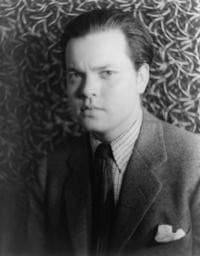
Orson Welles was an American filmmaker, actor, and writer active in the 20th century, best known for his innovative contributions to cinema and theater. His most notable work, "Citizen Kane," is often regarded as one of the greatest films in history, showcasing his unique storytelling and technical prowess. Welles's influence extended beyond film, impacting various aspects of the performing arts.
Similar books
- The Great Gatsby
F. Scott Fitzgerald
3.9 (3.8M) average on GoodreadsHistorical FictionExplores the rise and fall of a mysterious, wealthy figure through the eyes of an outsider, focusing on themes of wealth, ambition, and lost love.
- Death of a Salesman
Arthur Miller
3.5 (186k) average on GoodreadsFictionA poignant character study of a man reflecting on his life, dreams, and failures, revealing the tragic consequences of his choices.
- Atlas Shrugged
Ayn Rand
3.7 (354k) average on GoodreadsPoliticsFeatures a powerful, controversial industrialist protagonist whose life and philosophy are explored through various perspectives and flashbacks.
- Nineteen Eighty-Four
George Orwell
4.2 (5.5M) average on GoodreadsFictionWinston Smith dreams of truth and rebellion in a world where Big Brother watches all, but he confronts the terrifying power of a regime that controls not just actions, but thoughts.
- The Frozen River
Ariel Lawhon
4.4 (600k) average on GoodreadsFictionIn 1789 Maine, a heroic midwife's diary helps her expose a murder and get justice in a town that wants to silence her.
- A Man Called Ove
Fredrik Backman
4.4 (569k) average on GoodreadsFictionA stubborn widower, who lives by strict rules, finds his quiet world changed by a lively new family next door, making him face his past and find happiness in human connection.





Enjoyed the summary?
A summary gives you the shape of the book. The book itself has the detail, the examples and the voice.
Find Citizen Kane on AmazonAs an Amazon Associate, BookBrief earns from qualifying purchases. How we're funded