
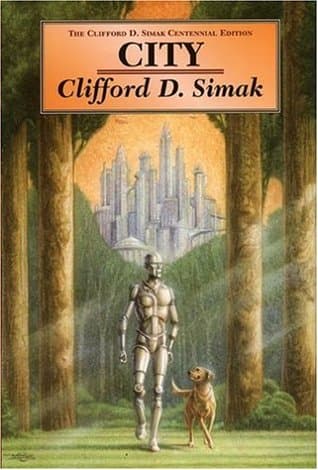
Synopsis
Covers the whole plot, including the ending.
- Difficulty
- Medium
- Pacing
- Slow
- Mood
- Melancholy, Contemplative, Philosophical, Nostalgic
- Read it if
- You enjoy contemplative, episodic science fiction exploring the slow decline of humanity and the rise of new intelligences, with a focus on philosophical and sociological themes.
- Skip it if
- You prefer fast-paced action, complex human characters, or a single, linear plot with a definitive climax.
City Plot Summary
Covers the whole plot, including the ending.
City
The story begins with Jenkins, an advanced robot, serving Gramps Webster, the last human, at the family's old homestead. Most humans have left Earth for other planets, leaving behind robots and genetically enhanced Dogs. Jenkins thinks about humanity's decline and the Websters' part in space colonization and creating intelligent Dogs. He maintains the property and cares for Gramps, ensuring his comfort in a world increasingly run by non-human intelligence. The Dogs, who can now speak, gather to hear Jenkins tell 'legends' of humanity, especially the Websters, showing their fading memory and the Dogs' developing culture.
Huddling Place
Jerome Webster, a genius in Martian diseases, lives in an isolated 'huddling place' because of his severe agoraphobia. He is one of the few humans left on Earth and is urgently needed on Mars to fight a growing plague. Despite his importance, Jerome cannot bring himself to leave his safe home, even for a short trip. His robot, Jenkins, and a Martian envoy try to convince him, stressing the serious results of his inaction. Jerome's deep fear of open spaces and new environments symbolizes humanity's increasing withdrawal from the universe they once explored, hinting at their eventual disappearance.
Census
Richard Webster, a descendant of the original Websters, finds an ant colony on his property that is quickly becoming intelligent. This unexpected evolution creates a moral problem for him and the remaining humans. At the same time, a new philosophical movement, 'The New Way,' appears, advocating for a simpler, more natural life and rejecting technology and space travel. Many humans are drawn to this movement, further speeding up Earth's depopulation. Richard tries to understand the ants' potential, while also seeing humanity's growing detachment from its past goals, and the increasing influence of the Dogs and robots.
Desertion
Kent Fowler, a human explorer, volunteers for a dangerous experiment on Jupiter. To survive Jupiter's harsh environment, he transforms into a Loper, a native Jovian creature. The experiment succeeds, but Fowler never returns to human form. Instead, he embraces his new life, finding a deep sense of peace and belonging in the alien landscape. His assistant, who also transforms, chooses to stay as well. This story, told by Jenkins, illustrates humanity's willingness to change its form and identity, and the appeal of other ways of being, contributing to their eventual departure from Earth.
Paradise
Nathaniel Webster, the last human on Earth, decides to leave his ancestral home for a peaceful 'paradise' where he can spend his final days. Jenkins and the Dogs go with him. Nathaniel reflects on the long history of the Websters and the evolution of Earth's new inhabitants. His departure marks the definite end of human presence on Earth, symbolizing a graceful exit rather than a tragic extinction. The Dogs, now the main sentient species, respectfully observe his passing, inheriting the planet and the legacy of humanity's past.
Hobbies
With humans gone, the Dogs have built a sophisticated and peaceful society, guided by Webster family principles. They pursue intellectual interests and maintain a good relationship with their robot companions. However, a new threat appears: the intelligent ant colonies, which have grown in power and numbers. The ants, with a collective consciousness, begin to challenge the Dogs' dominance. The Dogs must decide how to live with or compete with this growing intelligence, thinking about humanity's past conflicts with other species and its own technological progress.
Aesop
The Dogs, now Earth's guardians, continue to interpret humanity's 'legends,' especially those of the Websters, passed down by Jenkins. They meet an alien visitor, a 'traveler,' who brings up new philosophical questions about life and purpose. This encounter challenges the Dogs' understanding of their own history and humanity's role. The Dogs, through their philosophical inquiries and interactions with the alien, begin to form their own identity and future, moving beyond simply preserving human memory to creating their own path. Jenkins acts as a living archive, but his stories are now seen through a new lens.
The Simple Way
The tension between the Dogs and the intelligent ants grows. The ants, with their collective mind and efficient organization, are a strong force. The Dogs, with their individual yet cooperative society, must find a way to deal with this growing threat. Jenkins, always a wise observer, offers advice, drawing comparisons to human history and their mistakes. The story explores the difficulties of different intelligences living together and the potential for conflict when resources and territory are fought over. The Dogs' future on Earth depends on their ability to manage this complex relationship.
Author's Note
Clifford D. Simak provides a brief author's note, explaining his inspiration for 'City' and his intentions in writing the stories. He discusses his interest in a post-human world and the evolution of new intelligent species. Simak highlights the book's main themes, such as humanity's decline, the nature of intelligence, and the lasting legacy of culture and myth. This note gives context to the overall narrative and emphasizes the collection's philosophical basis, presenting it as a reflection on civilization and change.
Epilog
The Epilog takes place countless millennia after the last human left. Earth is now a diverse world of sentient life, including evolved Dogs, robots, and the ant collective. Humanity has become a myth, a collection of 'legends' passed down, often inaccurately, through Dog generations. Jenkins, the immortal robot, is still present, a living link to the human past, but his stories are now deeply part of the Dogs' own culture and interpreted through their unique understanding. The book ends with the Dogs reflecting on these ancient tales, confirming their role as Earth's true inheritors and its future.
City Characters
Jenkins
Supporting
The loyal and immortal robot butler to the Webster family, serving as the historian and storyteller for the Dogs.
Jenkins is an advanced, highly intelligent robot, originally designed to serve the Webster family. He is effectively immortal and remains on Earth long after humanity's departure. He possesses an encyclopedic memory of human history, particularly the Websters, and acts as the primary storyteller and chronicler of human 'legends' for the Dogs. Jenkins is wise, patient, and deeply philosophical, often reflecting on the nature of intelligence, civilization, and the passage of time. He is not just a servant but a guardian of memory and a mentor to the Dogs.
Relationships: Webster Family (Loyal, lifelong servant and caretaker); Dogs (Historian, storyteller, and philosophical guide)
The Webster Family
Protagonist/Mentioned
An ancestral line of humans whose actions and legacy profoundly shape the future of Earth and its non-human inhabitants.
The Websters are not a single character but a lineage representing humanity's journey through its decline. Individual Websters like Gramps, Jerome, Richard, and Nathaniel appear in different stories, each illustrating a facet of humanity's evolution: the pioneers, the recluses, the philosophers, and the final departures. They are responsible for many key developments, including space travel, the uplift of Dogs, and the creation of advanced robots. Their homestead serves as a central hub, and their decisions, both grand and personal, reverberate for millennia, becoming the foundational myths for the Dogs.
Relationships: Jenkins (Their devoted robot servant); Dogs (Their creations and eventual inheritors of their legacy); Robots (Their creations and fellow inhabitants)
The Dogs
Protagonist
Genetically uplifted canines who inherit Earth and develop their own sophisticated civilization and philosophy.
The Dogs are a species genetically engineered by humans, specifically the Websters, to possess intelligence and speech. After humanity's departure, they become the dominant sentient species on Earth. They develop a complex society, characterized by philosophy, ethics, and a deep respect for learning. They revere the 'legends' of humanity, particularly the Websters, as foundational myths for their own culture. The Dogs are curious, peaceful, and intellectual, but also face challenges, such as the emergence of the intelligent ants, which test their societal values and leadership.
Relationships: Jenkins (Their historian and mentor); Webster Family (Their creators and subjects of their legends); The Ants (Their rivals and potential co-inhabitants)
Gramps Webster
Supporting
An elderly Webster, one of the last humans, cared for by Jenkins.
Gramps Webster is one of the very last humans on Earth, representing the final generation to witness humanity's decline firsthand. He lives a quiet existence, cared for by Jenkins, and serves as a living link to the human past for the Dogs who gather to hear Jenkins' stories. His presence underscores the theme of humanity's gradual fading and the transition of stewardship to other species. He is a symbol of the end of an era, a quiet and dignified conclusion to humanity's long reign on Earth.
Relationships: Jenkins (His devoted caretaker and companion); Dogs (The inheritors of his world, to whom his stories are told)
Jerome Webster
Supporting
A brilliant but agoraphobic human scientist, whose fear prevents him from fulfilling a vital mission.
Jerome Webster is a highly intelligent scientist, indispensable for his knowledge of Martian diseases. However, he suffers from severe agoraphobia, a profound fear of open spaces, which confines him to his 'huddling place.' His inability to leave Earth, even to save lives on Mars, highlights humanity's increasing insularity and psychological retreat from the universe. Jerome symbolizes the human tendency to become trapped by their own limitations and fears, contributing to their eventual decline and departure from their once-conquered territories.
Relationships: Jenkins (His robot caretaker and confidant); Martian Envoy (The representative trying to persuade him to leave Earth)
Richard Webster
Supporting
A Webster who observes the rise of ant intelligence and the 'New Way' philosophy.
Richard Webster is a descendant who witnesses two significant developments: the rapid evolution of intelligence in an ant colony on his property and the growing popularity of 'The New Way' philosophy among humans. He grapples with the ethical implications of the ants' intelligence and the philosophical shift away from technology and expansion. Richard represents a human attempting to understand and adapt to a changing world, but ultimately he is part of the waning human presence, observing the forces that will shape the post-human Earth.
Relationships: The Ants (Observer of their burgeoning intelligence); The 'New Way' Followers (Observer of their philosophical shift)
Kent Fowler
Mentioned
A human explorer who transforms into a Jovian creature and chooses to remain in his new form.
Kent Fowler is an explorer who undergoes a radical physical transformation into a Loper, a native Jovian creature, to survive the harsh environment of Jupiter. This transformation is so profound that he chooses to remain in his new form, abandoning his humanity. Fowler's story, recounted by Jenkins, illustrates humanity's capacity for profound adaptation and assimilation, but also their willingness to shed their human identity when faced with the allure of a different existence. He represents a path of complete integration into an alien environment, contributing to the idea of humanity's dispersal.
Relationships: His Assistant (Fellow explorer and transformer who shares his choice)
Nathaniel Webster
Supporting
The very last human on Earth, who makes a final journey to a peaceful resting place.
Nathaniel Webster is the ultimate representation of humanity's end on Earth. As the last human, his journey to a final 'paradise' is a poignant and dignified farewell. He is accompanied by Jenkins and the Dogs, symbolizing the handover of stewardship. Nathaniel reflects on the long history of his family and humanity, accepting their fate with grace. His departure is not a tragedy but a natural conclusion, allowing the new intelligences to fully inherit the world. He embodies humanity's final act of letting go.
Relationships: Jenkins (His final companion and caretaker); Dogs (The respectful witnesses to his departure)
The Ants
Antagonist/Supporting
A species of insects that evolve collective intelligence, posing a challenge to the Dogs' dominance.
The Ants are an emergent intelligence, initially discovered by Richard Webster as a rapidly evolving colony. They represent a new form of collective consciousness, highly organized and efficient. As they grow in numbers and intelligence, they become a significant force on Earth, challenging the Dogs' established society. Their rise introduces conflict and ethical dilemmas, forcing the Dogs to confront the complexities of coexistence with another powerful, non-human intelligence. They embody the theme of continuous evolution and the potential for new forms of life to rise and assert their place.
Relationships: Dogs (Rivals and potential co-inhabitants for Earth's future); Richard Webster (Their initial human observer)
City Themes
The Decline and Legacy of Humanity
A main theme of 'City' is humanity's gradual, peaceful, and almost unnoticed decline on Earth. Instead of a catastrophic end, humans simply fade away, moving to other planets, retreating into isolation, or changing into other forms. Their legacy, however, continues through their creations: the intelligent Dogs and the immortal robots. The Websters' story, as told by Jenkins, becomes a founding myth for the Dogs, shaping their philosophy and culture. This theme appears in stories like 'City' and 'Paradise,' where the last humans quietly leave, leaving their mark not through continued presence but through the lasting impact of their past actions.
“Perhaps the greatest of all human legends was the legend of themselves.”
The Evolution of Intelligence and Species Succession
'City' explores the idea that intelligence is not unique to humanity and can appear in many forms. The genetically enhanced Dogs, advanced robots like Jenkins, and the collectively intelligent ants represent successive dominant species on Earth. The narrative suggests a natural progression where one species makes way for another, showing evolution's dynamic nature. 'Desertion' further emphasizes this by showing a human choosing to become a Jovian creature, illustrating how fluid species identity can be. This theme questions human-centered views and suggests a future where Earth has many varied, evolving intelligences.
“Man was leaving the Earth, leaving it to the things he had created.”
The Nature of Myth and History
As millennia pass, the factual history of humanity, especially the Websters, becomes myth and legend for the Dogs. Jenkins, the robot, is the main source of these stories, but they are interpreted and reinterpreted through the Dogs' unique cultural perspective. The stories are not just historical accounts but foundational narratives that shape the Dogs' understanding of their world, origins, and purpose. This theme is central to the book's entire structure, as each chapter is presented as a 'legend' told by the Dogs. It highlights how history changes, shaped by the views and needs of those who remember it, as seen in 'Aesop' where the Dogs deal with human concepts.
“These are the stories of the Websters, told by the Dogs around the dying embers of a campfire.”
Coexistence and Conflict Between Species
The book examines the challenges and possibilities of different intelligent species living together. The Dogs and robots form a harmonious society, but the appearance of intelligent ant colonies introduces a new dynamic of potential conflict. This theme explores the ethical considerations of interspecies relations, territory, and resource distribution. The Dogs, unlike humans, often seek philosophical solutions rather than outright war, showing a different approach to conflict resolution. Stories like 'Hobbies' and 'The Simple Way' directly address the growing tension and the Dogs' attempts to manage their relationship with the ants, questioning whether true peace can be achieved between different intelligences.
“Man had learned to live with the robot and the Dog, but how would the Dog learn to live with the ant?”
Plot Devices & Literary Techniques
Framing Device (Legends/Myths)
The entire narrative is presented as a series of 'legends' or 'myths' told by Dogs about humanity.
The primary plot device is the framing narrative where each chapter is introduced as a 'legend' or 'myth' recounted by the Dogs, often with Jenkins as the storyteller. This device immediately establishes the post-human context and positions humanity as a past, almost mythical entity. It allows for chronological jumps and shifts in perspective, as the stories are filtered through the Dogs' understanding and cultural interpretations. This framing emphasizes the theme of history becoming legend and the subjective nature of memory, making the reader aware that they are receiving an interpreted version of events.
The Webster Homestead
The ancestral home of the Webster family, serving as a symbolic anchor for humanity's presence and departure.
The Webster homestead is more than just a physical location; it's a symbolic anchor for humanity's presence on Earth. It is where the last Websters reside, where Jenkins faithfully serves, and where the Dogs gather to hear the ancient stories. As humans depart, the homestead remains, a poignant reminder of a bygone era. It represents continuity and tradition, even as the world around it changes dramatically. Its eventual abandonment by the last human, Nathaniel, signifies the definitive end of humanity's direct stewardship of Earth, making it a powerful symbol of transition.
The Uplifted Dogs
Genetically engineered canines given intelligence and speech, serving as humanity's successors.
The uplifted Dogs are a crucial plot device, as they are not merely companions but the direct inheritors of Earth and the primary perspective through which the story is told. Their intelligence and capacity for speech, gifted by humans, allow them to develop a sophisticated society and culture. They serve as a mirror to humanity, reflecting on human history and mistakes, but also forging their own unique path. Their existence directly addresses the question of what comes after humanity and provides a hopeful, if sometimes challenging, vision of a post-human world.
The Immortal Robot (Jenkins)
An advanced robot who serves as the living memory and historian for both humans and Dogs.
Jenkins is an immortal robot, a constant presence throughout millennia. His longevity allows him to witness the entire arc of humanity's decline and the rise of the Dogs and other intelligences. He functions as the story's primary historian and archivist, recounting the 'legends' of the Websters. His objective yet compassionate perspective provides a unique lens through which to view the events, offering insights into both human nature and the evolving non-human societies. He is the bridge between the past and the present, ensuring that humanity's legacy, however distorted, is preserved.
City Quotes
“Perhaps the greatest tragedy of mankind is that they are, in essence, a herd.”
“The wind was still, and the world was silent, save for the whisper of dry leaves.”
“There was no purpose to be served by holding on to things that had lost their meaning.”
“A man is a creature who has to find something to believe in, or he isn't a man at all.”
“The past is a story we tell ourselves, and we can change the story whenever we wish.”
“It was a peaceful world, and peace was a thing that man had never known.”
“The dogs had learned the lesson of responsibility, which was more than men had ever done.”
“Knowledge is a dangerous thing, for it makes you aware of your ignorance.”
“There was a time when men had been important, but that time was long past.”
“The web of life was intricate, and every strand was important.”
“Perhaps the greatest wisdom is to know when to let go.”
“Fear is a thing that lives in the mind, and it is a thing that can be conquered.”
“The robots, they were the keepers of the stories, the last echoes of mankind.”
“To be truly free, one must first be free of oneself.”
Quiz
10 questions on the plot and the characters. Each answer comes with a short explanation.
Question 1
In the story 'City,' what significant change occurs to the Webster house after the humans depart?
- It is dismantled and its materials are recycled for new Dog settlements.
- It becomes a central gathering place and museum for the Dogs.
- It is taken over by the ants as their primary colony.
- It is left to decay and eventually collapses due to disuse.
Show answer
B. It becomes a central gathering place and museum for the Dogs. The Webster house, after humans leave Earth, becomes a revered place for the Dogs, serving as a 'museum' of human civilization and a place for their assemblies.
Question 2
What gift did the Webster family bestow upon the Dogs, which is fundamental to their society in the book?
- Advanced technological tools for agriculture.
- The ability to read and write complex languages.
- The gift of speech and enhanced intelligence.
- Access to interstellar travel technology.
Show answer
C. The gift of speech and enhanced intelligence. The Webster family is credited with giving the Dogs the ability to speak and greatly increasing their intelligence, allowing them to form their own civilization.
Question 3
In the story 'Desertion,' what is the ultimate fate of Kenton, the first man to volunteer for the Jupiter expedition?
- He successfully returns to Earth and shares his findings.
- He perishes in a Jupiter storm shortly after landing.
- He transforms into a Loper and chooses to remain on Jupiter.
- He is rescued by a later expedition after being stranded.
Show answer
C. He transforms into a Loper and chooses to remain on Jupiter. Kenton, after experiencing the joy and freedom of being a Loper on Jupiter, chooses to shed his human form and remain on the planet, abandoning humanity.
Question 4
What is the primary reason for the decline and eventual disappearance of humans from Earth in 'City'?
- A catastrophic war or environmental disaster.
- Mass migration to other planets and a loss of will to live on Earth.
- A global pandemic that wiped out most of the population.
- The rise of sentient robots who expelled humans from the planet.
Show answer
B. Mass migration to other planets and a loss of will to live on Earth. Humans gradually leave Earth, preferring to explore and settle other planets, and those who remain lose their drive and eventually fade away, often becoming hermits.
Question 5
What role do robots, particularly Jenkins, play in the post-human society of the Dogs?
- They become the new rulers, enslaving the Dogs.
- They serve as caretakers and helpers, essentially 'hands' for the Dogs.
- They are dismantled for parts by the Dogs.
- They develop their own independent civilization separate from the Dogs.
Show answer
B. They serve as caretakers and helpers, essentially 'hands' for the Dogs. Robots like Jenkins were given to the Dogs by humans to be their 'hands,' performing tasks the Dogs cannot or prefer not to do, thus acting as loyal servants and companions.
Question 6
In 'Huddling Place,' what is the primary concern that causes Jerome A. Webster to remain housebound?
- He is afraid of the wild animals that roam outside the city limits.
- He suffers from agoraphobia, a fear of open spaces.
- He is physically frail and unable to leave his home.
- He is under house arrest for a past crime.
Show answer
B. He suffers from agoraphobia, a fear of open spaces. Jerome A. Webster suffers from severe agoraphobia, a symptom of humanity's increasing isolation and withdrawal into their own 'huddling places' as society declines.
Question 7
What is the 'simple way' referred to in the story of the same name, and what does it entail for the new inhabitants?
- A return to basic hunting and gathering for the Dogs.
- A philosophy of living in harmony with nature, adopted by the Dogs and the ants.
- The method used by humans to travel to other planets.
- A robotic programming language that simplifies complex tasks.
Show answer
B. A philosophy of living in harmony with nature, adopted by the Dogs and the ants. The 'simple way' describes the lifestyle adopted by the Dogs and later the ants, emphasizing a peaceful, natural existence without the complexities of human technology or cities.
Question 8
The 'Aesop' story features a philosophical debate between a Dog and a mutant about what fundamental aspect of existence?
- The ethics of interstellar travel.
- The nature of intelligence and consciousness.
- The value of knowledge and the purpose of existence.
- The best form of government for a post-human society.
Show answer
C. The value of knowledge and the purpose of existence. In 'Aesop,' the debate centers on the purpose of life and the value of knowledge, with the Dog valuing practical wisdom and the mutant seeking deeper, perhaps ultimately unanswerable, questions.
Question 9
What specific characteristic makes the Lopers of Jupiter so appealing to humans like Kenton in 'Desertion'?
- Their advanced telepathic communication abilities.
- Their ability to fly and explore the gas giant's atmosphere.
- Their freedom from physical pain and the burden of individuality and thought.
- Their access to a vast storehouse of alien knowledge.
Show answer
C. Their freedom from physical pain and the burden of individuality and thought. The Lopers offer an escape from the burdens of human consciousness, individuality, and physical pain, allowing a blissful, integrated existence with the Jovian environment.
Question 10
By the time of the 'Epilog,' what is the ultimate fate of Earth's sentient population, including the Dogs and the ants?
- They have all migrated off-world to join the scattered human colonies.
- They have achieved a symbiotic relationship and coexist peacefully on a rejuvenated Earth.
- They have engaged in a final, destructive war that leaves Earth barren.
- They have evolved into a single, unified consciousness that encompasses the entire planet.
Show answer
B. They have achieved a symbiotic relationship and coexist peacefully on a rejuvenated Earth. The Epilog describes a future where the Dogs, ants, and other creatures have found a way to live in harmony, forming a new, balanced ecosystem on Earth, having moved past the human-centric view.
City FAQ
What is the central premise of Clifford D. Simak's 'City'?
'City' is a collection of interconnected short stories, presented as legends and myths passed down by Dogs in a post-human world. These tales chronicle the slow decline and eventual disappearance of humanity, focusing on the Webster family's pivotal role in this transition, from developing interstellar travel to endowing Dogs with speech and creating robots to serve as their caretakers.
Who are the primary narrators of these stories, and what is their perspective?
The primary narrators are the Dogs, descendants of the Webster family's pets, who have gained sentience and developed a sophisticated culture. They recount the legends of 'Man' through their own understanding and oral tradition, often viewing humans as a mysterious, sometimes problematic, but ultimately revered species that has vanished.
How do the robots fit into the post-human society depicted in 'City'?
Robots, particularly the loyal butler Jenkins, are initially created by humans to serve as their hands and caretakers. After humanity's departure, they continue their programmed duties, primarily caring for the Dogs and maintaining the remnants of human civilization, acting as a bridge between the old world and the new canine one.
What event marks the ultimate departure of humanity from Earth?
Humanity's ultimate departure from Earth is not a single cataclysmic event, but a gradual emigration to other planets, facilitated by the Webster family's development of interstellar travel. Many humans, seeking solace or new frontiers, eventually abandon Earth, leaving it to the Dogs and robots, as exemplified by the exodus in 'Paradise'.
What is the significance of the 'City' itself in the first story?
In the initial story 'City', the titular city represents humanity's declining urban centers, which are gradually abandoned as people move to more rural 'huddling places' or off-world. It symbolizes the obsolescence of traditional human civilization and the beginning of the Dogs' stewardship of the Earth.
How does the character of Jenkins evolve throughout the legends?
Jenkins, the loyal robot butler, evolves from a simple servant to a keeper of history and a protector of the Dogs. He meticulously records human history and serves as a living archive, offering counsel and continuity across centuries, demonstrating an impressive capacity for adaptation and loyalty beyond his initial programming.
What is the 'huddling place' and why is it important to the Dogs?
The 'huddling place' refers to the rural, self-sufficient homesteads that humans retreat to as cities decline. For the Dogs, these places represent the origin of their own culture and the last vestiges of direct human interaction, becoming sacred ground where the legends of Man are preserved and revered.
What is the fate of the 'ants' and what do they represent in 'The Simple Way'?
The 'ants' are an intelligent, hive-minded species encountered by humans, who initially pose a threat but ultimately find a way to coexist. They represent an alternative form of intelligence and societal structure, challenging human anthropocentrism and hinting at the diverse life forms that exist beyond human comprehension.
How does the concept of 'desertion' manifest in the story 'Desertion'?
In 'Desertion', the concept manifests as a literal transformation of humans into Martian life forms, finding a new, more integrated existence on another planet. It explores the idea of shedding humanity's physical form and limitations to adapt to new environments, a profound act of abandoning one's original species.
What psychological need does the Webster family fulfill for the Dogs?
The Webster family fulfills a deep psychological need for an origin story and a guiding myth for the Dogs. As their creators and benefactors, the Websters provide a framework for understanding their own existence, purpose, and cultural values, acting as a foundational 'ancestral' figure.
How does the human fear of responsibility contribute to their decline?
The human fear of responsibility, particularly for maintaining a complex society and dealing with its problems, is a recurring theme. This fear drives them to seek easier lives, whether in rural isolation or on new planets, ultimately leading to their abdication of stewardship over Earth and their own civilization.
What psychological impact does the gift of speech have on the Dogs?
The gift of speech profoundly transforms the Dogs, enabling complex thought, communication, and the development of culture, history, and philosophy. It allows them to form a society, transmit knowledge, and ponder their existence, elevating them beyond mere animals to sentient beings with their own unique psychology.
How does Simak explore themes of evolution and adaptation through the various species?
Simak explores evolution by showing humans adapting to other planets, Dogs evolving sentience and forming a new dominant species, and the emergence of other intelligent life forms like the ants. This highlights the continuous, multifaceted process of life adapting to its environment, often beyond human control or expectation.
Is the ultimate departure of humanity a tragedy or a natural progression?
This is open to interpretation. While it marks the end of human dominance, the narrative often presents it as a natural progression, a species seeking new horizons or finding peace in simpler existences. The Dogs, in their legends, do not mourn humanity's absence but rather celebrate their legacy and the world they inherited, suggesting a cyclical view of life.
What is the significance of the recurring motif of 'legends' and 'myths'?
The recurring motif emphasizes the subjective nature of history and the power of storytelling. The Dogs' legends are not objective historical accounts but rather interpretations shaped by their culture and understanding, highlighting how societies construct their past and derive meaning from it, even when the original context is lost.
Does the book present a hopeful or bleak vision of the future?
The book offers a complex vision that is both melancholy and hopeful. While it portrays the end of human civilization, it simultaneously presents the rise of a new, peaceful canine society and the potential for diverse forms of intelligent life. It suggests that while species may come and go, life itself continues to thrive and adapt in new ways.
What philosophical statement does Simak make about the nature of 'home'?
Simak suggests that 'home' is not necessarily a fixed geographical location or species, but rather a state of belonging and purpose. Humans seek new homes among the stars, while Dogs find their home on a revitalized Earth. The book argues that true 'home' is where one finds peace, meaning, and community, regardless of physical form or planet.
How does the 'Epilog' change or solidify the reader's understanding of the entire collection?
The 'Epilog' typically ties together the various legends, often providing a final, reflective perspective from the Dogs or Jenkins. It solidifies the idea of humanity as a vanished but revered ancestor, and firmly establishes the Dogs' long-term stewardship of Earth, confirming the cyclical nature of life and the enduring power of legacy.
About the author
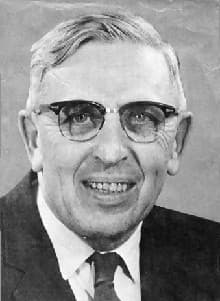
Clifford D. Simak was a celebrated American science fiction author, known for his thoughtful and often pastoral tales. His most famous work, "City," explores themes of humanity's future and its relationship with robots and dogs. Simak's writing style, characterized by its gentle pacing and focus on philosophical questions, earned him multiple Hugo and Nebula Awards, solidifying his legacy as a master of the genre.
Similar books
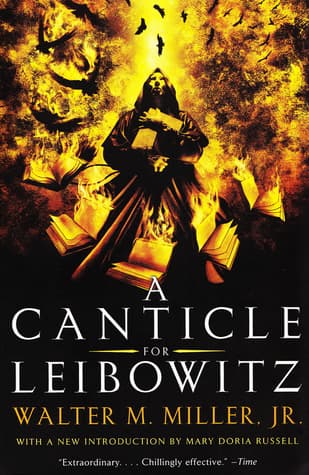
- A Canticle for Leibowitz
Walter M. Miller Jr.
4.0 (93k) average on GoodreadsFantasyExplores humanity's rise and fall through a series of interconnected stories over a vast timeline, with a contemplative tone.
- Dune
Frank Herbert
4.2 (766k) average on GoodreadsFantasyFeatures deep world-building and explores the long-term evolution of species and societies, though 'City' is far less epic in scope.
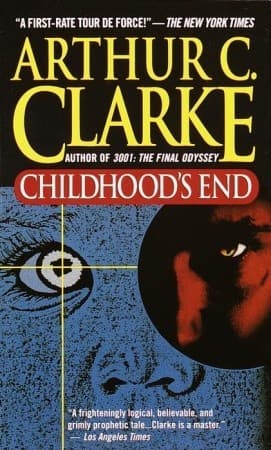
- Childhood's End
Arthur C. Clarke
4.1 (130k) average on GoodreadsFantasyWhile both explore humanity's evolution and transformation, Clarke's vision is grander, more cosmic, and driven by an external, omnipotent force. Simak's transformation is internal, gradual, and seemingly self-imposed, focusing on a quiet relinquishing rather than a forced transcendence.
- Harry Potter and the Sorcerer's Stone
J.K. Rowling
4.5 (7M) average on GoodreadsFantasyRescued from a miserable life under the stairs, an orphaned boy discovers he's a wizard destined for a magical school, where he uncovers a dangerous secret tied to the dark wizard who murdered his parents.
- The Hunger Games
Suzanne Collins
4.3 (6.4M) average on GoodreadsFantasyIn a future where children fight to the death on live television, Katniss Everdeen volunteers for the arena, turning a death sentence into a fight for survival and a spark of rebellion.
- 1984
George Orwell
4.2 (3.1M) average on GoodreadsPoliticsIn a future where surveillance and thought control are absolute, a man's search for truth clashes with the Party, showing that hope can be a form of rebellion.




Enjoyed the summary?
A summary gives you the shape of the book. The book itself has the detail, the examples and the voice.
Find City on AmazonAs an Amazon Associate, BookBrief earns from qualifying purchases. How we're funded