
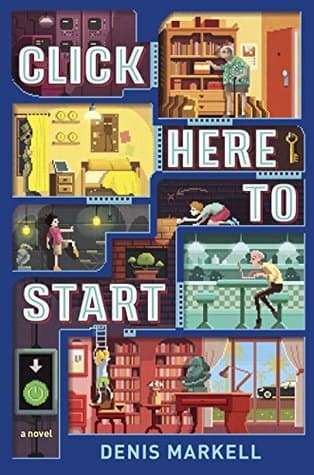
Synopsis
Covers the whole plot, including the ending.
- Difficulty
- Easy
- Pacing
- Fast
- Mood
- Adventurous, Mysterious, Engaging, Clever
- Read it if
- You enjoy mysteries, escape rooms, video game references, and historical puzzles.
- Skip it if
- You dislike children's protagonists or stories with a strong focus on puzzles.
Click Here to Start Plot Summary
Covers the whole plot, including the ending.
The Inheritance and the Apartment
Twelve-year-old Ted Gerson, a video game player, learns that his Great-Uncle Ted, whom he barely knew, has died. To his surprise, Ted is named the sole heir to his great-uncle's apartment and everything in it. When Ted and his mother visit the New York City apartment, he finds it a messy, junk-filled place, seemingly without any valuable treasure. However, a strange note from his great-uncle suggests the 'treasure' is hidden inside the apartment, hinting at a game or puzzle. Ted's initial disappointment turns to interest as he recognizes elements from his video games and escape rooms.
The First Clue and the Game Begins
While searching the apartment, Ted finds a hidden compartment with a small, old wooden box. Inside is a cryptic note from his Great-Uncle Ted, giving game rules and a first clue. The note explains that the apartment is an elaborate, real-life escape game, made for Ted. Excited by the challenge, Ted realizes his great-uncle knew about his love for puzzles and video games. This discovery makes Ted determined to solve the mystery, turning the big task of cleaning the apartment into an exciting quest. He decides to ask his two best friends, Caleb and Isabel, for help.
Assembling the Team
Ted calls his friends, Caleb and Isabel, and explains the unusual situation. Caleb, a tech expert good with codes and logic, immediately joins, seeing it as an exciting mental challenge. Isabel, a history lover and reader, is interested in the historical connections and the chance for a real adventure. They agree to meet at the apartment, ready for the first clue. Their combined skills and different viewpoints prove helpful as they begin working together, forming a team set on solving Great-Uncle Ted's game. Their friendship and individual strengths become important assets in the unfolding mystery.
The Mysterious Man in the Hat
As Ted, Caleb, and Isabel work through the puzzles, they notice a mysterious man in a fedora often lurking near the apartment building and trying to get inside. This man, later identified as Mr. Nimbus, seems to watch their every move, making them suspicious. His presence adds danger and urgency to their quest. They realize they are not the only ones interested in Great-Uncle Ted's treasure. The children become more careful, understanding that their game has real risks and a possible enemy who is trying to stop them and claim the treasure.
Unraveling the World War II Connection
Through a series of puzzles, including old maps, riddles in vintage games, and historical documents, Ted and his friends find a connection to World War II. They learn that Great-Uncle Ted was part of the 442nd Regimental Combat Team, a decorated Japanese American unit. The clues suggest the 'treasure' is not just a game, but a real fortune in gold and jewels their unit found during the war and had to hide. This revelation raises the stakes, turning their scavenger hunt into a historical investigation.
The Role of the Nisei Soldiers
Isabel's historical knowledge becomes important as they learn more about the 442nd Regimental Combat Team, mostly made of Nisei (second-generation Japanese Americans). They learn about the prejudice these soldiers faced, with many of their families held in internment camps back home, even as they fought for the United States. The treasure, they realize, might be more than money; it could represent the untold stories and sacrifices of these overlooked heroes. This historical background deepens the children's understanding and appreciation for Great-Uncle Ted's legacy, adding a moral purpose to their mission.
The Race Against Mr. Nimbus
Mr. Nimbus acts more aggressively. He breaks into the apartment, searches parts of it, and even directly confronts the children, demanding the treasure. This shows he knows about the treasure's true nature and will do much to get it. The children realize they are in a race against time with a dangerous enemy. They must use their intelligence and work together more efficiently, always watching their backs, to stay ahead of Mr. Nimbus and secure the treasure before he can get it. The game has become a dangerous real-world chase.
The Final Clue and the Subway System
The final clues lead Ted, Caleb, and Isabel beyond the apartment. They discover the treasure is not inside the building but in a location reached through the New York City subway system. The clues involve subway maps, specific station names, and historical facts about the city's infrastructure. This twist expands their adventure, forcing them to navigate the busy city, using their puzzle-solving skills on real landmarks and public transport. The chase with Mr. Nimbus continues, making their city journey even more exciting and dangerous.
The Treasure's Location
Following the subway clues, Ted, Caleb, and Isabel arrive at a forgotten, unused part of an old subway tunnel. There, hidden in a clever compartment, they find Great-Uncle Ted's treasure. To their surprise, it is not just gold and jewels, but also historical artifacts and documents from the 442nd Regimental Combat Team, along with Great-Uncle Ted's journal detailing their wartime experiences and the treasure's discovery. This shows that the treasure's real worth is not only monetary but also its historical importance and the stories it holds.
Confrontation and Resolution
Just as the children find the treasure, Mr. Nimbus appears, having followed them. A tense confrontation follows, but thanks to the children's quick thinking and teamwork, they outsmart him. Authorities, called by Ted's worried mother, arrive and arrest Mr. Nimbus. With the immediate danger gone, Ted, Caleb, and Isabel decide the historical artifacts and the story of the 442nd are too important to keep or sell. They arrange for the historical documents and artifacts to be given to a museum, ensuring the Nisei soldiers' legacy is honored and preserved, while the monetary treasure is handled properly.
Principal Figures
Ted Gerson
Protagonist
A twelve-year-old video game enthusiast who becomes an unlikely treasure hunter.
Ted is a bright, observant, and resourceful twelve-year-old boy whose primary passion is video games and escape rooms. He possesses a keen eye for detail and a strategic mind, honed by countless hours of virtual puzzles. Initially somewhat introverted, he thrives when faced with a challenge, especially one that mirrors his digital hobbies. His great-uncle's game forces him out of his comfort zone and into real-world adventure, revealing his courage and leadership qualities. He is driven by curiosity, a desire to honor his great-uncle, and the thrill of solving the ultimate puzzle.
Relationships: Great-Uncle Ted (Inheritor, puzzle-solver of his legacy); Caleb (Best friend, intellectual partner); Isabel (Best friend, historical consultant); Mr. Nimbus (Antagonist, rival for the treasure)
Caleb
Supporting
Ted's tech-savvy best friend, skilled in codes and logic.
Caleb is Ted's best friend and the brains behind much of the technical and logical problem-solving. He is adept with computers, enjoys deciphering codes, and possesses a sharp, analytical mind. Caleb provides the practical, methodical approach to the puzzles, often seeing patterns and solutions that others might miss. He is loyal, supportive, and always ready for an intellectual challenge, making him an indispensable member of the trio. His calm demeanor and logical reasoning balance Ted's impulsive enthusiasm.
Relationships: Ted Gerson (Best friend, partner in adventure); Isabel (Friend, fellow treasure hunter)
Isabel
Supporting
Ted's historically knowledgeable best friend, key to unlocking the past.
Isabel is Ted's other best friend and the history expert of the group. She is intelligent, well-read, and possesses a deep fascination with historical facts and events. Her knowledge of World War II and New York City history proves crucial in deciphering many of Great-Uncle Ted's clues, particularly those related to the 442nd Regimental Combat Team. Isabel is also observant and socially astute, often picking up on subtle cues that help them navigate their interactions with others. She brings a vital humanistic perspective to their quest, emphasizing the stories behind the puzzles.
Relationships: Ted Gerson (Best friend, partner in adventure); Caleb (Friend, fellow treasure hunter)
Great-Uncle Ted
Mentioned
The eccentric, deceased great-uncle who sets up the elaborate treasure hunt.
Great-Uncle Ted is the mastermind behind the entire adventure. Though deceased, his personality and intelligence are vividly conveyed through the intricate puzzles and clues he leaves behind. He was an eccentric and brilliant man, a veteran of the 442nd Regimental Combat Team during World War II, who discovered and hid a significant treasure. His motivations are complex: to challenge his great-nephew, to honor the legacy of his fellow Nisei soldiers, and to ensure the treasure's true story is told. He is a posthumous mentor figure, guiding Ted through his final game.
Relationships: Ted Gerson (Great-nephew, heir, recipient of his final game); 442nd Regimental Combat Team (Fellow soldiers, source of his historical mission)
Mr. Nimbus
Antagonist
A shadowy figure intent on stealing the treasure for himself.
Mr. Nimbus is the primary antagonist, a mysterious and menacing man who relentlessly pursues the treasure. He is driven by greed and a single-minded determination to acquire the fortune, showing little regard for the historical significance or the children's safety. He is cunning and persistent, often appearing when least expected, and his actions create a sense of urgency and danger for Ted and his friends. His past connection to Great-Uncle Ted or the treasure's origins is hinted at but never fully revealed, adding to his enigmatic and threatening presence.
Relationships: Ted Gerson (Rival, target of his intimidation); Caleb (Rival); Isabel (Rival)
Ted's Mom (Mrs. Gerson)
Supporting
Ted's concerned but ultimately supportive mother.
Ted's mother is initially overwhelmed by the task of clearing out Great-Uncle Ted's apartment and skeptical about any 'treasure.' She is a loving parent who prioritizes her son's safety and well-being. While she doesn't fully grasp the intricacies of the game, she eventually becomes supportive of Ted's quest, though her concern for his safety remains paramount. She provides a grounding presence and, in the end, plays a role in ensuring the authorities are involved when Mr. Nimbus becomes too dangerous.
Relationships: Ted Gerson (Mother-son relationship); Great-Uncle Ted (Brother-in-law (or similar relation), executor of his estate)
Themes & Insights
The Power of Games and Puzzles
The novel shows how skills from seemingly simple activities like video games and escape rooms can be useful in real-world problems. Ted's strategic thinking, pattern recognition, and problem-solving, honed by gaming, help him navigate Great-Uncle Ted's puzzle. This theme suggests that play can be a way to learn and prepare, turning a junk-filled apartment into an important quest. It confirms Ted's passion by showing its practical use in finding a historical secret and a real treasure.
“For years, Ted had been training for this. Not for life, exactly, but for a very specific kind of life. A life of puzzles.”
Uncovering Hidden History
A main theme is finding and honoring overlooked historical stories, especially that of the Japanese American 442nd Regimental Combat Team during World War II. The treasure hunt becomes a mission to highlight the bravery and sacrifice of these soldiers, who fought for a country that imprisoned their families. Isabel's historical knowledge is key here, making the gold and jewels a way to share a larger historical legacy. The story emphasizes the need to remember and share these untold stories.
“It wasn't just gold. It was a story. A story that needed to be told.”
Friendship and Collaboration
The success of the treasure hunt depends entirely on the teamwork and different skills of Ted, Caleb, and Isabel. Ted's strategic mind, Caleb's technical ability, and Isabel's historical knowledge form a strong team. The challenges are too complex for any one of them to solve alone, showing the strength in different viewpoints and mutual help. Their friendship is tested but grows stronger through shared adventure, danger, and discovery, proving that teamwork helps overcome obstacles.
“They were a team. And a team was always stronger than one person alone.”
The True Meaning of Treasure
At first, the 'treasure' seems to be money, but as the story continues, its true value is revealed to be much greater. The historical artifacts, the journal, and the story of the 442nd Regimental Combat Team become the most valuable part of Great-Uncle Ted's legacy. This theme explores the idea that true treasure is not just gold and jewels, but preserved history, personal stories, and the honor of those who sacrificed. The children's choice to donate the historical items shows this change in understanding, valuing legacy over money.
“The real treasure wasn't the gold. It was the stories. The history.”
Plot Devices & Literary Techniques
The Inheritance as a Catalyst
The great-uncle's will sets the entire mystery in motion.
Great-Uncle Ted's will, bequeathing his eccentric apartment and its 'treasure' to young Ted, acts as the primary catalyst for the entire plot. Without this unusual inheritance, Ted would never have encountered the puzzles or embarked on the adventure. It immediately establishes the central mystery and provides Ted with a compelling reason to engage with a world beyond his video games, transforming an ordinary summer into an extraordinary quest. This device effectively draws the protagonist into the story's core conflict.
Escape Room/Video Game Structure
The plot is structured like a real-life escape room or video game level.
The entire treasure hunt is meticulously designed by Great-Uncle Ted to mimic the structure of an escape room or a multi-level video game. This device is central to the narrative, as it leverages Ted's specific skills and interests. Each clue leads to another, puzzles must be solved sequentially, and progress is marked by unlocking new areas or understanding deeper layers of the mystery. This structure provides a clear, engaging framework for the plot, making the complex mystery accessible and exciting for the target audience.
The Red Herring/False Expectation
The initial perception of 'treasure' misleads characters and readers.
The initial mention of 'treasure' creates a false expectation of a purely monetary fortune. This serves as a red herring, subtly guiding the characters and the reader to focus on material wealth. However, as the story unfolds, the true nature of the treasure—historical documents and the untold story of the 442nd Regimental Combat Team—is revealed to be far more significant. This device allows for a thematic reveal, emphasizing that the real value lies beyond mere riches and enriching the story with a deeper historical and emotional core.
The Antagonist's Pursuit
Mr. Nimbus's pursuit adds urgency and danger to the children's quest.
The relentless pursuit by Mr. Nimbus serves as a crucial plot device to heighten tension and create a sense of urgency. His presence transforms the leisurely puzzle-solving into a dangerous race against time. He acts as an external threat, forcing Ted and his friends to work faster, think more strategically, and confront real-world consequences. This antagonist ensures that the stakes are always high, adding excitement and propelling the plot forward through confrontations and near-misses.
Click Here to Start Quotes
“The only way to solve a mystery is to become a part of it.”
“Sometimes the biggest secrets are hidden in plain sight.”
“Every game has rules, but not every player follows them.”
“The past isn't just history; it's a puzzle waiting to be solved.”
“Friendship is the best cheat code.”
“You can't win if you don't play.”
“The real treasure isn't what you find, but what you discover about yourself along the way.”
“A true hacker doesn't just break codes; they understand the mind that made them.”
“Sometimes you have to look beyond the screen to see the bigger picture.”
“Every ending is just a new beginning, if you know where to look for the 'start' button.”
“Clues are like breadcrumbs; follow enough of them, and you'll find your way home.”
“The most important thing about a journey isn't the destination, but the company you keep.”
“Fear is just a puzzle piece. Once you figure out where it fits, it loses its power.”
“Even the smallest detail can unlock the biggest secret.”
Quiz
10 questions on the plot and the characters. Each answer comes with a short explanation.
Question 1
What is the primary activity Ted Gerson has spent most of his summer doing before his great-uncle's death?
- Reading books at the library
- Playing video games
- Practicing a musical instrument
- Building models
Show answer
B. Playing video games The book description explicitly states that Ted Gerson has spent most of his summer playing video games.
Question 2
What kind of 'game' has Great-Uncle Ted set up in his apartment for Ted to solve?
- A traditional board game tournament
- A scavenger hunt with riddles
- A real-life escape-the-room game
- A virtual reality simulation
Show answer
C. A real-life escape-the-room game The description clearly states that Great-Uncle Ted has set up his apartment like a real-life escape-the-room game.
Question 3
What is the name of the protagonist who inherits his great-uncle's 'treasure'?
- Caleb
- Ted Gerson
- Isabel
- Denis Markell
Show answer
B. Ted Gerson The protagonist's name is explicitly stated as Ted Gerson, who is twelve years old.
Question 4
Who are Ted's two friends that help him with the mystery?
- Ernie Cline and Mr. Lemoncello
- Caleb and Isabel
- Mrs. Basil E. Frankweiler and his Great-Uncle Ted
- His parents
Show answer
B. Caleb and Isabel The summary mentions that Ted gets help from his friends Caleb and Isabel.
Question 5
What historical group is linked to the 'real gold and jewels' that might be Uncle Ted's treasure?
- A group of ancient explorers
- A Japanese American unit that served in World War II
- A secret society of video game developers
- A family of eccentric collectors
Show answer
B. A Japanese American unit that served in World War II The description reveals that the 'treasure' might be real gold and jewels found by a Japanese American unit that served in World War II.
Question 6
What specific skills does Ted use to solve the puzzles in his great-uncle's apartment?
- His knowledge of ancient history and cryptography
- His specially honed skills from playing video games
- His athletic prowess and physical strength
- His artistic talent and creativity
Show answer
B. His specially honed skills from playing video games The summary states that Ted uses his 'specially honed skills' acquired from playing video games to solve the puzzles.
Question 7
What is the main danger Ted and his friends face as they get closer to unraveling the mystery?
- They might run out of time before the treasure is lost forever.
- Someone dangerous is hot on their heels, trying to get the fortune.
- The puzzles become too difficult to solve.
- They might accidentally destroy the apartment.
Show answer
B. Someone dangerous is hot on their heels, trying to get the fortune. The description explicitly mentions, 'someone dangerous is hot on their heels, and he’s not about to let them get away with the fortune.'
Question 8
The book is compared to 'Ready Player One', 'Escape from Mr. Lemoncello's Library', and 'From the Mixed Up Files of Mrs. Basil E. Frankweiler'. What common theme or element does 'Click Here to Start' likely share with these books?
- A focus on futuristic technology and virtual reality.
- Children solving a mystery or puzzle in a unique setting to find a treasure.
- Stories primarily about historical events and figures.
- Narratives centered around school life and friendships.
Show answer
B. Children solving a mystery or puzzle in a unique setting to find a treasure. All three comparison books involve young protagonists solving puzzles or mysteries to uncover something significant, often a treasure, within an unusual or adventurous setting. This aligns perfectly with 'Click Here to Start'.
Question 9
What does Great-Uncle Ted's apartment initially appear to be, before Ted discovers its true nature?
- A minimalist, empty space
- An overstuffed junk shop
- A state-of-the-art gaming parlor
- A meticulously organized museum
Show answer
B. An overstuffed junk shop The description states Ted explores his great-uncle's 'overstuffed junk shop of an apartment' before realizing it's an escape game.
Question 10
The book description mentions 'Young fans of Ernie Cline's Ready Player One will love this classic video game inspired mystery'. What does 'classic video game inspired' imply about the nature of the puzzles or references in the book?
- The puzzles will exclusively involve modern virtual reality games.
- The mystery will feature elements, logic, or references reminiscent of older, well-known video games.
- The characters will literally enter a video game world to solve the mystery.
- The plot will be a direct adaptation of a classic video game story.
Show answer
B. The mystery will feature elements, logic, or references reminiscent of older, well-known video games. The phrase 'classic video game inspired' suggests that the puzzles and mystery will draw upon themes, mechanics, or references from older, foundational video games, much like 'Ready Player One' does.
Click Here to Start FAQ
What is the central mystery Ted Gerson must solve in 'Click Here to Start'?
Ted Gerson must solve a complex series of real-world puzzles and riddles left by his eccentric Great-Uncle Ted, which transform his uncle's apartment into an elaborate escape-the-room game. The ultimate goal is to locate a priceless treasure that Great-Uncle Ted hinted at in his will.
How do Ted's video game skills help him in the real-world treasure hunt?
Ted's extensive experience with video games, particularly his ability to recognize patterns, solve logic puzzles, and think strategically under pressure, directly translates to his success in navigating Great-Uncle Ted's game. He approaches the apartment's challenges as if they were levels to beat, using his gamer's intuition to decipher clues and unlock secrets.
Who are Ted's main companions on his adventure, and what unique skills do they bring?
Ted is joined by his friends Caleb and Isabel. Caleb is a tech whiz who can easily navigate digital clues and online research, while Isabel is a history buff with a keen eye for details and historical context, proving invaluable when the puzzles delve into historical events.
What is the true nature of the 'treasure' Great-Uncle Ted leaves behind?
The 'treasure' isn't just sentimental; it turns out to be real gold and jewels. This fortune was originally discovered by a Japanese American unit that served during World War II, adding a layer of historical significance and danger to the quest.
Who is the antagonist pursuing Ted and his friends, and what are their motivations?
The antagonist is a dangerous individual who is also after the fortune. Their motivations stem from greed and a desire to claim the treasure for themselves, leading them to aggressively pursue Ted and his friends as they get closer to solving the mystery.
What specific historical event is central to the origin of the treasure?
The treasure's origin is deeply rooted in the experiences of a Japanese American unit during World War II. This connection highlights the historical injustices faced by Japanese Americans and adds a poignant layer of meaning to the treasure hunt.
How does Great-Uncle Ted's character and past influence the design of his game?
Great-Uncle Ted was an eccentric individual with a love for puzzles and history, likely influenced by his own experiences or knowledge of the WWII unit. His personality is reflected in the intricate, personalized nature of the game, making it a final, elaborate message from him to Ted.
Are there any subtle clues about the antagonist's identity or connection to the treasure early in the book?
While not explicitly stated, the antagonist's immediate awareness and aggressive pursuit of the treasure suggest they might have had prior knowledge of Great-Uncle Ted's activities or the treasure's existence, possibly even a past connection to the WWII unit or its legacy.
How does the book explore the theme of legacy through Great-Uncle Ted's actions?
Great-Uncle Ted's elaborate game and the historical treasure represent his legacy, not just of wealth but of memory and justice. He uses the game to ensure the story of the Japanese American unit is remembered and that the treasure finds its rightful place, embodying a final act of remembrance and purpose.
How does Ted's journey impact his self-perception and relationship with his video game hobby?
Ted's journey validates his video game skills, showing him they have real-world application and value beyond mere entertainment. This boosts his confidence and helps him see his hobby not as a distraction, but as a legitimate skill set that can lead to incredible discoveries and personal growth.
What psychological impact does the escalating danger have on Ted and his friends?
The escalating danger forces Ted and his friends to confront fear, make difficult decisions, and rely heavily on each other. This pressure strengthens their bonds of friendship, fosters resilience, and pushes them to develop critical thinking and problem-solving skills under duress.
How does the book depict the psychological weight of historical injustice through the treasure's origin?
The treasure's origin, tied to a Japanese American unit during WWII, subtly conveys the psychological weight of historical injustice. It highlights how past events can have lasting impacts, influencing present-day actions and requiring future generations to confront and acknowledge these histories.
In what ways does Ted's initial perception of his great-uncle change throughout the story?
Initially, Ted likely views Great-Uncle Ted as just an eccentric relative with a junk-filled apartment. As he uncovers the elaborate game and the profound historical significance of the treasure, his perception shifts to one of deep respect and understanding for his uncle's cleverness, wisdom, and hidden depths.
Is the book suggesting that video games are a valid form of learning or skill development?
Yes, the book strongly suggests that video games can be a valid and powerful form of learning and skill development. Ted's success directly stems from his gaming abilities, demonstrating how strategic thinking, pattern recognition, and persistence cultivated in games can be highly applicable to real-world challenges.
What is the broader message about overlooked history that the book conveys?
The book conveys a powerful message about overlooked history, specifically highlighting the experiences of Japanese Americans during WWII. By making this history central to the treasure, it encourages readers to delve deeper into untold stories and recognize the contributions and injustices faced by marginalized groups.
Could Great-Uncle Ted's game be interpreted as a form of therapy or a way to process his own past?
It's plausible that Great-Uncle Ted's elaborate game serves as a form of therapy or a way to process his own past. The intricate nature of the puzzles and the historical significance of the treasure suggest a deep personal connection, allowing him to organize his memories and impart a final, meaningful message.
How does the ending suggest the ongoing importance of the treasure's history, beyond just its monetary value?
The ending likely emphasizes that the true value of the treasure lies not just in its gold and jewels, but in the historical narrative it represents. It suggests that preserving and sharing the story of the Japanese American unit and their contributions is paramount, ensuring their legacy endures beyond the monetary gain.
What lesson does Ted learn about the difference between virtual challenges and real-life consequences?
Ted learns that while virtual challenges can be reset, real-life consequences are permanent and carry significant emotional weight. The escalating danger from the antagonist and the historical gravity of the treasure impress upon him the seriousness of his quest, pushing him beyond the 'game over' mentality of video games.
Similar books
- Ready Player One
Ernest Cline
4.3 (861k) average on GoodreadsFantasyFeatures a treasure hunt driven by pop culture and video game knowledge.
- From the Mixed-Up Files of Mrs. Basil E. Frankweiler
E.L. Konigsburg
4.2 (189k) average on GoodreadsChildren'sChildren solve a mystery involving art and history in a famous New York City landmark.
- The Westing Game
Ellen Raskin
4.0 (165k) average on GoodreadsChildren'sBoth books feature an eccentric will leading to a complex inheritance game/scavenger hunt involving multiple characters. While 'The Westing Game' focuses more on character interactions and psychological puzzles among disparate adults and teens, 'Click Here to Start' is geared towards a younger audience with a more direct, clue-based adventure. Markell's book incorporates significant historical education, a feature less central to Raskin's narrative.
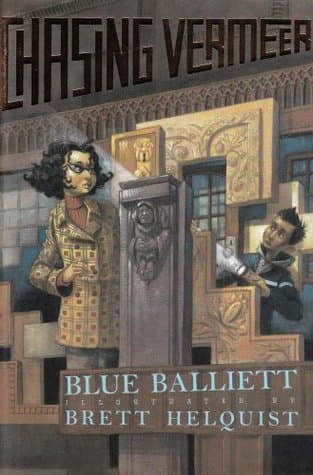
- Chasing Vermeer
Blue Balliett
3.7 (28k) average on GoodreadsChildren'sBoth novels involve young protagonists solving an art-related mystery with historical underpinnings. Balliett's 'Chasing Vermeer' heavily integrates art history and visual puzzles (pentominoes), while Markell's 'Click Here to Start' leans into World War II history and code-breaking. Both excel at creating a sense of intellectual adventure, but Markell's focus is on a direct treasure hunt rather than recovering a stolen masterpiece.
- Harry Potter and the Sorcerer's Stone
J.K. Rowling
4.5 (7M) average on GoodreadsFantasyRescued from a miserable life under the stairs, an orphaned boy discovers he's a wizard destined for a magical school, where he uncovers a dangerous secret tied to the dark wizard who murdered his parents.
- The Hobbit, or There and Back Again
J.R.R. Tolkien
4.3 (2.9M) average on GoodreadsFantasyA comfort-loving hobbit named Bilbo Baggins is whisked away by a mischievous wizard and a band of dwarves on an unexpected journey to reclaim stolen treasure from a fearsome dragon, discovering courage and a magical ring along the way.


Enjoyed the summary?
A summary gives you the shape of the book. The book itself has the detail, the examples and the voice.
Find Click Here to Start on AmazonAs an Amazon Associate, BookBrief earns from qualifying purchases. How we're funded