
Synopsis
Covers the whole plot, including the ending.
- Difficulty
- Easy
- Pacing
- Moderate
- Mood
- Mysterious, Adventurous, Slightly Spooky, Nostalgic
- Read it if
- You enjoy classic children's mysteries with a touch of suspense and historical intrigue, featuring plucky young protagonists.
- Skip it if
- You prefer complex adult thrillers or books without a clear resolution to their central mystery.
Closed for the Season Plot Summary
Covers the whole plot, including the ending.
Moving to the Murder House
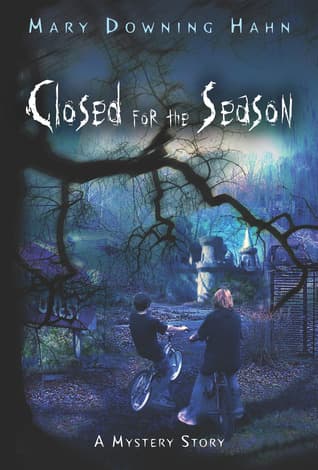
Thirteen-year-old Logan Forbes and his parents move from Baltimore to Hillsdale, Maryland, into a large, old Victorian house. Logan quickly learns from neighborhood kids that the house has a dark history: a murder happened there years ago. A woman named Liza Hempsteader was killed in the living room, and her husband, Mr. Hempsteader, was accused and imprisoned. This news immediately fascinates Logan, giving him a strange connection to the house and its past. He starts exploring, looking for clues, and Liza's death becomes his obsession.
Arthur's Skepticism and Growing Friendship
Logan soon meets Arthur Roth, a boy his age who lives nearby. Arthur is initially uninterested in Logan's fascination with the murder, preferring to read or play video games. He sees Logan's theories as childish. However, Logan's enthusiasm and his observations about the house slowly begin to intrigue Arthur. Despite his reluctance, Arthur joins Logan's quest, and a friendship forms between the two boys as they explore the house together, searching for any overlooked details or hidden passages that might explain the past.
Uncovering the Past in the House
Logan and Arthur begin a thorough search of the house for anything related to Liza Hempsteader's murder. They find a hidden compartment in the living room wall, where they discover a small, silver locket and a faded photograph of a young woman who looks like Liza. These finds strengthen their belief that there is more to the story than what was reported. They also notice details about the house's layout and original furnishings, leading them to think the official story of a simple spousal murder might be incomplete or false. The house itself seems to hold secrets, pushing them to find the truth.
The Old Man at the Library
To get more information, Logan and Arthur visit the Hillsdale Public Library. They meet Mr. Henderson, an elderly local historian who knows everything about the town's past. Mr. Henderson, at first hesitant to discuss the Hempsteader murder, eventually shares details about the family and local gossip. He mentions that Liza Hempsteader was known for her beauty and charm, but also for being flighty and having many admirers. He also hints that Mr. Hempsteader, despite his conviction, was considered a quiet man, making the crime seem out of character to some.
The Amusement Park Connection
During their research, Logan and Arthur find an old newspaper clipping mentioning Liza Hempsteader's connection to a local amusement park called 'Dreamland Park.' The park has been closed for years, earning it the nickname 'Closed for the Season.' They learn that Liza had worked there as a ticket taker and visited the park even after she married. This discovery gives them a new lead, moving their investigation from the house to a larger, potentially dangerous place. The boys decide to visit the abandoned amusement park next.
Exploring Dreamland Park
Ignoring the 'No Trespassing' signs and the broken fence, Logan and Arthur sneak into Dreamland Park. The park is a decaying version of its former self, with rusted rides, overgrown paths, and a sad atmosphere. They explore the attractions, feeling the eerie silence and imagining Liza's presence there years ago. They find an old, forgotten photo booth with undeveloped film, hoping it holds a clue. The park's atmosphere is unsettling, emphasizing the seriousness of their investigation and the darkness surrounding Liza's death.
The Photo Booth Revelation
Back at Logan's house, the boys develop the film from the photo booth. The photographs show Liza Hempsteader in playful poses, but one photo stands out: Liza is with a man who is clearly not Mr. Hempsteader. The man is tall, dark-haired, and has a distinct scar above his eye. This discovery is a breakthrough, suggesting Liza was having an affair and providing a possible motive for someone other than her husband. The image breaks the simple murder story and opens up a more complex set of possibilities.
Identifying the Mystery Man
Armed with the new photograph, Logan and Arthur return to Mr. Henderson at the library, showing him the picture. Mr. Henderson immediately recognizes the man as Mr. Silas Blackwood, a prominent and wealthy businessman in Hillsdale. Blackwood owned several local properties, including Dreamland Park. He was known for his ruthless business practices and his charming, manipulative personality. The revelation that Liza was involved with such a powerful and potentially dangerous man adds fear and urgency to the boys' investigation. They realize they are in a risky situation.
Confronting Blackwood's Past
Logan and Arthur discreetly investigate Silas Blackwood, learning more about his reputation and past involvement with Dreamland Park. They discover that Blackwood was possessive and vindictive, especially when relationships ended. They also find out that Liza had been trying to end her affair with Blackwood shortly before her death. This information paints a clear picture of a man with both motive and opportunity, and the boys begin to suspect Blackwood might have framed Mr. Hempsteader. Their suspicions grow, and they know they must find concrete proof.
The Hidden Diary
Driven by a hunch, Logan re-examines the hidden compartment in the living room, feeling around more thoroughly. He discovers a small, leather-bound diary tucked away behind a loose brick. The diary belongs to Liza Hempsteader. Reading it, the boys find entries detailing Liza's affair with Silas Blackwood, her growing fear of him, and her attempts to end their relationship. Liza wrote about Blackwood's threats and his possessive nature, and a chilling entry describes her fear that he would harm her if she left him. The diary directly links Blackwood to Liza's terror, strongly suggesting he was involved in her death.
The Confession and the Truth
The final entries in Liza's diary are horrifying. She describes a confrontation with Silas Blackwood in her living room, where she ended their affair. Blackwood, enraged, attacked her. The diary details his violent outburst and her struggle, confirming he was the murderer. She wrote frantically about her fear that he would frame her innocent husband. The diary reveals that Blackwood planted evidence to implicate Mr. Hempsteader, ensuring his conviction. Logan and Arthur are horrified by the detailed account of the murder and the injustice Mr. Hempsteader suffered; they are now sure they have found the truth.
Bringing Justice
Armed with Liza's diary, the locket, the photograph, and their research, Logan and Arthur present their evidence to the Hillsdale police. Initially skeptical, the police are convinced by the overwhelming and consistent details in the diary. The new evidence leads to a re-opening of the Hempsteader case. Silas Blackwood is arrested, and after a swift investigation, Mr. Hempsteader's original conviction is overturned. Mr. Hempsteader is released from prison, finally cleared of a crime he did not commit. Logan and Arthur, having solved the decades-old murder, feel a sense of accomplishment and justice, bringing closure to a long-standing tragedy in Hillsdale.
Principal Figures
Logan Forbes
Protagonist
The curious new kid obsessed with solving a murder mystery.
Logan is a thirteen-year-old boy who moves to Hillsdale with his family. He is inherently curious and intelligent, with a strong sense of justice. The murder in his new house immediately captures his imagination, turning into a deep-seated obsession. He is persistent and resourceful, often leading the charge in the investigation, and his determination drives the plot forward. He is also somewhat impulsive, which sometimes puts him and Arthur in risky situations, but his unwavering belief in the truth ultimately leads to the case being solved.
Relationships: Arthur Roth (Best friend and investigative partner); Liza Hempsteader (Victim whose murder Logan is obsessed with solving)
Arthur Roth
Supporting
Logan's skeptical but loyal best friend and investigative partner.
Arthur is Logan's best friend and a more cautious, logical counterpart. Initially, he is skeptical of Logan's murder theories, preferring books and video games to real-life mysteries. However, his loyalty to Logan and his own burgeoning curiosity draw him into the investigation. He often acts as the voice of reason, questioning Logan's more impulsive ideas, but he is equally dedicated to uncovering the truth once convinced. His intelligence and research skills prove invaluable to their detective work, providing a balanced partnership with Logan.
Relationships: Logan Forbes (Best friend and investigative partner)
Liza Hempsteader
Victim
The beautiful, charming woman whose unsolved murder drives the plot.
Liza Hempsteader is the murder victim whose death occurred years before the story begins, but whose presence looms large over Logan's new house and the entire town. She is described as beautiful, charming, and somewhat flighty, known for her magnetic personality and numerous admirers. Her past affair with Silas Blackwood and her subsequent attempts to end it are central to the mystery. Her hidden diary, discovered by the boys, provides her voice and perspective from beyond the grave, revealing the true circumstances of her murder and the fear she lived with.
Relationships: Mr. Hempsteader (Husband, framed for her murder); Silas Blackwood (Lover, her true murderer)
Mr. Hempsteader
Mentioned
Liza's quiet husband, wrongfully imprisoned for her murder.
Mr. Hempsteader is Liza's husband, who was wrongly convicted and imprisoned for her murder decades ago. He is consistently described as a quiet, unassuming man, making his supposed crime seem out of character to many in the town. He serves as a symbol of injustice and the devastating consequences of a flawed investigation. His eventual exoneration is the ultimate goal of Logan and Arthur's quest, representing the triumph of truth and justice.
Relationships: Liza Hempsteader (Wife, whose murder he was framed for)
Silas Blackwood
Antagonist
The wealthy, manipulative businessman and Liza's true murderer.
Silas Blackwood is the true antagonist of the story, a wealthy and powerful businessman in Hillsdale. He owns Dreamland Park and has a reputation for being ruthless and possessive. He had an affair with Liza Hempsteader and, when she tried to end it, he murdered her in a fit of rage and skillfully framed her innocent husband. Blackwood represents the dark underbelly of the seemingly peaceful town, embodying corruption and the abuse of power. His charming facade hides a violent and manipulative nature.
Relationships: Liza Hempsteader (Lover, whom he murdered)
Mr. Henderson
Supporting
The eccentric local historian who aids the boys' investigation.
Mr. Henderson is an elderly, eccentric, and highly knowledgeable local historian who works at the Hillsdale Public Library. He possesses a vast memory of the town's past, including the Hempsteader murder. Initially cautious about discussing the sensitive topic, he eventually provides Logan and Arthur with crucial historical context, local gossip, and identifies key figures like Silas Blackwood from old photographs. He serves as a valuable resource and a link to the past, guiding the boys with his anecdotal wisdom.
Logan's Parents
Supporting
Logan's well-meaning but often oblivious parents.
Logan's parents are supportive and loving, but largely unaware of the depth of their son's investigation into the murder in their new house. They represent the typical adult world, focused on moving, settling in, and managing their son's behavior, without realizing the dangerous path he is pursuing. Their presence provides a grounding element to the story, contrasting with the boys' secret detective work, and their lack of awareness highlights the autonomy and independence of the young protagonists.
Relationships: Logan Forbes (Parents of Logan)
Themes & Insights
The Pursuit of Truth and Justice
The main theme is Logan and Arthur's determination to uncover the truth behind Liza Hempsteader's murder and correct the injustice done to Mr. Hempsteader. Their investigation is driven by a strong moral sense, pushing them to challenge the accepted story and expose the real killer. This theme is clear in their careful research at the library, their brave exploration of the abandoned Dreamland Park, and their persistence in connecting clues like the locket, the photograph, and Liza's diary, all to ensure justice.
“Some things just aren’t right, Arthur. Someone got away with murder, and an innocent man paid for it.”
The Power of the Past
The past is a living part of 'Closed for the Season,' always influencing the present. The old Victorian house holds secrets from decades ago that refuse to stay hidden. The abandoned Dreamland Park is another link to the past, a decaying reminder of forgotten joys and hidden sorrows. The boys' entire quest is about finding and understanding past events to fix a present injustice. The past is not just a background but an active force, shaping the lives of characters, both living and dead, and demanding to be known.
“This house… it remembers. It remembers everything that happened here.”
Friendship and Loyalty
The growing friendship between Logan and Arthur is a key part of the novel. At first, Arthur is reluctant and skeptical, but his loyalty to Logan and their shared adventure build a strong bond. They support each other, balance each other's strengths and weaknesses (Logan's impulsiveness versus Arthur's caution), and rely on each other through dangerous discoveries. Their partnership is essential to solving the mystery, showing that even young boys can achieve great things when working together and trusting each other. Their bond deepens with every clue they uncover and every risk they take.
“We’re in this together, right? No matter what.”
Deception and Appearances
The novel explores how appearances can mislead, showing the difference between public perception and hidden realities. Silas Blackwood, a seemingly respected businessman, is revealed to be a manipulative murderer. The initial assumption that Mr. Hempsteader, a quiet man, could kill his wife is an example of misjudgment based on superficial understanding. The entire town of Hillsdale, outwardly peaceful, hides a dark secret. The boys' investigation uncovers these layers of deception, revealing the complex and often sinister truths beneath the surface of everyday life.
“People aren’t always what they seem on the outside.”
Plot Devices & Literary Techniques
The Haunted House Trope
The old Victorian house serves as a central hub of mystery and past events.
The house Logan's family moves into is not literally haunted by ghosts, but it carries the 'ghost' of a past murder. It acts as a catalyst for the plot, immediately drawing Logan into the mystery. The house itself holds physical clues (the hidden compartment, the locket, the diary) and a pervasive atmosphere of its dark history, creating a sense of unease and driving the boys' curiosity. It functions as a character in its own right, a silent witness to the crime, urging the protagonists to uncover its secrets.
The Abandoned Amusement Park
Dreamland Park provides an eerie, symbolic setting for crucial discoveries.
Dreamland Park, 'Closed for the Season,' is a classic gothic setting that symbolizes decay, forgotten dreams, and lingering secrets. Its dilapidated state mirrors the unresolved nature of Liza's murder. It's in this eerie, neglected place that the boys find the crucial photo booth and the undeveloped film, directly connecting Liza to Silas Blackwood. The park's atmosphere of past joy turned to present desolation effectively heightens the suspense and underscores the gravity of the dark events tied to it.
The Hidden Diary
Liza's diary serves as a direct, posthumous narrative voice, revealing the truth.
The discovery of Liza Hempsteader's hidden diary is the ultimate plot device, providing a direct, first-person account of the events leading up to and including her murder. It functions as a 'voice from the grave,' offering an undeniable and emotional revelation of the truth. The diary not only confirms the identity of the killer but also details Blackwood's motive and his plan to frame Mr. Hempsteader, serving as the irrefutable evidence needed to solve the cold case and bring about justice.
The Skeptical Sidekick
Arthur's initial skepticism provides contrast and grounds Logan's adventurous spirit.
Arthur Roth serves as the skeptical sidekick to Logan's enthusiastic detective. This dynamic is a common narrative device that allows for character development and adds realism. Arthur's initial doubt and logical questioning provide a necessary counterpoint to Logan's more impulsive nature, preventing the investigation from becoming too fantastical. His skepticism makes the eventual acceptance of the mystery more convincing and highlights the growing bond between the boys as he becomes fully invested in the pursuit of truth.
Closed for the Season Quotes
“The house looked like a giant, sleeping creature, its windows dark eyes half-closed against the world.”
“Sometimes you have to dig a little deeper to find the real story, the one no one wants to talk about.”
“Fear has a way of making you see things that aren't there, and not see things that are.”
“The past isn't just behind us; sometimes it's right here, lurking in the shadows.”
“It's funny how a place can feel so alive even when it's supposed to be empty.”
“Gossip is like a wildfire; it spreads fast and leaves destruction in its wake.”
“Some secrets are like heavy stones; they can weigh a person down until they can't breathe.”
“Even good people can do terrible things when they're desperate or scared.”
“The truth doesn't always set you free; sometimes it just makes things more complicated.”
“He learned that day that silence could be louder than any scream.”
“The world keeps turning, even when your own world feels like it's stopped completely.”
“You can't outrun your past, no matter how fast you try to go.”
“Sometimes the scariest things aren't ghosts or monsters, but the secrets people keep.”
Quiz
10 questions on the plot and the characters. Each answer comes with a short explanation.
Question 1
What is the name of the protagonist whose family moves into the old house where a murder occurred?
- Arthur
- Logan
- Mr. Henderson
- Officer Miller
Show answer
B. Logan Logan is the character whose family moves into the house, sparking the mystery.
Question 2
What kind of establishment is 'closed for the season' and becomes a key location in the boys' investigation?
- An old library
- A derelict amusement park
- A abandoned factory
- A haunted schoolhouse
Show answer
B. A derelict amusement park The title of the book refers to the derelict amusement park that the boys investigate.
Question 3
Who is Logan's primary partner in solving the murder mystery?
- His younger sister
- His father
- Arthur
- A local police officer
Show answer
C. Arthur Arthur is the other 13-year-old boy who teams up with Logan to solve the mystery.
Question 4
What is the central crime the two boys are trying to solve?
- A series of burglaries
- A kidnapping
- A murder that took place years ago
- A missing person's case
Show answer
C. A murder that took place years ago The core of the mystery is a historical murder that occurred in Logan's new house.
Question 5
The boys' investigation leads them to interact with people from various social strata in their town. What does this suggest about the nature of the mystery?
- The town is very small and everyone knows each other.
- The murder had far-reaching implications and connections throughout the community.
- The boys are simply trying to make new friends.
- Only wealthy people were involved in the original crime.
Show answer
B. The murder had far-reaching implications and connections throughout the community. The description states the quest takes them to 'highest and lowest levels of society,' indicating the mystery's broad connections.
Question 6
In what U.S. state is the small town where the story takes place located?
- Virginia
- Pennsylvania
- Maryland
- Delaware
Show answer
C. Maryland The book description specifically mentions that the small town is in Maryland.
Question 7
What is one of the primary challenges the boys face in solving a cold case murder?
- Lack of interest from the local police.
- The unreliability of memories from witnesses over time.
- Difficulty finding the murder weapon.
- Their parents forbidding them from investigating.
Show answer
B. The unreliability of memories from witnesses over time. Solving a 'murder that took place some years ago' inherently involves dealing with the passage of time, making memories a key challenge.
Question 8
The book is described as a 'contemporary thriller.' How does this genre typically influence the pacing and atmosphere of the story?
- It implies a slow, contemplative narrative focusing on character development.
- It suggests a focus on lighthearted humor and minimal suspense.
- It means the story will likely have a fast pace, rising tension, and suspenseful plot twists.
- It indicates a historical setting with minimal action.
Show answer
C. It means the story will likely have a fast pace, rising tension, and suspenseful plot twists. A 'contemporary thriller' typically features elements like suspense, a fast pace, and a sense of urgency, often leading to plot twists.
Question 9
Given the target audience (Children's, Young Adult) and the genre (Mystery, Thriller), what theme is most likely to be prominent in 'Closed for the Season'?
- The complexities of adult romantic relationships.
- The importance of friendship, courage, and perseverance in the face of danger.
- Critiques of political systems and societal inequality.
- Exploration of philosophical debates on existence and purpose.
Show answer
B. The importance of friendship, courage, and perseverance in the face of danger. For a children's/YA mystery thriller, themes of friendship, courage, and determination in solving a problem are very common and appropriate.
Question 10
How does the setting of a 'derelict amusement park' contribute to the atmosphere and potential plot developments of a mystery thriller?
- It provides a cheerful and safe environment for the boys to relax.
- It offers a mundane, everyday backdrop that contrasts with the exciting mystery.
- It creates an eerie, unsettling, and potentially dangerous environment, rich with hidden places and past stories.
- It serves purely as a place for the boys to conduct interviews with suspects.
Show answer
C. It creates an eerie, unsettling, and potentially dangerous environment, rich with hidden places and past stories. A derelict amusement park is inherently spooky and abandoned, providing a perfect setting for suspense, secrets, and potential dangers in a thriller.
Closed for the Season FAQ
What is the central mystery Arthur and Logan investigate in 'Closed for the Season'?
Arthur and Logan investigate the unsolved murder of Lizzy Trueax, which occurred years ago in the house Logan's family recently moved into. They aim to uncover who killed Lizzy and why, as the original police investigation yielded no conclusive answers.
Who are the two main protagonists leading the investigation?
The two main protagonists are Arthur, a local boy who is fascinated by the town's history and mysteries, and Logan, the new boy in town whose family has just moved into the house where the murder took place. Their combined curiosity and complementary skills drive the investigation.
What role does the old amusement park play in the story?
The derelict amusement park, 'Funland,' is a crucial setting where key events related to Lizzy Trueax's past and her murder took place. It serves as a place of hidden clues, dangerous encounters, and ultimately, the site where the boys confront the truth about the crime.
How do Arthur and Logan gather clues and information?
They gather clues by interviewing various townspeople, from the seemingly respectable to those living on the fringes, and by exploring the old Trueax house and the abandoned amusement park. They also piece together old newspaper clippings and local gossip, often encountering resistance or misdirection.
What is the significance of the Trueax house to the murder mystery?
The Trueax house is where Lizzy Trueax was murdered, and it holds lingering secrets and potential evidence. Logan's family moving in and experiencing strange occurrences or finding hidden items within its walls often sparks new directions for the boys' investigation.
Who was Lizzy Trueax, and what was her connection to the town?
Lizzy Trueax was a young woman with a reputation for being rebellious and having many secrets, particularly regarding her relationships. She was connected to various individuals across different social strata in the town, making her murder a complex web of potential motives and suspects.
Are there any red herrings or misleading clues in the investigation?
Yes, the boys encounter several red herrings, including accusations against various town figures and misinterpretations of past events. These diversions test their detective skills and force them to re-evaluate their theories multiple times before arriving at the true culprit.
What specific object or location provides a critical breakthrough in the case?
A critical breakthrough comes from something hidden within the Trueax house, possibly a diary or a hidden compartment, and a specific ride or area within the abandoned Funland that holds a crucial piece of physical evidence or a memory directly linked to Lizzy's final moments.
How do the boys' differing personalities contribute to their investigative dynamic?
Arthur's local knowledge, persistence, and sometimes reckless curiosity complement Logan's more cautious, analytical approach and his outsider's perspective. Arthur pushes them into risky situations, while Logan often provides the logical framework to process the information they uncover.
What emotional challenges do Arthur and Logan face during their investigation?
They face fear, frustration, and the moral dilemma of potentially exposing painful truths about their town and its residents. They also grapple with the weight of uncovering a violent crime, sometimes putting themselves in danger and feeling the pressure to bring justice to Lizzy.
How does the investigation impact Logan's adjustment to his new home and town?
The investigation deeply immerses Logan in the town's hidden history and social dynamics, making him feel both more connected and more alienated. It complicates his family's move, as their new house is at the center of a dark past, but it also forges a strong bond with Arthur.
What psychological motivations drive the murderer's actions?
The murderer is driven by a complex mix of motives, likely involving betrayal, jealousy, a desire to protect a secret, or a desperate attempt to avoid exposure. The crime stems from deeply personal and often volatile relationships Lizzy had, leading to a desperate act.
What is the broader message or theme about truth and justice in the novel?
The novel suggests that truth, no matter how old or inconvenient, eventually comes to light, and that justice, even if delayed, can be achieved through persistent effort. It also explores how communities can bury or ignore uncomfortable truths.
How does the author use the setting of the derelict amusement park to enhance the mystery and suspense?
The abandoned amusement park provides a deeply atmospheric and unsettling backdrop, symbolizing forgotten joy and lingering shadows. Its decaying rides and hidden corners create a sense of foreboding, danger, and a place where past secrets literally lurk in the ruins.
Does the ending provide a clear resolution, or are there lingering ambiguities?
The ending provides a clear resolution to Lizzy Trueax's murder, identifying the culprit and the circumstances of the crime. However, it may leave some lingering questions about the long-term impact on the town or the characters, or the full extent of the town's complicity in burying the truth.
What commentary does the book offer on social class dynamics within the small town?
The book subtly highlights how social class dynamics influenced Lizzy Trueax's life and death, and how different segments of society were affected by or involved in the cover-up. It shows how power and reputation can protect some, while others are more vulnerable to suspicion or neglect.
How does the novel explore the concept of memory and its reliability?
The novel explores how memory can be subjective, flawed, and even deliberately altered over time. The boys encounter conflicting accounts from witnesses, forcing them to discern truth from embellished or suppressed memories, highlighting the challenge of reconstructing past events.
About the author

Mary Downing Hahn is an American author known for her contributions to children's and young adult literature, particularly in the genre of ghost stories. Some of her notable works include "Wait Till Helen Comes," "The Old Willis Place," and "The Ghost of Crutchfield Hall," which often explore themes of friendship and the supernatural. Her writing has garnered a dedicated readership and critical attention over the years.
Similar books
- The Westing Game
Ellen Raskin
4.0 (165k) average on GoodreadsChildren'sFeatures young protagonists solving a complex mystery with a quirky cast of characters.
- Holes
Louis Sachar
4.0 (970k) average on GoodreadsChildren'sInvolves young characters uncovering a historical mystery that connects to their present.
- Coraline
Neil Gaiman
4.0 (23k) average on GoodreadsFantasyCompared to Gaiman's 'Coraline', which also features children uncovering dark secrets, Hahn's approach is less overtly fantastical and more grounded in a realistic, unsettling historical mystery. Gaiman often employs surrealism and folkloric elements to explore deeper psychological themes, while Hahn maintains a more conventional narrative structure, making it accessible to a broader range of middle-grade readers.
- Harry Potter and the Sorcerer's Stone
J.K. Rowling
4.5 (7M) average on GoodreadsFantasyRescued from a miserable life under the stairs, an orphaned boy discovers he's a wizard destined for a magical school, where he uncovers a dangerous secret tied to the dark wizard who murdered his parents.
- The Hobbit, or There and Back Again
J.R.R. Tolkien
4.3 (2.9M) average on GoodreadsFantasyA comfort-loving hobbit named Bilbo Baggins is whisked away by a mischievous wizard and a band of dwarves on an unexpected journey to reclaim stolen treasure from a fearsome dragon, discovering courage and a magical ring along the way.
- Harry Potter and the Goblet of Fire
J.K. Rowling
4.6 (2.6M) average on GoodreadsFantasyA bewildered Harry Potter, underage and thrust into a deadly Triwizard Tournament, must brave dragons, mermaids, and a resurgent dark magic to survive a year that will forever alter the wizarding world.





Enjoyed the summary?
A summary gives you the shape of the book. The book itself has the detail, the examples and the voice.
Find Closed for the Season on AmazonAs an Amazon Associate, BookBrief earns from qualifying purchases. How we're funded