
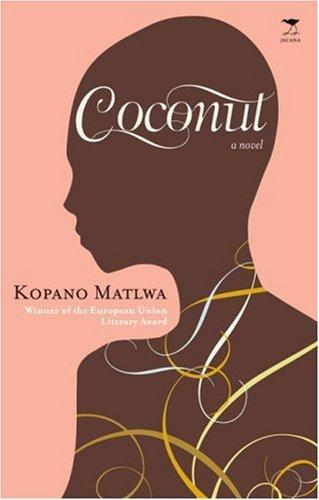
Synopsis
Covers the whole plot, including the ending.
- Difficulty
- Medium
- Pacing
- Moderate
- Mood
- Thought-provoking, introspective, challenging, hopeful
- Read it if
- you're interested in post-apartheid South African identity, stories of young women finding their place in a complex society, or narratives exploring cultural assimilation and privilege.
- Skip it if
- you prefer lighthearted reads without social commentary, or are looking for a plot-driven thriller.
Coconut Plot Summary
Covers the whole plot, including the ending.
Ofilwe's Early Life and Disillusionment
Ofilwe, a young Black woman, grew up in a wealthy, mostly white suburb of Johannesburg. Her childhood offered material comfort but a deep cultural distance from her Black heritage. She went to private schools, spoke fluent English, and felt more at home with white friends and their customs than with her family's traditions. This upbringing left her feeling out of place in both worlds—not fully accepted by white society, and increasingly separate from her Black identity. Her parents, trying to give her a 'better life,' accidentally created a cultural gap for Ofilwe, leading to early confusion and a shallow understanding of her role in post-apartheid South Africa.
Fiks's Rural Roots and Urban Aspirations
Fiks's story starts very differently from Ofilwe's. She comes from a rural village, knowing poverty and the harshness of township life. Despite her difficult situation, Fiks is ambitious, clever, and determined to leave her past behind. She sees education and moving to Johannesburg as her only ways to improve her life and future. Her early life showed her resilience and a strong desire to shed the labels linked to her background. She is very aware of social classes and the chances (or lack of them) available to her, which drives her to succeed in the city.
Ofilwe's University Experience and Identity Crisis
Ofilwe starts university and meets a more diverse group of students, including many Black students from different backgrounds. Here, her 'coconut' identity—Black on the outside, white on the inside—becomes a source of conflict and self-doubt. She struggles to connect with other Black students who see her as distant or 'too white,' while also feeling out of place with her former white friends. This time intensifies her identity crisis, making her face her internalized racism and her lack of connection to her culture. Her grades also drop as she deals with these big questions.
Fiks's Arrival in Johannesburg and Initial Challenges
Fiks successfully moves to Johannesburg, full of hope and a wish for success. But the city turns out to be much harder and less forgiving than she expected. She faces financial hardship, struggles to find steady work, and encounters exploitation. Her dreams of a glamorous life quickly clash with the harsh realities of urban poverty and fierce competition for resources. She experiences firsthand the class divisions within the Black community and the difficulties of navigating a system that often favors those with existing connections or privilege, forcing her to adapt and make tough choices to survive.
Ofilwe's Family Breakdown and Financial Struggles
Ofilwe's privileged world starts to fall apart when her parents' marriage ends, followed by their financial ruin. Her father loses his job, and the family has to leave their comfortable suburban home. This sudden change from wealth to financial uncertainty is a shock for Ofilwe, who had always taken her lifestyle for granted. She is forced to face the harsh realities of economic instability and how fragile her sheltered life was. This period marks a major turning point, forcing her to grow up and consider practical solutions instead of dwelling on her identity issues.
Fiks's Descent into Desperation and Survival Tactics
As Fiks's financial situation worsens, she takes increasingly desperate steps to survive and keep her place in Johannesburg. She gets involved in transactional relationships, exchanging sexual favors for money or opportunities. This path, while offering temporary relief, damages her self-worth and continues a cycle of dependence. Her ambition remains, but her methods become morally unclear as she navigates a world where survival often dictates choices, showing the difficult compromises many young women in similar situations are forced to make.
Ofilwe's Attempts at Reconnection and Cultural Exploration
After her family's financial decline, Ofilwe begins a conscious effort to reconnect with her Black heritage. She looks for ways to learn about African cultures, tries to learn an indigenous language, and attempts to understand the struggles faced by her community. This journey is initially awkward and often met with doubt from others, who see her efforts as insincere or too late. However, her persistence shows a real desire to bridge the gap between her upbringing and her cultural identity, showing her growing understanding that identity is not just about skin color but also about culture and community.
Fiks's Brief Success and Renewed Hope
Through sheer determination and some luck, Fiks gets a temporary job that offers a ray of hope. This time allows her to experience a taste of the sophisticated city life she had always dreamed of, though briefly. She enjoys a sense of independence and accomplishment, believing she is finally on the right track. This success, however short, confirms her belief in her own abilities and her ambition to rise above her circumstances, momentarily overshadowing the compromises she made to get there and renewing her optimism for the future.
Ofilwe's Reconciliation with Her Identity
Through her struggles and explorations, Ofilwe slowly starts to accept her complex identity. She realizes that she does not have to choose between being 'Black' or 'white,' but can embrace a mixed identity that reflects her unique upbringing and experiences. She begins to understand that her 'coconut' status, while a source of pain, also gives her a distinct viewpoint. This acceptance marks a significant step in her personal growth, moving her away from self-pity and towards a more nuanced understanding of herself and her place in a multicultural South Africa, finding strength in her individuality.
Fiks's Ultimate Disillusionment and Uncertain Future
Despite her brief success, Fiks ultimately faces more setbacks and disappointments. The temporary job ends, and she finds herself again struggling to make ends meet. The city's promises of glamour and opportunity prove to be out of reach, leaving her disappointed and tired. The story ends with Fiks's future uncertain, highlighting the ongoing challenges faced by many young Black women in South Africa who aim for upward mobility against systemic barriers. Her story concludes not with a clear solution, but with a moving reflection on the resilience needed to navigate a complex and often unforgiving society, leaving her fate open.
Principal Figures
Ofilwe
Protagonist
A privileged 'coconut' grappling with her identity.
Ofilwe is a young black woman raised in an affluent, predominantly white suburb of Johannesburg. Her upbringing has provided her with material comforts and a Westernized education, but has simultaneously alienated her from her black culture and heritage. She struggles with an acute identity crisis, feeling 'too white' for black society and not fully accepted by white society. Initially naive and somewhat self-absorbed, Ofilwe's journey is one of self-discovery, cultural re-engagement, and coming to terms with her unique, hybrid identity.
Relationships: Parents (Strained; they represent her privileged but culturally disconnected upbringing); White friends (Initial close ties, but she feels increasingly alienated from them); Black peers (Struggles to connect with them due to perceived cultural differences)
Fiks
Protagonist
An ambitious young woman from a rural background seeking success in the city.
Fiks is a resilient and ambitious young black woman from a rural, impoverished background. She is determined to escape her past and achieve success in Johannesburg, seeing the city as her only hope for upward mobility. Fiks is street-smart, resourceful, and pragmatic, willing to make difficult choices to survive and advance. Her journey is marked by a relentless pursuit of her dreams, despite facing exploitation, disillusionment, and the harsh realities of urban life. She represents the struggles of many young black women striving for a better future against systemic barriers.
Relationships: Family (Distant, but her motivation to succeed is partly for their upliftment); City dwellers (Encounters both exploitation and fleeting support); Sugar daddies (Transactional relationships for survival)
Ofilwe's Mother
Supporting
A parent who aimed for a better life, but created cultural distance.
Ofilwe's mother represents the aspirations of many black parents in post-apartheid South Africa who wanted to provide their children with opportunities they never had. She pushed Ofilwe into private schools and a Westernized lifestyle, believing it was the path to success. While well-intentioned, her choices inadvertently contributed to Ofilwe's cultural disconnect. She is initially depicted as somewhat superficial, focused on appearances and material wealth, but her character subtly reflects the complexities of navigating new social landscapes after apartheid, and the sacrifices made for perceived progress.
Relationships: Ofilwe (Loving but distant, with a misunderstanding of Ofilwe's cultural struggles); Ofilwe's Father (Strained, leading to divorce and financial collapse)
Ofilwe's Father
Supporting
The patriarch whose financial downfall shatters Ofilwe's privileged world.
Ofilwe's father is initially presented as the provider who affords his family a life of privilege. His professional success enables Ofilwe's sheltered upbringing. However, his eventual job loss and financial ruin are pivotal events that force Ofilwe to confront the realities of life outside her 'bubble.' His character highlights the fragility of economic stability, even for successful black professionals in post-apartheid South Africa, and how quickly fortunes can change. His downfall is a catalyst for Ofilwe's journey of self-discovery and a harsh lesson in resilience.
Relationships: Ofilwe (Distant, but his actions profoundly impact her life); Ofilwe's Mother (Strained, leading to divorce)
Thandi
Supporting
Ofilwe's more culturally grounded black friend at university.
Thandi is a black university student who serves as a foil to Ofilwe. She is more connected to her black culture and heritage, and initially views Ofilwe with skepticism due to her 'coconut' upbringing. Thandi represents a more 'authentic' black South African experience in Ofilwe's eyes, and their interactions often highlight Ofilwe's alienation. Despite their differences, Thandi's presence encourages Ofilwe to reflect on her own identity and cultural roots, indirectly pushing her towards self-discovery. She is a voice of cultural critique and a mirror for Ofilwe's internal struggles.
Relationships: Ofilwe (Initially critical, but eventually a source of indirect guidance); Other black students (Represents their collective perspective on 'coconuts')
Sipho
Supporting
A young man Fiks encounters, representing potential but also exploitation.
Sipho is a character Fiks encounters in Johannesburg. He represents the complex web of relationships and potential exploitation that young women like Fiks face in the city. He might initially appear as a source of support or opportunity, but his intentions are often self-serving. Sipho embodies the challenges of navigating urban relationships where trust is scarce and transactional exchanges are common. His role is to highlight the precariousness of Fiks's situation and the moral compromises she is forced to consider to survive.
Relationships: Fiks (Transactional and opportunistic, highlighting her vulnerability)
Themes & Insights
Identity and Belonging
The novel explores the complex and often broken sense of identity among young Black South Africans, especially those, like Ofilwe, who grow up in mostly white areas (the 'coconut' phenomenon). It looks at the struggle of feeling separated from both Black and white communities, and the search to define oneself in a post-apartheid society still dealing with racial and cultural divisions. For Fiks, identity is linked to class and location, as she tries to leave her rural past for a city persona. Both main characters seek a place where they truly belong, ultimately questioning what 'Blackness' really means in a modern, multicultural setting.
“I was a coconut, they said. Black on the outside, white on the inside. I didn't know which world I belonged to, or if I belonged anywhere at all.”
Class and Social Mobility
The sharp contrast between Ofilwe's privileged suburban life and Fiks's poor rural background shows the ongoing problem of class inequality in post-apartheid South Africa. The novel examines the hopes for social mobility, especially Fiks's strong drive for success in Johannesburg, and the often harsh realities and compromises needed to achieve it. It asks if true upward mobility is possible for everyone, or if systemic barriers and the legacy of apartheid continue to control one's opportunities and life path. Ofilwe's family's financial downfall also highlights how fragile new wealth and status can be.
“The city was supposed to be my escape, my salvation. But it chewed you up and spat you out just as easily as the village had.”
Cultural Disconnect and Reconnection
The theme of cultural separation is central to Ofilwe's story, as her Western upbringing leaves her disconnected from her Black heritage. The novel shows the inner struggle of losing one's cultural roots and the often awkward attempts to reconnect with them. It explores the tension between traditional African values and modern, Western influences, and the challenges of forming a new cultural identity that honors both. For Fiks, the separation is more about leaving behind a perceived 'backward' rural culture for a 'sophisticated' urban one, only to find the latter equally challenging and morally unclear.
“I spoke English better than I spoke my mother tongue. Was that a sign of progress, or a betrayal?”
Gender and Exploitation
The novel addresses the vulnerability and exploitation faced by young Black women in South Africa, particularly through Fiks's experiences in Johannesburg. It exposes the transactional nature of relationships that women are sometimes forced into for survival or social advancement, highlighting the lack of safe opportunities and the societal pressures that can lead to such compromises. The story sheds light on the economic and social structures that can trap women in cycles of dependence and abuse, even as they strive for independence and success. It critiques the double standards and the harsh realities faced by women navigating a patriarchal society.
“In this city, a girl's body was currency, and I was learning to spend it wisely, or so I told myself.”
Plot Devices & Literary Techniques
Dual Narrative Structure
Alternating perspectives of Ofilwe and Fiks.
The novel employs a dual narrative structure, alternating chapters between Ofilwe's and Fiks's first-person perspectives. This device allows for a comprehensive exploration of the central themes from two contrasting viewpoints. It highlights the vast differences in their upbringings and experiences, while simultaneously revealing shared struggles related to identity, belonging, and the challenges of being a young black woman in contemporary South Africa. This juxtaposition enriches the reader's understanding of the diverse realities within the black community and prevents a monolithic portrayal of identity issues.
Symbolism of 'Coconut'
Representing a black person perceived as 'white on the inside'.
The term 'coconut' serves as a central and powerful symbol throughout the novel. It refers to black individuals who are perceived to have adopted white cultural traits, language, and mannerisms to the extent that they are seen as alienated from their own black heritage. This derogatory term encapsulates Ofilwe's identity crisis and the societal judgment she faces. The symbol effectively illustrates the internal conflict and external pressures experienced by those caught between two cultures, highlighting issues of authenticity, cultural assimilation, and the complex layers of racial identity in post-apartheid South Africa.
Social Commentary
Critique of post-apartheid South African society.
The novel functions as a potent social commentary on the realities of post-apartheid South Africa, moving beyond simplistic narratives of liberation. It critiques the persistent class disparities, the challenges of economic empowerment for the majority, and the ongoing struggles with racial and cultural identity. Through the experiences of Ofilwe and Fiks, the author exposes the complexities of a society still grappling with its past, where the promises of a 'rainbow nation' often clash with the harsh realities of inequality, corruption, and the lingering psychological effects of apartheid. It's a critical lens on the nation's progress and its failures.
Coconut Quotes
“I am a coconut. I am brown on the outside and white on the inside.”
“They say that the best way to deal with a problem is to face it. But what if you don't know what the problem is?”
“I am a foreigner in my own country. I don't belong anywhere.”
“We are all just coconuts, trying to find our way in a world that doesn't understand us.”
“The problem with being a coconut is that you're always caught between two worlds.”
“I want to be free. I want to be myself. But I don't know who myself is.”
“They want us to be black, but they don't want us to be too black.”
“I am not ashamed of who I am. I am a coconut, and I am proud.”
“The world is a confusing place. And I am a confused person.”
“Maybe being a coconut is not a problem. Maybe it's just a state of being.”
“We are all looking for a place to belong. A place where we can be ourselves.”
“The struggle is real. But so is the hope.”
Quiz
10 questions on the plot and the characters. Each answer comes with a short explanation.
Question 1
What is the name of the book being discussed?
- Johannesburg Blues
- Coconut
- Suburbia Dreams
- The Two Worlds
Show answer
B. Coconut The text explicitly states the book is titled 'Coconut'.
Question 2
Who is the author of the book 'Coconut'?
- Fiks
- Ofilwe
- Kopano Matlwa
- Johannesburg
Show answer
C. Kopano Matlwa The author's name, Kopano Matlwa, is mentioned at the beginning of the description.
Question 3
What is a central theme in the book 'Coconut'?
- Rural farming practices
- The struggle for identity among young black women in predominantly white suburbs
- The history of Johannesburg
- Interstellar travel
Show answer
B. The struggle for identity among young black women in predominantly white suburbs The description highlights the 'struggle to find their identities' for two young women who 'have grown up black in white suburbs'.
Question 4
Which character has grown up in a privileged lifestyle and takes it for granted?
- Fiks
- Ofilwe
- The narrator
- Johannesburg
Show answer
B. Ofilwe The text states, 'The rich and pampered Ofilwe has taken her privileged lifestyle for granted'.
Question 5
What does Ofilwe confront when her 'soulless world falls apart'?
- Her ambition
- Her past
- Her swiftly dwindling sense of culture
- Her wealth
Show answer
C. Her swiftly dwindling sense of culture The description mentions that Ofilwe 'must confront her swiftly dwindling sense of culture when her soulless world falls apart'.
Question 6
What is Fiks described as?
- Shy and reserved
- Ambitious and hip
- Content and settled
- Unambitious and naive
Show answer
B. Ambitious and hip Fiks is described as 'the hip and sassy Fiks is an ambitious go-getter'.
Question 7
What does Fiks hope to achieve by moving to city life?
- To escape her past and find sophistication
- To reconnect with her culture
- To find a quiet and simple life
- To become a farmer
Show answer
A. To escape her past and find sophistication Fiks is 'desperate to leave her vicious past behind for the glossy sophistication of city life'.
Question 8
How does the description portray Johannesburg for Fiks?
- Welcoming and easy
- A place of simple opportunities
- Complicated and unforgiving
- A nostalgic return to her roots
Show answer
C. Complicated and unforgiving The text states that Fiks 'finds Johannesburg to be more complicated and unforgiving than she expected'.
Question 9
The phrase 'grown up black in white suburbs' suggests a potential conflict related to:
- Economic disparity
- Racial integration challenges
- Educational opportunities
- Religious differences
Show answer
B. Racial integration challenges This phrase implies a context where race and upbringing in a different dominant racial environment could lead to identity issues and potential discrimination or cultural disconnect.
Question 10
What can be inferred about Ofilwe's initial perspective on her life before it falls apart?
- She was deeply aware of her cultural heritage.
- She valued her privileged lifestyle but recognized its fragility.
- She was actively seeking to expand her horizons beyond her upbringing.
- She was complacent and did not fully appreciate her circumstances.
Show answer
D. She was complacent and did not fully appreciate her circumstances. The description states Ofilwe 'has taken her privileged lifestyle for granted', implying a lack of deep appreciation or awareness of its value and potential loss.
Coconut FAQ
What is the book 'Coconut' by Kopano Matlwa about?
'Coconut' tells the story of two young black women navigating their identities after growing up in predominantly white suburban environments. It explores their struggles with culture, privilege, ambition, and the harsh realities of finding their place in the world.
Who are the main characters in 'Coconut'?
The two main characters are Ofilwe, a privileged young woman who takes her lifestyle for granted and confronts a loss of culture, and Fiks, an ambitious woman trying to escape her past and find success in the city.
What themes are explored in 'Coconut'?
The novel delves into themes of identity, race, class, culture, ambition, and the complexities of growing up black in a post-apartheid South Africa, particularly in suburban and urban settings.
How does 'Coconut' portray the experience of growing up black in white suburbs?
The book illustrates the challenges faced by young black women who have grown up in predominantly white environments, often leading to a disconnect with their cultural heritage and a struggle to define their identities.
What is Ofilwe's main conflict in 'Coconut'?
Ofilwe's conflict arises when her privileged world crumbles, forcing her to confront her sense of culture and identity, which she had previously taken for granted.
What are Fiks's goals and challenges in 'Coconut'?
Fiks is an ambitious woman determined to leave her past behind and achieve sophistication in city life. However, she finds Johannesburg to be more difficult and unforgiving than she anticipated.
Is 'Coconut' a coming-of-age story?
Yes, 'Coconut' can be considered a coming-of-age story as it follows the journeys of two young women as they grapple with self-discovery, societal expectations, and the transition into adulthood.
What makes Johannesburg a significant setting in 'Coconut'?
Johannesburg serves as a complex and unforgiving backdrop for Fiks's ambitions. It represents both the allure of sophistication and the harsh realities of urban life, highlighting the challenges of upward mobility.
What is the significance of the title 'Coconut' in the book?
The title 'Coconut' is often used metaphorically to describe individuals who are 'black on the outside and white on the inside,' reflecting the characters' experiences of navigating racial and cultural identities in predominantly white spaces.
What kind of reader would enjoy 'Coconut'?
Readers interested in contemporary African literature, stories about identity and belonging, and explorations of race, class, and culture in South Africa would likely enjoy 'Coconut'.
Similar books
- Americanah
Chimamanda Ngozi Adichie
4.3 (264k) average on GoodreadsLiterary FictionExplores themes of race, identity, and cultural assimilation through the eyes of a young African woman in the West and back home.
- The Joys of Motherhood
Buchi Emecheta
4.1 (5k) average on GoodreadsHistorical FictionExamines the challenges and expectations placed on women in a changing African society, focusing on identity and societal roles.
- Disgrace
J. M. Coetzee
3.8 (87k) average on GoodreadsLiterary FictionOffers a stark look at post-apartheid South Africa, though from a different perspective, delving into themes of race, power, and reconciliation.
- Harry Potter and the Sorcerer's Stone
J.K. Rowling
4.5 (7M) average on GoodreadsFantasyRescued from a miserable life under the stairs, an orphaned boy discovers he's a wizard destined for a magical school, where he uncovers a dangerous secret tied to the dark wizard who murdered his parents.
- The Hunger Games
Suzanne Collins
4.3 (6.4M) average on GoodreadsFantasyIn a future where children fight to the death on live television, Katniss Everdeen volunteers for the arena, turning a death sentence into a fight for survival and a spark of rebellion.
- Nineteen Eighty-Four
George Orwell
4.2 (5.5M) average on GoodreadsFictionWinston Smith dreams of truth and rebellion in a world where Big Brother watches all, but he confronts the terrifying power of a regime that controls not just actions, but thoughts.





Enjoyed the summary?
A summary gives you the shape of the book. The book itself has the detail, the examples and the voice.
Find Coconut on AmazonAs an Amazon Associate, BookBrief earns from qualifying purchases. How we're funded