

Synopsis
Covers the whole plot, including the ending.
- Difficulty
- Medium
- Pacing
- Moderate
- Mood
- Thought-provoking, Reflective, Insightful, Romantic, Socially aware
- Read it if
- You enjoy character-driven literary fiction that explores themes of identity, race, immigration, and love with a sharp, insightful, and often humorous voice.
- Skip it if
- You prefer fast-paced plot-driven narratives or are not interested in detailed social commentary.
Americanah Plot Summary
Covers the whole plot, including the ending.
The Braiding Salon and the Past's Pull
Ifemelu sits in a braiding salon in Princeton, New Jersey, preparing her hair for her return to Nigeria after fifteen years. The lengthy process, unlike American hair care, makes her think about her life in America and her choice to leave. She remembers her first love, Obinze, and their strong connection in Lagos during high school. Their relationship was built on curiosity, shared dreams, and mutual understanding. The upcoming reunion with Obinze, now a wealthy man in Nigeria, is a strong emotional current in her preparations, hinting at unresolved feelings and their shared past.
Life in Lagos and the Dream of America
Growing up in Lagos, Ifemelu and Obinze's relationship develops amidst Nigeria's political instability and economic hardship under military rule. They attend university together, where their intellectual bond grows through shared books and talks. The repressive atmosphere and lack of opportunities make them want to emigrate. Ifemelu's aunt, Uju, and her devout Christian mother also influence her upbringing. The dream of America, a land of opportunity, becomes a strong force in their lives, shaping their conversations and plans. Obinze, in particular, is drawn to American culture and literature, seeing it as a sign of progress.
Ifemelu's Arrival in America and Racial Awakening
Ifemelu arrives in America for university, living with her aunt Uju and cousin Dike in Maryland. She experiences culture shock, struggling with American customs and the cold. More importantly, she deals with the concept of race for the first time. In Nigeria, she was simply 'Ifemelu'; in America, she is 'Black.' Her initial confusion turns into a painful awareness of racial hierarchies and the prejudices she faces. This awakening is a key moment, forcing her to redefine her identity in a society that labels her by her skin color.
Struggles and a New Relationship
Ifemelu's first years in America are marked by money problems, as her family in Nigeria can no longer send her funds due to an economic downturn. She takes various low-paying jobs, including modeling for a photographer who takes advantage of her. This time is humiliating and leaves her feeling alone. She eventually meets Curt, a wealthy white American, and they start a relationship. Curt offers her financial stability and a comfortable life, but their relationship is complicated by racial issues and Ifemelu's lingering feelings of displacement.
Obinze's Journey to London
After Ifemelu leaves for America, Obinze's attempts to get a visa to join her are repeatedly denied due to post-9/11 rules. Desperate to leave Nigeria and be with Ifemelu, he travels to London on a visitor's visa, hoping to stay and work. His time in London is very different from Ifemelu's in America. He lives undocumented, constantly fearing deportation, and takes low-wage jobs, often in bad conditions. He struggles with loneliness and the pressure of his uncertain life, all while hoping for a better future and a reunion with Ifemelu.
Life as an Undocumented Immigrant
In London, Obinze experiences life as an undocumented immigrant. He works illegally for low pay, cleaning toilets and doing other undesirable jobs. He befriends other undocumented people, including African men who share his struggles. He narrowly avoids deportation several times, living in constant fear. His experiences show him the big differences between the privileged and the marginalized. He sees the strength and desperation of those living on the edges of society. This time deeply shapes his understanding of power, class, and identity.
The Breakup and the Blog
Ifemelu eventually breaks up with Curt, realizing their relationship, despite its comforts, does not fulfill her. She feels restricted and unable to be herself. After this, she starts a blog called 'Raceteenth or Various Observations About American Blacks (Those Formerly Known as Negroes) by a Non-American Black.' The blog becomes a place for her to express her thoughts and frustrations about race in America, gaining many followers. Through her writing, she finds her voice and a sense of purpose, offering sharp, insightful comments on racial dynamics, identity, and the nuances of being a 'Non-American Black.'
Obinze's Return to Nigeria and Success
Obinze is eventually caught and deported from London, forcing him back to Nigeria. Despite the initial disappointment, his time abroad has given him a unique perspective and drive. He uses connections and his intelligence to build a very successful real estate business. He marries Kosi, a beautiful and practical woman, and they have a daughter, Buchi. Obinze becomes part of Nigeria's growing elite, living a life of luxury. However, despite his success, he often feels unfulfilled, remembering his past and Ifemelu.
Ifemelu's Return and Reintegration
Ifemelu returns to Nigeria, wanting to reconnect with her roots and escape the complexities of race in America. She finds Nigeria changed, a busy nation with its own challenges and opportunities. Reintegrating is both exciting and frustrating. She struggles with the chaotic infrastructure, corruption, and different social norms. She starts a new blog, 'The Lagos Review,' continuing her commentary, but now focused on Nigerian society. Her return is a journey of rediscovery, both of her homeland and of herself.
The Reunion and Rekindled Love
Ifemelu and Obinze eventually meet again in Lagos. Their first meetings are cautious, filled with unspoken history and lingering affection. Though Obinze is married with a child, their strong past connection quickly returns. They spend time together, recalling their youth, discussing their separate experiences abroad, and reconnecting. The undeniable chemistry between them becomes a central force, challenging their current lives and raising questions about fate, second chances, and the lasting power of first love. Their rekindled passion is both exciting and complicated.
Navigating the Present and Future
As Ifemelu and Obinze's affair deepens, they deal with the practical and emotional complexities of their situation. Obinze is torn between his family and his deep connection with Ifemelu. Ifemelu also questions her choices and desires. Their relationship becomes a small example of the larger themes of identity, belonging, and the pull of the past. They discuss their experiences in America and London, sharing insights only someone who has lived a similar life can understand. The future of their relationship, and their individual futures, remains uncertain, weighed down by their history and present lives.
Confrontation and Resolution
The tension in Obinze's marriage reaches a breaking point, and he confronts Kosi, revealing his true feelings. This confrontation is difficult, causing emotional turmoil for everyone. Meanwhile, Ifemelu continues to build her life in Nigeria, establishing her blog and finding a sense of belonging. She accepts her past and her experiences abroad, making them part of her renewed Nigerian identity. Ultimately, Ifemelu makes a clear choice about her future, affirming her commitment to Nigeria and to herself. Obinze must also decide his path, leaving the reader with a sense of both an ending and future possibilities for the characters.
Principal Figures
Ifemelu
Protagonist
A Nigerian woman who navigates racial identity in America and finds her voice through a blog.
Ifemelu is intelligent, observant, and fiercely independent. She leaves Nigeria for America, where she confronts the complexities of racial identity for the first time, learning what it means to be 'Black' in a society that categorizes her. Her journey is marked by periods of struggle, self-discovery, and a relentless pursuit of authenticity. She is driven by a need to understand and articulate the nuances of race and belonging, which she ultimately channels into her popular blog. She possesses a sharp wit and an honest, sometimes blunt, perspective.
Relationships: Obinze (First love and soulmate, a deep intellectual and emotional connection that endures.); Curt (Wealthy white American boyfriend who provides stability but not complete fulfillment.); Aunt Uju (Supportive but sometimes overbearing aunt in America.); Dike (Cousin, whom she deeply cares for and worries about his racial identity in America.)
Obinze
Protagonist
Ifemelu's first love, who endures undocumented life in London before becoming a wealthy Nigerian.
Obinze is thoughtful, intellectual, and deeply loyal. He shares a profound bond with Ifemelu, rooted in their shared love for books and their dreams of a life beyond Nigeria. His journey takes him to London, where he experiences the harsh realities of undocumented immigration, which profoundly shapes his character. Despite his later material success as a wealthy real estate developer in Nigeria, he remains introspective and is often haunted by a sense of longing and unfulfillment, still deeply connected to his past with Ifemelu.
Relationships: Ifemelu (First love and soulmate, a deep intellectual and emotional connection that endures.); Kosi (His wife, pragmatic and beautiful, but their relationship lacks the depth of his bond with Ifemelu.); Buchi (His daughter, whom he loves dearly.)
Curt
Supporting
Ifemelu's wealthy white American boyfriend who offers comfort but struggles to understand her.
Curt is a kind, generous, and well-meaning white American man from a privileged background. He falls deeply in love with Ifemelu and provides her with financial stability and emotional support during a difficult period in her life in America. However, despite his affection, he often struggles to fully comprehend Ifemelu's experiences with race and her sense of alienation. His love for her is genuine, but his inability to truly understand her unique identity as a 'Non-American Black' ultimately creates a subtle distance between them.
Relationships: Ifemelu (Boyfriend, he loves her but struggles with racial understanding.); Blaine (Ifemelu's subsequent boyfriend, a friendly acquaintance.)
Kosi
Supporting
Obinze's beautiful, pragmatic, and socially ambitious wife in Nigeria.
Kosi is Obinze's wife in Nigeria. She is beautiful, socially adept, and pragmatic, representing the aspirations of Nigeria's upwardly mobile middle class. She is a devoted wife and mother to their daughter, Buchi, and takes pride in their comfortable life. While she genuinely loves Obinze, their relationship lacks the intellectual and emotional depth that Obinze shares with Ifemelu. Kosi is focused on maintaining appearances and social standing, often oblivious to Obinze's deeper emotional struggles and his lingering feelings for Ifemelu.
Relationships: Obinze (Wife, she loves him but their relationship is not as deep as his with Ifemelu.); Buchi (Her daughter.)
Aunt Uju
Supporting
Ifemelu's aunt in America, who offers initial support but also embodies certain immigrant anxieties.
Aunt Uju is Ifemelu's aunt who lives in America with her son, Dike. She provides Ifemelu with initial housing and support when she first arrives. Uju is a complex character, embodying both the generosity of family and the anxieties of an immigrant trying to assimilate and maintain a respectable image. She is often concerned with appearances and what others think, particularly regarding race and class. She pushes Ifemelu to conform to American norms, sometimes at the expense of Ifemelu's authentic self, highlighting the pressures faced by immigrants.
Relationships: Ifemelu (Aunt, supportive but often pushes for assimilation.); Dike (Her son, Ifemelu's cousin.)
Dike
Supporting
Ifemelu's cousin, a young Black American grappling with his identity.
Dike is Ifemelu's cousin, Aunt Uju's son, who grows up in America. He is a quiet and sensitive young man, and his experiences highlight the complexities of being a young Black American. Ifemelu observes his struggles with identity, the subtle racism he faces in school, and his attempts to navigate two distinct cultural influences – his Nigerian heritage and his American upbringing. His character serves as a poignant illustration of the challenges of racial identity for the younger generation of African Americans, especially those with immigrant parents.
Relationships: Ifemelu (Cousin, whom Ifemelu feels protective of and observes closely.); Aunt Uju (His mother.)
Blaine
Supporting
Ifemelu's Black American boyfriend, an academic and Yale professor.
Blaine is Ifemelu's boyfriend after Curt. He is an African American professor at Yale, intellectual and politically conscious. He introduces Ifemelu to a different segment of Black American society, one that is academic and engaged in racial discourse. While he shares many of Ifemelu's intellectual interests, their relationship is also complicated by their different experiences of Blackness – Ifemelu as a 'Non-American Black' and Blaine as an 'American Black.' His character allows the novel to explore the internal divisions and nuances within the Black community in America.
Relationships: Ifemelu (Boyfriend, intellectual connection but different racial experiences.); Jasmine (His sister, a supportive friend to Ifemelu.)
Counsellor
Supporting
A Nigerian woman who helps Obinze navigate his undocumented life in London.
Counsellor is a Nigerian woman living in London who helps Obinze and other undocumented immigrants. She provides practical advice, connections for illegal work, and a sense of community. She is pragmatic, street-smart, and resilient, having navigated the complex and often dangerous world of undocumented life herself. She serves as a guide and a symbol of the underground network that supports immigrants living in the shadows, highlighting both the exploitation and the solidarity found within this community.
Relationships: Obinze (Mentor/guide in the undocumented community.)
Themes & Insights
Race and Identity
The novel explores how race is seen and defined differently across cultures. Ifemelu, growing up in Nigeria, does not know she is 'Black' until she arrives in America, where she is categorized and faces racial hierarchies. Her blog, 'Raceteenth,' helps her analyze these experiences, from the differences between 'American Black' and 'Non-American Black' to hair and skin color politics. This theme appears in her relationships and her observations of Dike, showing how race shapes self-perception, social interactions, and opportunities. The book shows that race is not one thing but a changing social idea that depends on context.
“Dear Non-American Black, when you make the decision to come to America, you become Black. Stop sounding shocked when a White person refers to you as Black.”
Immigration and Belonging
The immigrant experience is central to the story, focusing on the challenges of moving, adapting, and finding a place. Both Ifemelu and Obinze leave Nigeria for better opportunities, but their journeys are difficult. Ifemelu deals with culture shock and losing her true self in America. Obinze endures the dangerous and harsh life of an undocumented immigrant in London. The novel highlights the sacrifices, compromises, and emotional cost of living between two worlds. Their return to Nigeria suggests that true belonging often comes from reconnecting with one's roots, even if the homeland has also changed.
“The only reason you can be thinking of going to America is because you've never been. For those of us who've been, the only reason we're still thinking of America is because we have to. We have no choice.”
Love and Longing
The lasting love story between Ifemelu and Obinze forms the emotional core of the novel. Their connection, formed in their youth in Nigeria, survives distance, time, and the separate lives they build. Despite new relationships and success, a deep longing for each other remains. Their reunion in Nigeria is not just a rekindling of romance but a symbolic reconciliation with their past and a search for completeness. The theme explores the idea of soulmates, second chances, and the strong pull of a first love that shapes one's identity and life choices, even with obstacles and time passing.
“She rested her head on his shoulder, and in the silence of the car, she felt the truth of his presence, the quiet, steady rhythm of his breathing. This was home.”
The American Dream vs. African Reality
The novel examines the idea of the 'American Dream' from an African viewpoint. Ifemelu and Obinze first see the West as a place of opportunity. However, their experiences show a more complex reality: racial discrimination, economic exploitation, and loss of identity. While some find success, it often comes with a high personal cost. In contrast, the novel shows a changing Nigeria, a country with its own problems of corruption and inequality, but also with growing opportunities and a strong sense of belonging. The characters' journeys show disappointment with Western ideals and the growing appeal of returning to an evolving African reality, suggesting that 'success' and 'happiness' are not only defined by Western standards.
“It was what she had come to think of as The Luxury of Nonchalance: the ability to go about your life with the easy confidence of someone who belonged, of someone who knew that the world was, in some fundamental way, designed for them.”
Authenticity and Self-Expression
A main theme is the struggle for authenticity and the importance of self-expression, especially for Ifemelu. In America, she first hides parts of her Nigerian identity and adopts an 'American accent' to fit in, leading to a feeling of being untrue to herself. Her blog becomes her way to truly express herself, letting her share her thoughts on race and identity without compromise. The novel also touches on the pressure to conform, whether to American racial expectations or Nigerian social norms, and the freedom that comes from embracing one's true self. Her decision to return to Nigeria is partly a quest to reclaim a more authentic version of herself, free from America's racial lens.
“The only reason you don't like me is because I'm not afraid to be me. And you're not afraid to be you, either. That's why we get along.”
Plot Devices & Literary Techniques
Ifemelu's Blog: 'Raceteenth or Various Observations About American Blacks (Those Formerly Known as Negroes) by a Non-American Black'
A crucial narrative device for direct commentary on race and identity.
The blog serves as a powerful and innovative plot device, allowing Adichie to directly inject socio-political commentary and critical observations on race, identity, and culture into the narrative. It provides Ifemelu with a distinct voice and a platform for self-expression, enabling her to process and articulate her experiences as a 'Non-American Black.' The blog posts often precede or follow scenes, offering analytical insights that deepen the reader's understanding of the themes. It also demonstrates Ifemelu's intellectual growth and her journey toward finding her authentic voice.
Dual Perspectives (Ifemelu and Obinze)
Alternating focus between the two protagonists' experiences in different Western countries.
The novel alternates its focus between Ifemelu's experiences in America and Obinze's struggles in London. This dual perspective is a key plot device that allows for a comprehensive exploration of the immigrant experience from different angles. It highlights the varying challenges and opportunities faced by African immigrants based on their destination, legal status, and personal circumstances. By showing both characters' journeys in parallel, the narrative emphasizes their enduring connection despite their physical separation and provides a richer, more nuanced understanding of the broader themes of displacement, race, and belonging.
Flashbacks and Non-Linear Narrative
Frequent shifts between past and present to reveal character development and historical context.
The story is primarily framed by Ifemelu's present-day return to Nigeria, but it constantly employs flashbacks to her youth with Obinze in Lagos, her time in America, and Obinze's experiences in London. This non-linear structure is crucial for building the emotional depth of the characters and for revealing the complex layers of their shared history. It allows the reader to understand the origins of their bond, the reasons for their separation, and the profound impact of their past on their present choices, creating a sense of longing and inevitability regarding their reunion.
Hair as Metaphor
Ifemelu's changing hairstyles symbolize her evolving identity and relationship with race.
Hair serves as a powerful and recurring metaphor throughout the novel, particularly for Ifemelu's identity and her relationship with race. From the elaborate braiding in the opening scene, symbolizing her reconnection with Nigeria, to her struggles with 'relaxing' her hair to conform to American standards, and her eventual decision to wear her natural hair, her hairstyles reflect her journey of self-acceptance and racial awakening. It highlights the cultural politics of Black hair and how it is intertwined with notions of beauty, professionalism, and authenticity in different contexts.
Americanah Quotes
“The only reason you are not a racist is that you are not in power. Give a white person a little power…”
“You can’t just make a whole race of people responsible for a few people’s actions.”
“The problem with American racism is that it is not a problem for white people.”
“The only reason you don't like it is because it's not yours. If it were yours, you would like it.”
“She had become what she was, a young woman with an American accent, an American way of looking at things, and an American ambition.”
“There are some things that you can only learn in a foreign country.”
“To choose to be an American Black is to choose to be an American.”
“Privilege is invisible to those who have it.”
“The world was a place of endless differences, and the most dangerous thing was to pretend otherwise.”
“She was learning that in America, for a Black person, you needed to have a 'race explanation' for everything.”
“Sometimes, the things you don't say are the most important.”
“The only way to mend a broken heart is to give it away, and when you do, it will grow back, stronger than before.”
“Perhaps love was not about forgiveness at all. Perhaps it was about never needing to forgive.”
“Home was not a place but a feeling, a sense of belonging.”
“She wanted to be with him because she knew that when she was with him, she was herself.”
Quiz
10 questions on the plot and the characters. Each answer comes with a short explanation.
Question 1
What is the name of the blog Ifemelu starts in America?
- The American Dreamer
- Raceteenth or Various Observations About American Blacks (Those Formerly Known as Negroes) by a Non-American Black
- Notes from a Non-American Black
- The Nigerian Abroad
Show answer
B. Raceteenth or Various Observations About American Blacks (Those Formerly Known as Negroes) by a Non-American Black Ifemelu's popular blog is titled 'Raceteenth or Various Observations About American Blacks (Those Formerly Known as Negroes) by a Non-American Black,' where she discusses race in America from her unique perspective.
Question 2
Why is Obinze unable to join Ifemelu in America after she leaves Nigeria?
- He decides to pursue a business opportunity in Nigeria instead.
- His visa application is denied due to stricter post-9/11 immigration policies.
- Ifemelu tells him not to come.
- He gets married to another woman in Nigeria.
Show answer
B. His visa application is denied due to stricter post-9/11 immigration policies. Obinze's plans to join Ifemelu in America are thwarted when his visa is denied, largely due to the tightened immigration regulations following the 9/11 attacks.
Question 3
What country does Obinze go to after his American visa is denied, and where does he live an undocumented life?
- Canada
- Germany
- United Kingdom
- South Africa
Show answer
C. United Kingdom After his American visa denial, Obinze moves to London, United Kingdom, where he lives as an undocumented immigrant, working various menial jobs.
Question 4
What is the primary reason Ifemelu feels she is 'forced to grapple with what it means to be black for the first time' in America?
- She experiences overt racism from her college professors.
- She becomes aware of the specific racial hierarchy and classifications in America that did not exist for her in Nigeria.
- She struggles to find other black people in America.
- Her Nigerian accent is heavily ridiculed.
Show answer
B. She becomes aware of the specific racial hierarchy and classifications in America that did not exist for her in Nigeria. In America, Ifemelu encounters a rigid racial structure and specific categories like 'American Black' and 'Non-American Black' that were foreign to her in Nigeria, forcing her to confront her racial identity in a new way.
Question 5
Who is Curt, the white American man Ifemelu dates, and what does his character primarily represent in the novel?
- A symbol of American racial ignorance, as he often makes insensitive comments.
- A character who genuinely loves Ifemelu but is largely oblivious to the racial complexities she faces.
- Her first major connection to the American Black community.
- The reason Ifemelu decides to return to Nigeria.
Show answer
B. A character who genuinely loves Ifemelu but is largely oblivious to the racial complexities she faces. Curt is a kind and loving boyfriend to Ifemelu, but his character highlights the disconnect between white American privilege and the racial realities faced by people of color, as he often fails to grasp the nuances of her experiences.
Question 6
What career does Obinze eventually achieve in Nigeria after returning from London?
- A university professor
- A successful real estate developer
- A high-ranking government official
- An acclaimed writer
Show answer
B. A successful real estate developer After returning to Nigeria, Obinze becomes a highly successful and wealthy real estate developer, a stark contrast to his undocumented struggles in London.
Question 7
What is the significance of Ifemelu's decision to stop relaxing her hair and wear it natural?
- It is purely a fashion choice inspired by a new trend in America.
- It symbolizes her embrace of her authentic self, her African identity, and a rejection of Eurocentric beauty standards.
- It is a practical decision to save money on hair treatments.
- Her American boyfriend encourages her to do so.
Show answer
B. It symbolizes her embrace of her authentic self, her African identity, and a rejection of Eurocentric beauty standards. Ifemelu's decision to go natural with her hair is a powerful thematic element, representing her journey of self-acceptance, her reconnection with her Nigerian roots, and a defiance of Western beauty norms that often pressure black women to straighten their hair.
Question 8
How does Ginika, Ifemelu's childhood friend, initially react to Ifemelu's blog and her open discussions about race?
- She is incredibly supportive and encourages Ifemelu to write more.
- She finds it embarrassing and too controversial, advising Ifemelu to tone it down.
- She tries to contribute to the blog herself.
- She doesn't know about the blog until much later.
Show answer
B. She finds it embarrassing and too controversial, advising Ifemelu to tone it down. Ginika, who has assimilated more into American culture, finds Ifemelu's blunt blog posts about race in America uncomfortable and advises her to be less provocative, highlighting the differing approaches to identity among Nigerian immigrants.
Question 9
When Ifemelu returns to Nigeria, what is the primary reason she finds herself feeling like a 'foreign' Nigerian, or an 'Americanah'?
- She has forgotten how to speak Igbo.
- Her experiences and perspectives gained in America have subtly altered her, making her perceive Nigeria and its customs with a new, sometimes critical, lens.
- She actively rejects Nigerian culture in favor of American culture.
- She only socializes with other returnees from the West.
Show answer
B. Her experiences and perspectives gained in America have subtly altered her, making her perceive Nigeria and its customs with a new, sometimes critical, lens. Ifemelu's time in America has profoundly shaped her worldview. Upon returning to Nigeria, she finds herself an 'Americanah,' someone who is Nigerian by birth but has been influenced by American culture, leading to a sense of slight alienation and a fresh perspective on her homeland.
Question 10
What is the ultimate resolution of Ifemelu and Obinze's romantic relationship by the end of the novel?
- They decide to remain close friends but do not rekindle their romance.
- Obinze leaves his wife, Kosi, and he and Ifemelu get back together.
- Ifemelu returns to America to be with her American boyfriend.
- They both decide to focus on their individual careers and paths.
Show answer
B. Obinze leaves his wife, Kosi, and he and Ifemelu get back together. Despite the complexities of their lives and Obinze's marriage to Kosi, the novel concludes with Obinze leaving his wife to be with Ifemelu, reigniting their passionate relationship and fulfilling their long-held connection.
Americanah FAQ
What is the central premise of 'Americanah'?
'Americanah' explores the journey of Ifemelu and Obinze, two Nigerian lovers who depart their homeland for the West. Ifemelu navigates racial identity in America as a non-American Black, while Obinze faces the challenges of undocumented life in London. The novel ultimately traces their reunion and the complexities of returning to Nigeria.
How does Ifemelu's experience in America differ from her life in Nigeria?
In America, Ifemelu encounters racial categorization and prejudice that she never experienced in Nigeria, where race was not a primary identifier. She grapples with the concept of 'race' and 'non-American Blackness,' leading her to start a successful blog that dissects these observations. Her initial struggle with identity and belonging is a stark contrast to her self-assuredness in Lagos.
What challenges does Obinze face during his time in London?
Obinze's time in London is marked by precarity and the constant fear of deportation as an undocumented immigrant. He works various menial jobs, including packing boxes and cleaning, and experiences the humiliation and dehumanization of living outside the law. His struggle highlights the harsh realities faced by many seeking a better life abroad.
What role does Ifemelu's blog, 'Raceteenth or Various Observations About American Blacks (Those Formerly Known as Negroes) by a Non-American Black,' play in the novel?
Ifemelu's blog serves as a crucial platform for her to process and articulate her observations on race, identity, and culture in America. It allows her to critique American racial dynamics from an outsider's perspective, gaining her a significant following and shaping her understanding of herself. The blog also provides a narrative device for the author to explore complex themes directly.
How do Ifemelu and Obinze's paths eventually converge?
After fifteen years apart, Ifemelu and Obinze both return to a newly democratic Nigeria, having achieved different levels of success and stability in the West. Ifemelu, having closed her blog, seeks to reconnect with her homeland, while Obinze has become a wealthy real estate developer. Their shared history and unresolved feelings draw them back together in Lagos.
What is the significance of the names of Ifemelu's romantic interests, Curt and Blaine?
Curt, Ifemelu's wealthy white American boyfriend, represents a comfortable but ultimately detached existence, where she doesn't fully have to confront her racial identity. Blaine, her Black American academic boyfriend, offers intellectual kinship but also introduces her to the complexities of intra-racial politics in America. Both relationships highlight different facets of her American experience before she reconnects with Obinze.
How does Aunty Uju's story subtly comment on the Nigerian immigrant experience?
Aunty Uju, Ifemelu's aunt, initially struggles to find work in America despite her medical qualifications, reflecting the devaluation of foreign credentials. Her eventual success as a nurse in a less prestigious role, while providing stability, subtly illustrates the compromises and adjustments many Nigerian immigrants make. Her story is a quieter parallel to Ifemelu's more overt identity struggles.
What subtle clues suggest the enduring nature of Ifemelu and Obinze's connection even when they are apart?
Throughout their separation, both Ifemelu and Obinze frequently recall memories of their youth in Nigeria, often thinking of each other. Obinze carries a deep longing for Ifemelu, evident in his reflections and his eventual decision to reach out to her. Ifemelu's continued emotional attachment is shown through her difficulty fully committing to other relationships, suggesting Obinze's lasting presence in her psyche.
What is the implied significance of the 'Americanah' nickname given to Ifemelu upon her return to Nigeria?
The nickname 'Americanah' is given to Ifemelu by Nigerians who perceive her as having been changed, perhaps even tainted, by her time in America. It signifies a perceived foreignness in her demeanor, accent, or worldview, and highlights the cultural gap that can emerge for those who return home after extended periods abroad. It suggests she is no longer fully Nigerian in the eyes of some.
How does Ifemelu's relationship with her hair evolve throughout the novel, and what does it symbolize?
Ifemelu's hair journey mirrors her evolving racial consciousness. In America, she initially straightens her hair to conform, but later embraces natural styles, finding freedom and authenticity in them. Her decision to wear her hair natural, despite societal pressures, symbolizes her rejection of assimilation and her embrace of her authentic self and Black identity.
Analyze the psychological impact of Obinze's undocumented status on his self-perception.
Obinze's undocumented status in London profoundly affects his self-worth and dignity. He feels invisible and dehumanized, forced to adopt a subservient persona to survive, which clashes with his intelligent and thoughtful nature. This experience leaves him with a deep sense of vulnerability and a drive for financial security upon his return to Nigeria, as a means to regain control and respect.
How does the novel portray the psychological effects of 'assimilation' on Ifemelu?
Ifemelu initially attempts to assimilate into American culture, particularly in her early university years, by straightening her hair and trying to adopt certain social cues. However, this effort leads to a sense of inauthenticity and alienation. Her blog becomes an outlet for her to reject full assimilation and instead carve out a unique identity that acknowledges her Nigerian roots while engaging with American racial dynamics.
What psychological need does the act of blogging fulfill for Ifemelu?
Blogging fulfills Ifemelu's psychological need for expression, validation, and intellectual engagement, especially concerning her observations on race. It provides a structured way for her to process her experiences, assert her perspective, and connect with others who share or challenge her views. It also gives her a sense of purpose and agency in navigating a complex new world.
Is 'Americanah' primarily a love story or a novel about identity and race?
While the enduring love between Ifemelu and Obinze forms the narrative's emotional core, 'Americanah' is arguably more profoundly a novel about identity and race. The romance serves as a framework through which the characters' individual journeys of self-discovery, particularly Ifemelu's grappling with Blackness in America, are explored. The personal is deeply intertwined with the political and cultural.
How does the novel challenge conventional notions of 'home'?
'Americanah' challenges the idea of 'home' as a fixed geographical location, suggesting it is also tied to identity, belonging, and understanding. Ifemelu finds that returning to Nigeria doesn't automatically mean she's 'home' in the same way she left it, having been changed by her experiences. The novel implies 'home' is a complex, evolving concept influenced by personal growth and cultural shifts.
Does the ending suggest a definitive 'happily ever after' for Ifemelu and Obinze, or something more nuanced?
The ending suggests a nuanced reunion rather than a simplistic 'happily ever after.' While Ifemelu and Obinze reignite their passion and commitment to each other, their individual journeys have left them changed, and their relationship will require navigating these new selves within a familiar yet altered homeland. It's an optimistic reconciliation, but one grounded in the complexities of their pasts and presents.
What is the novel's stance on the concept of 'brain drain' in Nigeria?
The novel implicitly critiques 'brain drain' by showing the talent and potential that Nigeria loses when its brightest minds like Ifemelu and Obinze seek opportunities abroad. However, it also acknowledges the valid reasons for emigration (economic hardship, political instability) and the complex realities faced by those who return, suggesting that the issue is multifaceted rather than easily solvable.
How does Adichie use humor to address serious topics like race and immigration?
Adichie skillfully employs humor, particularly through Ifemelu's blog entries and internal monologues, to make serious topics like race, class, and immigration more accessible and engaging. The satirical edge in Ifemelu's observations allows for sharp critiques of societal absurdities without becoming preachy. This lightens the tone while still delivering powerful social commentary.
About the author

Chimamanda Ngozi Adichie is a Nigerian writer whose works include novels, short stories and nonfiction. She was described in The Times Literary Supplement as "the most prominent" of a "procession of critically acclaimed young anglophone authors [that] is succeeding in attracting a new generation of readers to African literature", particularly in her second home, the United States.
Similar books
- Half of a Yellow Sun
Chimamanda Ngozi Adichie
4.3 (103k) average on GoodreadsLiterary FictionExplores Nigerian history and identity with deep character development and a literary style.
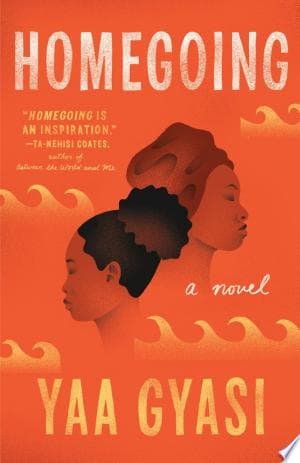
- Homegoing
Yaa Gyasi
4.4 (175k) average on GoodreadsLiterary FictionSpans generations and continents, examining the legacy of race and identity.
- The Vanishing Half
Brit Bennett
4.3 (132k) average on GoodreadsLiterary FictionDeals with themes of racial identity, belonging, and the choices that define lives.
- White Teeth
Zadie Smith
3.8 (124k) average on GoodreadsLiterary FictionAmericanah offers a more focused and piercing critique of racial identity specifically for African immigrants in America, whereas White Teeth provides a broader, multi-generational exploration of multiculturalism and immigration across various ethnic groups in London. Adichie's novel delves deeper into the specifics of 'non-American Black' identity, a topic less central to Smith's work.
- Ghana Must Go
Taiye Selasi
3.8 (10k) average on GoodreadsLiterary FictionWhile both novels explore African diaspora experiences and the complexities of return, Americanah distinguishes itself with its sharp deconstruction of racial performance and authenticity in the American context, often through Ifemelu's direct observations and blog. Selasi's novel focuses more on family dynamics and trauma within the diaspora, with less direct engagement with racial theory in the West.
- The Old Man and the Sea
Ernest Hemingway
3.8 (831k) average on GoodreadsLiterary FictionA Cuban fisherman's long struggle with a giant marlin becomes a story of endurance and dignity, now retold for young adults with illustrations, phonetic guides, and writing prompts in Traditional Chinese.



Enjoyed the summary?
A summary gives you the shape of the book. The book itself has the detail, the examples and the voice.
Find Americanah on AmazonAs an Amazon Associate, BookBrief earns from qualifying purchases. How we're funded