
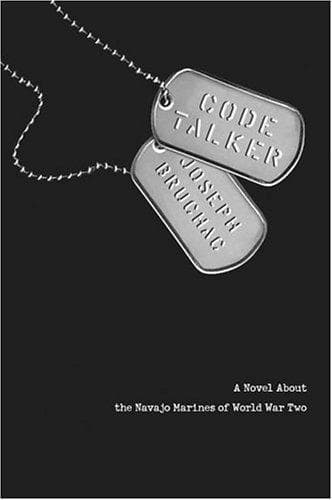
Synopsis
Covers the whole plot, including the ending.
- Difficulty
- Medium
- Pacing
- Moderate
- Mood
- Historical, poignant, educational, inspiring, war-torn
- Read it if
- you're interested in World War II history, indigenous perspectives on war, stories of overcoming prejudice, or the power of language.
- Skip it if
- you prefer purely fictional narratives, or are sensitive to detailed descriptions of wartime violence.
Code talker Plot Summary
Covers the whole plot, including the ending.
Early Life and Boarding School
Ned Begay grew up on the Navajo Reservation, surrounded by his people's traditions and language. He lived a calm life, learning from elders and taking part in tribal customs. But at six, Ned was sent to a government boarding school, common for Native American children then. There, he faced a harsh reality: his Navajo culture and language were forbidden. Students were punished for speaking their language, had their hair cut, and were given English names. Ned and his peers endured strict rules and cultural suppression, which made him think his language was 'useless' in the white world. Despite the difficulty, Ned's intelligence and resilience helped him adapt and learn English, while he secretly held onto his Navajo identity.
The Call to Serve
As Ned got older, World War II began. News of the Pearl Harbor attack reached even the distant Navajo Reservation, sparking patriotism and a wish to defend their land. Despite the past injustices Native Americans faced, many Navajo men felt a strong urge to enlist. Ned, now a young man, wanted to join the fight but was too young. However, a unique chance came up. The U.S. Marines started recruiting Navajo men for a secret mission, specifically looking for those fluent in both English and Navajo. This recruitment went against the government's earlier efforts to suppress the Navajo language. Ned, despite his age, found a way to enlist, wanting to prove himself and help the war effort, not knowing his specific role.
Training and the Birth of the Code
Ned and other Navajo recruits went to basic training, facing the tough physical and mental demands of becoming Marines. While white recruits were often surprised by their presence, the Navajo men quickly showed their strength and adaptability. During this time, their recruitment's true purpose was revealed: they were to create an unbreakable code using their native Navajo language. The Marines had trouble with Japanese codebreakers intercepting their messages and needed a solution. Ned and his fellow Code Talkers began the careful process of developing Navajo words for English military terms, creating a system that was complex and impossible for non-Navajo speakers to understand. This new approach was a key moment in their service.
First Deployment: Guadalcanal
After their intense training and code development, Ned and his fellow Code Talkers deployed to the Pacific Theater. Their first major combat was the brutal battle for Guadalcanal. This introduced Ned to the horrors of war – constant enemy fire, losing comrades, and the harshness of jungle fighting. As a Code Talker, Ned's role was important and dangerous. He worked on the front lines, relaying vital messages by radio, often under intense pressure and direct enemy fire. The speed and accuracy of his transmissions were critical for coordinating troop movements, artillery strikes, and intelligence gathering. Despite fear and chaos, Ned did his job with courage and precision, showing how effective the Navajo code was in real combat and earning the respect of his fellow Marines.
The Power of the Unbroken Code
Throughout the Pacific campaigns, the Navajo code remained unbreakable. The Japanese, despite their best efforts and skilled codebreakers, were baffled by the seemingly meaningless transmissions they intercepted. They could not decipher a single word, giving American forces a significant strategic advantage. Ned and the other Code Talkers became essential; their unique skill allowed for fast and secure communication in battle. Their work saved countless lives by enabling quick coordination and preventing ambushes. This success was a clear win for the Navajo language, once considered 'useless' and suppressed. The Code Talkers' ability to communicate vital information without interception was a cornerstone of American military strategy in the Pacific.
Island Hopping and Growing Horrors
Ned's service continued through the difficult island-hopping campaigns across the Pacific, including battles on places like Bougainville, Guam, and Peleliu. Each island brought new challenges and more brutality. Ned saw the devastating cost of war, experiencing the loss of friends and the mental impact of constant fighting. He learned to manage the fear and the overwhelming sights and sounds of battle, relying on his training, his comrades, and his strong connection to his Navajo heritage for strength. The experiences toughened him, but also deepened his understanding of life's value and his mission's importance. Despite the increasing horrors, Ned continued his duties as a Code Talker with steady dedication, his voice a lifeline in the noise of war.
Iwo Jima: The Ultimate Test
The battle for Iwo Jima was one of the war's most intense and costly engagements. Ned was among the Marines who landed on the volcanic island, facing entrenched Japanese defenses and fierce resistance. The fighting was relentless, with hand-to-hand combat, heavy casualties, and the iconic flag-raising on Mount Suribachi. As a Code Talker, Ned was constantly under fire, sending and receiving important messages that directed troop movements and called for reinforcements or artillery support. The pressure was immense; every word could mean life or death. Ned saw incredible bravery and sacrifice, and the sheer scale of the battle left a lasting mark on him, solidifying his understanding of his secret work's impact.
The End of the War and Secrecy
Eventually, the war in the Pacific ended with the Japanese surrender. Ned, having survived the horrific campaigns, returned home. However, the unique and vital contribution of the Navajo Code Talkers remained a secret. For decades, they could not speak about their wartime service, even to their families, because of military classification. This silence meant their heroism and the clever use of their language went largely unrecognized by the public. Ned, like many veterans, carried the weight of his experiences, both pride in service and the trauma of combat, without the public acknowledgment he deserved. The secrecy around their mission showed the extraordinary nature of their contribution and the need to protect the code's integrity.
Life After War
Back on the Navajo Reservation, Ned tried to resume his civilian life. He faced common struggles for many returning veterans: adjusting to a world without constant fighting, dealing with lingering psychological effects of war, and finding purpose. He reconnected with his family and community, finding comfort in familiar traditions and his culture's lasting strength. Despite the challenges, Ned dedicated himself to rebuilding his life and helping his community. He understood the importance of education and cultural preservation, using his experiences to shape his views. Though he could not speak of his war heroics, he embodied the quiet strength and resilience that defined his service.
Recognition and Legacy
Decades after World War II, the U.S. government declassified the Navajo Code Talker program. Suddenly, the secret heroes could tell their stories, and the world learned of their extraordinary contribution. Ned, now an elder, could share his experiences and receive the recognition he and his comrades deserved. The Code Talkers were honored with medals and widespread acclaim, finally celebrated for their cleverness, bravery, and patriotism. Their story became a powerful example of the value of indigenous languages and cultures, and a reminder of the diverse ways Americans helped the war effort. Ned was proud to share his story, ensuring the Navajo Code Talkers' legacy would not be forgotten and would inspire future generations.
Code talker Characters
Ned Begay
Protagonist
The young Navajo man who becomes a Code Talker.
Ned Begay is a resilient and intelligent Navajo man whose journey forms the core of the narrative. From a traditional upbringing on the reservation, he experiences the harsh assimilationist policies of government boarding schools, where his native language is forbidden. Despite this, he holds onto his cultural identity. Driven by a sense of duty, he enlists in the Marines during World War II and becomes one of the original Navajo Code Talkers. He is brave, observant, and dedicated, facing the horrors of war with courage and performing his vital role with precision. Ned represents the quiet strength and enduring spirit of his people.
Relationships: His Grandfather (Mentor and cultural guide); Fellow Code Talkers (Comrades-in-arms and brothers); His family (Source of cultural identity and support)
Grandfather
Supporting
Ned's wise and traditional elder who teaches him Navajo culture.
Ned's Grandfather is a central figure in his early life, embodying the wisdom, traditions, and spiritual beliefs of the Navajo people. He teaches Ned about the land, the ceremonies, and the importance of their language and history. His teachings instill in Ned a deep sense of cultural identity and pride, which serves as an anchor throughout Ned's experiences in boarding school and war. Though not physically present during Ned's military service, his grandfather's lessons resonate with Ned, providing moral guidance and a connection to his heritage.
Relationships: Ned Begay (Grandson and student)
Smitty (W.W. Smith)
Supporting
A white Marine who befriends Ned and respects the Code Talkers.
Smitty is a fellow Marine and a white soldier who initially encounters Ned and the other Navajo recruits. Unlike some, he is open-minded and quickly develops respect for the Navajo Code Talkers and their unique abilities. He becomes a friend and comrade to Ned, demonstrating that true camaraderie can transcend racial and cultural differences. Smitty's character helps to illustrate the growing acceptance and appreciation of the Code Talkers' role within the wider Marine Corps, providing an important counterpoint to earlier prejudices.
Relationships: Ned Begay (Friend and comrade); Other Marines (Fellow soldiers)
Georgia Boy
Supporting
A Marine who initially shows prejudice but later learns respect.
Georgia Boy is another Marine who serves alongside Ned. Initially, he harbors some prejudices against the Navajo recruits, reflecting the racial attitudes prevalent at the time. However, through shared combat experiences and witnessing the invaluable contribution of the Code Talkers, Georgia Boy's perspective gradually shifts. He comes to understand and appreciate the bravery and skill of Ned and his comrades, illustrating a journey from ignorance to respect. His character arc highlights the transformative power of shared purpose and the dismantling of stereotypes in the face of common adversity.
Relationships: Ned Begay (Fellow soldier, initially strained, later respectful); Other Marines (Comrade)
Corporal David
Supporting
A strict but fair instructor at the boarding school.
Corporal David is one of the instructors at the government boarding school Ned attends. He is strict and enforces the rules against speaking Navajo, as per the school's policy. While he represents the oppressive system of cultural assimilation, he is also depicted as fair in his own way, sometimes showing a glimmer of humanity beneath his stern exterior. He embodies the complex role of individuals within a system designed to strip away Native American identity, highlighting the conflicting motivations and impacts of such policies.
Relationships: Ned Begay (Student and authority figure)
Principal
Supporting
The head of the boarding school, enforcing assimilation policies.
The Principal is the ultimate authority figure at the government boarding school Ned attends. He is responsible for implementing and enforcing the assimilationist policies, including the prohibition of the Navajo language and traditions. He represents the institutionalized effort to 'civilize' Native American children by eradicating their cultural heritage. While his actions are detrimental to the students' cultural identity, he operates within the prevailing ideologies of the time, believing he is doing what is best for them. He is a symbol of the larger societal forces Ned must contend with.
Relationships: Ned Begay (Student and authority figure)
Frank Schab
Supporting
The Marine officer who conceived the idea of the Navajo code.
Major (later Colonel) Frank Schab is the visionary Marine officer who, frustrated by the Japanese ability to break American codes, proposes the radical idea of using the Navajo language for secure military communications. He recognizes the unique potential of an unwritten, complex language and champions the recruitment and training of the Navajo Code Talkers. Schab's foresight and determination are critical to the program's inception and success. He represents the innovative thinking and leadership that allowed for such an unconventional and effective solution to a critical wartime problem.
Relationships: Navajo Code Talkers (Commander and advocate)
Johnny Manuelito
Supporting
One of the original 29 Navajo Code Talkers.
Johnny Manuelito is one of the original 29 Navajo men recruited to develop and implement the code. He is a close comrade to Ned and a fellow pioneer in the Code Talker program. Johnny represents the collective effort and shared experience of these brave men, highlighting their intelligence, adaptability, and dedication to their mission. His presence underscores the bond formed among the Code Talkers, who relied on each other for support and understanding in their unique and dangerous role.
Relationships: Ned Begay (Close friend and fellow Code Talker); Other Code Talkers (Comrades-in-arms)
Code talker Themes
The Power of Language and Cultural Identity
The novel shows how language connects to cultural identity and resilience. Ned first learns his Navajo language is 'useless' and a barrier to success in the white world. Yet, it becomes the tool that saves many American lives and helps win the war. This theme highlights the irony of government policies that tried to suppress indigenous languages, only for one to become a key asset. It celebrates the lasting strength and value of indigenous cultures, proving that diversity can be a source of strength.
“Our language, the very thing that was forbidden to us, that we had been punished for speaking, was going to be our weapon.”
Prejudice, Resilience, and Patriotism
The book explores the complex relationship between Native Americans and the U.S. government. Despite past injustices and ongoing prejudice (seen in the boarding school system), Navajo men like Ned Begay show deep patriotism and loyalty to a country that often oppressed them. They volunteer to fight, not just for the U.S., but for their homes and people. The theme shows their incredible resilience in overcoming systemic discrimination and proving their worth through selfless service, eventually earning respect and recognition, even if delayed. It questions patriotism and belonging when facing hardship.
“We were fighting for America, yes, but we were also fighting for our people, for the Navajo Way.”
The Horrors and Heroism of War
The novel clearly portrays the brutal realities of combat in the Pacific Theater, from the constant island hopping to intense battles like Iwo Jima. It does not avoid showing the fear, loss, and mental toll of war on young soldiers. Along with the horrors, it emphasizes the incredible heroism, courage, and teamwork among the Marines, especially the Code Talkers who performed dangerous duties under constant threat. It highlights the individual sacrifices made for a greater cause and the strong bonds formed in battle, showing both the destructive and transformative aspects of war.
“War is like a fire. It burns away everything that is not strong, leaving only what is true and real.”
Memory, Storytelling, and Legacy
The story is told by Ned Begay, as an elder, sharing his experiences with his grandchildren. This structure emphasizes how memory and storytelling preserve history and cultural heritage. For decades, the Code Talkers' mission was secret, preventing them from sharing their stories. Once declassified, Ned's ability to speak about his past becomes a vital act of cultural and historical preservation. The theme shows how individual stories contribute to a collective legacy, ensuring the Navajo Code Talkers' sacrifices and triumphs are not forgotten and continue to inspire future generations.
“It is important that you remember this story, my grandchildren. It is part of who we are.”
Plot Devices & Literary Techniques
Framing Device
Elder Ned Begay recounting his story to his grandchildren.
The entire novel is framed by an elderly Ned Begay telling his life story, specifically his experiences as a Code Talker, to his grandchildren. This device provides a reflective and retrospective tone, allowing Ned to offer insights and wisdom gained over a lifetime. It also emphasizes the importance of oral tradition and the passing down of history within Navajo culture. The framing device gives the narrative a personal and intimate feel, making the historical events more accessible and emotionally resonant, while also serving as a powerful testament to the enduring legacy of the Code Talkers.
Flashback
Ned's detailed recollections of his childhood, boarding school, and war experiences.
Throughout the narrative, Ned's storytelling employs extensive flashbacks, allowing the reader to experience his past in vivid detail. These flashbacks cover his early life on the reservation, the harsh realities of boarding school, his recruitment, training, and combat experiences in the Pacific. This device is crucial for building Ned's character, explaining the historical context of the Code Talker program, and immersing the reader in the different stages of his journey. It effectively contrasts his peaceful childhood with the brutality of war and the cultural suppression he endured, highlighting his transformation.
Irony
The Navajo language, once forbidden, becomes a vital wartime weapon.
A central ironic element in the novel is the transformation of the Navajo language from a 'useless' and forbidden tongue, punishable in government boarding schools, into an invaluable and unbreakable military code that saves countless lives. This dramatic shift highlights the shortsightedness and cultural insensitivity of assimilationist policies. The very thing deemed a barrier to progress becomes the ultimate tool for strategic advantage, powerfully underscoring the inherent value and strength of indigenous cultures and languages that were once suppressed. It's a profound reversal of fortune and perception.
Symbolism (The Navajo Language)
The Navajo language as a symbol of cultural resilience and identity.
The Navajo language itself functions as a powerful symbol throughout the book. Initially, it symbolizes Ned's cultural heritage and the traditions he is forced to abandon at boarding school, representing a suppressed identity. Later, as it becomes the basis for the unbreakable code, it transforms into a symbol of resilience, ingenuity, and cultural pride. It represents the ability of an indigenous culture to contribute uniquely and profoundly to the national defense, validating its inherent worth and strength. The language embodies the enduring spirit of the Navajo people against all odds.
Code talker Quotes
“It is a great honor to be a Code Talker. It is a great responsibility.”
“We were the voice of the desert, the whisper of the wind, the roar of the thunder.”
“The white man's world is a world of machines and noise. Our world is a world of silence and spirit.”
“We fought for our land, for our people, for our freedom.”
“The code was our shield, our weapon, our voice.”
“They thought we were just savages. They didn't know we were warriors.”
“The war changed us all. It made us see the world in a different way.”
“Our words are like arrows. They fly true and they hit their mark.”
“We carried the spirits of our ancestors with us into battle.”
“The greatest battle is not on the battlefield, but within ourselves.”
“We were asked to be soldiers, and we were asked to be Code Talkers. We did both.”
“The silence of the desert is a language of its own, and it speaks to the heart.”
“We were the invisible men, the ones who spoke in a language no enemy could understand.”
“The stories we tell keep our ancestors alive.”
Quiz
10 questions on the plot and the characters. Each answer comes with a short explanation.
Question 1
What is the name of the protagonist in "Code Talker"?
- Ned Begay
- John Smith
- Robert Redford
- Samuel Jones
Show answer
A. Ned Begay The book explicitly states that Ned Begay is the protagonist.
Question 2
What was the initial attitude towards the Navajo language in the boarding school Ned attended?
- It was encouraged as a valuable skill.
- It was considered useless and suppressed.
- It was taught as a foreign language.
- It was ignored but not forbidden.
Show answer
B. It was considered useless and suppressed. The text states that Ned was taught that Navajo was a useless language.
Question 3
Which branch of the military recruited the Navajo Code Talkers?
- Army
- Navy
- Air Force
- Marines
Show answer
D. Marines The passage specifically mentions that the Marines recruited the Navajo men.
Question 4
What was the primary purpose of the Navajo Code Talkers during World War II?
- To translate enemy communications.
- To send messages in their native tongue.
- To train other soldiers in combat.
- To provide logistical support.
Show answer
B. To send messages in their native tongue. The Code Talkers used their native language to transmit messages securely.
Question 5
What historical event served as the backdrop for the events in "Code Talker"?
- The Korean War
- The Vietnam War
- World War I
- World War II
Show answer
D. World War II The book is set during World War II, as stated in the provided text.
Question 6
The boarding school experience for Ned and other Navajo boys was characterized by:
- Cultural assimilation and suppression of their language.
- Bilingual education programs.
- Vocational training for skilled trades.
- Respect for Navajo traditions.
Show answer
A. Cultural assimilation and suppression of their language. The text explicitly mentions they were taught that their language was useless, implying a suppression of their culture.
Question 7
The irony of the Navajo Code Talkers' role lies in:
- They were forced to fight against their will.
- A language deemed useless was crucial for military success.
- They were not trained in combat.
- Their code was eventually broken by the enemy.
Show answer
B. A language deemed useless was crucial for military success. The core irony is that the language they were told was useless became vital for communication and security in war.
Question 8
What was the strategic advantage of using the Navajo language as a code?
- It was spoken by many Allied soldiers.
- It was a complex language with no written form.
- It was unknown to the enemy and difficult to decipher.
- It allowed for faster transmission than radio.
Show answer
C. It was unknown to the enemy and difficult to decipher. The Navajo language's complexity and lack of widespread knowledge among enemies made it an excellent, unbreakable code.
Question 9
The term "Code Talker" refers to:
- Soldiers who translated enemy codes.
- Navajo individuals who used their language as a military code.
- Spies who infiltrated enemy lines.
- Writers who documented war stories.
Show answer
B. Navajo individuals who used their language as a military code. The specific role of the Navajo men was to transmit messages using their language as a code.
Question 10
The narrative arc of Ned Begay's story highlights a journey from:
- Rebellion to conformity.
- Ignorance to enlightenment.
- Suppression of identity to the valorization of heritage.
- Poverty to wealth.
Show answer
C. Suppression of identity to the valorization of heritage. Ned's experience moves from being taught his language was useless to that same language becoming a vital asset, thus valorizing his heritage.
Code talker FAQ
What is the book "Code Talker" about?
"Code Talker" by Joseph Bruchac tells the story of Ned Begay, a Navajo man who, despite being taught that his native language was useless, is recruited by the Marines to use his Navajo tongue as a secret code during World War II. The book follows his experiences and the vital role the Navajo Code Talkers played in the Pacific theater.
Who is the main character in "Code Talker"?
The main character in "Code Talker" is Ned Begay. The novel chronicles his journey from a boarding school where his Navajo language was suppressed to his critical service as a Code Talker in the U.S. Marines during World War II.
What historical event is central to the plot of "Code Talker"?
The central historical event in "Code Talker" is World War II, specifically the use of the Navajo language as an unbreakable code by the U.S. Marines in the Pacific theater. The book highlights the bravery and ingenuity of the Navajo Code Talkers.
What was the role of the Navajo Code Talkers in WWII?
The Navajo Code Talkers were instrumental in transmitting secret military information during World War II. They developed and used a code based on the Navajo language, which the enemy could not decipher, providing a significant advantage to the Allied forces.
What challenges did Ned Begay face before becoming a Code Talker?
Before becoming a Code Talker, Ned Begay faced the challenge of being sent to a white-run boarding school where his native Navajo language was forbidden and considered useless. This cultural suppression was a common experience for many Native American children of that era.
Is "Code Talker" based on a true story?
Yes, "Code Talker" is based on the true story of the Navajo Code Talkers. While Ned Begay is a fictional character, his experiences and the overall narrative are inspired by the real-life contributions and sacrifices of the Navajo men who served as Code Talkers in World War II.
What themes are explored in "Code Talker"?
The book "Code Talker" explores themes of cultural identity, resilience, patriotism, the impact of war, and the reclamation of a suppressed language. It highlights the contrast between the discrimination faced by Native Americans and their crucial contributions to the United States.
What is the significance of the Navajo language in the book?
The Navajo language is of immense significance in the book. It is initially suppressed by assimilationist policies but later becomes a powerful tool for national defense. The novel celebrates the beauty, complexity, and effectiveness of the Navajo language as a code.
What age group is "Code Talker" suitable for?
"Code Talker" is generally considered a young adult novel, suitable for middle school and high school readers. Its themes and content are appropriate for ages 12 and up, offering historical insights and engaging storytelling.
Where can I find more information about the real Navajo Code Talkers?
You can find more information about the real Navajo Code Talkers through historical resources, museums, documentaries, and official government archives. Organizations like the National WWII Museum and the Navajo Nation itself provide extensive information on their service and legacy.
Similar books
- Island of the Blue Dolphins
Scott O'Dell
3.8 (292k) average on GoodreadsChildren'sFeatures a strong young protagonist facing adversity in a historical setting, with themes of survival and connection to nature.
- Harry Potter and the Sorcerer's Stone
J.K. Rowling
4.5 (7M) average on GoodreadsFantasyRescued from a miserable life under the stairs, an orphaned boy discovers he's a wizard destined for a magical school, where he uncovers a dangerous secret tied to the dark wizard who murdered his parents.
- The Hunger Games
Suzanne Collins
4.3 (6.4M) average on GoodreadsFantasyIn a future where children fight to the death on live television, Katniss Everdeen volunteers for the arena, turning a death sentence into a fight for survival and a spark of rebellion.
- Nineteen Eighty-Four
George Orwell
4.2 (5.5M) average on GoodreadsFictionWinston Smith dreams of truth and rebellion in a world where Big Brother watches all, but he confronts the terrifying power of a regime that controls not just actions, but thoughts.
- Pride & Prejudice
Jane Austen
4.3 (4.9M) average on GoodreadsElizabeth Bennet and Mr. Darcy navigate love and misunderstanding, learning that first impressions can be wrong.
- To Kill a Mockingbird
Harper Lee
4.3 (4.5M) average on GoodreadsHistorical FictionIn the 1930s Jim Crow South, Harper Lee writes about racial injustice, moral growth, and the quiet courage of a lawyer father, Atticus Finch, as seen through his young daughter's eyes.





Enjoyed the summary?
A summary gives you the shape of the book. The book itself has the detail, the examples and the voice.
Find Code talker on AmazonAs an Amazon Associate, BookBrief earns from qualifying purchases. How we're funded