
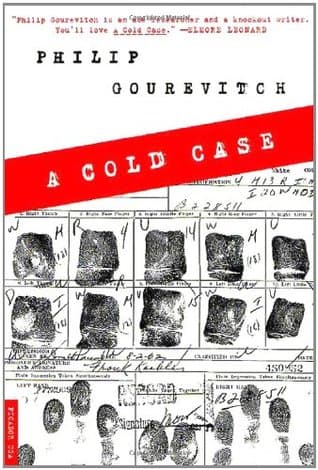
Core Idea
- Difficulty
- Medium
- Read it if
- You are fascinated by true crime that prioritizes philosophical inquiry over neat resolution, enjoy deep dives into the psychology of obsession, or appreciate literary journalism that explores the nature of memory and justice through a single, complex case.
- Skip it if
- You prefer true crime with a clear-cut solution and definitive answers, or find protracted investigations into ambiguous events frustrating rather than compelling.
Key Takeaways from Cold Case
The Unsolvable Nature of Memory
How the passage of time and the subjective nature of recollection erode truth.
Gourevitch shows how remembering, especially years after an event, is a process of reconstruction, not a retrieval of perfect data. Witness accounts, even when sincere, are influenced by later information, personal biases, and the brain's tendency to fill in gaps. This makes the 'truth' of a cold case hard to find, as investigators sort through evidence and layers of distorted memories. The book highlights the tension between the legal system's need for objective facts and the psychological reality of human recall, explaining why some cases remain unsolved due to how our minds work.
“Memory, like a detective's notebook, is filled with erasures and revisions, not always deliberate, but inherently unreliable.”
In the book: The multiple, often contradictory, accounts from various witnesses regarding the night of the murder, each convinced of their own veracity, yet none fully aligning.
Try this: Approach historical accounts or personal anecdotes with a critical lens, recognizing that 'facts' can be highly subjective and evolve over time, even with the best intentions.
Related ideas: memory-bias, cold-case-challenges, subjective-truth
The Enduring Power of Obsession
A detective's relentless pursuit of a decades-old crime reveals the personal cost of the job.
The story is largely driven by Detective Mike Struk's decades-long obsession with the murder of Helen Brach. This is more than professional duty; it is a deep personal commitment. Gourevitch explores the psychological toll this takes, showing how Struk's life becomes tied to the victim's, and how pursuing justice for a stranger can define an investigator's career. This obsession, while tenacious, also shows the potential for tunnel vision and blurred professional boundaries when a case becomes too personal. It is a compelling look at the human element behind police work, and the often-unseen sacrifices made for justice.
“Some cases become a part of you, a haunting, a puzzle you can't put down, even when logic dictates you should.”
In the book: Struk's continued visits to the crime scene, his detailed notes spanning decades, and his emotional recounting of the case even after retirement.
Try this: Recognize the fine line between dedicated pursuit and unhealthy obsession in personal and professional endeavors, ensuring balance and periodic re-evaluation of goals.
Related ideas: detective-psychology, professional-obsession, unsolved-mysteries
The Elusiveness of Justice
Even with dedicated effort, true resolution can be an impossible dream in the face of time and lost evidence.
Gourevitch exposes the reality that not every crime can be solved, and not every victim will receive the justice their loved ones want. The book explores the limits of the justice system, not due to incompetence, but due to evidence decay, fading memories, and the complexity of human events. The Brach case shows how even with dedicated police work, the 'truth' can remain out of reach, leaving a sense of incompleteness for everyone involved. This challenges the popular media portrayal of crime solving as an inevitable triumph, offering a more nuanced and often sad view.
“Justice, in a cold case, is not just about finding a culprit; it's about reclaiming a narrative from the past, a task often beyond human reach.”
In the book: The repeated interviews yielding no conclusive new evidence, the inability to locate key individuals, and the ultimate lack of a definitive conviction despite overwhelming suspicion.
Try this: Cultivate a realistic understanding of the limitations of any system, including justice, and practice acceptance when perfect resolution is unattainable.
Related ideas: unsolved-crimes, justice-system-limitations, closure-challenges
The 'Shadow' Lives of New York
Beneath the city's veneer, a hidden world of illicit dealings and transient connections thrives.
The Brach case reveals a specific part of New York society — one with con artists, drifters, and people operating outside the law. Gourevitch creates a vivid picture of this 'shadow' world, where reputations are easily made, money changes hands through questionable means, and personal connections are often transactional. This environment makes investigative work difficult, as witnesses are unreliable, motives are hidden by deceit, and people often disappear without a trace. It is an interesting look at the underside of a city, showing how anonymity and opportunity can create a unique system of crime.
“New York is a city of layers, and beneath the polished surface, there's always another world, a darker, less visible one, where different rules apply.”
In the book: The various characters interviewed, from shady horse trainers to dubious psychics and transient acquaintances, all moving within a semi-legal, fluid social network.
Try this: Be aware that urban environments often harbor complex, unseen social dynamics and subcultures that can influence events in unexpected ways.
Related ideas: urban-crime, underworld-networks, noir-setting
The Victim's Enduring Presence
Even decades later, the unseen victim continues to shape the investigation and the lives of those involved.
Despite Helen Brach's disappearance decades earlier, her presence is felt throughout the book. Gourevitch ensures she is not just a statistic but a complex person whose life and choices led to her tragic end. The detective's dedication, the witnesses' struggling memories, and the ongoing mystery all revolve around her. This emphasizes the ethical need in true crime to humanize the victim, to understand their life, not just their death. It shows how the void left by a missing person can continue to influence, driving the narrative and shaping the motivations of those trying to understand what happened.
“A victim, even long gone, leaves an echo, a void that resonates through the years, pulling at the threads of the living.”
In the book: Gourevitch's detailed descriptions of Helen Brach's personality, habits, and relationships, pieced together from various accounts, making her a central character despite her absence.
Try this: When discussing or analyzing events involving victims, make an effort to understand their full story and humanize their experience beyond the immediate incident.
Related ideas: victim-impact, true-crime-ethics, unseen-influence
The Unreliable Narrator of Self
Individuals often present a curated, self-serving version of events, further complicating the search for truth.
A key part of cold case investigations, as Gourevitch reveals, is dealing with the self-serving stories of those involved. Suspects, witnesses, and even family members often reconstruct events to minimize their own guilt or maximize their perceived innocence. This is not always malicious; it can be a subconscious defense mechanism or a genuine belief in their edited version of reality. The challenge for investigators, and for the reader, is to sift through these subjective accounts to find the truth, recognizing that everyone has an agenda, however subtle. This psychological insight is important for understanding why 'facts' can be so disputed and hard to establish.
“Everyone is the hero of their own story, even when that story is riddled with inconsistencies and convenient omissions.”
In the book: The conflicting statements from key suspects, particularly Helen Brach's husband and his associates, who consistently shifted blame or offered evasive answers.
Try this: When evaluating information from any source, consider the potential biases and self-interest of the narrator, and seek corroborating evidence.
Related ideas: narrative-bias, psychological-defense, truth-distortion
The Allure and Danger of the Horse Racing World
The book exposes the seedy underbelly of a seemingly glamorous industry.
A significant part of the Brach case happens within the world of horse racing, showing it to be more than just a sport. Gourevitch portrays it as a small world of high stakes, questionable ethics, and transient characters. From shady trainers to gamblers and fixers, the industry provides fertile ground for illegal activities, making it hard to tell legitimate business from criminal enterprise. This environment contributed to the mystery around Helen Brach's disappearance, as her connections within this world introduced many unreliable witnesses and potential motives. It is a reminder that glamour can often hide corruption.
“The track is a place of dreams and ruin, where fortunes are made and lost, and morality often takes a backseat to greed and ambition.”
In the book: The detailed descriptions of Helen Brach's involvement with horse trainers, their financial dealings, and the culture of betting and debt that permeated their lives.
Try this: Be cautious of environments where large sums of money change hands quickly and with little oversight, as they can be breeding grounds for deception.
Related ideas: gambling-crime, horse-racing-scandals, subculture-of-crime
The Power of Narrative in True Crime
Gourevitch demonstrates how compelling storytelling can illuminate even the most fragmented facts.
Beyond simply reporting facts, Gourevitch's 'Cold Case' is an example of narrative true crime. He does not just present evidence; he creates a story, building suspense, developing characters, and exploring themes of memory, obsession, and justice. This shows that even when a definite conclusion is elusive, the process of investigation and the art of storytelling can offer deep insights into human nature and societal complexities. The book itself shows the human need to make sense of the senseless, even when full resolution is not possible. It is a strong argument for the literary value of true crime.
“Even when the answers are incomplete, the act of telling the story, of weaving the threads, creates its own form of understanding, its own truth.”
In the book: The book's structure, which interweaves historical facts with current interviews, internal monologues of the detective, and evocative descriptions of New York City.
Try this: Appreciate that 'truth' can be conveyed through narrative and interpretation, not just through empirical data, especially in complex human situations.
Related ideas: narrative-journalism, true-crime-genre, storytelling-impact
The Lingering Ache of Ambiguity
Some mysteries are destined to remain unsolved, leaving a permanent void.
Perhaps the most important takeaway from 'Cold Case' is the acceptance of uncertainty. Gourevitch does not force a neat conclusion; instead, he lets the reader sit with the unsettling reality that some questions will never be answered. The book ends not with a definite 'who' or 'why,' but with the lingering echo of possibilities and suspicions. This is an honest portrayal of many cold cases, where time does not bring clarity but rather solidifies the fog of uncertainty. It forces both the detective and the reader to face the limits of human knowledge and the pain of unresolved loss.
“The greatest torment in a cold case is not the lack of an answer, but the permanent state of 'what if,' the endless possibilities that can never be confirmed.”
In the book: The book's ending, which, despite presenting strong theories, refrains from declaring a definitive solution, leaving the reader to grapple with the multiple possibilities.
Try this: Practice emotional resilience in the face of uncertainty, accepting that not all questions in life will have clear, satisfying answers.
Related ideas: unresolved-mystery, ambiguity-acceptance, existential-questions
The Detective as Historian
Investigative work becomes an archaeological dig into the past, preserving narratives that would otherwise be lost.
Gourevitch subtly positions Detective Struk not just as a crime solver, but as a historian, carefully piecing together fragments of a forgotten past. His decades of work involve interviewing, cross-referencing, and preserving details that would have vanished without him. This highlights the crucial role law enforcement plays in archiving human stories, even tragic ones. The detective's notebook becomes a primary source, and his memory a living archive, ensuring that the victim's life and the circumstances of their disappearance are not erased by time. It underscores the responsibility in such work.
“A detective, especially on a cold case, is not just solving a crime, but reconstructing a lost history, giving voice to the voiceless decades later.”
In the book: Struk's meticulous handwritten notes, his ability to recall minute details from decades ago, and his dedication to keeping the case file alive.
Try this: Recognize the importance of documentation and careful record-keeping in any field, as it preserves knowledge and provides context for future understanding.
Related ideas: historical-investigation, archival-work, memory-preservation
Cold Case Quotes
“The past is a foreign country; they do things differently there.”
“Every act of destruction is an act of creation.”
“Truth is a stubborn thing, and it has a way of coming out, eventually.”
“Memory is not a static archive but a living, breathing narrative, constantly reinterpreted.”
“The greatest cruelty is not in the act itself, but in the indifference that follows.”
“Sometimes, the hardest thing to find is not the killer, but the motive.”
“History is written by the victors, but the victims often whisper the most profound truths.”
“To forget is to betray, to remember is to forgive, in a way.”
“The silence of the archives can be louder than any scream.”
“Justice delayed is not always justice denied; sometimes it's just a longer road.”
“We are all detectives of our own past, piecing together fragments of what was.”
“The weight of a secret can crush a lifetime.”
“Every generation must confront its own shadows, or be consumed by them.”
“The line between perpetrator and victim is often blurrier than we'd like to admit.”
Quiz
10 questions on the main ideas. Each answer comes with a short explanation.
Question 1
Which historical event forms the primary backdrop and initial mystery for the investigation in 'Cold Case'?
- The 1929 stock market crash
- The 1918 Spanish Flu pandemic
- The 1930s 'Dutch Schultz' era of organized crime in New York
- The construction of the Empire State Building
Show answer
C. The 1930s 'Dutch Schultz' era of organized crime in New York The book centers on the cold case murder of a man connected to the organized crime world of Dutch Schultz in 1930s New York.
Question 2
Who is the central character, the detective, who reopens the cold case at the heart of the book?
- Detective Frank Serpico
- Detective Andy Rosenzweig
- Detective Mike Hammer
- Detective Elliot Ness
Show answer
B. Detective Andy Rosenzweig The book follows Detective Andy Rosenzweig as he revisits the decades-old murder case.
Question 3
The initial victim in the cold case, whose murder sparks the investigation, is identified as a former associate of which notorious gangster?
- Al Capone
- Lucky Luciano
- Meyer Lansky
- Dutch Schultz
Show answer
D. Dutch Schultz The victim, Joseph Stabile, was reportedly a numbers runner and associate of Dutch Schultz, making his murder deeply entwined with Schultz's criminal enterprise.
Question 4
What primary piece of physical evidence, initially overlooked or misinterpreted, becomes crucial for Detective Rosenzweig in re-evaluating the original crime scene?
- A blood-stained handkerchief
- A unique bullet casing
- A distinctive hat found near the body
- The precise location and angle of the victim's body in relation to the apartment layout
Show answer
D. The precise location and angle of the victim's body in relation to the apartment layout Rosenzweig's detailed re-examination of the crime scene photos and floor plan, particularly the victim's position, leads him to question the original police theory.
Question 5
Gourevitch uses the 'cold case' investigation not just to solve a murder, but also to explore what broader theme about New York City's past?
- The rise of Wall Street and corporate power
- The hidden layers of history, memory, and the city's continuous evolution
- The architectural transformation of Manhattan
- The impact of immigration on urban development
Show answer
B. The hidden layers of history, memory, and the city's continuous evolution The book delves into how the city's past, its crimes, and its characters linger and can be unearthed, revealing a continuous narrative beneath the modern surface.
Question 6
What is one of the key challenges Rosenzweig faces in investigating a case from the 1930s, as highlighted in the book?
- Lack of modern forensic technology
- The difficulty in locating and interviewing living witnesses or their descendants
- Inability to access historical police archives
- Outdated laws preventing re-prosecution
Show answer
B. The difficulty in locating and interviewing living witnesses or their descendants A major part of Rosenzweig's work involves tracking down elderly individuals who might have had a connection to the case or the people involved, or their families, decades after the fact.
Question 7
The book implies that the original police investigation into the 1930s murder may have been hampered or misdirected due to what prevalent factor of the era?
- Lack of communication between police precincts
- Widespread corruption within the police force and political influence from organized crime
- Inadequate training for homicide detectives
- The pressure of the Great Depression diverting resources
Show answer
B. Widespread corruption within the police force and political influence from organized crime Gourevitch subtly but firmly points to the pervasive corruption and the influence of figures like Dutch Schultz on law enforcement and city politics as a reason for the original investigation's shortcomings.
Question 8
What unconventional method does Detective Rosenzweig employ to gain a deeper understanding of the victim's life and the potential motives for his murder?
- He consults a psychic medium for clues.
- He attempts to live in the victim's old apartment for a week.
- He extensively researches the victim's personal history, family, and social connections, almost immersing himself in the victim's past world.
- He stages a re-enactment of the crime with actors.
Show answer
C. He extensively researches the victim's personal history, family, and social connections, almost immersing himself in the victim's past world. Rosenzweig goes far beyond typical police work, meticulously reconstructing the victim's life through interviews and archival research to understand the context of the murder.
Question 9
The book can be seen as an exploration of the nature of 'truth' in historical narratives and criminal investigations. How does Gourevitch illustrate this concept?
- By presenting multiple, equally plausible, and contradictory solutions to the murder.
- By showing how initial assumptions and official reports can obscure or distort what actually happened, requiring a painstaking re-evaluation of fragmented evidence and memories.
- By focusing solely on forensic science to determine objective facts, independent of human interpretation.
- By arguing that some historical events are inherently unknowable and should not be pursued.
Show answer
B. By showing how initial assumptions and official reports can obscure or distort what actually happened, requiring a painstaking re-evaluation of fragmented evidence and memories. Gourevitch demonstrates how the 'truth' of the case is not immediately apparent, but rather constructed through careful, critical examination of biased records, fading memories, and overlooked details.
Question 10
What is the ultimate fate of the cold case by the end of Gourevitch's narrative?
- The original killer is identified, arrested, and convicted.
- The case remains unsolved, but the book provides a definitive theory about what likely occurred and who was involved.
- The case is officially closed due to lack of evidence, with no new insights.
- A new, entirely unrelated suspect emerges, leading to a new investigation.
Show answer
B. The case remains unsolved, but the book provides a definitive theory about what likely occurred and who was involved. While the book doesn't end with an arrest or conviction (due to the passage of time and the death of all involved parties), Rosenzweig's investigation thoroughly reconstructs the events and offers a highly plausible solution to the mystery.
Cold Case FAQ
What is 'Cold Case' by Philip Gourevitch about?
'Cold Case' by Philip Gourevitch is a gripping true-crime narrative that delves into a decades-old, unsolved murder in Manhattan. The book meticulously reconstructs the investigation and the lives touched by the crime, offering a deep dive into the nature of justice and memory.
Does 'Cold Case' solve the mystery of the murder?
While 'Cold Case' provides an exhaustive account of the investigation and sheds new light on the circumstances, it ultimately explores the enduring nature of an unsolved crime rather than presenting a definitive resolution. Gourevitch focuses on the human element and the pursuit of truth over many years.
What kind of research went into 'Cold Case'?
Philip Gourevitch conducted extensive research for 'Cold Case,' involving numerous interviews with detectives, witnesses, and family members, as well as poring over police records, court documents, and archival materials spanning decades. His meticulous approach brings the cold case to vivid life.
What is the central concept of 'Manhattan noir' in the context of this book?
The 'Manhattan noir' concept in 'Cold Case' refers to its atmospheric portrayal of urban decay, moral ambiguity, and the dark underbelly of city life, often with a sense of fatalism, characteristic of classic noir fiction. It grounds the true crime story in a specific time and place with a distinctive mood.
How does 'Cold Case' differ from typical true-crime podcasts or documentaries?
'Cold Case' distinguishes itself through its literary depth and Gourevitch's distinctive narrative voice, offering more introspection and historical context than many faster-paced true-crime formats. It prioritizes the complexities of human memory and the slow erosion of time over sensationalism.
Is 'Cold Case' suitable for readers who prefer fiction?
Yes, 'Cold Case' is often recommended for readers of fiction due to its compelling narrative, vivid characterizations, and masterful storytelling, which read like a novel. While entirely factual, its literary quality transcends typical non-fiction boundaries.
What makes the murder in 'Cold Case' particularly intriguing?
The murder in 'Cold Case' is intriguing due to its seemingly inexplicable nature, the lack of clear motives, and the enduring mystery surrounding the perpetrator despite extensive police efforts. The case's longevity and its impact on multiple lives add to its captivating complexity.
Does 'Cold Case' provide insights into the process of cold case investigations?
Absolutely. 'Cold Case' offers a detailed look into the challenges and methodologies of investigating unsolved crimes over many years. It illuminates how evidence degrades, memories fade, and new technologies emerge, all while detectives grapple with the emotional toll of such cases.
About the author

Philip Gourevitch is an American author and journalist known for his non-fiction works that often explore themes of conflict and human rights. His book "Cold Case" examines the complexities of unresolved criminal cases, reflecting his interest in justice and accountability. Gourevitch is also recognized for his earlier work, "We Wish to Inform You That Tomorrow We Will Be Killed with Our Families," which addresses the Rwandan genocide.
Similar books
- In Cold Blood
Truman Capote
4.1 (529k) average on GoodreadsThrillerA seminal work of literary true crime, exploring a brutal murder and its aftermath with deep character study and reportage.
- The Devil in the White City: Murder, Magic, and Madness at the Fair That Changed America
Erik Larson
4.0 (522k) average on GoodreadsBiographyInterweaves historical narrative with true crime, immersing the reader in a specific time and place while detailing a complex criminal figure.
- The Diary of a Young Girl
Anne Frank
4.2 (2.7M) average on GoodreadsBiographyDuring the Nazi occupation, a teenage girl's diary, written from a secret annex, shares observations on humanity, hope, and the wait for freedom.
- Night
Elie Wiesel
4.3 (970k) average on GoodreadsBiographyIn the darkness of Auschwitz and Buchenwald, a teenage Elie Wiesel faces the extermination of his family, the loss of his faith, and the lasting scars of humanity's deepest cruelty.
- Steve Jobs
Walter Isaacson
4.1 (957k) average on GoodreadsBusinessSteve Jobs was a visionary who fused creativity and technology to revolutionize six industries and shape our digital world.
- Unbroken: A World War II Story of Survival, Resilience and Redemption
Laura Hillenbrand
4.4 (767k) average on GoodreadsBiographyLouis Zamperini's incredible World War II odyssey transforms him from a rebellious youth and Olympic runner into a survivor of a plane crash, shark-infested waters, and brutal Japanese POW camps, only to find redemption through forgiveness.





Enjoyed the summary?
A summary gives you the shape of the book. The book itself has the detail, the examples and the voice.
Find Cold Case on AmazonAs an Amazon Associate, BookBrief earns from qualifying purchases. How we're funded