
Synopsis
Covers the whole plot, including the ending.
- Difficulty
- Easy
- Pacing
- Fast
- Mood
- Humorous, Playful, Relatable, Lighthearted
- Read it if
- You want a humorous, relatable story about toddler tantrums and finding common ground.
- Skip it if
- You prefer books with complex plots or deep emotional themes (this is a simple children's book).
Crankenstein Plot Summary
Covers the whole plot, including the ending.
The Boy and the Transformation
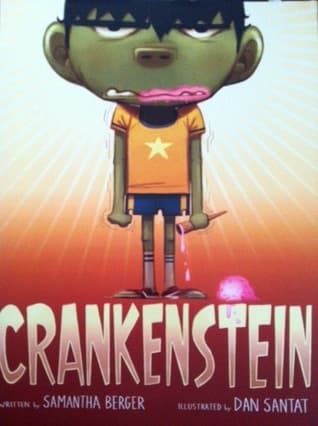
The story introduces an ordinary young boy who, like many children, gets frustrated and grumpy. For him, these moments cause a big change. When small annoyances happen, such as a sunny day suddenly turning rainy, a popsicle melting too fast, or a favorite toy breaking, he physically twists and complains, becoming the monster Crankenstein. This change is shown with humor, his eyes narrowing, his mouth turning down, and his body slumping into a grumpy pose, along with 'MEHHRRRR!!!' sounds.
Crankenstein's Morning Woes
Crankenstein's day often starts with morning problems. He might wake up to an alarm clock that is too loud, breakfast cereal that is too soggy, or a shirt that feels 'itchy.' These small irritations are enough to start his grumpy change. He grumbles about the sunlight being too bright, the toast being burnt, or having to get dressed. His morning grumpiness is a daily habit, affecting his interactions and setting a bad mood for his day, making him hard to please and likely to complain more.
Playtime Perils
Even activities that usually bring joy and play can quickly turn Crankenstein into his grumpy self. A game of hide-and-seek where he is always 'it,' a puzzle with a missing piece, or a swing set that is 'too high' or 'too low' can cause his change. He complains about the rules, the weather, or how unfair everything is. His playmates often do not understand his sudden mood changes, unable to grasp how frustrated he is over what they see as small problems, which makes him even more isolated in his grumpiness.
Mealtime Meltdowns
Mealtime is another chance for Crankenstein to appear. He might say his food is 'too hot,' 'too cold,' 'too green,' or simply 'not what I wanted.' Even a well-made meal can cause an argument. He might refuse to eat, push his plate away, or make loud groans and complaints about the food's texture or taste. These mealtime meltdowns happen often, making eating a difficult and frustrating experience for everyone, as he finds fault with almost everything on his plate.
The Cranky Commute
Trips outside the house, whether to the store or in a car, have many possible Crankenstein triggers. He might complain about traffic being 'too slow,' the car radio being 'too loud,' or having to sit still for 'too long.' Waiting in line at the grocery store, being taken through aisles of things he does not care about, or having to wear a seatbelt can all turn him into a grumbling monster. These public outbursts often embarrass the adult with him and are not pleasant for the boy.
Bedtime Battles
As the day ends, bedtime becomes a big fight for Crankenstein. He grumbles about taking a bath, putting on pajamas, or the idea of going to sleep. The dark might be 'too dark,' the blanket 'too lumpy,' or his bedtime story 'too short.' He fights going to sleep with all his might, finding every reason to complain and make the process longer. This nightly routine often ends with him still grumbling, even as he falls asleep, holding onto his last bits of crankiness.
A Day Full of Cranks
The story shows that Crankenstein's grumpiness is not rare but happens throughout his day. From morning to night, he finds reasons to complain, changing into his grumpy self many times. The story shows different situations where he becomes Crankenstein, highlighting how often and how strongly he changes. This constant cycle of finding fault and showing displeasure paints a clear picture of a day lived by a constantly grumpy child, struggling with life's small problems.
The Crankenstein Encounter
One day, in the park and feeling especially cranky about a broken swing, Crankenstein sees another child showing similar signs of extreme grumpiness. This 'Cranken-girl' is also moping, grumbling, and acting like Crankenstein. They both look equally unhappy and are clearly in the middle of their own changes. The boy, as Crankenstein, is at first surprised to see someone else showing his kind of monster grumpiness, suggesting a possible change from his usual lonely crankiness.
A Shared Grumble
The boy and the girl, both fully changed into Crankensteins, look at each other. Instead of fighting, they have a moment of understanding. They understand each other's grumbles and frustrations in a way no one else seems to. A shared 'MEHHRRRR!!!' passes between them, a sound of togetherness rather than anger. This shared show of grumpiness creates an unexpected bond, as they both realize they are not alone in their strange problem, and that someone else truly 'gets' what they are feeling.
The Uncranking
The shared grumbling and understanding between the two Crankensteins lead to a surprising and good outcome. As they keep 'MEHHRRRR!!!' together, a small smile starts to appear on both their faces. Sharing their grumpiness, having someone else understand their feelings, somehow lessens how strong their crankiness is. The monster changes start to go away, and they slowly return to their normal, happier selves. The shared experience, surprisingly, 'uncranks' them.
Friendship Blooms
After 'uncranking,' the boy and the girl feel connected and have a new friendship. Their shared moment of extreme grumpiness, instead of pushing them apart, has brought them together. They now have a special bond, understanding each other's occasional changes. The story ends with them playing together, no longer Crankensteins, suggesting that even the biggest grumpiness can be overcome and can even lead to good connections when shared and understood.
Principal Figures
The Boy / Crankenstein
Protagonist
An ordinary boy who transforms into a grumpy monster.
The boy is the central character, an otherwise normal child who experiences common frustrations. He is prone to dramatic mood swings, transforming into 'Crankenstein' whenever he encounters minor inconveniences, such as a rainy day, a melting popsicle, or an early bedtime. His Crankenstein persona is characterized by grumbling, complaining, and a generally miserable demeanor. Despite his monstrous outbursts, he is still fundamentally a child seeking understanding and connection, even if he doesn't realize it.
Relationships: The Cranken-girl (Fellow Crankenstein and eventual friend, sharing a unique bond over their grumpiness.); Parents/Guardians (implied) (Figures of authority who witness and manage his Crankenstein episodes, often with exasperation.)
The Cranken-girl
Supporting
Another child who mirrors Crankenstein's grumpy transformations.
The Cranken-girl is introduced later in the story as a mirror image to the protagonist. She also experiences intense grumpiness and transforms into her own Crankenstein persona, exhibiting the same 'MEHHRRRR!!!' sounds and expressions of displeasure. She represents the idea that Crankenstein moments are universal among children. Her presence is crucial as she provides the catalyst for the protagonist's 'uncranking,' demonstrating the power of shared experience and empathy.
Relationships: The Boy / Crankenstein (Fellow Crankenstein and eventual friend, sharing a unique bond over their grumpiness.)
Themes & Insights
The Universality of Grumpiness
The book shows that feeling grumpy is a common and normal part of childhood. The boy turning into Crankenstein over daily annoyances like a rainy day or a melting popsicle shows that even small frustrations can feel huge to a child. The Cranken-girl reinforces this, showing that the 'Crankenstein' event is not just for one child but a shared experience, making children feel understood and less alone when they are unhappy.
“He may look like any ordinary boy, but when faced with a rainy day, a melting popsicle, or an early bedtime, one little boy transforms into a mumbling, grumbling Crankenstein!”
The Power of Shared Experience
A main theme is how sharing negative feelings can have good results. Crankenstein's grumpiness is a lonely burden until he meets the Cranken-girl. Their mutual recognition and shared 'MEHHRRRR!!!' create an unexpected bond. This shared expression of frustration, instead of making them grumpier, actually calms it, letting them 'uncrank.' It teaches that finding someone who understands and accepts your feelings can help with loneliness and negativity, leading to connection and friendship.
“When Crankenstein meets his match in a fellow Crankenstein, the results could be catastrophic-or they could be just what he needs to brighten his day!”
Emotional Regulation and Coping
While not directly stated, the book explores emotional regulation. The boy's first reaction to frustration is to turn into Crankenstein, a physical sign of his inability to handle small problems. His eventual 'uncranking' through talking with another child suggests that outside acceptance and connection can be a way to cope. It implies that children need to learn healthy ways to deal with and show their negative emotions, and that sometimes, simply having someone understand can be the first step to managing them.
“MEHHRRRR!!! HE'S ALIVE!”
Plot Devices & Literary Techniques
Personification of Grumpiness
Abstract emotion is made into a physical, monstrous character.
The book uses personification by transforming the abstract emotion of grumpiness into a tangible, albeit temporary, monster called Crankenstein. This device allows young readers to visualize and understand the intense, overwhelming feeling of being cranky. By giving grumpiness a name and physical characteristics, it makes the emotion less abstract and more approachable for children, helping them identify and discuss their own 'Crankenstein' moments in a lighthearted way. It externalizes an internal state, making it easier to process.
Repetition
Repeated phrases and scenarios emphasize the ongoing nature of grumpiness.
The book heavily utilizes repetition, particularly with the sound 'MEHHRRRR!!!' and the recurring scenarios that trigger Crankenstein's transformation (rainy days, melting popsicles, early bedtimes). This repetition establishes a clear pattern of behavior for Crankenstein and reinforces the idea that grumpiness can strike at any moment over various common annoyances. For young readers, repetition aids in comprehension and memorability, creating a predictable yet humorous rhythm to the narrative and highlighting the pervasive nature of the character's crankiness.
Mirror Character
Introduction of a character who perfectly reflects the protagonist's central trait.
The introduction of the 'Cranken-girl' serves as a mirror character to Crankenstein. She embodies the exact same grumpy traits and transformations, reflecting the protagonist's core struggle. This device is crucial for the story's resolution because it allows Crankenstein to see his own behavior from an external perspective. By observing a mirror image of himself, he gains an unexpected sense of understanding and connection, which ultimately leads to his 'uncranking' and the formation of a friendship. It validates his feelings while also providing a pathway out of his solitary grumpiness.
Crankenstein Quotes
“Are you a Crankenstein?”
“When you wake up and it's a Monday...”
“When your toast falls jam-side down...”
“When your juice is gone and it's just a few ice cubes...”
“When your toy is stuck and you can't get it out...”
“When your friends are giggling and you don't know why...”
“When your socks feel bumpy...”
“When your ice cream melts before you can eat it...”
“When you can't find your favorite book...”
“When you have to wear the scratchy sweater...”
“When you just want to stomp and grumble and growl...”
“When you're a Crankenstein, there's only one thing to do...”
“Find another Crankenstein!”
“And grumble and growl and stomp together!”
Quiz
10 questions on the plot and the characters. Each answer comes with a short explanation.
Question 1
What kind of day is specifically mentioned as a trigger for the boy to transform into Crankenstein?
- A sunny day
- A snowy day
- A rainy day
- A windy day
Show answer
C. A rainy day The book explicitly states that 'when faced with a rainy day,' the boy transforms into Crankenstein.
Question 2
Which of the following items is NOT listed as something that can trigger the boy's transformation into Crankenstein?
- A melting popsicle
- An early bedtime
- A broken toy
- A rainy day
Show answer
C. A broken toy The text lists a rainy day, a melting popsicle, and an early bedtime as triggers. A broken toy is not mentioned.
Question 3
What is the primary characteristic that defines Crankenstein?
- He is a monster of happiness
- He is a monster of grumpiness
- He is a monster of silliness
- He is a monster of sleepiness
Show answer
B. He is a monster of grumpiness The book clearly states, 'HE IS A MONSTER OF GRUMPINESS THAT NO ONE CAN DESTROY!'
Question 4
What sound does Crankenstein typically make, as described in the book?
- Wheeee!
- MEHHRRRR!!!
- Hooray!
- Zzzzzz...
Show answer
B. MEHHRRRR!!! The text specifically uses the sound 'MEHHRRRR!!!' to describe Crankenstein.
Question 5
What is the initial appearance of Crankenstein before his transformation?
- A spooky ghost
- An ordinary boy
- A grumpy old man
- A giant green monster
Show answer
B. An ordinary boy The book states, 'He may look like any ordinary boy, but when faced with a rainy day... one little boy transforms into a mumbling, grumbling Crankenstein!'
Question 6
What is the potential outcome when Crankenstein 'meets his match in a fellow Crankenstein'?
- They will immediately become best friends.
- The results could be catastrophic or just what he needs to brighten his day.
- They will both disappear into thin air.
- They will start a giant food fight.
Show answer
B. The results could be catastrophic or just what he needs to brighten his day. The text explicitly states, 'When Crankenstein meets his match in a fellow Crankenstein, the results could be catastrophic-or they could be just what he needs to brighten his day!'
Question 7
What is the primary emotional state associated with Crankenstein?
- Joy
- Excitement
- Grumpiness
- Calmness
Show answer
C. Grumpiness Crankenstein is repeatedly described as a 'monster of grumpiness' and a 'mumbling, grumbling Crankenstein.'
Question 8
The description 'mumbling, grumbling' refers to what aspect of Crankenstein?
- His physical appearance
- His diet
- His vocalizations and demeanor
- His favorite activities
Show answer
C. His vocalizations and demeanor The phrase 'mumbling, grumbling Crankenstein' describes how he sounds and behaves when in his grumpy state.
Question 9
What is the implied deeper theme about dealing with bad moods, based on Crankenstein meeting a 'fellow Crankenstein'?
- Bad moods can only be overcome by ignoring them.
- Shared negative experiences can sometimes lead to an unexpected positive outcome or resolution.
- It's best to isolate oneself when feeling grumpy.
- Grumpiness is contagious and always worsens when shared.
Show answer
B. Shared negative experiences can sometimes lead to an unexpected positive outcome or resolution. The text suggests that meeting a fellow Crankenstein 'could be just what he needs to brighten his day,' implying that shared grumpiness can lead to a positive shift.
Question 10
The phrase 'a monster of grumpiness that no one can destroy!' implies what about Crankenstein's mood?
- His grumpiness is easily fixed by others.
- His grumpiness is a powerful, persistent, and internal force.
- He is literally an indestructible monster.
- His grumpiness only lasts for a few seconds.
Show answer
B. His grumpiness is a powerful, persistent, and internal force. The hyperbolic statement 'no one can destroy!' emphasizes the intense and seemingly unshakeable nature of Crankenstein's grumpiness, suggesting it's a deep-seated feeling.
Crankenstein FAQ
What triggers the main character's transformation into Crankenstein?
The main character transforms into Crankenstein when confronted with common childhood frustrations such as a rainy day, a melting popsicle, or an early bedtime. These everyday annoyances cause him to become grumpy and unleash his inner 'monster of grumpiness'.
What is Crankenstein's typical demeanor or 'monster' behavior?
Crankenstein exhibits a range of grumpy behaviors, including mumbling, grumbling, and making sounds like 'Mehhrrrr!!!'. He is characterized by a general state of dissatisfaction and an inability to be cheered up by typical means, embodying a 'monster of grumpiness'.
How does the book resolve Crankenstein's grumpiness?
Crankenstein's grumpiness is resolved when he encounters another child who is also in a Crankenstein state. Their shared grumpiness and relatable frustrations lead to a moment of mutual understanding and eventually, laughter, breaking their cranky spell.
What is the primary message or theme of 'Crankenstein'?
The primary message of 'Crankenstein' is that it's okay to feel grumpy sometimes, and that shared experiences, even negative ones, can lead to connection and improved mood. It normalizes childhood frustrations and offers a humorous way to cope with them.
Does Crankenstein have a specific name before he transforms, or is he just 'a little boy'?
The book refers to him simply as 'one little boy' who transforms into Crankenstein, rather than giving him a specific personal name. This universal approach allows many children to identify with the character and his experiences of grumpiness.
Are there any visual cues in the illustrations that hint at the transformation before it fully happens?
While the description focuses on the verbal transformation, the illustrations subtly build towards the Crankenstein persona through darkening colors, exaggerated facial expressions, and more angular lines on the boy's face and body as his grumpiness intensifies, culminating in his full 'monster' form.
What specific 'catastrophic' results are hinted at if Crankenstein meets his match?
The book hints at 'catastrophic' results in a playful, ironic sense, suggesting that two grumpy Crankensteins might amplify each other's negativity. However, the actual outcome is the opposite: their shared grumpiness leads to a positive, connecting experience rather than a breakdown.
How does the book use onomatopoeia and expressive language to convey Crankenstein's mood?
The book heavily relies on onomatopoeia like 'Mehhrrrr!!!' and descriptive words such as 'mumbling' and 'grumbling' to vividly portray Crankenstein's foul mood. This expressive language helps young readers understand and feel the character's intense grumpiness.
How does the book's portrayal of Crankenstein normalize negative emotions for children?
By personifying grumpiness as 'Crankenstein,' the book creates a relatable character for children to identify with their own frustrations. It validates that these feelings are normal and temporary, rather than something to be ashamed of, allowing kids to acknowledge their cranky moments.
What psychological benefit might children gain from seeing Crankenstein meet another Crankenstein?
Children might gain the psychological benefit of feeling understood and less alone in their negative emotions. Seeing Crankenstein find a peer who shares his grumpiness teaches empathy and shows that even unpleasant feelings can be a basis for connection and eventual relief.
How does the resolution of the story contribute to emotional regulation in young readers?
The story's resolution, where shared grumpiness leads to laughter, indirectly teaches emotional regulation by demonstrating that negative feelings don't last forever and can be transformed through connection. It shows a healthy way to move past frustration without escalating it.
In what ways does Crankenstein's behavior reflect typical childhood regression or defiance?
Crankenstein's 'mumbling' and 'grumbling' when faced with minor setbacks can be seen as a playful representation of childhood regression or defiance. He retreats into a state where he is unwilling to communicate constructively, mirroring how young children might react when overwhelmed by frustration.
Is Crankenstein intended to be a literal monster, or a metaphorical representation of grumpiness?
Crankenstein is clearly intended as a metaphorical representation of grumpiness, not a literal monster. The boy 'transforms' into him, indicating a shift in mood and behavior rather than a physical change, making the character relatable to children's internal experiences.
Could the 'fellow Crankenstein' be interpreted as a reflection or an external manifestation of the first Crankenstein's own feelings?
While presented as a separate character, the 'fellow Crankenstein' could be interpreted as a powerful mirror for the first boy, showing him his own grumpiness externally. This reflection allows for self-awareness and the shared experience that ultimately breaks the spell.
Does the book suggest that grumpiness is a necessary emotion for personal growth, or simply an unavoidable one?
The book leans towards suggesting grumpiness is an unavoidable, normal emotion, rather than strictly necessary for growth. It validates its existence and shows a healthy way to move through it, implying that acknowledging and sharing these feelings is important for well-being.
How does the ending, where laughter breaks the spell, emphasize the power of social connection?
The ending powerfully emphasizes the role of social connection by showing that shared understanding and mutual recognition of feelings, even negative ones, can lead to a positive outcome like laughter. It highlights how human connection can diffuse intense emotions.
What broader lesson about empathy can be drawn from Crankenstein's encounter with his match?
The encounter teaches a valuable lesson about empathy: understanding and relating to someone else's negative feelings can be a powerful way to connect and alleviate distress. It shows that empathy isn't just about sharing joy, but also about acknowledging shared struggles.
Similar books
- Harry Potter and the Sorcerer's Stone
J.K. Rowling
4.5 (7M) average on GoodreadsFantasyRescued from a miserable life under the stairs, an orphaned boy discovers he's a wizard destined for a magical school, where he uncovers a dangerous secret tied to the dark wizard who murdered his parents.
- The Hobbit, or There and Back Again
J.R.R. Tolkien
4.3 (2.9M) average on GoodreadsFantasyA comfort-loving hobbit named Bilbo Baggins is whisked away by a mischievous wizard and a band of dwarves on an unexpected journey to reclaim stolen treasure from a fearsome dragon, discovering courage and a magical ring along the way.
- Harry Potter and the Goblet of Fire
J.K. Rowling
4.6 (2.6M) average on GoodreadsFantasyA bewildered Harry Potter, underage and thrust into a deadly Triwizard Tournament, must brave dragons, mermaids, and a resurgent dark magic to survive a year that will forever alter the wizarding world.
- Harry Potter and the Order of the Phoenix
J.K. Rowling
4.5 (2.5M) average on GoodreadsFantasyIn a year of oppressive secrets and the threat of Voldemort, Harry Potter and Dumbledore's Army secretly train for war, shown through Jim Kay and Neil Packer's dark illustrations.
- The Lightning Thief
Rick Riordan
4.3 (2M) average on GoodreadsFantasyThrust into a world of mythological monsters and divine treachery, an ordinary boy discovers he's the son of Poseidon and must embark on a perilous quest across modern America to prevent an Olympian war.
- The Giver
Lois Lowry
4.1 (1.8M) average on GoodreadsFantasyIn a world where everyone is the same, a young boy named Jonas learns about true memory, forcing him to see the cost of his community's peaceful ignorance.






Enjoyed the summary?
A summary gives you the shape of the book. The book itself has the detail, the examples and the voice.
Find Crankenstein on AmazonAs an Amazon Associate, BookBrief earns from qualifying purchases. How we're funded