

Estimated read time: 5 min read
One Sentence Summary
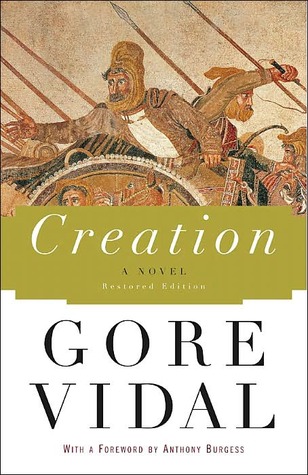
A historical novel that explores the life and travels of Cyrus Spitama, a Persian diplomat, philosopher, and grandson of Zoroaster.
Table of Contents
Introduction
In Gore Vidal's captivating novel "Creation," readers are immersed in a vivid and thought-provoking journey through ancient history and philosophy. Published in 1981, "Creation" takes us on a remarkable adventure, spanning centuries and continents, as we follow the life of Cyrus Spitama, a fictional grandson of Zoroaster. Through Spitama's eyes, Vidal explores the complex tapestry of human civilization, religion, and power dynamics. With its rich historical backdrop and insightful commentary, "Creation" offers a compelling exploration of the human condition.
Brief Synopsis
Set in the 5th century BCE, "Creation" transports readers to a world filled with political upheaval, religious fervor, and intellectual enlightenment. The story unfolds through the eyes of Cyrus Spitama, a Persian diplomat, philosopher, and historian. Raised as the grandson of Zoroaster, Spitama grows up in an environment where he encounters various cultures, religions, and philosophies. As he journeys across the ancient world, he witnesses the rise and fall of empires, meets influential thinkers, and grapples with questions of existence, morality, and the nature of power.
Main Characters
| Character | Description |
|---|---|
| Cyrus Spitama | The protagonist and narrator of the story. He is a Persian diplomat, philosopher, and historian. |
| Zoroaster | Cyrus's grandfather and founder of the Zoroastrian religion. |
| Xerxes | The King of Kings of Persia, known for his military campaigns. |
| Confucius | A prominent Chinese philosopher and teacher. |
| Buddha | The founder of Buddhism, an enlightened spiritual leader. |
| Pericles | The influential leader of Athens during its golden age. |
Summary of Different Story Points Over Chapters
Chapter 1: The Kingdom of Lydia
Cyrus Spitama introduces himself and describes his childhood in the Kingdom of Lydia. He introduces Zoroaster, his grandfather, and their encounters with religion and philosophy.
Chapter 2: Athens
Spitama travels to Athens and meets Pericles, the great leader of Athens. He witnesses the democratic system and the intellectual atmosphere of the city.
Chapter 3: Confucius
Spitama travels to China and meets Confucius, engaging in deep discussions about morality, social order, and the role of the individual in society.
Chapter 4: Buddha
Spitama encounters Buddha in India and delves into discussions about suffering, enlightenment, and the search for meaning.
Chapter 5: Persia
Returning to Persia, Spitama witnesses the reign of King Xerxes and the Persian wars against Greece. He grapples with the complexities of power, conquest, and the clash of civilizations.
Chapter 6: Egypt
Spitama visits Egypt and explores the mysteries of the pharaohs, the Nile civilization, and the nature of religious beliefs.
Chapter 7: The Garden
In the final chapter, Spitama reflects on his journey, the nature of creation, and the interconnectedness of all human experiences.
Main Events
- Spitama's encounters with various historical figures, including Pericles, Confucius, and Buddha.
- The Persian wars and the rise and fall of empires.
- Philosophical discussions on morality, religion, and the nature of existence.
- Exploration of different civilizations, including Lydia, Athens, China, Persia, and Egypt.
Themes and Insights
Exploration of Religion and Philosophy
"Creation" delves into the complexities of different religious and philosophical beliefs, highlighting the diversity of human thought and the search for meaning and purpose in life.
Power and Politics
Through the lens of ancient empires and rulers, the novel explores the dynamics of power, conquest, and the often destructive consequences of unchecked authority.
The Human Condition
Vidal delves into the fundamental questions of human existence, morality, and the nature of reality. The novel prompts readers to reflect on their own place in the world and the timeless struggles of humanity.
Reader's Takeaway
"Creation" offers a captivating and thought-provoking exploration of ancient history, religion, and philosophy. Through the eyes of Cyrus Spitama, readers are invited to contemplate the complexities of human civilization, the nature of power, and the eternal quest for meaning. Vidal's masterful storytelling and rich historical detail create a compelling narrative that leaves a lasting impression on readers, inspiring them to reflect on their own beliefs and the human condition.
Conclusion
"Creation" by Gore Vidal is a remarkable literary achievement, blending historical fiction, philosophy, and adventure into a captivating narrative. Through the eyes of Cyrus Spitama, readers are transported to ancient civilizations and guided through profound philosophical discussions. Vidal's writing not only entertains but also challenges readers to question their own beliefs and explore the timeless themes of human existence. "Creation" remains a timeless masterpiece that continues to resonate with readers today, offering a unique perspective on the tapestry of human history and the complexity of the human experience.
Creation FAQ
What is the book 'Creation' about?
The book 'Creation' is a historical novel that explores the ancient world and follows the journey of a Persian diplomat named Cyrus Spitama. It delves into various philosophical and religious ideas, political events, and cultural aspects of different civilizations.
Who is the author of 'Creation'?
The author of 'Creation' is Gore Vidal, an American writer known for his historical novels and essays.
When was the book 'Creation' published?
The book 'Creation' was published in 1981.
What is the writing style of 'Creation'?
The writing style of 'Creation' is a mix of historical fiction and philosophical discourse. It combines storytelling with intellectual exploration.
What time period does the book 'Creation' cover?
The book 'Creation' covers a wide range of time periods, from ancient Persia to Greece, India, and China. It spans several centuries.
Are the events in 'Creation' historically accurate?
While 'Creation' is a work of fiction, it incorporates historical events, figures, and cultures. However, some artistic liberties are taken to enhance the narrative.
Is 'Creation' a standalone novel or part of a series?
'Creation' is a standalone novel and does not belong to a series.
What are some themes explored in 'Creation'?
Some themes explored in 'Creation' include the nature of truth, the clash of cultures, the role of religion, the pursuit of knowledge, and the power dynamics between civilizations.
Is 'Creation' suitable for all readers?
'Creation' contains complex ideas and philosophical discussions, which may make it more suitable for readers who enjoy thought-provoking literature. It may not be suitable for younger audiences.
Has 'Creation' received any awards or recognition?
Yes, 'Creation' was a finalist for the National Book Award in 1981 and received positive reviews from critics.


