
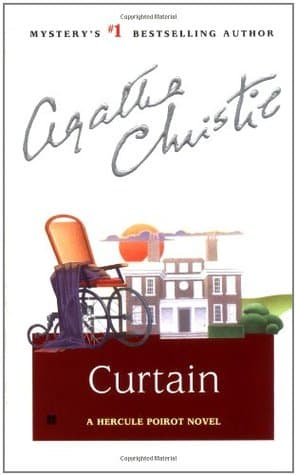
Synopsis
Covers the whole plot, including the ending.
- Difficulty
- Medium
- Pacing
- Moderate
- Mood
- Valedictory, Suspenseful, Melancholy, Clever
- Read it if
- You want to experience Hercule Poirot's final, most poignant case and witness a truly unique method of murder.
- Skip it if
- You prefer a healthy, active Poirot or dislike stories where the detective knows the killer from the start.
Curtain Plot Summary
Covers the whole plot, including the ending.
A Return to Styles
Captain Arthur Hastings returns from Africa and gets an urgent call from Hercule Poirot. Poirot is at Styles Court, the estate where they solved their first murder. Hastings finds Poirot badly crippled by arthritis, in a wheelchair, and needing a nurse, but his mind is sharp. Styles, now a guesthouse run by Colonel and Mrs. Luttrell, has many guests. Poirot tells Hastings that a murderer, 'X', is among them and will kill again. Poirot cannot act and needs Hastings to be his 'eyes and ears'.
The Enigmatic X
Poirot explains that 'X' does not kill directly but makes others kill, making their crimes look like accidents or acts by other people. This makes 'X' almost impossible to catch. Poirot knows who 'X' is but won't say, fearing for Hastings's safety. He tells Hastings to watch everyone at Styles for clues about 'X's' influence or their next victim. Hastings is confused by Poirot's secrecy but trusts him and starts watching.
A Cast of Characters
Hastings watches the guests and residents. They include Stephen Norton, a shy young man; Nurse Craven, Poirot's stern nurse; Elizabeth Cole, a beautiful woman with a troubled past; Colonel Luttrell, the kind owner; his younger wife, Daisy Luttrell; Sir William Boyd Carrington, a respected gossiper; Barbara Franklin, a cold woman; her quiet husband, Dr. Franklin; and Judith Hastings, Arthur's daughter, who works for Dr. Franklin. Tensions and romances are clear, especially between Judith and Stephen, and Dr. Franklin and Elizabeth Cole. Hastings feels overwhelmed by the task of finding a killer among so many people.
The First 'Accidental' Death
The first 'incident' happens during a rabbit shoot. Colonel Luttrell, who has bad eyesight, 'accidentally' shoots his wife, Daisy Luttrell, in the head. Daisy dies. The event is called an accident because of Luttrell's eyesight. But Hastings, remembering Poirot's warning, suspects 'X'. He notes that Colonel Luttrell had money problems and that Daisy was having an affair with Stephen Norton. The death makes Styles sad, but no one else suspects murder.
Poirot's Frustration and Hastings' Misdirection
Poirot gets more upset, telling Hastings to watch more closely and understand the subtle things happening. Hastings, however, thinks Elizabeth Cole is 'X' because of her past and what he sees as her manipulative nature. He also suspects Stephen Norton, especially after the affair with Daisy Luttrell. Hastings believes Elizabeth is trying to poison Stephen, but his attempts to find proof fail. Poirot, in his wheelchair, can only listen and make unclear remarks, growing more desperate as Hastings keeps misreading events.
Another 'Suicide'
Sir William Boyd Carrington, a gossipy man with past connections, is found dead. He died of cyanide poisoning, with a glass of his drink next to him. The death is called a suicide, as Sir William had a terminal illness. But Hastings is suspicious. He remembers Sir William talking with Elizabeth Cole before his death and Elizabeth acting strangely. Poirot's warnings about 'X' causing deaths that look accidental or self-inflicted make Hastings sure Elizabeth is the killer.
Hastings' Desperate Act
Believing Elizabeth Cole is 'X' and will kill again, Hastings makes a desperate choice. He gets a pistol and, thinking he is stopping a crime, tries to shoot Elizabeth. He misses. The event is chaotic and quickly covered up by the other residents, who think Hastings was upset or momentarily lost his mind. Hastings is shaken by his failure and how close he came to being a murderer. He feels he has failed Poirot.
Poirot's Final Revelation
Soon after Hastings's failed attempt, Hercule Poirot is found dead. The official cause is a heart attack. Hastings is crushed. Days later, a letter from Poirot, to be opened after his death, arrives. In it, Poirot confesses to giving himself a fatal dose of hyoscine. He reveals that 'X' is Stephen Norton, the shy young man. Poirot explains 'X's' manipulation and why he took his own life.
The Master Manipulator
Poirot's letter details how Stephen Norton works. Norton, seemingly harmless, is an expert at psychological manipulation. He finds people with hidden violent tendencies or those under stress and subtly makes them kill. He plants ideas, creates chances, and sets up situations where violence seems like the 'obvious' answer, all while appearing innocent. Poirot explains that Norton kills for the thrill of power, seeing it as an intellectual game. He is the ultimate puppet master.
The Crimes Unveiled
Poirot's letter explains how Stephen Norton planned the deaths at Styles. He encouraged Colonel Luttrell's existing jealousy of his wife, Daisy, knowing Luttrell's poor eyesight would make a 'hunting accident' believable. For Sir William Boyd Carrington's death, Stephen used Sir William's knowledge of Elizabeth Cole's past (she killed her abusive husband) and his terminal illness. Stephen subtly suggested suicide to Sir William, knowing the old man was despairing. He made sure cyanide was available and presented in a way Sir William would take it, making it look like suicide. Stephen's skill was making others think these were their own ideas.
Poirot's Ultimate Sacrifice
The most shocking part of Poirot's letter is his confession: he killed Stephen Norton. Poirot explains that his illness meant he could not stop Norton directly, and Norton's crimes were impossible to prove in court. Poirot realized the only way to stop Norton was to kill him. He lured Norton to his room, offered him cocoa, and gave him a fatal dose of hyoscine, making it look like Norton drank it by accident. After Norton's death, Poirot took his own life to avoid being caught for murder and, more importantly, to protect Hastings from the burden of knowing the truth without being able to act.
Hastings' Acceptance and Future
Hastings is overwhelmed by Poirot's letter, struggling to accept his moral friend as a murderer. But as he rereads it, he understands Poirot's immense burden and sacrifice. He sees Poirot's deep commitment to justice and humanity. Hastings also finds peace about his daughter, Judith, who marries Dr. Franklin and moves to Africa, fulfilling a wish Poirot had expressed. Hastings accepts that Poirot, in his last act, chose the hardest path to ensure justice, making the ultimate sacrifice for good.
Principal Figures
Hercule Poirot
Protagonist
The brilliant Belgian detective, now physically frail but mentally sharp, who masterminds his final case.
Poirot, in his final appearance, is an elderly, severely arthritic man, confined to a wheelchair and suffering from a debilitating heart condition. Despite his physical limitations, his 'little grey cells' remain as active and incisive as ever. He is meticulous, proud, and deeply committed to justice, even when it demands the ultimate personal sacrifice. His moral compass is absolute, leading him to take extreme measures to combat pure evil. He understands human nature profoundly, allowing him to see the hidden manipulations of 'X'.
Relationships: Captain Arthur Hastings (Lifelong friend and trusted companion, his 'eyes and ears'); Nurse Craven (His stern but dedicated nurse)
Captain Arthur Hastings
Narrator and Supporting
Poirot's loyal, if somewhat naive, best friend and chronicler of his cases.
Hastings returns to Styles after years in Africa, finding his old friend Poirot significantly aged and infirm. He is a kind-hearted, straightforward man, often prone to romanticizing situations and misinterpreting events. His loyalty to Poirot is unwavering, though he frequently struggles to keep pace with Poirot's complex deductions. He is a devoted father to Judith and often worries about her. Hastings represents the 'everyman' perspective, providing a contrast to Poirot's intellectual prowess and highlighting the subtlety of 'X's' crimes.
Relationships: Hercule Poirot (Best friend and long-time colleague); Judith Hastings (His daughter); Stephen Norton (Initially a potential suitor for Judith, later revealed as 'X')
Stephen Norton ('X')
Antagonist
The seemingly meek and unassuming young man who is secretly a master manipulator and serial killer.
Stephen Norton is presented as a shy, quiet, and somewhat awkward young man, often overlooked by others. This unassuming facade hides a chillingly brilliant and amoral mind. He is 'X', the psychological murderer who manipulates others into committing crimes. His motive is not financial gain or passion, but the sheer intellectual thrill and perverse satisfaction of exercising power over human lives. He is a master of subtle suggestion and identifying the latent weaknesses and desires in his victims, using them to orchestrate 'accidental' deaths or suicides. He has no conscience or empathy.
Relationships: Daisy Luttrell (Had an affair with her, which he used to manipulate her husband); Judith Hastings (Showed romantic interest in her, likely as another manipulative game)
Judith Hastings
Supporting
Captain Hastings' intelligent and independent daughter, working as a scientific assistant.
Judith is a bright, modern young woman, highly intelligent and scientifically minded. She works as Dr. Franklin's assistant, showing a keen interest in chemistry and pathology. She is independent and somewhat detached emotionally, which can frustrate her traditional father. She has an ambiguous relationship with Stephen Norton, who seems to be pursuing her. Poirot observes her closely, recognizing her sharp intellect and potential. She represents a new generation, less bound by conventional sentiment.
Relationships: Captain Arthur Hastings (Her father); Dr. Franklin (Her employer and later husband); Stephen Norton (A potential suitor, whom she eventually rejects)
Dr. Franklin
Supporting
A dedicated but somewhat meek research scientist, husband to Barbara Franklin.
Dr. Franklin is an intelligent and dedicated research scientist, entirely absorbed in his work. He is married to the cold and intellectual Barbara Franklin but is clearly attracted to Judith Hastings. He is generally mild-mannered and somewhat oblivious to the emotional undercurrents around him, focusing instead on his scientific pursuits. His work on alkaloids and poisons becomes a minor plot point. He is a good man, but easily manipulated by stronger personalities, unknowingly becoming a pawn in 'X's' game.
Relationships: Barbara Franklin (His wife); Judith Hastings (His assistant and later wife)
Elizabeth Cole
Supporting
A beautiful woman with a dark past, initially suspected by Hastings to be 'X'.
Elizabeth Cole is a striking and mysterious woman who has changed her name multiple times. She carries a secret from her past: she killed her abusive first husband in self-defense, though it was ruled an accident. This history makes her a prime suspect for Hastings, who misinterprets her guarded nature and intense gaze as signs of guilt. She is intelligent and perceptive, understanding more of the underlying tensions at Styles than many others. She feels a connection with Stephen Norton, though she is unaware of his true nature.
Relationships: Stephen Norton (She feels a strange affinity for him, unaware of his true identity); Captain Arthur Hastings (He wrongly suspects her of being 'X')
Colonel Luttrell
Supporting
The amiable but aging owner of Styles Court, with poor eyesight.
Colonel Luttrell is the current owner of Styles Court, which he has converted into a guesthouse. He is a friendly, somewhat bumbling man with notably poor eyesight. He is devoted to his much younger wife, Daisy, despite her affair, and is under significant financial pressure. His physical infirmity and emotional vulnerability make him an ideal target for Stephen Norton's manipulation, leading to the tragic 'accident' that claims his wife's life. He is a victim of 'X's' psychological influence.
Relationships: Daisy Luttrell (His wife, whom he accidentally kills); Stephen Norton (Unknowingly manipulated by him)
Daisy Luttrell
Supporting/Victim
Colonel Luttrell's much younger wife, who is having an affair.
Daisy Luttrell is the younger, attractive wife of Colonel Luttrell. She is having an affair with Stephen Norton, which is an open secret among some of the guests. She is somewhat flighty and perhaps bored with her life at Styles. Her affair and her husband's financial woes make her a central figure in the first 'accidental' death orchestrated by 'X'. She is a victim of both her own choices and Stephen Norton's insidious manipulation.
Relationships: Colonel Luttrell (Her husband); Stephen Norton (Her lover and eventual murderer by proxy)
Sir William Boyd Carrington
Supporting/Victim
A gossipy baronet with knowledge of Elizabeth Cole's past.
Sir William Boyd Carrington is an older baronet, known for his social connections and his tendency to gossip. He has a terminal illness, which leads him to despair. He knows of Elizabeth Cole's past and her history of killing her abusive husband, which makes him a potential threat to her and a pawn for 'X'. His vulnerability and despair make him an easy target for Stephen Norton's suggestions, leading to his 'suicide'. He represents another type of victim 'X' preys upon.
Relationships: Elizabeth Cole (Knows her past, leading to his manipulation by 'X')
Themes & Insights
The Nature of Evil
The book explores a terrifying evil in 'X'. Unlike typical murderers driven by emotion or money, 'X' kills for the intellectual thrill of control. This makes 'X' almost impossible to find or convict. Poirot's final case suggests that pure, motiveless evil, existing only to control and destroy, is the most dangerous kind, needing extreme measures to fight. Stephen Norton's ability to subtly make others kill, making their acts seem their own, shows the power of psychological manipulation.
“He is a murderer, yes, but a special kind of murderer. He does not kill with his own hand. He makes other people kill.”
Justice vs. Law
A main theme is the clash between legal justice and a higher moral justice. Poirot, facing death and unable to prove 'X's' guilt in court, acts outside the law to ensure justice. His decision to murder Stephen Norton, then kill himself, shows his belief that some evils are so deep and unprovable that they demand a personal, ultimate sacrifice to protect people. This challenges the usual detective story and makes Hastings, and the reader, think about the moral side of such an act.
“When a man is a public menace, then he must be removed. And if the law cannot remove him, then others must.”
Mortality and Legacy
The book is filled with the theme of death, as it is Poirot's last case and he is very ill. Poirot's failing body contrasts with his sharp mind, showing the mind's power even as the body weakens. His concern for his legacy and justice drives his actions. He makes sure Hastings, his friend, will understand and carry on the truth, giving meaning beyond his own death. Returning to Styles, where they started, frames his final journey.
“I am dying, Hastings. But before I go, I have one last duty to perform.”
Perception vs. Reality
The book often plays with the idea that things are not as they seem. Stephen Norton, the shy young man, is the deadliest character. Hastings often misreads events and suspects the wrong people (Elizabeth Cole), showing how easily one can be fooled by first impressions and biases. Poirot, despite his immobility, sees past these appearances, recognizing the subtle psychological currents. 'X's' crimes rely on changing perception, making murders look like accidents or suicides, hiding the real truth.
“It is not what one sees, Hastings. It is what one deduces.”
Plot Devices & Literary Techniques
The Locked-Room Mystery (Psychological Variant)
A traditional mystery trope inverted to focus on psychological manipulation within a confined setting.
While not a literal locked room where bodies are found, Styles Court functions as a psychological 'locked room'. The limited cast of characters within the isolated guesthouse creates an intense environment where everyone is under scrutiny. The 'mystery' isn't how someone entered or exited, but how a killer could operate without physically committing the acts. This twist on the classic trope elevates the psychological tension, forcing Hastings (and the reader) to look beyond physical evidence and into the subtle dynamics of human interaction within the confined space.
The Unreliable Narrator (Hastings's Misinterpretations)
Captain Hastings's observations and deductions are consistently flawed, leading the reader astray.
Captain Hastings, as the primary narrator, provides a biased and often incorrect interpretation of events. His emotional responses, traditional mindset, and tendency to jump to conclusions lead him to suspect the wrong characters and misread crucial interactions. This device effectively misdirects the reader, allowing the true identity and methods of 'X' to remain hidden until Poirot's posthumous revelation. It also highlights the cunning of 'X' and the difficulty of identifying a purely psychological murderer, as even a seasoned observer like Hastings is repeatedly fooled.
Poirot's Posthumous Letter
A letter from Poirot, delivered after his death, reveals the complete truth and his final actions.
This letter serves as the ultimate reveal, providing Poirot's full explanation of 'X's' identity, methods, and his own confession to murder. It allows Poirot, despite his physical incapacitation and death, to deliver his final, meticulously reasoned solution. This device creates a powerful emotional impact, as Hastings (and the reader) receives the truth directly from the deceased detective, making his sacrifice all the more poignant and his brilliance undeniable even in death. It's a classic Christie device, but given a profound twist in this final novel.
The Red Herring (Elizabeth Cole)
Elizabeth Cole's mysterious past and guarded demeanor are used to mislead Hastings and the reader.
Elizabeth Cole serves as a major red herring. Her history of having killed her abusive husband (albeit in self-defense) and her subsequent name changes make her an ideal candidate for Hastings's suspicion. Her somewhat aloof and intense personality further fuels his belief that she is 'X'. This misdirection is crucial in obscuring the true killer, Stephen Norton, who is presented as far less threatening. The red herring works by exploiting Hastings's emotional biases and the reader's expectation of a more conventional villain.
Curtain Quotes
“For five years I have known the truth. I have carried it about with me. What a burden it has been.”
“It is not the big things that matter, mon ami. It is the little things. The tiny, insignificant details.”
“The end, mon ami. The end has come.”
“I have been called a genius. I have been called a monster. I am neither. I am just a man who has done what had to be done.”
“There are some people who are better out of the world than in it.”
“It is not what a man says, but what he does, that is the true test.”
“My mind, it is still working. Even now, when the body fails, the little grey cells, they do not desert me.”
“You see, mon cher Hastings, it is not always the obvious solution that is the correct one.”
“To kill is one thing. To escape justice, that is another.”
“The greatest enemy of truth is often not the lie, but the myth.”
“It is a strange thing, life. So easily snuffed out.”
“And now, mon ami, I am tired. Very, very tired.”
“There are crimes of passion, and there are crimes of calculation. The latter are the more dangerous.”
“I have always hated injustice. And I have always tried to put it right.”
Quiz
10 questions on the plot and the characters. Each answer comes with a short explanation.
Question 1
Where do Poirot and Hastings reunite for Poirot's final case, a location significant to their first collaboration?
- St. Mary Mead
- Styles Court
- The Grange
- Whitehaven Mansions
Show answer
B. Styles Court Poirot and Hastings return to Styles, the very place where they solved their first case together, for Poirot's final investigation.
Question 2
What is the physical condition of Poirot in 'Curtain' that necessitates Hastings acting as his 'eyes and ears'?
- He is blind.
- He is deaf.
- He is arthritic and immobilized.
- He has lost his memory.
Show answer
C. He is arthritic and immobilized. Poirot is described as arthritic and immobilized, which is why he needs Hastings to observe and report details to him.
Question 3
What alias does Poirot use to refer to the unnamed criminal whose identity he knows but won't reveal to Hastings?
- The Serpent
- The Shadow
- 'X'
- The Mastermind
Show answer
C. 'X' Poirot refers to the criminal, whose identity he withholds from Hastings, as 'X'.
Question 4
Why did Agatha Christie initially write 'Curtain' and keep it in a safe for over thirty years?
- She wanted to surprise her publishers with a new series.
- She wrote it during WWII as a gift for her daughter, in case she didn't survive the bombings.
- She was dissatisfied with the ending and wanted to revise it later.
- It was part of a planned trilogy that she never completed.
Show answer
B. She wrote it during WWII as a gift for her daughter, in case she didn't survive the bombings. Agatha Christie wrote 'Curtain' during World War II as a gift for her daughter in case she did not survive the bombings, and it was kept in a safe for decades.
Question 5
What was the international reception to Poirot's death upon the publication of 'Curtain'?
- It was largely ignored by the public and critics.
- It was met with mild interest, but no significant impact.
- It was a major international event, earning him an obituary in The New York Times.
- It caused a decline in Agatha Christie's book sales.
Show answer
C. It was a major international event, earning him an obituary in The New York Times. The reception of Poirot's death was international, even earning him an obituary in The New York Times, highlighting its significant impact.
Question 6
Who was the first actor to portray Poirot in his final hours in the television adaptation of 'Curtain'?
- Peter Ustinov
- Albert Finney
- David Suchet
- Tony Randall
Show answer
C. David Suchet David Suchet was the first actor to portray Poirot in his final hours, doing so for the final episode of 'Agatha Christie’s Poirot' after playing the role for twenty-five years.
Question 7
What is the primary emotional reaction of many long-standing Agatha Christie fans towards reading 'Curtain'?
- Excitement to see a new Poirot adventure.
- Dread, with many refusing to read it due to Poirot's death.
- Indifference, as they preferred her other characters.
- Curiosity about the historical context of its writing.
Show answer
B. Dread, with many refusing to read it due to Poirot's death. The story was anticipated and dreaded by fans worldwide, many of whom still refuse to read it because it contains Poirot's death.
Question 8
What thematic element is highlighted by Poirot's decision to withhold the criminal's identity ('X') from Hastings, despite knowing it?
- Poirot's desire to test Hastings's deductive skills independently.
- The theme of the detective's burden and moral isolation in confronting evil.
- A plot device to extend the suspense unnecessarily.
- Poirot's failing mental faculties due to his physical state.
Show answer
B. The theme of the detective's burden and moral isolation in confronting evil. Poirot's decision to withhold 'X's identity, even from his trusted friend, emphasizes the unique and often solitary burden of the detective who must understand and confront the darkest aspects of human nature, making moral choices that others cannot or will not.
Question 9
Beyond being a final case, what makes 'Curtain' a particularly poignant and unique narrative experience for long-time readers of Agatha Christie?
- It introduces a new sidekick for Poirot.
- It serves as a meta-commentary on the nature of detective fiction itself.
- It brings Poirot and Hastings full circle, back to their first setting, for the detective's death.
- It reveals a secret about Agatha Christie's personal life.
Show answer
C. It brings Poirot and Hastings full circle, back to their first setting, for the detective's death. The narrative is poignant because it brings Poirot and Hastings back to Styles, the location of their first case, creating a full circle for Poirot's final act and death, which resonates deeply with readers familiar with their entire journey.
Question 10
How does the delayed publication of 'Curtain' (written during WWII but published in 1975) contribute to its legacy?
- It made the story feel outdated upon release.
- It built decades of anticipation, making Poirot's death a monumental event upon its eventual release.
- It allowed for significant revisions to the plot before publication.
- It was overshadowed by other authors' works published in the interim.
Show answer
B. It built decades of anticipation, making Poirot's death a monumental event upon its eventual release. The long delay between its writing and publication built decades of anticipation, contributing to the monumental impact and international reception of Poirot's death when the book was finally released in 1975.
Curtain FAQ
What is the central premise of 'Curtain' and why is it significant for Hercule Poirot?
'Curtain' sees an elderly, immobilized Hercule Poirot reunite with Captain Hastings at Styles Court, the location of their first case. Poirot, aware of a killer ('X') among them but unable to act physically, enlists Hastings to be his eyes and ears, making it Poirot's final and most personal investigation.
Who is 'X' and what is their unique method of murder?
'X' is Stephen Norton, a master manipulator who subtly encourages others to commit murder, then lets them believe it was their own idea or fault. Norton never directly commits the act himself, making him incredibly difficult to prove guilty through conventional means.
Why does Poirot choose not to reveal 'X's identity to Hastings until after the fact?
Poirot keeps 'X's identity secret from Hastings because he fears Hastings, with his straightforward nature, might inadvertently tip off the killer or act rashly, jeopardizing the delicate plan. Poirot also needs Hastings to remain objective in his observations, unclouded by suspicion.
What is the significance of Styles Court as the setting for Poirot's final case?
Styles Court holds immense significance as it was the location of Poirot and Hastings' first case together, 'The Mysterious Affair at Styles'. Its return symbolizes a full circle for the duo, bringing their partnership to a poignant close where it began.
How does Poirot ultimately stop 'X' and what is the moral dilemma involved?
Poirot ultimately stops 'X' by murdering him himself, administering a fatal dose of physostigmine. This presents a profound moral dilemma as Poirot, a staunch upholder of justice, takes a life to prevent further murders that the law cannot touch, sacrificing his own principles for the greater good.
What role does Captain Hastings play in Poirot's final investigation, beyond being his 'eyes and ears'?
Beyond being Poirot's observer, Hastings serves as the emotional anchor and moral compass for the reader. His frustration, confusion, and eventual grief reflect the audience's own journey, and his relationship with Poirot adds a deeply personal layer to the grim proceedings.
How does Poirot's physical deterioration impact his detective work in 'Curtain'?
Poirot's severe arthritis and immobility force him to rely entirely on his intellect and the observations of others, primarily Hastings. His physical limitations highlight the power of his mind, proving that even a broken body cannot diminish his razor-sharp deductive abilities.
What is the underlying psychological motivation for 'X's actions?
'X' is driven by a profound need for control and a sadistic pleasure in manipulating others to commit heinous acts. They thrive on the psychological power they hold over vulnerable individuals, proving their intellectual superiority by orchestrating murders without direct involvement.
Why was 'Curtain' written so far in advance of its publication?
Agatha Christie wrote 'Curtain' during World War II, intending it as a safeguard for her daughter's financial future should Christie not survive the war bombings. It was then kept in a safe for over thirty years, only published in 1975.
How does the book explore the themes of justice and morality through Poirot's final act?
The book deeply explores justice and morality by having Poirot commit murder. It questions whether extraordinary circumstances justify extraordinary measures, forcing readers to confront the grey areas where conventional justice fails and a personal, ultimate sacrifice is deemed necessary.
What is the significance of the physostigmine used by Poirot?
Poirot uses physostigmine, a drug that mimics symptoms of angina, to kill 'X'. This choice is significant because it allows 'X's death to appear natural, further obscuring Poirot's involvement and ensuring the manipulator's demise without revealing his own transgression.
How does Hastings's perception of Colonel Luttrell's shooting incident evolve throughout the story?
Initially, Hastings accepts the official explanation that Colonel Luttrell shot his wife and then himself out of remorse. However, as Poirot reveals 'X's true nature, Hastings realizes Luttrell was manipulated into the act, becoming another victim of 'X's psychological warfare.
What does Poirot's confession letter reveal about his character and his view of justice?
Poirot's confession letter reveals his profound torment and the immense weight of his decision to kill 'X'. It underscores his unwavering commitment to true justice, even if it means sacrificing his own soul and reputation to prevent further innocent deaths that the legal system could not stop.
How did the public and critics react to Poirot's death in 'Curtain'?
The public and critics reacted with widespread emotion, even earning Poirot an obituary in The New York Times, an unprecedented honor for a fictional character. Many fans dreaded and even refused to read it, highlighting the deep affection for the character.
What literary devices does Christie employ to build suspense and mystery around 'X'?
Christie masterfully uses Poirot's cryptic pronouncements, Hastings's limited perspective, and the constant threat of imminent murder to build suspense. By keeping 'X's identity and method vague, she forces the reader to suspect nearly everyone, heightening the mystery.
What is the ultimate fate of Hastings after Poirot's death?
After Poirot's death and the revelation of his confession, Hastings is left to process the profound loss of his friend and the shocking truth behind 'X's demise. He is a changed man, burdened by the knowledge and the memory of their final, tragic case together.
How does 'Curtain' serve as a commentary on the limitations of the legal system?
'Curtain' serves as a stark commentary on the limitations of the legal system, particularly its inability to prosecute a manipulator like 'X' who never physically commits murder. Poirot's drastic action highlights the gap between legal justice and true justice when facing a unique criminal mind.
About the author
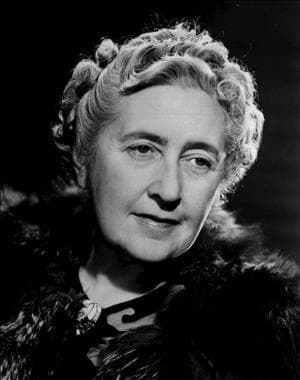
Dame Agatha Mary Clarissa Christie, Lady Mallowan, was an English writer known for her 66 detective novels and 14 short story collections, particularly those revolving around fictional detectives Hercule Poirot and Miss Marple. She also wrote the world's longest-running play, the murder mystery The Mousetrap, which has been performed in the West End since 1952. A writer during the "Golden Age of Detective Fiction", Christie has been called the "Queen of Crime". She also wrote six novels under the pseudonym Mary Westmacott. In 1971, she was made a Dame (DBE) by Queen Elizabeth II for her contributions to literature. Guinness World Records lists Christie as the best-selling fiction writer of all time, her novels having sold more than two billion copies.
Similar books
- THE MURDER OF ROGER ACKROYD
Agatha Christie
4.2 (153k) average on GoodreadsThrillerFeatures a similar twist on the traditional detective narrative and Poirot's brilliance.
- And Then There Were None
Agatha Christie
4.3 (822k) average on GoodreadsThrillerInvolves a group of people trapped in a location where a killer is among them.
- Gaudy Night
Dorothy L. Sayers
4.2 (23k) average on GoodreadsHistorical FictionSayers' novel, like Curtain, delves into moral dilemmas and character psychology. However, Lord Peter Wimsey consistently functions as a traditional detective seeking legal justice, in contrast to Poirot's ultimate, morally ambiguous sacrifice in Curtain.
- Angels & Demons
Dan Brown
3.9 (2.7M) average on GoodreadsThrillerA Harvard symbologist races through Rome's ancient sites, deciphering cryptic clues to unmask the Illuminati and stop a vengeful plot to destroy the Vatican with a stolen antimatter weapon.
- Gone Girl
Gillian Flynn
4.1 (2.3M) average on GoodreadsThrillerA wife's sudden disappearance on her fifth anniversary reveals a web of lies and psychological warfare, exposing the secrets within a seemingly perfect marriage.
- The Girl on the Train
Paula Hawkins
3.9 (2.1M) average on GoodreadsThrillerA woman’s fascination with a seemingly perfect couple she watches from her daily train commute leads her into a dark investigation when she witnesses something that shatters their idyllic image.




Enjoyed the summary?
A summary gives you the shape of the book. The book itself has the detail, the examples and the voice.
Find Curtain on AmazonAs an Amazon Associate, BookBrief earns from qualifying purchases. How we're funded