
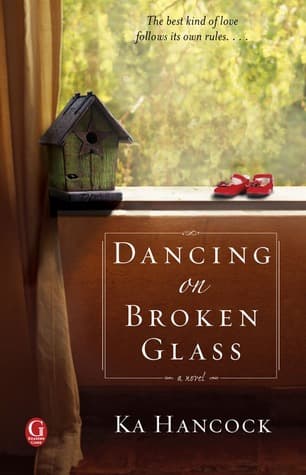
Synopsis
Covers the whole plot, including the ending.
- Difficulty
- Medium
- Pacing
- Moderate
- Mood
- Emotional, Resilient, Heartbreaking, Hopeful, Realistic
- Read it if
- You enjoy intense, character-driven love stories that tackle serious health issues and unconventional relationships with raw honesty.
- Skip it if
- You prefer lighthearted romance or find stories about chronic illness and difficult medical decisions too emotionally challenging.
Dancing on Broken Glass Plot Summary
Covers the whole plot, including the ending.
A Fateful Birthday Encounter
On her twenty-first birthday, Lucy Houston meets Mickey Chandler at a bar. Lucy, a cautious young woman with a strong family history of breast cancer, is initially wary but finds herself drawn to Mickey's charm and intensity. Mickey, who lives with bipolar disorder, is immediately captivated by Lucy. Their connection is clear and immediate, sparking an intense romance that surprises them both. Despite their vulnerabilities and the significant obstacles they know they face due to their health issues, they decide to pursue a relationship, acknowledging their strong chemistry.
The Marriage Contract
Aware of the complexities their conditions will bring, Lucy and Mickey craft a detailed marriage contract. Mickey pledges to diligently take his medication to manage his bipolar disorder, and Lucy promises not to hold him responsible for symptoms beyond his control. They also vow honesty and patience. This unusual agreement is the foundation for their marriage, showing their determination to make their love work despite significant hurdles. They also make the difficult, mutual decision not to have children, fearing the genetic risks and potential strain on their marriage.
Navigating Manic Episodes
Life with Mickey is a rollercoaster for Lucy. His manic episodes are characterized by impulsive spending, erratic behavior, and periods of intense creativity followed by deep depression. Lucy, true to her vows, tries to be patient and supportive, often taking on the role of his primary caregiver. These episodes put immense strain on their finances and emotional well-being, challenging Lucy's resilience and their commitment. Mickey, in his clear moments, is deeply apologetic and tries to adhere to his medication regimen, but the illness often proves to be a formidable adversary.
The Threat of Cancer
Lucy lives under the constant shadow of breast cancer, having witnessed its devastating effects on her mother and grandmother. She undergoes regular screenings and considers preventative surgeries, a decision that weighs heavily on her. Mickey is supportive during these times, understanding her fears and anxieties. This shared burden of their respective health issues strengthens their bond, even as it adds stress to their daily lives. They find comfort in each other's understanding and mutual support, facing each medical challenge as a united front.
An Unexpected Pregnancy
Just shy of their eleventh wedding anniversary, Lucy goes for a routine physical. To her astonishment, she discovers she is pregnant. This news shatters the carefully constructed framework of their lives. Their decision not to have children was a cornerstone of their marriage, made to protect their future and the potential child from their genetic predispositions. This impossible surprise throws all their rules and plans into disarray, forcing them to re-evaluate their entire understanding of their relationship and what it means to love.
Redefining Their Future
The unexpected pregnancy forces Lucy and Mickey to re-evaluate their life choices. The fear of passing on their 'faulty genes' resurfaces with immense intensity. They revisit their initial marriage contract, particularly the clause about not having children. Lucy struggles with the moral and emotional dilemma of carrying a child with potential risks, while Mickey grapples with the responsibility of fatherhood amid his ongoing battle with bipolar disorder. This period is marked by intense discussions, renewed fears, and a desperate search for a path forward that honors their love and protects their potential child.
A New Set of Challenges
As Lucy's pregnancy progresses, new anxieties emerge. They face decisions about genetic testing and prenatal care, each step filled with emotional weight. Mickey's mental health is particularly challenged by the stress and responsibility of impending fatherhood, leading to periods of instability. Lucy, while thrilled by the prospect of motherhood, is also terrified, constantly monitoring her health and the baby's. Their marriage is pushed to its limits, as they navigate the physical and emotional demands of pregnancy while confronting their deepest fears about their genetic legacies.
The Birth of Hope
After a challenging pregnancy, Lucy gives birth to a healthy baby. The arrival of their child brings an overwhelming sense of joy and love, deepening their bond in unexpected ways. This new life, once deemed an impossibility, becomes the center of their world, transforming their perspectives on their illnesses and their future. The baby represents hope and a new chapter, forcing them to adapt their carefully constructed lives and embrace the unpredictable beauty of parenthood. Mickey's commitment to stability for his family grows stronger.
Living with Uncertainty
Life with their child is a constant negotiation of joy and uncertainty. They continue to manage Mickey's bipolar disorder and Lucy's cancer risks, but now with the added responsibility and love for their child. They realize that while their conditions will always be a part of their lives, they do not define their capacity for love or happiness. The family learns to live in the present, cherishing each moment and finding strength in their unconventional, yet deeply loving, family unit. Their story shows enduring love against all odds.
Enduring Love
Ultimately, Lucy and Mickey's marriage shows enduring love and resilience. They navigate the daily challenges of chronic illness, unexpected parenthood, and the constant threat of genetic predisposition. Their love story is not without its pain and sacrifices, but it is also filled with deep devotion, understanding, and unwavering support. They demonstrate that love is about facing life's hardships together, adapting to the unforeseen, and finding beauty and strength even amid the 'broken glass' of their unique circumstances. Their family thrives, built on a foundation of deep, unconventional love.
Dancing on Broken Glass Characters
Lucy Houston Chandler
Protagonist
The resilient and cautious wife navigating love and the shadow of cancer.
Lucy is initially cautious and pragmatic, heavily influenced by her family's devastating history with breast cancer. She is intelligent, deeply empathetic, and fiercely loyal to Mickey. Her fear of passing on her 'faulty genes' leads her to make difficult life choices, including the decision not to have children. Despite her anxieties, she possesses immense inner strength and patience, becoming Mickey's anchor through his darkest periods. She finds profound joy in unexpected motherhood.
Relationships: Mickey Chandler (Husband, her soulmate and greatest challenge.); Her Mother (Her mother's battle with cancer deeply influences Lucy's life choices and fears.)
Mickey Chandler
Protagonist
The brilliant, artistic husband battling bipolar disorder.
Mickey is a charismatic, intelligent, and artistic man whose life is profoundly shaped by bipolar disorder. He experiences intense highs of creativity and impulsivity, followed by debilitating lows of depression. He genuinely loves Lucy and strives to manage his condition, but his illness often overwhelms him. He is deeply apologetic for the pain his episodes cause and is fiercely protective of Lucy. His journey involves constant struggle with his illness and a deep desire to be a stable partner and father.
Relationships: Lucy Houston Chandler (Wife, his unwavering support and the center of his world.)
Dr. Evans
Supporting
Lucy's compassionate and long-serving physician.
Dr. Evans is Lucy's gynecologist and a trusted confidante. She provides medical guidance and emotional support to Lucy throughout her journey, from her initial concerns about breast cancer to the shocking news of her unexpected pregnancy. She represents a voice of reason and care, helping Lucy navigate complex medical decisions and emotional turmoil with empathy and professionalism. Her presence underscores the medical realities and difficult choices faced by the couple.
Relationships: Lucy Houston Chandler (Doctor-patient relationship, evolving into a trusted advisor.)
Lucy's Mother
Supporting/Mentioned
A foundational figure whose struggle with cancer profoundly impacts Lucy.
Though often present in memory and influence rather than direct interaction, Lucy's mother is a pivotal character. Her battle with breast cancer, and the subsequent loss, deeply scarred Lucy and instilled in her a profound fear of the disease. Her mother's experience is a constant reminder of the genetic lottery and the potential future Lucy faces, heavily influencing her decisions regarding her own health and the choice not to have children. Her memory serves as a driving force behind Lucy's initial cautiousness.
Relationships: Lucy Houston Chandler (Mother-daughter, a relationship marked by love, loss, and profound influence.)
Lucy's Grandmother
Mentioned
Another family member whose cancer history contributes to Lucy's fears.
Lucy's grandmother, like her mother, suffered from breast cancer. Her story further reinforces the genetic predisposition within Lucy's family, intensifying Lucy's anxieties about her own health and the potential risks of having children. While not a direct character, her experience contributes to the pervasive theme of genetic inheritance and the difficult choices it presents for Lucy.
Relationships: Lucy Houston Chandler (Grandmother-granddaughter, a lineage of shared genetic risk.)
Dancing on Broken Glass Themes
The Nature of Unconditional Love
The novel explores how love can not only survive but thrive amid deep challenges. Lucy's patience and commitment to Mickey, despite his debilitating bipolar episodes, and Mickey's devotion to Lucy, despite her fears and the shadow of cancer, exemplify unconditional love. Their marriage contract, though pragmatic, shows their desire to make their love work, and their decision to embrace an unexpected pregnancy ultimately redefines their understanding of commitment and sacrifice. This theme is evident in Lucy's steady support during Mickey's manic phases and his tenderness during her cancer scares.
“We promised each other honesty and patience. We promised to love each other through the good days and the bad, even the really bad ones.”
Living with Chronic Illness and Genetic Predisposition
A central theme is the daily reality of living with chronic illness (Mickey's bipolar disorder) and the constant fear of genetic predisposition (Lucy's breast cancer risk). The book explores the emotional, financial, and relational toll these conditions take. It highlights the difficult decisions made to lessen risks, such as the initial choice not to have children, and the courage required to face an uncertain future. This theme is clearly portrayed in Mickey's struggles with medication adherence and Lucy's anxiety during her regular cancer screenings.
“Our genes were faulty, a ticking time bomb for both of us, but our love felt perfect.”
The Redefinition of Family and Parenthood
Initially, Lucy and Mickey make the heartbreaking decision not to have children due to their genetic concerns. The unexpected pregnancy forces them to confront and ultimately redefine their concept of family and parenthood. This theme explores the moral and emotional complexities of bringing a child into a world where parents carry significant health risks. It shows how love can transcend carefully laid plans, leading to an embrace of the unpredictable joys and responsibilities of creating a family against all odds, as seen in their eventual acceptance and love for their baby.
“We had built our life on rules, on avoidance. Now, a tiny heartbeat was shattering every single one.”
Resilience and Adaptation
The narrative illustrates the human capacity for resilience and adaptation in the face of adversity. Lucy and Mickey's marriage is a continuous exercise in adapting to the unpredictable nature of Mickey's illness and Lucy's health scares. They constantly adjust their expectations, plans, and daily lives to accommodate their unique circumstances. Their ability to find strength in each other and to navigate deep changes, particularly the shock of an unplanned pregnancy, shows their remarkable resilience as individuals and as a couple.
“Dancing on broken glass, that’s what we were doing. And somehow, we were still standing.”
Plot Devices & Literary Techniques
The Marriage Contract
A written agreement outlining the couple's commitments and boundaries.
This contract serves as a literal and symbolic framework for Lucy and Mickey's marriage. It's a tangible representation of their pragmatic approach to love, acknowledging the severe challenges posed by their health conditions. It functions as a set of rules and promises designed to protect their relationship, providing structure and accountability, particularly for Mickey's medication adherence. Later, the unexpected pregnancy forces them to re-evaluate and ultimately transcend the limitations of this initial agreement, highlighting the evolving nature of love and commitment.
Genetic Predisposition/Inheritance
The presence of 'faulty genes' impacting both protagonists.
This device is central to the novel's conflict and character motivations. Mickey's bipolar disorder is a direct manifestation of his genetic makeup, while Lucy carries a strong genetic predisposition for breast cancer, having seen its effects in her mother and grandmother. This shared burden of 'faulty genes' is the primary reason for their decision not to have children, creating a profound moral dilemma when Lucy unexpectedly becomes pregnant. It underscores the themes of fate, choice, and the anxieties associated with passing on genetic legacies.
The Unexpected Pregnancy
A surprise event that shatters the couple's carefully laid plans.
The unexpected pregnancy acts as the major turning point and inciting incident in the latter half of the novel. After years of deliberate choice to avoid children due to their genetic concerns, Lucy's pregnancy throws their entire marriage contract and life plan into disarray. It forces them to re-evaluate their fears, their commitment, and their understanding of love and family. This plot device creates immense emotional stakes and drives the narrative towards a profound redefinition of their relationship and future.
Dancing on Broken Glass Quotes
“Love isn't always pretty. Sometimes you fall in love with the wrong person. Sometimes you fall in love with the right person at the wrong time.”
“Sometimes the strongest among us are the ones who smile through silent pain, cry behind closed doors, and fight battles nobody knows about.”
“You can't fix what's broken until you admit it's broken.”
“The heart wants what it wants, even when it knows it shouldn't.”
“Life has a funny way of throwing curveballs when you least expect them, and sometimes, those curveballs are exactly what you needed.”
“Forgiveness isn't for the other person; it's for you. It's about letting go of the anger and bitterness that holds you captive.”
“We're all just trying to find our way in the dark, hoping someone will light a candle for us.”
“Sometimes the most beautiful things are found in the most unexpected places, with the most unexpected people.”
“It's hard to move forward when your heart is still stuck in the past.”
“The greatest battles are often fought within ourselves.”
“Sometimes you have to break a little to truly heal.”
“True love isn't about finding someone perfect, it's about seeing an imperfect person perfectly.”
“You can't choose who you fall in love with, but you can choose how you love them.”
“Every scar tells a story, and every story makes us who we are.”
Quiz
10 questions on the plot and the characters. Each answer comes with a short explanation.
Question 1
What significant health condition does Mickey Chandler suffer from?
- Schizophrenia
- Bipolar disorder
- Obsessive-compulsive disorder
- Clinical depression
Show answer
B. Bipolar disorder Mickey Chandler is plagued with faulty genes, specifically bipolar disorder, which is a central theme of the novel.
Question 2
What is Lucy Houston's significant health concern based on her family history?
- Heart disease
- Diabetes
- Breast cancer
- Alzheimer's
Show answer
C. Breast cancer Lucy has a ravaging family history of breast cancer, which influences her decisions throughout the story.
Question 3
On what specific occasion do Lucy Houston and Mickey Chandler first meet?
- Lucy's high school graduation
- Mickey's art exhibition
- Lucy's twenty-first birthday
- A mutual friend's wedding
Show answer
C. Lucy's twenty-first birthday Their paths cross on the night of Lucy's twenty-first birthday, sparking their initial connection.
Question 4
What unique method do Lucy and Mickey employ to manage their relationship challenges?
- They attend weekly couples therapy.
- They maintain separate residences.
- They put specific promises and rules in writing.
- They rely solely on spontaneous communication.
Show answer
C. They put specific promises and rules in writing. To make their relationship work, they put specific promises in writing, such as Mickey taking his medication and Lucy promising patience.
Question 5
What heartbreaking decision do Lucy and Mickey make early in their marriage due to their unique challenges?
- To live in separate cities for career purposes.
- Not to have children.
- To keep their marriage a secret from their families.
- To avoid discussing Mickey's illness.
Show answer
B. Not to have children. In dealing with their unique challenges, they make the heartbreaking decision not to have children, a significant sacrifice for their relationship.
Question 6
What 'impossible surprise' does Lucy receive just shy of their eleventh anniversary?
- A sudden job promotion for Mickey.
- An unexpected inheritance.
- She finds out she is pregnant.
- Mickey decides to stop taking his medication permanently.
Show answer
C. She finds out she is pregnant. Lucy receives an impossible surprise at a routine physical, revealing she is pregnant, which changes everything for the couple.
Question 7
Which of the following is NOT one of the specific promises made between Lucy and Mickey in their written agreement?
- Mickey promises to take his medication.
- Lucy promises not to blame him for what is beyond his control.
- Mickey promises honesty.
- Lucy promises to manage all financial decisions.
Show answer
D. Lucy promises to manage all financial decisions. The provided text mentions Mickey promising to take medication and honesty, and Lucy promising patience and not to blame him. There is no mention of Lucy promising to manage all financial decisions.
Question 8
The novel's title, 'Dancing on Broken Glass,' metaphorically represents:
- The couple's shared hobby of interpretive dance.
- The fragile and painful nature of their unconventional marriage.
- A specific, dangerous incident that occurs in the plot.
- Their successful careers in the arts.
Show answer
B. The fragile and painful nature of their unconventional marriage. The title metaphorically represents the delicate and challenging nature of their marriage, navigating Mickey's bipolar disorder and Lucy's cancer risk, akin to 'dancing on broken glass' due to its inherent difficulties and potential for pain.
Question 9
How does the unexpected pregnancy impact the established 'rules' of Lucy and Mickey's marriage?
- It reinforces their initial decision not to have children.
- It leads them to immediately seek a divorce.
- All their rules are thrown out the window, forcing them to redefine love.
- It has no significant impact on their existing agreements.
Show answer
C. All their rules are thrown out the window, forcing them to redefine love. The text explicitly states that when Lucy gets pregnant, 'Suddenly, all their rules are thrown out the window, and the two of them must redefine what love really is.'
Question 10
The primary theme explored by the novel, beyond the specific health conditions, is:
- The importance of financial stability in a relationship.
- The power of unconventional love and marriage to survive against odds.
- The challenges of pursuing artistic careers.
- The impact of societal expectations on personal choices.
Show answer
B. The power of unconventional love and marriage to survive against odds. The description highlights 'one couple's unconventional marriage that survives against all odds' and an 'unvarnished portrait of a marriage that is both ordinary and extraordinary,' emphasizing the enduring nature of their love despite unique challenges.
Dancing on Broken Glass FAQ
What are the primary health challenges faced by Lucy Houston and Mickey Chandler at the outset of their relationship?
Lucy Houston comes from a family with a strong history of breast cancer, making her vulnerable to the disease. Mickey Chandler lives with bipolar disorder, a mental illness that significantly impacts his mood and behavior, requiring ongoing management with medication.
How do Lucy and Mickey attempt to manage the potential difficulties arising from their health conditions within their marriage?
They establish a set of written rules and promises to guide their relationship. Mickey commits to taking his medication and being honest, while Lucy promises patience and not to blame him for aspects of his illness beyond his control.
What significant decision do Lucy and Mickey make early in their marriage regarding their future, and why?
They make the heartbreaking decision not to have children. This choice is driven by the serious health challenges they both face, specifically Mickey's bipolar disorder and Lucy's family history of breast cancer, as they don't want to pass on faulty genes or create an unstable environment.
What unexpected event dramatically alters the trajectory of Lucy and Mickey's carefully planned life together?
Just before their eleventh anniversary, Lucy receives an impossible surprise during a routine physical: she discovers she is pregnant. This unforeseen development completely upends their previous agreement and forces them to re-evaluate all their established rules.
How does the unexpected pregnancy challenge the core tenets of Lucy and Mickey's written agreement?
The pregnancy directly contradicts their foundational decision not to have children, throwing all their carefully constructed rules out the window. It forces them to redefine their understanding of love, commitment, and their future, as their previous framework no longer applies.
What specific literary device might be inferred by the title 'Dancing on Broken Glass' in relation to the couple's journey?
The title 'Dancing on Broken Glass' metaphorically represents the fragility and pain inherent in Lucy and Mickey's marriage, constantly navigating the sharp edges of their respective health challenges. Despite the inherent risk and difficulty, they continue to 'dance,' implying resilience and a commitment to endure together.
Are there any subtle indications early in the narrative that hint at the possibility of their rules being broken or challenged?
While not explicitly stated, the sheer difficulty of maintaining such strict rules in a passionate relationship, especially concerning deeply emotional topics like children, subtly suggests that life's unpredictable nature might eventually test their resolve, making their 'impossible surprise' feel earned.
How does Lucy's internal monologue likely shift after discovering her pregnancy, considering her past decision not to have children?
Lucy's internal monologue likely transitions from a resigned acceptance of a childless future to a turbulent mix of shock, fear, and perhaps a burgeoning hope. She would grapple with the implications for Mickey's stability and her own health, alongside the powerful, unexpected maternal instincts.
Discuss the psychological burden Mickey carries with his bipolar disorder and how it influences his commitment to Lucy.
Mickey carries the immense psychological burden of managing his bipolar disorder, which includes the fear of episodes and the potential impact on Lucy. His commitment to taking medication and honesty is a testament to his love and desire to protect their relationship, reflecting a deep struggle for stability.
How does Lucy's promise 'not to blame him for what is beyond his control' reflect her psychological strength and the unique nature of their bond?
This promise showcases Lucy's remarkable empathy and psychological strength, acknowledging the biological nature of Mickey's illness rather than viewing it as a personal failing. It forms a crucial foundation of trust and acceptance, distinguishing their bond from more conventional relationships.
What psychological impact might the 'good days and bad days—and some very bad days' have on Lucy, even with her patience?
Even with her patience, Lucy likely experiences significant psychological strain during Mickey's 'very bad days.' She might battle moments of exhaustion, fear for his well-being, and loneliness, requiring immense emotional resilience to uphold her promise and maintain her own mental health.
In what ways does the novel challenge conventional notions of a 'successful' marriage?
The novel challenges conventional success by portraying a marriage burdened by severe health issues and unconventional agreements, yet still thriving on deep love and commitment. It suggests that success isn't about perfection or ease, but about enduring challenges and redefining love on one's own terms.
How does the book explore the concept of free will versus genetic predisposition in the lives of Lucy and Mickey?
The book deeply explores this by presenting characters whose lives are profoundly shaped by genetic predispositions (bipolar disorder, cancer risk). However, their conscious choices—to marry, make rules, and ultimately embrace the unexpected—demonstrate their agency and free will in navigating these inherent challenges, rather than being solely defined by them.
What broader message about love and commitment do Lucy and Mickey's decisions convey to the reader?
Lucy and Mickey's journey conveys that love and commitment are not always easy or straightforward, often requiring immense sacrifice and unconventional solutions. Their story emphasizes that true love involves profound acceptance, unwavering support through adversity, and the willingness to redefine one's future when life takes unexpected turns.
Could the 'impossible surprise' be interpreted as a test of their love, or a natural evolution?
The 'impossible surprise' can be interpreted as both a profound test and a natural evolution. It tests their carefully constructed boundaries and commitment, forcing them to adapt. Simultaneously, it represents a natural, albeit unexpected, progression of a loving relationship where life often defies plans, pushing them to grow and redefine their bond.
How might the title also allude to the fragile balance between hope and despair in their lives?
The 'Dancing on Broken Glass' title perfectly encapsulates the precarious balance between hope and despair. Every step they take in their relationship, filled with love and hope, is simultaneously fraught with the potential for pain and setback due to their health conditions, reflecting a constant, delicate negotiation of their reality.
Similar books
- Me Before You
Jojo Moyes
4.3 (1.1M) average on GoodreadsRomanceExplores a profound, challenging love story involving disability and difficult life choices.
- The Fault in Our Stars
John Green
4.2 (3.6M) average on GoodreadsYoung AdultFeatures a romance where young people confront serious illness and mortality.
- Still Alice
Lisa Genova
4.3 (296k) average on GoodreadsPsychologyOffers an intimate portrayal of a character dealing with a devastating illness and its impact on relationships.
- The Silver Linings Playbook
Matthew Quick
4.0 (150k) average on GoodreadsPsychologyWhile both 'Dancing on Broken Glass' and 'The Silver Linings Playbook' feature protagonists navigating mental illness within a romantic context, Quick's novel focuses more on the individual's journey towards self-acceptance and recovery, with the romance serving as a catalyst for growth. Hancock's work, by contrast, places more emphasis on the strain mental illness places on an established, albeit nascent, relationship and the couple's shared struggle to maintain it. Quick's narrative employs more humor and eccentricity, whereas Hancock's tone is generally more serious and dramatic. Both offer valuable insights into mental health, but Quick's perhaps offers a more optimistic and less crisis-driven portrayal of living with mental illness.
- The Hunger Games
Suzanne Collins
4.3 (6.4M) average on GoodreadsFantasyIn a future where children fight to the death on live television, Katniss Everdeen volunteers for the arena, turning a death sentence into a fight for survival and a spark of rebellion.
- The Great Gatsby
F. Scott Fitzgerald
3.9 (3.8M) average on GoodreadsHistorical FictionIn the opulent Roaring Twenties, a mysterious millionaire's lavish parties hide his desperate, tragic pursuit of a lost love, exposing the emptiness within the American Dream.



Enjoyed the summary?
A summary gives you the shape of the book. The book itself has the detail, the examples and the voice.
Find Dancing on Broken Glass on AmazonAs an Amazon Associate, BookBrief earns from qualifying purchases. How we're funded