

Synopsis
Covers the whole plot, including the ending.
- Difficulty
- Medium
- Read it if
- You are interested in understanding the deeply personal and familial experience of early-onset Alzheimer's, or wish to cultivate empathy for those facing cognitive decline and their caregivers.
- Skip it if
- You are looking for a scientific or medical textbook on Alzheimer's, or prefer to avoid emotionally challenging narratives about illness and loss of self.
Still Alice Quotes
“I used to think that I'd had a good life, that I'd had a lot of fun, that I'd loved and been loved. But now I think that I've lived a life of mistakes.”
“Living in the moment. I've been doing that a lot lately. It's not a choice. It's just the way I live.”
“How many more of me will I lose?”
“My yesterdays are disappearing, and my tomorrows are uncertain, so what do I live for?”
“I wish I had cancer. I wouldn't wish this on my worst enemy.”
“Every morning I wake up and I play a game. It's a game of trying to remember. I try to remember who I am, where I am, what day it is.”
“I am not suffering. I am not even here. I am a ghost. A memory of a memory.”
“You don't have to be a genius to be a good person.”
“What's the point of having a memory if you can't access it?”
“I am not my brain. I am me.”
“The only way to get through this is together.”
“I used to know so many things. Now I know so few. But I know what love is. I know what family is. I know what hope is.”
“I am still Alice.”
“It’s not what you take with you when you leave this world. It’s what you leave behind you when you go.”
Quiz
10 questions on the plot and the characters. Each answer comes with a short explanation.
Question 1
At the beginning of the novel, what is Alice Howland's profession?
- A renowned neuroscientist at MIT
- A celebrated Harvard professor of cognitive psychology
- A successful author and lecturer
- A practicing clinical psychologist
Show answer
B. A celebrated Harvard professor of cognitive psychology Alice Howland is introduced as a highly accomplished Harvard professor of cognitive psychology, a detail that makes her diagnosis of Alzheimer's particularly poignant as her identity is so tied to her intellect.
Question 2
What was the initial symptom that made Alice concerned about her memory?
- Forgetting family members' names
- Getting lost in familiar places while jogging
- Struggling to remember her lecture material
- Misplacing her car keys repeatedly
Show answer
B. Getting lost in familiar places while jogging Alice first notices her memory problems when she gets disoriented and lost during her regular jogging route around Harvard University, a place she knew intimately.
Question 3
What type of Alzheimer's disease is Alice diagnosed with?
- Late-onset Alzheimer's
- Vascular dementia
- Early-onset familial Alzheimer's disease (FAD)
- Lewy body dementia
Show answer
C. Early-onset familial Alzheimer's disease (FAD) Alice is diagnosed with early-onset familial Alzheimer's disease (FAD), which is a rare, inherited form of Alzheimer's that strikes people younger than age 65.
Question 4
Which of Alice's children is most resistant to getting tested for the genetic marker for early-onset Alzheimer's?
- Anna
- Tom
- Lydia
- All of them are equally resistant
Show answer
C. Lydia Lydia, the youngest child and an aspiring actress, is the most resistant to getting tested, preferring to live her life without the knowledge of a potential future diagnosis.
Question 5
What coping mechanism does Alice try to implement to help her remember critical information as her disease progresses?
- She relies heavily on her smartphone for reminders and notes.
- She keeps a detailed daily journal and a series of questions on her computer.
- She asks her husband to quiz her daily on important facts.
- She uses visual cues and sticky notes throughout her house.
Show answer
B. She keeps a detailed daily journal and a series of questions on her computer. Alice creates a detailed system on her computer, including questions about her family and a journal, to help her retain her sense of self and critical information as her memory deteriorates.
Question 6
What is the significance of Alice's 'Good-bye, my darling' file on her computer?
- It contains letters to her family members for when she can no longer communicate.
- It is a collection of her favorite memories she wants to preserve.
- It is an instruction for herself to commit suicide when she reaches a certain stage of the disease.
- It's a research paper on the ethics of end-of-life care for Alzheimer's patients.
Show answer
C. It is an instruction for herself to commit suicide when she reaches a certain stage of the disease. The 'Good-bye, my darling' file contains instructions for Alice to take an overdose of pills when her cognitive decline becomes too severe, reflecting her fierce independence and desire to control her own destiny.
Question 7
How does Alice's relationship with her husband, John, change as her Alzheimer's progresses?
- He becomes increasingly frustrated and eventually leaves her.
- He remains her steadfast caregiver, making significant sacrifices for her well-being.
- He hires full-time professional caregivers and distances himself emotionally.
- They grow closer initially but then drift apart due to communication difficulties.
Show answer
B. He remains her steadfast caregiver, making significant sacrifices for her well-being. Despite the immense challenges, John remains devoted to Alice, ultimately giving up his own career opportunities to care for her full-time. Their relationship transforms from one of intellectual equals to one of caregiver and cared-for, but his commitment endures.
Question 8
What is a central theme explored by Lisa Genova through Alice's experience with Alzheimer's?
- The importance of genetic testing for all serious illnesses.
- The definition of identity and self when memory and cognitive functions are lost.
- The superiority of scientific research over emotional support in terminal illness.
- The inevitability of despair when faced with an incurable disease.
Show answer
B. The definition of identity and self when memory and cognitive functions are lost. A core theme of 'Still Alice' is the exploration of what constitutes 'self' when one's memories, intellect, and ability to communicate are progressively stripped away by Alzheimer's. The book asks if identity can exist beyond these cognitive functions.
Question 9
What specific challenge does Alice face regarding her ability to give a planned lecture after her diagnosis?
- She forgets the topic of her lecture entirely on the day it's scheduled.
- She struggles to find the right words and articulate her thoughts coherently during the presentation.
- She loses her notes and slides just before stepping on stage.
- She develops severe stage fright, which she never had before.
Show answer
B. She struggles to find the right words and articulate her thoughts coherently during the presentation. During a key lecture, Alice experiences significant aphasia, struggling to retrieve words and form complete sentences, which is devastating for a renowned linguistics professor and highlights the impact of the disease on her core abilities.
Question 10
By the end of the novel, what is the primary way Alice communicates and connects with her family?
- Through written notes and flashcards
- Mainly through physical touch and emotional presence
- She can still hold simple conversations, albeit with difficulty.
- Her family interprets her non-verbal cues and gestures.
Show answer
B. Mainly through physical touch and emotional presence As Alice's disease progresses to its later stages, verbal communication becomes almost impossible. Her connection with her family, particularly Lydia, shifts to being primarily through touch, hugs, and the emotional presence they share, underscoring that love and connection can persist beyond words and memory.
Still Alice FAQ
What is the main theme of 'Still Alice'?
'Still Alice' explores the devastating impact of early-onset Alzheimer's disease on an individual and their family. It delves into the loss of identity, independence, and the struggle to maintain dignity in the face of a progressive neurodegenerative condition.
Does 'Still Alice' accurately portray early-onset Alzheimer's?
Yes, 'Still Alice' is widely praised for its accurate and sensitive portrayal of early-onset Alzheimer's disease. Author Lisa Genova, with her Ph.D. in neuroscience, meticulously researched the condition to provide a realistic perspective on its symptoms, progression, and emotional toll.
What is early-onset Alzheimer's disease?
Early-onset Alzheimer's disease is a rare form of Alzheimer's that affects people younger than age 65, often in their 30s, 40s, or 50s. It shares similar symptoms with late-onset Alzheimer's but can progress more rapidly and often has a stronger genetic link.
How does 'Still Alice' differ from other books about memory loss?
'Still Alice' distinguishes itself by offering a deeply personal, first-person narrative from the perspective of someone experiencing Alzheimer's. Unlike clinical accounts, it vividly portrays the internal confusion, emotional struggles, and day-to-day challenges of living with the disease, rather than just observing it from the outside.
What challenges does Alice Howland face in the book?
Alice Howland faces the profound challenge of losing her intellectual capabilities, memory, and sense of self. She struggles with maintaining her career, her relationships, and her independence, all while grappling with the fear and frustration of her declining cognitive functions.
Is 'Still Alice' based on a true story?
While 'Still Alice' is a fictional novel, it is inspired by extensive research and real-life experiences of individuals and families affected by Alzheimer's disease. Lisa Genova drew upon her neuroscience background and interviews to create a highly realistic and empathetic narrative.
What impact did 'Still Alice' have on public awareness of Alzheimer's?
'Still Alice' significantly raised public awareness and empathy for individuals with Alzheimer's, particularly early-onset. Its accessible and moving narrative helped humanize the disease, encouraging greater understanding and conversations about its challenges.
What is the significance of Alice's profession as a Harvard professor?
Alice's profession as a brilliant Harvard professor highlights the cruel irony of her diagnosis, as her identity is deeply intertwined with her intellect and memory. It underscores the devastating loss when a mind so sharp begins to fail, making her descent into Alzheimer's even more poignant.
What coping mechanisms does Alice use in 'Still Alice'?
Alice attempts various coping mechanisms, including writing notes to herself, using highlighters, and trying to live in the moment. She also relies on the support of her family, although her increasing confusion makes navigating daily life incredibly challenging.
About the author

Lisa Genova is an American author known for her fiction that often explores themes of neurological disorders and human connection. Her notable works include "Still Alice," which addresses Alzheimer's disease, "Left Neglected," focusing on brain injury, and "Love Anthony," which delves into autism. Genova's writing is informed by her background in neuroscience.
Similar books
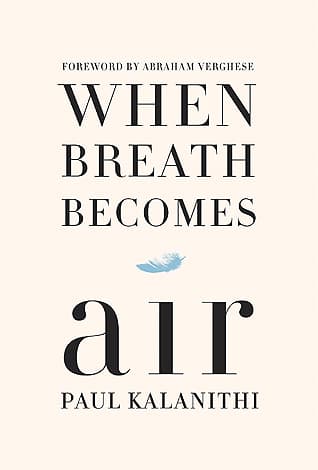
- When Breath Becomes Air
Paul Kalanithi
4.4 (415k) average on GoodreadsBiographyExplores a brilliant professional's confrontation with a terminal illness and the redefinition of identity.
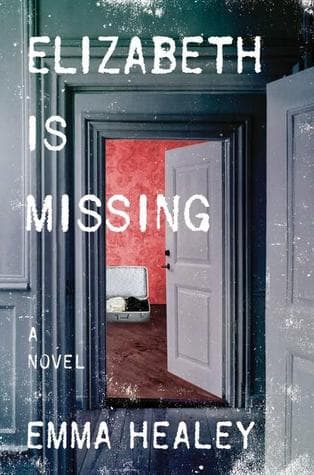
- Elizabeth Is Missing
Emma Healey
3.7 (55k) average on GoodreadsThrillerNarrated by a woman with dementia trying to solve a mystery, highlighting the confusion and struggle of the condition.
- The Story of Arthur Truluv
Elizabeth Berg
4.2 (32k) average on GoodreadsLiterary FictionBerg's novel touches on themes of aging and companionship, but its depiction of memory loss is less central and lacks the detailed, psychologically informed insight into the disease's progression that characterizes Still Alice. Genova's scientific background allows for a more direct and empathetic portrayal of cognitive decline from within.
- The Perks of Being a Wallflower
Stephen Chbosky
4.2 (1.3M) average on GoodreadsPsychologyThrough letters, a shy high school freshman learns to navigate first love, trauma, and self-discovery, stepping off the sidelines and into life.
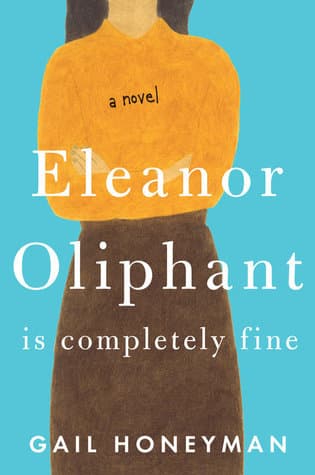
- Eleanor Oliphant Is Completely Fine
Gail Honeyman
4.3 (708k) average on GoodreadsLiterary FictionA lonely woman's structured life changes when an IT guy and an elderly man help her learn to open her heart.
- One Flew Over the Cuckoo's Nest
Ken Kesey
4.2 (631k) average on GoodreadsPsychologyIn a mind-bending asylum, the boisterous Randle McMurphy wages a defiant war against the tyrannical Nurse Ratched, inspiring his fellow inmates, including the seemingly catatonic Chief Bromden, to reclaim their lost humanity.


Enjoyed the summary?
A summary gives you the shape of the book. The book itself has the detail, the examples and the voice.
Find Still Alice on AmazonAs an Amazon Associate, BookBrief earns from qualifying purchases. How we're funded