
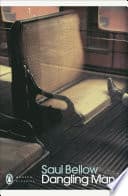
Synopsis
Covers the whole plot, including the ending.
- Difficulty
- Medium
- Pacing
- Slow
- Mood
- Introspective, Melancholy, Philosophical, Isolated
- Read it if
- You enjoy introspective, philosophical character studies set against a backdrop of war, exploring themes of idleness, freedom, and the human psyche.
- Skip it if
- You prefer fast-paced plots, strong external conflict, or clear narrative resolutions over internal monologue and psychological exploration.
Dangling Man Plot Summary
Covers the whole plot, including the ending.
The Waiting Begins
Joseph starts his journal on December 15th, writing about his life in Chicago as he waits to join the army. He has already left his job at an export company, sold many belongings, and moved into a smaller apartment with his wife, Iva. His preparations for war have left him in a state of limbo, as the expected call to service is repeatedly delayed. This early period includes a feeling of unease and an effort to bring order to his sudden idleness. He thinks about society's expectation to be busy and his own difficulty with forced inactivity, feeling more and more separate from the world that continues around him.
Domestic Tensions and Social Isolation
As weeks turn into months, Joseph's forced idleness starts to strain his home life with Iva. His introspection and irritability cause tension, and Iva, though supportive, struggles to understand his growing psychological state. Joseph feels increasingly isolated from his friends, especially his old group, as he senses their lives moving forward while his is stuck. He resents their casual questions about his induction, seeing them as not truly understanding his situation. His walks through Chicago become less about exploring and more about escaping his apartment and the growing awkwardness of his social interactions.
The Question of Freedom
Joseph writes much in his journal about his thoughts on freedom. He first believes his unburdened state, free from work or social duties, should offer a deep sense of liberation. However, he quickly finds that this 'freedom' is a weight, leading to an oppressive self-awareness and an inability to find meaning. He questions if true freedom is real or an illusion, and if people can truly decide their own path without outside pressure. This intellectual struggle is a main idea, as he tries to make sense of his emotional distress.
Encounters with Old Friends
Joseph occasionally contacts old friends, or they seek him out, but these meetings often show his growing isolation. He visits his friends Morris and Kitty, but finds he cannot truly connect, feeling an unspoken judgment or a lack of understanding from them. His talks with his former mentor, Professor Wulpy, are similarly unfulfilling. Joseph feels that his friends, busy with their own lives, cannot grasp the unique psychological burden of his 'dangling' state. These meetings often leave him feeling more misunderstood and alone, pushing him further into his journal and his own thoughts.
The Neoclassicist and the Romantic
Joseph recalls a past intellectual disagreement with an old friend, a 'neoclassicist' who valued order, reason, and control. Joseph, in contrast, identifies more with the 'romantic' view, valuing passion, intuition, and individual experience. This memory acts as a comparison for his current internal conflict: his desire for structure and purpose (the neoclassicist ideal) clashing with his current chaotic, unbound life (the romantic's struggle). He re-examines these opposing ideas, trying to decide which worldview offers a better way through his current problem, ultimately finding neither fully helpful in easing his existential worry.
The Argument with Iva
The growing tensions between Joseph and Iva end in a big argument. Joseph, increasingly irritable and self-absorbed, lashes out at Iva for what he sees as her lack of understanding or her attempts to 'manage' his mood. Iva, in turn, expresses her frustration with his withdrawal and his inability to engage constructively with their shared life. This confrontation is a painful but necessary release of pent-up emotions, showing how much his idleness has strained their relationship. While they make up, the incident highlights the deep impact of his 'dangling' state on those closest to him.
The 'Spirit of Alternatives'
To understand his internal conflicts, Joseph invents an imaginary voice he calls the 'Spirit of Alternatives.' This internal voice acts as a challenger, questioning his assumptions, exploring his motives, and doubting his self-pity. Through these imagined talks, Joseph tries to gain perspective on his situation, to understand why he is unhappy, and to face his own intellectual and emotional avoidance. The 'Spirit of Alternatives' represents Joseph's critical self, pushing him to confront uncomfortable truths about his character and how he responds to difficulty.
Family Obligations and Resentment
Joseph reluctantly visits his brother, Amos, and his family. While he feels a sense of family duty, he also resents the expectations and the superficiality he sees in their interactions. His brother, a more conventional and successful man, represents the kind of life Joseph has temporarily given up. Joseph feels judged and misunderstood by his family, sensing their unspoken disapproval of his idleness and his philosophical thoughts. These family encounters further highlight his feeling of being an outsider, reinforcing his preference for solitude and the introspective world of his journal.
The Breakdown of Self-Control
As his waiting period continues, Joseph's self-control begins to break down. He becomes more irritable, prone to sudden outbursts, and struggles to maintain his intellectual discipline. His philosophical thoughts become darker, more nihilistic, as he questions the value of human effort and the meaning of existence itself. The initial intellectual challenge of his idleness gives way to a deeper psychological decline, marked by a sense of futility and a growing inability to find joy or purpose in anything. He becomes more aware of his own flaws and the limits of his self-imposed intellectualism.
The Call to Service
After nearly a year of difficult waiting, Joseph finally receives his induction notice. The news, though long-expected, comes with a surprising mix of relief and resignation. The end of his 'dangling' period means both an escape from his debilitating idleness and an entry into a new, uncertain chapter. He prepares to close his journal, thinking about the year that has passed and the deep internal changes it has caused. The army, which once seemed a distant, abstract duty, now becomes a concrete reality, offering a definite end to his state of existential limbo.
A Plea for Discipline
In his last journal entries, Joseph expresses a surprisingly strong desire for the discipline and structure of army life. He sees it as a welcome relief from the overwhelming burden of his self-imposed freedom and the constant demand for self-determination that has troubled him. He wants external authority to guide his actions and decisions, believing this will free him from the paralyzing introspection and the endless cycle of alternatives that have defined his year of waiting. This final feeling highlights the main irony of his 'freedom'—it ultimately led him to crave the very limits he first tried to escape.
Principal Figures
Joseph
Protagonist
An intellectual young man awaiting army induction, grappling with idleness and existential questions.
Joseph is the introspective, intellectual narrator of the novel, chronicling his thoughts and experiences in a journal. He is highly self-aware, prone to philosophical musings, and deeply affected by his forced idleness. He struggles with the concept of freedom, the burden of self-determination, and his place in a world that continues without him. While intelligent, he can be irritable, self-absorbed, and prone to intellectualizing his emotional turmoil, often alienating those around him. He is a sensitive observer of his own psychological state and the social world.
Relationships: Iva (Wife, often strained by Joseph's introspection); Morris (Old friend, whom Joseph feels alienated from); Professor Wulpy (Former mentor, whose practical advice Joseph struggles with); Amos (Brother, representing conventional life Joseph resents)
Iva
Supporting
Joseph's patient and supportive, yet increasingly frustrated, wife.
Iva is Joseph's wife, who shares his small apartment during his period of waiting. She is generally patient and supportive, attempting to maintain a sense of normalcy and provide comfort amidst Joseph's growing introspection and irritability. However, she also expresses her frustration and bewilderment at his changing moods and his inability to engage with life in a more constructive way. She represents the grounding, practical aspect of life that Joseph often struggles to connect with, and her love provides a vital, albeit often unappreciated, anchor for him.
Relationships: Joseph (Husband, the primary relationship in the novel)
Morris
Supporting
An old friend of Joseph's, representing a more conventional and busy life.
Morris is one of Joseph's old friends, still engaged in the routines of work and social life that Joseph has abandoned. He serves as a contrast to Joseph's 'dangling' state, embodying the kind of productive, integrated existence Joseph feels alienated from. While he attempts to maintain their friendship, Joseph often perceives Morris as lacking understanding or as being too superficial to grasp the depth of his existential crisis. Their interactions highlight Joseph's growing isolation and his difficulty in relating to those who are not experiencing similar psychological turmoil.
Relationships: Joseph (Old friend, their relationship becomes strained)
Professor Wulpy
Mentioned
Joseph's former academic mentor, offering practical advice that Joseph struggles to accept.
Professor Wulpy is Joseph's former mentor, whom Joseph occasionally visits. He is portrayed as a practical, somewhat detached intellectual who offers Joseph advice rooted in common sense and experience. While Joseph respects Wulpy, he finds his counsel insufficient for his unique predicament, feeling that Wulpy cannot fully grasp the profound psychological and existential nature of his idleness. Wulpy represents a more traditional academic approach to life's problems, which Joseph, in his current state, finds inadequate for his internal struggles.
Relationships: Joseph (Former student and mentor)
Amos
Supporting
Joseph's older brother, representing conventional success and family expectations.
Amos is Joseph's brother, a successful and conventional man with a family. He embodies the societal norms and expectations that Joseph has temporarily detached himself from. Joseph's interactions with Amos are often fraught with unspoken tension; Joseph feels judged and misunderstood by his brother, while Amos seems to represent the stable, productive life Joseph feels he has forfeited. Amos serves as a symbol of the 'normal' world and the family obligations that Joseph finds both comforting and stifling in his current state.
Relationships: Joseph (Brother, their relationship is marked by unspoken tensions)
Kitty
Mentioned
Morris's wife, a peripheral figure in Joseph's social circle.
Kitty is Morris's wife, encountered during Joseph's visits to his friend. She is a background character, representing the social milieu that Joseph feels increasingly estranged from. Her presence contributes to the atmosphere of normal domesticity and social interaction that Joseph observes from a distance, highlighting his own feeling of being an outsider looking in. She has no significant individual arc but helps to flesh out the social world Joseph navigates.
Relationships: Joseph (Acquaintance, through Morris)
Themes & Insights
The Burden of Freedom and Idleness
The main theme explores how unexpected freedom, especially from work and social duties, can become a deep burden. Joseph first expects liberation but finds himself unable to act due to too many choices and a lack of outside structure. His journal entries repeatedly question what true freedom is, showing how a lack of limits can lead to an oppressive self-awareness and existential worry. This is clear in his philosophical thoughts on the 'Spirit of Alternatives' and his eventual desire for army discipline, as seen in his final journal entries.
“What did I want? I wanted to be free. I wanted to be in a condition of mind that allowed me to be more myself.”
Alienation and Isolation
Joseph's long idleness and intense self-reflection lead to a deep sense of separation from society, his friends, and even his wife. He feels disconnected from the world that continues its routines while he is stalled. His attempts to interact with friends like Morris often result in feelings of misunderstanding and more isolation, as he believes they cannot grasp his unique psychological situation. This theme appears in his retreat into his journal, his walks through the city as an observer rather than a participant, and the growing strain on his marriage with Iva.
“I am an idler, I am a loafer, I am a dangling man.”
The Nature of Self and Identity
Joseph's forced inactivity makes him relentlessly examine his own identity, character, and reasons. Without his professional role and social purpose, he struggles to define himself. His journal becomes a tool for self-analysis, but this introspection often reveals an uncomfortable, irritable, and self-absorbed person. The 'Spirit of Alternatives' directly shows this theme, representing his internal struggle to understand and confront his own 'character' and the different selves he sees within him, ending in a breakdown of his perceived self-control.
“I must get to the bottom of this character of mine.”
The Search for Meaning and Purpose
During his year of waiting, Joseph desperately seeks meaning and purpose in his life, especially without outside direction. He turns to philosophy, intellectual discussions, and self-analysis to fill the void left by his lack of work or military service. However, his search often leads to frustration and a sense of futility, as he finds no easy answers. The war outside contrasts sharply with his internal, abstract struggles, highlighting his inability to find a concrete purpose in his 'dangling' state.
“It is a good thing to be a man, but it is a difficult thing to be a man.”
Plot Devices & Literary Techniques
First-Person Journal Narration
The entire novel is presented as Joseph's personal journal entries.
This device offers an intimate and unfiltered look into Joseph's mind, allowing the reader direct access to his thoughts, philosophical musings, and emotional fluctuations. It emphasizes his isolation, as the journal becomes his primary confidant and outlet for his internal struggles. The subjective nature of the narration means the reader experiences events and characters solely through Joseph's often biased and self-absorbed perspective, highlighting his introspection and unreliable self-assessment. The journal structure also reinforces the theme of idleness, as writing becomes Joseph's main activity.
The 'Spirit of Alternatives'
Joseph's imaginary interlocutor, embodying his critical self and internal conflicts.
This unique device is an imagined character Joseph invents to externalize his internal debates and self-criticism. The 'Spirit' challenges Joseph's assumptions, questions his motives, and forces him to confront his own flaws and intellectual evasions. It serves as a psychological mirror, allowing Joseph to engage in a dialectical process that reveals deeper layers of his character and the complexities of his situation. This device highlights Joseph's intellectualism and his struggle to find objective truth amidst his subjective experience.
The War as a Backdrop
World War II serves as a constant, yet distant, presence, contrasting with Joseph's internal struggles.
The ongoing World War II provides a significant contextual backdrop, even though it is rarely directly experienced by Joseph. It represents a world of action, purpose, and collective struggle, standing in stark contrast to Joseph's personal idleness and introspective angst. The war's delay in claiming Joseph's service is the catalyst for his 'dangling' state. Its presence highlights Joseph's alienation and makes his internal philosophical battles seem both profound and, at times, self-indulgent when compared to the global conflict.
The Chicago Setting
The urban landscape of Chicago reflects Joseph's internal state and provides a stage for his observations.
Chicago functions as more than just a physical location; it mirrors Joseph's internal state. His aimless walks through the city reflect his psychological wandering and his feeling of being disconnected from the vibrant life around him. The city's indifference to his personal crisis emphasizes his isolation. Specific neighborhoods and observations of city dwellers provide concrete details that ground his abstract musings, showing how he attempts to find meaning or distraction in his immediate environment, even as he feels increasingly estranged from it.
Dangling Man Quotes
“I am an American, and I am a Chicagoan, and I am a Jew, and I have been a soldier, and I am a writer. I have been a lot of things.”
“How, to begin with, does one's own existence strike one? In the midst of all this, I still want to live. What is the meaning of it?”
“I have been trying to live life, to taste it, to feel it, to make it yield its secrets, and this is what I have found: mostly boredom.”
“A man's life is his own work of art. And I am not doing a very good job of it.”
“There was a time when I thought I could solve the problems of the world. Now I can't even solve my own.”
“It is because I have taken my own side, and I have done so with a clear conscience, that I feel so isolated.”
“One can't live without a theory of existence, and if one doesn't have one, one has to invent one.”
“I am not a hero. I am not a martyr. I am a man who is waiting.”
“The greatest punishment for a man is to be left to himself.”
“I must get out of this room. I must get out of this state. I must get out of this self.”
“What is it that I want? I want to be bound. I want to be commanded. I want to be given tasks, reasons, grievances, and objectives.”
“I am a man of the age, and I am subject to its diseases. The disease of solitude, of the self.”
“The world is too much with us; late and soon, getting and spending, we lay waste our powers.”
“I have been dangling in the air, a man waiting for the end of a war, waiting for the beginning of a life.”
Quiz
10 questions on the plot and the characters. Each answer comes with a short explanation.
Question 1
What is the primary reason Joseph finds himself with a year of idleness at the beginning of the novel?
- He quit his job to pursue a writing career.
- He was laid off due to wartime economic changes.
- His induction into the army was delayed by mix-ups.
- He decided to take a sabbatical before joining the war effort.
Show answer
C. His induction into the army was delayed by mix-ups. Joseph had given up his job in preparation for his army induction, but a series of mix-ups caused a significant delay.
Question 2
What form does Joseph's narrative take throughout 'Dangling Man'?
- A series of letters to his brother.
- A collection of short stories.
- A personal journal or diary.
- Flashbacks during a courtroom trial.
Show answer
C. A personal journal or diary. The novel is presented as Joseph's journal, detailing his experiences and thoughts during his period of idleness.
Question 3
Which city serves as the primary setting for Joseph's wanderings and musings?
- New York City
- Chicago
- Boston
- San Francisco
Show answer
B. Chicago Joseph's restless wanderings are described as taking place through Chicago's streets.
Question 4
How does Joseph's 'inner argument' with his 'spirit' or 'tuition' manifest in the novel?
- He frequently debates with his wife, Iva, about philosophical matters.
- He engages in lengthy, often critical, internal dialogues with an imagined interlocutor.
- He writes letters to his deceased parents, seeking their advice.
- He seeks out various mentors in Chicago to discuss his existential dread.
Show answer
B. He engages in lengthy, often critical, internal dialogues with an imagined interlocutor. Joseph often engages in an internal debate with an imagined 'spirit' or 'tuition' (an alternate spelling of 'intuition'), which serves as an externalized part of his consciousness, challenging his thoughts and actions.
Question 5
What is Joseph's general psychological reaction to his prolonged inactivity while war rages on?
- He feels immense relief and takes advantage of the free time for self-improvement.
- He becomes increasingly restless, isolated, and prone to introspection and irritation.
- He dedicates himself to anti-war activism, finding a new purpose.
- He falls into a deep depression, unable to leave his home.
Show answer
B. He becomes increasingly restless, isolated, and prone to introspection and irritation. The novel explicitly describes his 'psychological reaction to his inactivity while war rages around him,' highlighting his restlessness and the internal turmoil it causes.
Question 6
Which of the following best describes Joseph's relationship with his wife, Iva, during his period of idleness?
- It is consistently supportive and harmonious, providing him stability.
- It becomes strained and marked by increasing tension and misunderstanding.
- They grow closer as they face the uncertainty of his induction together.
- Iva leaves him early in the novel due to his difficult temperament.
Show answer
B. It becomes strained and marked by increasing tension and misunderstanding. Joseph's self-absorption and irritability strain his relationship with Iva, leading to arguments and a growing distance between them.
Question 7
What is a central theme explored through Joseph's 'uneasy insights into the nature of freedom and choice'?
- That true freedom is found only in complete isolation from society.
- The paradox that too much freedom, without external demands, can lead to a debilitating sense of emptiness and paralysis.
- The idea that choice is an illusion and all human actions are predetermined.
- That freedom is primarily economic and tied to one's financial independence.
Show answer
B. The paradox that too much freedom, without external demands, can lead to a debilitating sense of emptiness and paralysis. Joseph struggles with the burden of his newfound 'freedom' from a job and immediate military service, finding it leads to a profound sense of aimlessness and an inability to act meaningfully.
Question 8
Joseph often reflects on the idea of 'making a case' for himself. What does this 'case' primarily involve?
- A legal defense against accusations of draft dodging.
- An artistic manifesto outlining his literary ambitions.
- An attempt to justify his existence and define his identity and purpose to himself and others.
- A financial argument for why he should receive an army deferment.
Show answer
C. An attempt to justify his existence and define his identity and purpose to himself and others. Joseph's 'case' is his internal struggle to define himself, his worth, and his place in the world, particularly in the absence of external roles or demands.
Question 9
At the end of the novel, what is Joseph's ultimate decision or outcome regarding his situation?
- He successfully avoids induction and finds a new civilian job.
- He finally receives his induction notice and expresses a sense of relief.
- He commits himself to a mental institution, unable to cope with his idleness.
- He reconciles with his brother and moves to the countryside.
Show answer
B. He finally receives his induction notice and expresses a sense of relief. Joseph's journal concludes with him finally receiving his induction notice, which he welcomes as an end to his agonizing period of 'dangling' and uncertainty.
Question 10
Joseph has a notable interaction with his landlord, Mr. Tuclach. What does this interaction reveal about Joseph's state of mind?
- His growing financial desperation and reliance on others.
- His ability to maintain polite, civil interactions despite his internal turmoil.
- His increasing irritability, paranoia, and tendency to project his internal frustrations onto others.
- His unexpected kindness and generosity towards those less fortunate.
Show answer
C. His increasing irritability, paranoia, and tendency to project his internal frustrations onto others. Joseph's interactions with Mr. Tuclach, particularly the argument over the furnace, highlight his heightened sensitivity, quickness to anger, and the way his internal pressure makes him perceive slights and provocations from others.
Dangling Man FAQ
What is the central conflict Joseph faces in 'Dangling Man'?
Joseph's central conflict stems from the unexpected delay in his army induction, which leaves him in a state of 'dangling' idleness. Having quit his job and prepared for war, he struggles with the lack of purpose and the psychological burden of waiting, contrasting his personal stasis with the global conflict raging around him.
Who is Iva, and what is her role in Joseph's life during this period?
Iva is Joseph's wife, and she represents a grounding, if sometimes exasperated, presence in his increasingly isolated life. While she tries to maintain normalcy and connect with him, Joseph's internal struggles often push her away, highlighting his self-absorption during his period of inactivity.
What kind of entries does Joseph typically make in his journal?
Joseph's journal entries are a mix of introspective musings, philosophical reflections on freedom and choice, and observations of his daily life in Chicago. He records his often-strained interactions with others, his memories of the past, and his growing frustration with his indeterminate status.
How does Joseph's relationship with his family change throughout the novel?
Joseph's relationships with his family, particularly his sister Michelle and her husband Morris, become increasingly strained and fraught with tension. His idleness makes him sensitive to perceived slights and judgments, leading to arguments and a deepening sense of alienation from those closest to him.
What is the significance of the 'spirit of the times' that Joseph frequently references?
The 'spirit of the times' refers to Joseph's perception of a pervasive societal malaise and a lack of genuine human connection, which he feels is exacerbated by the war. He believes this spirit contributes to superficiality and a reluctance to engage deeply with life's profound questions, further isolating him in his introspection.
Are there any recurring symbols or motifs related to Joseph's 'dangling' state?
Yes, the city of Chicago itself acts as a recurring motif, with Joseph's aimless wanderings reflecting his internal lack of direction. The recurring images of enclosed spaces, such as his room, and the contrast with the vastness of the war, symbolize his psychological confinement and the limited scope of his current existence.
What is the implied reason for Joseph's earlier 'break' or breakdown mentioned in the journal?
While not explicitly detailed, the journal hints at a past 'break' possibly related to an earlier period of disillusionment or a failure to find meaningful engagement with the world. This earlier experience foreshadows his current psychological fragility and his deep-seated struggles with purpose and identity.
How does Joseph's internal 'alter ego' or 'tutelary spirit' function in the narrative?
Joseph invents an imaginary 'tutelary spirit' with whom he engages in internal dialogues, particularly about the nature of freedom and responsibility. This spirit serves as a device for Joseph to externalize his conflicting thoughts and to challenge his own rationalizations, providing a unique form of self-analysis.
Describe the psychological impact of idleness on Joseph.
Idleness profoundly affects Joseph's psychological state, leading to heightened anxiety, irritability, and a sense of profound existential dread. He becomes hypersensitive to external stimuli, prone to arguments, and increasingly isolated, as his lack of external purpose forces him into an intense, often painful, introspection.
How does Joseph's sense of self evolve or devolve during his waiting period?
Joseph's sense of self devolves into a state of acute self-consciousness and alienation. Stripped of external roles (worker, soldier), he grapples with the core of his identity, often finding it lacking or undefined. His introspection, while deep, frequently spirals into self-pity and a critical detachment from others.
What role does memory play in Joseph's psychological state?
Memory plays a significant role, as Joseph frequently revisits past events and relationships, often through a lens of regret or unresolved conflict. These memories contribute to his melancholic and introspective mood, highlighting his longing for a past sense of purpose or connection that he feels is missing in his present.
Is Joseph's eventual decision to welcome his induction a sign of growth or resignation?
Joseph's eventual embrace of his induction can be interpreted as both resignation and a desperate search for structure. He seems to welcome the external imposition of purpose, even if it's war, as an escape from the unbearable burden of 'freedom' and choice that his idleness had forced upon him.
To what extent is Joseph a reliable narrator of his own experiences and psychological state?
Joseph is an unreliable narrator to a significant extent, as his journal is deeply subjective, filtered through his increasingly agitated and self-absorbed mind. While he offers profound insights, his perceptions of others and his own motivations are often skewed by his emotional state and intellectual pride.
How does the novel comment on the nature of 'freedom' in modern society?
The novel suggests that unrestrained freedom, particularly without a clear purpose or external demands, can be a burden rather than a liberation. Joseph's experience illustrates how too much choice, or the absence of imposed structure, can lead to paralysis, anxiety, and a profound sense of meaninglessness.
What is the significance of the novel ending with Joseph's induction rather than his war experience?
Ending with Joseph's induction emphasizes that the novel's true subject is not war itself, but the psychological and philosophical struggle of waiting for it. The conclusion highlights his escape from the 'dangling' state, suggesting that even the harsh realities of war offer a more defined existence than the torment of idleness.
Does Joseph ever truly connect with another person during his year of idleness?
Joseph struggles profoundly to connect with others during his idleness, often alienating Iva, his family, and friends through his irritability and self-absorption. His deepest 'conversations' are often internal with his 'tutelary spirit,' suggesting a failure to bridge the gap between his intense inner world and external relationships.
How does the setting of wartime Chicago contribute to Joseph's internal state?
Wartime Chicago amplifies Joseph's internal turmoil by juxtaposing his personal stasis with the city's ongoing life and the distant, yet pervasive, reality of global conflict. The contrast between mundane urban routines and the world-shaking events further highlights his sense of isolation and irrelevance in his 'dangling' state.
What is the underlying criticism of intellectualism or introspection in the novel?
The novel, through Joseph's experience, subtly criticizes intellectualism when it becomes divorced from action and genuine human engagement. Joseph's incessant introspection, while profound, often leads to paralysis, self-pity, and an inability to connect, suggesting that pure thought without purpose can be debilitating.
About the author
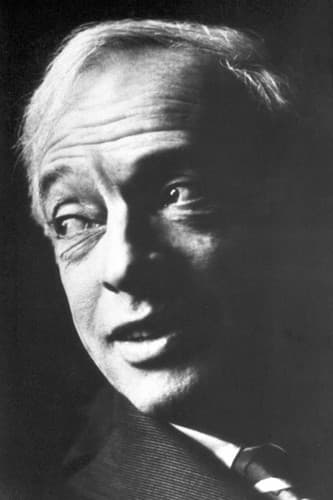
Saul Bellow was a Canadian–American writer. For his literary work, Bellow was awarded the Pulitzer Prize, the Nobel Prize for Literature, and the National Medal of Arts. He is the only writer to win the National Book Award for Fiction three times, and he received the National Book Foundation's lifetime Medal for Distinguished Contribution to American Letters in 1990.
Similar books
- Notes from Underground
Fyodor Dostoevsky
4.2 (84k) average on GoodreadsPsychologyBoth feature an alienated, introspective male narrator grappling with existential questions and societal norms through a journal format.
- The Stranger
Albert Camus
4.1 (3k) average on GoodreadsFantasyExplores themes of alienation and the absurd through a detached protagonist, with a focus on internal experience rather than external action.
- A Single Man
Christopher Isherwood
4.1 (24k) average on GoodreadsLiterary FictionA day in the life of an academic dealing with grief and isolation, rich in internal monologue and observations.
- The Naked and the Dead
Norman Mailer
3.9 (23k) average on GoodreadsHistorical FictionWhile both novels deal with World War II, Mailer's The Naked and the Dead provides a sprawling, realistic, and action-oriented depiction of soldiers in combat. Dangling Man, in contrast, focuses on the psychological and existential struggles of a single man waiting for induction on the home front, offering an internal landscape rather than an external battlefield. Bellow's novel is more introspective and philosophical, less concerned with grand social or military narratives.
- A Separate Peace
John Knowles
3.6 (191k) average on GoodreadsHistorical FictionKnowles's A Separate Peace (1959), while also set during WWII and exploring themes of youth and coming-of-age, focuses on the dynamics between two friends at a boarding school. It delves into jealousy, identity, and the loss of innocence against the backdrop of an impending war, with a more traditional narrative arc and external events driving the plot. Dangling Man is far more confined to the protagonist's internal world and intellectual struggles, with minimal external plot, making it a more direct exploration of existential angst rather than social or developmental psychology.
- Nineteen Eighty-Four
George Orwell
4.2 (5.5M) average on GoodreadsFictionWinston Smith dreams of truth and rebellion in a world where Big Brother watches all, but he confronts the terrifying power of a regime that controls not just actions, but thoughts.






Enjoyed the summary?
A summary gives you the shape of the book. The book itself has the detail, the examples and the voice.
Find Dangling Man on AmazonAs an Amazon Associate, BookBrief earns from qualifying purchases. How we're funded