

Synopsis
Covers the whole plot, including the ending.
- Difficulty
- Easy
- Pacing
- Fast
- Mood
- Gritty, Desperate, Suspenseful, Bleak
- Read it if
- You enjoy gritty, first-person survival horror told through journal entries, with a focus on realism and the psychological toll of an apocalypse.
- Skip it if
- You prefer character-driven narratives with deep emotional arcs, or dislike the 'found footage'/journal format.
Day by Day Armageddon Plot Summary
Covers the whole plot, including the ending.
The Initial Outbreak and Isolation
The journal starts with the main character, a man in the suburbs, noticing unusual news reports about a fast-spreading virus. He initially dismisses them, but as the situation worsens with reports of widespread illness and chaos, he begins to prepare. He details his efforts to secure his home, gather supplies, and keep in touch with his family by phone. The power soon fails, leaving his area dark and silent. He makes a frightening discovery when he sees his neighbor, Mr. Henderson, acting strangely and violently, confirming the reality of the 'undead' plague. His first entries show disbelief, fear, and a growing sense of being alone.
Encountering the Infected and First Forays
Running low on supplies and needing information, the main character has his first close encounters with the infected. He describes their appearance and constant pursuit, quickly learning how to avoid and, if needed, kill them. His early scavenging trips are tense and dangerous, mostly to nearby houses and a local store. He gets essential items like food, water, and ammunition. During these trips, he sees the outbreak's devastating effects: abandoned cars, looted stores, and the constant danger of the undead. He starts to form a plan for moving through this dangerous new world.
The Decision to Move and the Search for Family
As weeks pass, the main character realizes his suburban home is too exposed and lacks resources for long-term survival. He makes the difficult choice to leave, wanting to find his estranged wife and daughter, who he believes are at his parents' house in a more rural area. He carefully plans his journey, mapping routes and supply stashes. Before leaving, he tries to get a vehicle, facing more encounters with the infected. This phase shows a shift from reacting to survival to actively planning, driven by the hope of reuniting and needing a safer position.
The Perilous Journey North
The journey north tests his skills and determination. He travels by car, seeing destroyed roads, abandoned vehicles, and hordes of infected. He learns to save fuel, scavenge well, and stay alert. He describes the grim landscape of a fallen civilization and the constant mental toll of isolation and fear. He makes hard choices, like avoiding other survivors because they might be a threat or attract infected. His journal entries focus more on practical survival tips, observations about the infected, and his declining mental state, marked by loneliness and a constant sense of dread.
Arrival at the Parents' House and Disappointment
After weeks of travel, the main character finally reaches his parents' secluded rural home. His hope for reunion is immediately gone; the house is empty. There are no signs of his wife or daughter, or his parents. The house seems untouched, suggesting they left before the worst of the outbreak, but their absence is a crushing blow. He finds a note from his parents, saying they went to a pre-arranged safe location. This discovery, while offering a small hope that his family might still be alive, leaves him alone again and without immediate answers about his wife and daughter. He takes shelter in the house, restocking and regrouping.
Establishing a New Base and Encountering Other Survivors
Deciding to make his parents' home his new base, the main character spends much time fortifying it, setting traps, and creating a perimeter. He explores the area, finding a small, isolated group of survivors nearby. He cautiously approaches them, checking if they are trustworthy. This group includes a former military man named Frank, who becomes a helpful ally. They share information and resources, forming a tentative alliance for protection. This is a turning point, as the main character moves from surviving alone to cautious cooperation, though still keeping some independence and distrust.
The Scavenging Raid and Confrontation
Needing more specialized supplies, especially medical equipment and advanced weapons, the main character and Frank plan a dangerous scavenging raid into a larger, infected town. They prepare carefully, using their combined skills. The mission is full of danger, with close calls with large hordes of infected and navigating booby-trapped buildings. They get valuable resources, but the experience shows the extreme danger of going into urban areas. This raid strengthens the bond between the main character and Frank, as they rely on each other's combat and tactical skills to survive the intense fight.
The Growing Threat and Defensive Preparations
As autumn continues, the survivors notice more infected activity around their rural home. They think colder weather or dwindling food in urban areas might be driving the hordes out. This increased threat requires more aggressive defensive preparations. The main character, Frank, and the other survivors work hard to strengthen their defenses, set up alarms, and practice defensive moves. Tensions rise as they expect a large attack. The journal entries show a growing sense of urgency and the grim realization that their safe haven might soon face its biggest test against overwhelming numbers.
The Winter Siege and Desperate Measures
Winter arrives, bringing extreme cold and an unprecedented surge of infected activity. The survivors face a long siege, fighting wave after wave of undead. Resources quickly run out, and the mental strain becomes immense. The main character details desperate measures to save ammunition, food, and fuel. There are casualties among their small group, showing the brutal reality of their situation. The fight for survival becomes a daily struggle against the weather and the relentless hordes, forcing them to make difficult tactical decisions and endure immense physical and emotional hardship.
The Search for a New Haven and Lingering Hope
After the brutal winter and constant threat, the main character and the remaining survivors decide their current location is no longer sustainable. They plan to move again, looking for a more defensible and resource-rich haven, possibly a military bunker or a hidden compound. The main character continues to record his observations, detailing the changing behavior of the infected and his own changing view on humanity and survival. Despite the despair, a glimmer of hope remains for finding a long-term solution and, perhaps, answers about his family's fate. The journal ends with them preparing for another dangerous journey into the unknown.
Principal Figures
The Protagonist (Unnamed)
Protagonist
A resourceful everyman documenting his fight for survival in a zombie apocalypse.
Our unnamed protagonist is an ordinary man thrust into extraordinary circumstances. Before the outbreak, he appears to have lived a typical suburban life, with a family and a job. He is highly observant, methodical, and pragmatic, skills that prove invaluable in the apocalypse. His journal entries reveal a man who is constantly learning, adapting, and analyzing his environment. While initially driven by the hope of finding his family, his primary motivation becomes sheer survival, and he develops a ruthless efficiency in dealing with threats. He is a skilled marksman and develops expertise in scavenging, fortification, and tactical movement.
Relationships: Wife (unnamed) (estranged, catalyst for his initial journey); Daughter (unnamed) (estranged, catalyst for his initial journey); Mr. Henderson (neighbor, first infected he witnesses); Frank (fellow survivor, becomes a trusted ally)
Frank
Supporting
A former military man and a valuable ally to the protagonist.
Frank is a seasoned survivor, implied to have a military background, which provides him with valuable combat and tactical skills. He is pragmatic, disciplined, and resourceful. When the protagonist encounters him, Frank is already part of a small group of survivors, demonstrating his ability to lead and cooperate. He quickly forms a strong bond with the protagonist, recognizing their shared capabilities and similar survival instincts. Frank's presence offers the protagonist not only practical support but also much-needed companionship in an otherwise desolate world. He is a reliable partner in scavenging missions and defensive operations.
Relationships: The Protagonist (trusted ally and comrade-in-arms); Other Survivors (leader/member of a small group)
The Infected (Zombies)
Antagonist
The relentless, undead hordes that threaten humanity's existence.
The infected are the primary antagonists of the story, the result of an unknown plague that reanimates corpses with a hunger for living flesh. They are depicted as fast, strong, and highly aggressive, often moving in large, overwhelming hordes. The protagonist notes their evolving behavior, such as their attraction to sound and their ability to break down defenses over time. They represent a constant, existential threat, forcing humanity to adapt or perish. While they lack individual personality, their collective presence drives the narrative, dictating the survivors' movements, strategies, and daily struggles. They are a force of nature, an unstoppable wave of destruction.
Relationships: The Protagonist (predator to his prey)
Mr. Henderson
Mentioned
The protagonist's neighbor, who becomes one of the first infected he personally witnesses.
Mr. Henderson is a minor character, serving primarily as a catalyst for the protagonist's full realization of the apocalypse. He is the protagonist's next-door neighbor, and his transformation into one of the infected is a chilling and personal encounter for the protagonist. Witnessing Mr. Henderson's violent, reanimated state shatters any lingering doubts the protagonist might have had about the nature of the plague. His brief appearance underscores the sudden and brutal reality of the outbreak, bringing the global tragedy home to a personal level for the protagonist.
Relationships: The Protagonist (neighbor, first infected seen up close)
The Protagonist's Wife and Daughter (unnamed)
Supporting
The protagonist's estranged family, whose fate drives his initial search.
Though never directly encountered, the protagonist's wife and daughter are significant characters due to their role as his initial motivation. Early in the outbreak, he attempts to contact them, believing them to be at his parents' rural home. The hope of finding them alive fuels his perilous journey north. Their absence at his parents' house is a crushing blow, but the discovery of his parents' note suggesting they went to a 'bug-out' location keeps a glimmer of hope alive. They represent the protagonist's lost past and the potential for a future beyond mere survival, even if their actual fate remains unknown.
Relationships: The Protagonist (estranged family, his initial motivation)
The Other Survivors (unnamed)
Supporting
A small group of individuals who band together with Frank.
This group of unnamed individuals forms a small community with Frank, providing a temporary sense of camaraderie and shared defense for the protagonist. They are primarily background characters, representing the collective effort and struggles of humanity trying to survive. While not individually fleshed out, their presence highlights the dynamics of group survival, the need for cooperation, and the inevitable conflicts and losses that come with it. They contribute to the defensive efforts, scavenging, and daily routines of maintaining their homestead, showing the diverse skills needed for collective survival.
Relationships: The Protagonist (fellow survivors, temporary allies); Frank (members of his initial group)
Themes & Insights
The Collapse of Civilization and Social Order
The novel shows the fast and brutal collapse of all societal structures after the outbreak. The main character's journal entries detail the breakdown of communication, infrastructure (power, water, roads), and government. He sees firsthand how communities become ghost towns, stores are looted, and law enforcement disappears. This theme highlights how fragile humanity is when its basic systems are removed, forcing people to rely on primal survival instincts. For example, the initial chaos and later silence of the suburbs, or the endless abandoned cars on the highway, are clear reminders of this collapse.
“Day 12: The power is gone. Not just here, but everywhere. The silence is deafening. It's like the world just decided to stop turning.”
Isolation and Psychological Deterioration
A main theme is the deep sense of isolation the main character feels, and its psychological cost. His journal is his only confidante, showing his internal struggles, fears, and loneliness. He deals with the loss of his family, the constant threat of death, and the lack of human connection. This isolation is made worse by his choice to avoid other survivors early on, due to distrust. Even when he joins a group, he keeps some emotional distance, a defense against more loss. The entries often show his declining mental state, with vivid nightmares and a struggle to keep hope, especially after finding his parents' house empty.
“Day 37: The silence is the worst enemy. It eats at you, whispering doubts, making you question your sanity. I talk to myself more now. I have to.”
Adaptation and Resourcefulness
The main character's journey shows human adaptability and resourcefulness in extreme difficulty. He constantly learns new skills, from efficient scavenging and weapon maintenance to fortification and tactical movement. He devises traps, modifies vehicles for long-distance travel, and learns to analyze the infected's behavior. This theme is clear in his careful planning for journeys, his innovative use of everyday items for survival, and his ability to change from a confused civilian into a hardened survivor. His journal acts as a practical survival guide, detailing his successful and unsuccessful attempts.
“Day 68: You learn fast out here, or you die. Every mistake is a lesson, etched in blood. You become a hunter, a scavenger, a ghost.”
The Nature of Humanity in Crisis
The novel explores the range of human behavior when people are pushed to their limits. While the main character mainly focuses on his own survival, his cautious interactions with other survivors, like Frank and his group, show the potential for cooperation and friendship. However, his initial distrust of others and his observations of societal collapse also hint at the darker side of human nature, where self-preservation can lead to aggression or indifference. The main character himself makes difficult, often ruthless, choices to ensure his survival, questioning his own morality in a world without rules. This theme is explored through his internal thoughts and his careful approach to any new encounter.
“Day 101: There are no good guys or bad guys anymore. Only the living and the dead. And sometimes, the living are worse.”
Plot Devices & Literary Techniques
First-Person Journal Format
The entire narrative is presented as the protagonist's personal journal entries.
This device immerses the reader directly into the protagonist's mind, offering an intimate and unfiltered perspective on the apocalypse. It allows for direct access to his thoughts, fears, observations, and survival strategies, creating a strong sense of realism and immediacy. The journal entries are dated, providing a clear timeline of the unfolding events and the protagonist's deteriorating mental state. This format also serves as a coping mechanism for the protagonist, allowing him to process the trauma and maintain a semblance of sanity by documenting his experiences.
Unreliable Narrator (Subtly)
The protagonist's perspective is influenced by extreme stress and isolation, potentially skewing his interpretation of events.
While the protagonist strives for accuracy, his extreme isolation, psychological trauma, and constant fear mean his perception of events, particularly regarding the behavior of other survivors or the exact nature of the infected, could be subtly skewed. His interpretations are filtered through his own biases and survival instincts. This unreliability isn't overt deception but rather a product of his deteriorating mental state, making the reader question the absolute truth of his observations and enhancing the psychological tension of the narrative.
Foreshadowing (via observations and premonitions)
The protagonist's detailed observations and internal monologues hint at future dangers or developments.
The protagonist's meticulous documentation often includes his analysis of the infected's behavior, changes in the environment, or his own premonitions. These serve as subtle foreshadowing, building tension and preparing the reader for upcoming challenges, such as the increasing hordes in winter or the need to relocate. For instance, his early observations about the infected's sensitivity to sound or their tendency to gather hints at future large-scale encounters. This device keeps the reader engaged, constantly anticipating the next threat based on the protagonist's insights.
The MacGuffin (The Protagonist's Family)
The protagonist's estranged family serves as his initial driving motivation.
The protagonist's wife and daughter, whose whereabouts are unknown for much of the early narrative, act as a MacGuffin. Their potential survival and the hope of reuniting with them provide the protagonist with a crucial initial goal beyond mere survival. This quest drives him through dangerous territories and pushes him to overcome immense obstacles. While their actual fate remains ambiguous, the idea of them keeps a flicker of hope alive and gives his journey a deeper personal meaning beyond simply existing in the apocalypse.
Day by Day Armageddon Quotes
“I can't believe I'm doing this. I'm actually doing this. Living proof that a man can only take so much before he snaps.”
“The world isn't going to end with a bang, it's going to end with a whimper. Or in my case, a growl.”
“It's funny how quickly you adapt. How quickly the things that once horrified you become normal.”
“The greatest weapon isn't a gun or a knife. It's information. Knowing what's coming, knowing where to go.”
“Sleep is a luxury I can no longer afford. Every moment of rest feels like a moment wasted, a moment when they could be getting closer.”
“I used to worry about bills, about traffic, about what to have for dinner. Now I worry about how many bullets I have left and if I'll see another sunrise.”
“There are no good guys and bad guys anymore. Just survivors and the dead. And the things that want to make you dead.”
“Hope is a dangerous thing. It can keep you going, but it can also blind you to the truth.”
“The silence is almost as terrifying as the screams. It's the silence of a world that has stopped breathing.”
“Every day is a gift. A bloody, terrifying, painful gift, but a gift nonetheless.”
“You learn to trust your gut. It's the only thing left that hasn't been corrupted.”
“The biggest enemy isn't always outside. Sometimes, it's the one looking back at you in the reflection.”
“Sometimes, the only way to survive is to stop being human. Or at least, what you thought being human meant.”
Quiz
10 questions on the plot and the characters. Each answer comes with a short explanation.
Question 1
What is the protagonist's primary mode of transportation for the majority of his initial journey and scavenging trips?
- A stolen police cruiser
- His personal pickup truck
- A modified ATV
- On foot
Show answer
B. His personal pickup truck The protagonist frequently uses his personal pickup truck for travel, scavenging, and even as a temporary shelter in the early days of the apocalypse.
Question 2
Where does the protagonist initially try to establish a long-term base of operations after leaving his home?
- A remote cabin in the woods
- An abandoned military base
- A fortified church
- A secluded farm
Show answer
D. A secluded farm After leaving his initial home, the protagonist finds and attempts to secure a secluded farm as a more defensible long-term base.
Question 3
What is the primary method the protagonist uses to document his experiences throughout the book?
- Video recordings
- A digital audio recorder
- A written journal
- Sending encrypted emails
Show answer
C. A written journal The entire book is presented as an ongoing journal, detailing the protagonist's daily struggles and observations.
Question 4
What significant event occurs that forces the protagonist to leave his initial home and begin his journey?
- His food and water supplies run out completely.
- A large horde of undead breaches his perimeter.
- He receives a distress call from a family member.
- He is attacked by a group of hostile survivors.
Show answer
B. A large horde of undead breaches his perimeter. The protagonist is forced to abandon his home when a large number of undead overwhelm his defenses, making it no longer safe.
Question 5
What type of weapon does the protagonist come to rely on heavily for close-quarters combat against the undead?
- A katana
- A baseball bat with nails
- A tactical axe
- A machete
Show answer
C. A tactical axe The protagonist frequently mentions and uses his tactical axe for dispatching individual undead, valuing its effectiveness and reusability.
Question 6
What is the primary emotional struggle the protagonist faces, as frequently expressed in his journal entries?
- Overcoming his fear of the dark
- Battling loneliness and the desire for human connection
- Coping with extreme physical pain from injuries
- Dealing with the guilt of past actions
Show answer
B. Battling loneliness and the desire for human connection A recurring theme in the journal is the protagonist's profound loneliness and the psychological toll of prolonged isolation in a world devoid of living human interaction.
Question 7
What is the crucial piece of equipment the protagonist always ensures is operational or secured, vital for his survival and navigation?
- His shortwave radio
- His night vision goggles
- His GPS unit and maps
- His portable solar charger
Show answer
C. His GPS unit and maps The protagonist frequently references the importance of his GPS and maps for navigating and avoiding known zombie concentrations, especially after roads become impassable.
Question 8
What is the protagonist's military background prior to the apocalypse, which influences his survival skills and mindset?
- Former Navy SEAL
- Retired Army Ranger
- Ex-Marine Corps Scout Sniper
- Former Air Force Pararescueman
Show answer
B. Retired Army Ranger The protagonist's past as an Army Ranger is consistently referenced, explaining his tactical knowledge, discipline, and proficiency with weapons and survival.
Question 9
What specific type of weapon system does the protagonist eventually manage to utilize from a military installation, significantly increasing his defensive capabilities?
- A mounted .50 caliber machine gun
- A remotely operated drone with explosives
- An anti-personnel minefield
- A shoulder-fired missile launcher
Show answer
A. A mounted .50 caliber machine gun During his scavenging of military sites, the protagonist acquires and sets up a mounted .50 caliber machine gun, using it to defend his position against large hordes.
Question 10
What is the underlying theme about the nature of humanity that the protagonist repeatedly reflects upon in the face of the apocalypse, beyond just survival?
- The triumph of technology over natural disaster
- The inevitable descent into savagery and loss of civility
- The inherent goodness of people when faced with adversity
- The importance of faith in maintaining hope
Show answer
B. The inevitable descent into savagery and loss of civility The protagonist often muses on how quickly society broke down, and how the remaining humans often prove to be as dangerous, if not more so, than the undead, highlighting the fragility of civilization.
Day by Day Armageddon FAQ
What is the core premise of 'Day by Day Armageddon'?
'Day by Day Armageddon' is presented as the journal entries of an unnamed protagonist, detailing his struggle for survival in a post-apocalyptic world overrun by zombies. It chronicles the rapid collapse of society and his personal journey from initial confusion to becoming a hardened survivor, emphasizing the day-to-day realities of the catastrophe.
Who is the main character, and what is his initial background?
The main character is an unnamed pilot, referred to only by his profession. He lives in Florida and initially has a relatively normal life, enjoying flying and spending time with his wife. His military training as a pilot provides him with valuable skills that become crucial for his survival and later for his group.
How does the zombie outbreak begin in the narrative?
The outbreak is initially reported as a mysterious illness spreading rapidly, causing confusion and fear. News reports hint at a highly contagious virus, but the true nature of the infected—reanimating corpses—is only slowly revealed through the protagonist's direct observations and desperate attempts to understand the chaos around him.
What significant event forces the protagonist to leave his home?
The protagonist is forced to leave his home after his wife is bitten and succumbs to the infection, turning into a zombie. This traumatic event, combined with the increasing danger and lack of resources in his immediate vicinity, compels him to abandon his safe house and seek out other survivors, specifically his family in Alabama.
What is the significance of the protagonist's journey to Alabama?
The journey to Alabama is a central plot point, driven by the protagonist's hope of finding his family alive. It's a perilous trek across a zombie-infested landscape, highlighting the breakdown of infrastructure and the extreme dangers of travel. This journey also introduces him to other survivors and forces him to adapt to new survival strategies.
Are there any clues about the origin or nature of the zombie virus?
The book deliberately leaves the exact origin of the virus ambiguous, focusing instead on the immediate impact and survival. However, there are subtle hints, particularly regarding the rapid spread and the seemingly unkillable nature of the infected, suggesting a highly resilient and aggressive pathogen, possibly with a unique biological mechanism.
Does the protagonist ever encounter organized military resistance or government efforts?
Initially, the protagonist observes fragmented military responses and attempts at containment, but these quickly collapse. He later encounters small, isolated military groups or remnants, but there's no large-scale, coordinated government effort depicted, reinforcing the sense of utter societal collapse and individual survival.
What role do other survivors play in the narrative, and are there recurring characters?
Other survivors play a crucial role, providing both aid and new challenges. While not all are recurring, some individuals like his family members (Brother and Sister) and later, members of the group he joins, become central to his emotional and physical survival. Their interactions highlight the human element amidst the horror.
How does the protagonist's mental state evolve throughout his journal entries?
The protagonist's mental state undergoes a significant transformation. He starts with shock and grief, grappling with the loss of his wife and the old world. Over time, he develops a hardened, pragmatic, and often cynical outlook, prioritizing survival above all else, though flashes of his humanity and despair still surface.
What psychological impact does killing zombies, especially former humans, have on the protagonist?
Initially, killing zombies is horrifying and emotionally taxing, especially when he recognizes former neighbors or even his own wife. However, as the narrative progresses, it becomes a necessary, almost mechanical act of survival. This desensitization is a key psychological adaptation, allowing him to function in a brutal world.
How does the isolation of the apocalypse affect the protagonist's decision-making?
The profound isolation profoundly impacts his decision-making. Without external authority or societal norms, he is forced to rely solely on his judgment, leading to difficult choices regarding resource allocation, risk assessment, and when to trust or distrust others. This fosters a self-reliant but often burdened mindset.
What is the psychological significance of the journal format itself?
The journal format serves as a crucial psychological outlet for the protagonist. It allows him to process trauma, maintain a sense of sanity, and document his experiences, preventing total mental collapse. It's a way to impose order on chaos and retain his identity in a world stripped of meaning, even if only for himself.
Is there a deeper meaning to the 'Day by Day' aspect of the title?
The 'Day by Day' aspect emphasizes the relentless, grinding nature of survival. It highlights that in a zombie apocalypse, there are no grand solutions, only the continuous struggle to make it through another 24 hours. It underscores the protagonist's focus on immediate threats and small victories rather than long-term hope.
Does the book offer any hope for humanity's long-term survival or rebuilding?
While the book focuses heavily on the immediate struggle, it subtly hints at the potential for humanity's long-term survival through the formation of small, resilient communities. However, it largely avoids definitive answers, leaving the ultimate fate of humanity ambiguous, prioritizing the individual's fight for existence.
How does the book's realistic portrayal of survival distinguish it from other zombie fiction?
'Day by Day Armageddon' distinguishes itself through its gritty realism, focusing on practical survival skills, resource management, and the psychological toll of the apocalypse. It largely eschews fantastical elements, instead emphasizing the mundane yet terrifying challenges of a world without infrastructure, electricity, or basic safety.
What is the overarching theme regarding human nature in the face of collapse?
The book explores the dual nature of humanity under extreme duress. While it showcases acts of brutality and selfishness, it also highlights moments of self-sacrifice, loyalty, and the enduring human need for connection and purpose, even in the darkest of times. It suggests that both good and evil are amplified by the apocalypse.
Is the lack of a named protagonist significant to the story's themes?
The unnamed protagonist can be interpreted as a deliberate choice to make him an everyman figure, allowing readers to more easily project themselves into his shoes. It emphasizes that his struggle is universal within the apocalyptic context, focusing on the human experience of survival rather than a specific individual's destiny.
How does the use of a journal format impact the pacing and reader's experience?
The journal format creates an intimate, immediate, and often fragmented reading experience. It provides a direct window into the protagonist's thoughts and fears, often with abrupt entries that mirror the chaotic reality. This subjective perspective heightens suspense and empathy, making the reader feel like a direct witness to the unfolding horror.
Similar books
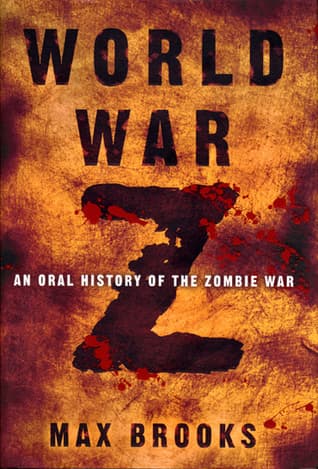
- World War Z: An Oral History of the Zombie War
Max Brooks
4.0 (440k) average on GoodreadsFantasyEpisodic, realistic portrayal of a zombie apocalypse, though 'Day by Day Armageddon' is first-person.
- The Road
Cormac McCarthy
4.0 (716k) average on GoodreadsScience FictionFocuses on a bleak, post-apocalyptic journey and the struggle for survival, though 'The Road' is literary fiction.
- Angels & Demons
Dan Brown
3.9 (2.7M) average on GoodreadsThrillerA Harvard symbologist races through Rome's ancient sites, deciphering cryptic clues to unmask the Illuminati and stop a vengeful plot to destroy the Vatican with a stolen antimatter weapon.
- Gone Girl
Gillian Flynn
4.1 (2.3M) average on GoodreadsThrillerA wife's sudden disappearance on her fifth anniversary reveals a web of lies and psychological warfare, exposing the secrets within a seemingly perfect marriage.
- The Girl on the Train
Paula Hawkins
3.9 (2.1M) average on GoodreadsThrillerA woman’s fascination with a seemingly perfect couple she watches from her daily train commute leads her into a dark investigation when she witnesses something that shatters their idyllic image.
- The Da Vinci Code
Dan Brown
3.9 (1.9M) average on GoodreadsThrillerA symbologist and a cryptologist race through European landmarks, deciphering ancient codes and uncovering a conspiracy that could rewrite the foundations of Christianity.





Enjoyed the summary?
A summary gives you the shape of the book. The book itself has the detail, the examples and the voice.
Find Day by Day Armageddon on AmazonAs an Amazon Associate, BookBrief earns from qualifying purchases. How we're funded