
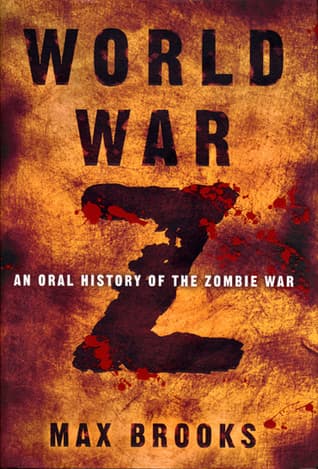
Synopsis
Covers the whole plot, including the ending.
- Difficulty
- Medium
- Pacing
- Moderate
- Mood
- Gritty, reflective, sobering, tense, hopeful
World War Z Plot Summary
Covers the whole plot, including the ending.
Warnings
The story starts with an interview with Kwang Jingshu, a former doctor from Chongqing, China. He describes the first 'rabies-like' symptoms in a rural village, starting with a young boy, Patient Zero. The Chinese government quickly suppresses these cases, calling them a new flu strain to avoid social unrest and international attention. Jingshu details the government's strong censorship and misinformation campaign, which kept the world from understanding the real threat. This period of denial allowed the infection to spread, both in China and globally, through black markets and human movement, setting the stage for the worldwide pandemic.
The Great Panic
As the infection spreads, initial government responses are mostly ineffective. Bad information, underestimating the threat, and using traditional military tactics lead to massive failures. Breckinridge 'Breck' Scott, a former intelligence operative, explains how the global economy collapses, driven by widespread panic, hoarding, and a desperate search for safety. During the 'Great Panic,' major cities fall, governments break down, and millions die, often from human violence and logistical failures more than direct zombie attacks. This time shows how fragile modern civilization is when it faces a new and deadly threat.
The Battle of Yonkers
General Travis D'Ambrosia, a U.S. armed forces veteran, describes the Battle of Yonkers. This was a moment when the world's most advanced military forces, including the U.S. Army, fought zombie hordes in an open-field battle. Despite having much better technology, the military's tactics were completely wrong for fighting the undead. Their loud, high-caliber weapons attracted more zombies, and their armored vehicles were easily overwhelmed and stopped. The battle was a huge defeat for human forces, breaking morale and forcing a complete change in military strategy. It was a harsh lesson that traditional warfare was useless against the zombie threat.
The Redeker Plan
Paul Redeker, a former South African intelligence officer, explains his 'Redeker Plan.' Realizing it was pointless to fight zombies directly, Redeker proposed sacrificing large parts of the population to create strong, zombie-free safe zones. This involved intentionally moving people into vulnerable areas to be bait or to delay the zombies, allowing important personnel and resources to be saved. While many found it morally wrong, the plan eventually saved humanity by creating secure strongholds and letting nations regroup and develop new strategies. Its use shows the extreme ethical problems faced during the war and the terrible choices needed for survival.
Life in the Safe Zones
Various interviews show life inside the safe zones. Todd Wainio, a former infantryman, describes the tough conditions in the U.S. 'Rocky Mountain Redoubt,' where survivors lived under strict military rule, facing constant threats of zombie attacks and internal conflict. Other stories detail the cleverness and strength needed to rebuild basic services, grow food, and stay sane in isolated, often crowded, and resource-scarce places. These parts highlight the mental toll of long isolation and the constant watchfulness needed, showing humanity's ability to adapt and build community even in the face of terrible hardship.
The Submarine Exodus
Admiral Xu Zhicai of the Chinese Navy describes the move to living on the ocean. Knowing zombies could not swim and the relative safety of the sea, many naval forces, including nuclear submarines, became important havens for survivors and mobile command centers. Xu recounts the difficulties of keeping morale up, managing resources, and adjusting to long periods of isolation underwater. These submarines became key for gathering intelligence, scouting, and eventually, for launching coordinated attacks against zombies along the coast. This adaptation shows humanity's cleverness in using the enemy's weaknesses and finding new ways to survive.
New Tactics and Tools
Interviews with military personnel and civilian inventors detail the creation of new anti-zombie tactics and weapons. The 'Lopec' (Lightweight Ordnance for Pest Extermination and Control), a special pickaxe, becomes the standard close-quarters combat tool because it works well against zombie brains and makes little noise. Soldiers learn to fight in small, coordinated groups, focusing on headshots and silent kills. Quiet vehicles, like bicycles and modified electric vehicles, are emphasized. These accounts show the difficult learning process and the eventual mastery of special techniques needed to turn the tide against the seemingly overwhelming zombie threat.
The Human Cost
Many survivors recount the deep psychological harm caused by the war. Jesika Hendricks, a former child soldier, describes losing her innocence and the harsh realities of combat at a young age. Other accounts detail 'Phalanx Syndrome,' a form of PTSD where survivors are haunted by war memories, often experiencing extreme alertness and difficulty returning to normal society. The vast scale of death and destruction, the loss of loved ones, and the constant threat of annihilation leave lasting marks on the human mind. This section shows that victory came at a huge and lasting human cost, far beyond the physical deaths.
Reclaiming the Land
After the tide turns, humanity faces the hard task of taking back territory from the zombie hordes. Accounts from 'cleaners' and 'reconstructors' detail the dangerous and hard process of clearing cities, often involving burning whole blocks, and slowly rebuilding infrastructure. Challenges include dealing with remaining zombie threats, environmental pollution, and the mental impact of working in desolate, corpse-filled areas. This phase of the war emphasizes the long-term effort and strength needed not just to defeat the enemy, but to heal the planet and rebuild civilization from its ruins, piece by painstaking piece.
The New World Order
The final interviews explore the global and social changes after the war. Nations like the United States have moved their capitals and changed their governments. Russia undergoes a major spiritual and political transformation. The global population is greatly reduced, leading to a rethinking of resource management and environmental practices. There is a renewed sense of global cooperation, but also new forms of nationalism and isolationism. The world is permanently changed, shaped by the memory of the war and the lessons learned about human nature, societal weakness, and the importance of working together against global threats.
World War Z Characters
The Narrator (Max Brooks)
Protagonist
A UN Postwar Commission agent compiling survivor testimonies.
While never directly interviewed, the narrator is the unseen protagonist, the 'editor' of this oral history. He travels the globe, meticulously collecting and curating the diverse accounts of survivors, military personnel, politicians, and ordinary citizens. His role is to provide a comprehensive, unbiased record of the Zombie War, focusing on the human element often overlooked by official reports. He is driven by a desire to prevent future generations from repeating past mistakes by understanding the full scope of the catastrophe.
Kwang Jingshu
Supporting
Chinese doctor who first encountered the zombie virus.
A former doctor from Chongqing, China, Jingshu is one of the first to witness the early stages of the zombie infection. His testimony highlights the Chinese government's initial cover-up and suppression of information, which allowed the virus to spread globally. He represents the ethical struggle of professionals forced to choose between their conscience and state obedience, and the devastating consequences of political denial in the face of a biological threat.
Breckinridge 'Breck' Scott
Supporting
Former intelligence operative who profited from the panic.
A former intelligence operative turned opportunistic businessman, Breckinridge Scott embodies the darker side of human nature during the Great Panic. He capitalized on the chaos, selling fake vaccines and exploiting fear to amass a fortune. His story highlights the moral decay and predatory behavior that emerged when societal structures collapsed, and how some individuals prioritized personal gain over collective survival, even at the cost of countless lives.
General Travis D'Ambrosia
Supporting
U.S. General who led the disastrous Battle of Yonkers.
General D'Ambrosia is a veteran U.S. Army general who commanded forces during the catastrophic Battle of Yonkers. His account serves as a stark reminder of humanity's initial strategic failures against the zombies, particularly the reliance on conventional warfare tactics that proved utterly ineffective. He represents the difficult transition military leaders had to make, learning from devastating losses to adapt and develop new, effective anti-zombie strategies.
Paul Redeker
Supporting
Architect of the controversial 'Redeker Plan' for survival.
A former South African intelligence officer, Redeker is the controversial figure behind the 'Redeker Plan,' a brutal strategy that involved sacrificing large populations to create secure safe zones. His cold, logical, and utilitarian approach to survival, while morally questionable, ultimately saved humanity. He represents the extreme ethical dilemmas and unspeakable choices leaders faced during the war, prioritizing the species' survival over individual lives.
Todd Wainio
Supporting
Former U.S. infantryman who fought in the Rocky Mountain Redoubt.
Todd Wainio is a former U.S. Army infantryman whose gritty account provides a ground-level perspective of the war. He details the harsh realities of fighting zombies, the development of new close-quarters combat techniques, and the psychological toll of constant vigilance and violence. His experiences in the Rocky Mountain Redoubt highlight the discipline, camaraderie, and sheer endurance required of ordinary soldiers to survive and eventually push back the undead.
Jesika Hendricks
Supporting
Former child soldier from the U.S.
Jesika Hendricks represents the devastating impact of the war on children. Recruited as a child soldier in the U.S. military, she recounts the loss of innocence, the horrors she witnessed, and the brutal training she underwent. Her testimony underscores the extreme measures humanity resorted to for survival and the lasting psychological scars inflicted upon an entire generation, highlighting the profound human cost beyond mere casualties.
Konnichi (Japanese Otaku)
Supporting
A hikikomori who finds purpose in the zombie war.
Konnichi is a Japanese hikikomori (social recluse) who, ironically, thrives during the zombie apocalypse. His pre-existing isolation and survival skills, honed by years of living off the grid, make him uniquely suited to the new, dangerous world. He represents how societal outcasts can find purpose and even excel when conventional norms collapse, highlighting the unexpected strengths that emerge in extreme circumstances.
Philip Addison
Supporting
A former British spy who observed global collapse.
Philip Addison, a former British MI6 agent, offers a detached, analytical perspective on the global collapse. He details the breakdown of international relations, the failure of intelligence agencies to accurately assess the threat, and the scramble for resources and power. His account provides insight into the geopolitical dimensions of the war, showcasing how nations reacted, adapted, or failed to adapt to the unprecedented crisis.
Maria Zhuganova
Supporting
Former Russian General who witnessed the 'Great Cleansing'.
Maria Zhuganova, a former general in the Russian military, recounts the 'Great Cleansing' and Russia's unique spiritual and political transformation during the war. Her testimony illustrates the extreme measures taken by some nations, including mass executions and forced conscription, and the profound ideological shifts that occurred. She represents the resilience and brutality of a nation pushed to its absolute limits, finding a new identity through immense suffering.
World War Z Themes
The Fragility of Civilization
The book shows how quickly modern civilization can fall apart under extreme pressure. The systems of government, economy, and social order are surprisingly weak against a threat like the zombie plague. The initial global panic, the collapse of infrastructure, and widespread societal breakdown reveal that our advanced societies rest on a delicate balance, easily broken by a truly devastating crisis. This theme makes the reader consider what fundamental elements hold society together and how quickly they can unravel.
“Humanity is not a species that adapts to the environment. It is a species that adapts the environment to itself. When that ability is removed, we are naked, defenseless, and utterly lost.”
The Human Factor
Despite focusing on zombies, the book is about human nature—its strengths and weaknesses—when facing an apocalypse. It explores the range of human behavior, from self-sacrifice and bravery to greed, fear, and cruelty. The initial denial and cover-ups by governments, the profiteering during the panic, and moral compromises like the Redeker Plan all point to human flaws. Conversely, the resilience, cleverness, and ability to adapt and cooperate show humanity's lasting spirit and will to survive. The book argues that understanding this 'human factor' is vital for learning from history.
“By excluding the human factor, aren't we risking the kind of personal detachment from history that may, heaven forbid, lead us one day to repeat it? And in the end, isn't the human factor the only true difference between us and the enemy we now refer to as 'the living dead'?”
Adaptation and Innovation
A main theme is humanity's ability to adapt and invent new solutions when facing a threat to its existence. Initial failures, like the Battle of Yonkers, force a difficult but necessary re-evaluation of tactics, technology, and social structures. From developing new weapons like the Lopec and quiet vehicles to creating fortified safe zones and new forms of government, humanity constantly learns and changes. This theme highlights that survival does not depend on brute force or existing technology, but on flexibility, creative problem-solving, and a willingness to abandon old ideas for new, effective ones.
“The greatest lesson of the war was that the old world had to die for the new one to be born.”
The Cost of Survival
The story consistently explores the huge and often terrible cost of humanity's survival. This includes not just physical casualties but also moral compromises, psychological harm, and irreversible societal changes. The Redeker Plan, child soldiers, the 'Great Cleansing' in Russia, and widespread PTSD ('Phalanx Syndrome') all show that victory came at a terrible price. The book forces readers to confront the ethical dilemmas of survival and the lasting scars left on individuals and nations, suggesting that even a 'victory' can be deeply bittersweet and leave a permanent mark on everyone.
“There are some wounds that never heal, some scars that never fade. It's called the human condition.”
Truth vs. Propaganda
The book highlights the dangerous role of misinformation and propaganda early in the war. The Chinese government's cover-up of Patient Zero, the media's downplaying of the threat, and the spread of fake cures all show how official stories can hinder effective responses and worsen a crisis. Conversely, the narrator's goal to compile an 'oral history' emphasizes the importance of truth and accurate historical records, even when painful, to learn from past mistakes and prevent future disasters. This theme highlights the critical role of transparency and honest communication.
“Truth, like all other natural resources, is finite. It must be mined, refined, and disseminated.”
Plot Devices & Literary Techniques
Oral History Format
First-person accounts from diverse global perspectives.
The entire novel is presented as a collection of first-person interviews conducted by a UN Postwar Commission agent. This format allows for a mosaic of perspectives, showcasing the global impact of the zombie war from various social, economic, and national viewpoints. It creates a sense of authenticity and immediacy, making the reader feel like a direct recipient of these testimonies. This device also allows Brooks to explore different facets of the conflict—political, military, social, psychological—without a single, omniscient narrator, emphasizing the subjective and fragmented nature of historical truth.
Unseen Narrator
The interviewer's presence is implied but never explicitly detailed.
The interviewer, the 'Max Brooks' character, is never directly seen or heard, only implied through his questions and the structure of the interviews. This allows the reader to project themselves into the role of the listener, enhancing immersion. It also reinforces the idea that the story is not about the chronicler, but about the collective experiences of the survivors. The narrator serves as a silent guide, allowing the diverse voices of the war to speak for themselves, lending greater authenticity and impact to their individual stories.
Subtle Foreshadowing
Early interviews hint at later global catastrophes.
Throughout the early interviews, particularly those from China, there are subtle hints and suppressed reports of a rapidly spreading, unusual illness. These early, dismissed warnings serve as foreshadowing for the global pandemic that is to come. This device builds tension and highlights the tragic consequences of ignorance, denial, and political cover-ups. It underscores the idea that the disaster was not entirely unforeseen, but rather ignored, making the subsequent unfolding of events more poignant and cautionary.
The Lopec
A specialized pickaxe symbolizing humanity's tactical adaptation.
The Lopec (Lightweight Ordnance for Pest Extermination and Control) is a fictional, specialized pickaxe that becomes the standard close-quarters combat weapon against zombies. This device symbolizes humanity's painful but necessary adaptation in warfare. It represents the rejection of conventional, noisy, and inefficient firearms in favor of a silent, effective tool designed specifically for the unique enemy. The Lopec becomes an iconic representation of the shift from technological superiority to practical, specialized combat, marking a turning point in the war and a testament to human ingenuity.
Quiz
10 questions on the plot and the characters. Each answer comes with a short explanation.
Question 1
What is the primary genre of the book 'World War Z: An Oral History of the Zombie War'?
- Historical Fiction
- Fantasy and Science Fiction
- Horror
- Thriller
Show answer
B. Fantasy and Science Fiction The book is explicitly described as 'Fantasy, Science Fiction'.
Question 2
According to the text, what was the main purpose of Max Brooks's travel and interviews?
- To document the military strategies used to fight the zombies.
- To gather personal accounts from survivors of the Zombie War.
- To map the spread of the zombie infection globally.
- To understand the origin of the zombie virus.
Show answer
B. To gather personal accounts from survivors of the Zombie War. The text states Brooks traveled to record 'the testimony of men, women, and sometimes children who came face-to-face with the living, or at least the undead, hell of that dreadful time.'
Question 3
Where did the epidemiological trail of the Zombie War begin, according to the book?
- In the unnamed northern forests.
- In the United States of Southern Africa.
- In the village of New Dachang in the United Federation of China.
- In the west-of-the-Rockies redoubt.
Show answer
C. In the village of New Dachang in the United Federation of China. The text mentions, 'Ranging from the now infamous village of New Dachang in the United Federation of China, where the epidemiological trail began with the twelve-year-old Patient Zero...'
Question 4
What was the 'Redeker Plan' mentioned in the book?
- A military offensive to eradicate the zombies.
- A scientific project to create a cure for the zombie virus.
- A plan that offered hope for humanity at a significant cost.
- A strategy for rebuilding cities after the war.
Show answer
C. A plan that offered hope for humanity at a significant cost. The text describes it as 'the Redeker Plan provided hope for humanity at an unspeakable price.'
Question 5
What does Max Brooks suggest is the only true difference between humans and the 'living dead'?
- Intelligence
- Physical strength
- The human factor
- The ability to reproduce
Show answer
C. The human factor Brooks asks, 'And in the end, isn't the human factor the only true difference between us and the enemy we now refer to as 'the living dead'?'
Question 6
What significant event is described as having 'came unthinkably close to eradicating humanity'?
- A global pandemic
- A nuclear war
- The Zombie War
- An alien invasion
Show answer
C. The Zombie War The opening sentence states, 'The Zombie War came unthinkably close to eradicating humanity.'
Question 7
What is the significance of the 'human factor' in the context of the book, according to Max Brooks?
- It represents the biological vulnerability of humans.
- It is crucial for understanding history and avoiding repeating mistakes.
- It is what distinguishes humans from the zombies' capacity for destruction.
- It refers to the collective will of humanity to survive.
Show answer
B. It is crucial for understanding history and avoiding repeating mistakes. Brooks argues that excluding the human factor risks 'personal detachment from history that may... lead us one day to repeat it.'
Question 8
Which of the following is NOT mentioned as a location visited or referenced in the book's narrative?
- The United States of Southern Africa
- The Amazon Rainforest
- New Dachang in the United Federation of China
- West-of-the-Rockies redoubt
Show answer
B. The Amazon Rainforest The text mentions the United States of Southern Africa, New Dachang, and the west-of-the-Rockies redoubt, but not the Amazon Rainforest.
Question 9
What is implied about the nature of the 'unspeakable price' associated with the Redeker Plan?
- It involved a massive financial cost to rebuild society.
- It required significant human sacrifice or moral compromise.
- It led to the creation of a new, powerful military force.
- It resulted in the loss of advanced technology.
Show answer
B. It required significant human sacrifice or moral compromise. The phrase 'at an unspeakable price' suggests a cost that is profound and likely involves severe hardship, sacrifice, or ethical transgression, rather than merely financial or technological loss.
Question 10
What does the book aim to convey through its 'haunting immediacy'?
- The scientific details of the zombie plague.
- The political ramifications of the global conflict.
- The human dimension of the epochal event.
- The tactical advantages of the surviving human forces.
Show answer
C. The human dimension of the epochal event. The text explicitly states, 'Most of all, the book captures with haunting immediacy the human dimension of this epochal event.'
World War Z FAQ
What is World War Z about?
World War Z is presented as an oral history of a zombie war that nearly wiped out humanity. It collects first-hand accounts from survivors across the globe, detailing their experiences during the apocalyptic event.
Is World War Z a horror book?
While it deals with the horrific events of a zombie apocalypse, its primary focus is on the human element, survival, and the societal impact of such a war, rather than being a traditional horror novel.
What is the 'Redeker Plan' mentioned in World War Z?
The Redeker Plan is a controversial strategy discussed in the book that involved sacrificing a significant portion of the population to ensure the survival of the remaining human race. It highlights the difficult ethical choices made during the war.
How does World War Z differ from the movie?
The book is structured as an oral history with numerous interwoven testimonies, focusing on the global political, social, and personal impacts of the zombie war. The movie is a more action-oriented narrative with a single protagonist's journey.
Who is Patient Zero in World War Z?
Patient Zero is identified as a twelve-year-old child from the village of New Dachang in the United Federation of China, marking the beginning of the zombie plague's global spread.
What is the significance of the oral history format in World War Z?
The oral history format allows Max Brooks to present a multifaceted and deeply personal perspective on the war. It emphasizes the human stories and the collective memory of the survivors, making the experience more immediate and impactful.
Are there practical survival tips in World War Z?
While not a survival manual, the book implicitly offers insights into survival strategies, societal organization, and human resilience through the accounts of those who lived through the apocalypse. It shows how different communities adapted and fought back.
What message does Max Brooks convey with World War Z?
Brooks emphasizes the importance of remembering and understanding history, especially the human element. He suggests that by learning from past struggles, humanity can avoid repeating mistakes and better face future crises.
Where does the zombie outbreak begin in the book?
The book traces the origin of the zombie outbreak to a village called New Dachang in the United Federation of China, starting with a twelve-year-old patient.
What is the tone of World War Z?
The tone is generally serious and reflective, capturing the fear, loss, and eventual resilience of humanity. Despite the dire subject matter, there's an underlying message of hope and the strength of the human spirit.
About the author
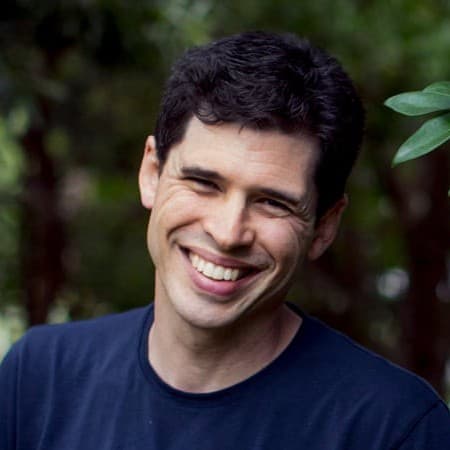
Max Brooks is an American author known for his work in the horror and speculative fiction genres. He is best recognized for "World War Z: An Oral History of the Zombie War," a novel that presents a fictional account of a global zombie apocalypse through a series of interviews. Brooks' writing often explores themes of survival and societal collapse.
Similar books
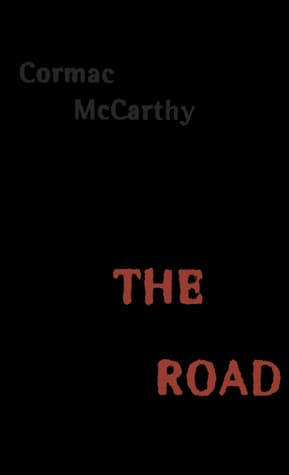
- The Road
Cormac McCarthy
4.0 (716k) average on GoodreadsScience FictionBoth "World War Z" and "The Road" depict post-apocalyptic worlds, but their tone, scope, and focus are vastly different. "The Road" is a bleak, minimalist, and intensely personal story of a father and son struggling for survival in a desolate, unnamed, and ambiguous post-cataclysmic landscape. Its horror is existential, rooted in the loss of hope and the degradation of humanity. "World War Z," while acknowledging the horrors, ultimately presents a narrative of human victory and recovery, albeit a costly one. It is a story of collective action and global strategy, whereas "The Road" is an intimate, almost suffocating portrayal of individual despair and the desperate clinging to a solitary bond. Brooks examines the 'how' of survival on a grand scale; McCarthy explores the 'why' of enduring in a world stripped of meaning.
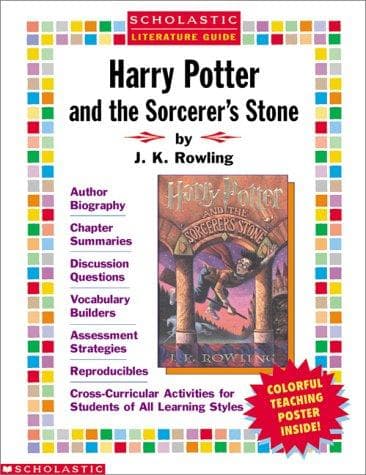
- Harry Potter and the Sorcerer's Stone
J.K. Rowling
4.5 (7M) average on GoodreadsFantasyRescued from a miserable life under the stairs, an orphaned boy discovers he's a wizard destined for a magical school, where he uncovers a dangerous secret tied to the dark wizard who murdered his parents.
- The Hunger Games
Suzanne Collins
4.3 (6.4M) average on GoodreadsFantasyIn a future where children fight to the death on live television, Katniss Everdeen volunteers for the arena, turning a death sentence into a fight for survival and a spark of rebellion.
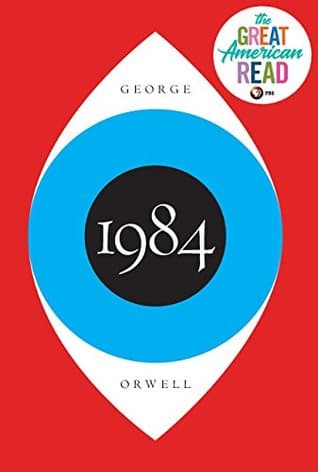
- 1984
George Orwell
4.2 (3.1M) average on GoodreadsPoliticsIn a future where surveillance and thought control are absolute, a man's search for truth clashes with the Party, showing that hope can be a form of rebellion.
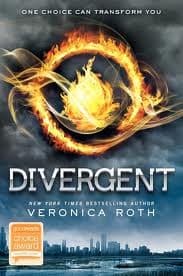
- Divergent
Veronica Roth
4.2 (2.9M) average on GoodreadsFantasyIn a society divided by virtues, a sixteen-year-old's difference from the norm starts a rebellion that threatens her world.
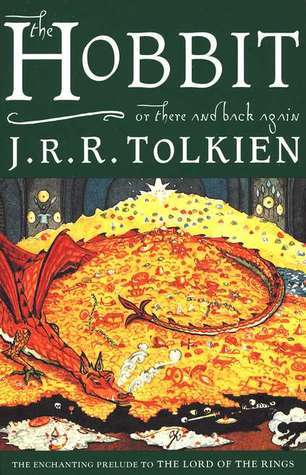
- The Hobbit, or There and Back Again
J.R.R. Tolkien
4.3 (2.9M) average on GoodreadsFantasyA comfort-loving hobbit named Bilbo Baggins is whisked away by a mischievous wizard and a band of dwarves on an unexpected journey to reclaim stolen treasure from a fearsome dragon, discovering courage and a magical ring along the way.

Enjoyed the summary?
A summary gives you the shape of the book. The book itself has the detail, the examples and the voice.
Find World War Z on AmazonAs an Amazon Associate, BookBrief earns from qualifying purchases. How we're funded