

Synopsis
Covers the whole plot, including the ending.
- Difficulty
- Easy
- Pacing
- Fast
- Mood
- Intense, terrifying, action-packed, desperate, gruesome
Dead of Night Plot Summary
Covers the whole plot, including the ending.
The First Bite
Dr. Brand, a brilliant but morally ambiguous prison doctor, prepares for the execution of Judge, a notorious serial killer. Instead of a lethal injection, Brand administers a cocktail of his own design, intended to preserve the killer's consciousness beyond death, allowing him to experience his body's decay. The execution proceeds, and Judge is pronounced dead. However, just as the body is being prepared for transport, Judge reanimates, his eyes glowing with an unnatural hunger. He attacks the medical staff and guards, displaying incredible strength and speed. His initial bites infect his victims, who quickly turn into similar ravenous creatures, starting a rapid and brutal outbreak within the prison.
Prison Breakout
The prison descends into chaos as the newly turned 'zombies' overwhelm the remaining guards and inmates. The infection spreads quickly, turning anyone bitten or scratched into a flesh-eating monster. Brand, horrified by the unforeseen consequences of his experiment, attempts to contain the situation but is quickly outmatched. The prison's security systems, designed for human inmates, are useless against the relentless, unthinking hordes. The few survivors, including Brand and a handful of guards and inmates, must fight their way through the corridors, seeing unimaginable horrors as their former colleagues and friends become ravenous predators. The main gates are breached, and the infected pour out into the surrounding town.
Sheriff Kilgore's Stand
Sheriff Frank Kilgore, a seasoned lawman in Stebbins County, receives frantic calls from the prison about an unprecedented riot. He and his deputies respond, only to find the prison gates open and a tide of monstrous, reanimated bodies pouring out. Kilgore quickly realizes this is no ordinary riot; these are not human beings. He sees the brutal efficiency of the infection firsthand as his deputies are torn apart and turned. Despite the overwhelming odds and the horrific nature of the threat, Kilgore, driven by a strong sense of duty and the need to protect his community, begins to organize a desperate defense, attempting to establish a perimeter around the prison town and warn the outside world.
The Town Overrun
The infection sweeps through Stebbins County with terrifying speed. The small town, unprepared for such a disaster, quickly falls. Homes are breached, families are torn apart, and the streets become battlegrounds where the living desperately fight for survival against their former neighbors. Kilgore and his remaining deputies, along with a few civilian survivors, see society collapse in mere hours. They establish a temporary safe house in the local church, but even that sanctuary is constantly under threat. The sheer number of the undead makes sustained resistance nearly impossible, and the survivors must make increasingly difficult and brutal choices to stay alive.
Dr. Brand's Confession
Dr. Brand, having escaped the prison, eventually meets Sheriff Kilgore and the other survivors. Under duress and immense guilt, he confesses to Kilgore about his experimental formula and how it was administered to Judge. He explains his intention to keep Judge's mind alive to suffer, but the unforeseen side effect was the reanimation and the rapid, contagious spread of the infection. Kilgore, initially furious and disgusted by Brand's arrogance, realizes that Brand, despite his culpability, might hold the key to understanding the creatures and potentially finding a way to stop them. Their fragile alliance is born out of desperation and the shared goal of survival.
Military Intervention
News of the outbreak finally reaches the military, who deploy troops to contain the situation. However, the scale and ferocity of the zombie horde prove to be far beyond their intelligence. The soldiers, trained for conventional warfare, are not equipped to deal with an enemy that feels no pain, cannot be reasoned with, and whose numbers grow exponentially with every bite. The military's initial attempts to establish a cordon and eliminate the threat quickly devolve into a desperate retreat, suffering heavy casualties. The survivors witness the collapse of even the most powerful organized resistance, cementing the horrifying reality that this is not a localized incident but a burgeoning apocalypse.
The Road to Salvation (or Damnation)
Realizing that staying in Stebbins County is a death sentence, Kilgore, Brand, and the remaining survivors devise a desperate plan to escape. Their goal is to reach a rumored safe zone or at least find a way out of the immediate hot zone. The journey is dangerous, forcing them to navigate through streets teeming with the undead. They scavenge for supplies, face moral dilemmas, and see the full depravity of human nature under extreme duress, both from the zombies and from other desperate survivors. The group's dynamic is tested as trust is fragile and the line between humanity and savagery blurs.
Judge's Persistence
Throughout their ordeal, the survivors notice a disturbing pattern: the original zombie, Judge, seems to be actively pursuing them. Unlike the mindless horde, Judge exhibits a terrifying, almost predatory intelligence. He appears to anticipate their movements, setting traps and displaying a level of cunning far beyond that of the other infected. Dr. Brand theorizes that his unique formula, designed to preserve consciousness, might have given Judge a heightened, malevolent intelligence even in his undead state. This makes Judge not just another monster, but a truly terrifying, vengeful antagonist, adding a layer of psychological horror to their physical struggle for survival.
The Human Element
As the world collapses around them, the survivors encounter not just the undead, but also other human factions. Some are desperate but honorable, others are opportunistic and cruel, preying on the weak. The group faces threats from looters, gangs, and individuals who have lost all sense of morality. These encounters highlight that the zombies are not the only monsters; humanity itself can be just as terrifying when pushed to its limits. Kilgore struggles to maintain order and uphold his principles in a world where law and justice have ceased to exist, forcing him to make brutal decisions that weigh heavily on his conscience.
A Glimmer of Hope?
Despite the overwhelming despair, Dr. Brand continues to analyze samples and data, driven by guilt and a desperate hope to mitigate the disaster he caused. He studies the unique properties of the infection, particularly how it affects Judge differently. He theorizes about potential weaknesses or ways to create a deterrent, even if a full cure seems impossible. His scientific mind, though flawed, becomes a beacon of potential hope for the group, offering the possibility that knowledge might be their only weapon against the relentless tide of the undead. This provides a fragile sense of purpose amidst the chaos.
The Final Confrontation
The journey culminates in a harrowing confrontation with the reanimated Judge. He corners the survivors, demonstrating his continued malicious intelligence and enhanced strength. Kilgore, Brand, and the remaining group members are forced into a desperate, no-holds-barred battle for their lives. The fight is brutal and personal, with Kilgore driven by a need for justice and Brand by a desire for redemption. They utilize every resource and tactic available, suffering further losses, but determined to neutralize the source of the plague, or at least the most dangerous manifestation of it, even if it means sacrificing themselves.
The World Ends
Even after the confrontation with Judge, the survivors face the grim reality: the world as they knew it is gone. The infection has spread far beyond Stebbins County, and the military response has failed. There is no rescue, no cure, only endless hordes of the undead. The remaining characters are left with the chilling understanding that their fight is no longer about containing an outbreak but about surviving in a new, brutal world. The ending is not one of triumph, but of stark, bleak realization, leaving them on the precipice of an irreversible apocalypse, where every day is a battle for existence.
Dead of Night Characters
Sheriff Frank Kilgore
Protagonist
A dedicated lawman fighting to protect his community in a crumbling world.
Sheriff Frank Kilgore is a pragmatic, honorable, and deeply ethical man. He is a seasoned law enforcement officer with a strong moral compass and a profound sense of duty to his community, Stebbins County. Despite facing unimaginable horrors and the complete collapse of society, he strives to maintain order and protect the innocent. He is a natural leader, though often burdened by the terrible decisions he must make to ensure the survival of his group. His strength lies in his resilience and his unwavering commitment to humanity, even when humanity itself seems lost.
Relationships: Dr. Brand (Antagonistic alliance); Judge (Mortal enemy); His deputies (Professional subordinates, comrades)
Dr. Brand
Supporting
The brilliant, morally ambiguous prison doctor whose experiment unleashes the apocalypse.
Dr. Brand is an intelligent and ambitious prison doctor, driven by a desire to push the boundaries of science, even if it means crossing ethical lines. He is highly educated and an expert in neurobiology and pharmacology. While his initial intentions for Judge were rooted in a twisted form of justice (prolonged suffering), he is genuinely horrified by the catastrophic outcome of his experiment. He carries immense guilt and uses his scientific knowledge to try and understand the infection, hoping to find a way to mitigate the disaster he caused. He is physically less capable than Kilgore but provides crucial intellectual insight.
Relationships: Sheriff Kilgore (Antagonistic alliance); Judge (Experiment subject, accidental creator of the monster)
Judge (Earl Dann)
Antagonist
The reanimated serial killer, the patient zero of the zombie apocalypse.
Judge, whose real name is Earl Dann, was a notorious serial killer before his execution. After Dr. Brand's experimental injection, he becomes the first and most terrifying of the infected. Unlike the mindless horde, Judge retains a malevolent, predatory intelligence, seemingly driven by a vengeful consciousness. He is incredibly strong, fast, and resilient, making him a unique and persistent threat. He acts as a dark reflection of Brand's hubris and a constant, personal tormentor for the survivors, embodying the ultimate, intelligent evil unleashed upon the world. He represents the ultimate unforeseen consequence.
Relationships: Dr. Brand (Experimenter/experiment, creator/creation); Sheriff Kilgore (Opponent, target of vengeance)
Deputy Ben
Supporting
Kilgore's loyal, young deputy.
Deputy Ben is a young and eager deputy under Sheriff Kilgore's command. He is loyal, brave, and initially optimistic, but the horrors of the outbreak quickly strip away his innocence. He looks up to Kilgore and tries his best to uphold the law and protect civilians, even as society crumbles around them. His journey is one of rapid maturation and loss, forced to confront the darkest aspects of survival. He represents the ordinary person thrust into an extraordinary, terrifying situation, fighting for humanity amidst chaos.
Relationships: Sheriff Kilgore (Subordinate/mentor)
Sarah
Supporting
A resilient civilian survivor who joins Kilgore's group.
Sarah is a civilian caught in the chaos of the outbreak. She is resourceful, resilient, and possesses a strong will to survive. She quickly adapts to the brutal new reality, demonstrating courage and practicality when faced with danger. She provides a civilian perspective to Kilgore's group, highlighting the impact of the apocalypse on ordinary people. While not a fighter by training, she learns quickly and contributes to the group's survival through her ingenuity and determination. She often acts as a moral anchor, reminding the group of what they are fighting for.
Relationships: Sheriff Kilgore (Fellow survivor, trusted ally)
Major Thompson
Supporting
A military officer attempting to contain the outbreak.
Major Thompson is a dedicated military officer tasked with leading a containment effort. He is disciplined, experienced in conventional warfare, and initially confident in the military's ability to handle the situation. However, he quickly realizes that the zombie plague is an enemy unlike any he has ever faced. He struggles with the rapidly deteriorating situation, the overwhelming numbers of the undead, and the horrific casualties his troops sustain. His character highlights the inadequacy of traditional military responses to this new kind of threat and the rapid collapse of organized resistance.
Relationships: His troops (Commander/subordinates)
Dead of Night Themes
The Perils of Scientific Hubris
The novel explores the dangerous consequences of scientific experimentation without proper ethical boundaries. Dr. Brand's desire to transcend death and inflict prolonged, conscious suffering on Judge leads directly to the zombie apocalypse. His ambition and disregard for the unknown variables unleash a catastrophe that consumes the world. The theme suggests that some knowledge or power is not meant to be wielded, and that even morbidly curious scientific pursuits can have devastating, unforeseen side effects when moral limits are ignored. It's a cautionary tale about playing God.
“I wanted him to suffer. To truly know what it was like to rot, while his mind was still alive. I never imagined...”
The Collapse of Society and Morality
As the zombie plague spreads, the novel depicts the rapid and brutal collapse of all societal structures—law, order, government, and even basic human decency. Sheriff Kilgore struggles to maintain a semblance of his moral code in a world where law is meaningless and survival dictates all actions. The emergence of human predators, looters, and ruthless gangs alongside the undead highlights that humanity itself can be just as monstrous when civilization crumbles. The theme explores how quickly people devolve to their basest instincts when faced with existential threat, blurring the lines between right and wrong.
“The dead were bad, but the living... the living were often worse.”
The Nature of Evil
The book examines different forms of evil. There is the initial, premeditated evil of Judge as a serial killer, which then becomes the mindless, instinctual evil of the zombie horde. However, the most chilling aspect is Judge's reanimated form, which retains a malevolent intelligence, suggesting that true evil can persist and even evolve beyond death. This contrasts with the 'necessary' evil committed by survivors for self-preservation. The theme questions whether evil is an inherent human trait, a biological imperative, or something that can transcend physical form, becoming an almost sentient force.
“He wasn't just hungry. He remembered. He hated.”
Survival vs. Humanity
A central conflict for the characters is the constant tension between doing what is necessary to survive and retaining their humanity. Kilgore, in particular, grapples with the brutal choices he must make—leaving people behind, killing those who are infected, or even killing other humans who pose a threat. The theme explores how far one can go for survival before losing the very essence of what makes them human. It forces characters and readers to confront the difficult question of whether survival at any cost is truly living, or if there are lines that should never be crossed, even in the face of the apocalypse.
“Every day, we lose a little more of ourselves, trying to stay alive.”
Plot Devices & Literary Techniques
Patient Zero
The origin point of the contagion, establishing the unique nature of the threat.
The character of Judge serves as the ultimate patient zero. His unique reanimation, caused by Dr. Brand's experimental formula, is the direct catalyst for the entire zombie apocalypse. Unlike many zombie narratives where the origin is vague, 'Dead of Night' provides a very specific, human-induced genesis. This device not only establishes the initial horror but also provides Dr. Brand with a direct link to the disaster, fueling his guilt and his desperate search for understanding. It also makes Judge a uniquely intelligent and personal antagonist, rather than just another mindless member of the horde.
The Unreliable Authority Figure
Dr. Brand, whose scientific expertise is both the cause and potential key to the crisis.
Dr. Brand embodies the unreliable authority figure. He possesses the scientific knowledge that could potentially understand or even combat the zombie plague, yet his own hubris and unethical actions were the direct cause of the disaster. Survivors are forced to rely on his intellect, despite his moral culpability and the fact that his 'expertise' is what led them to this hell. This device creates inherent tension and distrust within the group, highlighting the danger of unchecked scientific ambition and making the search for a solution deeply personal and morally fraught.
The Intelligent Zombie
Judge's unique consciousness elevates him beyond the typical zombie threat.
While most of the infected are mindless, ravenous creatures, Judge retains a terrifying, malevolent intelligence due to Brand's unique formula. This plot device elevates him from a generic monster to a cunning, vengeful antagonist. Judge is capable of anticipating the survivors' moves, setting traps, and actively pursuing them, adding a layer of psychological horror and personal vendetta to the physical struggle for survival. This makes the threat more complex and personal, ensuring that the final confrontation is not just about brute force but also about outwitting a sentient evil.
The Rapid Collapse
The accelerated breakdown of society emphasizes the overwhelming nature of the threat.
The novel depicts an incredibly swift and brutal collapse of society. Within hours, a small town is overrun, and within days, military efforts fail, signaling a global apocalypse. This rapid collapse serves to emphasize the overwhelming, unstoppable nature of the zombie plague and the futility of conventional defenses. It immediately strips characters of their familiar world and forces them into extreme survival mode, heightening the tension and demonstrating the fragility of civilization. The speed of the fall underscores the irreversible nature of the new, brutal reality.
Quiz
10 questions on the plot and the characters. Each answer comes with a short explanation.
Question 1
What is the name of the book?
- The Last Bite
- Dead of Night
- Rotting Awake
- Infected World
Show answer
B. Dead of Night The book title is explicitly stated as 'Dead of Night'.
Question 2
Who is the author of the book?
- James Patterson
- Lee Child
- Jonathan Maberry
- Michael Connelly
Show answer
C. Jonathan Maberry The author's name is given as Jonathan Maberry.
Question 3
What is the primary genre of the book?
- Science Fiction
- Fantasy
- Romance
- Thriller/Mystery
Show answer
D. Thriller/Mystery The book is described as a Thriller/Mystery.
Question 4
What was the purpose of the formula injected into the serial killer?
- To induce a coma
- To accelerate decomposition
- To keep his consciousness awake as his body decayed
- To erase his memories
Show answer
C. To keep his consciousness awake as his body decayed The doctor's intention was to 'keep his consciousness awake while his body rots in the grave'.
Question 5
What unforeseen side-effect occurred after the injection?
- The killer's body became immune to decay
- The killer woke up before burial, hungry and infected
- The killer's consciousness faded completely
- The formula had no effect
Show answer
B. The killer woke up before burial, hungry and infected The description states, 'Before he could be buried, the killer wakes up. Hungry. Infected.'
Question 6
What is the nature of the killer's condition after waking up?
- He is a zombie
- He is a vampire
- He is infected and contagious
- He is a ghost
Show answer
C. He is infected and contagious The text explicitly states he is 'Infected. Contagious.'
Question 7
What does the phrase 'This is the way the world ends. Not with a bang…but a bite.' imply about the story's progression?
- The story will conclude with a large explosion.
- The world will end due to a widespread infection spread by biting.
- The killer will be defeated by a single bite.
- The story is a metaphor for a political collapse.
Show answer
B. The world will end due to a widespread infection spread by biting. The phrase directly suggests an apocalyptic scenario caused by a contagious infection spread through biting, contrasting it with a conventional 'bang'.
Question 8
Who administered the experimental formula to the serial killer?
- A prison warden
- A scientist from a pharmaceutical company
- A prison doctor
- The killer himself
Show answer
C. A prison doctor The book description states, 'A prison doctor injects a condemned serial killer...'
Question 9
The phrase 'his body rots in the grave' suggests the formula's intended effect was to delay or prevent what process?
- Consciousness fading
- Physical decay and decomposition
- The onset of the infection
- The killer's eventual burial
Show answer
B. Physical decay and decomposition The phrase 'body rots in the grave' refers to the natural process of decomposition after death.
Question 10
What is the ultimate consequence of the killer waking up infected and contagious?
- He is immediately recaptured and buried properly.
- He escapes and begins a new life.
- It leads to the end of the world.
- The formula is successfully reversed.
Show answer
C. It leads to the end of the world. The concluding sentence, 'This is the way the world ends. Not with a bang…but a bite,' directly links the killer's condition to the world's demise.
Dead of Night FAQ
What is the plot of Jonathan Maberry's Dead of Night?
Dead of Night follows a prison doctor's experiment on a condemned serial killer, injecting him with a formula to keep his mind awake even after death. However, the formula has unforeseen, horrific side effects, leading to the killer waking up before burial, infected, contagious, and ravenously hungry.
What genre is Dead of Night?
Dead of Night is a thrilling blend of horror and mystery, with strong elements of action and suspense. It leans heavily into the zombie apocalypse subgenre.
Who is the main antagonist in Dead of Night?
The primary antagonist is a serial killer who becomes the first of the infected, a monstrous being that is contagious and driven by an insatiable hunger.
What are the unforeseen side effects of the experimental formula?
The experimental formula, intended to prolong consciousness, causes the subject to become a reanimated, flesh-eating infected creature. This infection is contagious, leading to a rapid outbreak.
What is the 'bite' referred to in the book's description?
The 'bite' refers to the contagious nature of the infection. Those bitten or otherwise exposed to the infected become infected themselves, perpetuating the outbreak.
How does Dead of Night differ from typical zombie stories?
While featuring zombie-like infected, Dead of Night distinguishes itself with a more grounded scientific premise for the outbreak and a focus on the immediate, chaotic collapse of society rather than a slow burn.
What kind of action can I expect in Dead of Night?
Readers can expect intense action sequences as characters fight for survival against the rapidly spreading infection and the relentless infected. The story is fast-paced and action-packed.
Is Dead of Night a standalone novel or part of a series?
Dead of Night is the first book in Jonathan Maberry's 'Joe Ledger' series, though it can be read as a standalone introduction to his world of bio-terrorism and supernatural threats.
What is the overall tone of Dead of Night?
The tone is dark, intense, and often terrifying. It explores themes of survival, the breakdown of order, and the primal fight against an unstoppable threat.
Who would enjoy reading Dead of Night?
Fans of fast-paced thrillers, horror novels, zombie fiction, and stories with high stakes and relentless action will likely enjoy Dead of Night.
About the author

Jonathan Maberry is an American author known for his work in the horror and thriller genres. His notable books include "Patient Zero," which explores a zombie outbreak, and "Dead of Night," a tale of survival in a post-apocalyptic world. Maberry's writing often combines elements of science fiction with horror themes.
Similar books
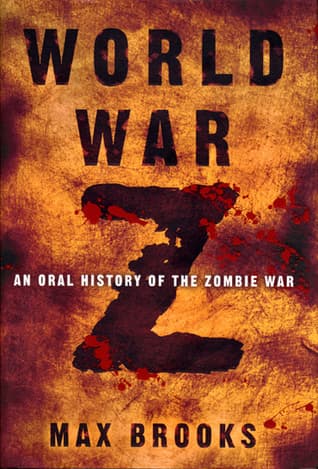
- World War Z: An Oral History of the Zombie War
Max Brooks
4.0 (440k) average on GoodreadsFantasyWhile both "Dead of Night" and "World War Z" tackle a global zombie apocalypse, Maberry's approach is a more traditional, character-driven narrative focusing on a smaller group's immediate survival. Brooks's work, in contrast, adopts a unique oral history format, providing a broader, more geopolitical perspective on the war. "Dead of Night" offers a more intimate, visceral horror experience, whereas "World War Z" is a meticulously researched speculative fiction examining societal collapse and recovery on a grand scale. Maberry's zombies are often more physically aggressive and 'alive' in their threat, while Brooks's are a more shambling, overwhelming force of nature.
- The Road
Cormac McCarthy
4.0 (716k) average on GoodreadsScience FictionBoth "Dead of Night" and "The Road" explore post-apocalyptic survival, but their underlying themes and narrative styles differ significantly. Maberry's novel is a high-octane thriller with explicit horror elements, focusing on fighting back against a tangible, monstrous threat. McCarthy's "The Road," however, is a bleak, literary exploration of humanity's endurance and the loss of civilization in a world devoid of specific monsters, where the greatest horrors often come from other desperate humans. "Dead of Night" offers moments of intense action and a sense of purpose in combat, while "The Road" is a slow, meditative, and profoundly melancholic journey through utter desolation, with survival itself being the only, often futile, goal.
- Angels & Demons
Dan Brown
3.9 (2.7M) average on GoodreadsThrillerA Harvard symbologist races through Rome's ancient sites, deciphering cryptic clues to unmask the Illuminati and stop a vengeful plot to destroy the Vatican with a stolen antimatter weapon.
- Gone Girl
Gillian Flynn
4.1 (2.3M) average on GoodreadsThrillerA wife's sudden disappearance on her fifth anniversary reveals a web of lies and psychological warfare, exposing the secrets within a seemingly perfect marriage.
- The Girl on the Train
Paula Hawkins
3.9 (2.1M) average on GoodreadsThrillerA woman’s fascination with a seemingly perfect couple she watches from her daily train commute leads her into a dark investigation when she witnesses something that shatters their idyllic image.
- The Da Vinci Code
Dan Brown
3.9 (1.9M) average on GoodreadsThrillerA symbologist and a cryptologist race through European landmarks, deciphering ancient codes and uncovering a conspiracy that could rewrite the foundations of Christianity.





Enjoyed the summary?
A summary gives you the shape of the book. The book itself has the detail, the examples and the voice.
Find Dead of Night on AmazonAs an Amazon Associate, BookBrief earns from qualifying purchases. How we're funded