
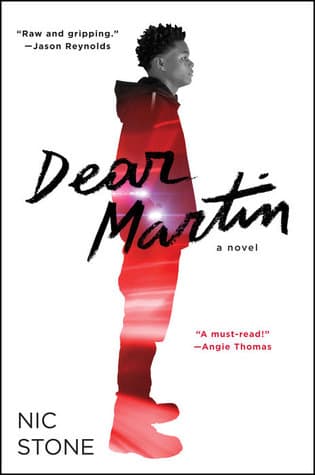
Synopsis
Covers the whole plot, including the ending.
- Difficulty
- Medium
- Pacing
- Moderate
- Mood
- Thought-provoking, Raw, Urgent, Emotional, Tense
- Read it if
- You want a powerful, thought-provoking story about racial injustice, privilege, and finding your voice, especially if you appreciate contemporary YA with strong social commentary.
- Skip it if
- You are looking for lighthearted escapism or are uncomfortable with direct discussions of racism, police brutality, and the justice system.
Dear Martin Plot Summary
Covers the whole plot, including the ending.
An Unjust Arrest
Justyce McAllister, a Black senior at the mostly-white Braselton Prep school, tries to help his drunk ex-girlfriend, Melo Taylor, get home from a party. As he puts her in her car, a white police officer, Officer Castillo, stops him. Even though Justyce tries to explain, the officer thinks he is a threat because of his race and violently handcuffs him. This bad experience makes Justyce angry and confused, leading him to start a journal to Dr. Martin Luther King Jr., asking for advice on how to deal with racial injustice today.
Seeking Guidance from MLK
After his arrest, Justyce begins writing in his journal to Dr. King. He wonders if King's ideas of nonviolence and peaceful protest still matter in a society where he, a Black student doing well, is still seen as a threat. He faces small daily insults at Braselton Prep, especially from his debate partner, Jared Christensen, who often makes racially insensitive comments. Justyce deals with his two identities – a Black man from a less privileged area and a successful student in an elite white setting – and tries to match the unfairness he faces with Dr. King's ideals.
Tensions Rise with Jared
Problems between Justyce and Jared get worse at a Halloween party. Jared and his friends dress as 'thugs' and 'stereotypes,' making fun of racial and economic groups. Justyce and his best friend, Manny Rivers, dress as 'STATISTICAL IMPOSSIBILITIES' – a Black Panther and a Black doctor. Jared's costume, wearing a 'hoodie' and baggy pants, particularly offends Justyce. This event shows the deep racial insensitivity of some of Justyce's white classmates and makes him feel more frustrated and alone, confirming his belief that trying to 'fit in' is useless.
The Debate and Its Aftermath
Justyce finds a like-minded person in Sarah-Jane Friedman, his debate partner. She truly cares about him and is clearly uncomfortable with Jared's behavior. Their connection grows during a school debate, where they argue for affirmative action. After the debate, Justyce and SJ share a close moment and start a romantic relationship. This new connection gives Justyce hope and a sense of belonging, contrasting with the racial frustrations he feels with others. He begins to feel a bit of hope that he can find understanding and love despite society's biases.
Manny's Transformation and Conflict
Manny, who at first was more quiet about racial issues than Justyce, starts to change. Inspired by Justyce's experiences and his own growing awareness, Manny confronts Jared and their other white friends about their racist jokes and attitudes. This leads to a physical fight between Manny and Jared. The event is a turning point for Manny, as he starts to actively recognize and challenge the racism around him. This brings him closer to Justyce's view and strengthens their friendship, but also separates them from their old social group.
The Tragic Shooting
While driving with Manny, listening to loud hip-hop music, they meet an off-duty white police officer, Garrett Tison, at a stoplight. Tison, annoyed by their music, shouts racial slurs and tells them to turn it down. Manny, fueled by his recent awakening and anger, refuses to obey and provokes Tison. Tison then pulls out a gun and shoots multiple times into their car. Manny dies instantly, and Justyce is shot in the arm. This senseless violence shatters Justyce's world and leaves him deeply traumatized, making him question everything he thought he knew about justice and fairness.
The Aftermath and Public Scrutiny
After the shooting, Justyce is in the hospital and then released, but his trouble continues. The media's story of the event is very biased, showing Manny and Justyce as attackers and criminals, while Tison is shown sympathetically. Justyce faces intense public scrutiny, hate mail, and online harassment. This makes his trauma and sense of injustice even worse. The story shifts from Tison's guilt to the supposed 'thuggish' behavior of the Black victims, showing systemic racism in media and justice systems.
The Trial of Garrett Tison
Garrett Tison's trial begins, and Justyce, despite his injuries and trauma, is called to speak. The defense lawyer tries to discredit Justyce and Manny, focusing on the loud music and Manny's defiant words, instead of Tison's deadly reaction. Despite strong evidence and emotional testimony, the jury finds Tison not guilty of all charges. This decision is a crushing blow to Justyce, Manny's family, and the Black community. It confirms their fears about racial bias in the justice system and leaves Justyce feeling completely defeated and without hope for true justice.
The Aftermath of Acquittal
After Tison is found not guilty, Justyce is consumed by sadness and anger. He struggles with depression and the desire for revenge. However, he slowly finds strength with the help of his mother, SJ, and Dr. Rivers (Manny's father). He decides to turn his pain into action, promising to honor Manny's memory by finding a way to fight for justice and make a positive difference. He realizes that while Dr. King's methods might seem hard, the underlying goal of justice and equality is still most important, and he must find his own way to help.
A Future Dedicated to Justice
Inspired by Manny's memory and Dr. King's lasting message, Justyce decides to go to Yale University to study law. He realizes that his intelligence and position can be strong tools in the fight against racial injustice. He continues to write in his journal, but his entries now show a more mature understanding of the struggle's complexities. At Yale, he finds new allies and a community that supports his goals. This shows a hopeful, though challenging, future where he can actively help create a more just society, carrying Manny's legacy with him.
Principal Figures
Justyce McAllister
Protagonist
A bright, ambitious Black student grappling with racial injustice and identity.
Justyce is an intelligent, academically gifted Black senior at Braselton Prep, aiming for an Ivy League education. He is a scholarship student from a lower-income neighborhood, constantly navigating the two worlds he inhabits. He struggles with his identity and the pervasive racism he encounters, from microaggressions to outright violence. His internal conflict is central to the narrative, as he attempts to reconcile Dr. Martin Luther King Jr.'s teachings with his lived experiences of injustice. He is driven by a desire for fairness and respect, and later, a profound need for justice in Manny's name.
Relationships: Manny Rivers (Best friend); Sarah-Jane Friedman (Girlfriend and debate partner); Mama (Supportive mother); Jared Christensen (Antagonistic classmate); Dr. Martin Luther King Jr. (Inspirational figure and journal recipient)
Manny Rivers
Supporting
Justyce's best friend, who undergoes a racial awakening before his tragic death.
Manny is Justyce's wealthy Black best friend and fellow student at Braselton Prep. Initially, Manny is more accustomed to overlooking or downplaying racial slights, having grown up in a more affluent environment. However, through his friendship with Justyce and their shared experiences, he begins to confront the reality of racism and his own identity. He becomes more outspoken and defiant against racial injustice, culminating in his fatal confrontation with Garrett Tison. His death is the central tragedy of the novel, profoundly impacting Justyce and the community.
Relationships: Justyce McAllister (Best friend); Jared Christensen (Former friend, later antagonist); Doc (Uncle, mentor); Mr. and Mrs. Rivers (Parents)
Sarah-Jane Friedman (SJ)
Supporting
Justyce's supportive white girlfriend and debate partner.
SJ is Justyce's white debate partner and later his girlfriend. She is intelligent, compassionate, and one of the few white characters who genuinely understands and empathizes with Justyce's experiences of racism. She actively challenges Jared's prejudiced views and offers Justyce unwavering emotional support, especially after Manny's death. SJ represents a hopeful alliance across racial lines, demonstrating that not all white people are complicit in racism and that genuine understanding and solidarity are possible.
Relationships: Justyce McAllister (Girlfriend and debate partner); Jared Christensen (Classmate, often in disagreement with)
Jared Christensen
Antagonist
A privileged white classmate who embodies racial insensitivity and prejudice.
Jared is a white student at Braselton Prep and a classmate of Justyce and Manny. He is portrayed as privileged, entitled, and largely oblivious to his own racial biases. He frequently makes racially insensitive jokes and comments, believing himself to be 'colorblind' and that racism is no longer a significant issue. His actions and words serve as a constant source of frustration and anger for Justyce, highlighting the pervasive microaggressions and systemic racism that Black individuals face, even in seemingly progressive environments.
Relationships: Justyce McAllister (Classmate, rival); Manny Rivers (Classmate, former friend, later antagonist)
Officer Garrett Tison
Antagonist
The off-duty white police officer who fatally shoots Manny Rivers.
Garrett Tison is the off-duty white police officer who shoots and kills Manny Rivers, and wounds Justyce. His actions are driven by racial prejudice and a sense of entitlement, as he reacts with lethal force to loud music and perceived disrespect from two Black teenagers. He represents the stark reality of police brutality and the unchecked power wielded by some law enforcement officers. His subsequent acquittal underscores the systemic failures of the justice system to hold officers accountable for violence against Black individuals.
Dr. Rivers (Manny's Father)
Supporting
Manny's father, a successful Black doctor who initially advises caution but later seeks justice.
Dr. Rivers is Manny's father, a respected Black doctor who embodies a philosophy of navigating racism by being 'twice as good' and avoiding confrontation. He initially advises Justyce to be careful and not draw attention to himself. However, after Manny's murder, he is shattered and deeply affected, channeling his grief into a fierce determination to seek justice for his son. He becomes a symbol of the pain and resilience of Black parents who lose their children to racial violence, ultimately supporting Justyce's pursuit of a law career.
Relationships: Manny Rivers (Son); Justyce McAllister (Manny's best friend, mentored figure)
Mama (Justyce's Mother)
Supporting
Justyce's loving and protective mother, who grounds him in his identity.
Justyce's mother is a hardworking, loving, and protective figure. She constantly worries about Justyce's safety and well-being in a world that is often hostile to Black men. She encourages him to pursue his education and make the most of his opportunities at Braselton Prep, while also grounding him in his identity and reminding him of the dangers he faces. Her support and love are crucial for Justyce, especially during his darkest moments after Manny's death, providing him with emotional stability and a sense of belonging.
Relationships: Justyce McAllister (Son)
Doc (Mr. Rivers's Brother)
Supporting
Manny's uncle and a source of wisdom and support for Justyce.
Doc is Manny's uncle and a significant mentor figure to both Manny and Justyce. He is a wise and thoughtful man who offers guidance and a broader perspective on racial issues. He encourages Justyce to consider how he can make a difference and provides emotional support after Manny's death. He helps Justyce process his grief and anger, reminding him that while Dr. King's methods might be challenging, the core fight for justice remains essential. He is a voice of reason and hope.
Relationships: Manny Rivers (Nephew); Justyce McAllister (Mentored friend)
Melo Taylor
Mentioned
Justyce's ex-girlfriend, whose drunken state leads to Justyce's first unjust arrest.
Melo is Justyce's ex-girlfriend. She is initially presented as a catalyst for Justyce's first traumatic encounter with the police, as his attempt to help her while she is intoxicated results in his unjust arrest. While not a major character, her presence highlights the initial spark for Justyce's journal writing and his growing awareness of how easily a Black person can be criminalized, even when performing a good deed.
Relationships: Justyce McAllister (Ex-girlfriend)
Themes & Insights
Racial Injustice and Police Brutality
This is the main theme, shown through Justyce's unfair arrest and Manny's fatal shooting. The novel clearly shows how Black people, no matter their achievements or intentions, are often seen as threats by police. It highlights the systemic nature of racism, from small daily insults by white classmates like Jared to the justice system's failure in finding Garrett Tison not guilty. The media's biased portrayal of the victims further shows the deep-seated racial prejudice in society.
“Justyce sits there, hands cuffed behind his back, watching the world through tear-filled eyes. He’s Justyce. A good kid. A decent kid. A kid who, despite growing up in a 'bad' neighborhood, has managed to stay out of trouble. Until tonight.”
Identity and Self-Discovery
Justyce deals with his identity as a Black student in a mostly white school and society. He questions how to be true to himself while handling expectations and biases. His journal to Dr. King is a journey of self-discovery, as he tries to match King's nonviolent ideas with the anger and frustration he feels. Manny's character also starts to understand his racial identity, moving from quiet acceptance to active defiance. Both characters try to define themselves beyond societal stereotypes.
“How am I supposed to be a 'good guy' when I’m being treated like a 'bad guy'?”
The Legacy of Dr. Martin Luther King Jr.
Dr. King's teachings are a main guide for Justyce's internal thoughts and moral compass. Justyce constantly questions if King's nonviolent principles are still relevant and useful in modern America, especially after experiencing profound injustice. The novel explores whether King's methods are still effective or if a more direct approach is needed. In the end, Justyce finds his own way to honor King's work by using legal means to fight for civil rights, adapting the spirit of King's message to today's problems.
“Is it possible for a Black man to be a 'good guy' in modern America, Dr. King?”
Friendship and Solidarity
The strong bond between Justyce and Manny is a key part of the novel, showing how friendship helps navigate racial difficulty. Their shared experiences and growing understanding of racial injustice strengthen their connection, even as it separates them from other friends. The support Justyce finds with SJ and his family after Manny's death shows how important community help is in dealing with trauma and fighting for justice. These relationships provide emotional stability in a hostile world.
“You can't change how people think, Jus. You can only change how you react.”
Media Bias and Public Perception
The novel critically looks at how the media shapes public opinion, especially in cases with race and police violence. After Manny's shooting, the media quickly labels Justyce and Manny as 'thugs' and 'gang-affiliated,' while Officer Tison is shown sympathetically. This biased reporting affects public opinion, contributes to the injustice of Tison's not guilty verdict, and further traumatizes Justyce. It shows how stories can be twisted to justify racial prejudice and avoid accountability.
“Media’s a powerful tool, Jus. They paint a picture, and people believe it.”
Plot Devices & Literary Techniques
Journal Entries
A series of letters addressed to Dr. Martin Luther King Jr.
Justyce's journal entries to Dr. Martin Luther King Jr. serve as a primary narrative device. These letters allow readers direct access to Justyce's inner thoughts, questions, frustrations, and emotional journey. They function as a confessional, a means of seeking guidance, and a way for Justyce to process the racial injustices he experiences. The device also explicitly connects Justyce's contemporary struggles to the historical Civil Rights Movement, prompting reflections on its legacy and relevance today.
Dialogue and Slang
Realistic conversations that reveal character and societal attitudes.
The novel uses authentic and often raw dialogue, including slang and racial epithets, to portray realistic interactions between characters. This device effectively highlights the casual racism and microaggressions Justyce faces from peers like Jared, as well as the deeper prejudice of figures like Officer Tison. The contrast between Justyce's thoughtful internal monologue and the often insensitive external dialogue underscores the challenges he faces in communicating his experiences and finding understanding in a biased world.
News Clippings and Transcripts
Interspersed media reports and court documents that provide external perspective.
Throughout the narrative, Nic Stone includes excerpts of news reports, articles, and court transcripts related to Manny's shooting and Tison's trial. These external documents serve multiple purposes: they show how the media frames and often distorts events, highlight the legal processes involved, and underscore the systemic biases within the justice system. By juxtaposing these 'objective' reports with Justyce's subjective experience, the author exposes the stark disconnect between official narratives and lived realities.
The 'What Would MLK Do?' Question
A recurring rhetorical question guiding Justyce's moral dilemma.
This question, implicitly and explicitly posed by Justyce in his journal, acts as a central moral and philosophical anchor for the story. It drives Justyce's internal conflict and his attempts to navigate racial injustice. It forces him (and the reader) to consider whether nonviolence and peaceful protest are still viable and effective responses to systemic racism in contemporary society, or if other forms of resistance are necessary. The question evolves as Justyce gains experience and understanding.
Dear Martin Quotes
“You can't change how other people think and act, but you're in full control of you.”
“I'm not a thug. I'm a person.”
“Dear Martin, I'm tired of feeling like I'm not supposed to be here.”
“Sometimes I feel like I'm fighting a war and I'm the only one on my side.”
“You can't be what you can't see.”
“It's like no matter what I do, I'm still just a black kid to them.”
“We have to be twice as good to get half as far.”
“Silence is compliance.”
“I'm not asking for special treatment. I'm asking for equal treatment.”
“The world is gonna see you the way it wants to see you.”
“You don't get to choose how you're born, but you can choose how you live.”
“Hate is too great a burden to bear.”
“They see a black boy in a hoodie and they see a threat.”
“Maybe the point is to try.”
Quiz
10 questions on the plot and the characters. Each answer comes with a short explanation.
Question 1
What event triggers Justyce McAllister to start writing letters to Dr. Martin Luther King Jr.?
- He gets into a fight with his best friend Manny
- He is wrongfully handcuffed by a police officer while trying to help his drunk ex-girlfriend
- He fails an important exam at his prestigious school
- He witnesses a shooting in his old neighborhood
Show answer
B. He is wrongfully handcuffed by a police officer while trying to help his drunk ex-girlfriend Justyce starts his journal to Dr. King after being handcuffed by Officer Castillo while trying to help his intoxicated ex-girlfriend Melo get home safely. This incident makes him question how to navigate racism and injustice as a Black teen in America.
Question 2
What is the name of Justyce's best friend who is shot and killed by an off-duty police officer?
- SJ
- Manny
- Jared
- Quan
Show answer
B. Manny Manny Rivers is Justyce's best friend who is fatally shot by Officer Garrett Tison during a confrontation that begins when Tison objects to their loud music. This pivotal event drives much of the novel's conflict and media attention.
Question 3
What prestigious preparatory school does Justyce attend?
- Braselton Preparatory Academy
- Dalton Academy
- St. Francis Prep
- Ivy Ridge School
Show answer
A. Braselton Preparatory Academy Justyce attends Braselton Preparatory Academy, an elite school where he faces microaggressions and racism from some classmates despite his academic achievements, highlighting the class and racial tensions in his life.
Question 4
Why does Justyce initially struggle with Dr. King's teachings of nonviolence?
- He finds them too religious and outdated
- He believes they are ineffective in the face of modern systemic racism and police brutality
- He thinks they only apply to adults, not teenagers
- He prefers the more aggressive approach of Malcolm X
Show answer
B. He believes they are ineffective in the face of modern systemic racism and police brutality Justyce questions whether Dr. King's philosophy of peaceful protest and turning the other cheek can protect him from racial profiling, violence, and injustice in contemporary America, especially after his and Manny's experiences.
Question 5
What incident at a party leads to tension between Justyce and his classmates Jared and Manny?
- Justyce accidentally spills a drink on Jared
- Jared wears a costume that stereotypes Black people, and Justyce confronts him
- Manny starts a fight over a girl they both like
- Justyce refuses to participate in a drinking game
Show answer
B. Jared wears a costume that stereotypes Black people, and Justyce confronts him At a Halloween party, Jared wears a costume that perpetuates racist stereotypes, causing Justyce to call him out. Manny initially sides with Jared, exposing the complexities of their friendship and the racial insensitivity Justyce faces.
Question 6
How does the media initially portray Justyce after the shooting involving Manny?
- As a heroic figure who tried to save Manny
- As a troubled teen from a bad neighborhood who provoked the officer
- As an innocent bystander with no connection to the incident
- As a key witness who cooperated fully with police
Show answer
B. As a troubled teen from a bad neighborhood who provoked the officer Despite being a victim, Justyce is vilified in the media, with outlets focusing on his background and suggesting he was responsible for the confrontation, illustrating how Black victims are often criminalized in news coverage.
Question 7
What role does Sarah-Jane (SJ) play in Justyce's life?
- She is his lawyer who defends him after the shooting
- She is a classmate and debate partner who becomes a romantic interest and supports him emotionally
- She is a journalist who writes a positive story about him
- She is a teacher who encourages his journal writing
Show answer
B. She is a classmate and debate partner who becomes a romantic interest and supports him emotionally SJ is Justyce's debate partner at Braselton who challenges his views, offers solidarity as a biracial character, and develops a romantic relationship with him, providing a source of understanding and connection amid his struggles.
Question 8
What is the outcome of Officer Garrett Tison's trial for shooting Manny?
- He is found guilty of murder and sentenced to life in prison
- He is acquitted of all charges, sparking outrage and protests
- He pleads guilty to manslaughter and receives a light sentence
- The trial is postponed indefinitely due to lack of evidence
Show answer
B. He is acquitted of all charges, sparking outrage and protests Tison is acquitted, mirroring real-world cases where police officers are not held accountable for killing Black individuals. This verdict deeply affects Justyce and underscores the novel's themes of systemic injustice.
Question 9
How does Justyce's relationship with his mother influence his decisions after Manny's death?
- She encourages him to drop out of school and focus on activism
- She urges him to avoid public attention and stay safe, but he becomes more outspoken
- She blames him for Manny's death and cuts off contact
- She pushes him to pursue a career in law to fight injustice
Show answer
B. She urges him to avoid public attention and stay safe, but he becomes more outspoken Justyce's mother worries about his safety and wants him to lay low, but he feels compelled to speak out against injustice, showing the tension between parental protection and his growing activism.
Question 10
What symbolic act does Justyce perform at the end of the novel to honor Manny and express his resilience?
- He burns his journal to Dr. King
- He gives a speech at his graduation while wearing a hoodie like the one Manny wore when shot
- He tattoos Manny's name on his arm
- He starts a scholarship fund in Manny's name
Show answer
B. He gives a speech at his graduation while wearing a hoodie like the one Manny wore when shot At his graduation, Justyce wears a hoodie similar to Manny's, reclaiming it as a symbol of resistance and memory rather than the negative stereotype used against them. This act shows his commitment to fighting injustice while honoring his friend.
Dear Martin FAQ
What is 'Dear Martin' about?
'Dear Martin' follows Justyce McAllister, a Black high school senior from Atlanta who faces racial profiling when a police officer handcuffs him despite his academic achievements. After this incident, he starts a journal to Dr. Martin Luther King Jr. to process his experiences with racism, leading to a tragic event where he and his friend Manny are shot by an off-duty white cop during a traffic altercation, sparking media controversy and personal turmoil.
Why should I read 'Dear Martin'?
This book offers a raw, contemporary exploration of race relations in America through the eyes of a relatable teenage protagonist. It tackles issues like racial profiling, systemic injustice, and identity with emotional depth, making it both educational and gripping for readers interested in social justice and coming-of-age stories.
What is the background/setting of 'Dear Martin'?
The story is set in modern-day Atlanta, Georgia, primarily in Justyce's high school and his neighborhood. It contrasts his elite, predominantly white private school with his rougher home environment, highlighting the racial and socioeconomic divides that shape his experiences.
What are the most memorable quotes?
Key quotes include Justyce's journal entries like 'Dear Martin, I thought if I made sure to be an upstanding citizen, I'd be exempt from the stuff THOSE black guys deal with, you know?' and Manny's line 'You can't change how people see you, Justyce. All you can change is how you see yourself.' These capture the book's themes of identity and resilience.
What writing style does the author use?
Nic Stone employs a direct, first-person narrative through Justyce's perspective, interspersed with his journal entries to Dr. King. The prose is conversational and urgent, blending realistic dialogue with introspective moments to convey the emotional weight of racial injustice.
What minor details add significant meaning?
Details like Justyce's Ivy League aspirations and his mother's pride in his achievements underscore how systemic racism undermines his success. The music playing during the shooting scene—loud hip-hop—becomes a symbol of cultural expression that triggers racial bias, adding layers to the conflict.
What are some subtle foreshadowing moments?
Early scenes, such as Justyce being handcuffed while helping his drunk ex-girlfriend, foreshadow the police violence he later faces. Manny's discomfort with racial tensions at school hints at his eventual involvement in the shooting, building tension toward the tragic climax.
What unexpected character connections exist?
Justyce's friendship with Manny, who comes from a wealthier Black family, reveals internalized racism and class divides within the Black community. His interactions with white classmates like SJ, who becomes an ally, show complex racial dynamics that challenge stereotypes.
What are unspoken character motivations?
Justyce is motivated by a deep-seated fear of not being seen as 'good enough' due to his race, driving his academic efforts and journaling. Manny's desire to fit in with his white peers leads him to downplay racism, which ultimately puts him in danger during the shooting incident.
What psychological complexities do characters exhibit?
Justyce grapples with internal conflict between Dr. King's teachings of nonviolence and his own anger at injustice, leading to PTSD after the shooting. Manny exhibits cognitive dissonance, enjoying privileges as a wealthy Black teen while ignoring racial threats until it's too late.
What are the major emotional turning points?
Key turning points include Justyce's initial arrest, which shatters his innocence; the shooting that kills Manny and injures Justyce, causing grief and trauma; and the media backlash that forces Justyce to confront public racism, deepening his resolve to seek justice.
How do relationship dynamics evolve?
Justyce and Manny's friendship strains over differing views on race before the shooting brings tragic clarity. Justyce's bond with SJ grows from academic rivalry to mutual support as she helps him navigate the aftermath, highlighting how alliances can form across racial lines.
Which parts remain ambiguous or open-ended?
The legal outcome for the off-duty cop who shoots Manny is left unresolved, mirroring real-world uncertainties in police brutality cases. Justyce's future beyond high school and how he'll continue applying Dr. King's teachings are open to interpretation, emphasizing ongoing struggle.
What are controversial scenes or decisions?
The shooting scene sparks debate over racial profiling and 'stand your ground' laws, as the cop claims self-defense. Justyce's decision to journal to Dr. King, rather than take more militant action, raises questions about the relevance of nonviolent protest in modern racism.
'Dear Martin' ending explained: how it ends & what it means
The book ends with Justyce giving a eulogy at Manny's funeral, honoring his friend while condemning racial injustice. He continues his journal to Dr. King, suggesting a commitment to activism through words and resilience. This signifies hope amid tragedy, as Justyce finds strength to fight systemic racism without losing his humanity.
About the author

Nic Stone is an American author known for her work in young adult fiction. Her notable book, "Dear Martin," explores themes of race and social justice through the story of a high school student grappling with the complexities of identity and systemic inequality. Stone's writing often addresses contemporary issues affecting young people today.
Similar books
- The Hate U Give
Angie Thomas
4.5 (504k) average on GoodreadsYoung AdultExplores police brutality and racial injustice through the eyes of a young Black protagonist, dealing with the aftermath of a friend's shooting.
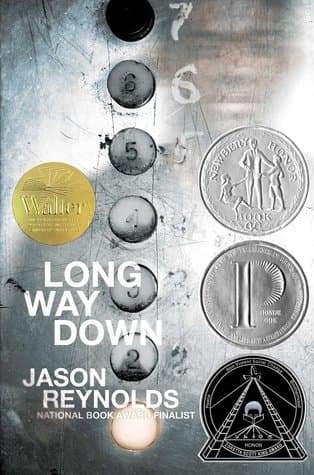
- Long Way Down
Jason Reynolds
4.3 (58k) average on GoodreadsYoung AdultA poignant exploration of grief, revenge, and the cycle of violence through a young Black man's internal monologue.
- Harry Potter and the Sorcerer's Stone
J.K. Rowling
4.5 (7M) average on GoodreadsFantasyRescued from a miserable life under the stairs, an orphaned boy discovers he's a wizard destined for a magical school, where he uncovers a dangerous secret tied to the dark wizard who murdered his parents.
- The Hunger Games
Suzanne Collins
4.3 (6.4M) average on GoodreadsFantasyIn a future where children fight to the death on live television, Katniss Everdeen volunteers for the arena, turning a death sentence into a fight for survival and a spark of rebellion.
- To Kill a Mockingbird
Harper Lee
4.3 (4.5M) average on GoodreadsHistorical FictionIn the 1930s Jim Crow South, Harper Lee writes about racial injustice, moral growth, and the quiet courage of a lawyer father, Atticus Finch, as seen through his young daughter's eyes.
- The Fault in Our Stars
John Green
4.2 (3.6M) average on GoodreadsYoung AdultA girl with a terminal illness finds her story rewritten when a charming boy with a similar past enters her life at a cancer support group, leading to a star-crossed romance.




Enjoyed the summary?
A summary gives you the shape of the book. The book itself has the detail, the examples and the voice.
Find Dear Martin on AmazonAs an Amazon Associate, BookBrief earns from qualifying purchases. How we're funded