
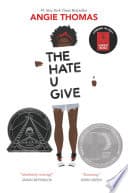
Synopsis
Covers the whole plot, including the ending.
- Difficulty
- Medium
- Pacing
- Moderate
- Mood
- Thought-provoking, Emotional, Intense, Resilient, Hopeful
- Read it if
- You want a powerful, timely story about racial injustice, police brutality, and a young woman finding her voice amidst tragedy. Ideal for those interested in social commentary, character-driven narratives, and themes of identity and activism.
- Skip it if
- You prefer lighthearted stories without intense social or racial conflict, or if you are uncomfortable with themes of violence and grief.
The Hate U Give Plot Summary
Covers the whole plot, including the ending.
A Party, a Shooting, and Khalil's Death
Sixteen-year-old Starr Carter lives a double life, attending a prep school, Williamson, while living in the poor, mostly Black neighborhood of Garden Heights. She goes to a party in Garden Heights with her childhood friend, Khalil Harris. A fight starts, and Starr and Khalil leave together. While driving home, a white police officer, One-Fifteen, pulls them over. Khalil is told to get out of the car, and while reaching for his hairbrush, which One-Fifteen thinks is a gun, he is shot three times and killed in front of Starr. Starr is traumatized, forced to watch Khalil die while the officer keeps his gun pointed at her.
The Aftermath and Starr's Silence
The time right after Khalil's death is chaotic. Starr's parents, Maverick and Lisa, try to protect her, but the news spreads fast. The media portrays Khalil as a drug dealer and gang member after his death, which overshadows the unfairness of his death. Starr is the only witness and feels much pressure, not only from her family and the community but also from the District Attorney's office. She attends Khalil's funeral, where a local activist, April Ofrah, offers support and encourages her to testify. Starr hesitates, fearing for her safety and what might happen if she speaks out against a police officer.
Finding Her Voice and the Grand Jury
Starr's inner struggle grows as she moves between her two worlds: Williamson, where her friends, Hailey and Maya, are mostly unaware or insensitive to racial tensions, and Garden Heights, where the community wants justice for Khalil. After much thought and encouragement from her family, especially her father, Maverick, Starr decides to testify before the grand jury. She works with April Ofrah to prepare her statement, reliving the traumatic event many times. This process makes Starr confront her own identity and the racial injustices in her society, slowly finding her voice.
The Grand Jury's Decision and Community Outrage
The grand jury announces its decision: Officer One-Fifteen will not be charged with Khalil's murder. This news causes much anger and frustration in Garden Heights. Protests become riots, with residents clashing with police. Starr, along with her family and friends, takes part in these demonstrations. During one violent protest, a tear gas canister is thrown, and Starr's brother, Sekani, picks it up, causing a tense situation. Maverick protects Sekani, stopping the immediate danger, but the unfairness of the verdict makes Starr more determined to fight for change.
Confrontation and Betrayal at Williamson
At Williamson, Starr feels more isolated and misunderstood. Her friends, Hailey and Maya, make racially insensitive comments about Khalil and the protests. This ends with Hailey unfollowing Starr's Tumblr and making a racist remark about fried chicken. Starr finally confronts Hailey, calling her out for her prejudice and lack of understanding, leading to a strong argument and the end of their friendship. Maya, though at first unsure, supports Starr. This confrontation shows Starr that her Williamson world cannot truly understand her experiences in Garden Heights.
King Lords' Retaliation and Family Danger
King, the gang leader who had been dealing drugs with Khalil, sees Starr's testimony as a betrayal and a threat to his operations. He retaliates by burning down Maverick's grocery store, which is important to the community and the family's income. This violence directly endangers Starr and her family, making them temporarily stay at their Uncle Carlos's house. The incident shows the complex and dangerous web of gang violence, poverty, and police brutality in Garden Heights, further showing the risks Starr takes by speaking out.
The Final Protest and Starr's Public Speech
Despite the danger, Starr will not be silent. She joins another large protest in Garden Heights, which turns violent as police arrive in riot gear. Starr, along with Chris, Seven, and DeVante, finds herself in the middle of the chaos. Inspired by her father and the memory of Khalil, Starr bravely climbs on top of a car and speaks to the crowd using a megaphone. She passionately tells about Khalil's death, exposes the systemic racism, and encourages the community to keep fighting for justice, saying that Khalil's life mattered.
Confronting King and Community Unity
During the protest, King's house is set on fire. Starr and her family, along with DeVante and other community members, confront King. DeVante, who had been working for King and saw his illegal activities, gives important information to the police. The community, tired of King's control, stands together, and King is arrested. This event is a turning point for Garden Heights, as the community takes back its power and begins to heal from the influence of gang violence, offering some hope for a safer future.
Moving Forward, But Not Forgetting
Afterward, Maverick begins rebuilding his store, and the family starts to deal with the trauma and look to the future. Starr realizes that while the immediate fight for Khalil's justice may be over, the larger fight against systemic racism and police brutality continues. She promises to keep using her voice and experiences to advocate for change, understanding that her journey has just begun. Starr accepts the pain and loss but embraces her role as an activist, ready to face future challenges and ensure that no other child in Garden Heights suffers Khalil's fate.
The Hate U Give Characters
Starr Carter
Protagonist
A sixteen-year-old Black girl navigating two distinct worlds after witnessing her friend's murder.
Starr is the central character, a perceptive and resilient teenager who struggles with her identity, caught between her impoverished, predominantly Black neighborhood of Garden Heights and her affluent, predominantly white prep school, Williamson. After witnessing the fatal shooting of her childhood friend, Khalil, by a police officer, Starr is forced to confront systemic racism, police brutality, and the complexities of her community. She grapples with fear, grief, and the immense pressure to speak out, ultimately finding her voice and becoming an activist for justice.
Relationships: Khalil Harris (childhood best friend, victim of police brutality); Maverick Carter (father, mentor, community leader); Lisa Carter (mother, nurse, protector); Seven Carter (older half-brother, protective); Sekani Carter (younger brother); Chris (white boyfriend, supportive); Hailey Grant (white prep school friend, becomes antagonistic); Maya Yang (Asian prep school friend, eventually supportive); Uncle Carlos (maternal uncle, police officer, surrogate father figure); April Ofrah (activist, legal counsel, mentor)
Maverick Carter
Supporting
Starr's father, a former gang member turned community activist and grocery store owner.
Maverick is Starr's father, a strong and principled man with a complex past. He was formerly incarcerated for gang activity, which he views as a sacrifice to protect his family. Now a reformed man, he owns a local grocery store in Garden Heights, which serves as a community hub. Maverick instills strong values in his children, teaching them about Black history and identity. He is fiercely protective of his family and encourages Starr to find her voice and stand up for what is right, even when it's dangerous.
Relationships: Starr Carter (daughter, whom he guides and protects); Lisa Carter (wife, strong partnership); Seven Carter (son, whom he respects and trusts); Sekani Carter (son, whom he cherishes); King (former rival, antagonist)
Lisa Carter
Supporting
Starr's mother, a pragmatic and protective nurse who prioritizes her children's safety.
Lisa is Starr's mother, a pragmatic and intelligent woman who works as a nurse. She is the anchor of the family, providing stability and emotional support. Lisa is fiercely protective of her children, particularly Starr, and initially encourages her to remain silent about Khalil's shooting to ensure her safety. She often acts as the voice of reason, balancing Maverick's more impassioned approach. Despite her fears, she ultimately supports Starr's decision to speak out, demonstrating her unwavering love and belief in her daughter.
Relationships: Starr Carter (daughter, whom she protects and supports); Maverick Carter (husband, partner in parenting); Uncle Carlos (brother, confidante)
Khalil Harris
Mentioned
Starr's childhood best friend, whose fatal shooting by police ignites the story's conflict.
Khalil is Starr's childhood best friend and the catalyst for the novel's events. He is portrayed as a young man from Garden Heights, who, despite having aspirations, was drawn into drug dealing to help his sick grandmother and pay off debts to King. His death at the hands of a white police officer, One-Fifteen, is the central tragedy. The media's portrayal of him as a thug contrasts sharply with Starr's memories of their shared innocent childhood, highlighting the dehumanization of Black victims and the systemic biases against them.
Relationships: Starr Carter (childhood best friend); King (drug dealer, employer)
Uncle Carlos
Supporting
Starr's maternal uncle and a police detective, offering a nuanced perspective on law enforcement.
Uncle Carlos is Lisa's brother and a detective in the police force. He acts as a surrogate father figure to Starr, especially when Maverick was incarcerated. His presence in the police force provides a complex perspective on law enforcement, as he is both a loving family member and a representative of the system Starr is fighting against. He cares deeply for Starr and tries to protect her, but his loyalty to the force sometimes clashes with his family's experiences, leading to tension and important discussions about police conduct.
Relationships: Starr Carter (niece, whom he cares for deeply); Lisa Carter (sister); Maverick Carter (brother-in-law)
Chris
Supporting
Starr's white boyfriend from Williamson, who struggles to understand her world but offers unwavering support.
Chris is Starr's white boyfriend from Williamson. He is wealthy, kind, and genuinely loves Starr, but he initially struggles to fully grasp the racial complexities of her life in Garden Heights. Despite his privileged background, he makes an earnest effort to understand Starr's experiences and the injustices she faces. He proves to be a loyal and supportive partner, standing by her even when her Williamson friends abandon her, and even participating in the protests with her, demonstrating his commitment.
Relationships: Starr Carter (boyfriend, supportive and loving)
Seven Carter
Supporting
Starr's older half-brother, fiercely protective of his family and navigating his own complex family dynamics.
Seven is Starr's older half-brother, sharing a mother (Lisa) with Starr and Sekani, and a father (Maverick) with Kenya. He is fiercely protective of his sisters, Starr and Kenya, and his younger brother, Sekani. Seven often acts as a mediator and a source of strength within the family. He navigates the difficult relationship with his mother's other children and his biological father, King, while remaining loyal to the Carters. He is a constant presence of support for Starr throughout her ordeal.
Relationships: Starr Carter (half-sister, whom he protects); Maverick Carter (father); Lisa Carter (mother); King (biological father, antagonist); Kenya (half-sister)
King
Antagonist
The ruthless leader of the King Lords gang and the primary antagonist in Garden Heights.
King is the ruthless and feared leader of the King Lords gang in Garden Heights. He is responsible for much of the drug dealing and violence in the neighborhood, including Khalil's involvement in dealing. King exerts a powerful and dangerous influence over the community, and his actions directly threaten Starr and her family after she testifies. He represents the systemic issues of poverty and lack of opportunity that lead to gang involvement, but also the individual choice to perpetuate violence and fear.
Relationships: Khalil Harris (drug dealer, victim of his influence); Maverick Carter (former rival); Seven Carter (biological father)
Hailey Grant
Supporting
Starr's white prep school friend who reveals her underlying racism and insensitivity.
Hailey is one of Starr's best friends at Williamson Prep. Initially appearing supportive, her true colors are revealed through a series of racially insensitive comments and actions following Khalil's death. She makes jokes about Khalil's perceived gang affiliation, unfollows Starr's Tumblr, and makes a racist comment about fried chicken, demonstrating her ignorance and prejudice. Hailey represents the subtle, yet pervasive, racism that Starr encounters in her white world and the difficulty of bridging racial divides.
Relationships: Starr Carter (prep school friend, becomes antagonistic); Maya Yang (prep school friend)
April Ofrah
Supporting
A civil rights activist and lawyer who mentors Starr and encourages her to speak out.
April Ofrah is a civil rights activist and lawyer who becomes a crucial mentor and advocate for Starr. She recognizes the importance of Starr's testimony and provides her with legal guidance and emotional support throughout the grand jury process. April encourages Starr to find her voice and use it as a powerful tool for change, helping her understand the larger implications of Khalil's death and the systemic fight for justice. She empowers Starr to embrace her role as an activist.
Relationships: Starr Carter (client, mentee)
The Hate U Give Themes
Identity and Code-Switching
Starr's struggle with identity is central to the novel. She constantly code-switches between 'Starr Version 1' (the Garden Heights Starr) and 'Starr Version 2' (the Williamson Starr), changing her language, behavior, and even thoughts to fit different environments. This dual identity creates inner conflict and a feeling of not being true to herself. Khalil's death forces her to bring these two versions of herself together, finally embracing her full, authentic Black identity and refusing to make herself smaller for others. This is clear when she finally confronts Hailey, no longer code-switching.
“'Sometimes you can do everything right and things will still go wrong. The key is to never stop doing right.'”
Systemic Racism and Police Brutality
The novel directly addresses systemic racism and police brutality through Khalil's unfair death and its aftermath. The media's immediate negative portrayal of Khalil, the grand jury's failure to charge Officer One-Fifteen, and the police's aggressive response to protests all show the biases within the justice system and society. The book argues that racism is not just individual prejudice but a deeply ingrained system that disadvantages Black communities, as seen in the lack of accountability for One-Fifteen and the immediate assumption that Khalil was a criminal.
“'The truth is, what I saw in that alley was a kid. A human being. He was scared. We were all scared. And he deserved to live.'”
The Power of Voice and Activism
Starr's journey from silence to finding her voice shows activism. At first, fear and trauma make her quiet, but with guidance from her family, April Ofrah, and her own growing belief, she learns the importance of speaking truth to power. Her testimony, her public speech during the riot, and her commitment to continuing the fight show how individual voices, especially from marginalized communities, can start change and challenge injustice. Her voice is a tool against the silence that allows oppression to continue.
“'What's the point of having a voice if you're gonna be silent in those moments you shouldn't be?'”
Family and Community Bonds
The strength of family and community in Garden Heights is an important theme. The Carter family, despite their problems, provides a strong, loving, and supportive unit for Starr. Maverick's dedication to his community, Lisa's protective instincts, and Seven's loyalty all show how important these bonds are. The community of Garden Heights, though facing internal struggles like gang violence, unites in grief and protest for Khalil. This shows collective resilience and a shared desire for justice, especially when they work together against King.
“'Sometimes you have to make noise to be heard.'”
The Cycle of Poverty and Violence
The novel shows how poverty and lack of opportunity contribute to cycles of violence and crime in communities like Garden Heights. Khalil's decision to deal drugs to help his grandmother, King's strong influence over the neighborhood, and the general struggle for survival all show the social and economic factors that trap individuals in difficult situations. King burning Maverick's store, a symbol of community business, further shows how violence can hinder attempts at progress, continuing a destructive cycle.
“'The Hate U Give Little Infants F***s Everybody.'”
Plot Devices & Literary Techniques
First-Person Perspective
Provides intimate access to Starr's thoughts, emotions, and internal conflicts.
The entire story is narrated from Starr Carter's first-person point of view. This device is crucial for understanding her internal struggles with identity, trauma, and the pressure of being the sole witness. It allows readers to directly experience her code-switching, her fear, her grief, and her growing courage, making her journey deeply personal and empathetic. The reader sees the events unfold through her eyes, highlighting the subjective nature of truth and perception in the aftermath of a police shooting.
Code-Switching
Highlights the duality of Starr's life and the challenges of navigating different social environments.
Code-switching is a recurring behavioral device used by Starr. She consciously alters her speech patterns, vocabulary, and mannerisms when moving between Garden Heights and Williamson Prep. This device effectively illustrates the racial and class divides she experiences and the emotional toll of constantly having to adjust her identity to fit in. It underscores the theme of identity and the pressure to conform, showcasing the 'two Starrs' and the difficulty of integrating her authentic self in both worlds.
The Garden Heights/Williamson Divide
Symbolizes the racial and socio-economic segregation in American society.
The stark contrast between Garden Heights (Starr's predominantly Black, low-income neighborhood) and Williamson Prep (her predominantly white, affluent private school) serves as a significant plot device. This geographical and social divide highlights systemic inequalities, differing perspectives on race and justice, and Starr's internal conflict. It creates external conflict as Starr's friends from each world clash, and it forces Starr to confront which 'version' of herself she truly is, ultimately leading her to bridge these worlds through her activism.
Tupac Shakur's 'THUG LIFE' Acronym
Provides a thematic framework for understanding systemic oppression and its impact.
The acronym 'THUG LIFE' (The Hate U Give Little Infants F***s Everybody), coined by Tupac Shakur, is a central thematic and symbolic device. Khalil explains it to Starr before his death, and Maverick later reinforces its meaning. It articulates the novel's core message: the negative societal conditions and systemic oppression inflicted upon marginalized children (the 'hate u give little infants') ultimately harm everyone ('f***s everybody'), perpetuating cycles of poverty, violence, and despair. This phrase provides a powerful lens through which to interpret the events and motivations in the story.
The Hate U Give Quotes
“What's the point of having a voice if you're gonna be silent in those moments you shouldn't be?”
“Brave doesn't mean you're not scared. It means you go on even though you're scared.”
“Sometimes you can do everything right and things will still go wrong. The key is to never stop doing right.”
“The hate u give little infants fucks everybody.”
“I can't change where I come from or what I've been through, so why should I be ashamed of what makes me, me?”
“People like us in situations like this become hashtags, but they rarely get justice.”
“It's dope to be black until it's hard to be black.”
“Funny how it works with white kids though. It's dope to be black until it's hard to be black.”
“I've seen it happen over and over again: a black person gets killed just for being black, and all hell breaks loose.”
“You don't have to be a thug to be a threat.”
“At an early age I learned that people make mistakes, and you have to decide if their mistakes are bigger than your love for them.”
“I want to do more than survive. I want to thrive.”
“That's the problem. We let people say stuff, and they say it so much that it becomes okay to them and normal for us.”
“Once you've seen how broken someone is it's hard to stay mad at them.”
Quiz
10 questions on the plot and the characters. Each answer comes with a short explanation.
Question 1
What is the name of the fictional neighborhood where Starr Carter lives?
- Garden Heights
- Rosewood
- Maplewood
- Brookfield
Show answer
A. Garden Heights Starr lives in Garden Heights, a predominantly Black, low-income neighborhood that is central to the book's exploration of community, poverty, and racial tension.
Question 2
What event triggers the main conflict of the story?
- Starr's brother being arrested
- The police shooting of Khalil Harris
- A riot at Starr's school
- Starr's parents losing their jobs
Show answer
B. The police shooting of Khalil Harris Khalil Harris, Starr's childhood friend, is shot and killed by a police officer during a traffic stop, setting off the central plot about justice, activism, and racial violence.
Question 3
Where does Starr attend high school?
- Garden Heights High
- Williamson Prep
- Riverton Academy
- Eastside High
Show answer
B. Williamson Prep Starr attends Williamson Prep, a predominantly white, affluent private school, which highlights the code-switching she does between her home life in Garden Heights and her school environment.
Question 4
Why does Starr initially hesitate to speak out about Khalil's shooting?
- She fears retaliation from the police
- She is worried about her family's safety from gang violence
- She does not remember the details of the event
- She believes Khalil was at fault
Show answer
B. She is worried about her family's safety from gang violence Starr fears that speaking out could endanger her family, particularly due to threats from King, the local gang leader, who is involved with Khalil's past and the community's dynamics.
Question 5
What is the significance of the phrase 'Thug Life' in the book?
- It is a gang slogan used by King
- It refers to Tupac Shakur's concept that society's hate towards the poor cycles back
- It is a motto at Starr's school
- It is the title of a news report about Khalil
Show answer
B. It refers to Tupac Shakur's concept that society's hate towards the poor cycles back The phrase 'Thug Life,' inspired by Tupac Shakur, underpins the book's title and theme: 'The Hate U Give Little Infants F---s Everybody' (T.H.U.G. L.I.F.E.), illustrating how systemic racism and neglect harm communities and perpetuate cycles of violence.
Question 6
How does Starr's father, Maverick, contribute to the community?
- He is a police officer who advocates for reform
- He runs a grocery store and teaches Black empowerment
- He is a lawyer fighting Khalil's case
- He organizes protests at Williamson Prep
Show answer
B. He runs a grocery store and teaches Black empowerment Maverick owns a grocery store in Garden Heights and is a former gang member who now focuses on Black empowerment, teaching his children about their history and rights, which influences Starr's activism.
Question 7
What role does the character of Hailey play in Starr's life?
- She is Starr's supportive best friend from Garden Heights
- She is a white friend at Williamson Prep who often makes racially insensitive comments
- She is a journalist covering Khalil's case
- She is a relative who helps Starr's family during the crisis
Show answer
B. She is a white friend at Williamson Prep who often makes racially insensitive comments Hailey is one of Starr's friends at Williamson Prep whose microaggressions and dismissive attitude towards racial issues strain their friendship, highlighting themes of allyship and racial ignorance.
Question 8
What is the outcome of the grand jury investigation into Khalil's shooting?
- The officer is convicted of murder
- The officer is indicted but the case goes to trial
- No charges are filed against the officer
- The officer is suspended from duty
Show answer
C. No charges are filed against the officer The grand jury decides not to indict the officer, reflecting real-world issues of police accountability and sparking protests in Garden Heights, which pushes Starr to become more vocal.
Question 9
How does the book address the theme of code-switching?
- Through Starr adjusting her behavior between Garden Heights and Williamson Prep
- By having characters speak multiple languages
- Through the use of different narrative perspectives
- By depicting Starr's parents switching jobs
Show answer
A. Through Starr adjusting her behavior between Garden Heights and Williamson Prep Code-switching is a key theme shown through Starr's experience of altering her speech, interests, and demeanor to fit in at her predominantly white school versus her Black neighborhood, illustrating the pressures of navigating different racial and social environments.
Question 10
What pivotal action does Starr take towards the end of the book that symbolizes her growth?
- She moves away from Garden Heights permanently
- She gives a televised interview identifying herself as the witness to Khalil's shooting
- She joins a gang to protect her family
- She drops out of Williamson Prep
Show answer
B. She gives a televised interview identifying herself as the witness to Khalil's shooting Starr publicly reveals on television that she was the witness to Khalil's shooting, overcoming her fears and using her voice to demand justice, which marks her transformation from a hesitant observer to an activist.
The Hate U Give FAQ
What is 'The Hate U Give' about?
'The Hate U Give' follows Starr Carter, a 16-year-old Black girl who navigates between her poor, predominantly Black neighborhood of Garden Heights and her wealthy, predominantly white prep school. The story centers on Starr witnessing the fatal police shooting of her unarmed childhood friend Khalil Harris, and her journey to find her voice and seek justice while grappling with trauma, identity, and systemic racism.
Why should I read 'The Hate U Give'?
This book offers a powerful, timely exploration of police brutality, racial injustice, and code-switching through a relatable teenage protagonist. It combines gripping personal drama with social commentary, making complex issues accessible while highlighting themes of activism, community, and finding one's voice in the face of oppression.
What is the background/setting of 'The Hate U Give'?
The story is set in the fictional neighborhood of Garden Heights, a low-income, predominantly Black community plagued by gang violence and police surveillance, contrasted with Williamson Prep, Starr's affluent, predominantly white private school. This dual setting underscores Starr's constant code-switching and the racial divides in her life.
What are the most memorable quotes?
Key quotes include Khalil's explanation of 'Thug Life' ('The Hate U Give Little Infants Fucks Everybody'), Starr's realization 'Brave doesn't mean you're not scared. It means you go on even though you're scared,' and her father Maverick's advice 'Sometimes you can do everything right and things will still go wrong. The key is to never stop doing right.'
What writing style does the author use?
Angie Thomas employs a first-person narrative from Starr's perspective, using contemporary, authentic teen dialogue and vivid descriptions. The prose balances raw emotional intensity with moments of humor and warmth, making heavy themes accessible while maintaining a fast-paced, engaging plot.
What minor details add significant meaning?
Starr's obsession with Harry Potter—referencing characters like 'the Boy Who Lived'—parallels her own survival and hidden identity. The gardenias Maverick grows symbolize hope and resilience in Garden Heights, while the 'Fresh Prince of Bel-Air' theme song represents Starr's dual-world experience, much like Will Smith's character.
What are some subtle foreshadowing moments?
Early mentions of Khalil's grandmother's illness hint at his drug-dealing motivation to pay her medical bills. Starr's anxiety about speaking up at Williamson Prep foreshadows her struggle to testify about the shooting. Maverick's lessons on the Black Panthers and activism subtly prepare Starr for her eventual public stance.
What unexpected character connections exist?
King, the local gang leader, is revealed to have ties to both Khalil's death and Starr's family—he employs Starr's uncle Carlos, a police officer, highlighting complex loyalties. Hailey, Starr's white friend, initially seems supportive but later exposes deep-seated racial biases, straining their friendship.
What are unspoken character motivations?
Starr's mother Lisa pushes for a safer life partly due to unresolved trauma from Maverick's past incarceration. Chris, Starr's white boyfriend, seeks to understand her world out of genuine love but also guilt over his privilege. Khalil sold drugs not for greed but to support his grandmother, a detail often ignored in media portrayals.
What psychological complexities do characters exhibit?
Starr experiences PTSD-like symptoms—flashbacks, insomnia, and hypervigilance—after witnessing Khalil's death. Maverick balances fierce protectiveness with a reformed past, showing how trauma shapes parenting. DeVante, a gang member, displays vulnerability and a desire for redemption, complicating stereotypes.
What are the major emotional turning points?
Starr's decision to testify before the grand jury marks her shift from silence to activism. The riot in Garden Heights after the non-indictment of Officer One-Fifteen forces Starr to publicly claim her identity. Her confrontation with Hailey over racial microaggressions solidifies her self-worth beyond white approval.
How do relationship dynamics evolve?
Starr and Chris's relationship deepens as he educates himself on racial issues, moving from awkward support to genuine partnership. Starr's friendship with Hailey deteriorates due to Hailey's refusal to acknowledge her racism. Starr grows closer to her family, especially Maverick, as she embraces their activist roots.
Which parts remain ambiguous or open-ended?
The book leaves Khalil's full backstory—like his exact interactions with King—partly unexplored, emphasizing how victims are often reduced to stereotypes. The legal system's ultimate failure to indict Officer One-Fifteen is unresolved, mirroring real-world injustices and leaving readers to ponder systemic change.
What are controversial scenes or decisions?
Starr's initial silence about witnessing Khalil's shooting sparks debate on survivor's guilt versus moral duty. The portrayal of police—like Uncle Carlos's conflicted loyalty—critiques systemic issues without vilifying all officers. The riot scene is controversial, with some viewing it as destructive and others as a justified outburst of pain.
'The Hate U Give' ending explained: how it ends & what it means
The story ends with Starr publicly speaking her name at a protest, embracing her identity as an activist from Garden Heights. Khalil's death goes unpunished, but Starr finds purpose in community organizing. This underscores that systemic change requires sustained effort beyond legal outcomes, with hope rooted in collective action and voice.
About the author
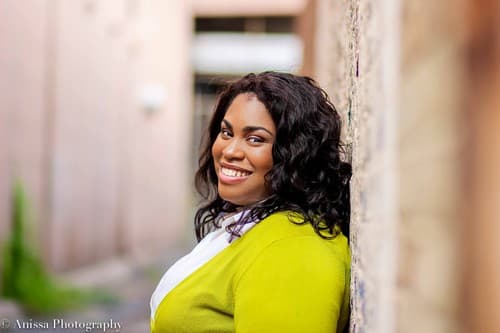
Angie Thomas is an American young adult author, best known for writing The Hate U Give (2017). Her second young adult novel, On the Come Up, was released on February 25, 2019.
Similar books
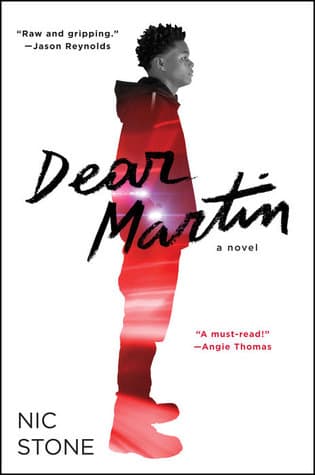
- Dear Martin
Nic Stone
4.4 (45k) average on GoodreadsYoung AdultExplores racial injustice and police brutality through the eyes of a Black teenager.
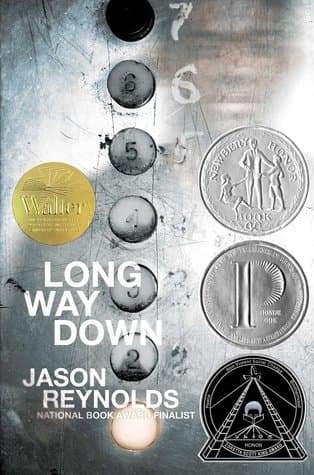
- Long Way Down
Jason Reynolds
4.3 (58k) average on GoodreadsYoung AdultAddresses gun violence and cycles of revenge within an urban setting.
- Harry Potter and the Sorcerer's Stone
J.K. Rowling
4.5 (7M) average on GoodreadsFantasyRescued from a miserable life under the stairs, an orphaned boy discovers he's a wizard destined for a magical school, where he uncovers a dangerous secret tied to the dark wizard who murdered his parents.
- The Hunger Games
Suzanne Collins
4.3 (6.4M) average on GoodreadsFantasyIn a future where children fight to the death on live television, Katniss Everdeen volunteers for the arena, turning a death sentence into a fight for survival and a spark of rebellion.
- To Kill a Mockingbird
Harper Lee
4.3 (4.5M) average on GoodreadsHistorical FictionIn the 1930s Jim Crow South, Harper Lee writes about racial injustice, moral growth, and the quiet courage of a lawyer father, Atticus Finch, as seen through his young daughter's eyes.
- The Fault in Our Stars
John Green
4.2 (3.6M) average on GoodreadsYoung AdultA girl with a terminal illness finds her story rewritten when a charming boy with a similar past enters her life at a cancer support group, leading to a star-crossed romance.




Enjoyed the summary?
A summary gives you the shape of the book. The book itself has the detail, the examples and the voice.
Find The Hate U Give on AmazonAs an Amazon Associate, BookBrief earns from qualifying purchases. How we're funded