

Synopsis
Covers the whole plot, including the ending.
- Difficulty
- Medium
- Pacing
- Moderate
- Mood
- Suspenseful, Dark, Analytical, Intriguing
- Read it if
- You enjoy forensic thrillers with strong female protagonists, intricate plots, and a blend of historical and contemporary mysteries.
- Skip it if
- You dislike detailed forensic descriptions or prefer lighthearted mysteries without dark themes.
Death du Jour Plot Summary
Covers the whole plot, including the ending.
The Nun's Empty Grave
Forensic anthropologist Dr. Temperance Brennan goes to the Sisters of the Sacred Heart convent in Montreal. The sisters are exhuming Sister Elisabeth Nicolet, a candidate for sainthood, but her grave is empty. Instead, Tempe finds a small, child-sized coffin with an infant's skeleton from the late 19th century. This discovery stops the canonization process and sparks Tempe's scientific curiosity. She begins looking through the convent's archives and historical records, seeking answers about Sister Elisabeth's real fate and the infant's identity. This historical mystery contrasts with her other, more immediate cases.
The Chalet Arson
At the same time, Tempe is called to a horrific scene: a burned-out chalet in the Laurentians. Inside, she finds multiple scorched and dismembered bodies, making identification and cause of death very difficult. The scene suggests arson and murder. Her initial examination shows that some victims were dismembered after death and that the fire was used to destroy evidence. Homicide Detective Andrew Ryan, with whom Tempe has a complicated personal and professional history, arrives to lead the police investigation. The gruesome deaths and deliberate destruction of evidence point to a sophisticated and brutal killer.
Intersecting Investigations
As Tempe identifies the chalet fire victims, she finds clues linking the modern murders to Sister Elisabeth's historical mystery. One chalet victim is Louise Charbonneau, who had connections to Professor Claude LaManche. LaManche is an expert in religious history and cults, and he had been researching Sister Elisabeth Nicolet. This overlap between a historical religious mystery and a contemporary mass murder raises suspicions for both Tempe and Ryan, suggesting a more complex conspiracy.
Professor LaManche and the Cult
Tempe and Ryan interview Professor Claude LaManche, a charismatic but enigmatic academic. LaManche admits knowing Louise Charbonneau and reveals his research into 'The Children of Light,' a religious commune led by Brother John. LaManche's research shows that Sister Elisabeth Nicolet may have been connected to an earlier version of this group or a similar spiritual movement. He also provides information about the commune's activities and isolated location. His knowledge and somewhat evasive manner make him a person of interest and open a new investigation into the commune.
The Carolina Connection
Further forensic analysis of the chalet victims, especially dental records and bone anomalies, leads Tempe to suspect a connection to a primate research facility in North Carolina. She travels to the facility, where she meets Dr. Kit Lowery, a primatologist. Tempe discovers that several chalet victims had worked at the facility, specifically with chimpanzees. She also finds evidence of questionable ethical practices and a strange, almost cult-like devotion among some staff to 'natural living' and a return to primal instincts, echoing themes from Professor LaManche's research into Brother John's commune.
Brother John's Influence
Tempe learns more about Brother John, the leader of 'The Children of Light' commune. He preaches a philosophy of returning to a 'state of grace' by shedding modern societal constraints, including conventional medicine. His teachings are influenced by distorted interpretations of religious texts and pseudo-scientific theories about human evolution and spirituality. Tempe realizes that Brother John has a loyal following, like a cult. She begins to suspect that his manipulative influence extends beyond the commune, possibly encompassing the chalet victims and even Sister Elisabeth's historical mystery.
The Commune Raid
Armed with warrants, Ryan and his team, with Tempe, raid Brother John's secluded commune. The raid uncovers a grim scene: evidence of ritualistic practices, crude medical experiments, and more human remains, including those of children. It becomes clear that Brother John has been experimenting on his followers, denying them proper medical care, and possibly orchestrating their deaths under the guise of spiritual purification. The discovery of multiple graves solidifies the commune as the center of the modern murders and confirms the horrific extent of Brother John's depravity.
Sister Elisabeth's Fate Revealed
Through careful forensic analysis of the remains at the commune and research into historical documents, Tempe finally pieces together Sister Elisabeth Nicolet's fate. Sister Elisabeth, a progressive and empathetic nun, had secretly helped a young, pregnant woman from the community who was ostracized for her pregnancy. The infant in Sister Elisabeth's grave was likely this woman's child. Sister Elisabeth herself was not canonized because she had left the convent to join an early, proto-commune led by a charismatic figure who was an ancestor or ideological predecessor to Brother John. She died under mysterious circumstances, likely at the hands of this manipulative leader. Her death was covered up to maintain the commune's secrecy and the leader's authority.
The Confrontation and Capture
The evidence points to Brother John as the orchestrator of the chalet murders and the deaths at the commune. Tempe and Ryan track him to a remote location, where they confront him. Brother John, a charismatic but disturbed individual, tries to justify his actions with his twisted philosophy, believing he is guiding his followers to a higher plane of existence. A tense standoff follows, during which Brother John tries to evade capture, but Ryan and his team apprehend him. His capture ends the immediate threat from his commune.
Unraveling the Conspiracy
With Brother John in custody, the full scope of his network and the conspiracy begins to unravel. It becomes clear that Professor LaManche, while not directly involved in the murders, had a deeper, more manipulative connection to Brother John than he initially let on, possibly exploiting the commune for his own academic or ideological purposes. Other followers who aided Brother John in his crimes are also identified and apprehended. The investigation reveals a long history of manipulation, abuse, and murder, spanning generations and showing the enduring power of charismatic cult leaders over vulnerable individuals.
Aftermath and Reflection
After the case, Tempe reflects on the disturbing similarities between the historical and modern mysteries. Both involved charismatic leaders exploiting faith and vulnerability, leading to tragic outcomes. The case challenges her scientific rationalism with the irrationality of human belief and depravity. The emotional toll of dealing with such horrific crimes, especially those involving children and the systematic abuse of trust, weighs heavily on her. She considers the human need for belonging and meaning, and how easily it can be twisted by those who seek power and control.
Death du Jour Characters
Dr. Temperance Brennan
Protagonist
A highly skilled forensic anthropologist who solves complex cases with scientific rigor and personal intuition.
Dr. Temperance 'Tempe' Brennan is the forensic anthropologist for the Province of Quebec, a brilliant and dedicated scientist with a sharp mind and an often-sarcastic wit. She is driven by a profound commitment to truth and justice, using her expertise in osteology to give voices to the dead. While professionally detached, she is deeply affected by the human suffering she encounters, especially when children are involved. She often struggles to balance her demanding career with her personal life, including her complicated relationship with Detective Ryan and her daughter, Katy.
Relationships: Andrew Ryan (Complicated romantic and professional partnership); Katy Brennan (Daughter, often a source of concern and love); Dr. Kit Lowery (Professional colleague, initially contentious, later collaborative)
Detective Andrew Ryan
Supporting
A Montreal Homicide Detective, Tempe's on-again, off-again romantic interest and professional partner.
Andrew Ryan is a seasoned homicide detective with the Montreal police force. He is intuitive, often relying on gut feelings and street smarts, which sometimes puts him at odds with Tempe's purely scientific approach. Despite their professional differences and personal complexities, he respects Tempe's abilities and relies on her expertise. He is protective of her, yet also capable of challenging her, making their dynamic both tense and effective. Ryan is dedicated to his work, often sacrificing personal comfort for the pursuit of justice.
Relationships: Dr. Temperance Brennan (Complicated romantic and professional partnership)
Professor Claude LaManche
Supporting
A charismatic and controversial academic specializing in religious history and cults.
Professor Claude LaManche is an expert in religious movements and cults, particularly those with historical roots in Quebec. He is intelligent and articulate, but also somewhat enigmatic and evasive. LaManche's research into Sister Elisabeth Nicolet and 'The Children of Light' commune makes him a key figure in the investigation, providing crucial information while also raising suspicions about his own potential involvement or motivations. He represents the academic fascination with, and sometimes exploitation of, fringe spiritual groups.
Relationships: Brother John (Subject of academic research, possibly an ideological connection); Louise Charbonneau (Former student/associate, one of the chalet victims)
Brother John
Antagonist
The manipulative and dangerous leader of 'The Children of Light' commune.
Brother John is the charismatic and deeply disturbed leader of 'The Children of Light' commune. He preaches a twisted philosophy of spiritual purity and a return to nature, which he uses to manipulate and control his followers. He denies them conventional medical care, encourages extreme practices, and is responsible for multiple deaths, both historically and in the present day. He embodies the dangers of unchecked charismatic authority and religious fanaticism, believing himself to be a messianic figure.
Relationships: Professor Claude LaManche (Subject of academic research, ideological predecessor); Sister Elisabeth Nicolet (Ideological predecessor to his cult, linked through historical context)
Sister Elisabeth Nicolet
Mentioned
A 19th-century nun whose empty grave sparks the historical mystery.
Sister Elisabeth Nicolet is a historical figure, a nun from the 19th century whose empty grave is the initial catalyst for Tempe's investigation. She is a candidate for sainthood, but the truth of her life and death turns out to be far more complex and tragic than the convent's records suggest. She represents a progressive and compassionate spirit who likely sought to help those marginalized by society, ultimately leading to her entanglement with an early cult-like group and her disappearance.
Relationships: The infant in her grave (A child she helped or was connected to); Early cult leader (Her captor/manipulator)
Dr. Kit Lowery
Supporting
A primatologist at a North Carolina research facility with questionable ethical practices.
Dr. Kit Lowery is a primatologist at a research facility in North Carolina. She is initially defensive and somewhat hostile towards Tempe, but eventually provides crucial information about the victims from the chalet fire, many of whom had worked at her facility. Lowery's facility has a unique, almost insular culture, with some staff members exhibiting an unusual devotion to the 'natural' way of life, hinting at a connection to Brother John's philosophy. She represents the scientific community grappling with ethical boundaries.
Relationships: Dr. Temperance Brennan (Professional colleague, initially adversarial)
Louise Charbonneau
Mentioned
One of the chalet victims, whose connections link the modern and historical mysteries.
Louise Charbonneau is one of the victims found at the burned-out chalet. Her identification is a crucial breakthrough in the case, as she had connections to both Professor LaManche and, indirectly, to Brother John's commune. She represents the vulnerable individuals drawn into the orbit of charismatic leaders, becoming victims of their manipulative schemes. Her death serves as a key connecting point between the seemingly disparate investigations.
Relationships: Professor Claude LaManche (Acquaintance/associate); Brother John (Follower of his teachings)
Death du Jour Themes
The Dangers of Charismatic Authority and Cults
The novel explores how charismatic leaders, religious or pseudo-scientific, can manipulate and control vulnerable individuals, leading to tragic and deadly outcomes. Brother John is an example, using a distorted blend of spirituality and 'natural' living to justify abuse, neglect, and murder in his commune. This theme is mirrored in Sister Elisabeth's historical narrative, who likely fell prey to a similar manipulative figure. The chalet victims are modern examples of individuals drawn into such a destructive orbit, showing the enduring human susceptibility to such influence.
“'Faith, Tempe. It can move mountains. Or it can bury bodies.'”
The Interplay of Faith and Science
Tempe, a scientist, faces cases rooted in faith, both historical and contemporary. The investigation into Sister Elisabeth's potential sainthood clashes with the forensic reality of an empty grave and an infant's skeleton. Similarly, Brother John's cult blends pseudo-science with distorted religious dogma. Tempe must navigate these intersections, using scientific rigor to uncover truths hidden by belief systems, while acknowledging the powerful, sometimes destructive, role faith plays in human lives. The novel questions where genuine spiritual conviction ends and dangerous delusion begins.
“'Bones don't lie. Beliefs, however, are another matter entirely.'”
The Echoes of the Past in the Present
A central theme is how historical events and patterns of human behavior continue to influence and appear in the present. The historical mystery of Sister Elisabeth Nicolet is not just a parallel narrative but directly informs and connects with the modern-day murders at the chalet and the commune. The novel suggests that the manipulative tactics of charismatic leaders, the vulnerability of individuals seeking belonging, and the cover-up of inconvenient truths are recurring patterns across generations. Tempe's work is often about uncovering these historical echoes to understand contemporary crimes.
“'Sometimes, the dead reach out across centuries to tell their stories.'”
The Fragility of Life and the Search for Meaning
The gruesome nature of the deaths, particularly those involving children and the systematic denial of medical care within the commune, highlights the fragility of human life. Many of Brother John's followers are presented as individuals searching for meaning, community, or an escape from modern society, only to find exploitation and death. The novel explores the human need for belonging and purpose, and how this fundamental desire can be tragically exploited by those who promise salvation but deliver destruction. Tempe's role is to restore dignity to these lost lives by uncovering their truth.
“'In the end, all that's left are bones and the stories they tell of lives lived, and sometimes, lives taken.'”
Plot Devices & Literary Techniques
Dual Narrative / Intertwined Mysteries
Two seemingly separate mysteries – one historical, one modern – are gradually revealed to be interconnected.
The novel employs a dual narrative structure, presenting two distinct mysteries: the historical disappearance of Sister Elisabeth Nicolet and the contemporary mass murder at the chalet. Initially, these seem unrelated, providing a contrast for Tempe's work. However, as the plot progresses, clues emerge that inextricably link the two. This device builds suspense by making the reader wonder how the past influences the present, ultimately revealing a multi-generational pattern of manipulation and violence orchestrated by similar charismatic figures.
Red Herrings
Misleading clues and characters are introduced to divert attention from the true perpetrators and motives.
The narrative strategically introduces several red herrings. Professor LaManche, with his enigmatic demeanor and deep knowledge of cults, is initially presented as a potential suspect, diverting attention from Brother John's full depravity. The focus on the primate research facility and its ethical ambiguities also serves as a partial misdirection, making the reader question the motives of Dr. Lowery or her colleagues before the full scope of Brother John's influence is revealed. These diversions heighten the mystery and keep the reader guessing.
Forensic Science as a Revealer of Truth
The systematic application of forensic anthropology and other sciences to uncover hidden truths.
Dr. Brennan's forensic expertise is not just a plot element but a central device for unraveling the mysteries. Her ability to 'read' bones, identify victims from fragmented remains, and deduce circumstances of death is crucial. Beyond individual identifications, forensic science is used to piece together the broader narrative – distinguishing between natural death and murder, identifying ritualistic practices, and even dating remains to connect the historical and modern crimes. It functions as the ultimate arbiter of truth against human deception and belief.
The Unreliable Narrator (Subtle)
While Tempe is largely reliable, the narrative occasionally highlights her subjective interpretations and emotional responses.
While Dr. Brennan is a highly rational and observant narrator, the device of subtle unreliability is used to filter events through her personal biases, scientific frustrations, and emotional reactions. Her often-sarcastic internal monologue and her complicated relationship with Ryan color her perceptions. This allows the author to explore Tempe's inner world and humanize her, demonstrating that even a scientist's objective observations are processed through a subjective lens, particularly when dealing with horrific crimes that challenge her worldview.
Death du Jour Quotes
“The dead don't care how they're handled. But the living do.”
“There are no accidents in forensic anthropology. Only unanswered questions.”
“Grief is a strange beast. It can make you do things you never thought you would.”
“Sometimes the smallest detail holds the biggest secret.”
“You can never truly escape your past. It always finds a way to catch up.”
“The truth is rarely simple, and almost never pretty.”
“Even in death, there's a story to be told.”
“Fear is a powerful motivator. It can make people do terrible things, or incredibly brave ones.”
“Skeletal remains don't lie. They tell the unvarnished truth.”
“Justice is a slow-moving train, but it eventually reaches its destination.”
“The human capacity for cruelty never ceases to amaze me.”
“Sometimes the obvious answer is the right one. And sometimes it's a carefully constructed lie.”
“Every bone has a tale. Every fracture, every scar, every alteration.”
“You never really know someone until you see how they react under pressure.”
Quiz
10 questions on the plot and the characters. Each answer comes with a short explanation.
Question 1
Where does Dr. Temperance Brennan initially dig for the corpse of Sister Elisabeth Nicolet?
- A remote island in Carolina
- A Montreal cemetery
- The recesses of a decaying church in Montreal
- A burning chalet
Show answer
C. The recesses of a decaying church in Montreal The synopsis states that Tempe 'digs for a corpse where Sister Elisabeth Nicolet...should lie in her grave' and that 'A strange, small coffin, buried in the recesses of a decaying church, holds the first clue'.
Question 2
What is Sister Elisabeth Nicolet a candidate for?
- A historical preservation award
- Sainthood
- A medical study
- Re-interment in a new crypt
Show answer
B. Sainthood The text explicitly states Sister Elisabeth Nicolet is 'now a candidate for sainthood'.
Question 3
Who joins Dr. Temperance Brennan in the arson investigation at the burning chalet?
- An enigmatic and controversial professor
- A member of a mysterious commune
- Homicide Detective Andrew Ryan
- A colleague from the primate colony
Show answer
C. Homicide Detective Andrew Ryan The synopsis states, 'Homicide Detective Andrew Ryan, with whom Tempe has a combustive history, joins her in the arson investigation.'
Question 4
What is Dr. Temperance Brennan's professional role?
- Homicide Detective
- Forensic Anthropologist
- Arson Investigator
- Primatologist
Show answer
B. Forensic Anthropologist The synopsis identifies Dr. Temperance Brennan as 'Forensic Anthropologist for the Province of Quebec'.
Question 5
What is found in the 'strange, small coffin' instead of Sister Elisabeth Nicolet's remains?
- A collection of ancient religious artifacts
- Another, unidentified body
- The text doesn't explicitly state what is found, only that it holds 'the first clue to the cloistered nun's fate'.
- A diary belonging to Sister Elisabeth
Show answer
C. The text doesn't explicitly state what is found, only that it holds 'the first clue to the cloistered nun's fate'. The synopsis mentions a 'strange, small coffin' holding 'the first clue to the cloistered nun's fate', implying her remains are not where they should be, but it doesn't specify what *is* inside the coffin itself, only its significance.
Question 6
What kind of history do Dr. Temperance Brennan and Homicide Detective Andrew Ryan share?
- A long-standing professional rivalry
- A mutually respectful academic partnership
- A 'combustive history'
- A previous successful joint investigation
Show answer
C. A 'combustive history' The synopsis describes their relationship as having a 'combustive history', suggesting a complex and potentially volatile dynamic.
Question 7
Besides the investigation into Sister Elisabeth Nicolet, what other primary case does Tempe become involved in?
- A missing persons case from the primate colony
- A series of thefts from the decaying church
- An arson investigation involving scorched and twisted bodies at a burning chalet
- A cold case related to the enigmatic professor
Show answer
C. An arson investigation involving scorched and twisted bodies at a burning chalet The synopsis states, 'The puzzle surrounding Sister Elisabeth's life and death provides a welcome contrast to discoveries at a burning chalet, where scorched and twisted bodies await Tempe's professional expertise.'
Question 8
Which of the following locations is NOT mentioned as being part of the wider investigation that Tempe and Ryan are drawn into?
- An enigmatic and controversial professor's world
- A mysterious commune
- A secret government laboratory
- A primate colony on a Carolina island
Show answer
C. A secret government laboratory The synopsis explicitly mentions 'the worlds of an enigmatic and controversial professor, a mysterious commune, and a primate colony on a Carolina island.' A secret government laboratory is not mentioned.
Question 9
What specific environmental condition is highlighted at the beginning of the book's setting in Montreal?
- A humid summer heatwave
- A severe earthquake
- The bitter cold of a Montreal winter
- Heavy, incessant rainfall
Show answer
C. The bitter cold of a Montreal winter The opening sentence describes Tempe being 'Assaulted by the bitter cold of a Montreal winter'.
Question 10
The synopsis implies a thematic contrast between which two main investigative threads?
- Ancient history and modern technology
- A historical, cloistered nun's fate and a contemporary, violent arson case
- Urban crime and rural mysteries
- Individual psychology and group dynamics
Show answer
B. A historical, cloistered nun's fate and a contemporary, violent arson case The synopsis states, 'The puzzle surrounding Sister Elisabeth's life and death provides a welcome contrast to discoveries at a burning chalet...', clearly setting up a contrast between the historical, religious mystery and the modern, violent crime.
Death du Jour FAQ
What is the central mystery Dr. Temperance Brennan investigates in 'Death du Jour'?
Dr. Temperance Brennan is initially tasked with exhuming the remains of Sister Elisabeth Nicolet, a candidate for sainthood, only to find a strange, small coffin in her grave. Concurrently, she investigates a horrific arson case involving multiple charred bodies at a chalet, which quickly becomes the primary focus.
Who is Sister Elisabeth Nicolet and why is her grave significant?
Sister Elisabeth Nicolet was a cloistered nun who died over a century ago and is now a candidate for sainthood. Her grave becomes significant when Tempe discovers it contains a child's coffin instead of the nun's remains, suggesting a long-hidden secret about her life and possible death.
What is the connection between the chalet fire and Sister Elisabeth Nicolet?
The initial connection is not immediately apparent, but as Tempe investigates the chalet fire victims, she uncovers links to a commune and a controversial professor. These connections eventually lead back to a secret society with historical ties that may shed light on Sister Elisabeth's true fate and the events surrounding her disappearance.
Who is Homicide Detective Andrew Ryan and what is his role?
Homicide Detective Andrew Ryan is a Montreal detective with whom Tempe has a complex and 'combustive history.' He becomes her partner in the arson investigation, providing law enforcement support and often clashing with Tempe's scientific approach while also developing their personal dynamic.
What kind of 'primate colony' is mentioned and how does it fit into the plot?
The investigation leads Tempe and Ryan to a primate colony on a Carolina island. This colony is linked to the controversial professor and the commune, suggesting scientific or ethical experiments that may be connected to the victims of the chalet fire and the broader conspiracy.
What specific forensic challenges does Tempe face with the chalet fire victims?
Tempe faces extreme challenges with the chalet fire victims due to their scorched and twisted state, making identification and cause of death difficult. She must meticulously analyze skeletal remains, dental records, and other subtle clues to reconstruct their identities and the circumstances of their gruesome fate.
How does Tempe's American background influence her experience in Montreal?
Tempe's American background often puts her at odds with Canadian customs and the French language, making her feel like an outsider. The 'bitter cold of a Montreal winter' also highlights a stark contrast to her presumed warmer origins, adding to her sense of displacement and resilience.
What is the nature of the 'combustive history' between Tempe and Ryan?
Their 'combustive history' implies a past filled with both professional tension and unresolved romantic or sexual chemistry. They challenge each other's methods and personalities, but their interactions often reveal a deeper respect and attraction beneath the surface, driving their dynamic throughout the investigation.
How does the 'enigmatic and controversial professor' contribute to the mystery?
The 'enigmatic and controversial professor' is a key figure who appears to be connected to both the commune and the primate colony. His research or beliefs likely provide the ideological or scientific foundation for the events unfolding, making him a central person of interest in understanding the motive behind the crimes.
What psychological impact does dealing with such gruesome cases have on Tempe?
Dealing with cases like the charred bodies at the chalet takes a significant psychological toll on Tempe. She often internalizes the horror, using her scientific detachment as a coping mechanism, but the emotional weight of identifying victims and understanding their suffering still affects her deeply.
Is Sister Elisabeth Nicolet a victim of foul play, or did she simply vanish?
The discovery of a child's coffin in her grave strongly suggests that Sister Elisabeth Nicolet was a victim of foul play or that her identity was deliberately concealed. The narrative implies a deeper conspiracy rather than a simple disappearance, prompting Tempe to uncover the truth of her fate.
What themes of secrecy and hidden pasts are explored in the book?
The book deeply explores themes of secrecy and hidden pasts through Sister Elisabeth's concealed identity and the commune's clandestine activities. It suggests that historical events and personal choices can have long-reaching, devastating consequences that eventually surface, demanding justice and truth.
How does Tempe's role as a forensic anthropologist differ from a traditional detective in this case?
As a forensic anthropologist, Tempe focuses on the scientific analysis of human remains to reconstruct events, identify victims, and determine causes of death. This contrasts with a traditional detective like Ryan, who focuses on interviewing suspects, gathering evidence from living sources, and building a legal case, creating a complementary investigative partnership.
What is the significance of the 'decaying church' setting for Sister Elisabeth's grave?
The 'decaying church' setting for Sister Elisabeth's grave adds to the atmosphere of forgotten history and moral decay. It symbolizes the crumbling of old secrets and institutions, hinting that the truth buried within its walls is finally ready to be unearthed and exposed.
How does the cold Montreal winter serve as a backdrop for the narrative?
The 'bitter cold of a Montreal winter' serves as a harsh and unforgiving backdrop, mirroring the grim and chilling nature of the crimes Tempe investigates. It amplifies the sense of isolation and hardship, making the pursuit of truth feel even more arduous and relentless.
Are there any ethical dilemmas presented by the controversial professor's work or the commune?
The controversial professor's work, especially in connection with the primate colony and the commune, likely raises significant ethical dilemmas. These could involve unauthorized human experimentation, genetic manipulation, or extreme ideological practices that cross moral and legal boundaries, driving the core conflict of the mystery.
How does Tempe balance her professional detachment with her personal emotional responses?
Tempe constantly struggles to balance her professional detachment, which is essential for her work, with her personal emotional responses to the brutality she witnesses. She often uses dark humor or focuses intensely on scientific details to maintain composure, but moments of vulnerability reveal her underlying empathy and distress.
What role does the 'mysterious commune' play in the overall conspiracy?
The 'mysterious commune' appears to be a central hub for the activities connected to the chalet fire victims and the controversial professor. It likely harbors secrets, provides a base for illicit operations, or serves as a gathering place for individuals involved in the larger conspiracy, making it a critical investigative target.
About the author

Kathy Reichs is an author and forensic anthropologist known for her crime fiction and thriller novels. Her notable works include "Déjà Dead," "Death du Jour," "Virals," "Bones to Ashes," "Devil Bones," and "Seizure," many of which feature her character Temperance Brennan, a forensic scientist. Reichs's writing often draws on her expertise in forensic science, blending real-life experiences with fictional narratives.
Similar books
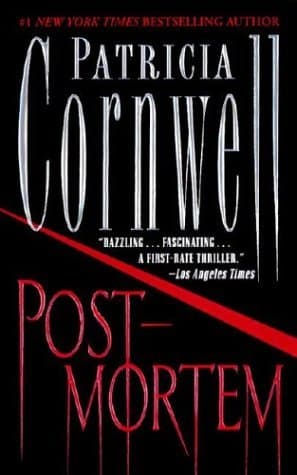
- Postmortem
Patricia Cornwell
4.0 (212k) average on GoodreadsThrillerFeatures a female medical examiner solving complex murders with forensic detail.
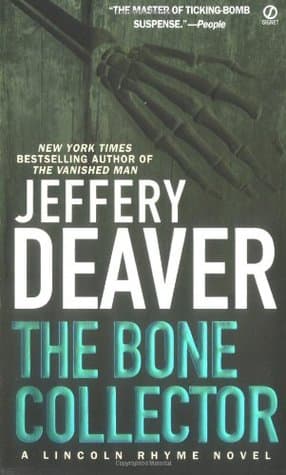
- The Bone Collector
Jeffery Deaver
4.2 (158k) average on GoodreadsThrillerInvolves a forensic expert using detailed analysis to track a serial killer.
- Body of Evidence
Patricia Cornwell
4.0 (68k) average on GoodreadsThrillerAnother Kay Scarpetta novel with intricate forensic investigation and suspense.
- The Likeness
Tana French
4.0 (126k) average on GoodreadsThrillerCompared to French's The Likeness, which delves deeply into psychological complexity and character-driven mystery, Reichs's focus remains more squarely on the scientific puzzle and the external pursuit of justice. French prioritizes atmosphere and internal conflict, often blurring lines of morality, while Reichs, in "Death du Jour," maintains a clearer distinction between good and evil, with forensic evidence as the ultimate arbiter of truth.
- Angels & Demons
Dan Brown
3.9 (2.7M) average on GoodreadsThrillerA Harvard symbologist races through Rome's ancient sites, deciphering cryptic clues to unmask the Illuminati and stop a vengeful plot to destroy the Vatican with a stolen antimatter weapon.
- Gone Girl
Gillian Flynn
4.1 (2.3M) average on GoodreadsThrillerA wife's sudden disappearance on her fifth anniversary reveals a web of lies and psychological warfare, exposing the secrets within a seemingly perfect marriage.




Enjoyed the summary?
A summary gives you the shape of the book. The book itself has the detail, the examples and the voice.
Find Death du Jour on AmazonAs an Amazon Associate, BookBrief earns from qualifying purchases. How we're funded