
Synopsis
Covers the whole plot, including the ending.
- Difficulty
- Medium
- Pacing
- Fast
- Mood
- Suspenseful, Gritty, Intense, Romantic
- Read it if
- You enjoy futuristic police procedurals with a strong romantic subplot, complex mysteries, and high stakes.
- Skip it if
- You dislike science fiction elements in your thrillers or prefer less graphic depictions of violence.
Delusion in Death Plot Summary
Covers the whole plot, including the ending.
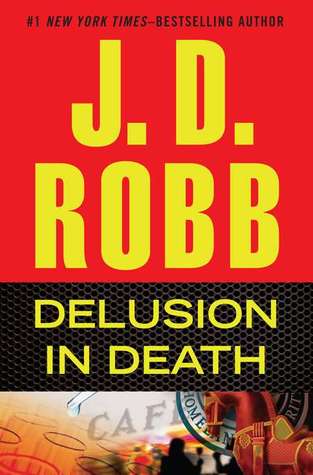
The Downside Bar Massacre
Detective Lieutenant Eve Dallas is called to The Downside, a bar owned by her husband Roarke, after a horrific incident leaves eighty people dead and many more injured. Witnesses describe a sudden onset of extreme paranoia, rage, and hallucinations, with many claiming to have seen monsters or swarms of insects. The scene is one of chaos, with victims having turned on each other in a frenzy of violence. Eve, alongside her partner Detective Peabody, begins the task of piecing together what happened, confronting the shocking reality of a mass murder without a clear motive or perpetrator. The inexplicable nature of the event immediately suggests something far more sinister than a typical crime.
Forensics and the 'Cocktail'
Dr. Mira, the police psychologist, and Chief Medical Examiner Morris confirm the presence of a powerful psychoactive cocktail in the victims' systems. This concoction, later identified as a blend of chemicals and illegal drugs, can induce temporary insanity, aggression, and vivid hallucinations. The discovery explains the bizarre witness testimonies and the uncharacteristic violence. Eve and her team realize they are dealing with a deliberate act of bioterrorism or chemical warfare, designed to cause widespread panic and death. The airborne nature of the agent makes the threat even more terrifying, as it could be deployed anywhere.
Roarke's Involvement and Corporate Connections
Roarke, disturbed by the attack on his property and the loss of life, launches his own investigation, focusing on corporate security and potential vulnerabilities. While he initially fears he might have been the target, the scale and nature of the attack suggest a broader agenda. He works closely with Eve, providing resources and insights from his network. His investigation reveals that a new, secure air filtration system was recently installed at The Downside, making it an unlikely target for an airborne attack unless the system itself was compromised or bypassed. This leads them to consider that the perpetrator had knowledge of Roarke's operations.
The Second Attack: Public Plaza
Despite increased vigilance, a second, smaller-scale attack occurs in a public plaza, replicating the symptoms and chaos of the Downside incident. This confirms Eve's fears: the perpetrator is not targeting Roarke specifically but is testing or deploying the agent in different environments. The second attack solidifies the understanding that the threat is airborne and could strike anywhere. The public is gripped by fear, and the authorities struggle to reassure them while trying to contain the panic. Eve feels the immense pressure of a killer operating with an invisible weapon, threatening society.
Identifying the Agent: 'Delusion'
Through collaboration, Dr. Mira, Morris, and their teams isolate and identify the specific psychoactive compound responsible for the attacks. They call it 'Delusion' due to its effect on perception and behavior. The compound is sophisticated, designed to spread rapidly through air and induce its effects almost instantaneously. Understanding its chemical makeup is the first step towards developing a countermeasure, but the immediate challenge remains identifying its source and the person or group behind its creation and deployment. The scientific community is horrified by this weapon.
The Suspect Pool Narrows
Eve and Peabody, following leads from Roarke's corporate investigation and their own forensics, begin to narrow down their suspect pool. They focus on individuals with advanced chemical and biological knowledge, particularly those who might have access to the resources needed to synthesize 'Delusion'. They also look for individuals with a history of grievances, radical ideologies, or a desire for chaos. The investigation leads them through academic and corporate circles, uncovering a network of disgruntled scientists and former employees who felt wronged by powerful corporations or the system. The challenge is identifying the one capable of such a heinous act.
The Architect of Chaos: Dr. Arnette
The investigation leads Eve to Dr. Cyrus Arnette, a brilliant but embittered scientist who had been disgraced and fired from a prominent research institution years prior. Arnette harbored resentment against society, believing it to be corrupt and deserving of a 'reset' through manufactured chaos. He saw his creation, 'Delusion,' as the tool to expose humanity's savagery and bring about a new world order. His motive is not profit or personal gain, but a twisted ideological conviction. He planned the attacks, using his scientific genius to craft the weapon and delivery system.
Uncovering the Delivery System
Eve and Roarke, using their combined resources, uncover Arnette's sophisticated delivery system. He wasn't relying on single-point deployments but had devised a method to disperse 'Delusion' through seemingly innocuous means. He had infiltrated various public utility systems, disguised the dispersal devices as common maintenance equipment, and planned to unleash a massive, simultaneous attack across the city. His plan was to create widespread, uncontrollable chaos, paralyzing the city and forcing society to collapse. The scale and ingenuity of his plan are terrifying, highlighting the depth of his delusion and hatred.
The Race Against Time
With the full scope of Arnette's plan revealed, Eve, Roarke, and the entire police force, along with federal agencies, launch a massive operation to locate and neutralize his dispersal devices. It's a race against time, as Arnette has set a deadline for his final, devastating attack. The team combs through schematics, surveillance footage, and intelligence, trying to predict Arnette's next move and find his hidden devices. The pressure is immense, as failure would mean untold casualties and the breakdown of societal order. Every second counts as they work to prevent a catastrophe.
Confrontation and Resolution
Eve tracks Arnette to his final lair, a hidden laboratory where he is overseeing the activation of his remaining devices. A tense confrontation ensues, with Arnette unrepentant and convinced of his actions. Eve, using her intellect and resolve, outmaneuvers him, preventing the final, city-wide dispersal. Arnette is apprehended, and his network of devices is neutralized just in time. The city breathes a sigh of relief, but the trauma of the attacks lingers. Eve reflects on the fragility of order and the insidious nature of delusion, even as justice is served.
Principal Figures
Eve Dallas
Protagonist
A tough and intuitive homicide detective haunted by her past.
Detective Lieutenant Eve Dallas is a highly skilled and dedicated homicide detective with the NYPSD. She is known for her sharp intellect, unwavering determination, and a deeply ingrained sense of justice. Despite a traumatic past, she has built a stable life with her husband, Roarke, and finds purpose in her work. Eve is often pragmatic and cynical, but beneath her tough exterior lies a profound empathy for victims. She is relentless in her pursuit of truth and order, especially when confronted with crimes that defy conventional explanation.
Relationships: Roarke (Husband, partner, and confidante); Mavis Freestone (Best friend and fashion designer); Detective Delia Peabody (Partner and protégé); Commander Whitney (Superior officer and mentor); Dr. Charlotte Mira (Police psychologist and friend)
Roarke
Supporting
Billionaire businessman and Eve's devoted husband, with a shadowy past.
Roarke is an Irish billionaire with a vast global empire and a mysterious, often illicit, past. He is fiercely intelligent, resourceful, and deeply devoted to Eve. While he operates outside the conventional bounds of law enforcement, his resources, connections, and keen analytical mind are invaluable to Eve's investigations. He is protective of Eve and will go to any lengths to support her, often blurring the lines between legal and illegal means to achieve justice. His ownership of The Downside bar places him intimately at the center of the initial attack.
Relationships: Eve Dallas (Wife, partner, and the center of his world); Summerset (Household manager and trusted confidante)
Detective Delia Peabody
Supporting
Eve's loyal and increasingly competent partner.
Detective Peabody is Eve's junior partner, known for her quirky personality, sharp mind, and unwavering loyalty. She has grown significantly under Eve's mentorship, developing into a capable and insightful detective. Peabody often provides a more grounded, relatable perspective, balancing Eve's intensity. She is dedicated to her work and committed to learning from Eve, often providing crucial insights and support during complex investigations. Her personal life, including her relationship with Detective McNab, often serves as a counterpoint to the grim realities of their work.
Relationships: Eve Dallas (Partner, mentor, and friend); Detective Ian McNab (Boyfriend and fellow officer)
Dr. Charlotte Mira
Supporting
The police psychologist and Eve's trusted confidante.
Dr. Mira is the NYPSD's resident police psychologist, a highly perceptive and empathetic professional. She serves as a crucial resource for Eve, helping her understand the psychological motivations behind crimes and the impact of trauma on victims and perpetrators. Mira often provides insights into the minds of the disturbed, offering psychological profiles that are vital to the investigation. She is also a trusted friend to Eve, offering emotional support and guidance, helping Eve navigate the darkest aspects of human nature without losing her own humanity.
Relationships: Eve Dallas (Friend and professional colleague)
Dr. Morris
Supporting
Chief Medical Examiner and forensic expert.
Dr. Morris is the Chief Medical Examiner for the NYPSD, a brilliant and meticulous forensic scientist. He is responsible for conducting autopsies and analyzing physical evidence, providing crucial scientific data that often breaks open Eve's cases. Morris is methodical and unflappable, even in the face of the most gruesome scenes. His expertise in toxicology and pathology is invaluable in identifying the chemical agent 'Delusion' and understanding its effects on the human body, providing the scientific backbone for the investigation.
Relationships: Eve Dallas (Professional colleague)
Commander Whitney
Supporting
Eve's superior officer and a steady hand in the NYPSD.
Commander Whitney is Eve's immediate superior, a seasoned and respected officer who trusts Eve's judgment implicitly. He provides the necessary authority and resources for Eve's investigations, often shielding her from bureaucratic interference. Whitney is a calming and authoritative presence, offering strategic guidance and maintaining order within the department, especially during times of crisis. He recognizes Eve's unique abilities and gives her the latitude she needs to pursue complex cases, even when they venture into uncharted territory.
Relationships: Eve Dallas (Superior officer and mentor)
Dr. Cyrus Arnette
Antagonist
A brilliant but deranged scientist seeking to 'reset' society through manufactured chaos.
Dr. Cyrus Arnette is the brilliant but deeply disturbed scientist responsible for creating and deploying 'Delusion'. He was once a respected figure in the scientific community but was disgraced and fired, leading to a profound resentment against society. Arnette believes humanity is corrupt and that a 'reset' through widespread chaos and violence is necessary to usher in a new, purer world. He is highly intelligent, meticulous, and utterly convinced of the righteousness of his twisted ideology, viewing himself as a societal cleanser rather than a mass murderer. His scientific genius is matched only by his profound delusion.
Summerset
Supporting
Roarke and Eve's meticulous and somewhat curmudgeonly household manager.
Summerset is the impeccably dressed and highly efficient household manager for Roarke and Eve. While often appearing formal and reserved, he possesses a deep affection for both of them, particularly Eve, whom he initially disliked but has grown to cherish. He manages their domestic affairs with precision and provides a grounding presence in their often chaotic lives. Summerset is a source of quiet strength and care, ensuring that Eve and Roarke have a sanctuary to return to, even amidst the most harrowing cases.
Relationships: Roarke (Employer and long-time associate); Eve Dallas (Employer, whom he deeply cares for)
Themes & Insights
The Fragility of Social Order
The novel shows how easily social order can collapse under the influence of fear and manufactured chaos. The Downside massacre, where ordinary people turn on each other, highlights the thin veneer of civilization. The subsequent public panic and the threat of widespread attacks underscore the constant vigilance required to maintain societal stability. Eve's fight against Arnette is not just against a killer, but against a force that seeks to unravel society, forcing humanity to confront its primal fears and aggression.
“One day, everything is normal. The next, people are tearing each other apart over nothing. It makes you wonder, doesn't it, what's really holding us all together?”
The Nature of Delusion and Madness
The plot revolves around a chemical agent that induces 'delusion' and madness. This theme explores how perception can be manipulated and how easily individuals can be driven to irrationality and violence when their minds are compromised. Dr. Arnette himself embodies a profound delusion, believing his actions are a necessary 'reset' for humanity. The novel explores the psychological underpinnings of mass hysteria and individual psychosis, showing how a twisted ideology can be as dangerous as any physical weapon. Dr. Mira's psychological expertise is important for understanding this theme.
“He didn't just want to kill them. He wanted them to kill each other. To prove some sick point about humanity.”
The Power of Science, for Good and Evil
Science is presented as a double-edged sword. While Dr. Arnette perverts his scientific genius to create a weapon of mass destruction, the collective scientific expertise of Dr. Morris and Dr. Mira is essential in identifying 'Delusion,' understanding its effects, and developing countermeasures. Roarke's technological prowess also aids the investigation. The theme highlights the ethical responsibilities of scientific discovery and the battle between those who use knowledge for destructive ends and those who strive to harness it for protection and healing. It's a reminder that tools are neutral, but their application defines their moral weight.
“Science isn't good or evil, Eve. It's just knowledge. It's what people do with it that matters.”
Resilience and Connection in the Face of Chaos
Despite the horror and chaos, the novel emphasizes human connection, teamwork, and resilience. Eve and Roarke's bond provides a stable anchor amidst the madness. The loyalty and dedication of Eve's team – Peabody, McNab, Dr. Mira, and Dr. Morris – show how collective effort and mutual support are vital in overcoming threats. Even as society faces its darkest impulses, the acts of courage, empathy, and determination by the protagonists offer hope, proving that human connection can withstand the most severe pressures.
“When the world goes mad, you hold onto what's real. You hold onto each other.”
Plot Devices & Literary Techniques
The MacGuffin: 'Delusion'
A psychoactive chemical agent driving the plot's central conflict.
'Delusion' is the fictional psychoactive chemical agent that serves as the primary catalyst for the entire plot. Its mysterious origin, devastating effects (inducing paranoia, rage, and hallucinations), and airborne nature drive the investigation. While its precise chemical makeup is eventually understood, its initial unknown qualities create suspense and urgency. The race to identify, understand, and neutralize 'Delusion' is the central thrust of Eve's investigation, making it a classic MacGuffin that propels the characters and narrative forward.
Ticking Clock
A looming deadline for a city-wide attack creates intense urgency.
The 'ticking clock' device is employed effectively once Dr. Arnette's full plan is revealed. His intention to launch a massive, simultaneous city-wide dispersal of 'Delusion' by a specific deadline creates immense urgency and pressure for Eve and her team. This device heightens the stakes, forcing characters to act quickly and decisively, adding a layer of tension to the investigation and the final confrontation. The race against time ensures that every decision and every lead is critical, making the climax particularly impactful.
Red Herrings and Misdirection
Initial suspicions are diverted to mislead the investigation.
Early in the investigation, there is initial speculation that the attack on The Downside bar might have been specifically aimed at Roarke due to his ownership and complex past. This serves as a red herring, diverting initial suspicions and allowing the true nature of the perpetrator's broader ideological motive to remain hidden for a time. This misdirection helps to build suspense and allows the true, more terrifying scope of the threat to unfold gradually, keeping both the characters and the reader guessing about the true target and motive of the attacks.
The Unreliable Narrator (Witness Accounts)
Witnesses' delusional perceptions create unreliable but crucial information.
The initial witness accounts of the Downside massacre serve as a form of unreliable narration. Survivors describe seeing 'monsters' and 'swarms of bees,' which are later understood to be hallucinations induced by 'Delusion.' While these accounts are not literally true, they provide crucial, albeit distorted, information about the chemical's effects. Eve must sift through these delusional perceptions to extract the underlying reality of extreme fear, rage, and paranoia, making the early stages of the investigation particularly challenging and intriguing.
Delusion in Death Quotes
“Eve knew it wasn't a good sign when her first thought upon waking was how much she wanted a cup of coffee and a loaded gun.”
“The dead had their secrets, but the living had more.”
“Sometimes the monster wasn't under the bed, it was in the mirror.”
“She had learned long ago that the truth was rarely simple, and almost never pretty.”
“It wasn't about justice, not really. It was about stopping the next one.”
“In the end, all the fancy tech and forensic wizardry just brought you back to basic human evil.”
“He knew her, truly knew her, and that was a weapon more potent than any blade.”
“The city never slept, and neither did its demons.”
“Fear was a powerful motivator, but sometimes, so was pure, unadulterated malice.”
“She was a cop first, last, and always. Everything else was secondary, even him, sometimes.”
“The past had a way of reaching out, even across decades, to strangle the present.”
“There was a fine line between genius and madness, and some people danced on it with alarming grace.”
“He was her anchor, her safe harbor in a world that often felt like a storm.”
“Every victim told a story, even in silence. It was the detective's job to listen.”
Quiz
10 questions on the plot and the characters. Each answer comes with a short explanation.
Question 1
What was the initial setting where the 'madness' descended, resulting in eighty deaths?
- A busy downtown office building
- An after-work happy-hour bar
- A crowded public park
- A late-night subway station
Show answer
B. An after-work happy-hour bar The synopsis clearly states the incident occurred at 'just another after-work happy-hour bar downtown.'
Question 2
How long did the chaotic event, described as 'madness,' last before eighty people lay dead?
- Five minutes
- Ten minutes
- Twelve minutes
- Fifteen minutes
Show answer
C. Twelve minutes The synopsis specifies that 'after twelve minutes of chaos and violence, eighty people lay dead.'
Question 3
Who is Eve Dallas's husband, and what is his connection to the initial crime scene?
- McNab, he was a patron at the bar.
- Feeney, he investigated the chemical exposure.
- Roarke, he owns the bar where the attack occurred.
- Summerset, he cleaned up the aftermath.
Show answer
C. Roarke, he owns the bar where the attack occurred. Eve's husband is Roarke, and the text states, 'Eve's husband, Roarke, happens to own the bar.'
Question 4
What did surviving witnesses report seeing during the twelve minutes of chaos?
- Ghosts and shadows
- Monsters and swarms of bees
- Bright lights and strange symbols
- Other bar patrons transforming
Show answer
B. Monsters and swarms of bees The synopsis mentions, 'Surviving witnesses talk about seeing things—monsters and swarms of bees.'
Question 5
What did forensics discover that provided a scientific explanation for the mass delusions experienced by the bar patrons?
- A highly contagious virus
- A cocktail of chemicals and illegal drugs
- An electromagnetic field disruption
- A sonic weapon causing hallucinations
Show answer
B. A cocktail of chemicals and illegal drugs Forensics reported that 'it appears the bar patrons were exposed to a cocktail of chemicals and illegal drugs.'
Question 6
What were the overwhelming feelings described by witnesses during the incident?
- Euphoria and joy
- Confusion and sadness
- Fear, rage, and paranoia
- Apathy and detachment
Show answer
C. Fear, rage, and paranoia Witnesses 'describe sudden, overwhelming feelings of fear and rage and paranoia.'
Question 7
Why does Roarke believe the attack wasn't specifically directed at him, despite owning the bar?
- He had sold the bar recently.
- He was not present at the time.
- He's convinced the attack is 'bigger than that.'
- He had no known enemies.
Show answer
C. He's convinced the attack is 'bigger than that.' Roarke 'is convinced the attack wasn't directed at him. It's bigger than that.'
Question 8
What is the primary concern for Eve Dallas if she cannot quickly solve the mystery of the attack?
- Roarke's business reputation will suffer.
- The chemical cocktail will expire.
- It could happen again, anytime, anywhere, because it's airborne.
- The witnesses might recant their statements.
Show answer
C. It could happen again, anytime, anywhere, because it's airborne. The final lines of the synopsis state, 'And if Eve can't figure it out fast, it could happen again, anytime, anywhere. Because it's airborne....'
Question 9
What is the core mystery that Eve Dallas is trying to unravel, even after forensics explains the delusions?
- The exact chemical composition of the drugs.
- Who would unleash such horror—or why.
- How the bar's ventilation system failed.
- The identity of the eighty victims.
Show answer
B. Who would unleash such horror—or why. Even after forensics, the text says, 'But that doesn't explain who would unleash such horror—or why.'
Question 10
The synopsis implies a significant threat beyond the initial incident. What characteristic of the attack agent makes it so dangerous for future occurrences?
- It requires direct physical contact.
- It is waterborne.
- It is airborne.
- It targets specific genetic markers.
Show answer
C. It is airborne. The final sentence warns, 'Because it's airborne....' highlighting its widespread threat.
Delusion in Death FAQ
What is the central mystery Eve Dallas investigates in 'Delusion in Death'?
Eve Dallas investigates a horrific incident at a downtown bar where eighty people died after twelve minutes of inexplicable chaos and violence. Witnesses described seeing monsters and experiencing overwhelming fear and rage, leading Eve to uncover a deliberate act of mass delusion orchestrated through airborne chemicals and drugs.
What makes the incident at the bar so unusual and difficult for Eve to initially comprehend?
The incident is unusual because initial reports from surviving witnesses describe mass hallucinations like seeing monsters and swarms of bees, coupled with sudden, intense feelings of fear and rage. This suggests a psychological element beyond typical criminal acts, pointing towards a deliberate manipulation of perception and emotion.
How do forensics help explain the initial 'madness' described by witnesses?
Forensics reveals that the bar patrons were exposed to a cocktail of chemicals and illegal drugs, designed to induce temporary insanity, paranoia, and extreme emotional states. This explains the mass delusions and violent behavior observed, providing a scientific basis for the seemingly supernatural events.
What is Roarke's connection to the crime, and why does he believe he wasn't the target?
Roarke owns the bar where the incident occurred, making him an indirect victim. However, he is convinced the attack wasn't specifically aimed at him or his business, but rather part of a larger, more widespread agenda. His intuition and past experiences lead him to believe the scope is much broader.
What is the most alarming aspect of the weapon used in the attack?
The most alarming aspect is that the psychoactive chemical cocktail is airborne, meaning it can be deployed anywhere, anytime, with devastating results. This makes the threat pervasive and difficult to contain, raising fears of widespread, unpredictable attacks.
Are there any subtle clues early on that suggest the attack is more than just a random act of violence?
Yes, the sheer scale of the deaths, the uniformity of the 'delusions' across many individuals, and the specific cocktail of chemicals suggest a sophisticated, planned attack rather than random violence. The lack of a clear motive or target initially also hints at a deeper conspiracy.
How does Roarke's background in illicit activities or his network of contacts aid Eve in her investigation?
Roarke's vast, often shadowy, network of contacts and his past experience with high-tech illicit operations give him unique insights into the methods and potential perpetrators of such a sophisticated attack. He can access information and resources unavailable to the police, proving invaluable to Eve.
Does the book hint at previous similar incidents, or is this the first of its kind?
The description implies this specific type of mass delusion attack is new and unprecedented for Eve, shocking even her seasoned sensibilities. However, the advanced nature of the weapon suggests a developer who might have tested components or researched similar effects.
How does Eve's past trauma or experiences influence her approach to investigating such a psychologically disturbing case?
Eve's past trauma, particularly her experiences with extreme violence and psychological manipulation, makes her both deeply empathetic to the victims and fiercely determined to understand the 'why.' She pushes harder to comprehend the perpetrator's mindset, driven by her own history of confronting pure evil.
What psychological impact does witnessing such mass delusion have on the surviving victims and the first responders?
The surviving victims are left with deep psychological scars, struggling with the horror of their own actions and perceptions during the delusion. First responders, like Eve, are also profoundly affected by the senselessness and the sheer scale of the terror, potentially leading to secondary trauma and a reevaluation of what they thought possible.
How does the perpetrator's motivation connect to the specific psychological effects of the chemical weapon?
The perpetrator's motivation likely involves creating widespread fear, chaos, or demonstrating a terrifying new form of control. The specific psychological effects of fear, rage, and paranoia are chosen to maximize disruption and societal breakdown, targeting the very fabric of human trust and sanity.
What is the psychological toll on Eve and Roarke as they confront a weapon that targets the mind itself?
Confronting a weapon that targets the mind takes a significant toll on both Eve and Roarke. For Eve, it challenges her understanding of reality and justice. For Roarke, it's a stark reminder of humanity's capacity for evil, even as he uses his own past to combat it, creating a sense of vulnerability for their future.
Is the ultimate goal of the perpetrator purely destructive, or is there a deeper, more ideological motive?
While the immediate effect is destructive, the scale and sophistication of the attack suggest a deeper, potentially ideological motive. The perpetrator might aim to destabilize society, prove a point about human fragility, or initiate a larger, more sinister agenda beyond simple mass murder.
How does 'Delusion in Death' explore the boundaries between reality and perception?
'Delusion in Death' profoundly explores the boundaries between reality and perception by demonstrating how easily the human mind can be manipulated. It forces characters and readers to question what is real when senses can be so thoroughly deceived, highlighting the fragility of our understanding of the world.
Does the book suggest a larger conspiracy or organization behind the attack, or is it the work of a lone individual?
The sophisticated nature of the airborne chemical weapon and its deployment strongly suggest a larger conspiracy or a well-funded organization rather than a lone individual. Roarke's conviction that the attack is 'bigger than that' further supports the idea of a wider network.
What ethical dilemmas arise from the use of such mind-altering weapons in warfare or terrorism?
The use of mind-altering weapons raises profound ethical dilemmas, particularly regarding consent, individual autonomy, and the definition of war crimes. It blurs the lines between physical and psychological harm, making victims unwitting participants in their own destruction and potentially creating irreversible societal trauma.
How does the futuristic setting of the In Death series enhance or complicate the investigation in 'Delusion in Death'?
The futuristic setting both enhances and complicates the investigation. Advanced forensic technology aids in identifying the complex chemical agents, but the existence of such sophisticated, easily deployed weapons also presents unprecedented challenges, pushing the limits of current law enforcement capabilities.
About the author

J.D. Robb is a pseudonym for author Nora Roberts, known for her work in the romance and suspense genres. She is particularly recognized for the "In Death" series, which includes titles such as "Naked in Death," "Glory in Death," "Immortal in Death," "Rapture in Death," "Ceremony in Death," and "Holiday in Death." These novels blend elements of crime fiction with futuristic settings and strong character development.
Similar books
- Naked in Death
J.D. Robb
4.1 (167k) average on GoodreadsThrillerFirst book in the 'In Death' series, establishing characters and world.
- The Silent Patient
Alex Michaelides
4.1 (507k) average on GoodreadsThrillerFeatures a psychological thriller with a shocking twist and intense investigation.
- The Secret Place
Tana French
3.9 (63k) average on GoodreadsThrillerFrench's novel focuses on psychological depth and intricate character studies within a traditional police procedural. Robb's 'Delusion in Death' offers a broader scope with futuristic elements and high-stakes bio-terrorism, providing a faster-paced, more action-oriented narrative compared to French's subtle character nuance and atmospheric tension.
- The Andromeda Strain
Michael Crichton
3.9 (223k) average on GoodreadsThrillerCrichton's work is a quintessential techno-thriller focused almost entirely on scientific crisis and resolution. 'Delusion in Death' integrates a much stronger human element through the romance and character development of Eve and Roarke, balancing the scientific dilemma with personal stakes and an ongoing character arc, making it more accessible to readers who appreciate both thrilling plots and enduring relationships.
- Angels & Demons
Dan Brown
3.9 (2.7M) average on GoodreadsThrillerA Harvard symbologist races through Rome's ancient sites, deciphering cryptic clues to unmask the Illuminati and stop a vengeful plot to destroy the Vatican with a stolen antimatter weapon.
- Gone Girl
Gillian Flynn
4.1 (2.3M) average on GoodreadsThrillerA wife's sudden disappearance on her fifth anniversary reveals a web of lies and psychological warfare, exposing the secrets within a seemingly perfect marriage.




Enjoyed the summary?
A summary gives you the shape of the book. The book itself has the detail, the examples and the voice.
Find Delusion in Death on AmazonAs an Amazon Associate, BookBrief earns from qualifying purchases. How we're funded