
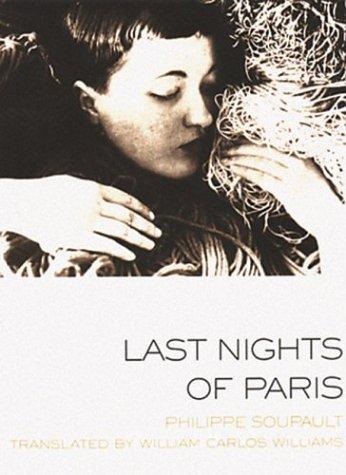
Synopsis
Covers the whole plot, including the ending.
- Difficulty
- Medium
- Pacing
- Slow
- Mood
- Melancholy, atmospheric, introspective, restless, surreal, urban, existential
- Read it if
- you enjoy experimental, atmospheric, and philosophical novels that explore urban alienation, the bohemian underworld, and existential themes. Fans of surrealism and stream-of-consciousness narratives will appreciate its unique style.
- Skip it if
- you prefer plot-driven stories with clear character arcs, traditional narrative structures, and a sense of resolution. It's not for readers seeking lighthearted or easy reads.
Dernières nuits de Paris Plot Summary
Covers the whole plot, including the ending.
The Enigmatic Encounter
The story begins with the unnamed narrator, a man wandering the streets of Paris at night. He meets Eugénie, a striking woman. Their meeting happens by chance in a café or on a street corner in the early hours. Eugénie immediately draws the narrator in with her elusive charm and air of mystery. She represents the city's nightlife, her presence both appealing and slightly unsettling. Their first interactions show an immediate, unspoken connection, but also a great distance. The narrator is pulled into her world, curious about her mysterious nature and hints of a complex, possibly dangerous, life. This meeting starts the narrator's journey into a world different from his own.
Eugénie's World
After their first meeting, the narrator spends his nights with Eugénie, exploring parts of her life. He learns she is part of a bohemian, somewhat illegal group, made up of artists, small-time criminals, and social outcasts who thrive in Paris's nightlife. These people live on the edge of society, wanting freedom and disliking normal rules. Eugénie moves through this world with calm grace, her reasons often unclear. The narrator watches her, trying to understand her true self and the network of relationships she has. He becomes a quiet observer, drawn deeper into a world he barely understands but finds compelling.
The Shadowy Figure of Roger
As the narrator gets more involved in Eugénie's world, he meets Roger, a man who seems important to her, though his role is unclear. Roger is a shadowy, somewhat threatening figure whose presence suggests a darker side to Eugénie's bohemian life. He is often with her or near her, and his actions with others point to illegal activities. The narrator watches Roger with suspicion and curiosity, sensing a possible threat or hidden motive. Roger's relationship with Eugénie is never clearly stated, but it feels like they share secrets, which makes Eugénie and her nighttime activities more mysterious. His presence adds tension and potential danger to the story.
Nocturnal Wanderings
Much of the novel describes the narrator and Eugénie's long walks through Paris at night. They visit different places—dimly lit bars, secret clubs, and busy markets—immersing themselves in the city's lively, often illegal, nightlife. These walks are less about specific places and more about the experience of moving through the urban maze. The city itself becomes a character, showing its true self only after dark. The narrator acts as a detached observer, taking in the sights, sounds, and smells of this hidden Paris, often with Eugénie as his mysterious guide. These parts of the story highlight the fleeting, dreamlike quality of their meetings and the strong sense of freedom and anonymity the night offers.
Eugénie's Unveiling
Through broken conversations and observations, the narrator learns a few details about Eugénie's past. It comes out that she has lived a life of instability and has rejected normal society. Her past is hinted at with struggles, independence, and perhaps minor wrongdoings. Even with these hints, Eugénie largely remains a mystery; she carefully guards her true reasons and deeper feelings. She rarely shows direct emotions or explains her actions, keeping a detached air. This elusiveness is key to her character, making her both fascinating and frustrating for the narrator, who tries to understand her without ever fully succeeding. Her past, though glimpsed, only deepens the mystery of her present.
The Allure of the Underworld
The narrator finds himself increasingly drawn to the darker, more illegal parts of Eugénie's world. While he never joins in any crimes, he becomes a close observer of a setting where small crimes, shady deals, and unusual lifestyles are common. He is fascinated by the people who live in this underworld—their cleverness, their defiance of authority, and their unique moral codes. This fascination comes not from a wish to join them, but from intellectual curiosity and a desire for experiences beyond the ordinary. The narrator's immersion in this world challenges his ideas of right and wrong, making him face the complexities of life on the edges of society.
The Disappearance of Roger
At some point, Roger, the shadowy figure connected to Eugénie, suddenly disappears from the story. His absence is abrupt and unexplained, leaving an empty feeling and a sense of unease. Neither Eugénie nor her friends offer clear reasons for his vanishing, only vague hints or evasive answers. The narrator guesses about Roger's fate, wondering if he fled, was arrested, or met a worse end. This disappearance adds to the novel's unclear atmosphere and unspoken dangers. It shows how uncertain life is in the Parisian underworld, where people can vanish without a trace and secrets stay buried. Roger's absence makes the narrator feel more like he is living on the edge of a dangerous reality, further complicating his understanding of Eugénie.
Eugénie's Detachment
Throughout their time together, the narrator struggles with Eugénie's deep emotional detachment. While they share intimate moments and long periods of companionship, Eugénie keeps an impenetrable barrier, rarely showing her inner thoughts or feelings. Her responses are often cryptic, her manner calm and unreadable. The narrator longs for a deeper connection, for some sign of shared emotion, but Eugénie always avoids such closeness. This detachment is a central theme, highlighting the narrator's unfulfilled desire and the loneliness of their relationship. Eugénie embodies the elusive spirit of Paris itself—alluring but ultimately unknowable, a mirror reflecting the narrator's own desires and frustrations without offering easy answers.
A Glimmer of Vulnerability
In a rare and quick moment, Eugénie shows a hint of vulnerability, giving the narrator a brief look beneath her calm exterior. This moment is not a big confession but a subtle change in her manner, perhaps a tired sigh, a distant look, or a brief, unguarded comment that suggests a hidden sadness or struggle. It is enough to briefly break through her usual detachment, showing the possibility of a complex inner life she carefully hides. This glimpse is important because it is so rare, reinforcing the idea that Eugénie is not just an empty character but a woman with her own burdens and experiences. However, this vulnerability quickly disappears back into her usual mysterious self, leaving the narrator to wonder what it meant.
The Inevitable Departure
Just as suddenly and mysteriously as she appeared, Eugénie vanishes from the narrator's life. There is no goodbye, no explanation, only her abrupt absence. The narrator searches for her in their usual places, but she is nowhere to be found. Her disappearance mirrors the fleeting nature of their relationship and the temporary quality of the Parisian nights they shared. This ending reinforces the novel's themes of impermanence and the unknowable parts of human connection. The narrator is left with a strong sense of loss and a lasting memory of Eugénie, a figure who remains as mysterious in her leaving as she was in her arrival. The 'last nights of Paris' end with her absence, leaving the narrator to think about the fleeting beauty and mystery of his nighttime encounters.
Principal Figures
The Narrator
Protagonist
A detached observer drawn into Paris's nocturnal underworld.
The unnamed narrator is a contemplative and somewhat melancholic figure, drifting through life with a sense of aimlessness. He is an intellectual observer, more inclined to watch and reflect than to actively participate. His encounter with Eugénie awakens a dormant curiosity within him, pulling him into a world of bohemianism and illicit activities. He is fascinated by the fringes of society, seeking authenticity and intense experiences beyond the mundane. Despite his immersion, he maintains a certain emotional distance, constantly trying to understand the people around him, particularly Eugénie, without fully committing himself. He represents the intellectual flâneur, captivated by the city's hidden pulse.
Relationships: Eugénie (Intense, enigmatic fascination and unfulfilled romantic longing); Roger (Suspicion and curiosity)
Eugénie
Supporting
The enigmatic woman who embodies the spirit of nocturnal Paris.
Eugénie is the central enigma of the novel, a captivating and elusive woman who embodies the nocturnal spirit of Paris. She is beautiful, self-possessed, and maintains an almost impenetrable emotional detachment. Her past is hinted at but never fully revealed, adding to her mystique. She navigates the city's underworld with an air of casual grace, seemingly unfazed by its dangers or unconventional characters. Eugénie represents freedom, mystery, and a rejection of societal norms. She is less a character with a clear arc and more a force of nature, a catalyst for the narrator's journey into the hidden depths of the city. Her allure lies in her unknowability.
Relationships: The Narrator (Object of fascination and unrequited longing); Roger (Ambiguous, possibly illicit, and secretive connection)
Roger
Supporting
A shadowy figure linked to Eugénie's illicit world.
Roger is a minor yet significant character, representing the darker, more dangerous elements of the Parisian underworld. He is portrayed as a suspicious and potentially menacing figure, whose presence suggests illicit activities and hidden agendas. His relationship with Eugénie is ambiguous, hinting at a shared past or complicity in her unconventional life. Roger's interactions are sparse, but his presence casts a shadow over the narrative, introducing an element of tension and potential threat. His mysterious disappearance further emphasizes the precariousness and unpredictability of life on the fringes of society, leaving questions unanswered and adding to the novel's enigmatic atmosphere.
Relationships: Eugénie (Ambiguous, possibly illicit, and secretive connection); The Narrator (Object of suspicion)
The Parisian Underworld Figures
Supporting
The diverse inhabitants of Paris's nocturnal fringes.
This group comprises the various unnamed and briefly encountered individuals who populate Eugénie's world – petty criminals, artists, bohemians, and other outcasts. They are a collective character, representing the vibrant, unconventional, and often dangerous subculture that thrives after dark in Paris. These figures embody a rejection of bourgeois society, living by their own rules and seeking freedom and excitement. They contribute to the novel's atmosphere of mystery and allure, showcasing the diverse tapestry of human experience on the margins. Their presence highlights the narrator's fascination with alternative lifestyles and the hidden realities of the city.
Relationships: Eugénie (Associates in the bohemian/illicit milieu); The Narrator (Objects of observation and fascination)
Themes & Insights
The Mystique of the Nocturnal City
The novel shows Paris not just as a place but as a living thing that reveals its true, mysterious character only after dark. Night turns the city into a place of freedom, anonymity, and hidden possibilities, a stage for unusual lives and illegal meetings. The streets, cafés, and shadowy alleys become characters themselves, reflecting the characters' feelings and offering a refuge from daily constraints. The nighttime city is both appealing and dangerous, a maze of secrets that draws the narrator in, embodying the elusive nature of human experience.
“Paris, la nuit, est une femme qui se dénude.”
Elusiveness and Unknowability
A main theme is the difficulty, and perhaps impossibility, of truly knowing another person, or even oneself. Eugénie shows this theme, remaining a mystery throughout the story despite the narrator's strong interest and long companionship. Her detachment and mysterious past highlight the limits of understanding. Similarly, the nightlife itself is elusive, offering quick glimpses of truth but never a full picture. This theme suggests that true closeness or understanding is often out of reach, leaving characters, and readers, to deal with uncertainty and the lasting mystery of human nature and city life.
“Je ne savais rien d'elle, je ne savais rien de moi.”
Freedom and Anarchy
The novel explores the appeal of a life lived outside normal societal rules and morals. The characters of the Parisian underworld, especially Eugénie, embody a spirit of freedom and a rejection of middle-class restrictions. They live in a space where traditional rules do not apply, allowing for a more authentic, though sometimes dangerous, existence. This freedom often has a touch of anarchy, a rebellion against order that is both exciting and unsettling. The narrator is drawn to this liberation, finding a temporary escape from his own structured world, even as he sees its risks and temporary nature.
“Ils étaient libres, plus libres que personne, libres de tout, même d'eux-mêmes.”
Transient Encounters and Loneliness
Despite other characters being present and the narrator being deeply involved in Eugénie's world, a strong sense of loneliness and transience fills the story. Relationships are brief, connections are often shallow, and people remain ultimately isolated. Eugénie's sudden appearance and disappearance highlight how temporary human bonds are in this nighttime world. The narrator's unfulfilled longing for a deeper connection with Eugénie shows this emotional solitude. The novel suggests that even among shared experiences, a basic loneliness remains, and moments of connection are often short, leaving only memories and unanswered questions.
“Ces nuits étaient faites de rencontres sans lendemain, de paroles échangées sans écho.”
Plot Devices & Literary Techniques
The Flâneur
The detached urban wanderer as a narrative lens.
The narrator embodies the archetype of the flâneur, a detached observer who wanders through the city, absorbing its atmosphere and people without fully participating. This device allows for a subjective, impressionistic portrayal of Paris and its inhabitants, filtered through the narrator's consciousness. The flâneur's perspective emphasizes observation over action, creating a sense of distance and intellectual engagement. It enables the exploration of urban spaces and social dynamics, highlighting the city's role as a character and a mirror to the narrator's inner world, while maintaining a level of mystery around the events unfolding.
Enigmatic Character
Eugénie as an inscrutable figure.
Eugénie serves as an enigmatic character, her motivations, past, and true feelings remaining largely unknown to the narrator and the reader. This device creates suspense and fascination, constantly drawing the narrator (and us) deeper into her orbit in an attempt to uncover her secrets. Her inscrutability reflects the broader theme of unknowability and the elusive nature of human connection. By withholding clear information about her, the author emphasizes the subjective experience of the narrator's fascination and the power of mystery in attraction, rather than providing a conventional character study.
Non-Linear/Fragmented Narrative
A dreamlike, discontinuous recounting of events.
The plot unfolds in a non-linear, often fragmented manner, mirroring the dreamlike quality of the nocturnal experience. Events are recounted as a series of impressions, observations, and fleeting encounters rather than a strictly chronological or cause-and-effect progression. This device enhances the sense of mystery and disorientation, reflecting the narrator's subjective experience of being adrift in the city's underworld. It prioritizes mood and atmosphere over plot coherence, immersing the reader in the sensory and psychological landscape of the 'last nights of Paris' and the elusive nature of memory.
The City as Character
Paris as an active, living entity.
Paris, particularly its nocturnal aspect, functions as a character in its own right. It is not merely a backdrop but an active force that influences the characters, shapes their interactions, and embodies the novel's themes. The city's labyrinthine streets, hidden corners, and diverse inhabitants contribute to its mysterious and alluring personality. It offers freedom and anonymity, but also danger and transience. This device allows the author to explore the symbiotic relationship between urban space and human experience, highlighting how the city can both reflect and define the identities of those who inhabit its shadows.
Dernières nuits de Paris Quotes
“La nuit est une immense toile où l'on peut peindre tous les rêves.”
“Paris, ma belle, tu es une sirène qui chante dans la nuit.”
“Les lumières de la ville sont des étoiles tombées sur la terre.”
“Dans le silence de la nuit, les secrets prennent vie.”
“Chaque coin de rue a une histoire à raconter, surtout quand le soleil se couche.”
“L'amour est une flamme qui brûle plus fort dans l'obscurité.”
“On ne voit bien qu'avec le cœur, surtout quand la raison dort.”
“Les ombres dansent, complices des pensées vagabondes.”
“La ville endormie rêve aussi, de ses propres fantômes.”
“Le bruit des pas résonne comme un écho du passé.”
“Il y a une liberté étrange dans le fait d'être seul au milieu de la nuit parisienne.”
“Les étoiles au-dessus de nous sont les témoins silencieux de nos nuits.”
“La nuit efface les contours, rendant tout possible.”
“Dans les ruelles sombres, les désirs les plus secrets se révèlent.”
Quiz
10 questions on the plot and the characters. Each answer comes with a short explanation.
Question 1
What is the primary literary movement associated with Philippe Soupault?
- Symbolism
- Surrealism
- Existentialism
- Naturalism
Show answer
B. Surrealism Philippe Soupault was a key figure in the early Surrealist movement, co-writing 'The Magnetic Fields' with André Breton.
Question 2
In 'Dernières nuits de Paris', what is the protagonist's main activity that drives the narrative?
- Writing a novel
- Investigating a crime
- Searching for a lost love
- Experiencing fragmented dreams and nocturnal wanderings
Show answer
D. Experiencing fragmented dreams and nocturnal wanderings The novel is characterized by its dreamlike quality and the protagonist's surreal experiences during his nights in Paris.
Question 3
Which city is the setting for 'Dernières nuits de Paris'?
- Marseille
- Lyon
- Paris
- Bordeaux
Show answer
C. Paris As the title suggests, the novel is set in Paris, exploring its nocturnal atmosphere.
Question 4
What is a common stylistic feature of 'Dernières nuits de Paris' that aligns with Surrealist principles?
- Linear narrative structure
- Focus on psychological realism
- Juxtaposition of unexpected images and free association
- Strict adherence to classical poetic forms
Show answer
C. Juxtaposition of unexpected images and free association Surrealism often employs unexpected juxtapositions and stream-of-consciousness techniques to explore the subconscious.
Question 5
Who was a significant collaborator and contemporary of Soupault during the Surrealist period?
- Albert Camus
- Jean-Paul Sartre
- Louis Aragon
- Paul Éluard
Show answer
C. Louis Aragon Louis Aragon was another prominent figure in early Surrealism and a close associate of Soupault.
Question 6
The title 'Dernières nuits de Paris' can be translated as:
- Last Nights of Paris
- Parisian Nights
- Nights in Paris
- Final Paris Nights
Show answer
A. Last Nights of Paris The direct translation of 'Dernières nuits de Paris' is 'Last Nights of Paris'.
Question 7
What kind of atmosphere does Soupault often evoke in his writing, particularly in 'Dernières nuits de Paris'?
- Tranquil and pastoral
- Chaotic and disorienting
- Humorous and lighthearted
- Formal and academic
Show answer
B. Chaotic and disorienting Soupault's work, influenced by Surrealism, often explores themes of disorientation and the subconscious, creating a chaotic or dreamlike atmosphere.
Question 8
Which of the following themes is LEAST likely to be explored in 'Dernières nuits de Paris'?
- The irrationality of dreams
- The exploration of the subconscious mind
- The rigidity of societal norms
- The blurring of reality and imagination
Show answer
C. The rigidity of societal norms Surrealist works like 'Dernières nuits de Paris' tend to focus on the irrational, subconscious, and the blurring of reality, rather than the strict adherence to societal norms.
Question 9
How does the narrative structure of 'Dernières nuits de Paris' generally deviate from traditional novels?
- It follows a strict chronological order.
- It maintains a consistent point of view.
- It is fragmented, episodic, and often non-linear.
- It relies heavily on dialogue to advance the plot.
Show answer
C. It is fragmented, episodic, and often non-linear. Surrealist literature, including this novel, often features fragmented narratives, dream logic, and a departure from linear storytelling.
Question 10
What is the significance of the 'nights' in the title 'Dernières nuits de Paris'?
- They represent a literal count of nights spent in Paris.
- They symbolize a period of intense personal experience and subconscious exploration.
- They refer to the final moments of the city's existence.
- They are a metaphor for the end of a historical era.
Show answer
B. They symbolize a period of intense personal experience and subconscious exploration. The 'nights' in the title are symbolic of a heightened state of consciousness, dreamlike experiences, and a journey into the protagonist's subconscious, characteristic of Surrealist themes.
Dernières nuits de Paris FAQ
What is "Dernières nuits de Paris" about?
"Dernières nuits de Paris" is a novel by Philippe Soupault that explores the surreal and dreamlike experiences of its protagonist in Paris. It delves into themes of memory, identity, and the subconscious, characteristic of the Surrealist movement.
Who wrote "Dernières nuits de Paris"?
The novel "Dernières nuits de Paris" was written by Philippe Soupault, a prominent figure in French literature and a co-founder of the Surrealist movement.
What literary movement is "Dernières nuits de Paris" associated with?
"Dernières nuits de Paris" is strongly associated with the Surrealist movement. Its narrative style, exploration of dreams, and unconventional structure are hallmarks of Surrealist literature.
What are the main themes in "Dernières nuits de Paris"?
Key themes in the novel include the exploration of dreams and the subconscious, the fluidity of identity, the subjective experience of reality, and the disorienting nature of urban life, particularly Paris at night.
Is "Dernières nuits de Paris" a realistic novel?
No, "Dernières nuits de Paris" is not a realistic novel. It embraces Surrealist principles, employing dream logic, unexpected juxtapositions, and a departure from conventional narrative structures to explore the inner world of its characters.
What is the significance of Paris in the novel?
Paris in "Dernières nuits de Paris" is not just a setting but a character in itself, transformed by the protagonist's subjective experience and the dreamlike atmosphere. The city becomes a canvas for exploring psychological states and subconscious desires.
How does "Dernières nuits de Paris" compare to other Surrealist works?
Compared to other Surrealist works, "Dernières nuits de Paris" stands out for its poetic prose and its deep dive into the protagonist's psyche, often blurring the lines between waking life and dream states in a manner typical of the movement's exploration of the irrational.
Is "Dernières nuits de Paris" easy to read?
The novel can be challenging for readers unfamiliar with Surrealist literature due to its non-linear narrative, dreamlike imagery, and departure from traditional plot structures. It requires an openness to unconventional storytelling.
Where can I find "Dernières nuits de Paris"?
"Dernières nuits de Paris" can typically be found in libraries, bookstores specializing in French literature, and online retailers. It may also be available in various editions and translations.
What is the historical context of "Dernières nuits de Paris"?
Written during the height of the Surrealist movement in the early 20th century, "Dernières nuits de Paris" reflects the era's fascination with psychoanalysis, dreams, and challenging societal norms through artistic expression.
Similar books
- Nightwood
Djuna Barnes
3.6 (9k) average on GoodreadsLiterary FictionOffers a dense, poetic exploration of nocturnal urban life and its marginalized characters, with a focus on atmosphere and psychological depth.
- Harry Potter and the Sorcerer's Stone
J.K. Rowling
4.5 (7M) average on GoodreadsFantasyRescued from a miserable life under the stairs, an orphaned boy discovers he's a wizard destined for a magical school, where he uncovers a dangerous secret tied to the dark wizard who murdered his parents.
- The Hunger Games
Suzanne Collins
4.3 (6.4M) average on GoodreadsFantasyIn a future where children fight to the death on live television, Katniss Everdeen volunteers for the arena, turning a death sentence into a fight for survival and a spark of rebellion.
- Nineteen Eighty-Four
George Orwell
4.2 (5.5M) average on GoodreadsFictionWinston Smith dreams of truth and rebellion in a world where Big Brother watches all, but he confronts the terrifying power of a regime that controls not just actions, but thoughts.
- Pride & Prejudice
Jane Austen
4.3 (4.9M) average on GoodreadsElizabeth Bennet and Mr. Darcy navigate love and misunderstanding, learning that first impressions can be wrong.
- To Kill a Mockingbird
Harper Lee
4.3 (4.5M) average on GoodreadsHistorical FictionIn the 1930s Jim Crow South, Harper Lee writes about racial injustice, moral growth, and the quiet courage of a lawyer father, Atticus Finch, as seen through his young daughter's eyes.




Enjoyed the summary?
A summary gives you the shape of the book. The book itself has the detail, the examples and the voice.
Find Dernières nuits de Paris on AmazonAs an Amazon Associate, BookBrief earns from qualifying purchases. How we're funded