

Synopsis
Covers the whole plot, including the ending.
- Difficulty
- Medium
- Pacing
- Moderate
- Mood
- Suspenseful, Realistic, Investigative, Gritty
- Read it if
- You enjoy police procedurals with intricate plots, deep dives into forensic science, and high-stakes political corruption, all wrapped in a classic thriller style.
- Skip it if
- You prefer fantasy or romance, or are looking for a light, character-driven story without intense investigative detail.
Detective Plot Summary
Covers the whole plot, including the ending.
The Summons to Death Row
Detective Sergeant Malcolm Ainslie is moments away from embarking on a much-anticipated vacation to the Caribbean with his wife, Helen, and son, Doug. His bags are packed, and the family is ready to leave when the phone rings. It's Father Vincent, the chaplain at Florida State Prison, with an urgent request. Elroy Doil, a notorious serial killer whom Ainslie helped convict for a double murder, is scheduled to be executed at dawn. Doil has requested a final confession, but only to Ainslie in person. Despite the disruption to his personal plans and Helen's disappointment, Ainslie, driven by the possibility of closing ten unsolved murder cases linked to Doil, reluctantly agrees to go, postponing his family's departure.
Elroy Doil's Confession
Ainslie arrives at Florida State Prison and is led to Elroy Doil's cell. Doil, a chilling and manipulative figure, admits to the two murders for which he was convicted but then makes a bombshell confession regarding the death of Sally Anne Kincaid, one of the ten other victims attributed to him. Doil vehemently denies killing Kincaid, stating that she was already dead when he found her. He describes the scene, providing details that suggest Kincaid's death was not part of his modus operandi. This revelation immediately throws a wrench into the established police narrative and raises serious questions about the integrity of the original investigation, specifically the work of Captain Jefferson, Ainslie's former mentor.
The Unraveling of a Case
Doil provides specific, unsettling details about Sally Anne Kincaid's death, including her unusual attire and the state of her body. He insists he only desecrated the body, a detail that was never released to the public. Ainslie, an ex-priest with a strong moral compass, is deeply disturbed by Doil's account, which contradicts the official police report and the evidence presented at trial. He realizes that if Doil is telling the truth about Kincaid, it means an innocent person might have been falsely linked to the crime, or worse, the real killer is still at large. The confession compels Ainslie to begin a discreet, immediate re-investigation, despite the pressure of the impending execution.
Initial Obstacles and Resistance
Upon returning to Miami, Ainslie attempts to open a new inquiry into Sally Anne Kincaid's death, facing immediate pushback from his superiors, particularly Captain Jefferson, who oversaw the original investigation. Jefferson dismisses Doil's confession as a desperate last-minute ploy from a condemned man seeking attention. Other colleagues are also reluctant to revisit a closed case, especially one that could tarnish the department's reputation. Ainslie finds himself increasingly isolated, but his commitment to justice and his suspicion that something is deeply wrong compel him to proceed, using his connections and resources to discreetly gather information.
Forensic Re-evaluation and Hidden Evidence
Ainslie enlists the help of Dr. Arnie Ziff, a careful forensic pathologist, to re-examine the original autopsy reports and evidence related to Sally Anne Kincaid. Ziff's independent review uncovers subtle but significant discrepancies that align with Doil's confession. It becomes clear that certain evidence, particularly details about the time and manner of Kincaid's death, was either overlooked or intentionally suppressed in the original investigation. This new forensic evidence strengthens Ainslie's conviction that Kincaid's death was not a Doil murder, pointing towards a cover-up within the police department or a powerful figure's involvement.
The Trail Leads to High Places
As Ainslie investigates further, he discovers that Sally Anne Kincaid was involved in a complex web of relationships, including with powerful figures in Miami's city government and business community. He learns that Kincaid had been working as an escort and had potentially blackmailed some of her high-profile clients. The investigation begins to point towards Mayor Harry S. Golding and other prominent individuals, suggesting a conspiracy to cover up Kincaid's true killer and protect their reputations. Ainslie realizes the stakes are much higher than he initially imagined, potentially jeopardizing his career and even his life.
Confrontation and Betrayal
Malcolm Ainslie confronts Captain Jefferson with the growing evidence, including the new forensic findings and the connections to prominent city figures. Jefferson, initially defensive and dismissive, eventually cracks under pressure. He confesses that he knew about the inconsistencies in the Kincaid case but was pressured by higher-ups, including Mayor Golding, to close the case quickly and attribute it to Doil to avoid scandal. Jefferson admits to deliberately suppressing evidence and manipulating the investigation, revealing the depth of corruption and the betrayal of justice within the department. This confession deeply wounds Ainslie, who had once admired Jefferson.
The Real Killer Revealed
Through painstaking investigation, Ainslie uncovers that Sally Anne Kincaid was murdered by Dennis Golding, Mayor Golding's son. Dennis, a disturbed and violent individual, had killed Kincaid in a fit of rage after she threatened to expose their relationship and his father's involvement. Mayor Golding, desperate to protect his son and his political career, orchestrated the cover-up, using his influence within the police department to pin the crime on Elroy Doil. Ainslie carefully pieces together the evidence, connecting Dennis to the crime scene and the specific details Doil had provided, confirming Doil's innocence in that particular murder.
Justice Prevails, At a Cost
Ainslie presents his irrefutable evidence to the District Attorney, exposing Mayor Golding's complicity and his son's culpability. The revelation sends shockwaves through Miami's political and law enforcement circles. Dennis Golding is arrested, and Mayor Golding faces public disgrace and potential legal repercussions. While Ainslie achieves justice for Sally Anne Kincaid and vindicates Elroy Doil's death row confession, his actions come at a significant personal and professional cost. He faces ostracism from some colleagues and the strain on his family, but he emerges with his integrity intact, reaffirming his commitment to truth and justice.
Aftermath and Reflection
In the aftermath of the Kincaid case, Malcolm Ainslie reflects on the moral compromises and ethical dilemmas he encountered. The experience deeply impacts him, reinforcing his belief in the importance of justice, even when it means challenging the very institutions he serves. He acknowledges the personal sacrifices, including the delayed vacation and the strain on his relationship with Helen, but finds a renewed sense of purpose. The case is a stark reminder of the dark side of power and the constant vigilance required to uphold the law and protect the innocent, solidifying his resolve as a detective and as a man of principle.
Principal Figures
Malcolm Ainslie
Protagonist
A former priest turned homicide detective, driven by a deep sense of justice.
Detective Sergeant Malcolm Ainslie is a complex and principled man, haunted by his past as a Catholic priest. His moral compass is exceptionally strong, guiding his actions even when it puts him at odds with his superiors and colleagues. He is meticulous, intelligent, and possesses a keen understanding of human nature, honed by both his religious background and his police work. Despite his dedication to his job, he values his family deeply and struggles to balance the demands of his profession with his personal life. His internal conflict between faith and the harsh realities of crime is a constant undercurrent.
Relationships: Helen Ainslie (Wife, provides emotional support but struggles with his dedication to work.); Doug Ainslie (Son, represents his family life and future.); Elroy Doil (The serial killer whose confession initiates the central conflict.); Captain Jefferson (Former mentor and colleague, later revealed to be complicit in a cover-up.)
Elroy Doil
Antagonist/Catalyst
A manipulative and chilling serial killer on death row, whose confession sparks the investigation.
Elroy Doil is a notorious serial killer, convicted of two murders but suspected of many more. On the eve of his execution, he orchestrates a final confession, specifically requesting Ainslie. Doil is intelligent, cunning, and takes perverse pleasure in psychological manipulation. His confession, though seemingly a last act of defiance or conscience, is calculated to create maximum disruption and reveal a truth that has been hidden. He represents the dark, unrepentant side of humanity but ironically becomes a reluctant instrument of justice in the Kincaid case.
Relationships: Malcolm Ainslie (The detective he chooses to confess to, forming an adversarial yet truth-seeking dynamic.)
Helen Ainslie
Supporting
Malcolm's supportive but often frustrated wife, representing his personal life.
Helen Ainslie is Malcolm's devoted wife, who deeply loves her husband but frequently struggles with the demands of his profession. She yearns for a normal family life and often feels neglected due to Malcolm's relentless dedication to his work, especially when it infringes on their family time. Helen serves as a grounding force for Malcolm, reminding him of his personal responsibilities and the importance of their relationship. Her patience and understanding are tested throughout the novel, highlighting the personal cost of Malcolm's commitment to justice.
Relationships: Malcolm Ainslie (Wife, provides emotional support but experiences frustration due to his work.)
Captain Jefferson
Antagonist/Supporting
Ainslie's former mentor and superior, compromised by corruption.
Captain Jefferson is a highly respected figure within the Miami Police Department and was once Malcolm Ainslie's mentor. He represents the institutional pressures and moral compromises that can occur within law enforcement. Jefferson is a capable detective but ultimately succumbs to political pressure, participating in the cover-up of Sally Anne Kincaid's murder to protect powerful city officials. His character embodies the conflict between professional loyalty and ethical duty, and his betrayal deeply affects Ainslie.
Relationships: Malcolm Ainslie (Former mentor and superior, later revealed as complicit in a cover-up.); Mayor Harry S. Golding (Under pressure from him to cover up the crime.)
Sally Anne Kincaid
Victim/Catalyst
The murdered woman whose case was falsely attributed to Elroy Doil.
Sally Anne Kincaid is the victim whose murder sparks Ainslie's re-investigation. Though deceased, her life and death are central to the plot. She was a young woman involved in the escort industry, which brought her into contact with powerful and dangerous individuals. Her character, revealed through flashbacks and investigation, highlights themes of vulnerability, social stratification, and the moral failings of those in power. Her unjust death and the subsequent cover-up underscore the novel's critique of corruption.
Relationships: Elroy Doil (Falsely accused of her murder.); Dennis Golding (Her real murderer.); Mayor Harry S. Golding (Involved in the cover-up of her murder.)
Mayor Harry S. Golding
Antagonist
The powerful and corrupt Mayor of Miami, orchestrating the cover-up.
Mayor Harry S. Golding is a prominent and influential figure in Miami, representing the corrupting influence of power and political ambition. He is ruthless and manipulative, willing to go to extreme lengths to protect his son, Dennis, and his own political career. Golding leverages his authority and connections to orchestrate the cover-up of Sally Anne Kincaid's murder, pressuring law enforcement officials to falsely attribute the crime to Elroy Doil. He serves as the primary antagonist, embodying the systemic corruption that Ainslie fights against.
Relationships: Dennis Golding (His son, whom he protects by orchestrating a cover-up.); Captain Jefferson (Pressures him to comply with the cover-up.)
Dennis Golding
Antagonist
The Mayor's disturbed son and the true murderer of Sally Anne Kincaid.
Dennis Golding is Mayor Harry S. Golding's son, a troubled and violent individual responsible for the murder of Sally Anne Kincaid. He is portrayed as unstable and prone to fits of rage, sheltered by his father's power and influence. His actions highlight the theme of privilege and impunity, as his father attempts to shield him from the consequences of his crime. Dennis represents the immediate threat to justice, while his father represents the systemic corruption enabling it.
Relationships: Mayor Harry S. Golding (His father, who covers up his crime.); Sally Anne Kincaid (His victim.)
Dr. Arnie Ziff
Supporting
A meticulous forensic pathologist who helps Ainslie re-examine evidence.
Dr. Arnie Ziff is a highly skilled and independent forensic pathologist. He is thorough, objective, and unafraid to challenge established findings. Ziff's expertise is crucial to Ainslie's investigation, as he uncovers the critical forensic discrepancies in Sally Anne Kincaid's autopsy report that support Elroy Doil's confession. He represents the scientific pursuit of truth, providing the empirical evidence needed to dismantle the elaborate cover-up.
Relationships: Malcolm Ainslie (Professional colleague, assists in re-examining forensic evidence.)
Themes & Insights
Justice vs. Corruption
The central theme is Ainslie's relentless pursuit of justice against deep corruption within law enforcement and city government. The novel explores how powerful individuals, like Mayor Golding, can manipulate the system to protect themselves, leading to wrongful convictions and the suppression of truth. Ainslie's struggle to expose the real killer of Sally Anne Kincaid, despite immense pressure and betrayal, highlights the moral need to uphold justice, even at a significant personal cost. The contrast between Elroy Doil's twisted 'justice' and Ainslie's principled stand is stark.
“Justice is not a commodity. It’s a sacred trust. When we betray it, we betray everything.”
Moral Integrity and Conscience
Malcolm Ainslie's past as a priest deeply informs his strong moral compass and conscience. This theme explores the internal struggle of an individual committed to ethical principles in a world often without them. Ainslie's decision to investigate Doil's confession, even when it threatens his career and family, is driven by a deep sense of right and wrong. His character embodies the idea that true integrity means standing up for the truth, regardless of the consequences, and that one's conscience is a powerful guide. The betrayal by his former mentor, Captain Jefferson, further tests his resolve but ultimately strengthens his commitment.
“A lie could be buried, but the truth, like a persistent weed, always found a way to the surface.”
The Burden of Truth
The novel examines the heavy burden that comes with uncovering and revealing difficult truths, especially when those truths challenge established narratives and powerful institutions. Ainslie experiences immense pressure, isolation, and personal sacrifice as he unearths the conspiracy surrounding Sally Anne Kincaid's murder. The truth not only exposes criminals but also shatters reputations and trust, forcing individuals to confront uncomfortable realities. This theme highlights that while truth is essential for justice, its revelation often comes with significant personal and professional repercussions for those brave enough to pursue it.
“Some truths were like poison, once swallowed, they changed everything.”
The Nature of Evil
The book explores different facets of evil, from the obvious psychopathy of a serial killer like Elroy Doil to the more subtle, systemic corruption represented by Mayor Golding and Captain Jefferson. Doil's calculated manipulation and violence are contrasted with the 'respectable' evil of those who abuse their power for personal gain and reputation. This theme explores how evil can appear in various forms, challenging the simple idea of good versus bad and revealing the complex moral landscape of society. It forces Ainslie, and the reader, to confront the uncomfortable truth that evil often wears a disguise of power and authority.
“Evil wasn't always a monster in the shadows. Sometimes, it wore a suit and tie, and sat in the mayor's office.”
Plot Devices & Literary Techniques
The Death Row Confession
A condemned serial killer's last-minute confession that unravels a conspiracy.
Elroy Doil's death row confession serves as the primary inciting incident and a crucial plot device. By confessing only to Ainslie and denying one of the murders attributed to him, Doil acts as a catalyst, forcing Ainslie to re-open a seemingly closed case. This device creates immediate urgency due to the impending execution and establishes the central mystery. It subverts expectations by having the 'villain' provide a piece of truth that exposes a larger, more insidious evil within the system, driving the entire narrative forward.
The Unreliable Narrator (of past events)
The official police narrative of the Kincaid murder is revealed to be false, creating dramatic irony.
This device is used to establish a false premise early in the story – that Elroy Doil killed Sally Anne Kincaid. The 'unreliable narrator' here isn't a character, but the established, official police narrative that Ainslie initially accepts. Doil's confession directly challenges this, forcing Ainslie (and the reader) to question everything. The dramatic irony comes from the audience knowing the official story is likely false, watching Ainslie painstakingly uncover the 'true' version of events, building suspense and highlighting the themes of truth and corruption.
The Mentor's Betrayal
Ainslie's respected former mentor is revealed to be complicit in the cover-up.
The betrayal by Captain Jefferson, Malcolm Ainslie's former mentor, is a powerful plot device that deepens the emotional stakes for the protagonist. It not only provides a personal challenge for Ainslie, forcing him to confront a trusted figure, but also vividly illustrates the pervasive nature of the corruption he is fighting. This betrayal highlights the theme of moral compromise within institutions and underscores the personal cost of Ainslie's unwavering commitment to justice, making his victory more poignant.
Forensic Re-evaluation
New scientific examination of old evidence reveals critical discrepancies.
The re-examination of Sally Anne Kincaid's autopsy and crime scene evidence by Dr. Arnie Ziff is a key plot device. It provides the objective, scientific proof needed to validate Doil's confession and dismantle the official narrative. This device grounds the mystery in realistic police procedure, adding authenticity and credibility to Ainslie's investigation. It serves to systematically chip away at the cover-up, moving the plot forward with concrete, undeniable facts that eventually force the truth to light.
Detective Quotes
“The law was a living, breathing thing, constantly changing, constantly challenging.”
“Every crime, no matter how perfect, left a thread. The trick was to find it.”
“Bureaucracy was the enemy of efficiency, a monster that fed on paper and devoured time.”
“In police work, the truth was rarely simple, and often profoundly disturbing.”
“A good detective didn't just look for clues; he looked for patterns, for the story behind the facts.”
“Fear was a powerful motivator, capable of making ordinary people do extraordinary things, both good and bad.”
“The city never slept, and neither did its criminals. Or its police.”
“Justice wasn't a perfect machine; it was a human endeavor, flawed and fallible.”
“Every person carried secrets, and sometimes those secrets were deadly.”
“The past was never truly dead; it always found a way to catch up.”
“In the labyrinth of the human mind, motives were often the most elusive prey.”
“The weight of responsibility was a heavy cloak, especially when lives hung in the balance.”
“Sometimes, the most obvious answer was the one you should trust the least.”
“The silence in a murder victim's home was louder than any scream.”
Quiz
10 questions on the plot and the characters. Each answer comes with a short explanation.
Question 1
What is Detective-Sergeant Malcolm Ainslie's profession?
- A prison chaplain
- A homicide detective
- A city government official
- A lawyer
Show answer
B. A homicide detective Malcolm Ainslie is introduced as a Detective-Sergeant, specifically in a homicide division.
Question 2
What is Elroy Doil's connection to Malcolm Ainslie?
- Doil is Ainslie's informant on another case.
- Ainslie helped convict Doil of a double murder.
- Doil is Ainslie's former partner.
- Ainslie is Doil's defense attorney.
Show answer
B. Ainslie helped convict Doil of a double murder. The text states that Elroy Doil is 'the serial murderer Ainslie helped put on the prison's death row.'
Question 3
What is Elroy Doil's condition for delivering his confession?
- He wants a reduced sentence.
- He will only confess to the prison chaplain.
- He will only deliver it in person to Ainslie.
- He wants to speak to his family first.
Show answer
C. He will only deliver it in person to Ainslie. The text explicitly states: 'But there is a condition: he will deliver it only in person to Ainslie.'
Question 4
What significant personal event is Ainslie about to embark on before receiving the call about Doil?
- A major promotion within the department.
- A long-delayed and much-deserved vacation with his family.
- Retirement from the police force.
- A high-stakes undercover operation.
Show answer
B. A long-delayed and much-deserved vacation with his family. The opening sentence reveals Ainslie is 'due to set off on a long-delayed and much-deserved vacation with his wife and son.'
Question 5
Beyond the double murder for which he was convicted, how many other murders was Elroy Doil suspected of?
- Two more
- Five more
- Ten more
- Fifteen more
Show answer
C. Ten more The synopsis mentions, 'Doil was convicted of a double murder, but he was suspected in ten more.'
Question 6
What is Malcolm Ainslie's past profession before becoming a cop?
- A lawyer
- A journalist
- An ex-priest
- A psychologist
Show answer
C. An ex-priest The text describes Ainslie as the 'ex-priest-turned-cop'.
Question 7
What is a central theme explored in Arthur Hailey's novels, as mentioned in the synopsis?
- The glamour of high society.
- The pressures of jobs and how people cope with them.
- Historical events and their impact.
- Fantasy and mythical creatures.
Show answer
B. The pressures of jobs and how people cope with them. The synopsis states Hailey is 'legendary for... taking readers inside the places where men and women endure and sometimes crack under the pressures of jobs that shape our lives and world.'
Question 8
What wider investigation does Doil's confession propel Ainslie into?
- A cold case from another state.
- An investigation reaching into elite levels of his own department and city government.
- A search for Doil's accomplices.
- An internal affairs investigation into a minor infraction.
Show answer
B. An investigation reaching into elite levels of his own department and city government. The text states Doil's confession 'propels the ex-priest-turned-cop into an investigation that reaches into the most elite levels of his own department and the Miami city government.'
Question 9
Why does Ainslie feel he has 'no choice' but to hear Elroy Doil's confession?
- He fears Doil will escape if he doesn't.
- He is ordered to by the prison warden.
- No homicide detective could turn down the opportunity to close ten murder cases.
- He wants to prove his superiority over Doil.
Show answer
C. No homicide detective could turn down the opportunity to close ten murder cases. The narrator explains Ainslie's motivation: 'No homicide detective could turn down the opportunity to close ten murder cases in a single night.'
Question 10
What aspects of a contemporary urban homicide division does Arthur Hailey's novel 'Detective' promise to depict?
- Only the administrative paperwork and office politics.
- The sights, sounds, and true-to-life details.
- Exclusively the high-speed car chases and shootouts.
- A fictionalized, unrealistic portrayal for dramatic effect.
Show answer
B. The sights, sounds, and true-to-life details. The synopsis highlights that the book is 'bristling with the sights, sounds, and true-to-life details of a contemporary urban homicide division'.
Detective FAQ
What is the central premise that forces Detective-Sergeant Malcolm Ainslie to postpone his vacation?
Malcolm Ainslie, an ex-priest turned detective, is called by the chaplain at Florida State Prison. Elroy Doil, a serial murderer Ainslie helped convict, is on death row and requests to make a confession only to Ainslie, hours before his execution and Ainslie's long-awaited vacation.
Who is Elroy Doil, and what is the significance of his confession to Ainslie?
Elroy Doil is a convicted serial murderer, responsible for a double murder and suspected in ten others. His confession to Ainslie is crucial because it offers the opportunity to close numerous unsolved cases, but it comes with the condition that he will only confess to Ainslie personally.
What kind of moral or ethical dilemma does Ainslie face by agreeing to hear Doil's confession?
Ainslie, an ex-priest, faces a profound moral dilemma. While he wants to close the unsolved murder cases, he must confront the man he helped send to his death, and potentially hear truths that challenge his past work and the justice system he serves, all while delaying his family's vacation.
How does Doil's confession impact Ainslie's perception of his own department and the Miami city government?
Doil's confession reveals a conspiracy that reaches into the highest echelons of Ainslie's own police department and the Miami city government. This forces Ainslie to re-evaluate the integrity of the institutions he has dedicated his life to, questioning corruption at elite levels.
What specific details about Doil's methods or motives are revealed that surprise Ainslie?
Doil's confession unveils that he was not the sole perpetrator in all the murders attributed to him, and that some killings were orchestrated by powerful figures to cover up their own illicit activities. This revelation shatters Ainslie's initial understanding of the cases and Doil's role.
How does Ainslie's past as a priest influence his approach to the investigation and Doil?
Ainslie's background as a priest gives him a unique insight into human nature, sin, and confession, allowing him to discern truth from deception in Doil's statements more acutely. It also imbues him with a sense of moral duty beyond just legal enforcement, seeking genuine justice.
Are there any subtle clues or foreshadowing early in the book about the deeper corruption Ainslie uncovers?
Early in the narrative, subtle hints like unusual resistance to certain lines of inquiry during Doil's initial investigation or unexplained procedural shortcuts might foreshadow the extensive corruption Ainslie eventually uncovers within the department and city government.
How does Ainslie's family, specifically his wife and son, react to his sudden call to duty?
Ainslie's wife and son are initially disappointed and frustrated by the postponement of their long-awaited vacation. However, they understand the gravity of his profession, though the prolonged and dangerous nature of this particular investigation causes them significant anxiety and concern for his safety.
What is the ultimate fate of Elroy Doil, and does his confession achieve his intended purpose?
Elroy Doil is executed as planned, but his confession achieves his intended purpose of exposing the true criminals and the corruption that enabled them. He uses his final moments to settle scores and reveal truths that shake the foundations of the city's power structure.
How does Ainslie deal with the internal conflict of investigating his own colleagues?
Ainslie struggles profoundly with the betrayal of trust and the moral injury of investigating colleagues he once respected. He relies on his unwavering commitment to justice and his moral compass, honed by his priestly past, to push through the discomfort and pursue the truth regardless of who it implicates.
What specific piece of evidence or testimony from Doil proves to be the turning point in the new investigation?
Doil provides Ainslie with a specific name and a hidden location of a ledger containing illicit transactions and payoffs, linking high-ranking officials to the murders. This tangible evidence serves as the undeniable turning point, validating Doil's claims and providing concrete leads.
Does Ainslie receive support from within his department during his investigation into corruption, or is he isolated?
Ainslie initially faces significant isolation and resistance as his investigation targets powerful figures within his own department. However, he eventually garners support from a few trusted, principled colleagues who risk their careers to help him expose the truth, highlighting the divide within the force.
How does the author, Arthur Hailey, use the setting of a contemporary urban homicide division to enhance the story?
Arthur Hailey masterfully uses the authentic, gritty details of a contemporary urban homicide division—the bureaucratic pressures, the forensic science, the camaraderie, and the internal politics—to create a realistic and immersive backdrop. This authenticity grounds the extraordinary plot in believable daily operations and enhances the tension.
What is the significance of Ainslie being an 'ex-priest-turned-cop' in the context of the book's themes?
Ainslie's dual identity as an ex-priest and a cop is central to the book's themes of justice, morality, redemption, and corruption. It allows for a deeper exploration of right and wrong, the fallibility of institutions, and the personal cost of upholding truth, blending spiritual and legal perspectives.
Are there any ambiguities left at the end regarding the full extent of the corruption or the fate of all involved parties?
While the primary perpetrators of the corruption are exposed and face justice, the ending might leave some ambiguities regarding the full, long-term systemic impact of such widespread corruption. It suggests that while a battle was won, the war against inherent human greed and power abuse continues.
How does Malcolm Ainslie's character evolve throughout the course of this intense investigation?
Malcolm Ainslie evolves from a competent, by-the-book detective into a deeply disillusioned but ultimately resilient figure. He is forced to confront the dark underbelly of the system he serves, testing his faith in humanity and justice, and emerging with a hardened but more profound understanding of truth and integrity.
What role does the media play, if any, in Ainslie's investigation or the public's perception of the events?
The media plays a crucial role, first by sensationalizing the original Doil murders, and later, potentially, by becoming an avenue for Ainslie to leak information or expose the corruption when official channels are blocked. Public perception, swayed by media narratives, adds another layer of pressure and complexity to the unfolding events.
Is there a specific antagonist besides Elroy Doil, and how is their identity revealed?
Yes, beyond Elroy Doil, the primary antagonist is a high-ranking official within the Miami city government or police department, revealed through Doil's confession and Ainslie's subsequent investigation. Their identity is gradually uncovered as Ainslie follows the paper trail and testimonies, exposing their motives and network of influence.
About the author

Arthur Hailey was a British-Canadian novelist renowned for his meticulously researched, fast-paced thrillers often set in specific industries. His major works, including 'Airport,' 'Hotel,' and 'Strong Medicine,' became international bestsellers, captivating readers with their detailed portrayals of complex professional environments and gripping narratives.
Similar books
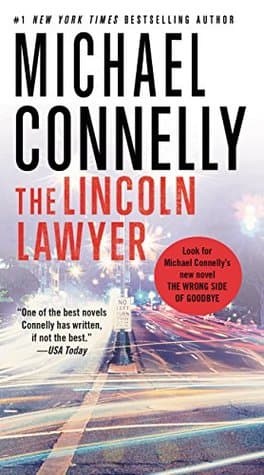
- The Lincoln Lawyer
Michael Connelly
4.2 (193k) average on GoodreadsThrillerFeatures a morally complex protagonist navigating a corrupt legal system with surprising twists.
- Presumed Innocent
Scott Turow
4.1 (107k) average on GoodreadsThrillerA legal thriller focused on a prosecutor investigating a murder, uncovering hidden truths and corruption.
- The Da Vinci Code
Dan Brown
3.9 (1.9M) average on GoodreadsThrillerA fast-paced mystery where a protagonist uncovers a conspiracy reaching high places, with historical/religious undertones.
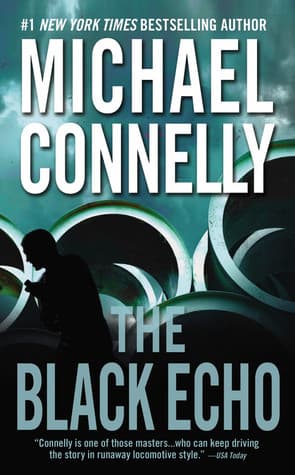
- The Black Echo
Michael Connelly
4.1 (155k) average on GoodreadsThrillerWhile both Hailey's "Detective" and Connelly's "The Black Echo" feature seasoned homicide detectives investigating complex cases, Connelly excels in developing the psychological depth and moral ambiguities of his protagonist, Harry Bosch. Hailey's Malcolm Ainslie, though competent, often feels more like a vehicle for the plot, whereas Bosch's personal demons, past trauma, and unique sense of justice are integral to the narrative. Connelly's work often delves into the ethical quagmires of police work with more nuance, making his characters more relatable and complex than Hailey's typically more straightforward heroes, as noted by critics like Marilyn Stasio in The New York Times.
- Angels & Demons
Dan Brown
3.9 (2.7M) average on GoodreadsThrillerA Harvard symbologist races through Rome's ancient sites, deciphering cryptic clues to unmask the Illuminati and stop a vengeful plot to destroy the Vatican with a stolen antimatter weapon.
- Gone Girl
Gillian Flynn
4.1 (2.3M) average on GoodreadsThrillerA wife's sudden disappearance on her fifth anniversary reveals a web of lies and psychological warfare, exposing the secrets within a seemingly perfect marriage.




Enjoyed the summary?
A summary gives you the shape of the book. The book itself has the detail, the examples and the voice.
Find Detective on AmazonAs an Amazon Associate, BookBrief earns from qualifying purchases. How we're funded