
Synopsis
Covers the whole plot, including the ending.
- Difficulty
- Easy
- Pacing
- Fast
- Mood
- Adventurous, Mysterious, Fun, Suspenseful
- Read it if
- You love Disney, mysteries, and action-packed adventures with a touch of science fiction.
- Skip it if
- You dislike children's books or stories where real-world logic is secondary to fantasy elements.
Disney After Dark Plot Summary
Covers the whole plot, including the ending.
Arrival at the Kingdom Keepers Program
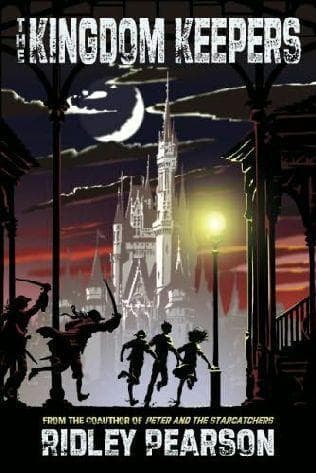
Finn Whitman, a typical teenager, receives an unexpected invitation to a new Disney World program called 'Kingdom Keepers.' He arrives at Walt Disney World Resort in Florida with four other teenagers: Amanda, Charlene, Willa, and Philby. Wayne Kresky, a long-time Disney Imagineer and the program's creator, greets them. Kresky explains their job: becoming holographic guides within the Magic Kingdom after park hours. The teens undergo a special procedure where their likenesses are scanned and transformed into DHI (Disney Host Interactive) projections, allowing them to move freely and invisibly through the park at night. This setup establishes their unique powers and responsibilities.
First Night in the Park and the Overtakers
During their first night as DHIs, Finn and the other Kingdom Keepers explore the deserted Magic Kingdom. They soon realize Kresky's program is more complex and dangerous than they imagined. They encounter classic Disney villains, including Maleficent, Cruella De Vil, and the Evil Queen, who are alive, sentient, and malevolent. These villains, led by Maleficent, are the 'Overtakers,' a group planning to escape the park and spread evil into the real world. The Keepers witness the Overtakers holding a secret meeting, discussing their plan to use a powerful magical object to achieve their goal, which sets up the main conflict.
Uncovering Maleficent's Plan
The Kingdom Keepers, still dealing with their new DHI forms and the reality of living villains, begin to understand Maleficent's plan. They discover the Overtakers intend to use the park's advanced holographic technology, the same technology that created the Keepers' DHI forms, to project themselves into the real world permanently. Maleficent, as the main antagonist, leads this plan, believing that once outside the park, they can unleash chaos and darkness. The Keepers realize they are the only ones who can stop her, given their unique ability to exist within the park's digital and physical spaces after dark.
The Search for the Key to the Kingdom
To stop Maleficent, the Kingdom Keepers learn from Kresky that they must find a legendary object called the 'Key to the Kingdom.' This object, hidden somewhere within the Magic Kingdom, can either seal the Overtakers within the park or weaken their ability to project into the real world. The search for the Key becomes a race against time, as the Overtakers are also seeking it to increase their power. The Keepers use their park knowledge and DHI abilities to navigate attractions and secret passages, encountering many traps and obstacles set by the villains, which shows their growing teamwork and individual strengths.
Confrontation in Cinderella Castle
Maleficent's plan culminates at Cinderella Castle, the iconic center of the Magic Kingdom. The Overtakers gather there, trying to perform a dark ritual that will allow their permanent projection into the real world. The Kingdom Keepers, having narrowly avoided various villainous traps and puzzles, arrive to disrupt the ceremony. A tense confrontation happens inside the castle, with the Keepers using their DHI abilities—phasing through walls, invisibility, and quick movements—to fight the physically stronger Overtakers. The battle is fierce, showing the Keepers' bravery and their growing understanding of their powers.
The Power of the Key
During the chaotic battle in Cinderella Castle, Finn, guided by instinct and Kresky's earlier hints, discovers the true power of the Key to the Kingdom. He realizes it is not a physical object but rather a concept of belief and the magic inherent in the park itself. By focusing his will and the collective belief of the Keepers, Finn can use this power. He uses it to disrupt Maleficent's ritual, weakening her and the other Overtakers, forcing them back into their traditional animated forms or into dormant states. This temporary victory saves the real world from their immediate threat, but the Keepers know the battle is far from over.
The Aftermath and New Responsibilities
After the intense confrontation, the Magic Kingdom returns to its normal, peaceful state by morning, with no guests aware of the night's battle. The Kingdom Keepers, back in their human forms, process the extraordinary events. Wayne Kresky congratulates them but also warns them that their victory is only temporary. The Overtakers are not truly defeated but merely contained, and they will try again. The Keepers understand their role as protectors of the park and the real world has just begun, solidifying their commitment to the program and each other. They realize their lives have changed forever, burdened with the secret of Disney's living magic and its lurking dangers.
Building Team Dynamics
Throughout their initial trials, Finn, Amanda, Charlene, Willa, and Philby learn to overcome their individual differences and work as a team. Finn often acts as the leader, while Philby provides intellectual insight, Amanda offers bravery and resourcefulness, Charlene brings athletic prowess, and Willa contributes her technological savvy. Their shared experiences, from navigating haunted attractions to confronting terrifying villains, create a strong bond between them. They learn to trust each other's instincts and abilities, recognizing that their collective strengths are essential for their survival and success against the Overtakers.
The Enigma of Wayne Kresky
Wayne Kresky, the eccentric Imagineer who created the Kingdom Keepers program, is a mentor. He gives the teens important information, cryptic clues, and technological support. However, his full knowledge of the Overtakers and the magical aspects of Disney World remains somewhat mysterious. He often speaks in riddles, pushing the Keepers to find answers for themselves rather than explicitly telling them everything. This approach forces the teens to develop their own problem-solving skills and resilience, while also hinting at a deeper, more complex history behind Disney's magic and Kresky's involvement.
The Threat Lingers
Even after stopping Maleficent's immediate plan, the Kingdom Keepers understand that the threat from the Overtakers is far from over. Maleficent and her fellow villains are only temporarily subdued, not permanently defeated. The magic that brings them to life and allows them to interact with the park's technology is still active. This realization sets the stage for future conflicts, as the Keepers accept their ongoing responsibility to protect Disney World and the real world from these animated adversaries. The ending reinforces that their journey as Kingdom Keepers has just begun, with many more challenges ahead.
Principal Figures
Finn Whitman
Protagonist
A resourceful and brave teenager chosen to lead the Kingdom Keepers.
Finn is initially an ordinary teenager who finds himself thrust into an extraordinary situation. He's observant, quick-thinking, and possesses a strong moral compass. Despite his initial apprehension, he quickly adapts to his DHI form and takes on a natural leadership role within the group. He often makes intuitive leaps and shows remarkable courage when facing the Overtakers. His determination to protect the park and his friends drives many of his actions.
Relationships: Wayne Kresky (mentor-mentee); Amanda (friend, potential romantic interest); Philby (friend, intellectual foil); Charlene (friend, athletic ally); Willa (friend, tech-savvy ally)
Wayne Kresky
Supporting
The enigmatic Disney Imagineer who created the Kingdom Keepers program.
Kresky is a brilliant and eccentric Imagineer with a deep understanding of Disney's magic and technology. He is the mastermind behind the DHI program and serves as the Keepers' primary mentor, providing cryptic advice and vital information. He carries a significant burden of knowledge about the Overtakers and the magical forces at play within the park. His intentions are good, but his methods are often indirect, forcing the teens to learn and grow independently.
Relationships: Finn Whitman (mentor-mentee); Maleficent (long-standing adversary)
Maleficent
Antagonist
The powerful and malevolent leader of the Overtakers.
Maleficent is the primary antagonist, a classic Disney villain brought to life with amplified power and cunning. She leads the Overtakers, driven by a desire to escape the confines of Disney World and unleash chaos upon the real world. She is intelligent, manipulative, and possesses formidable magical abilities, making her a constant and terrifying threat to the Kingdom Keepers. Her presence instills fear and urgency in the Keepers' mission.
Relationships: Kingdom Keepers (arch-enemies); Other Overtakers (leader-subordinates)
Philby
Supporting
The intelligent and analytical member of the Kingdom Keepers.
Philby is the brains of the operation, highly intelligent and logical, often providing crucial insights and solving complex puzzles. He is resourceful and well-versed in Disney lore, which proves invaluable during their investigations. While sometimes socially awkward, his sharp mind and strategic thinking are indispensable. He balances Finn's more intuitive leadership with practical solutions.
Relationships: Finn Whitman (friend, intellectual partner); Other Kingdom Keepers (friends, teammates)
Amanda
Supporting
A brave and resourceful Kingdom Keeper with a knack for quick thinking.
Amanda is characterized by her bravery, quick wit, and loyalty. She is often the first to jump into action and is not easily intimidated, even by the most fearsome villains. Her resourcefulness and ability to think on her feet make her a valuable asset to the team. She develops a close bond with Finn, often serving as his confidante and a source of encouragement.
Relationships: Finn Whitman (friend, potential romantic interest); Other Kingdom Keepers (friends, teammates)
Charlene
Supporting
An athletic and agile Kingdom Keeper.
Charlene is the athletic member of the group, possessing agility and physical prowess that often come in handy during their encounters with the Overtakers. She is practical and grounded, providing a steady presence. Her physical abilities allow her to navigate challenging environments and escape dangerous situations, making her an important part of the team's evasive maneuvers and strategies.
Relationships: Other Kingdom Keepers (friends, teammates)
Willa
Supporting
The tech-savvy and observant Kingdom Keeper.
Willa is adept with technology and often notices details that others miss. She is observant and brings a practical, grounded perspective to the group. Her understanding of the DHI technology and her keen eye for environmental clues are crucial for navigating the park and uncovering the Overtakers' plans. She often provides the technical explanations and helps decipher complex situations.
Relationships: Other Kingdom Keepers (friends, teammates)
Cruella De Vil
Antagonist
One of Maleficent's primary lieutenants, known for her cunning.
Cruella De Vil is a prominent member of the Overtakers, serving as one of Maleficent's key allies. She is depicted as cunning, ruthless, and just as determined as Maleficent to escape into the real world. Her presence adds another layer of threat and villainy to the Overtakers' ranks, and she often provides direct opposition to the Kingdom Keepers.
Relationships: Maleficent (subordinate, ally); Kingdom Keepers (enemy)
Themes & Insights
The Battle Between Good and Evil
The main theme is the struggle between good and evil. The Kingdom Keepers, representing heroism, stand against the classic Disney villains (Overtakers) who embody malice and chaos. This theme is clear in the nocturnal battles within the Magic Kingdom, where the park's innocence contrasts with the sinister intentions of Maleficent and her allies. The Keepers' fight to protect the park and the real world from the villains' darkness shows the ongoing nature of this conflict, highlighting that even in a place of magic, good must actively defend against evil.
“Evil will always find a way to creep in, even in the happiest of places.”
The Power of Belief and Imagination
The novel suggests that Disney World's magic, and the Overtakers' power, comes from belief and imagination. The DHI technology itself shows this, allowing characters to become 'real.' The 'Key to the Kingdom' is not a physical object, but the collective belief and will of the Keepers. This theme shows how human imagination and belief give power to stories and characters, making the line between fiction and reality permeable within the park. The villains gain strength from fear and disbelief, while the Keepers draw theirs from hope and unity.
“The real magic, Finn, isn't in the rides or the shows. It's in what people believe.”
Teamwork and Friendship
A core theme is the importance of teamwork and friendship in overcoming problems. Finn, Amanda, Philby, Charlene, and Willa, initially strangers, must learn to trust and rely on each other to survive the dangers of the Magic Kingdom. Each Keeper has a unique skill set—leadership, intelligence, bravery, athleticism, and tech-savviness—that is essential for the group's success. Their individual strengths combine to form a strong force against the Overtakers, showing that collective effort and mutual support are crucial when facing overwhelming odds. Their bonds deepen with each challenge, changing them from a disparate group into a cohesive unit.
“Alone, you're just kids. Together, you're Kingdom Keepers.”
The Blurring of Reality and Fiction
The novel blurs the lines between reality and fiction, a central theme to its premise. The Disney characters, traditionally confined to animation or costumed performers, become living, breathing, and malevolent entities. The protagonists themselves exist as both physical teenagers and holographic projections, moving between these states. This constant shift challenges the characters' and readers' perceptions of what is real within Disney World, suggesting that stories and their characters can gain a life beyond their original medium, especially in a place built on fantasy and immersion. The park itself becomes a space where the impossible is possible.
“What happens after the park closes... that's where the stories truly come alive.”
Plot Devices & Literary Techniques
DHI (Disney Host Interactive) Technology
A cutting-edge holographic projection system that allows the Keepers to exist as digital avatars.
The DHI technology is the central plot device, enabling the Kingdom Keepers to transform into holographic projections of themselves. This allows them to explore the Magic Kingdom after hours, move unseen, and interact with the park in ways impossible for physical humans. It also grants them certain abilities like phasing through objects and temporary invisibility. This device sets up the unique premise of the story and is directly tied to the Overtakers' plan, as they seek to use the same technology to project themselves into the real world permanently.
The Key to the Kingdom
A metaphorical object representing the power of belief and the park's magic, crucial for defeating the Overtakers.
Initially presented as a tangible object, the 'Key to the Kingdom' is revealed to be a powerful, metaphorical force derived from the collective belief and imagination associated with Disney World. It is the ultimate weapon against the Overtakers, capable of disrupting their magic and containing them within the park. Its abstract nature forces the Keepers to understand the deeper magic of Disney, rather than relying on a simple magical artifact. This device elevates the theme of belief and gives the Keepers agency beyond mere physical combat.
The Overtakers
Classic Disney villains who have come to life and seek to escape the park.
The Overtakers serve as the primary antagonists and a key plot device for conflict. They are classic Disney villains like Maleficent and Cruella De Vil, brought to life and imbued with malevolent sentience. Their goal to escape Disney World and spread evil into the real world drives the entire plot, providing the central threat that the Kingdom Keepers must combat. Their existence establishes the stakes and the fantastical nature of the story, transforming beloved characters into formidable adversaries.
The Deserted Theme Park
The Magic Kingdom after closing hours, transforming from a place of joy into a mysterious and dangerous battleground.
The deserted Magic Kingdom after closing hours is a powerful plot device that creates a unique atmosphere of mystery and suspense. By day, it's a place of joy and wonder; by night, it becomes an eerie, empty landscape where familiar attractions hide secrets and dangers. This setting allows the villains to operate freely and provides a vast, iconic playground for the Keepers' adventures and confrontations. The contrast between its daytime and nighttime personas heightens the sense of peril and wonder, making the setting itself a character in the story.
Disney After Dark Quotes
“Finn had never felt so alone in his life. Not when his parents had died, not when he’d been shuffled from foster home to foster home, not even when he’d first arrived at the park.”
“The park was alive. Not just with people, but with something else. Something magical. Something dangerous.”
“Being a Kingdom Keeper wasn't a game. It was a responsibility. A heavy one.”
“They were digital. They were real. And they were trapped.”
“Sometimes, the biggest monsters aren't the ones with fangs and claws. They're the ones who look just like everyone else.”
“Fear was a funny thing. It could paralyze you, or it could make you do things you never thought possible.”
“Every ride, every show, every character... it all had a secret. A life after dark.”
“The future of Disney wasn't just about rides and movies. It was about something far more important: imagination.”
“They weren't just fighting for themselves. They were fighting for the magic. For everything Disney stood for.”
“Even in the happiest place on Earth, there were shadows. Deep ones.”
“Trust was earned, not given. Especially when you were dealing with a world that wasn't supposed to exist.”
“The park had a heartbeat. A rhythm that changed when the sun went down.”
“Sometimes, the only way to find your way out of the dark was to embrace a little bit of it yourself.”
Quiz
10 questions on the plot and the characters. Each answer comes with a short explanation.
Question 1
What is the primary power of the technology used to transform Finn and the other guides?
- Super strength and speed
- Invisibility and flight
- The ability to become hologram projections
- Mind-reading and telekinesis
Show answer
C. The ability to become hologram projections Finn and the other teens are transformed into hologram projections, allowing them to lead guests around the park in a unique way.
Question 2
Which Disney park serves as the main setting for the story?
- Epcot
- Disney's Hollywood Studios
- Magic Kingdom
- Disney's Animal Kingdom
Show answer
C. Magic Kingdom The Magic Kingdom is the specific Disney World park where Finn and his friends work and where the main conflict unfolds.
Question 3
What is the primary role of Finn Whitman and the other teens at Disney World?
- Maintenance crew members
- Costumed character performers
- Theme park guides
- Ride operators
Show answer
C. Theme park guides Finn and the other teens are hired as special theme park guides, using their holographic abilities.
Question 4
What is the main threat that Finn and his friends must thwart?
- A power outage affecting the entire park
- A group of Disney villains planning an uprising
- A rival theme park attempting to steal technology
- An alien invasion of the park
Show answer
B. A group of Disney villains planning an uprising The core conflict involves Finn and his pals trying to stop a menacing group of Disney villains from causing trouble in the park.
Question 5
What kind of job does Finn initially believe he is taking at Disney World?
- A standard summer internship
- An exciting theme park job as a guide
- A behind-the-scenes engineering role
- A role as a Disney character actor
Show answer
B. An exciting theme park job as a guide The description states that 'What begins as an exciting theme park job' turns into a nightmare, indicating his initial perception.
Question 6
The transformation technology is described as 'cutting-edge'. What does this imply about its nature?
- It is old and outdated, prone to malfunction.
- It is basic and easily replicated.
- It is highly advanced and innovative.
- It is dangerous and experimental.
Show answer
C. It is highly advanced and innovative. 'Cutting-edge' technology refers to the most advanced and innovative developments in a particular field.
Question 7
How many teens, including Finn, are initially hired as Disney World guides with this special technology?
- Three
- Four
- Five
- Six
Show answer
C. Five The synopsis states, 'Finn Whitman and four other teens have been hired,' which totals five individuals.
Question 8
The novel blends elements of 'Fantasy, Children's, Mystery, Science Fiction, Young Adult'. Which of these genres is most directly represented by the 'cutting-edge technology' and 'hologram projections'?
- Fantasy
- Mystery
- Science Fiction
- Young Adult
Show answer
C. Science Fiction Cutting-edge technology, especially involving projections and advanced devices, is a hallmark of the science fiction genre.
Question 9
The phrase 'a virtual nightmare' is used to describe the turn of events. What does 'virtual' imply in this context, considering the nature of their jobs?
- The nightmare is not real, only imagined by Finn.
- The nightmare is caused by computer viruses.
- The nightmare is experienced within their holographic, non-physical state.
- The nightmare is almost, but not entirely, a nightmare.
Show answer
C. The nightmare is experienced within their holographic, non-physical state. Given that the teens are literally 'hologram projections,' their experiences and the 'nightmare' they face are inherently tied to their virtual, non-physical existence within the park's digital framework.
Question 10
What is the thematic contrast established between Finn's initial perception of his job and the reality that unfolds?
- From boredom to excitement.
- From a simple job to a complex leadership role.
- From an exciting opportunity to a dangerous crisis.
- From anonymity to fame.
Show answer
C. From an exciting opportunity to a dangerous crisis. The text explicitly states, 'What begins as an exciting theme park job turns into a virtual nightmare,' highlighting the shift from an appealing opportunity to a perilous situation.
Disney After Dark FAQ
What is the core premise of 'Disney After Dark'?
The core premise involves five teenagers, led by Finn Whitman, who are hired as Disney World guides. Through advanced holographic technology, they are transformed into projections that can navigate the park. Their exciting new jobs quickly turn perilous when they discover a plot by classic Disney villains to take over the Magic Kingdom.
Who are the five main teenage protagonists, and what is their role?
The five protagonists are Finn Whitman, Amanda, Willa, Jess, and Philby. They are part of the 'Kingdom Keepers' program, becoming holographic 'DHI' (Disney Host Interactive) projections after the park closes. Their primary role is to act as guides, but they soon become the park's last line of defense against the villains.
What kind of technology is used to transform the teens, and how does it work?
The teens are transformed using cutting-edge holographic projection technology, allowing them to become 'DHIs' (Disney Host Interactives). This technology enables them to move freely and invisibly through the park after hours, giving them unique abilities and vulnerabilities as they battle the Overtakers.
Who are the 'Overtakers' and what is their goal?
The 'Overtakers' are a menacing group of classic Disney villains, led by Maleficent, who are attempting to escape their fictional confines and take over the Magic Kingdom, and eventually the real world. Their goal is to gain control of the park's technology and spread their influence beyond its gates.
Which specific Disney villains are prominently featured in this initial uprising?
Maleficent from 'Sleeping Beauty' is the primary antagonist and leader of the Overtakers. Other notable villains include the Evil Queen from 'Snow White,' Cruella De Vil from '101 Dalmatians,' and various other minor antagonists who serve Maleficent's agenda within the park.
How do the DHI abilities of the Kingdom Keepers impact their fight against the villains?
As DHIs, the Kingdom Keepers can pass through solid objects, move at incredible speeds, and are generally invisible to humans. However, they are vulnerable to specific 'real-world' attacks and can be 'derezed' or damaged, which creates a unique set of challenges and limitations in their battles with the physically manifested Overtakers.
Are there any subtle clues within the park's existing attractions that foreshadow the conflict?
The book hints that the 'magic' of Disney is real and has always had a dual nature. Certain animatronics and effects within attractions like the Haunted Mansion or Pirates of the Caribbean are shown to have a deeper, more sinister potential, almost as if they are latent power sources or dormant entities waiting to be awakened by the Overtakers.
How does the concept of 'preserving the magic' tie into the larger narrative beyond just stopping the villains?
The novel suggests that the 'magic' of Disney is a fragile balance between imagination and reality, and the Overtakers seek to corrupt or destroy this balance. The Kingdom Keepers aren't just saving the park; they are preserving the integrity of storytelling and the positive influence Disney has on the world, preventing its darker elements from escaping.
What is the significance of the specific locations within Magic Kingdom that the battles take place?
Battles are strategically placed in iconic locations like Cinderella Castle, Space Mountain, and the Haunted Mansion. These locations are not just backdrops; they are often integral to the villains' plans, serving as power conduits, staging grounds, or symbolic targets, enhancing the stakes and visual appeal of the confrontations.
How does Finn's leadership style evolve throughout the initial conflict?
Initially, Finn is hesitant and overwhelmed by the responsibility, often relying on his friends. As the stakes rise and they face direct threats from Maleficent, he grows into a more decisive and strategic leader, learning to trust his instincts and coordinate his diverse team's abilities under pressure.
What psychological impact does being a DHI have on the teens, particularly their sense of self?
Being a DHI blurs the line between their physical selves and their holographic projections, causing identity confusion and a sense of detachment. They struggle with the idea of being 'real' versus being digital, impacting their perception of danger and their connection to the world outside the park.
How does the fear of being 'derezed' affect the Kingdom Keepers' decision-making and teamwork?
The constant threat of being 'derezed' (effectively dying as a DHI) creates immense psychological pressure, forcing them to confront their mortality in an unusual way. This fear pushes them to be more cautious but also strengthens their bonds, as they must rely on each other for survival and emotional support.
What motivates the villains, beyond simple evil, to take over the park?
Beyond pure malice, the villains are motivated by a desire for freedom from their narrative confines and a craving for real-world power and recognition. They resent being confined to stories and seek to rewrite their destinies, making the Magic Kingdom their first step towards global domination.
Is the novel suggesting a deeper commentary on the nature of artificial intelligence or virtual reality?
Yes, by making the protagonists holographic projections, the novel subtly explores themes of artificial intelligence and virtual reality. It questions what constitutes 'life' or 'reality' when consciousness can be digitized, hinting at the ethical implications of such advanced technology.
How does the book blend the fantasy of Disney with elements of science fiction?
The book cleverly blends traditional Disney fantasy (talking animals, magic spells) with hard science fiction elements like advanced holographic projection, neural interfaces, and cutting-edge surveillance technology. This fusion creates a unique genre where magic and tech are two sides of the same coin.
What message, if any, does the author convey about the power of imagination and storytelling?
The author strongly conveys that imagination and storytelling are powerful forces, capable of both immense good and profound evil. The villains' ability to manifest from stories, and the heroes' reliance on creative problem-solving, highlight how narratives shape reality and human experience.
Could the 'uprising' be interpreted as a metaphor for something larger in society?
The uprising could be interpreted as a metaphor for the struggle between good and evil inherent in human nature, or perhaps the battle against the corruption of innocence and wonder. The villains represent negative influences seeking to tarnish a place of joy and imagination, much like societal cynicism can erode optimism.
How does the novel address the concept of 'good' versus 'evil' within the context of Disney characters?
The novel portrays 'good' and 'evil' as tangible forces, rather than mere moral concepts. The Disney villains are not just bad guys; they embody malevolent energy that can physically alter the world, while the Kingdom Keepers' actions represent the defense of light, hope, and the positive aspects of imagination.
About the author

Ridley Pearson is an American author known for his fiction, particularly in the realm of young adult and thriller genres. His notable works include "Disney After Dark," which is part of the Kingdom Keepers series, and "The Insider," a gripping tale that explores themes of crime and deception. Pearson's writing often blends adventure with elements of mystery.
Similar books
- Fablehaven
Brandon Mull
4.1 (134k) average on GoodreadsFantasyFeatures secret magical worlds hidden in plain sight and children protecting them.
- Eragon
Christopher Paolini
3.9 (1.4M) average on GoodreadsFantasyWhile both are fantasy novels targeting a young adult audience, Paolini builds an entirely new high-fantasy world with unique creatures, languages, and political systems. Pearson, in contrast, sets his fantasy within a real-world, highly recognizable location (Disney parks) and utilizes existing characters (Disney villains and heroes). This difference impacts the scope of world-building; Paolini has complete creative freedom, while Pearson must work within the constraints and established imagery of the Disney brand, which can both enhance accessibility and limit originality.
- Harry Potter and the Sorcerer's Stone
J.K. Rowling
4.5 (7M) average on GoodreadsFantasyRescued from a miserable life under the stairs, an orphaned boy discovers he's a wizard destined for a magical school, where he uncovers a dangerous secret tied to the dark wizard who murdered his parents.
- The Hunger Games
Suzanne Collins
4.3 (6.4M) average on GoodreadsFantasyIn a future where children fight to the death on live television, Katniss Everdeen volunteers for the arena, turning a death sentence into a fight for survival and a spark of rebellion.
- 1984
George Orwell
4.2 (3.1M) average on GoodreadsPoliticsIn a future where surveillance and thought control are absolute, a man's search for truth clashes with the Party, showing that hope can be a form of rebellion.
- Divergent
Veronica Roth
4.2 (2.9M) average on GoodreadsFantasyIn a society divided by virtues, a sixteen-year-old's difference from the norm starts a rebellion that threatens her world.




Enjoyed the summary?
A summary gives you the shape of the book. The book itself has the detail, the examples and the voice.
Find Disney After Dark on AmazonAs an Amazon Associate, BookBrief earns from qualifying purchases. How we're funded