
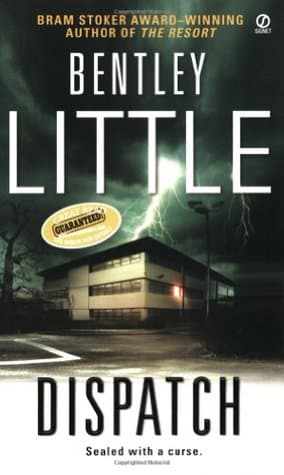
Synopsis
Covers the whole plot, including the ending.
- Difficulty
- Medium
- Pacing
- Variable
- Mood
- Dark, unsettling, suspenseful, paranoid, psychological
- Read it if
- You enjoy dark, psychological thrillers with a supernatural twist and a creeping sense of dread, and don't mind a protagonist's slow descent into moral ambiguity.
- Skip it if
- You prefer clear-cut heroes, lighthearted plots, or stories with a definitive, uplifting resolution.
Dispatch Plot Summary
Covers the whole plot, including the ending.
The Gift of Persuasion
Jason Handford, a writer in Phoenix, Arizona, is good at crafting letters. Whether it is a complaint to a cable company, a love letter, or an editorial, his words always get the desired result. His letters to companies solve problems instantly, his love letters reignite old passions, and his political letters sway public opinion. Jason first uses this gift for himself and to help friends, often writing under other names. He enjoys the power his words have, even though he is somewhat confused by the consistent and often strong reactions they cause in recipients, who seem forced to act exactly as he suggests.
The Mysterious Job Offer
One day, Jason gets a mysterious letter from a company called 'Dispatch,' offering him a high-paying job as a professional letter writer. The letter acknowledges his unique skill and promises an environment where he can fully use his abilities. Despite his initial doubt and the vague details about the company's work and purpose, the appeal of a steady income and a chance to improve his craft is too strong. He accepts the offer, not fully understanding the group's nature or the effect this decision will have on his life, believing it to be a real, if unusual, business.
Entering the World of Dispatch
Jason starts working at Dispatch, located in a plain, isolated building. The office feels unsettling; his coworkers are odd and distant, each having their own strange skills—from a woman who can make people feel guilty with a single phrase to a man who can compel actions with spoken commands. The company's main job is to write letters for clients, for everything from corporate deals to personal feuds, all with a guarantee of success. Jason is happy at first with the challenge and the immediate, clear power of the letters he now writes for Dispatch, but he also feels a sinister undercurrent.
The Escalation of Power
As Jason works more at Dispatch, his letters' effects become more clear and often disturbing. He writes a letter to a competitor that leads to their financial ruin and even suicide. A letter to a lover causes an irrational obsession. The letters do not just influence; they compel. Jason sees his coworkers' letters achieving similar, often disastrous, results. While he is initially fascinated by this immense power, a growing unease settles over him as he sees the destructive effects of his words. He realizes the company's methods are far from good or ethical.
Personal Entanglement
Jason's personal life begins to merge with his work. He uses his letter-writing skill to influence a difficult landlord, get a better apartment, and even manipulate romantic interests. While these actions bring him temporary satisfaction, they also deepen his moral struggle. He battles with the ethics of holding such absolute power, even for seemingly small personal gains. The line between right and wrong becomes more blurry as he gets used to the immediate satisfaction and control his letters provide, pulling him further into Dispatch's dark influence.
The Darker Truths of Dispatch
Driven by growing suspicion, Jason begins to investigate Dispatch's history and its leader, Mr. Pinter. He discovers that Dispatch is not just a powerful company but an ancient, possibly supernatural, entity that has existed for centuries, manipulating events throughout history through its 'correspondence.' The group thrives on chaos and control, feeding off the despair and subjugation it creates. Jason learns that his coworkers are not just talented individuals but are, in some cases, beings who have been corrupted or empowered by Dispatch's dark influence, serving its evil agenda across generations.
The Price of Power
As Jason continues to write for Dispatch, he feels his own personality and morality wearing away. He becomes more unfeeling, more distant from the human effects of his letters. He feels a growing emptiness inside, as if his soul is being drained by the constant use of his persuasive power. The once-exciting feeling of control is replaced by a chilling realization that he is becoming a tool, an extension of Dispatch's will, losing his own identity. He starts to question if the immense power is worth the ultimate personal cost.
Rebellion and Resistance
Disturbed by his soul's corruption and Dispatch's evil nature, Jason tries to resist. He tries to write letters that go against Dispatch's goals or to simply stop writing. However, he finds himself increasingly bound by an unseen force, a compulsion to continue his work. He discovers that leaving is not an option, as the company has subtle yet strong ways of keeping its employees. His attempts at rebellion are met with psychological pressure, unsettling incidents, and the chilling realization that Dispatch has deep roots in society, making escape almost impossible.
Confrontation with Mr. Pinter
Jason finally confronts Mr. Pinter, the seemingly ageless and all-knowing head of Dispatch. Pinter reveals the full extent of Dispatch's ancient origins and its true purpose: to control humanity, shaping history and individual lives through the power of written and spoken word. He explains that Jason's gift is not just a talent but a link to this primal force, and that by working for Dispatch, Jason is fulfilling a predetermined role. Pinter's calm, unsettling manner and the sheer scale of his revelations make Jason feel small and trapped, facing a power far beyond his understanding.
The Final Letter
In a desperate last effort, Jason tries to write a letter that could somehow dismantle Dispatch or break his connection to its power. He pours all his remaining will and corrupted talent into this final letter, hoping to use the very tool that enslaved him to gain freedom. The act is mentally and spiritually painful, a battle for his very being. The outcome of this letter is uncertain, a final gamble against an ancient, seemingly unbeatable force, representing his last bit of independent will against the overwhelming darkness that has consumed his life.
Descent into Dispatch
Despite his efforts, Jason's final letter fails to destroy Dispatch. Instead, it is twisted and absorbed by the company's power. Jason eventually gives in, losing his individuality and becoming fully integrated into Dispatch's ancient, evil network. He is transformed, physically or spiritually, into a permanent part of the organization, destined to write its letters forever, stripped of his former self. The novel ends with Jason, or what remains of him, continuing his work, a chilling example of Dispatch's subtle and inescapable power, and the ultimate cost of using such a dark gift.
Principal Figures
Jason Handford
Protagonist
A struggling writer with an extraordinary, supernatural gift for persuasive letter writing.
Jason Handford is an aspiring writer who initially uses his uncanny ability to craft letters that get undeniable results for personal gain and to help friends. He is intelligent, observant, and initially possesses a strong moral compass, though it is tested and eroded throughout the story. He is drawn to the power his words wield but quickly becomes disturbed by the extreme consequences. His internal struggle between the allure of power and his conscience forms the core of the narrative.
Relationships: Mr. Pinter (Subordinate to superior; later, captive to captor.); Colleagues at Dispatch (Fellow employees, but also fellow victims/agents of Dispatch's power.)
Mr. Pinter
Antagonist
The enigmatic and ancient leader of Dispatch, embodying its malevolent power.
Mr. Pinter is the seemingly ageless and all-knowing head of Dispatch. He is calm, collected, and possesses an unsettling aura of ancient authority. Pinter serves as the primary mouthpiece for Dispatch's philosophy and reveals its true, sinister nature to Jason. He represents the ultimate, inescapable power of the organization, a figure of pure, ancient malevolence who manipulates lives and history with detached efficiency. He is the personification of the dark force Jason is fighting against.
Relationships: Jason Handford (Employer to employee; later, master to enslaved agent.)
The Colleagues at Dispatch
Supporting
Eccentric individuals with their own unique, manipulative abilities, serving Dispatch.
Jason's colleagues at Dispatch are a diverse group of individuals, each possessing a specific, supernatural talent for manipulation – be it through spoken words, subtle gestures, or other forms of communication. They are largely detached, almost robotic, in their dedication to Dispatch's work, having long since succumbed to its influence. They serve as a chilling preview of Jason's potential future, demonstrating the corrosive effects of Dispatch's power on human morality and individuality.
Relationships: Jason Handford (Fellow employees under Dispatch's control.); Mr. Pinter (Subordinates to the leader of Dispatch.)
Sarah (Mentioned)
Mentioned
Jason's former romantic interest, influenced by his early letters.
Sarah is a woman Jason had a romantic interest in before joining Dispatch. He used his letter-writing gift to rekindle their relationship, demonstrating the early, 'positive' applications of his power. She represents a connection to Jason's 'normal' life and the moral ambiguities of his gift before it became fully corrupted by Dispatch. Her presence highlights the initial allure and the later loss of his humanity.
Relationships: Jason Handford (Former romantic interest, manipulated by his letters.)
Themes & Insights
The Corrupting Nature of Absolute Power
The novel explores how unchecked power can erode one's morality and identity. Jason's gift, initially satisfying, slowly turns him into a tool of manipulation. The immediate success of his letters leads him to ignore ethical boundaries, ending in a complete loss of self as he becomes part of Dispatch's evil will. This theme is clear in how Jason's early, seemingly harmless letters for personal gain escalate to causing ruin and despair for others, showing a gradual decline into moral decay.
“The words were no longer his; they were merely channeled through him, a current of pure, irresistible will.”
Loss of Self and Identity
As Jason learns more about Dispatch, he loses his sense of self. His personality, values, and even his free will are consumed by the organization's influence. Writing becomes less about creativity and more about being a channel for Dispatch's ancient agenda. This theme is shown through Jason's thoughts, where he notes his increasing emotional distance and the feeling that his soul is being drained, leaving an empty shell. His change is a chilling depiction of how an individual can be completely taken over by a powerful, outside force.
“He was a pen. Nothing more. A tool. The words flowed, but the meaning, the intent, was no longer his own.”
The Insidious Nature of Control
Dispatch shows how subtle control can be more powerful than obvious force. The company does not use violence; it uses words to subtly, yet completely, compel actions and shape destinies. This form of control is inescapable, affecting every part of life, from personal relationships to global events. The novel shows how even attempts to resist are subtly turned against the individual, highlighting the frightening effectiveness of psychological and linguistic manipulation over brute strength.
“You don't break free from us, Mr. Handford. You become us.”
The Supernatural and Ancient Evil in Modernity
The novel mixes supernatural horror with a modern setting, suggesting that ancient evils persist and adapt to new forms of communication and influence. Dispatch is not just a company; it is an ancient entity rooted in history, working through the timeless power of persuasion. This theme reveals how the ordinary act of writing a letter can become a channel for deep, evil forces. The contrast between the normal office and the cosmic horror of Dispatch's true nature emphasizes that evil can hide in plain sight, using everyday tools for its sinister purposes.
“We have always been here. In the scrolls, in the proclamations, in the very words that shaped empires.”
Plot Devices & Literary Techniques
The Supernatural Letter-Writing Gift
A magical ability to write letters that compel absolute, undeniable results from recipients.
This is the central plot device. Jason's gift is not merely persuasive; it is absolute. Any letter he writes, for any purpose, elicits the exact desired response. This immediate and powerful feedback mechanism drives the plot, as Jason explores the limits and consequences of his ability. It acts as both a blessing and a curse, drawing him into Dispatch's orbit and ultimately leading to his downfall. The supernatural aspect elevates the story from a mundane thriller to a horror narrative, as the power becomes increasingly dark and uncontrollable.
The Mysterious Organization (Dispatch)
A shadowy, ancient entity masquerading as a modern corporation, employing individuals with unique persuasive talents.
Dispatch serves as the primary antagonist and the catalyst for Jason's transformation. Its mysterious nature, hidden motives, and the unsettling talents of its employees create an atmosphere of dread and suspicion. The organization functions as a trap, luring Jason with promises of wealth and purpose, only to enslave him. Its ancient origins and malevolent agenda reveal the true stakes of Jason's involvement, moving the story from a personal struggle to a battle against an insidious, cosmic evil.
Internal Monologue and Moral Erosion
Jason's ongoing internal reflections on his power and its consequences, charting his moral decline.
Jason's internal monologue is crucial for conveying the theme of corrupting power and loss of self. His thoughts and struggles provide insight into his initial fascination, growing unease, and eventual despair. This device allows the reader to witness his gradual moral erosion firsthand, as he rationalizes increasingly unethical actions and feels his identity slipping away. It makes his descent into Dispatch's control more poignant and terrifying, as the reader experiences the internal battle he eventually loses.
The 'Compulsion' Mechanism
An unseen, irresistible force that binds Jason to Dispatch and compels him to continue his work.
Beyond the initial job offer, Jason is bound to Dispatch by an invisible, supernatural compulsion. He cannot simply quit or refuse to write; an internal or external force drives him. This mechanism highlights the inescapable nature of Dispatch's power and Jason's lack of free will, transforming him from an employee into a prisoner. It raises the stakes of his struggle, showing that even if he wanted to escape, he is physically and spiritually tethered to the organization, making his eventual succumb all the more tragic.
Dispatch Quotes
“The darkness was not just an absence of light, but a presence unto itself, a living, breathing thing that pressed in from all sides.”
“There are some secrets that the earth itself tries to keep buried, and some men are foolish enough to try and dig them up.”
“The town had a way of consuming people, not just their bodies, but their very souls.”
“He felt a cold dread, not the fear of an animal, but the existential terror of a soul confronting something utterly alien.”
“History wasn't just written by the victors; sometimes, it was rewritten by something far older and more patient.”
“The line between reality and nightmare was not merely blurred; it had ceased to exist.”
“Every shadow seemed to hold a watching eye, every whisper a hidden threat.”
“Some evil doesn't need a motive; it simply *is*.”
“The past wasn't dead; it was merely waiting, breathing beneath the surface, for its moment to rise again.”
“He had seen monsters before, but never one that wore the skin of normalcy so perfectly.”
“Hope was a dangerous thing in this place; it only made the eventual despair more profound.”
“The silence was not peaceful, but heavy, pregnant with unspoken horrors.”
“Fear was a language they all understood, a universal dialect spoken in screams and trembling hands.”
“Sometimes, the only way to fight a monster is to understand what makes it tick, even if that understanding drives you mad.”
Quiz
10 questions on the plot and the characters. Each answer comes with a short explanation.
Question 1
What is Jason Handford's unique talent at the beginning of the story?
- He is an exceptional public speaker.
- He has a gift for writing letters that get results.
- He is a skilled private investigator.
- He can perfectly mimic other people's handwriting.
Show answer
B. He has a gift for writing letters that get results. Jason's initial talent, which forms the premise of the story, is his ability to write letters that achieve their desired outcome.
Question 2
What kind of letters does Jason write for people before taking the professional job?
- Only legal documents and wills.
- Mainly résumés and cover letters.
- Complaints, love letters, and editorials.
- Thank you notes and invitations.
Show answer
C. Complaints, love letters, and editorials. The description states Jason writes a variety of letters, including complaints, love letters, and editorials, showcasing his versatility.
Question 3
What is the primary consequence of Jason taking the professional job offered to him?
- It makes him incredibly wealthy and famous.
- It allows him more free time to pursue his hobbies.
- It consumes his time, his mind, and eventually, his soul.
- It leads him to discover a hidden family secret.
Show answer
C. It consumes his time, his mind, and eventually, his soul. The book description explicitly states that the job 'consumes his time, his mind, and eventually, his soul,' highlighting the negative impact.
Question 4
The tagline 'Jason really should have stuck with freelance' suggests which overarching theme?
- The benefits of self-employment over corporate jobs.
- The dangers of commercializing a personal talent.
- The importance of finding a stable career path.
- The difficulty of writing effective letters for hire.
Show answer
B. The dangers of commercializing a personal talent. The phrase implies regret and a negative outcome from taking the professional job, contrasting it with his earlier freelance work, suggesting a theme about the perils of turning a gift into a consuming profession.
Question 5
What genre elements are explicitly mentioned for 'Dispatch'?
- Romance, Historical Fiction, Comedy
- Science Fiction, Horror, Drama
- Thriller, Fantasy, Mystery
- Literary Fiction, Biography, Adventure
Show answer
C. Thriller, Fantasy, Mystery The genre tags provided in the prompt are Thriller, Fantasy, Mystery.
Question 6
The phrase 'consumes his time, his mind, and eventually, his soul' indicates a shift in the nature of Jason's letter-writing. What is the most likely implication regarding the letters themselves?
- The letters become less effective over time.
- The letters begin to have unforeseen or dark consequences.
- The letters become repetitive and boring to write.
- The letters are simply too numerous for him to handle.
Show answer
B. The letters begin to have unforeseen or dark consequences. The 'consumption of his soul' suggests a supernatural or morally corrupting element, implying the letters or the job itself goes beyond mere workload and has a darker, more profound effect.
Question 7
Bentley Little is known for his horror novels. Given the provided description, what element specifically hints at a potential horror or dark fantasy aspect in 'Dispatch'?
- The mention of Jason writing love letters.
- The fact that the job 'consumes his soul.'
- The idea of writing complaints for results.
- The term 'freelance' in the final line.
Show answer
B. The fact that the job 'consumes his soul.' The phrase 'consumes his soul' moves beyond psychological stress into a spiritual or supernatural realm, strongly hinting at the horror or dark fantasy elements often found in Bentley Little's work.
Question 8
Considering the genres 'Thriller, Fantasy, Mystery' and the plot description, what kind of 'results' might Jason's letters achieve that would align with these genres beyond simple everyday outcomes?
- Only successful product refunds and customer service resolutions.
- Unexplained phenomena, manipulation of reality, or uncovering hidden truths.
- Primarily political campaign victories and public policy changes.
- Just getting people to respond to personal advertisements.
Show answer
B. Unexplained phenomena, manipulation of reality, or uncovering hidden truths. The inclusion of 'Fantasy' and 'Mystery' suggests the 'results' are not mundane. 'Unexplained phenomena, manipulation of reality, or uncovering hidden truths' would fit the supernatural/fantastical and investigative/mysterious aspects implied.
Question 9
What is the most significant internal conflict Jason Handford likely faces as the story progresses, based on the synopsis?
- Struggling to meet deadlines for his clients.
- Debating whether to retire early or continue working.
- A moral struggle over the power and consequences of his letters, and the loss of his own identity/soul.
- Trying to learn new writing techniques to improve his craft.
Show answer
C. A moral struggle over the power and consequences of his letters, and the loss of his own identity/soul. The phrase 'consumes his time, his mind, and eventually, his soul' points directly to a profound internal struggle regarding the moral implications of his work and its corrosive effect on his being.
Question 10
If Jason 'should have stuck with freelance,' what does this imply about the nature of his earlier, non-professional letter writing?
- It was less effective and rarely got results.
- It was more creatively fulfilling but poorly paid.
- It was done with more personal control and without the soul-consuming consequences of the professional job.
- It involved writing only mundane, everyday correspondence.
Show answer
C. It was done with more personal control and without the soul-consuming consequences of the professional job. The contrast between 'freelance' and the 'consumes his soul' professional job suggests the freelance work, while perhaps less prestigious or profitable, allowed Jason greater autonomy and prevented the dire consequences that follow his professional engagement.
Dispatch FAQ
What is the central premise of 'Dispatch' and how does Jason Handford's unique ability drive the plot?
The central premise revolves around Jason Handford, a man with an extraordinary talent for crafting letters that unfailingly achieve their desired outcome. His ability to write letters that manipulate reality, from getting refunds to inciting violence, is what initially attracts the mysterious Dispatch organization and propels him into a world where his gift becomes a terrifying burden rather than a useful skill.
Who is the Dispatch organization, and what is their initial offer to Jason?
The Dispatch organization is a shadowy, powerful entity that recognizes Jason's unique talent for letter writing. They offer him a lucrative full-time position, promising to utilize his skills for various 'clients' and pay him handsomely. This offer initially seems like a dream job, freeing him from financial worries and allowing him to fully embrace his passion, but it quickly reveals its sinister true nature.
How does Jason's personal life begin to unravel after joining Dispatch?
After joining Dispatch, Jason's personal life rapidly deteriorates. His wife, Sharon, becomes increasingly distant and alarmed by his obsession with work, and his once-normal routine is consumed by the endless, disturbing requests for letters. His home life becomes secondary to his job, leading to profound isolation and a growing sense of dread as his connection to reality frays.
What kind of letters does Jason find himself writing for Dispatch, and how do they impact his morality?
Jason is forced to write an increasingly dark array of letters, ranging from those that manipulate business deals and personal relationships to those that incite violence, ruin lives, and even cause death. The direct, often catastrophic consequences of his words weigh heavily on his conscience, forcing him to confront the horrifying ethical implications of his 'gift' and the evil he is enabling.
What is the ultimate fate of Jason Handford by the end of the novel?
By the novel's chilling conclusion, Jason Handford has been completely consumed by the Dispatch organization and his own 'gift.' He loses his identity, his sanity, and his soul, becoming a mere instrument for the organization's malevolent will. His transformation is complete, leaving him as nothing more than a letter-writing automaton, eternally bound to his terrifying craft.
Are there any subtle clues early on that hint at the supernatural nature of Jason's gift, beyond mere persuasion?
Yes, early in the narrative, there are subtle hints that Jason's letters possess an almost magical efficacy, exceeding what normal persuasion could achieve. The speed and improbable success of some of his freelance letters, such as getting immediate, unexpected results from trivial complaints, foreshadow the reality-bending power he wields, even before he understands its true scope.
What is the significance of the seemingly mundane office environment of Dispatch, despite its sinister purpose?
The mundane, almost bureaucratic office environment of Dispatch serves as a chilling juxtaposition to its supernatural and malevolent purpose. This banality highlights how evil can be institutionalized and normalized within everyday structures, making the organization's power even more insidious. It suggests that the true horror lies not in overt monstrousness, but in the quiet, efficient execution of malevolence.
Are there any recurring symbols or motifs that hint at Jason's loss of self?
One recurring motif is the gradual blurring of Jason's handwriting, then his thoughts, and eventually his very identity with the demands of the letters. The act of writing itself becomes less a creative endeavor and more a compulsive, automated process. This physical and mental degradation symbolizes his complete surrender to the Dispatch organization, where his individuality is systematically erased.
How does Bentley Little use the mundane act of letter writing to explore themes of power and control?
Bentley Little brilliantly subverts the mundane act of letter writing, transforming it into a conduit for immense, reality-altering power. He uses it to explore how control can be exerted remotely and subtly, demonstrating that words, when imbued with a certain 'gift,' can be more potent than physical force. The novel suggests that the most insidious forms of power often operate through seemingly innocuous channels.
How does Jason's initial excitement about his gift transform into dread and self-loathing?
Jason's initial excitement stems from the validation and success his letters bring, satisfying a deep-seated desire for impact. However, as the requests from Dispatch become increasingly dark and manipulative, his pride morphs into profound dread. He witnesses the devastating consequences of his words, leading to intense self-loathing as he recognizes himself as an agent of destruction, trapped by his own unique talent.
Discuss the psychological impact of Jason's isolation from his wife, Sharon, as his work consumes him.
Jason's increasing isolation from Sharon has a profound psychological impact, amplifying his descent into despair. As he becomes more secretive and withdrawn, Sharon's growing concern and eventual alienation strip away his last vestiges of normalcy and emotional support. This detachment leaves him vulnerable and alone to face the horrors of Dispatch, accelerating his mental and emotional collapse.
How does the novel portray the addictive nature of power, even when it's destructive?
The novel portrays the addictive nature of power through Jason's inability to extricate himself from Dispatch, even as it destroys him. Despite the horror, there's an underlying draw to the absolute efficacy of his letters and the control they afford. This perverse allure of seeing his words manifest reality, no matter how destructive, illustrates how power can become an inescapable, soul-corroding addiction.
To what extent is Jason a victim of Dispatch, and to what extent is he complicit in his own downfall?
Jason is undoubtedly a victim of Dispatch's insidious manipulation and supernatural coercion, trapped by their power. However, he also bears some complicity in his downfall, initially drawn by the allure of money and validation, and later by a twisted fascination with his own power. His reluctance to truly fight back until it's too late highlights a degree of passive acceptance that contributes to his ultimate fate.
Is Dispatch a literal organization, a metaphor for something else, or both?
Dispatch operates on both literal and metaphorical levels. Literally, it's a shadowy, powerful organization exploiting Jason's gift. Metaphorically, it can be interpreted as a representation of systemic evil, the corrupting influence of unchecked power, or even the dark side of ambition and the consequences of selling one's soul for success. Its ambiguous nature enhances its terrifying impact.
What is the significance of the novel's ending, and what message does it convey about free will?
The novel's chilling ending, with Jason completely absorbed into Dispatch, signifies the ultimate loss of individuality and free will. It conveys a bleak message that once an individual succumbs to a corrupting force, escape can become impossible, leading to a complete erasure of the self. It serves as a stark warning about the dangers of unchecked power and the erosion of personal agency.
Could Jason have ever truly escaped Dispatch, or was his fate sealed from the moment he accepted the job?
It's highly debatable whether Jason could have truly escaped Dispatch. The novel suggests that the organization's reach is all-encompassing and its power supernatural, implying his fate was largely sealed. However, some might argue that earlier, more decisive resistance, or a refusal to engage with the darker requests, might have offered a slim chance, though the narrative leans towards an inescapable doom.
How does 'Dispatch' reflect or critique societal reliance on communication and written words in the digital age?
While 'Dispatch' predates the full digital age, it critiques the power and potential misuse of written communication. It amplifies the idea that words, seemingly harmless, can be weaponized with devastating effect. In a world increasingly dominated by digital messages and their immediate impact, the novel serves as a potent allegory for the unseen control and manipulation that can be exerted through text.
What philosophical questions does the book raise about the nature of reality and causality?
The book profoundly questions the nature of reality and causality by demonstrating how Jason's letters can directly alter events and outcomes, seemingly bending the fabric of existence. It raises philosophical questions about whether reality is fixed or malleable, and if a powerful enough will (or gift) can override natural laws. The efficacy of his letters suggests a world where belief and intent have tangible, immediate effects.
Similar books
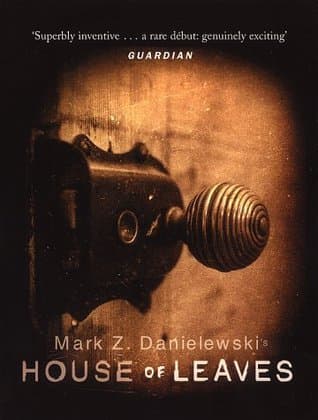
- House of Leaves
Mark Z. Danielewski
4.1 (131k) average on GoodreadsThrillerFeatures a protagonist consumed by a mysterious, reality-bending phenomenon.
- The Road
Cormac McCarthy
4.0 (716k) average on GoodreadsScience FictionDark tone and exploration of moral decay in extreme circumstances.
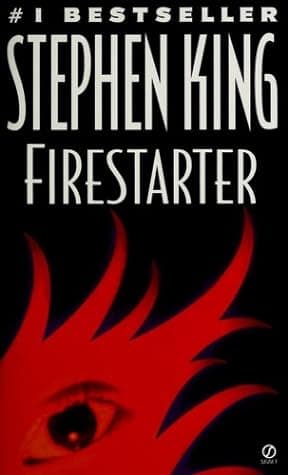
- Firestarter
Stephen King
3.9 (190k) average on GoodreadsThrillerWhile both novels feature protagonists targeted by powerful, shadowy organizations, King's 'The Shop' is more overtly governmental and scientific, focusing on psychic abilities. Little's 'Dispatch' is distinct in its corporate, almost bureaucratic, approach to supernatural persuasion and control, making the insidious nature feel more relatable and pervasive in a modern context.
- Gone Girl
Gillian Flynn
4.1 (2.3M) average on GoodreadsThrillerFlynn's novel primarily explores interpersonal manipulation, psychological games, and the dark underbelly of a marriage. Dispatch differs significantly by focusing on an external, almost cosmic, corporate entity that grants and exploits a 'Gift of Persuasion,' expanding the scope beyond individual relationships to a broader commentary on power structures and societal control.
- Angels & Demons
Dan Brown
3.9 (2.7M) average on GoodreadsThrillerA Harvard symbologist races through Rome's ancient sites, deciphering cryptic clues to unmask the Illuminati and stop a vengeful plot to destroy the Vatican with a stolen antimatter weapon.
- The Girl on the Train
Paula Hawkins
3.9 (2.1M) average on GoodreadsThrillerA woman’s fascination with a seemingly perfect couple she watches from her daily train commute leads her into a dark investigation when she witnesses something that shatters their idyllic image.




Enjoyed the summary?
A summary gives you the shape of the book. The book itself has the detail, the examples and the voice.
Find Dispatch on AmazonAs an Amazon Associate, BookBrief earns from qualifying purchases. How we're funded