
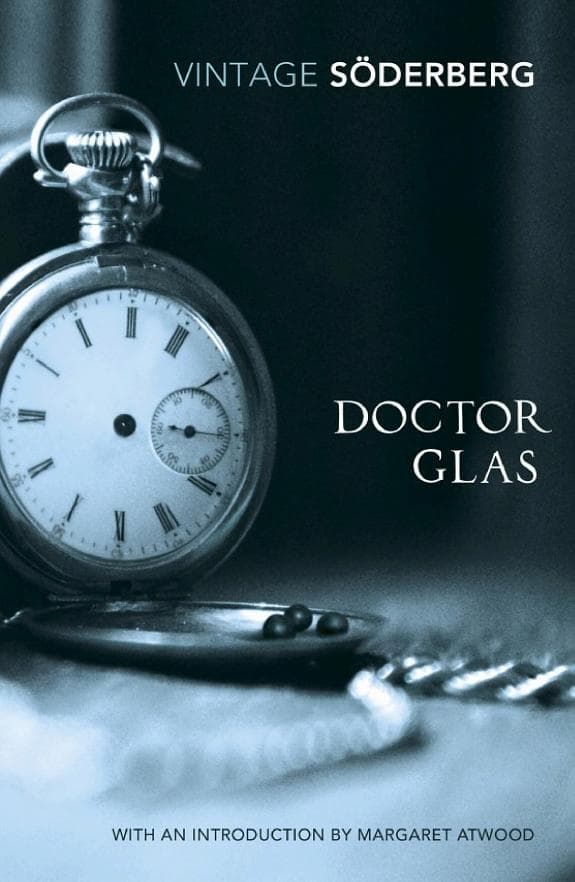
Synopsis
Covers the whole plot, including the ending.
- Difficulty
- Medium
- Pacing
- Slow
- Mood
- Brooding, Introspective, Dark, Suspenseful, Atmospheric
- Read it if
- You enjoy classic psychological thrillers, moral dilemmas, and explorations of obsession and internal conflict set in a brooding, turn-of-the-century European atmosphere.
- Skip it if
- You prefer fast-paced plots with clear-cut heroes and villains, or shy away from dark, morally ambiguous narratives.
Doctor Glas Plot Summary
Covers the whole plot, including the ending.
A Summer Day's Entry
Doctor Glas begins his diary entries on a warm July day in Stockholm, thinking about his lonely life as a doctor and his sadness. He describes his routine, his lack of close human connection, and his feeling of isolation even when surrounded by people. He expresses a general tiredness with life and a philosophical distance, often thinking about existence, happiness, and suffering. He hints at a past sorrow involving a woman named Helga, though details are few, which sets the somber, reflective tone for the story and reveals Glas's inner world.
The Minister and His Wife
Helga Gregorius, the young wife of Pastor Gregorius, visits Doctor Glas's office, complaining of tiredness and unease. During her check-up, she tells Glas about her strong dislike for her husband's physical advances. She describes Pastor Gregorius as an old, repulsive man whose touch sickens her, and she feels trapped in their marriage. Glas, who already dislikes the minister because of his public image and perceived hypocrisy, feels immediate sympathy and a growing desire to protect Helga. This meeting starts his dangerous obsession and his wish to help her.
A Moral Dilemma
After Helga's confession, Doctor Glas becomes consumed by her situation. He starts imagining ways to free her from her oppressive marriage, at first considering non-violent solutions like convincing Pastor Gregorius to stop having sex. He visits the minister, pretending to discuss public health, and subtly probes Gregorius's character and his views on marriage and duty. Glas finds the minister's self-righteousness and insensitivity disgusting, which strengthens his belief that Helga is suffering unfairly. His inner thoughts show a conflict between his medical ethics and his growing desire to act for Helga, even if it means breaking moral rules.
The First Deception
Doctor Glas plans a way to give Helga temporary relief from her husband. He falsely tells Pastor Gregorius that Helga has a serious heart condition that makes sexual activity dangerous and possibly fatal. Gregorius, though at first doubtful and resistant, eventually agrees to Glas's medical advice, though unwillingly. This manipulation gives Helga a period of relief, and she thanks Glas, which deepens his emotional involvement in her well-being. Glas feels a twisted satisfaction in his deception, seeing it as a necessary wrong to ease Helga's suffering and proof of his growing power over the situation.
Helga's Affair
During the time of forced abstinence, Doctor Glas notices Helga's renewed energy and happiness. He sees her often in the city, frequently with a handsome young student named Reverend Recke. Glas's initial pleasure at Helga's improved state soon turns into a mix of jealousy and a feeling of betrayal when he realizes they are lovers. He feels a pang of disappointment, as if his efforts for her were not entirely for her freedom, but perhaps for some unspoken, unacknowledged desire of his own. This discovery complicates his moral view, as his protective instincts now clash with his own unrequited feelings and the knowledge of her infidelity.
The Minister's Persistence
Pastor Gregorius, growing impatient and suspicious of his wife's long 'illness,' confronts Doctor Glas. He says he doesn't believe in Helga's heart condition and demands that Glas take back his diagnosis, insisting on his right to his wife. Gregorius's self-centeredness and lack of empathy further fuel Glas's contempt. The minister's persistence and his refusal to consider Helga's feelings confirm Glas's belief that Gregorius prevents Helga's happiness and freedom, and that his continued existence causes her deep suffering. This confrontation pushes Glas closer to thinking about more extreme actions.
The Idea of Murder
Faced with Gregorius's firm demands and Helga's renewed despair, Doctor Glas increasingly considers murder as the only lasting solution. He comes up with detailed ethical and philosophical reasons for such an act, arguing that some lives are not worth living and that removing a source of suffering can be a moral must. He reasons that Gregorius's death would free Helga and, more broadly, serve humanity by getting rid of an offensive person. He carefully plans how he might commit the murder without being caught, weighing different methods and their outcomes, which shows how deep his obsession is.
The Poisoning
Doctor Glas carries out his plan. He invites Pastor Gregorius to his office, supposedly to discuss a new treatment for his 'heart condition.' During the consultation, Glas offers Gregorius a glass of water containing a lethal dose of cyanide. Gregorius, unsuspecting, drinks it. Glas watches the minister's final moments with a chilling detachment, recording the physical effects of the poison in his diary. He feels a strange mix of triumph and emptiness, having executed his plan with clinical precision. The act is presented as both a liberation for Helga and a dark, definite expression of Glas's own will.
Aftermath and Reflection
In the days after Pastor Gregorius's death, which is officially attributed to a heart attack, Doctor Glas appears composed. Inside, however, he deals with the aftermath of his actions. He observes Helga's reaction, noting her relief but also some sadness and perhaps guilt. He feels no regret for the act itself, believing it was justified, but he is left with a deep sense of isolation and a realization that his deed has not brought him the peace or connection he might have subconsciously wanted. His diary entries become even more introspective, exploring responsibility, justice, and the ultimate pointlessness of human effort.
The Burden of Secrecy
Life continues for Doctor Glas, but he carries the heavy burden of his secret. He continues his medical practice, interacts with society, but remains alone. He occasionally sees Helga, who eventually moves on with her life, perhaps marrying Reverend Recke. Glas realizes that his grand act of 'liberation' has not brought him closer to Helga or to any personal fulfillment. The novel ends with Glas continuing his diary entries, reflecting on the mystery of human existence, good and evil, and his own place in a world where he has committed a serious wrong, yet remains outwardly untouched by justice, only by his own inner solitude.
Principal Figures
Doctor Glas
Protagonist
A melancholic and introspective physician in fin-de-siècle Stockholm.
Doctor Glas is a deeply isolated and philosophical man, a physician who observes the world and its inhabitants with a detached, often cynical eye. He is highly intelligent, prone to introspection, and burdened by a profound sense of melancholy and loneliness. He harbors strong moral convictions, particularly regarding the rights of individuals to happiness and freedom, which often clash with societal norms and religious dogma. His internal world is rich with reflections on life, death, love, and the human condition, but he struggles to form genuine connections with others.
Relationships: Helga Gregorius (Obsessive, protective, unrequited love); Pastor Gregorius (Deep antipathy, moral opposition, victim)
Helga Gregorius
Supporting
The beautiful, unhappily married wife of Pastor Gregorius.
Helga is a young, attractive woman trapped in a loveless and physically repulsive marriage to Pastor Gregorius. She is presented as a victim of circumstance, yearning for freedom, affection, and a life beyond the confines of her oppressive domestic situation. She confides in Doctor Glas, trusting him with her vulnerability and desires. Her beauty and suffering ignite a powerful, protective, and ultimately destructive obsession in Glas. She represents innocence and vitality stifled by conventional morality and an unsympathetic husband.
Relationships: Doctor Glas (Patient-doctor, object of obsession and protection); Pastor Gregorius (Husband-wife, relationship of revulsion and oppression); Reverend Recke (Lover, source of happiness and potential future)
Pastor Gregorius
Antagonist
An aging, self-righteous, and sexually demanding minister.
Pastor Gregorius is depicted as a physically unappealing, morally rigid, and self-centered man. He is oblivious to his wife's suffering and asserts his marital rights with a sense of entitlement and lack of empathy. He represents the oppressive forces of societal convention, religious hypocrisy, and male patriarchal authority that Glas despises. His character serves as the primary obstacle to Helga's happiness and the catalyst for Glas's increasingly radical ethical justifications for murder. He is portrayed without redeeming qualities, making him an easy target for Glas's moral condemnation.
Relationships: Doctor Glas (Antagonistic, professional (doctor-patient), victim); Helga Gregorius (Husband-wife, relationship of oppression and revulsion)
Reverend Recke
Supporting
A young, handsome theological student and Helga Gregorius's lover.
Reverend Recke is a minor character but significant as Helga's lover. He represents the youthful passion and happiness that Helga craves and briefly experiences. His existence complicates Doctor Glas's motivations, introducing an element of jealousy and a realization that Helga's freedom might not align with Glas's own unspoken desires. He is a symbol of conventional love and a potential future for Helga, distinct from Glas's more abstract and dangerous form of devotion.
Relationships: Helga Gregorius (Lover); Doctor Glas (Rival (unacknowledged by Recke))
Anna
Mentioned
A woman from Doctor Glas's past.
Anna is a woman from Doctor Glas's past who is briefly mentioned in his diary entries. She represents a lost love or a significant past relationship that contributed to his melancholic and solitary nature. Her memory adds a layer of depth to Glas's character, suggesting that his present isolation is not merely a choice but also a consequence of past emotional experiences and perhaps failures in love. Her brief mention highlights Glas's capacity for deep feeling, even if those feelings are now tinged with sorrow.
Relationships: Doctor Glas (Past love/significant relationship)
Themes & Insights
Moral Ambiguity and Justification
The novel explores the unclear lines between right and wrong, especially through Doctor Glas's inner thoughts. He carefully builds elaborate philosophical reasons for his planned murder of Pastor Gregorius, arguing that some lives are not worth living and that removing a source of suffering can be a moral act. This theme appears in Glas's justification of deception and, finally, killing, as a 'service' to Helga and society, challenging common ethics and making the reader face the complexities of individual morality versus societal law. His belief that 'one can never kill a man who is already dead' sums up his twisted logic.
“One can never kill a man who is already dead.”
Loneliness and Isolation
Doctor Glas is a deeply lonely character, despite his job which brings him into contact with many people. His diary entries are full of thoughts on his solitude, his inability to form deep connections, and his feeling of being an outsider. This theme is key to understanding his reasons; his obsession with Helga and his wish to 'save' her can be seen as a desperate attempt to escape his isolation and find meaning. His act of murder, rather than easing his loneliness, ultimately deepens it, as he becomes burdened by a secret that further separates him from humanity.
“Oh, to be loved! To be loved for oneself alone, for one's own sake! Is that not the greatest happiness?”
The Nature of Love and Desire
The novel examines different kinds of love and desire: Helga's disgust for her husband, her passionate affair with Recke, and Doctor Glas's complex, unrequited, and ultimately destructive obsession. Glas's 'love' for Helga is not purely selfless; it is tied to his own need for purpose, his appreciation of her beauty, and a hidden possessiveness. The story questions whether love can truly exist without being returned and explores how desire, when unmet or twisted, can lead to extreme actions. It shows the destructive power of unacknowledged desires and the gap between romantic ideals and messy reality.
“Is it not a beautiful thing, to be loved by a woman you admire?”
Societal Hypocrisy and Repression
Late 19th-century Stockholm sets the scene for a critique of social rules and the suppression of natural human instincts. Pastor Gregorius represents the hypocrisy of religious authority, following strict moral codes while acting selfishly and insensitively in his private life. Helga's suffering directly results from societal expectations about marriage and female submission. Doctor Glas, though a murderer, also criticizes society, railing against the conventions that stifle individual happiness and authenticity. The novel suggests that society's rigid moral facade can create resentment, despair, and, finally, rebellion through extreme acts.
“It is a strange thing to be a human being, and to live among other human beings.”
Plot Devices & Literary Techniques
First-Person Diary Narration
The story is told entirely through Doctor Glas's personal diary entries.
This device offers an intimate and unfiltered look into Doctor Glas's mind, allowing the reader to experience his complex thoughts, philosophical musings, moral justifications, and emotional struggles directly. It creates a sense of immediacy and draws the reader into his subjective reality, making his descent into obsession and murder feel chillingly personal. The diary format also allows for retrospective reflection and the gradual unfolding of his plan, building suspense and providing a unique perspective on the events, even if it is a biased one.
Dramatic Irony
The reader is aware of Glas's intentions and actions, while other characters remain ignorant.
Dramatic irony is prevalent as Doctor Glas meticulously plans and executes the murder of Pastor Gregorius, while Helga and the rest of society remain unaware of his true role. This creates tension and suspense, as the reader is privy to Glas's internal deliberations and his deceptive interactions with other characters. The irony is particularly stark when Glas acts as a 'sympathetic' doctor, knowing his ultimate goal is to eliminate his patient, highlighting the dark undercurrents of his character and the duplicity required for his plan.
Symbolism of Summer and Autumn
The changing seasons mirror the progression of Glas's internal state and the narrative.
The novel opens in the heat of summer, a time associated with life and vitality, yet Glas is already in a state of melancholic stagnation. As his obsession with Helga intensifies and his thoughts turn to murder, the narrative progresses into late summer and autumn, symbolizing decay, decline, and the impending death. The cooling weather and shortening days mirror the chilling nature of Glas's plans and the moral winter he enters by committing murder. The natural world provides a subtle, yet powerful, backdrop for the psychological drama.
The Unreliable Narrator
Doctor Glas's perspective is subjective and colored by his biases and self-deception.
As the sole narrator, Doctor Glas presents events and characters through his own distorted lens. His philosophical justifications for murder, his idealization of Helga, and his demonization of Pastor Gregorius are all subject to his personal biases and self-serving rationalizations. The reader is constantly challenged to question the veracity and objectivity of his account, recognizing that his internal logic, while meticulously constructed, serves to absolve him of guilt and justify his actions. This device forces the reader to critically engage with the narrative and form their own judgments.
Doctor Glas Quotes
“One wants to be loved, in case of doubt, admired, in case of doubt, feared, in case of doubt, abhorred. One wants to instill some sort of emotion in people. The soul shudders before emptiness and wants contact at any price.”
“There are moments when one feels such a powerful need to act, to do something, anything, even if it is wrong, just to escape the unbearable passivity.”
“It is strange how much one can hate a person whom one has never done any harm.”
“To take a human life is a terrible thing. But there are lives that are so miserable, so useless, that their ending is a mercy.”
“The greatest tragedy in life is not death, but life that is lived without purpose, without love, without joy.”
“It is not the great events that shape our lives, but the small, imperceptible changes that gradually alter our perspective.”
“We are all prisoners of our own character, our own temperament, our own past.”
“A man who thinks too much about death never lives fully.”
“The only true freedom is to be free from oneself, from one's own desires and fears.”
“Sometimes it seems as if the whole world is a hospital, and we are all patients, suffering from different ailments of the soul.”
“Conscience is a strange thing. It can be a guide, or it can be a tormentor.”
“To judge others is easy; to understand them is much harder.”
“There is a kind of peace in giving up, in letting go of the struggle, even if it means defeat.”
“The heart has its reasons, which reason knows nothing of.”
Quiz
10 questions on the plot and the characters. Each answer comes with a short explanation.
Question 1
What is Doctor Glas's profession?
- A lawyer
- A minister
- A doctor
- A teacher
Show answer
C. A doctor Doctor Glas is, as his name suggests, a physician, and the story is told from his perspective.
Question 2
What is the name of the minister whom Doctor Glas despises?
- Pastor Blom
- Reverend Gregorius
- Father Karlsson
- Bishop Svensson
Show answer
B. Reverend Gregorius Doctor Glas's primary antagonist and the target of his murderous thoughts is the odious Reverend Gregorius.
Question 3
What city serves as the setting for 'Doctor Glas'?
- Copenhagen
- Oslo
- Helsinki
- Stockholm
Show answer
D. Stockholm The novel juxtaposes impressions of fin-de-siècle Stockholm against the psychological landscape of Doctor Glas.
Question 4
What is the primary complaint the minister's wife brings to Doctor Glas?
- She is suffering from a mysterious illness.
- She is experiencing financial difficulties.
- She wishes to escape her husband's oppressive sexual attentions.
- She is concerned about her husband's public reputation.
Show answer
C. She wishes to escape her husband's oppressive sexual attentions. The minister's wife confides in Doctor Glas about her profound discomfort and desire to avoid her husband's sexual demands, which fuels Glas's murderous thoughts.
Question 5
What philosophical concept is frequently explored through Doctor Glas's internal monologues?
- Utilitarianism
- Nietzschean will to power
- Existential angst
- Stoicism
Show answer
B. Nietzschean will to power Doctor Glas's internal struggle with the morality of his actions and his belief in the right to take life reflects themes of individual will and power, reminiscent of Nietzschean philosophy.
Question 6
What method does Doctor Glas initially consider to 'help' the minister's wife?
- Suggesting a divorce
- Administering a poison to Gregorius
- Arranging for the wife to leave town
- Confronting Gregorius directly
Show answer
B. Administering a poison to Gregorius Driven by his intense dislike for Gregorius and his sympathy for the wife, Glas contemplates poisoning the minister.
Question 7
What is the nature of Doctor Glas's relationship with the minister's wife, Helga?
- They are secretly lovers.
- He harbors an unrequited, obsessive love for her.
- They are distant acquaintances.
- He sees her only as a patient.
Show answer
B. He harbors an unrequited, obsessive love for her. While Helga seeks his help, Doctor Glas's motives are deeply intertwined with his own obsessive feelings and infatuation with her, which are largely unreciprocated.
Question 8
How does Doctor Glas ultimately execute his plan against Reverend Gregorius?
- He uses a pillow to suffocate him in his sleep.
- He administers a lethal dose of medication disguised as a heart remedy during a visit.
- He pushes him in front of a carriage.
- He arranges for a third party to commit the murder.
Show answer
B. He administers a lethal dose of medication disguised as a heart remedy during a visit. Glas carefully plans and executes the murder by giving Gregorius what he claims is a heart medicine but is, in fact, a fatal dose of cyanide, ensuring his death appears natural.
Question 9
What is the central ethical dilemma Doctor Glas grapples with throughout the novel?
- The conflict between personal ambition and professional ethics.
- The justification of murder for perceived moral good or personal desire.
- The struggle between religious faith and scientific reason.
- The balance between individual freedom and societal expectations.
Show answer
B. The justification of murder for perceived moral good or personal desire. The core of the novel is Glas's internal debate about whether he has the right to take a life he deems worthless to free someone he admires, blurring the lines of morality and justice.
Question 10
After Gregorius's death, what is the ultimate outcome for Doctor Glas concerning his actions?
- He is caught and prosecuted for murder.
- He confesses his crime to the authorities.
- He escapes detection and continues his life, though perhaps not without internal consequence.
- He commits suicide out of guilt.
Show answer
C. He escapes detection and continues his life, though perhaps not without internal consequence. Doctor Glas successfully carries out the murder without being discovered or facing legal repercussions, living with the secret and his complex internal world.
Doctor Glas FAQ
What is the central moral dilemma Doctor Glas faces in the novel?
Doctor Glas grapples with the ethical quandary of whether to intervene in what he perceives as the suffering of Helene Gregorius. He considers murder as a means to free her from her husband, Reverend Gregorius, believing it to be a compassionate act despite its illegality and moral implications.
Who is Helene Gregorius and what is her role in Doctor Glas's life?
Helene Gregorius is the young, beautiful wife of the much older Reverend Gregorius. She confides in Doctor Glas about her husband's oppressive sexual demands, becoming the catalyst for Glas's murderous contemplation and the object of his idealized, unrequited affection.
Describe Reverend Gregorius and why Doctor Glas despises him.
Reverend Gregorius is portrayed as an old, physically repulsive, and morally hypocritical minister. Doctor Glas despises him not only for his treatment of Helene but also for his general boorishness, his perceived intellectual inferiority, and his oppressive, life-denying religiosity.
What is the setting of the novel and how does it influence the mood?
The novel is set in fin-de-siècle Stockholm, characterized by its melancholic and often grey atmosphere. This setting, with its long, dark winters and introspective mood, mirrors Doctor Glas's internal psychological landscape, amplifying his feelings of loneliness, isolation, and moral brooding.
Does Doctor Glas actually commit murder? If so, how?
Yes, Doctor Glas does commit murder. He administers a lethal dose of cyanide to Reverend Gregorius, disguised as a heart tonic, after convincing him that a weakened heart requires it. He orchestrates the death to appear natural, avoiding immediate suspicion.
What is the significance of the recurring motif of flowers and nature in Glas's thoughts?
Flowers and nature often represent purity, beauty, and unspoiled life in Glas's mind, contrasting sharply with the decay and ugliness he associates with Reverend Gregorius. They symbolize his longing for an idealized existence and his aesthetic appreciation, which informs his moral judgments.
How does Glas's past relationship with his mother influence his present actions?
Glas's strained and somewhat distant relationship with his mother, particularly her early death and his feelings of inadequacy regarding her, contributes to his emotional isolation and his profound empathy for Helene. He projects some of his unfulfilled emotional needs onto Helene, seeing her as a figure to be protected.
Are there any clues to Glas's mental state beyond his direct narration?
Yes, Glas's frequent philosophical digressions, his obsessive focus on Helene's suffering, and his detailed justifications for murder reveal a deeply introspective, possibly solipsistic, and morally relativistic mind. His journal-like entries also show a gradual descent into justification for extreme actions.
What role does Dr. Glas's profession as a physician play in his moral considerations?
His profession provides him with both the knowledge and the means to commit murder, as he has access to poisons and an understanding of human physiology. It also creates a profound irony, as he is bound by an oath to heal, yet contemplates taking a life, using his medical expertise for destruction.
How does Doctor Glas's loneliness contribute to his obsession with Helene?
Doctor Glas's profound and chronic loneliness makes him highly susceptible to idealizing Helene. Her confession of marital unhappiness provides him with a sense of purpose and connection, however vicarious, and he projects his own desires for beauty and meaning onto her plight, fueling his obsession.
Analyze the psychological impact of Glas's unrequited love for Helene.
Glas's unrequited love for Helene transforms from admiration into a dangerous obsession. It distorts his moral compass, allowing him to rationalize murder as an act of selfless devotion, while simultaneously providing him with a profound, albeit ultimately destructive, emotional focus.
How does Glas's intellectualism and philosophical inclinations affect his decision-making?
Glas's intellectualism allows him to construct elaborate philosophical justifications for his actions, detaching himself from conventional morality. He uses reason to rationalize his desires, creating a framework where his personal feelings and aesthetic judgments supersede societal laws and ethical norms.
What is the nature of Doctor Glas's empathy, and is it truly altruistic?
Doctor Glas's empathy is complex and likely not purely altruistic. While he genuinely pities Helene, his 'empathy' is deeply intertwined with his own aesthetic judgments, his hatred for Gregorius, and his desire to feel powerful and purposeful. It serves his own psychological needs as much as it aims to alleviate Helene's suffering.
Is Doctor Glas a hero, a villain, or something in between?
Doctor Glas is best described as an anti-hero. While he commits a villainous act, his motivations are complex, stemming from a distorted sense of justice, compassion, and personal frustration. He embodies the moral ambiguities of human nature, making him neither purely heroic nor purely evil.
The novel was controversial. What aspects likely provoked the strongest reactions?
The novel's controversy likely stemmed from its depiction of a physician contemplating and committing murder for what he perceives as moral reasons, challenging conventional ethics and the sanctity of life. Its exploration of sexual repression, hypocrisy within the church, and the subjective nature of morality also contributed to its provocative nature.
How does the novel explore themes of societal hypocrisy and moral relativism?
The novel exposes societal hypocrisy through the character of Reverend Gregorius, a man of God who is morally objectionable. Doctor Glas's internal monologues present a strong case for moral relativism, arguing that certain acts, though legally wrong, can be morally justifiable based on individual circumstances and perceived suffering.
What is the ultimate message or warning conveyed by 'Doctor Glas'?
'Doctor Glas' serves as a cautionary tale about the dangers of unchecked intellectualism, isolation, and the subjective nature of morality. It suggests that even well-intentioned individuals can be led to extreme actions when their personal convictions override universal ethical principles and emotional balance is lost.
How does the ending of the novel reflect Doctor Glas's overall journey?
The ending, where Glas reflects on his deed and its aftermath, reveals a profound sense of isolation and a lack of true resolution. Despite achieving his goal, he remains unfulfilled, suggesting that his act of murder did not bring him the peace or connection he subconsciously sought, thus reinforcing his tragic journey.
About the author
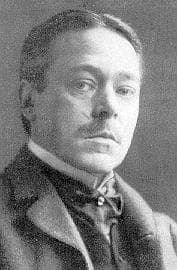
Hjalmar Söderberg was a Swedish author known for his contributions to early 20th-century literature. His notable work, Doctor Glas, explores themes of morality and existentialism through the story of a physician in Stockholm. Söderberg's fiction often reflects his keen observations of human nature and societal issues.
Similar books
- The Stranger
Albert Camus
4.1 (3k) average on GoodreadsFantasyFeatures an emotionally detached protagonist grappling with a significant act.
- Notes from Underground
Fyodor Dostoevsky
4.2 (84k) average on GoodreadsPsychologyOffers a deep dive into the mind of an alienated and cynical individual.
- Hunger
Knut Hamsun
4.0 (76k) average on GoodreadsFantasyWhile both novels explore disturbed male psyches through first-person narration, Hamsun's Hunger focuses on existential despair, physical degradation, and artistic struggle. Doctor Glas, in contrast, delves into the intellectual and moral rationalization of a premeditated crime, with Glas's motivations rooted in a desire to 'correct' an perceived injustice rather than a response to material hardship or mental breakdown.
- Nineteen Eighty-Four
George Orwell
4.2 (5.5M) average on GoodreadsFictionWinston Smith dreams of truth and rebellion in a world where Big Brother watches all, but he confronts the terrifying power of a regime that controls not just actions, but thoughts.
- The Frozen River
Ariel Lawhon
4.4 (600k) average on GoodreadsFictionIn 1789 Maine, a heroic midwife's diary helps her expose a murder and get justice in a town that wants to silence her.
- A Man Called Ove
Fredrik Backman
4.4 (569k) average on GoodreadsFictionA stubborn widower, who lives by strict rules, finds his quiet world changed by a lively new family next door, making him face his past and find happiness in human connection.






Enjoyed the summary?
A summary gives you the shape of the book. The book itself has the detail, the examples and the voice.
Find Doctor Glas on AmazonAs an Amazon Associate, BookBrief earns from qualifying purchases. How we're funded