
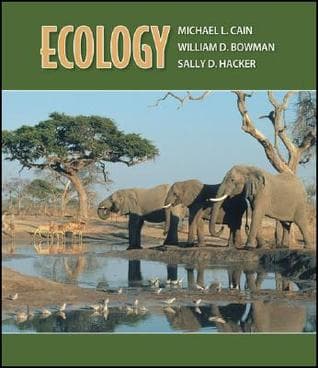
Core Idea
- Difficulty
- Hard
- Read it if
- You want a thorough, foundational understanding of ecological principles, from basic concepts to complex ecosystem dynamics, with an emphasis on scientific rigor.
- Skip it if
- You are looking for a light introduction to environmentalism without delving into detailed scientific mechanisms, or prefer a book focused solely on policy or advocacy.
Key Takeaways from Ecology
The Interconnected Web of Life
Ecosystems are complex, interdependent networks where every component plays a vital role.
Ecology shows that no organism lives alone. Every living thing, from bacteria to redwoods, connects to others and its physical surroundings. These connections form complex ecosystems, where energy and nutrients move through producers, consumers, and decomposers. Understanding these links is important because disturbing one part can affect the whole system, often with unexpected bad results. This view highlights the delicate balance that supports life and the importance of biodiversity for ecosystem health.
“Ecology is the scientific study of the interactions between organisms and their environment.”
In the book: The book frequently uses examples like food webs in a forest or aquatic environment to illustrate how energy transfer and nutrient cycling connect diverse species, from primary producers (plants) to apex predators, and the role of decomposers (fungi, bacteria) in returning nutrients to the soil.
Try this: When considering land use or resource management, recognize the potential ripple effects on an entire ecosystem rather than focusing solely on a single species or resource. Support conservation efforts that protect whole habitats, not just individual charismatic species.
Related ideas: ecosystem, food-web, biodiversity
Energy: The Driving Force of Ecosystems
Energy flows, but does not cycle, through ecosystems, dictating their productivity and structure.
Energy powers all life processes. Unlike nutrients, which cycle, energy moves in one direction through an ecosystem, mostly from the sun. Plants capture this solar energy, changing it into chemical energy. This energy then moves up through food levels as organisms eat each other. A key idea is that this transfer is inefficient: only about 10% of the energy from one level typically goes to the next, with the rest lost as heat. This '10% rule' explains why there is less life at higher food levels and why top predators are rare. It shows a basic limit on ecosystem structure and productivity.
“The sun is the ultimate source of energy for almost all ecosystems.”
In the book: The concept of trophic levels and the 10% rule of energy transfer are explained using diagrams of ecological pyramids (pyramids of numbers, biomass, and energy) and examples of how much plant material is required to support a given amount of herbivore biomass, and subsequently, carnivore biomass.
Try this: Understand that our food choices have significant energetic implications; consuming lower on the food chain (e.g., plant-based diets) is generally more energetically efficient and sustainable than consuming high-trophic-level organisms. Support renewable energy sources to reduce reliance on fossil fuels, which represent stored, ancient solar energy.
Related ideas: trophic-levels, energy-flow, photosynthesis, 10-percent-rule
Nutrient Cycling: Earth's Recycling System
Essential elements constantly cycle through biotic and abiotic components, sustaining life.
While energy flows, important nutrients like carbon, nitrogen, phosphorus, and water constantly cycle. These cycles involve elements moving between living things and non-living parts of the environment, including the air, oceans, and soil. These cycles are vital for providing the resources needed for growth and reproduction. Human actions, such as burning fossil fuels (carbon cycle), using fertilizers (nitrogen and phosphorus cycles), and cutting down forests, can greatly change the natural balance of these cycles. This leads to environmental problems like climate change, too many nutrients in water, and soil damage. Keeping these cycles healthy is crucial for long-term ecological well-being.
“Unlike energy, nutrients are continually recycled within ecosystems.”
In the book: Detailed explanations of the carbon, nitrogen, and phosphorus cycles are provided, including reservoirs (e.g., atmosphere for carbon, soil for nitrogen) and processes (e.g., photosynthesis, decomposition, nitrification). The impact of human activities like the Haber-Bosch process on the nitrogen cycle is often cited.
Try this: Reduce your carbon footprint by minimizing energy consumption and supporting sustainable transportation. Be mindful of fertilizer use in gardening to prevent nutrient runoff into waterways. Advocate for policies that promote sustainable agriculture and waste management to preserve natural nutrient cycles.
Related ideas: biogeochemical-cycles, carbon-cycle, nitrogen-cycle, eutrophication
Evolution: Ecology's Deep Historical Context
Evolutionary processes shape organisms, influencing their ecological roles and interactions.
Ecology and evolution are closely related. One cannot fully understand an organism's role or interactions without considering its evolutionary past. Natural selection causes organisms to adapt to their environments, developing traits that help them survive and reproduce. These adaptations then define an organism's role in the ecosystem, whether it is a specialized predator, a strong competitor, or a unique pollinator. Understanding this relationship helps explain patterns of biodiversity, where species live, and how ecosystems respond to environmental change. Evolution is an ongoing process, always refining the ecological drama.
“Evolutionary processes provide the historical backdrop against which ecological interactions play out.”
In the book: Examples like the co-evolution of predators and prey (e.g., cheetahs and gazelles), or the development of specialized beaks in finches on the Galapagos Islands in response to different food sources, are used to illustrate how natural selection shapes ecological roles.
Try this: Recognize that conservation efforts must account for evolutionary potential; maintaining genetic diversity within populations is crucial for their ability to adapt to future environmental changes. Support research that integrates ecological and evolutionary perspectives to better predict species responses to climate change.
Related ideas: natural-selection, adaptation, co-evolution, niche
Population Dynamics: Numbers Tell a Story
Understanding how populations grow, decline, and interact is crucial for conservation and management.
Population ecology studies factors that affect the size, density, distribution, and age structure of populations. Key factors include birth rates, death rates, and migration, which together determine if a population grows or shrinks. Factors that depend on population density (e.g., competition, predation, disease) and factors that do not (e.g., natural disasters, climate) control population sizes. Understanding these changes is crucial for effective conservation. It allows scientists to predict the future of endangered species, manage pest outbreaks, and use resources sustainably. Human population growth itself is a major ecological force, affecting almost every other species and ecosystem.
“The dynamics of populations are fundamental to understanding how species persist or decline.”
In the book: The book discusses models of population growth (exponential vs. logistic growth), carrying capacity, and examples of how factors like predator control or habitat loss impact specific animal populations (e.g., deer populations, fish stocks).
Try this: Support initiatives for sustainable resource management and family planning education. When observing local wildlife, appreciate the factors influencing their numbers and advocate for responsible human interaction with these populations. Understand that unchecked growth, even in human populations, has ecological limits.
Related ideas: population-growth, carrying-capacity, density-dependent-factors, conservation
Community Interactions: The Fabric of Coexistence
Species interact in diverse ways, shaping community structure and influencing each other's survival.
In any area, many species live together and interact in complex ways, forming an ecological community. These interactions can be positive (both benefit), negative (one harms the other, like predation or competition), or neutral. Competition happens when species need the same limited resources. Predation and herbivory involve one species eating another. Mutualism, where both species benefit, is seen in pollinators and flowers. These interactions are not fixed; they are dynamic forces that drive natural selection, influence where species live, and determine a community's diversity and stability. Understanding these relationships helps predict how communities will react to disturbances or new species.
“Interactions between species are the glue that holds ecological communities together.”
In the book: Classic examples include competitive exclusion principle (e.g., Paramecium species), predator-prey dynamics (lynx and snowshoe hare cycles), mutualism (mycorrhizal fungi and plants), and mimicry (Batesian and Müllerian) as an anti-predator adaptation.
Try this: When considering gardening or landscaping, choose native plants that support local pollinators and avoid introducing invasive species that can outcompete native flora. Appreciate the intricate balance in nature and how even seemingly small interactions contribute to the overall health of an ecosystem.
Related ideas: community-ecology, competition, predation, mutualism, invasive-species
Ecosystem Services: Nature's Unpaid Labor
Healthy ecosystems provide invaluable services essential for human well-being, often taken for granted.
Beyond their inherent value, ecosystems provide many 'services' that are essential for human survival and quality of life. These include provisioning services (food, water, timber), regulating services (climate control, flood control, disease control, pollination), cultural services (recreation, spiritual, beauty), and supporting services (nutrient cycling, soil formation, primary production). Historically, these services have been undervalued in economic models. However, their decline due to human actions carries huge economic and social costs. This shows the vital importance of conservation not just for nature, but for humanity's future.
“Ecosystems provide essential services that support human life and well-being, often without direct cost.”
In the book: The book details examples like wetlands filtering water, forests regulating rainfall and preventing erosion, pollinators ensuring crop yields, and healthy soils supporting agriculture. The economic valuation of these services is often discussed.
Try this: Support policies that recognize and value ecosystem services in economic decision-making. Choose products from companies committed to sustainable practices. Participate in local conservation efforts like tree planting or stream cleanups to directly contribute to maintaining these vital services.
Related ideas: ecosystem-services, sustainability, conservation-biology, natural-capital
Human Impact: The Dominant Ecological Force
Human activities are profoundly altering global ecosystems, demanding urgent and informed action.
The extent of human activities has made our species the most influential ecological force on Earth. From habitat destruction and fragmentation to climate change, pollution, and the introduction of invasive species, human actions cause unprecedented rates of species loss and ecosystem damage. These impacts are not separate; they interact in complex ways, often making each other worse. Recognizing this deep influence is the first step toward developing sustainable practices and reducing the harm. The future of global ecosystems, and thus human well-being, depends on our ability to understand and responsibly manage our impact on the environment.
“Humans have become the dominant force shaping Earth's ecosystems.”
In the book: Examples include the extent of deforestation globally, the accumulation of plastics in oceans, the impact of greenhouse gas emissions on global temperatures and sea levels, and the rapid decline in populations of many species due to human-induced habitat loss.
Try this: Educate yourself on environmental issues and advocate for policy changes. Reduce your personal consumption, reuse items, and recycle. Support organizations working on environmental protection and sustainable development. Make conscious choices about your diet, energy use, and transportation.
Related ideas: anthropocene, climate-change, habitat-loss, pollution, sustainability
The Role of Disturbance: Shaping Ecosystems Anew
Disturbances, both natural and human-induced, are integral to ecosystem dynamics and succession.
Ecological communities are not static; they change constantly, often shaped by disturbances. A disturbance is an event that alters a community's structure, removes organisms, or changes resource availability. These can be natural events like wildfires, floods, and volcanic eruptions, or human-caused like logging or farming. After a disturbance, ecosystems go through ecological succession, where species colonize and replace each other over time, gradually restoring or changing the community. While some disturbances are destructive, many are natural and even necessary for maintaining biodiversity and ecosystem health. They create chances for new species to grow and prevent one species from dominating others.
“Disturbances, whether natural or anthropogenic, are an intrinsic part of ecosystem dynamics.”
In the book: Examples of natural disturbances like Yellowstone wildfires and their role in lodgepole pine regeneration, or the impact of hurricanes on coastal ecosystems, are often used. The concept of primary and secondary succession is explained through examples like volcanic islands or abandoned agricultural fields.
Try this: Understand that 'pristine' is not always 'static'; some ecosystems benefit from periodic disturbances (e.g., prescribed burns in fire-adapted forests). Support management practices that mimic natural disturbance regimes where appropriate, rather than attempting to prevent all change. Recognize the difference between natural, regenerative disturbance and destructive, human-caused degradation.
Related ideas: disturbance, ecological-succession, resilience, wildfire
Conservation: An Ecological Imperative
Applying ecological principles is essential for preserving biodiversity and ensuring a sustainable future.
The knowledge gained from ecology is not just academic; it forms the basis of conservation biology and environmental management. Understanding ecological principles, from population dynamics and community interactions to ecosystem services and human impacts, provides the tools needed to address current environmental challenges. Conservation is not just about saving individual species; it is about preserving the complex interactions, habitats, and processes that support all life, including our own. It requires many approaches, combining science, policy, economics, and ethics to create a more balanced and sustainable relationship between humanity and the natural world.
“Conservation biology is an applied science that integrates ecology, genetics, physiology, molecular biology, and evolutionary biology to conserve biological diversity.”
In the book: The book discusses various conservation strategies, such as habitat restoration projects, the establishment of protected areas, efforts to mitigate climate change, and programs to reintroduce endangered species, all grounded in ecological understanding.
Try this: Actively engage in conservation efforts, whether through volunteering, supporting reputable environmental organizations, or advocating for sound environmental policies. Incorporate sustainable practices into your daily life. Continuously learn about ecological issues and share that knowledge to inspire others.
Related ideas: conservation-biology, environmental-management, sustainability, biodiversity-loss
Ecology Quotes
“Ecology is the scientific study of the interactions that determine the distribution and abundance of organisms.”
“No population can increase in size indefinitely.”
“The niche of a species is the range of environmental conditions and resources within which it can survive and reproduce.”
“Competition occurs when two or more organisms require the same limited resource.”
“Predation is an interaction in which one organism kills and eats another organism.”
“Disturbance is any relatively discrete event in time that disrupts ecosystem, community, or population structure and changes resources, substrate availability, or the physical environment.”
“Succession is the process of change in the species structure of an ecological community over time.”
“Energy flows, matter cycles.”
“Biodiversity is the variety of life in all its forms, and at all levels of organization.”
“Climate change is one of the most pressing environmental challenges facing humanity.”
“The extinction of species is an irreversible loss of biodiversity.”
“Humans are an integral part of ecosystems, not separate from them.”
“Conservation biology is a mission-oriented science that focuses on protecting and restoring biodiversity.”
“Understanding ecological principles is crucial for managing our planet sustainably.”
Quiz
10 questions on the main ideas. Each answer comes with a short explanation.
Question 1
Which of the following is NOT typically considered a primary focus in the study of ecology, according to the principles emphasized in Cain's 'Ecology'?
- Connections in nature
- The importance of ecology to environmental health
- Links to evolutionary processes
- The chemical composition of distant galaxies
Show answer
D. The chemical composition of distant galaxies Cain's 'Ecology' emphasizes connections in nature, the importance of ecology to environmental health and services, and links to evolution. The chemical composition of distant galaxies falls outside the scope of ecological study.
Question 2
What level of ecological organization focuses on a group of individuals of the same species living in the same area?
- Ecosystem
- Community
- Population
- Biosphere
Show answer
C. Population A population is defined as a group of individuals of the same species living in the same area. This is a fundamental concept in ecological organization.
Question 3
Which of the following best describes the concept of a 'niche' in ecology?
- The physical location where an organism lives
- The role an organism plays in its community, including its interactions and resource use
- The total number of individuals in a species within a given biome
- The genetic diversity within a population
Show answer
B. The role an organism plays in its community, including its interactions and resource use A niche encompasses the full range of conditions and resources in which a species can survive and reproduce, essentially its 'job' or 'role' in the ecosystem, not just its address (habitat).
Question 4
In the context of energy flow in ecosystems, what is the primary role of decomposers like bacteria and fungi?
- To convert light energy into chemical energy
- To consume primary producers
- To break down dead organic matter and return nutrients to the soil
- To act as top-level predators in food webs
Show answer
C. To break down dead organic matter and return nutrients to the soil Decomposers are crucial for nutrient cycling. They break down dead organic material, making inorganic nutrients available again for producers, thus closing the loop in ecosystem nutrient flow.
Question 5
Which of the following factors is most likely to lead to an increase in a population's carrying capacity?
- A prolonged drought reducing water availability
- An increase in the availability of essential resources
- An increase in predator population
- The introduction of a new disease
Show answer
B. An increase in the availability of essential resources Carrying capacity is the maximum population size that the environment can sustain indefinitely. An increase in essential resources directly expands the environment's ability to support more individuals.
Question 6
The concept of 'ecosystem services' is emphasized in Cain's 'Ecology'. Which of the following is an example of a regulating ecosystem service?
- The production of timber for construction
- Cultural and recreational opportunities in national parks
- Pollination of crops by insects
- The provision of fresh water from a river
Show answer
C. Pollination of crops by insects Regulating services are the benefits obtained from the regulation of ecosystem processes, such as climate regulation, flood regulation, disease regulation, and water purification. Pollination is a key regulating service.
Question 7
The 'intermediate disturbance hypothesis' suggests that species diversity is highest at intermediate levels of disturbance. What is the primary reason for this pattern?
- High disturbance levels allow dominant competitors to thrive
- Low disturbance levels lead to competitive exclusion of some species
- Intermediate disturbance prevents competitive exclusion by dominant species while allowing colonization by new species
- Disturbance has no impact on species diversity
Show answer
C. Intermediate disturbance prevents competitive exclusion by dominant species while allowing colonization by new species The intermediate disturbance hypothesis posits that at intermediate levels of disturbance, both early and late successional species can coexist, leading to higher diversity. Too little disturbance allows dominant species to outcompete others, while too much disturbance prevents many species from establishing.
Question 8
When discussing 'links to evolution,' Cain's 'Ecology' likely emphasizes how ecological interactions can drive natural selection. Which of the following is an example of an ecological factor directly influencing evolutionary change?
- The rate of photosynthesis in a plant leaf
- The geographic distribution of a mountain range
- Predation pressure favoring faster-running prey individuals
- The total biomass of producers in an ecosystem
Show answer
C. Predation pressure favoring faster-running prey individuals Predation is an ecological interaction that creates selective pressure. Individuals with traits that help them evade predators (like faster running) are more likely to survive and reproduce, leading to an increase in those traits in the population over generations – a clear link to evolution.
Question 9
Consider a scenario where a non-native invasive species is introduced into an ecosystem. Which of the following ecological principles is most likely to explain its success and impact?
- The principle of limiting similarity, preventing competition
- The competitive exclusion principle, where the invasive species outcompetes native species for resources
- The theory of island biogeography, as it increases island size
- The concept of trophic cascades, leading to increased biodiversity
Show answer
B. The competitive exclusion principle, where the invasive species outcompetes native species for resources The competitive exclusion principle states that two species competing for the same limiting resources cannot coexist. Invasive species often succeed by being superior competitors, outcompeting native species and leading to their decline.
Question 10
What is the key difference between 'gross primary production (GPP)' and 'net primary production (NPP)' in an ecosystem?
- GPP is the energy assimilated by consumers, while NPP is energy assimilated by producers.
- GPP is the total energy fixed by photosynthesis, while NPP is the energy remaining after producers' respiration.
- GPP refers to primary production on land, while NPP refers to primary production in aquatic environments.
- GPP includes the energy from decomposers, while NPP does not.
Show answer
B. GPP is the total energy fixed by photosynthesis, while NPP is the energy remaining after producers' respiration. Gross Primary Production (GPP) is the total amount of chemical energy produced by autotrophs (producers) from light or chemical energy. Net Primary Production (NPP) is the GPP minus the energy lost by producers during respiration (R), so NPP = GPP - R. NPP represents the energy available to heterotrophs.
Ecology FAQ
What is ecology and why is it important?
Ecology is the scientific study of the interactions between organisms and their environment. It is crucial for understanding how natural systems function, the impact of human activities, and for developing solutions to environmental challenges.
Does the book 'Ecology' by Michael L. Cain cover environmental policy?
While the book emphasizes the importance of ecology to environmental health and services, it primarily focuses on the scientific concepts of ecology rather than delving into specific environmental policies or regulations.
What is a 'trophic cascade' and how does it relate to ecosystem health?
A trophic cascade is an ecological phenomenon triggered by the addition or removal of top predators, which then propagates down the food web, affecting the abundance of species at lower trophic levels. Understanding these cascades is vital for assessing and maintaining ecosystem health and stability.
How does 'Ecology' by Michael L. Cain differ from other general ecology textbooks?
This book distinguishes itself by offering a balanced emphasis on subject matter, clearly presented concepts, and engaging examples. It places a strong focus on connections in nature, the importance of ecology to environmental health, and its links to evolutionary principles.
What role does evolution play in ecological studies, as discussed in the book?
The book highlights the inseparable links between ecology and evolution, demonstrating how evolutionary processes shape ecological interactions and how ecological pressures drive evolutionary change. It emphasizes that current ecological patterns are often a result of past evolutionary history.
Does the book include case studies or real-world examples?
Yes, the book incorporates engaging examples and likely includes various case studies to illustrate ecological concepts and their real-world applications, helping students connect theory with practical scenarios.
What are 'ecosystem services' and why are they important to understand?
Ecosystem services are the many benefits that humans receive from ecosystems, such as clean air and water, pollination of crops, and climate regulation. Understanding them is crucial for recognizing the economic and social value of healthy ecosystems and for sustainable resource management.
Is 'Ecology' by Michael L. Cain suitable for beginners in the field?
Yes, with its clearly presented concepts and engaging examples, the book is designed to help students gain a better understanding of ecology, making it suitable for those new to the subject or undergraduate students.
How does climate change impact biodiversity, according to ecological principles?
Ecological principles demonstrate that climate change impacts biodiversity by altering habitats, shifting species ranges, disrupting phenology, and increasing stress on ecosystems. These changes can lead to declines in population size, extinctions, and overall reductions in ecosystem resilience.
Similar books
- Freakonomics: A Rogue Economist Explores the Hidden Side of Everything
Steven D. Levitt
4.0 (709k) average on GoodreadsBusinessThis book uses economic principles to reveal the surprising incentives behind everything from drug dealing and real estate to cheating teachers and the decline of crime.
- The Tipping Point: How Little Things Can Make a Big Difference
Malcolm Gladwell
4.0 (690k) average on GoodreadsBusinessMalcolm Gladwell explains how small, targeted actions can start widespread changes in trends, behaviors, and ideas.
- The Immortal Life of Henrietta Lacks
Rebecca Skloot
4.1 (587k) average on GoodreadsBiographyA poor Southern tobacco farmer's unwitting contribution of 'immortal' cells starts a journey through scientific breakthroughs, medical ethics, and her family's decades-long fight for recognition and understanding.
- Outliers: The Story of Success
Malcolm Gladwell
4.2 (556k) average on GoodreadsBusinessMalcolm Gladwell argues that true success is not just about individual talent, but about the hidden advantages of culture, opportunity, and unique experiences that shape extraordinary lives.
- Sapiens: A Brief History of Humankind
Yuval Noah Harari
4.4 (502k) average on GoodreadsPsychologySapiens tells the story of Homo sapiens, showing how our ability to create shared fictions helped us go from an ordinary ape to the planet's main species, changing Earth and our future.
- Blink: The Power of Thinking Without Thinking
Malcolm Gladwell
3.9 (487k) average on GoodreadsBusinessExplore the hidden power of quick judgments and how 'thin-slicing' information helps skilled decision-makers succeed instantly, often without conscious thought.




Enjoyed the summary?
A summary gives you the shape of the book. The book itself has the detail, the examples and the voice.
Find Ecology on AmazonAs an Amazon Associate, BookBrief earns from qualifying purchases. How we're funded