

Core Idea
- Difficulty
- Medium
- Read it if
- You are interested in medical ethics, the history of scientific discovery, the human cost of scientific progress, racial injustice in medicine, or the power of narrative to illuminate complex social issues.
- Skip it if
- You prefer purely scientific texts without a significant human-interest or ethical dimension, or are uncomfortable with detailed discussions of medical procedures and historical exploitation.
Key Takeaways from The Immortal Life of Henrietta Lacks
The Unseen Immortal
Henrietta Lacks's cells, not her, achieved medical immortality, highlighting a profound ethical disconnect.
The book places the monumental scientific impact of HeLa cells alongside the tragic anonymity and exploitation of Henrietta Lacks herself. Her cells, taken without consent in 1951 from a Black woman in a 'colored' ward, became the basis of modern medicine—they helped develop the polio vaccine, understand cancer, and advance gene mapping. Yet, Henrietta died a painful death from cervical cancer, buried in an unmarked grave, while her cellular legacy created a multi-billion dollar industry. This contrast shows readers that scientific progress can, and often did, come at a severe human cost, especially for marginalized communities, showing a deep disregard for certain human lives in the pursuit of knowledge.
“Her name was Henrietta Lacks, but scientists know her as HeLa. She was a poor Southern tobacco farmer who worked the same land as her slave ancestors, yet her cells—taken without her knowledge—became one of the most important tools in medicine.”
In the book: The initial biopsy taken from Henrietta's cervix at Johns Hopkins Hospital in 1951, without her knowledge or consent, which subsequently led to the creation of the HeLa cell line. Her family only learned of her cells' existence over 20 years later.
Try this: When considering medical advancements or participating in research, always question the origin and ethical implications of the materials or data used. Advocate for transparency and informed consent, especially for vulnerable populations, ensuring that the human source behind scientific breakthroughs is acknowledged and treated with dignity, not just their biological contribution.
Related ideas: bioethics, informed-consent, medical-exploitation, scientific-progress
The Birth of Bioethics
The HeLa story directly catalyzed the modern bioethics movement, forcing a reckoning with patient rights.
The Immortal Life of Henrietta Lacks is a foundational text for understanding modern bioethics. The fact that Henrietta's cells were used widely and profitably without her or her family's consent, and that her family was later researched without proper informed consent, caused outrage and legislative action. Before HeLa, patient ownership of their own tissues was largely non-existent, and the rights of research subjects were poorly defined. The Lacks family's struggle brought these issues forward, pushing for Institutional Review Boards (IRBs) and informed consent as key parts of ethical medical research globally. This narrative shows how individual suffering can lead to systemic change, even if that change comes decades too late for the original victims.
“The story of the Lacks family — past and present — is inextricably connected to the dark history of experimentation on African Americans, the birth of bioethics, and the legal battles over whether we control the stuff we are made of.”
In the book: The initial lack of consent for taking Henrietta's cells, followed by researchers later drawing blood samples from her children without fully explaining why or what they were looking for, leading to family distress and confusion about their mother's 'immortality.' This directly contributed to public pressure and legal discussions that shaped modern research guidelines.
Try this: As a patient or research participant, always ask questions about what samples are being taken, how they will be used, who will have access to them, and for how long. Understand your rights to privacy and consent, and be aware that ethical guidelines, while improved, are constantly evolving and require vigilance.
Related ideas: informed-consent, patient-rights, bioethics, medical-research-ethics
The Legacy of Exploitation
Henrietta's story is a microcosm of historical medical exploitation against African Americans.
Skloot places Henrietta's story within the broader, painful context of medical racism and exploitation in America. The narrative shows that Henrietta's treatment was not an isolated incident but part of a systemic pattern where Black bodies were often treated as disposable research material, especially in the Jim Crow South. From involuntary sterilization to the Tuskegee Syphilis Study, African Americans were often subjected to medical procedures and experiments without consent, often due to racist beliefs about their pain tolerance or intelligence. This history is important for understanding the Lacks family's initial distrust of the medical establishment and their long struggles. It emphasizes that the scientific community must confront and make up for its past injustices to build trust with marginalized communities.
“As Rebecca Skloot so brilliantly shows, the story of the Lacks family — past and present — is inextricably connected to the dark history of experimentation on African Americans...”
In the book: The existence of 'colored' wards in hospitals like Johns Hopkins, where Henrietta received treatment, and the prevailing societal attitudes that allowed for unethical practices against Black patients, such as the infamous Tuskegee Syphilis Study, which ran for decades.
Try this: Recognize and acknowledge the historical and ongoing impact of medical racism. Support initiatives that promote health equity, cultural competence in healthcare, and restorative justice for communities affected by past medical abuses. Understand that distrust of the medical system by certain communities is often rooted in legitimate historical trauma.
Related ideas: medical-racism, jim-crow, tuskegee-syphilis-study, health-equity
Family's Burden and Legacy
The Lacks family inherited not wealth, but a complex burden of fame, fear, and unanswered questions.
While Henrietta's cells generated immense wealth and scientific progress, her family remained in poverty, struggling with basic healthcare and deep emotional trauma. Skloot shows their journey: the initial shock of learning about HeLa, the fear of their mother's cells being 'alive' and in space, the frustration of their lack of recognition or compensation, and the constant requests from researchers and media. Deborah Lacks, in particular, carries the heavy weight of her mother's legacy, seeking knowledge and understanding, yet often being exploited or misunderstood. This highlights the disconnect between scientific achievement and human empathy, and the responsibility researchers and institutions have to the families whose biological material contributes to their work.
“And if her mother was so important to medicine, why couldn’t her children afford health insurance?”
In the book: Deborah Lacks's emotional and physical journey to understand her mother's cells, her belief that her mother was suffering, and her distress when scientists took blood samples from her and her siblings without adequate explanation. The family's ongoing financial struggles despite the multi-billion dollar industry built on HeLa cells.
Try this: If involved in research that uses human biological material, ensure that the donor's family is treated with respect, transparency, and, where appropriate, a pathway to benefit or recognition, moving beyond mere informed consent to genuine engagement and ethical partnership.
Related ideas: family-legacy, medical-ethics, exploitation, socioeconomic-disparity
The Power of Narrative
Skloot's immersive storytelling bridges science, history, and profound human emotion.
Rebecca Skloot's decade-long dedication to researching and writing this book shows the power of narrative journalism. She does not just present facts; she connects the 'colored' ward of 1950s Johns Hopkins with modern scientific labs, and the Lacks family's struggles with global scientific breakthroughs. By working with the Lacks family, particularly Deborah, Skloot provides an empathetic and human perspective that goes beyond typical scientific reporting. This approach allows readers to understand scientific concepts and feel the emotional weight of Henrietta's legacy, making the abstract issues of bioethics tangible and urgent. It shows that true understanding often requires looking beyond data to the human stories behind it.
“Intimate in feeling, astonishing in scope, and impossible to put down, The Immortal Life of Henrietta Lacks captures the beauty and drama of scientific discovery, as well as its human consequences.”
In the book: Skloot's personal journey described in the book, including her extensive time spent with Deborah Lacks, building trust and navigating the family's complex history and emotions. Her detailed recounting of scientific processes alongside the family's spiritual beliefs.
Try this: When trying to understand complex issues, seek out narratives that humanize the subjects and provide diverse perspectives. Recognize that personal stories can be powerful tools for fostering empathy and driving social change, often more so than dry statistics or scientific reports alone.
Related ideas: narrative-journalism, empathy, storytelling, science-communication
The Immortal Cell
HeLa cells' unique 'immortality' revolutionized biology, but also raised questions about what constitutes 'life'.
HeLa cells are extraordinary. Unlike most human cells, which die after a limited number of divisions, HeLa cells are 'immortal'—they can divide indefinitely in a laboratory setting. This unique property, a consequence of Henrietta's aggressive cervical cancer, made them invaluable to scientific research. They provided an endless supply of human cells for experiments, enabling breakthroughs like the polio vaccine, cancer research, and gene mapping. However, their immortality also led to philosophical questions for the Lacks family and the scientific community: Are the cells 'Henrietta'? Do they feel pain? Where does Henrietta end and HeLa begin? This biological anomaly forced a re-evaluation of what constitutes life, identity, and the ethical limits of manipulating human biological material.
“The first “immortal” human cells grown in culture, they are still alive today, though she has been dead for more than sixty years.”
In the book: The scientific explanation of HeLa's telomerase activity, which prevents the telomeres from shortening, allowing for indefinite cell division. The sheer volume of HeLa cells produced globally (50 million metric tons) since their discovery.
Try this: Engage with the ethical questions posed by biotechnological advancements. Understand that 'life' and 'identity' in a biological context can be complex and challenge traditional definitions, requiring ongoing ethical deliberation and public discourse.
Related ideas: cellular-immortality, hela-cells, biotechnology, philosophy-of-biology
Science's Blind Spots
The scientific community, in its pursuit of knowledge, often overlooked the human source and ethical implications.
Skloot examines the scientific community's historical and systemic blind spots. While individual scientists might have been driven by curiosity and the desire to cure diseases, the institutional framework often failed to prioritize patient rights, especially for marginalized groups. The book highlights how the pursuit of discovery, combined with existing societal prejudices, led to a dehumanization of the 'source material.' Scientists, for decades, referred to HeLa cells without acknowledging Henrietta Lacks, or even knowing her full name. This oversight was not necessarily malicious in every instance, but it shows a dangerous detachment from the human element, demonstrating how ethical considerations can be set aside when unchecked scientific ambition reigns. It is a reminder that scientific progress must be balanced with human awareness.
“Scientists often say that if you look at a cell under a microscope, there’s no way to tell if it came from a black person or a white person. But Henrietta Lacks’s cells were different: they were a black woman’s cells, and in the 1950s, that made a difference.”
In the book: The fact that George Gey, the researcher who cultured HeLa, never asked Henrietta for consent or even bothered to learn her name beyond 'Lacks.' The widespread use of HeLa cells for decades with little to no public or scientific acknowledgment of Henrietta's identity or the circumstances of the cells' origin.
Try this: In any field, critically evaluate whether the pursuit of a goal (e.g., profit, knowledge, efficiency) is inadvertently leading to the dehumanization or exploitation of others. Advocate for interdisciplinary approaches that integrate ethics and social sciences directly into scientific and technological development.
Related ideas: scientific-ethics, dehumanization, institutional-bias, research-accountability
Control Over Our Bodies
The HeLa story ignited a global debate on who owns our biological material once it leaves our body.
A legal and ethical question raised by HeLa is the ownership of human biological material. Henrietta's cells were taken without consent, multiplied, distributed, and sold globally, yet her family received no compensation and had no control over their use. This case, along with others like the John Moore case (where a patient successfully sued his doctor for profiting from his cells), forced courts and legislatures worldwide to grapple with questions: Do we retain property rights over our tissues once they are removed? Does a patient have a right to benefit from discoveries made using their biological material? The book highlights that while legal precedents have largely favored research institutions over individuals, the debate continues, showing the need for clear policies that balance scientific progress with individual autonomy and fairness.
“The legal battles over whether we control the stuff we are made of.”
In the book: The Lacks family's inability to control the use of HeLa cells or receive financial compensation, contrasted with the John Moore case where a patient's spleen cells were used to create a profitable cell line without his knowledge, leading to a landmark lawsuit.
Try this: Be aware of your rights regarding your biological samples in medical and research settings. Support legislative efforts that clarify ownership and consent standards for human tissue, ensuring that individuals have a say in how their biological material is used and if they should benefit from its commercialization.
Related ideas: tissue-ownership, bio-property, informed-consent, medical-law
Faith and Science Collide
The Lacks family's spiritual beliefs provided a unique lens through which to understand HeLa's 'immortality'.
Skloot sensitively portrays the Lacks family's spiritual and religious beliefs, which often clashed with scientific explanations. For many in the family, especially Deborah, the idea of Henrietta's cells living on was not just scientific fact but a personal and often frightening spiritual reality. They grappled with questions of whether Henrietta was suffering, if her cells were her 'spirit,' and how this immortality fit with their faith. This cultural and spiritual perspective provides a counterpoint to the logic of scientific inquiry, highlighting the importance of cultural sensitivity and understanding when communicating complex scientific concepts, particularly to communities whose worldviews are rooted in different traditions. It shows that healing and understanding involve more than just biological facts; they encompass emotional and spiritual dimensions.
“What happened to her sister, Elsie, who died in a mental institution at the age of fifteen? And if her mother was so important to medicine, why couldn’t her children afford health insurance?”
In the book: Deborah Lacks's strong belief that her mother's cells felt pain and her desire to retrieve them, driven by a spiritual connection to her mother. The family's reliance on faith healings and voodoo in their community of Clover, Virginia.
Try this: When engaging with diverse communities about science or healthcare, acknowledge and respect their cultural and spiritual frameworks. Seek to understand their perspectives, rather than dismissing them, to build trust and facilitate more meaningful communication and collaboration.
Related ideas: cultural-sensitivity, faith-and-science, spiritual-beliefs, health-communication
The Immortal Life of Henrietta Lacks Quotes
“There’s a photo of Henrietta in exquisite detail, just her face from the neck up, her hair in a bun, the pearls on her ears reflecting the light. It’s the one photo most people have seen of her. There is no other known photo of her.”
“But a scientist named George Gey, who worked at Johns Hopkins, had a theory: What if he could get human cells to grow indefinitely in his lab?”
“She was a poor black tobacco farmer, but her cells—taken without her knowledge—became one of the most important tools in medicine.”
“Like all Henrietta’s children, Deborah had a fifth-grade education and a fiery personality.”
“Science and faith, Skloot realized, did not have to be mutually exclusive.”
“He told me that if I kept asking questions, I would upset the family. He told me that they didn’t want their mother to be famous.”
“They were afraid of doctors, afraid of hospitals, afraid of science.”
“Henrietta’s cells were part of a secret experiment, and she had no idea.”
“The only way to understand the science, I realized, was to understand the people.”
“For the Lacks family, there was no separating Henrietta from her cells.”
“What does it mean to be immortal?”
“The cells, she said, were the only part of her mother that was still alive.”
“Sometimes I wonder if my mother is up in heaven, looking down at us, saying, 'Well, I’m famous.'”
“She was an extraordinary woman, a mother, a wife, and a friend, and she gave us something that changed the world.”
Quiz
10 questions on the main ideas. Each answer comes with a short explanation.
Question 1
What was the primary medical application for which HeLa cells were initially vital, as mentioned in the text?
- Developing a cure for AIDS
- Creating the first human clone
- Developing the polio vaccine
- Mapping the human genome
Show answer
C. Developing the polio vaccine The text explicitly states that 'HeLa cells were vital for developing the polio vaccine.'
Question 2
How did Henrietta Lacks's family first learn about the existence and use of her cells?
- Henrietta informed them before her death.
- Scientists contacted them shortly after her death to obtain consent.
- More than twenty years after her death, when scientists used her family in research without informed consent.
- They read about it in a scientific journal.
Show answer
C. More than twenty years after her death, when scientists used her family in research without informed consent. The text states, 'Henrietta’s family did not learn of her “immortality” until more than twenty years after her death, when scientists investigating HeLa began using her husband and children in research without informed consent.'
Question 3
What was the estimated total weight of all HeLa cells ever grown, according to the provided text?
- As much as a hundred Empire State Buildings
- More than 50 million pounds
- As much as a hundred cars
- Less than 1 million metric tons
Show answer
A. As much as a hundred Empire State Buildings The text specifies: 'If you could pile all HeLa cells ever grown onto a scale, they’d weigh more than 50 million metric tons—as much as a hundred Empire State Buildings.'
Question 4
The story of the Lacks family is connected to which broader historical and ethical issues, according to Rebecca Skloot?
- The development of intellectual property law and corporate espionage.
- The dark history of experimentation on African Americans, the birth of bioethics, and legal battles over control of biological materials.
- The economic impact of scientific research on rural communities.
- The challenges of funding scientific endeavors in the mid-20th century.
Show answer
B. The dark history of experimentation on African Americans, the birth of bioethics, and legal battles over control of biological materials. The text states that 'the story of the Lacks family — past and present — is inextricably connected to the dark history of experimentation on African Americans, the birth of bioethics, and the legal battles over whether we control the stuff we are made of.'
Question 5
Which specific location is mentioned as Henrietta Lacks's small, dying hometown?
- East Baltimore
- Clover, Virginia
- Johns Hopkins Hospital
- Southern tobacco farms
Show answer
B. Clover, Virginia The description notes the journey 'from Henrietta’s small, dying hometown of Clover, Virginia.'
Question 6
Despite the multimillion-dollar industry launched by HeLa cells, what was the financial situation of Henrietta's family regarding the profits?
- They received a portion of the profits but not enough for health insurance.
- They were compensated for their participation in later research.
- They never saw any of the profits.
- They invested in the companies that sold HeLa cells.
Show answer
C. They never saw any of the profits. The text clearly states: 'And though the cells had launched a multimillion-dollar industry that sells human biological materials, her family never saw any of the profits.'
Question 7
Deborah, Henrietta's daughter, was consumed with several questions about her mother's cells and family history. Which of these was NOT one of her primary concerns mentioned in the text?
- Had scientists cloned her mother?
- Did it hurt her when researchers infected her cells with viruses and shot them into space?
- Why couldn’t her children afford health insurance?
- How much money did scientists make from selling her mother's cells?
Show answer
D. How much money did scientists make from selling her mother's cells? The text lists Deborah's questions as: 'Had scientists cloned her mother? Did it hurt her when researchers infected her cells with viruses and shot them into space? What happened to her sister, Elsie, who died in a mental institution at the age of fifteen? And if her mother was so important to medicine, why couldn’t her children afford health insurance?' The specific question about how much money scientists made is not listed as one of her direct concerns.
Question 8
The book explores the journey from the 'colored' ward of Johns Hopkins Hospital in the 1950s to modern laboratories. What does this contrast highlight in the narrative?
- The rapid decline of racial segregation in medical facilities.
- The enduring legacy of racial inequality in healthcare and research, despite scientific advancement.
- The shift from hospital-based research to private laboratory settings.
- The evolution of medical technology from rudimentary to highly advanced.
Show answer
B. The enduring legacy of racial inequality in healthcare and research, despite scientific advancement. This contrast underscores the narrative's central theme of how scientific progress (modern labs) often has roots in, and can perpetuate, historical injustices and racial disparities (the 'colored' ward and lack of informed consent).
Question 9
The description states that Henrietta Lacks was a poor Southern tobacco farmer who worked the same land as her slave ancestors. What deeper historical context does this detail implicitly connect Henrietta's story to?
- The economic challenges of agricultural work in the mid-20th century.
- The history of slavery and its lingering socio-economic impact on African Americans.
- The importance of tobacco in the Southern economy.
- The migration patterns of rural populations to urban centers.
Show answer
B. The history of slavery and its lingering socio-economic impact on African Americans. Her working the 'same land as her slave ancestors' directly links her personal history to the broader, dark history of slavery and its enduring effects on African Americans, which is a core theme explored in the book regarding medical experimentation and exploitation.
Question 10
Rebecca Skloot became 'enmeshed in the lives of the Lacks family' over a decade. What does this suggest about the book's narrative approach and the author's role?
- Skloot maintained a strictly objective and detached journalistic perspective.
- Skloot's deep personal involvement was crucial to uncovering the story and understanding its human consequences.
- The Lacks family initially resisted Skloot's attempts to tell their story.
- The research was primarily conducted through archival documents rather than personal interviews.
Show answer
B. Skloot's deep personal involvement was crucial to uncovering the story and understanding its human consequences. The phrase 'enmeshed in the lives' over a decade implies a deep, personal, and long-term engagement, suggesting that her involvement was integral to gaining the trust and insight needed to tell such an intimate and complex story, highlighting the 'human consequences.'
The Immortal Life of Henrietta Lacks FAQ
What is the primary focus of 'The Immortal Life of Henrietta Lacks'?
The book tells the story of Henrietta Lacks, an African American woman whose cells, known as HeLa cells, were taken without her consent in 1951 and became crucial for medical research. It explores the scientific advancements made possible by her cells, the ethical implications of their use, and the profound impact on her family.
Does Henrietta Lacks's family receive any compensation from the use of HeLa cells?
No, despite HeLa cells launching a multimillion-dollar industry, Henrietta Lacks's family never received any financial compensation or profits from their widespread commercial use. This lack of compensation is a central theme discussing bioethics and exploitation.
What are HeLa cells, and why are they considered 'immortal'?
HeLa cells are the first human cells successfully grown in culture that could divide indefinitely, making them 'immortal' in a laboratory setting. They originated from a cancerous tumor taken from Henrietta Lacks and have been continuously reproducing for over sixty years, even after her death.
How did HeLa cells contribute to scientific advancements?
HeLa cells were vital for developing the polio vaccine, uncovering secrets of cancer and viruses, and understanding the effects of the atom bomb. They also led to significant advances in areas like in vitro fertilization, cloning, and gene mapping, making them one of the most important tools in medicine.
How is this book different from a typical science textbook?
'The Immortal Life of Henrietta Lacks' differs from a typical science textbook by weaving together scientific explanations with a deeply personal narrative. It explores the human story of the Lacks family, the history of medical ethics, and racial inequality, rather than just presenting scientific facts.
Does the book discuss informed consent in medical research?
Yes, a significant portion of the book focuses on the historical lack of informed consent, particularly concerning Henrietta Lacks and her family. Her cells were taken without her knowledge, and later, her family members were used in research without their consent, highlighting the birth of modern bioethics.
What role does Deborah Lacks play in the book?
Deborah Lacks, Henrietta's daughter, is a central figure in the book. Rebecca Skloot became deeply enmeshed in Deborah's life as she sought answers about her mother, her cells, and the legacy left behind, making Deborah's emotional journey a core part of the narrative.
Does the book address the history of experimentation on African Americans?
Yes, the book inextricably connects the story of the Lacks family to the dark history of experimentation on African Americans. It highlights how racial biases and inequalities influenced medical practices and the treatment of Black patients during the mid-20th century.
What ethical questions does 'The Immortal Life of Henrietta Lacks' raise?
The book raises profound ethical questions about patient rights, informed consent, the ownership of human biological materials, and the equitable distribution of profits from scientific discoveries. It also delves into issues of privacy, medical exploitation, and the legacy of historical injustices in medicine.
About the author
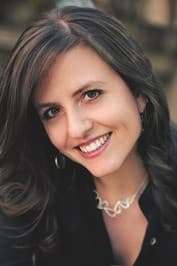
Rebecca Skloot is an American author and science writer known for her work in non-fiction. She is best known for "The Immortal Life of Henrietta Lacks," which explores the story of Henrietta Lacks and the immortal cell line derived from her cancer cells. Skloot's writing often focuses on the intersection of science and ethics.
Similar books
- Being Mortal: Medicine and What Matters in the End
Atul Gawande
4.4 (132k) average on GoodreadsPsychologyExamines complex ethical issues in medicine and patient care, though with a different focus on end-of-life decisions.
- The Diary of a Young Girl
Anne Frank
4.2 (2.7M) average on GoodreadsBiographyDuring the Nazi occupation, a teenage girl's diary, written from a secret annex, shares observations on humanity, hope, and the wait for freedom.
- Eat, Pray, Love
Elizabeth Gilbert
3.6 (1.5M) average on GoodreadsLifestyleA heartbroken writer leaves her conventional life for a year-long global search for pleasure in Italy, spiritual devotion in India, and unexpected love and balance in Bali.
- Night
Elie Wiesel
4.3 (970k) average on GoodreadsBiographyIn the darkness of Auschwitz and Buchenwald, a teenage Elie Wiesel faces the extermination of his family, the loss of his faith, and the lasting scars of humanity's deepest cruelty.
- Steve Jobs
Walter Isaacson
4.1 (957k) average on GoodreadsBusinessSteve Jobs was a visionary who fused creativity and technology to revolutionize six industries and shape our digital world.
- The Glass Castle
Jeannette Walls
4.3 (903k) average on GoodreadsBiographyJeannette Walls's memoir describes her unusual childhood with brilliant, free-spirited parents whose poverty-stricken life shaped her independence and love despite family problems.






Enjoyed the summary?
A summary gives you the shape of the book. The book itself has the detail, the examples and the voice.
Find The Immortal Life of Henrietta Lacks on AmazonAs an Amazon Associate, BookBrief earns from qualifying purchases. How we're funded