
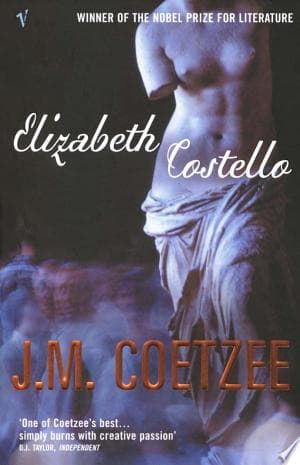
Synopsis
Covers the whole plot, including the ending.
- Difficulty
- Medium
- Pacing
- Slow
- Mood
- Philosophical, Reflective, Thought-provoking, Intense
- Read it if
- You enjoy philosophical fiction that delves into complex ethical and existential questions through the lens of a compelling, albeit difficult, protagonist.
- Skip it if
- You prefer fast-paced plot-driven narratives or clear-cut resolutions to moral dilemmas.
Elizabeth Costello Plot Summary
Covers the whole plot, including the ending.
The Animal's Curse: A Lecture at Appleton College
Elizabeth Costello, an aging Australian novelist, arrives at Appleton College in Pennsylvania to accept the fictional 'St Louis Award for Fiction' and give two lectures. Her son, John, a physics professor at the same college, accompanies her, often feeling embarrassed by her unconventional views. In her first lecture, 'The Animal's Curse,' Elizabeth argues passionately for the ethical treatment of animals, comparing the industrialized killing of animals to the Holocaust. She criticizes humans' capacity for 'sympathetic imagination,' which she believes is limited to their own species. Her lecture provokes discomfort and resistance from the audience and faculty, including her son, who finds her comparisons extreme and her arguments lacking academic rigor.
The Humanities in Africa: A Dialogue on Reason and Sympathy
Following her provocative lecture, Elizabeth Costello participates in a panel discussion with various Appleton College faculty members, including Professor Abraham, an expert in African literature, and Dr. A.D. Schopenhauer, a philosopher. The discussion revolves around animal consciousness and the limits of human understanding and sympathy. Elizabeth challenges the idea that animals are mere automatons, incapable of feeling pain or having an inner life comparable to humans. She rejects purely rational, philosophical arguments, instead appealing to an intuitive, imaginative understanding of animal suffering. John observes these interactions, often mediating or attempting to rationalize his mother's more radical statements, highlighting the tension between academic discourse and Elizabeth's more visceral, moral stance.
The Lives of Animals: A Son's Perspective
This section focuses on John's internal thoughts and his perspective on his mother's character and beliefs. He recounts her past, her literary career, and her lifelong obsession with animal suffering. John struggles to reconcile the brilliant, renowned author with the eccentric, often embarrassing woman who is his mother. He acknowledges her intellectual power but criticizes her methods and her perceived lack of academic rigor. He reflects on their complex relationship, marked by filial duty, frustration, and a grudging admiration for her unwavering moral conviction, even if he does not fully agree with her conclusions or her confrontational style. He feels burdened by her celebrity and her challenging ideas.
The Problem of Evil: A Cruise Ship Residency
Elizabeth Costello is a writer-in-residence on a luxury cruise ship sailing from Athens to Port Said. During this period, she gives a lecture titled 'The Problem of Evil,' where she explores the origins and manifestations of evil in human history and literature. She discusses figures like Hitler and the perpetrators of the Holocaust, questioning how such atrocities could occur. She grapples with language and art's inadequacy to fully comprehend or represent the depths of human cruelty. Her interactions with the cruise ship's passengers and staff are minimal, highlighting her isolation and her internal struggle with philosophical questions, often feeling out of place in the opulent environment.
The Novel in Africa: A Sister's Visit
Elizabeth travels to Africa to visit her sister, Blanche, who is a missionary nun. Blanche is receiving an honorary degree for her decades of service. This visit is a last opportunity for the estranged sisters to reconcile. During their time together, they discuss their differing life paths, their spiritual beliefs, and the role of faith versus reason. Elizabeth, an atheist, struggles to understand Blanche's unwavering devotion and her life of self-sacrifice. They also touch upon storytelling and the impact of the novel in an African context, with Blanche suggesting that African narratives often prioritize community and oral tradition over the individualistic focus of Western fiction. The encounter is fraught with unspoken resentments and the weight of their diverging lives.
The Poet and the Ape: A Literary Conference
Elizabeth attends a literary conference in Amsterdam, where she is scheduled to give a lecture on Franz Kafka's 'Report to an Academy,' a story narrated by an ape named Red Peter. She examines the themes of mimicry, freedom, and the humanization of animals, arguing that Kafka's ape challenges human assumptions about consciousness and language. During her lecture, she notices a man in the audience who strongly resembles Red Peter as described in Kafka's story. This unsettling encounter blurs the lines between fiction and reality for Elizabeth, prompting her to question her own imaginative projections and narrative's power to manifest itself in unexpected ways, intensifying her preoccupation with animal perspectives.
The Gatekeeper: A Trial of Faith
In a surreal, allegorical sequence, Elizabeth finds herself in a place resembling a spiritual or bureaucratic purgatory, needing to pass through a gate. To do so, she must answer questions about her beliefs, specifically regarding God, animals, and the nature of her soul. She struggles to articulate a definitive faith or a clear set of convictions that satisfies her interrogators, who include a priest and a judge. She confesses her inability to believe in God in the traditional sense, and her primary conviction seems to be the suffering of animals. This section explores her intellectual and spiritual honesty, her refusal to conform to prescribed doctrines, and her deep empathy for non-human life, even in the face of judgment.
The Dog: A Question of Loyalty
While awaiting judgment at the gate, Elizabeth observes a dog and its master. This observation prompts her to reflect on the nature of the human-dog relationship, particularly loyalty and obedience. She questions whether the dog's devotion is a genuine expression of affection or merely a conditioned response to its dependence on humans. This introspection ties back to her earlier concerns about animal consciousness and agency. She wonders if humans truly understand the inner lives of animals or if they project their own desires and interpretations onto them. The dog becomes a symbol of the broader ethical dilemma she faces regarding human dominion over other species.
The Verdict: A Soul's Unsettled State
After her interrogation, Elizabeth is not definitively granted passage through the gate, nor is she entirely denied. Her judges remain unconvinced by her explanations, particularly her lack of traditional faith and her intense focus on animal suffering. She remains in an indeterminate state, her soul unsettled, unable to fully align with either the secular or the religious frameworks presented to her. This concluding section emphasizes the ongoing nature of her philosophical and ethical quest, her refusal to accept easy answers, and her enduring commitment to a moral vision that often puts her at odds with conventional thought. Her journey remains one of perpetual inquiry and discomfort.
Elizabeth Costello Characters
Elizabeth Costello
Protagonist
An aging, internationally renowned Australian novelist known for her controversial views on animal rights.
Elizabeth Costello is a highly intelligent, fiercely opinionated, and morally driven woman. She is famous for her literary work but increasingly uses her platform to advocate for animal rights, often alienating her audiences with her uncompromising comparisons and passionate rhetoric. She is an atheist who grapples with profound philosophical and ethical questions, particularly the nature of evil, consciousness, and the human relationship with other species. She is often isolated, feeling misunderstood by both her family and the intellectual establishment, yet she remains steadfast in her convictions.
Relationships: John Costello (Son; often embarrassed by her, yet deeply connected and dutiful.); Blanche (Sister; estranged, their relationship is marked by differing life paths and spiritual beliefs.); Professor Abraham (Academic interlocutor; engages her in philosophical debate at Appleton College.)
John Costello
Supporting
Elizabeth's son, a physics professor who often accompanies her and struggles with her public persona.
John Costello is a rational, academic man, a physics professor at Appleton College. He is dutiful to his mother, Elizabeth, often acting as her escort and sometimes her interpreter or apologist. He loves her but is frequently embarrassed by her unconventional views and confrontational style, particularly her lectures on animal rights. He represents the more traditional academic and scientific perspective, often finding his mother's arguments lacking in empirical evidence or logical rigor. He struggles to reconcile the public intellectual with the private, often difficult, mother.
Relationships: Elizabeth Costello (Mother; complex, loving, but often strained by her public persona and challenging views.)
Blanche
Supporting
Elizabeth's sister, a devout missionary nun in Africa.
Blanche is Elizabeth's estranged sister, a missionary nun who has dedicated her life to service in Africa. She represents a life of faith, self-sacrifice, and community, contrasting sharply with Elizabeth's intellectual, individualistic, and often critical worldview. Their reunion is a difficult attempt at reconciliation, marked by unspoken histories and fundamental differences in their spiritual and ethical frameworks. Blanche's perspective highlights the role of faith and compassion in a practical, often challenging, environment.
Relationships: Elizabeth Costello (Sister; estranged, with a history of differing life choices and beliefs.)
Professor Abraham
Supporting
An academic at Appleton College who debates Elizabeth on animal consciousness.
Professor Abraham is a scholar of African literature at Appleton College. He participates in the discussions following Elizabeth's lectures, engaging her in intellectual debate about animal consciousness and the humanities. He represents a more traditional academic approach, seeking logical arguments and evidence. While respectful, he challenges Elizabeth's more emotional and less rigorously structured arguments, providing a foil for her unconventional thought processes.
Relationships: Elizabeth Costello (Intellectual sparring partner at Appleton College.)
The Gatekeeper / Judges
Mentioned
Allegorical figures who interrogate Elizabeth in a surreal, purgatorial setting.
These figures appear in the allegorical 'The Gatekeeper' section. They represent a higher authority, perhaps divine or bureaucratic, who interrogate Elizabeth about her beliefs and convictions. They are stern and unyielding, demanding clear answers about her faith, her soul, and her understanding of the world. They embody the societal and spiritual structures that Elizabeth often challenges, forcing her to articulate her often-unorthodox positions in a context of judgment.
Relationships: Elizabeth Costello (Interrogators and judges in a metaphorical trial.)
Red Peter (The Ape)
Mentioned
The central character of Kafka's 'Report to an Academy,' who Elizabeth lectures on.
Red Peter is a character from Franz Kafka's short story, a ape who learns to mimic human behavior and speech to escape his cage. Elizabeth Costello uses Red Peter as a focal point for her lecture in Amsterdam, exploring themes of consciousness, freedom, and the humanization of animals. The ape embodies the blurring of boundaries between human and animal, and the challenge to anthropocentric views of intelligence and sentience. His unexpected 'appearance' in the audience further blurs the lines between fiction and reality for Elizabeth.
Relationships: Elizabeth Costello (Subject of her lecture and a manifestation of her literary and philosophical preoccupations.)
Elizabeth Costello Themes
Animal Rights and Human Cruelty
This is the central, most pervasive theme. Elizabeth Costello passionately argues for the ethical treatment of animals, often comparing factory farming and the industrialized killing of animals to the Holocaust. She challenges human anthropocentrism, arguing that humans lack the 'sympathetic imagination' to truly understand and empathize with animal suffering. Her lectures, particularly 'The Animal's Curse,' force the reader to confront uncomfortable truths about humanity's dominion over other species and the moral implications of their actions. This theme explores the boundaries of empathy and the definition of consciousness beyond the human.
“We are surrounded by an enterprise of degradation, cruelty, and killing which rivals any atrocity in history.”
The Nature of Consciousness and Empathy
The novel repeatedly questions what constitutes consciousness, especially in non-human animals. Elizabeth challenges the scientific and philosophical frameworks that limit consciousness to human beings, arguing for an intuitive, imaginative understanding of animal inner lives. The discussions at Appleton College and her reflections on Kafka's Red Peter explore whether animals feel pain, have agency, or possess a form of self-awareness. This theme explores the limits of human empathy and the difficulty of truly knowing another's experience, whether human or animal.
“How do we know what it is like to be a bat? How do we know what it is like to be a cow?”
The Role and Limits of Literature/Art
Elizabeth Costello, as a novelist, constantly grapples with literature's power and limitations. She questions whether fiction can truly convey suffering, explore the nature of evil, or effect genuine moral change. Her lecture on 'The Problem of Evil' reflects her struggle with language's inadequacy to represent extreme human cruelty. Her engagement with Kafka's 'Report to an Academy' shows her belief in literature's capacity to challenge human perspectives and imagine non-human consciousness, yet she also encounters the unsettling manifestation of her literary subject in reality, blurring the lines between art and life.
“Literature can do everything but save the world.”
Reason vs. Intuition/Faith
A recurring tension exists between logical, academic reasoning and intuitive, passionate conviction. John, the academics, and the 'judges' at the gate often demand rational, evidence-based arguments from Elizabeth. However, Elizabeth frequently appeals to a more visceral, imaginative, or even spiritual understanding, particularly concerning animal suffering. Her atheism contrasts with her sister Blanche's unwavering faith, highlighting different paths to understanding the world and moral truth. This theme explores the different ways humans seek meaning and truth, and the limitations of purely rational approaches to profound ethical dilemmas.
“Reason is what human beings use to justify what they do.”
Aging, Isolation, and Public Persona
The novel portrays Elizabeth Costello as an aging public figure whose life has become a series of ceremonial appearances. Despite her renown, she often feels isolated and misunderstood, particularly by her son and the academic establishment. Her public persona as a 'famous writer' contrasts with her private struggles and her profound, often unsettling, moral convictions. The theme explores the challenges of maintaining intellectual integrity and personal authenticity in the face of public scrutiny and the inevitable decline of age. Her journey is one of internal solitude amidst external demands.
“She has become a body of work, a name, a set of opinions.”
Plot Devices & Literary Techniques
Lecture/Essay Format
The narrative is structured around Elizabeth Costello's formal lectures and internal essays.
Much of the novel's content is delivered through Elizabeth Costello's public lectures ('The Animal's Curse,' 'The Problem of Evil,' 'The Poet and the Ape') and internal monologues that read like essays. This device allows Coetzee to directly present complex philosophical and ethical arguments, rather than embedding them solely within dialogue or action. It highlights Elizabeth's role as an intellectual and public speaker, and it challenges the reader to engage with her ideas directly, mimicking the experience of her audiences. This format also lends the book a meditative and argumentative quality, blurring the lines between fiction and philosophical discourse.
Allegory and Surrealism
The novel employs allegorical scenes and elements of surrealism, particularly in its later sections.
The 'Gatekeeper' section, where Elizabeth is interrogated about her beliefs before passing through a gate, is a clear example of allegory, representing a metaphorical trial of the soul or a reckoning with one's life. Similarly, the 'appearance' of Red Peter, the ape from Kafka's story, in the audience of Elizabeth's lecture introduces a surreal element. These devices allow Coetzee to explore profound existential and spiritual questions outside the strict confines of realism, adding a layer of symbolic meaning and psychological depth to Elizabeth's journey and her internal struggles.
Metafiction
The novel frequently comments on its own nature as a fictional text and the act of storytelling.
The book itself is presented as a series of 'lessons' or 'chapters' that chronicle Elizabeth Costello's intellectual journey. The character of Elizabeth Costello is also a writer, and her discussions about the role and limits of literature ('The Novel in Africa,' 'The Problem of Evil') are metafictional, reflecting on the craft and purpose of storytelling within the story itself. This device invites the reader to consider the artificiality of fiction, the relationship between author and character, and the power of narrative to shape understanding and moral conviction.
Intertextuality
The novel extensively references other literary works and philosophical ideas.
Coetzee weaves in numerous references to other texts and thinkers, most notably Franz Kafka's 'Report to an Academy,' but also allusions to philosophers like Thomas Nagel ('What Is It Like to Be a Bat?') and historical events like the Holocaust. This intertextuality enriches the novel's thematic depth, placing Elizabeth Costello's arguments within a broader intellectual and literary tradition. It also serves to validate her arguments by demonstrating their connection to established thought, while simultaneously allowing for their critique and reinterpretation within the novel's unique context.
Elizabeth Costello Quotes
“Reason is not a faculty we use in order to obtain truth. Reason is a faculty we use in order to be more effective in our lives.”
“We are not ourselves, we are what we do.”
“There are no good books, only good readers.”
“The animal is not a machine, it is a being.”
“We have to think our way into the being of another. It's the only way.”
“What is it like to be a bat? We will never know. But we can imagine.”
“The business of the novelist is to portray the world as it is, not as it ought to be.”
“Perhaps the only way to be a good human being is to be a bad animal.”
“The novel is not a lecture, it is an experience.”
“We live in a world of symbols, not of things.”
“The heart has its reasons, which reason knows nothing of.”
“To be human is to be caught in a net of stories.”
“Ignorance is not bliss. Ignorance is just ignorance.”
“The question is not 'Can they reason?' nor 'Can they talk?' but 'Can they suffer?'”
Quiz
10 questions on the plot and the characters. Each answer comes with a short explanation.
Question 1
Which country is Elizabeth Costello from?
- South Africa
- Australia
- United States
- England
Show answer
B. Australia The book description explicitly states Elizabeth Costello is an Australian writer.
Question 2
What is Elizabeth Costello primarily famous for?
- Her extensive critical essays on other authors.
- A groundbreaking early novel that established her reputation.
- Her controversial political activism.
- Her work as a missionary in Africa.
Show answer
B. A groundbreaking early novel that established her reputation. The text states she is 'famous principally for an early novel that established her reputation'.
Question 3
Where does Elizabeth Costello's sister live and work?
- In an American college town.
- On a cruise liner.
- As a missionary in Africa.
- In Amsterdam, attending a writers' conference.
Show answer
C. As a missionary in Africa. The synopsis mentions 'a visit to her sister, a missionary in Africa'.
Question 4
What is the primary concern for Elizabeth Costello as she navigates her public life?
- Earning more awards and recognition.
- Reconciling with her estranged family members.
- The continuing search for a means of articulating her vision and the verdict of future generations.
- Avoiding public scrutiny and maintaining her privacy.
Show answer
C. The continuing search for a means of articulating her vision and the verdict of future generations. The text states, 'But, for her, what matters is the continuing search for a means of articulating her vision and the verdict of future generations.'
Question 5
Which of the following is NOT listed as a type of engagement Elizabeth Costello undertakes?
- Delivering a lecture at an American college for a major award.
- Attending a book signing tour across several continents.
- Serving as a writer in residence on a cruise liner.
- Answering questions at a writers' conference in Amsterdam.
Show answer
B. Attending a book signing tour across several continents. While she has many engagements, a 'book signing tour' is not specifically mentioned among the listed activities like the American college, cruise liner, or Amsterdam conference.
Question 6
What unexpected event occurs at the writers' conference in Amsterdam?
- She receives an impromptu lifetime achievement award.
- She encounters the subject of her talk unexpectedly amongst the audience.
- Her sister makes an unannounced appearance.
- She is asked to rewrite a section of her famous novel live.
Show answer
B. She encounters the subject of her talk unexpectedly amongst the audience. The text mentions 'a disquieting appearance at a writers' conference in Amsterdam where she finds the subject of her talk unexpectedly amongst the audience.'
Question 7
What is the nature of Elizabeth Costello's relationship with her sister, as suggested by their meeting in Africa?
- They have a close, supportive bond, frequently meeting.
- They are fierce rivals, constantly competing for recognition.
- It is an opportunity for them to effect some form of reconciliation, implying a strained or distant past.
- They are professional colleagues collaborating on a project.
Show answer
C. It is an opportunity for them to effect some form of reconciliation, implying a strained or distant past. The text describes the visit as an occasion 'which both recognise as the final opportunity for effecting some form of reconciliation', suggesting a need to repair their relationship.
Question 8
How does Elizabeth Costello's current public role contrast with her life's work?
- Her public role involves studying other people, which aligns perfectly with her life's work.
- Her public role forces her to be the object of scrutiny, whereas her life's work has been the study of other people.
- Her public role requires her to write new novels, which is a departure from her academic life's work.
- Her public role is about escaping the literary world, while her life's work was deeply embedded in it.
Show answer
B. Her public role forces her to be the object of scrutiny, whereas her life's work has been the study of other people. The text highlights this contrast: 'She has made her life's work the study of other people yet now it is she who is the object of scrutiny.'
Question 9
The phrase 'a private consciousness obliged to reveal itself to a curious public' best describes which aspect of Elizabeth Costello's current existence?
- Her voluntary choice to share her personal life with fans.
- The burden of celebrity that forces her inner self into public view.
- Her role as a literary critic, dissecting the works of others.
- Her desire to inspire young writers through personal anecdotes.
Show answer
B. The burden of celebrity that forces her inner self into public view. This phrase directly from the description illustrates the intrusive nature of her fame, where her private thoughts are expected to be public.
Question 10
Considering her status as an 'Australian writer of international renown' and her public engagements, what overarching theme about literary celebrity does the description suggest?
- The ease with which successful authors can transition into retirement.
- The enduring fulfillment and joy that comes with constant public veneration.
- The potential for a writer's later life to become a repetitive, somewhat 'sterile' performance of their past achievements.
- The opportunity for authors to use their fame to pursue entirely new creative endeavors.
Show answer
C. The potential for a writer's later life to become a repetitive, somewhat 'sterile' performance of their past achievements. The description mentions her life becoming 'a series of engagements in sterile conference rooms' and her function to 'be venerated and applauded', suggesting a repetitive and perhaps unfulfilling aspect of sustained literary fame.
Elizabeth Costello FAQ
What is the central premise of 'Elizabeth Costello'?
The novel follows Elizabeth Costello, an aging and celebrated Australian author, as she navigates a series of public appearances and lectures, reflecting on her life, art, and the nature of belief. It explores the tension between her private thoughts and the public persona she is expected to maintain, often through the lens of her son, John.
Who is John, and what is his role in the book?
John is Elizabeth Costello's son, a professor who often accompanies her to her engagements and acts as her reluctant handler and observer. He frequently narrates sections of the novel, providing a detached, often critical, perspective on his mother's philosophical musings and public performances.
What is the 'problem of evil' lecture Elizabeth delivers at the American college?
At the American college, Elizabeth delivers two lectures. The first, 'The Realism of Daniel Defoe,' critiques Defoe's portrayal of humanity. The second, 'The Lives of Animals,' is a passionate and controversial argument for animal rights, comparing factory farming to the Holocaust and challenging human exceptionalism.
What happens during Elizabeth's visit to her sister, Blanche?
Elizabeth visits her sister Blanche, a Catholic missionary in Africa, who is receiving an honorary degree. This reunion is fraught with tension and unspoken resentments, as the sisters, one a secular intellectual and the other a devout believer, struggle to find common ground or reconciliation before it's too late.
What is the significance of the Amsterdam writers' conference?
At the Amsterdam conference, Elizabeth is scheduled to speak on 'The Problem of Evil.' The unexpected twist is that the subject of her talk, a controversial figure whose trial she had closely followed, is present in the audience, forcing her to confront her own philosophical positions directly.
How does the novel connect to Coetzee's earlier work 'The Lives of Animals'?
'Elizabeth Costello' directly incorporates the two lectures on animal rights that previously appeared as 'The Lives of Animals.' This integration allows Coetzee to re-examine the arguments within a fictional narrative context, showing their impact on characters and their reception by a wider audience.
Is Elizabeth Costello a fictional character, or is she based on a real person?
Elizabeth Costello is a fictional character, but she serves as a meta-fictional device through which Coetzee explores his own philosophical concerns, particularly those related to animal rights, the role of the writer, and the nature of fiction itself. She can be seen as an alter ego or a vehicle for intellectual inquiry.
What is the 'hearing' Elizabeth undergoes in the final section of the book?
In the final, dreamlike section, Elizabeth finds herself in a kind of afterlife or purgatorial bureaucracy, where she must state her 'credo' or belief system to be granted passage. This surreal 'hearing' forces her to articulate her deepest convictions without recourse to literary or philosophical abstraction.
How does Elizabeth's relationship with John reflect her broader philosophical concerns?
Elizabeth's relationship with John is a microcosm of her broader concerns about empathy, understanding, and the limitations of language. John often fails to grasp the depth of her convictions, particularly regarding animal suffering, mirroring the general public's inability or unwillingness to fully engage with her radical ideas.
What psychological toll do Elizabeth's public appearances take on her?
Elizabeth experiences significant emotional and intellectual fatigue from her public engagements. She feels a profound disconnect between her inner life and the performative expectations placed upon her, leading to feelings of alienation, frustration, and a sense of her own declining relevance as a truth-teller.
How does Elizabeth's aging affect her perspective and arguments?
As Elizabeth ages, she becomes less concerned with academic rigor and more with raw, visceral truth, even if it makes her unpopular. Her arguments, particularly on animal rights, gain an urgency and a lack of compromise that stems from a lifetime of observation and a sense of impending finality, making her more blunt and less diplomatic.
What is the nature of the reconciliation Elizabeth seeks with Blanche?
Elizabeth seeks a spiritual or existential reconciliation with Blanche, hoping to bridge the chasm between their vastly different worldviews before one of them dies. However, their deeply ingrained beliefs and past grievances prove too strong, leading to a poignant failure to truly connect or understand each other's paths.
Is 'Elizabeth Costello' a novel about animal rights, or something more?
While animal rights are a prominent theme, the novel is more broadly about the nature of belief, empathy, the limitations of reason, and the role of the artist in articulating uncomfortable truths. The animal rights argument serves as a potent example of how deeply held moral convictions can challenge societal norms.
How does the novel challenge the traditional boundaries between fiction and essay?
Coetzee deliberately blurs these boundaries by embedding philosophical lectures and debates directly into the narrative, often with minimal fictional framing. This structure allows him to explore complex ideas without the full constraints of either genre, making the novel a hybrid work of 'fictionalized philosophy.'
What is the significance of the 'credo' Elizabeth must present in the final chapter?
The 'credo' represents the ultimate test of Elizabeth's integrity and the culmination of her life's intellectual and moral journey. It forces her to distill her entire being into a fundamental statement of belief, revealing the core of her identity beyond her literary achievements or public persona.
Does the novel offer any definitive answers to the philosophical questions it raises?
No, the novel deliberately refrains from offering definitive answers. Instead, it explores the complexities and ambiguities of profound philosophical questions, such as the problem of evil, the nature of consciousness, and human responsibility, leaving the reader to grapple with the discomfort and uncertainty.
How does Coetzee use John's narration to create a sense of critical distance?
John's narration often provides a skeptical, rational, and sometimes exasperated counterpoint to Elizabeth's impassioned arguments. His academic perspective and emotional detachment allow the reader to observe Elizabeth's ideas from an external, often critical, viewpoint, preventing the novel from becoming a mere mouthpiece for Coetzee's own views.
What is the overall tone of 'Elizabeth Costello'?
The tone is generally intellectual and probing, yet also tinged with melancholy, irony, and a quiet despair. There's a persistent sense of profound inquiry combined with the weariness of an aging mind confronting the world's indifference to its most deeply held moral convictions.
About the author
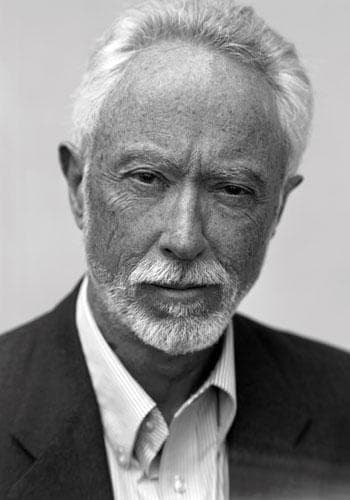
John Maxwell Coetzee OMG is a South African and Australian novelist, essayist, linguist, translator and recipient of the 2003 Nobel Prize in Literature. He is one of the most critically acclaimed and decorated authors in the English language. He has won the Booker Prize (twice), the CNA Prize (thrice), the Jerusalem Prize, the Prix Femina étranger, and The Irish Times International Fiction Prize, and holds a number of other awards and honorary doctorates.
Similar books
- Disgrace
J. M. Coetzee
3.8 (87k) average on GoodreadsLiterary FictionExplores moral decay and intellectual struggle in post-apartheid South Africa with a similar detached, academic tone.
- Austerlitz
W.G. Sebald
4.0 (14k) average on GoodreadsHistorical FictionFeatures a reflective, intellectual protagonist on a journey, exploring memory, history, and identity through fragmented narratives.
- Life of Pi
Yann Martel
3.9 (1.3M) average on GoodreadsFantasyBoth novels explore human-animal relationships, but Martel's Life of Pi uses a more allegorical and fantastical approach to explore themes of survival, faith, and storytelling. Coetzee's Elizabeth Costello directly tackles the ethical and philosophical implications of animal rights with a more academic and confrontational intensity, rooted in real-world philosophical debates rather than a fictionalized journey.
- Nineteen Eighty-Four
George Orwell
4.2 (5.5M) average on GoodreadsFictionWinston Smith dreams of truth and rebellion in a world where Big Brother watches all, but he confronts the terrifying power of a regime that controls not just actions, but thoughts.
- The Frozen River
Ariel Lawhon
4.4 (600k) average on GoodreadsFictionIn 1789 Maine, a heroic midwife's diary helps her expose a murder and get justice in a town that wants to silence her.
- A Man Called Ove
Fredrik Backman
4.4 (569k) average on GoodreadsFictionA stubborn widower, who lives by strict rules, finds his quiet world changed by a lively new family next door, making him face his past and find happiness in human connection.





Enjoyed the summary?
A summary gives you the shape of the book. The book itself has the detail, the examples and the voice.
Find Elizabeth Costello on AmazonAs an Amazon Associate, BookBrief earns from qualifying purchases. How we're funded