
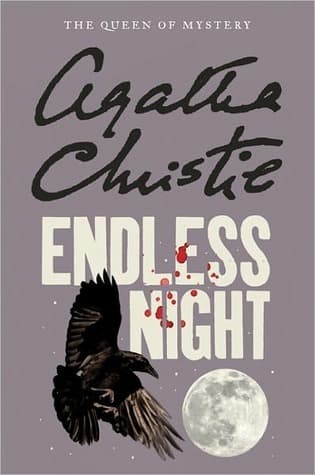
Synopsis
Covers the whole plot, including the ending.
- Difficulty
- Medium
- Pacing
- Moderate
- Mood
- Dark, Suspenseful, Atmospheric, Chilling
- Read it if
- You enjoy psychological thrillers with a dark, unreliable narrator and a classic 'perfect crime' setup, especially if you appreciate Agatha Christie's later, more character-driven works.
- Skip it if
- You prefer traditional whodunits with multiple suspects and intricate clue-solving, or if you dislike stories with truly villainous protagonists.
Endless Night Plot Summary
Covers the whole plot, including the ending.
A Dream of Gipsy's Acre
Michael Rogers, a working-class young man who drifts from job to job, is captivated by Gipsy's Acre, a seemingly idyllic but locally feared plot of land in the village of Combe. He dreams of building a modern house there and living a perfect life. Despite warnings from the villagers, particularly the elderly Miss Van Rydock and the local architect, Santonix, about the land's cursed history and the gypsy legend, Michael is undeterred. He frequently visits the site, imagining his future home, and even encounters a mysterious, beautiful young woman there.
The Unexpected Heiress
While working as a chauffeur in London, Michael encounters the same young woman he saw at Gipsy's Acre. She introduces herself as Fenella 'Ellie' Guteman, an American heiress of immense wealth, escaping her overprotective family and legal guardians. To Michael's astonishment, Ellie also shares his deep affection for Gipsy's Acre and wants to build a house there. A whirlwind romance ensues, culminating in a secret marriage against the wishes of Ellie's family, particularly her lawyer, Stanford Lloyd, and her stepmother, Cora. They decide to keep their marriage secret initially, hoping to secure Gipsy's Acre for themselves.
Building a Dream Home
Using Ellie's vast fortune, Michael and Ellie purchase Gipsy's Acre. They commission Santonix, the local architect whom Michael had previously met, to design their dream house. Santonix, despite his own reservations about the land and his fragile health, commits to the project, creating a modern home. During this period, Michael's mother, a working-class woman with a sharp tongue, expresses her disapproval of Ellie's wealth and their rapid marriage. Meanwhile, Miss Van Rydock, who seems to know more about the local legends, continues to warn Ellie about the dangers of the land.
The Arrival of Greta and Family Interference
Ellie's childhood friend, Greta Andersen, a striking and manipulative Swedish woman, arrives to live with them at Gipsy's Acre. Greta quickly takes charge of the household, making herself indispensable to Ellie. Michael grows wary of Greta's influence over Ellie. Simultaneously, Ellie's family, including Stanford Lloyd and Cora, try to convince Ellie to sign papers that would grant them more control over her inheritance, but Ellie refuses, trusting Michael implicitly. The pressure from her family and the unsettling atmosphere created by Greta begin to weigh on Ellie.
Santonix's Premonition and Death
Santonix, the architect, completes the house, but his health deteriorates rapidly. Before his death, he makes a chilling statement to Michael, implying he senses a deep evil or a 'wrongness' associated with the house or its inhabitants. He warns Michael to 'be careful' and to 'watch out for the others,' leaving Michael unsettled but unable to fully grasp the meaning of his words. Santonix’s death removes a potential ally and a voice of reason, leaving Michael and Ellie more isolated at Gipsy's Acre.
Ellie's Growing Unease
Ellie begins to experience unsettling incidents at Gipsy's Acre: a riding accident, a near-drowning in the swimming pool, and a general feeling of being watched and manipulated. She confides in Michael about her fears and her growing belief that the house is indeed cursed, or that someone wishes her harm. She even suggests they sell the house and move away, which alarms Michael, as Gipsy's Acre represents his ultimate dream. She also reveals that she has updated her will, leaving everything to Michael, a detail that further complicates the situation.
The Tragic Fall
One day, while riding her horse, Ellie suffers a fatal fall. The death is quickly ruled an accident, consistent with her previous riding incident. However, the circumstances of her death, combined with the earlier warnings and strange occurrences, leave a lingering sense of unease among some of the villagers and Ellie's family. Michael, despite his apparent grief, immediately inherits Ellie's vast fortune, fulfilling his dream of wealth and the house at Gipsy's Acre. The focus shifts to how Michael will cope with his new life.
A New Life, A New Threat
After Ellie's death, Michael continues to live at Gipsy's Acre, now the sole owner of the magnificent house and Ellie's immense wealth. He lives with Greta, who remains in the house, maintaining her role as a companion. Michael meets a local girl, a riding instructor named Claudia, and begins to develop a relationship with her. However, the elderly Miss Van Rydock, who has an uncanny knack for knowing things, continues to visit and subtly probe Michael, expressing her belief that Ellie's death was not an accident and that there is a deeper evil at play. Her persistence unnerves Michael.
The Truth Unveiled: Part One
In a shocking twist, Michael, the narrator, reveals his true, psychopathic nature. He confesses that he and Greta had meticulously planned Ellie's murder from the very beginning. They met at Gipsy's Acre years before Michael ever met Ellie, and conspired to find a wealthy heiress, marry her, and then murder her for her fortune. Greta had orchestrated the 'accidents' and created the atmosphere of fear that led Ellie to believe the house was cursed. Michael explains that he deliberately chose Ellie for her naive trust and immense wealth.
The Truth Unveiled: Part Two
Michael reveals that Greta was the one who actually pushed Ellie during her horse ride, ensuring her death appeared accidental. He details their careful planning, including Greta's role in isolating Ellie and making her distrust her family, and their manipulation of the situation to ensure Michael inherited everything. He confesses his utter lack of remorse, describing his actions with cold detachment. The narrative shifts from a seemingly innocent man's dream to the chilling confession of a calculating murderer, exposing his twisted soul. He even admits to having planned to kill Greta once her usefulness was over.
A Final Reckoning
The story culminates with Michael's final act of evil. He kills Greta by poisoning her, believing he has eliminated the only person who could implicate him. His plan is to then marry Claudia and continue his life of luxury. However, the persistent investigation by Miss Van Rydock and others eventually leads to the truth being uncovered. Michael is apprehended, and the full extent of his crimes is exposed. The final pages leave Michael reflecting on his life, trapped in his own 'endless night' of psychopathy, unable to comprehend the concept of good or evil.
Endless Night Characters
Michael Rogers
Protagonist/Antagonist
A charming, ambitious, and ultimately psychopathic young man obsessed with wealth and a dream home.
Michael is the narrator and central character of the story, initially presenting himself as a charming, working-class young man with a romantic dream of building a house on Gipsy's Acre. He is a drifter, moving from job to job, but possesses a strong will and a clear vision for his future. His true nature is gradually revealed to be that of a calculating, amoral psychopath, driven by greed and a desire for an easy life. He is utterly devoid of empathy and sees others as mere tools to achieve his goals. His charm is a facade, expertly used to manipulate those around him, especially Ellie.
Relationships: Fenella 'Ellie' Guteman (Husband, but truly a manipulative murderer); Greta Andersen (Accomplice and lover, later victim); Miss Van Rydock (Object of suspicion and annoyance); Santonix (Architect, potential threat); Claudia Hardcastle (Prospective future victim/wife)
Fenella 'Ellie' Guteman
Victim/Supporting
A naive, incredibly wealthy American heiress who falls in love with Michael and his dream.
Ellie is a kind, innocent, and incredibly wealthy American heiress who has lived a sheltered life. She is lonely and yearns for genuine connection and freedom from her overprotective family. She shares Michael's romantic vision for Gipsy's Acre and quickly falls deeply in love with him, trusting him completely. Her naivete and immense fortune make her the perfect target for Michael and Greta. She is sensitive and perceptive, eventually sensing the malevolent atmosphere at Gipsy's Acre and growing fearful, but her trust in Michael ultimately blinds her to the true danger.
Relationships: Michael Rogers (Wife, deeply in love and trusting); Greta Andersen (Best friend from childhood, manipulated and betrayed by her); Stanford Lloyd (Family lawyer/guardian, distrusted by Ellie); Cora Van Stuyvesant (Stepmother, seen as overbearing)
Greta Andersen
Antagonist/Supporting
Ellie's beautiful, manipulative best friend and Michael's cunning accomplice.
Greta is Ellie's childhood best friend, a beautiful and seemingly devoted companion. However, she is secretly Michael's lover and a co-conspirator in the plot to murder Ellie for her fortune. She is intelligent, cunning, and highly manipulative, expertly playing the role of a supportive friend while subtly undermining Ellie's confidence and creating an atmosphere of fear at Gipsy's Acre. She is as ruthless and amoral as Michael, though perhaps less overtly charming. Her presence in the house isolates Ellie further and facilitates their scheme.
Relationships: Michael Rogers (Lover and co-conspirator); Fenella 'Ellie' Guteman (Childhood best friend, betrayed and murdered); Miss Van Rydock (Object of suspicion)
Miss Van Rydock
Supporting
An elderly, astute American woman with an uncanny intuition and a connection to Ellie's family.
Miss Van Rydock is an elderly, sharp-witted American woman who lives in the village and knows a great deal about people and local legends. She is an old acquaintance of Ellie's family and takes an immediate interest in Ellie and Michael. She possesses a keen intuition and a strong sense that something is wrong at Gipsy's Acre, particularly after Ellie's death. She frequently visits, subtly probing Michael and expressing her suspicions, acting as a catalyst for the eventual uncovering of the truth, even if she doesn't fully understand the 'how' or 'who' initially.
Relationships: Fenella 'Ellie' Guteman (Acquaintance of her family, concerned for her well-being); Michael Rogers (Object of suspicion); Greta Andersen (Object of suspicion)
Santonix
Supporting
A brilliant but frail architect who designs the house at Gipsy's Acre and senses its underlying evil.
Santonix is the talented architect commissioned by Michael and Ellie to design their dream home. He is an artistic and sensitive man, but also frail and suffering from a terminal illness. He develops a fondness for Ellie and is deeply invested in the house. He possesses an almost psychic sensitivity to the atmosphere of Gipsy's Acre, sensing a profound 'evil' or 'wrongness' associated with the place or its inhabitants. His cryptic warnings to Michael before his death serve as an early clue to the sinister events unfolding.
Relationships: Michael Rogers (Client and acquaintance); Fenella 'Ellie' Guteman (Client, for whom he has affection)
Stanford Lloyd
Supporting
Ellie's stern and protective family lawyer and guardian, suspicious of Michael.
Stanford Lloyd is Ellie's family lawyer and one of her legal guardians. He is a serious, somewhat rigid man who is deeply concerned about Ellie's well-being and her vast inheritance. He is immediately suspicious of Michael's motives and disapproves of Ellie's secret marriage. He tries to persuade Ellie to sign papers that would give her family more control over her finances, but she refuses. He represents the voice of caution and concern from Ellie's 'old' life, which she is trying to escape.
Relationships: Fenella 'Ellie' Guteman (Lawyer and guardian); Michael Rogers (Distrusts him deeply)
Cora Van Stuyvesant
Supporting
Ellie's stepmother, concerned about Ellie's impulsive marriage.
Cora is Ellie's stepmother, a socialite who, along with Stanford Lloyd, tries to guide Ellie and protect her inheritance. She is less formal than Lloyd but equally concerned about Ellie's impetuous marriage to Michael. She represents the social expectations and family pressures that Ellie is trying to escape by marrying Michael and moving to Gipsy's Acre. Her concerns, though dismissed by Ellie, highlight the perceived recklessness of Ellie's choices.
Relationships: Fenella 'Ellie' Guteman (Stepmother, concerned for her); Michael Rogers (Distrusts him)
Mrs. Rogers
Supporting
Michael's working-class mother, critical and perceptive in her own way.
Michael's mother is a working-class woman with a sharp tongue and a pragmatic view of life. She is initially critical of Michael's drifting lifestyle but also expresses disapproval of Ellie's immense wealth and her son's sudden marriage. She has a shrewd, if cynical, understanding of human nature and money. While she doesn't suspect murder, her comments often highlight the class divide and the potential for trouble that Michael's sudden rise in fortune represents.
Relationships: Michael Rogers (Mother, critical but supportive in her own way); Fenella 'Ellie' Guteman (Daughter-in-law, viewed with suspicion due to her wealth)
Claudia Hardcastle
Mentioned
A local riding instructor whom Michael plans to marry after Ellie's death.
Claudia is a local riding instructor who becomes acquainted with Michael after Ellie's death. She is a pleasant, seemingly innocent young woman whom Michael plans to marry as his next victim or simply to maintain his facade of normalcy and acquire more wealth, implying a continuation of his psychopathic pattern. She represents the next potential target in Michael's 'endless night' of crime.
Relationships: Michael Rogers (Potential future wife/victim)
Endless Night Themes
The Nature of Evil and Psychopathy
The central theme explores the chilling nature of psychopathy through Michael Rogers. His narration, initially appearing charming and romantic, slowly reveals a complete absence of empathy, remorse, and moral compass. Christie uses the first-person perspective to immerse the reader in the mind of a twisted character who consistently chooses evil over good, not out of passion, but cold calculation. This theme is exemplified by Michael's meticulous planning of Ellie's murder, his casual disposal of Greta, and his utter detachment from the consequences of his actions, showing the 'endless night' within his soul.
“In my end is my beginning.”
Appearance vs. Reality
This theme is central to the novel's suspense and ultimate twist. Michael Rogers presents himself as a charming, romantic dreamer, but his true self is a calculating murderer. Gipsy's Acre itself embodies this theme: a beautiful, idyllic site that hides a dark history and becomes the stage for a heinous crime. Ellie, too, is misled by Michael's charming facade, failing to see the evil beneath. The entire narrative is built on the deception of appearances, where the reader, like Ellie, is initially fooled by Michael's seemingly innocent perspective, only for the brutal reality to be unveiled in the climax.
“I was born with a craving for the best, and a determination to get it.”
Greed and Social Climbing
Michael's primary motivation is an insatiable greed and a desire to escape his working-class background for a life of luxury. He views wealth as the ultimate goal and is willing to commit any crime to achieve it. His obsession with Gipsy's Acre and the 'perfect house' is intertwined with his desire for an opulent lifestyle, which Ellie's fortune provides. This theme explores the corrupting influence of unchecked ambition and the lengths to which an individual will go to achieve social and financial status, regardless of the human cost.
“I was never one for working. Not if there was an easier way.”
Fate, Superstition, and Foreshadowing
The novel uses the local legend of Gipsy's Acre being cursed, and the warnings from characters like Miss Van Rydock and Santonix. These elements create a pervasive sense of foreboding, suggesting that fate or a supernatural force is at play. However, the twist reveals that the 'curse' is not supernatural but human-made—the result of deliberate, evil actions. This theme plays with the reader's expectations, making them question whether the events are due to an ancient curse or a more sinister, human design, ultimately showing the human capacity for evil as the true 'curse'.
“There's no luck for them as meddles with Gipsy's Acre.”
Plot Devices & Literary Techniques
First-Person Unreliable Narrator
The entire story is told from Michael Rogers' perspective, revealing his psychopathy only at the climax.
The most crucial plot device in 'Endless Night' is the use of Michael Rogers as a first-person unreliable narrator. For the majority of the novel, Michael presents himself as a romantic, somewhat naive young man whose dreams are tragically shattered. This perspective completely misleads the reader, making them sympathize with Michael and believe his version of events. The shocking revelation of his true, psychopathic nature in the final chapters recontextualizes every previous detail, demonstrating Christie's masterful manipulation of narrative perspective to create a profound twist and heighten the psychological horror.
Foreshadowing and Ominous Atmosphere
Subtle clues, warnings, and an unsettling mood hint at the impending tragedy.
Christie employs extensive foreshadowing and creates a consistently ominous atmosphere from the very beginning. The legend of Gipsy's Acre being cursed, Miss Van Rydock's cryptic warnings, Santonix's premonitions of 'evil,' and Ellie's growing unease all build a sense of impending doom. These elements prepare the reader for a tragic outcome, but the specific nature of the tragedy – a meticulously planned murder by the narrator himself – remains hidden until the final reveal. The unsettling mood is a constant companion, making the reader feel that something is deeply wrong, even if they can't pinpoint it.
The 'Perfect Crime' Motif
The murderers meticulously plan and execute a crime designed to look like an accident, for financial gain.
The novel uses the 'perfect crime' motif, where Michael and Greta meticulously plan Ellie's murder to appear as a series of unfortunate accidents, culminating in a fatal fall. Their strategy involves isolating Ellie, creating an atmosphere of fear to make her believe in a curse, and ensuring that Michael inherits her vast fortune. The detailed planning, the exploitation of Ellie's trust, and the subsequent efforts to cover their tracks are central to the plot, showcasing the cold calculation involved in their scheme. The 'perfection' of the crime is only undone by the persistence of external forces and Michael's final confession.
The Gypsy's Acre Legend
A local superstition that serves as a red herring and a symbolic backdrop for the events.
The legend surrounding Gipsy's Acre, that it is cursed and brings bad luck to those who build on it, functions as both a red herring and a powerful symbolic device. Initially, it leads characters and readers to attribute the misfortunes to supernatural causes. However, the true 'curse' is revealed to be the human evil that inhabits the land through Michael and Greta. The legend underscores the theme of appearance vs. reality, as the beautiful land conceals a dark human capacity for violence, making the ancient superstition a tragic mirror for modern villainy.
Endless Night Quotes
“For some, there is no escape. They are caught in a web of their own making.”
“I was born with a craving for beauty, and a dislike of anything that wasn't beautiful.”
“How can you tell what a man is capable of until you put him to the test?”
“It's always the quiet ones, isn't it? The ones you'd least suspect.”
“Some places are like that, they seem to draw trouble to them. Or perhaps it's the people who are drawn to the places.”
“There's a lot of things people don't know about their nearest and dearest.”
“Money doesn't buy happiness, but it buys a lot of other things that make unhappiness bearable.”
“You can't change what's in a person's nature, not really.”
“It was as though the past had reached out and claimed its own.”
“The truth has a way of coming out, sooner or later.”
“I suppose everyone has a dark side, even if they don't show it.”
“It was the perfect house for a new life. Or for an end to one.”
“One never really knows anyone, do they? Not completely.”
“Sometimes the most beautiful things can hide the most terrible secrets.”
Quiz
10 questions on the plot and the characters. Each answer comes with a short explanation.
Question 1
What is the name of the beautiful upland site that captivates Michael Rogers?
- Ferryman's Croft
- Gipsy's Acre
- Widow's Peak
- Serpent's Ridge
Show answer
B. Gipsy's Acre The book explicitly states that the site Michael Rogers falls in love with is called Gipsy's Acre, a place with a local legend attached to it.
Question 2
What is Michael Rogers' primary ambition for Gipsy's Acre?
- To turn it into a profitable tourist attraction.
- To sell it to the highest bidder for a large profit.
- To build a house, find a girl, and live happily ever after.
- To preserve it as a natural reserve.
Show answer
C. To build a house, find a girl, and live happily ever after. The summary states Michael's dream: 'There, amongst the dark fir trees, he planned to build a house, find a girl and live happily ever after.'
Question 3
What is the local warning associated with Gipsy's Acre?
- ''Beware the dark fir trees.''
- ''The spirits of the land will protect you.''
- ''There’s no luck for them as meddles with Gipsy’s Acre.''
- ''Only the pure of heart may build here.''
Show answer
C. ''There’s no luck for them as meddles with Gipsy’s Acre.'' The provided text explicitly quotes the local warning: 'Perhaps Michael should have heeded the locals’ warnings: ‘There’s no luck for them as meddles with Gipsy’s Acre.’'
Question 4
What literary work is the title 'Endless Night' taken from?
- Shakespeare's Sonnets
- William Blake’s Auguries of Innocence
- John Keats' Endymion
- Lord Byron's Childe Harold's Pilgrimage
Show answer
B. William Blake’s Auguries of Innocence The text states: 'The title Endless Night was taken from William Blake’s Auguries of Innocence.'
Question 5
What theme does Agatha Christie describe as her 'favourite' in 'Endless Night'?
- The triumph of good over evil.
- A 'twisted' character, who always chooses evil over good.
- The corrupting influence of wealth.
- The power of true love to overcome adversity.
Show answer
B. A 'twisted' character, who always chooses evil over good. Christie's favorite theme in the novel is described as 'a “twisted” character, who always chooses evil over good,' reflecting the dark nature of the story.
Question 6
Despite being in her seventies, how did Agatha Christie find writing from the perspective of the twenty-something narrator, Michael?
- Extremely challenging due to the age gap.
- Somewhat difficult, requiring extensive research.
- ''Not difficult'' because she heard people like him talking all the time.
- She relied heavily on her own youthful memories.
Show answer
C. ''Not difficult'' because she heard people like him talking all the time. Agatha Christie stated that being Michael, the twenty-something narrator, 'wasn’t difficult. After all, you hear people like him talking all the time.'
Question 7
What does the old saying 'In my end is my beginning' imply about Michael Rogers' journey?
- His past mistakes will lead to a fresh start.
- The conclusion of his story will reveal the true nature or origin of events.
- He will find peace and contentment at the end of his life.
- His life is a continuous cycle of joy and sorrow.
Show answer
B. The conclusion of his story will reveal the true nature or origin of events. The phrase 'In my end is my beginning' is a classic literary device often used to indicate a cyclical narrative or, in mysteries, that the resolution (the 'end') illuminates the true nature of the start or the underlying motives, which is highly relevant for a 'twisted' character like Michael in a thriller.
Question 8
What is unique about the speed at which Agatha Christie wrote 'Endless Night' compared to her other novels?
- It took her significantly longer, around a year.
- She finished it in six weeks, much faster than her usual three-four months.
- It was a collaborative effort, speeding up the process.
- She dictated it, which was a new method for her.
Show answer
B. She finished it in six weeks, much faster than her usual three-four months. The text explicitly states: 'Christie finished Endless Night in six weeks, as opposed to the three-four months that most of her other novels took.'
Question 9
The dedication of the book mentions 'Nora Prichard'. What is Nora's connection to the story?
- She was the inspiration for the character of the girl Michael falls for.
- She was Christie's editor who encouraged the story.
- She was Christie's relative from whom she first heard the legend of Gipsy's Acre.
- She helped Christie research the architectural plans for the house.
Show answer
C. She was Christie's relative from whom she first heard the legend of Gipsy's Acre. The dedication reads: 'The book is dedicated to Christie's relative 'Nora Prichard from whom I first heard the legend of Gipsy's Acre.'
Question 10
Given the description of Michael Rogers as a 'twisted' character who 'always chooses evil over good,' what can readers anticipate about his role in the narrative?
- He will be the innocent victim of the 'accidents' on Gipsy's Acre.
- He is likely the unreliable narrator, and potentially the perpetrator of the 'accidents'.
- He will overcome his darker impulses and achieve redemption.
- He will serve as a moral compass for other characters.
Show answer
B. He is likely the unreliable narrator, and potentially the perpetrator of the 'accidents'. The description of Michael as a 'twisted' character who 'always chooses evil over good,' especially as the narrator, strongly suggests he is an unreliable narrator and likely involved in the sinister events, rather than a passive victim or moral guide.
Endless Night FAQ
What is Endless Night about?
Endless Night tells the story of Michael Rogers, a young chauffeur with aspirations, who dreams of building a house on the beautiful but supposedly cursed Gipsy's Acre. He falls in love with and marries the wealthy American heiress, Ellie Goodman, and together they build their dream home on the land. However, their idyllic life is soon shattered by a series of unsettling events, leading to tragedy and revealing the dark truth behind Gipsy's Acre and their seemingly perfect romance.
Why should I read Endless Night?
You should read Endless Night for its unique narrative style, being told from the perspective of the seemingly charming but ultimately twisted Michael Rogers, which sets it apart from many of Christie's other works. It's a psychological thriller that masterfully builds suspense and dread, exploring themes of greed, obsession, and the insidious nature of evil, culminating in one of Christie's most shocking and memorable endings.
What is the background/setting of Endless Night?
The primary setting is Gipsy's Acre, a stunningly beautiful but locally feared piece of land with views out to sea, located in the English countryside. Local legends claim that the land is cursed and brings bad luck to anyone who builds upon it. The story unfolds as Michael Rogers and his wife, Ellie, defy these warnings to construct their modern dream house there, setting the stage for the unfolding tragedy.
What are the most memorable quotes from Endless Night?
One of the most memorable quotes, which encapsulates the book's dark theme, is 'In my end is my beginning,' a phrase that gains profound and chilling significance by the story's conclusion. Another is the local warning, 'There’s no luck for them as meddles with Gipsy’s Acre,' which serves as a constant, ominous refrain throughout Michael's narrative.
What writing style does Agatha Christie use in Endless Night?
Agatha Christie employs a first-person narrative from the perspective of Michael Rogers, which is unusual for her, allowing for deep immersion into his thoughts and perceptions. The style is conversational and often charming, lulling the reader into a false sense of security while subtly hinting at the darkness beneath the surface. She masterfully uses foreshadowing and psychological insights to build tension.
What minor details add significant meaning in Endless Night?
The repeated local warnings about Gipsy's Acre, initially dismissed by Michael and Ellie as superstition, become increasingly significant as events unfold, underscoring the sense of impending doom. Also, the seemingly innocuous character of Greta, Ellie's 'companion,' subtly influences events and relationships in ways that are only fully understood in retrospect, revealing her crucial role in the scheme.
What are some subtle foreshadowing moments in Endless Night?
Early in the novel, Michael's seemingly casual observation about how 'accidents happen' on Gipsy's Acre, even before any major tragedy, subtly foreshadows the 'accidental' death of Ellie. His fascination with the idea of a 'perfect crime' and his detached recounting of events, even joyous ones, hint at his true, calculating nature long before the reveal.
What unexpected character connections exist in Endless Night?
The most unexpected connection is between Michael Rogers and Greta, Ellie's 'best friend' and companion. Their relationship, initially presented as antagonistic or indifferent, is revealed to be a deep, long-standing, and sinister partnership designed to manipulate Ellie and orchestrate her demise for her inheritance.
What are unspoken character motivations in Endless Night?
Michael Rogers' unspoken motivation is pure, unadulterated greed and a desire for a life of luxury without working for it, masked by his charming facade and claims of loving Ellie. Greta's unspoken motivation is a similar desire for wealth and power, coupled with a deep, obsessive attachment to Michael, driving her to participate in the heinous plot against Ellie.
What psychological complexities do characters exhibit in Endless Night?
Michael Rogers exhibits extreme psychopathy, displaying a complete lack of empathy, a grandiose sense of self, and a manipulative charm that deceives everyone around him, including the reader. Ellie, on the other hand, shows a complex blend of naiveté, deep love, and a desire for independence, making her vulnerable to the machinations of those closest to her.
What are the major emotional turning points in Endless Night?
A major emotional turning point is the death of Ellie's beloved friend and companion, Miss Vanish, which deeply unsettles Ellie and introduces a darker atmosphere to Gipsy's Acre. The most significant turning point, however, is Ellie's 'accidental' death, which shatters the idyllic illusion and sets the stage for Michael's unraveling and the eventual exposure of the truth.
How do relationship dynamics evolve in Endless Night?
The relationship between Michael and Ellie initially evolves from a whirlwind romance into an seemingly idyllic marriage built on shared dreams for Gipsy's Acre. However, underlying tensions and the interference of characters like Greta and Ellie's family gradually strain their bond. The true evolution, however, is the revelation of Michael and Greta's long-standing, manipulative partnership, which completely recontextualizes all other relationships.
Which parts of Endless Night remain ambiguous or open-ended?
While the core mystery is resolved, the ultimate fate of Michael Rogers after his confession is left somewhat open to interpretation beyond his immediate arrest. The lingering question of whether the 'curse' of Gipsy's Acre was purely superstition or if it somehow influenced the characters' dark actions also remains a subtle point of ambiguity, adding to the novel's unsettling atmosphere.
What are controversial scenes or decisions in Endless Night?
The most controversial aspect of the novel is arguably the sheer cold-bloodedness and premeditation of Michael and Greta's plan to murder Ellie for her inheritance. The decision to portray such a 'twisted' character, who always chooses evil, without a hint of redemption, was a departure for Christie and shocked many readers accustomed to more traditional detective stories where justice is clearly served.
Endless Night ending explained: how it ends & what it means
The novel ends with Michael Rogers confessing to the murder of Ellie, revealing that her death was not an accident but a meticulously planned crime orchestrated with his accomplice and secret lover, Greta. The 'curse' of Gipsy's Acre was merely a smokescreen for human greed and evil. The ending means that Michael, the charming narrator, was a psychopath all along, and the entire story was his chilling confession, showcasing Christie's mastery of psychological suspense and her ability to subvert reader expectations.
About the author
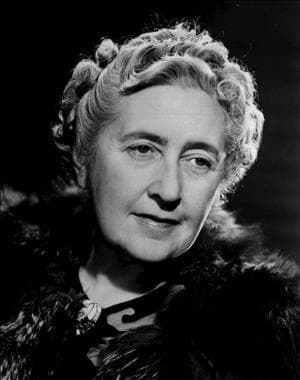
Dame Agatha Mary Clarissa Christie, Lady Mallowan, was an English writer known for her 66 detective novels and 14 short story collections, particularly those revolving around fictional detectives Hercule Poirot and Miss Marple. She also wrote the world's longest-running play, the murder mystery The Mousetrap, which has been performed in the West End since 1952. A writer during the "Golden Age of Detective Fiction", Christie has been called the "Queen of Crime". She also wrote six novels under the pseudonym Mary Westmacott. In 1971, she was made a Dame (DBE) by Queen Elizabeth II for her contributions to literature. Guinness World Records lists Christie as the best-selling fiction writer of all time, her novels having sold more than two billion copies.
Similar books
- Rebecca
Daphne du Maurier
4.2 (450k) average on GoodreadsThrillerFeatures a gothic atmosphere, a grand estate, and a sense of psychological dread surrounding a new marriage.
- Gone Girl
Gillian Flynn
4.1 (2.3M) average on GoodreadsThrillerFeatures an unreliable narrator and explores the dark side of marriage and hidden motives behind a seemingly perfect facade.
- Rosemary's Baby
Ira Levin
4.0 (112k) average on GoodreadsThrillerBoth build suspense through escalating dread in a seemingly perfect setting. Levin's horror is external and supernatural, driven by a malevolent cult. Christie's terror in Endless Night is entirely internal and human-driven, focusing on the psychological unraveling and the discovery of evil within an individual, making it a more grounded psychological thriller.
- Angels & Demons
Dan Brown
3.9 (2.7M) average on GoodreadsThrillerA Harvard symbologist races through Rome's ancient sites, deciphering cryptic clues to unmask the Illuminati and stop a vengeful plot to destroy the Vatican with a stolen antimatter weapon.
- The Girl on the Train
Paula Hawkins
3.9 (2.1M) average on GoodreadsThrillerA woman’s fascination with a seemingly perfect couple she watches from her daily train commute leads her into a dark investigation when she witnesses something that shatters their idyllic image.
- The Da Vinci Code
Dan Brown
3.9 (1.9M) average on GoodreadsThrillerA symbologist and a cryptologist race through European landmarks, deciphering ancient codes and uncovering a conspiracy that could rewrite the foundations of Christianity.





Enjoyed the summary?
A summary gives you the shape of the book. The book itself has the detail, the examples and the voice.
Find Endless Night on AmazonAs an Amazon Associate, BookBrief earns from qualifying purchases. How we're funded