
Estimated read time: 9 min read
One Sentence Summary
A psychiatrist attempts to understand the psychological motives behind a young man's violent blinding of horses, uncovering themes of passion, worship, and societal repression.
Table of Contents
Introduction
Imagine a teenage boy, a psychiatrist grappling with his own doubts, and a series of mysterious attacks on horses. Equus, Peter Shaffer’s 1973 play, throws us into this riveting psychological drama, pulling back the curtain on the human soul’s darkest corners. Revered for its daring exploration of passion, repression, and the human psyche, Equus has captivated readers and theatergoers for decades. Whether you’re a college student seeking deeper meaning, a lecturer analyzing modern drama, or simply curious about what makes us tick, Shaffer’s work promises to challenge and enthrall in equal measure.
Historical Context
Set in 1970s England, Equus emerges during a time of social transformation. The era was marked by shifting attitudes toward psychology, religion, and sexuality—a perfect storm for Shaffer’s intense narrative. The play’s debut in 1973 coincided with a growing fascination with psychoanalysis and the questioning of traditional authority, both in the home and in society. The story draws inspiration from a real-life crime—a boy’s inexplicable blinding of horses—reported in the British press. Shaffer transforms this shocking event into a profound meditation on faith, desire, and the boundaries of normalcy.
Brief Synopsis
Plot Overview
Equus follows psychiatrist Martin Dysart as he’s brought a troubling case: Alan Strang, a seventeen-year-old who has blinded six horses. As Dysart delves into Alan’s mind, he discovers a labyrinth of suppressed desires, religious fervor, and the search for meaning. The investigation becomes a journey not only into Alan’s soul but Dysart’s own, forcing both to confront uncomfortable truths about passion, worship, and what it means to be truly alive.
Setting
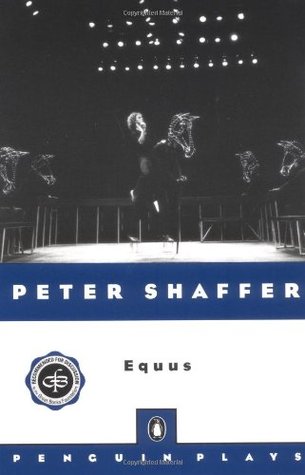
The play unfolds in a small English town, blending the clinical confines of a psychiatric hospital with the raw, elemental world of the stable. Shaffer’s minimalist stage directions encourage imaginative staging—horses are represented by actors in stylized masks, blurring lines between reality and hallucination. The atmosphere is charged, sometimes claustrophobic, oscillating between the sterile and the mythic, echoing Alan’s inner turmoil.
Main Characters
Here’s a quick reference to the key players who animate Shaffer’s intense psychological drama:
| Name | Role | Key Traits | Importance to Plot |
|---|---|---|---|
| Martin Dysart | Psychiatrist | Introspective, disillusioned, empathetic | Protagonist; investigates Alan and confronts his own doubts |
| Alan Strang | Teenage patient | Troubled, fervent, imaginative | Central figure; blinded the horses; subject of Dysart’s study |
| Frank Strang | Alan’s father | Atheist, strict, emotionally distant | Influences Alan’s conflicting beliefs |
| Dora Strang | Alan’s mother | Religious, caring, overprotective | Shapes Alan’s religious intensity |
| Jill Mason | Stable girl, Alan’s friend | Confident, sensual, empathetic | Catalyst for Alan’s emotional crisis |
| Hesther Salomon | Magistrate, Dysart’s friend | Practical, compassionate | Brings Alan’s case to Dysart; moral support |
| Nurses & Orderlies | Hospital staff | Professional, detached | Represent the clinical environment |
Plot Summary
Let's break down the play’s major movements for clarity, without spoiling its most gripping revelations.
The Case Begins
The curtain rises on Dr. Martin Dysart, who’s lost in thought. Enter Hesther Salomon, a magistrate and friend, urging Dysart to help Alan Strang—a boy accused of a horrific act. Dysart, already burdened by doubts about his profession, reluctantly agrees. From the outset, the case is more than just another patient; it’s a riddle that gnaws at Dysart’s own sense of purpose.
Peeling Back the Layers
Dysart’s sessions with Alan are a psychological chess match. Alan is guarded, evasive, and cryptic, speaking in commercial jingles and television slogans. Gradually, through patience and empathy, Dysart uncovers Alan’s complex family dynamics: a mother obsessed with religion and a father who scorns it. Alan’s home life is a battleground of conflicting values.
The World of Equus
As Alan’s story unfolds, Dysart learns how Alan’s fascination with horses blossomed into obsession. Horses become objects of both reverence and fear—recipients of Alan’s secret worship. Alan names his personal god “Equus,” blending elements of Christianity and pagan ritual into a private mythology centered on the horse. The stable is Alan’s temple; his rides are acts of worship—and transgression.
Catalyst and Crisis
Jill Mason, a free-spirited coworker at the stable, befriends Alan and invites him into her world. Jill’s interest in Alan awakens both desire and terror within him, pushing him toward a breaking point. When Jill encourages intimacy, Alan’s internal conflicts explode, leading to the shocking act at the play’s center—an act that leaves six horses blinded and Alan shattered.
The Aftermath and Dysart’s Dilemma
As Dysart pieces together Alan’s motivations, he’s forced to confront his own emptiness. Alan’s passion, though destructive, stands in stark contrast to Dysart’s own safe but sterile existence. The play closes on Dysart’s anguished realization: to “cure” Alan is to rob him of his passion, leaving him “adjusted” but hollow. Dysart is left questioning the very nature of healing and normalcy.
Themes and Motifs
Shaffer’s play brims with themes that speak to the anxieties and yearnings of the modern soul.
Passion vs. Normalcy
Equus pits the fire of passion against the dullness of conformity. Alan’s worship of Equus is wild, dangerous, and all-consuming—yet it gives his life meaning. Dysart, conversely, realizes that his own existence is passionless, raising the question: Is it better to live safely, or to burn with intensity, even at great cost?
Religion and Ritual
Alan’s “Equus” is a god of his own making, a synthesis of Christian and pagan imagery. The play interrogates the need for ritual and transcendence in a secular world. Alan’s rituals are both sacred and profane—his longing for connection is universal, even if his methods are extreme.
The Search for Identity
Alan’s struggle is, at its core, the adolescent quest for selfhood. Torn between his parents’ beliefs, societal expectations, and his own desires, Alan creates a secret world where he can be true to himself. The play explores the dangers of repression and the lengths to which people will go to carve out an identity.
The Limits of Psychiatry
Dysart’s growing doubts about his profession form a meta-commentary on the limits of psychiatry. Can therapy truly “heal,” or does it simply enforce conformity? The play asks whether “curing” someone means stripping away what makes them unique.
Motifs
- Horses: Symbolize power, freedom, and forbidden desire.
- Eyes and Blindness: Represent both literal and metaphorical sight—what characters can and cannot see about themselves and others.
- Chains and Restraints: Physical and psychological constraints recurring throughout the play.
Literary Techniques and Style
Shaffer’s Equus is a masterclass in dramatic structure and style.
Nonlinear Narrative
The play unfolds through Dysart’s memories and Alan’s fragmented recollections, interweaving past and present. This structure mirrors the process of therapy—revelations emerge in fits and starts, never in a straight line.
Minimalist Stagecraft
Shaffer’s stage directions are famously sparse. Horses are played by actors, their movements stylized and mask-like, lending an eerie, dreamlike quality. The set is often bare, relying on lighting and sound to evoke mood and place.
Symbolism and Imagery
The play is rich with symbolic imagery—horses as gods, the bit as a symbol of control, the stables as a church. Shaffer uses these elements to evoke primal emotions and universal themes.
Dialogue
Shaffer’s language is both naturalistic and poetic. Characters speak in everyday English, but moments of revelation soar into lyrical intensity, especially in Alan’s monologues and Dysart’s introspections.
Author's Background
Peter Shaffer: The Man Behind the Myth
Peter Shaffer (1926–2016) was a British playwright renowned for blending psychological depth with theatrical innovation. His twin brother, Anthony Shaffer, was also a celebrated writer, but Peter carved his own path with works like The Royal Hunt of the Sun, Amadeus, and, of course, Equus.
Shaffer’s fascination with ritual, myth, and the search for meaning runs through much of his work. His plays often pit the individual against society, exploring the tension between passion and restraint. Equus earned critical acclaim, winning the Tony Award for Best Play in 1975 and inspiring a celebrated film adaptation.
Shaffer’s legacy lies in his ability to challenge audiences—he doesn’t offer easy answers, but asks the questions that keep us up at night. His work remains a touchstone for students of modern drama, psychology, and philosophy.
Key Takeaways
- Passion is double-edged: It can inspire greatness or lead to destruction.
- Society’s norms can suffocate individuality: Healing and conformity are not always the same.
- Religion and ritual fulfill deep psychological needs: Even in secular societies, people seek transcendent experiences.
- The quest for identity is fraught: Suppression of desire can have dire consequences.
- Psychiatry’s limits: Therapy can “normalize” behavior, but may also diminish what makes us unique.
Reader's Takeaway
Equus is more than a story—it’s an invitation to wrestle with the big questions of life. Shaffer’s play will make you laugh, squirm, and maybe even cry, as you recognize pieces of yourself in Alan’s longing, Dysart’s doubt, and the play’s relentless pursuit of meaning. Whether you’re interested in psychology, religion, or just a good mystery, this is a drama that burrows deep under your skin.
Conclusion
Peter Shaffer’s Equus is a bold, unsettling exploration of the human condition. With its unforgettable characters, searing themes, and haunting imagery, it remains a touchstone for anyone seeking to understand the mysteries of passion, faith, and identity. If you haven’t yet experienced this masterpiece, prepare to be challenged—and changed. Dive in, and let Equus show you the wild, unpredictable terrain of the human soul.
Equus FAQ
What is 'Equus' by Peter Shaffer about?
'Equus' is a play that explores the psychological and spiritual turmoil of a teenage boy named Alan Strang, who blinds six horses in a fit of passion. The story unfolds as psychiatrist Martin Dysart investigates the reasons behind Alan's actions, delving into themes of worship, repression, and the nature of normalcy.
Who are the main characters in 'Equus'?
The main characters are Alan Strang, a troubled seventeen-year-old boy, and Dr. Martin Dysart, the psychiatrist who seeks to understand and treat him. Other important characters include Alan's parents, Frank and Dora Strang, and Jill Mason, a young woman who works with Alan.
What are the central themes of 'Equus'?
Major themes in 'Equus' include the conflict between passion and societal norms, the nature of worship and obsession, the search for identity, psychological trauma, and the cost of conformity.
Is 'Equus' based on a true story?
'Equus' was inspired by a real-life incident in which a British teenager blinded several horses, but the play itself is a work of fiction. Peter Shaffer created his own narrative and psychological motivations for the characters.
Why does Alan Strang blind the horses?
Alan's act of blinding the horses is the climax of his internal conflict involving religious fervor, sexual awakening, and personal guilt. The horses become objects of both worship and terror, representing his struggle between passion and repression.
What is the significance of the title 'Equus'?
'Equus' is the Latin word for 'horse.' It symbolizes the powerful and mystical role horses play in Alan's psyche and the broader themes of worship, repression, and primal energy explored in the play.
Has 'Equus' been adapted into film or other media?
Yes, 'Equus' was adapted into a film in 1977, directed by Sidney Lumet and starring Richard Burton as Dr. Dysart and Peter Firth as Alan Strang. The play is also frequently staged in theaters worldwide.
What is the overall message of 'Equus'?
'Equus' questions what it means to be 'normal' and whether society's suppression of passion and individuality is truly beneficial. Through Dysart's doubts and Alan's suffering, the play explores the cost of eradicating personal passion in the name of mental health.
Is 'Equus' suitable for all audiences?
'Equus' contains mature themes, including violence, sexuality, and psychological distress. It is generally recommended for mature audiences and may not be suitable for children or sensitive viewers.


