
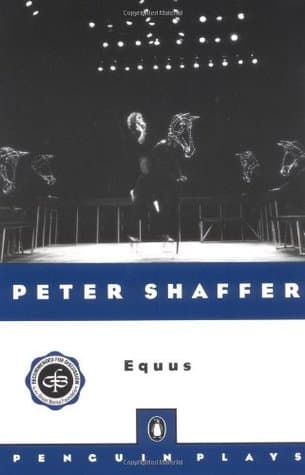
Synopsis
Covers the whole plot, including the ending.
- Difficulty
- Medium
- Read it if
- You are fascinated by the psychological interplay between the sacred and profane, the impact of societal norms on individual psyche, and the existential dilemmas faced by those who attempt to 'cure' the human spirit.
- Skip it if
- You prefer straightforward narratives without deep philosophical or psychological introspection, or are uncomfortable with themes of animal cruelty and intense sexual/religious psychological conflict.
Equus Quotes
“There is now, in my opinion, no God that can ride upon a horse.”
“A child is born into a world of phenomena all his own. He is aware of his own needs and desires, and he responds to them in his own way.”
“The only thing I ever felt was the two ends of a piece of string.”
“Passion, you see, can be a way of life. It can also be a way of death.”
“What I want to know is this: what is his pain? Not the pain of his crime, but the pain that made him commit the crime.”
“The boy has got to be helped. The boy has got to be cured. But what if the cure is worse than the disease?”
“He's making a religion out of it! He's trying to find God in a stable!”
“I'm a healer. I mend children. But what if I'm only mending them for a world that's sicker than they are?”
“A man who is not afraid to love is a man who is not afraid to live.”
“You see, Doctor, I don't think he's mad. I think he's just... different.”
“Without worship, you cannot have a culture.”
“The boy had a passion. He had a god. And I took it away from him.”
“There is a core of divine madness in him, and if I take it away, what will be left?”
“I can only stand by the door of the cave and watch. And wonder.”
Quiz
10 questions on the plot and the characters. Each answer comes with a short explanation.
Question 1
What is the initial crime committed by Alan Strang that brings him to Dr. Martin Dysart's attention?
- He set fire to a church.
- He blinded six horses with a spike.
- He assaulted a stable hand.
- He stole money from his parents.
Show answer
B. He blinded six horses with a spike. The play centers around the horrific act of Alan Strang blinding six horses, which is the catalyst for his psychiatric evaluation by Dr. Dysart.
Question 2
Dr. Martin Dysart, the psychiatrist treating Alan, primarily struggles with what personal crisis throughout the play?
- His failing marriage and lack of passion in his own life.
- His professional reputation being questioned.
- His inability to connect with his own children.
- A fear of being replaced by a younger colleague.
Show answer
A. His failing marriage and lack of passion in his own life. Dysart frequently laments his 'smothered' life, his unfulfilling marriage, and his longing for the intense passion he observes in Alan, even in his madness.
Question 3
What is the name Alan gives to his personal god, a figure he worships with intense devotion?
- Apollo
- Zeus
- Equus
- Pegasus
Show answer
C. Equus Alan creates a highly personal, quasi-religious worship of horses, personifying them as 'Equus,' a deity with whom he seeks communion and spiritual ecstasy.
Question 4
How does Alan's father, Frank Strang, inadvertently contribute to Alan's troubled development and his relationship with horses?
- He forced Alan to work in the stables against his will.
- He secretly replaced a picture of Christ with a picture of a horse in Alan's room.
- He openly mocked Alan's interest in horses, leading to resentment.
- He encouraged Alan to engage in violent acts towards animals.
Show answer
B. He secretly replaced a picture of Christ with a picture of a horse in Alan's room. Frank, a staunch atheist, replaced a picture of Christ with a picture of a horse in Alan's room as a subtle act of rebellion against his wife's religiosity, unknowingly fueling Alan's nascent equine worship.
Question 5
What is the central thematic argument Peter Shaffer explores through the contrast between Alan's 'madness' and Dysart's 'sanity'?
- The superiority of scientific reason over religious belief.
- The idea that modern society has sacrificed passion and worship for materialism and convenience, leading to spiritual decay.
- The inherent danger of unchecked religious fanaticism.
- The importance of strict parental discipline in child development.
Show answer
B. The idea that modern society has sacrificed passion and worship for materialism and convenience, leading to spiritual decay. The play's core argument, as stated in the prompt, is that modern life's emphasis on materialism and convenience has eroded our capacity for intense passion and worship, leaving individuals like Dysart spiritually barren, while Alan, despite his madness, possesses a profound, albeit destructive, form of worship.
Question 6
What specific object does Alan use to blind the horses?
- A broken glass bottle
- A sharp stone
- A metal spike
- A piece of jagged wood
Show answer
C. A metal spike The prompt explicitly states that Alan 'blinds six horses with a spike,' a crucial detail of the central crime.
Question 7
What is the significance of the character of Jill Mason in Alan's story?
- She is Alan's sister who tries to help him.
- She is a stable girl with whom Alan attempts intimacy, leading to the climax of his breakdown.
- She is a childhood friend who witnessed his early fascination with horses.
- She is a journalist trying to expose Alan's story.
Show answer
B. She is a stable girl with whom Alan attempts intimacy, leading to the climax of his breakdown. Jill is the stable girl with whom Alan attempts a sexual encounter. His inability to perform, coupled with the perceived 'gaze' of Equus, triggers his ultimate act of violence against the horses.
Question 8
Dysart expresses a fear that by 'curing' Alan, he might be doing what to him?
- Making him susceptible to further manipulation.
- Turning him into a 'normal' but passionless individual, like himself.
- Making him forget his past, thus preventing true healing.
- Exposing him to public ridicule and judgment.
Show answer
B. Turning him into a 'normal' but passionless individual, like himself. Dysart's profound dilemma is his fear that by removing Alan's 'pain' and 'madness,' he will also strip him of his intense capacity for worship and passion, leaving him with a mundane, uninspired existence, much like Dysart's own.
Question 9
Which of the following best describes the theatrical style of 'Equus'?
- A purely naturalistic domestic drama.
- A highly stylized and ritualistic drama with direct address to the audience.
- A farce relying on slapstick comedy.
- A traditional drawing-room mystery.
Show answer
B. A highly stylized and ritualistic drama with direct address to the audience. Shaffer employs a non-naturalistic style, with actors playing horses, Dysart directly addressing the audience, and a focus on ritualistic elements, especially during Alan's worship scenes.
Question 10
Ultimately, what does Dysart conclude about the nature of Alan's 'worship' and his own role as a psychiatrist?
- He believes Alan's worship is entirely a product of mental illness and must be eradicated.
- He recognizes the profound, albeit destructive, spiritual depth in Alan's worship, contrasting it with his own spiritual emptiness, leading to a crisis of purpose in his profession.
- He decides to abandon psychiatry to pursue a more spiritual path.
- He concludes that Alan's actions are simply evil and beyond psychological help.
Show answer
B. He recognizes the profound, albeit destructive, spiritual depth in Alan's worship, contrasting it with his own spiritual emptiness, leading to a crisis of purpose in his profession. Dysart's monologues reveal his deep ambivalence. He envies Alan's capacity for intense feeling and worship, even while recognizing its destructive manifestation, leading him to question the very purpose and efficacy of his 'healing' profession in a world devoid of such passion.
Equus FAQ
What is the main theme of Peter Shaffer's 'Equus'?
'Equus' primarily explores the conflict between societal norms, rationalism, and the human need for passion, worship, and spiritual connection. It delves into how modern life may suppress intense emotional experiences, leading to psychological distress.
Does psychiatric therapy 'work' in 'Equus'?
The play raises complex questions about the nature and goals of psychiatric intervention. While Dr. Dysart aims to 'cure' Alan, he grapples with whether restoring Alan to societal normalcy might also extinguish the very passion that defines him, leaving him 'less alive.'
What is the significance of the horses in 'Equus'?
The horses in 'Equus' symbolize raw power, primal instinct, and a form of divine, untamed passion that Alan Strang worships. They represent a connection to something ancient and spiritual, contrasting sharply with the mundane, materialistic world.
How is 'Equus' different from other psychological dramas?
'Equus' distinguishes itself by its theatricality, non-linear narrative, and the psychiatrist's profound internal struggle and self-doubt, making him as much a subject of analysis as his patient. It prioritizes philosophical inquiry over a simple diagnostic resolution.
What is 'the sacred' in the context of 'Equus'?
In 'Equus,' 'the sacred' refers to deeply felt, often irrational, sources of meaning, awe, and worship that transcend everyday materialism. For Alan, it is embodied in Equus, while Dr. Dysart laments its absence in his own life.
Is 'Equus' based on a true story?
While the core incident of a youth blinding horses was inspired by a real event Peter Shaffer heard about, the characters, their motivations, and the entire psychological and philosophical exploration are fictionalized and developed by the playwright.
What role does ritual play in Alan Strang's life?
Ritual is central to Alan's worship of Equus, providing structure and meaning to his intense spiritual experiences. His secret rites, including riding and blinding the horses, are a desperate attempt to connect with the divine in his own way.
How does 'Equus' critique modern society?
The play critiques modern society for its perceived emphasis on rationality, conformity, and materialism, suggesting these values stifle profound spiritual and emotional experiences. It questions whether the price of 'normalcy' is a loss of vital passion and pain.
What is Dr. Dysart's central conflict?
Dr. Dysart's central conflict stems from his professional duty to 'cure' Alan versus his personal realization that Alan's 'madness' contains a passion and capacity for worship that Dysart himself lacks and deeply envies, leading to profound self-doubt.
About the author

Peter Shaffer was a British playwright and screenwriter known for his thought-provoking works. His notable plays include "Equus," which explores the psychological struggles of a young man, and "Amadeus," a fictionalized account of the rivalry between composers Mozart and Salieri. Shaffer received significant recognition for his contributions to theater, including multiple Tony Awards.
Similar books
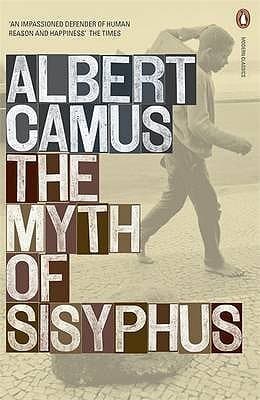
- The Myth of Sisyphus
Albert Camus
4.2 (25k) average on GoodreadsPhilosophyExplores existential meaninglessness and the search for purpose in a world devoid of inherent value.
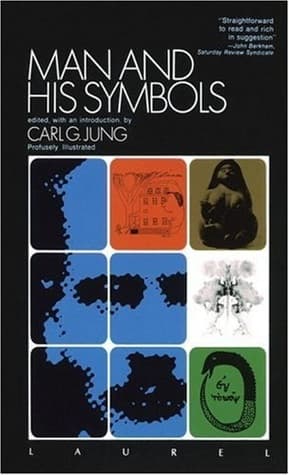
- Man and His Symbols
C.G. Jung
4.2 (21k) average on GoodreadsPsychologyDelves into the power of archetypes, myths, and the unconscious in shaping human experience and pathology.
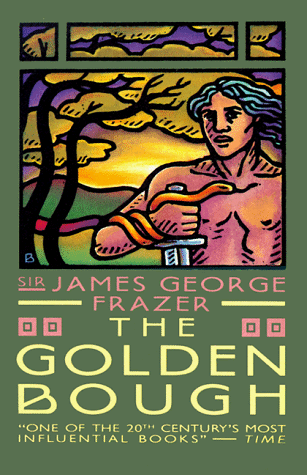
- The Golden Bough
James George Frazer
4.0 (8k) average on GoodreadsReferenceExamines the role of myth, ritual, and religion across cultures, touching upon their psychological and societal functions.
- One Flew Over the Cuckoo's Nest
Ken Kesey
4.2 (631k) average on GoodreadsPsychologyBoth Equus and One Flew Over the Cuckoo's Nest critique psychiatric institutions and the societal enforcement of normalcy. Kesey's novel, however, focuses more on the oppressive power structures within the asylum and the struggle for individual freedom against systemic control, personified by McMurphy's rebellion against Nurse Ratched. While Shaffer explores the internal and existential crisis of the psychiatrist, Kesey emphasizes the patient's agency and the broader social critique of 'fixing' those who don't conform. Equus delves into the why of madness, whereas Kesey focuses on the how of resistance within a system.
- The Perks of Being a Wallflower
Stephen Chbosky
4.2 (1.3M) average on GoodreadsPsychologyThrough letters, a shy high school freshman learns to navigate first love, trauma, and self-discovery, stepping off the sidelines and into life.
- Eleanor Oliphant Is Completely Fine
Gail Honeyman
4.3 (708k) average on GoodreadsLiterary FictionA lonely woman's structured life changes when an IT guy and an elderly man help her learn to open her heart.



Enjoyed the summary?
A summary gives you the shape of the book. The book itself has the detail, the examples and the voice.
Find Equus on AmazonAs an Amazon Associate, BookBrief earns from qualifying purchases. How we're funded