

Synopsis
Covers the whole plot, including the ending.
- Difficulty
- Medium
- Pacing
- Slow
- Mood
- Melancholy, Thought-provoking, Tragic, Social commentary
- Read it if
- You enjoy classic 19th-century French literature exploring themes of avarice, social class, and the tragic consequences of unrequited love.
- Skip it if
- You prefer fast-paced plots or lighthearted stories with clear happy endings.
Eugenie Grandet Plot Summary
Covers the whole plot, including the ending.
The Grandet Household in Saumur
Monsieur Félix Grandet, a former cooper who made a fortune, lives in a rundown house in Saumur with his wife, Madame Grandet, and their daughter, Eugénie. Their life is extremely frugal. Grandet carefully controls every expense. The house itself shows his saving nature, cold and sparsely furnished. Eugénie, a kind and religious young woman, does not know how wealthy her father is. She lives without luxury or social events, her days filled with simple routines and much loneliness. This introduction sets the harsh mood Grandet's greed creates.
The Suitors and the Arrival of Charles
Two main Saumur families, the Cruchots and the des Grassins, want to marry Eugénie, mainly because of her rumored large inheritance. The Cruchot family, with President de Bonfons, and the des Grassins family, with their son Adolphe, often visit the Grandet home. They put up with Monsieur Grandet's miserliness for the chance of wealth. This quiet, predictable life breaks on Eugénie's twenty-third birthday when her Parisian cousin, Charles Grandet, arrives. Charles is the son of Grandet's brother, Guillaume, a rich Parisian banker. His elegant clothes, refined manners, and fashionable look immediately charm Eugénie, who has never met such sophistication.
Charles's Desperate Situation
Charles brings a letter for Monsieur Grandet. It reveals bad news: his father, Guillaume Grandet, killed himself after going bankrupt, leaving Charles penniless and in great debt. Charles does not at first know the full extent of his father's ruin and thinks he is only staying in Saumur for a short time. Monsieur Grandet, after reading the letter, immediately sees a way to profit from his brother's bad luck and save his own name. He pretends to care while secretly planning how to handle the bankruptcy without losing any of his own money. He manipulates the situation to his benefit and further isolates Charles.
Eugénie's Awakening and Compassion
Seeing Charles's deep sadness, Eugénie feels strong emotions for the first time. Her sheltered life has not prepared her for such sorrow. Overcome by sympathy and growing love, she secretly gives Charles all her personal gold, 6,000 francs. She had received this money over the years as birthday gifts from her father. She means for this money to help him start over in the Indies, where he plans to seek his fortune. This act of selfless giving is a sharp contrast to her father's greed and marks a key change in her character, showing her ability for deep affection and sacrifice.
Grandet Discovers the Gift
Monsieur Grandet eventually finds out that Eugénie gave her gold to Charles. He reacts with furious anger, not because he cares for Eugénie, but because he lost his valuable gold and she defied his authority. He confronts Eugénie, demanding to know where her gold is. When she admits her generous act, he locks her in her room, denying her food and fire, and keeps her from her mother. This harsh punishment shows Grandet's complete obsession with money and his tyrannical control over his home. It highlights the destructive power of his greed and the suffering it brings his family.
Madame Grandet's Intervention and Illness
Madame Grandet, weak and submissive, is very upset by her husband's cruelty to Eugénie. Despite her fear of Grandet, she bravely steps in, asking him to free their daughter. Grandet, fearing his wife might die without a will, which would complicate his inheritance plans, reluctantly agrees to a compromise. He releases Eugénie but stays cold toward her. However, the emotional stress and her husband's constant mistreatment have badly affected Madame Grandet's health. Her condition quickly worsens, made worse by the oppressive atmosphere and her inability to fully protect her daughter. This hints at her coming death.
Madame Grandet's Death and Grandet's Manipulation
Madame Grandet eventually dies peacefully from her illness. Her death creates a new legal situation for her estate, of which Eugénie is legally entitled to half. Monsieur Grandet, always calculating, fears that Eugénie's inheritance will lessen his control and wealth. He manipulates Eugénie, taking advantage of her grief and innocence. He threatens to declare bankruptcy himself if she does not sign away her share of her mother's inheritance to him. Eugénie, out of duty and wanting to avoid more conflict, agrees to sign the documents, giving up her claim and putting Grandet's large fortune solely under his control.
Charles's Return and Betrayal
Years pass. Charles Grandet returns from the Indies a rich man, having made his fortune through clever, and sometimes dishonest, business deals. He has, however, forgotten his promise to Eugénie and their unspoken engagement. Instead, he wants to marry a noblewoman, Mademoiselle d'Aubrion, to gain social standing. He sends a letter to Eugénie, delivered by Monsieur des Grassins, coldly telling her of his plan to marry someone else and offering to repay the 6,000 francs she gave him. This heartbreaking betrayal crushes Eugénie's hopes and ends her innocent idealism about love.
Eugénie's Revenge and Grandet's Death
After receiving Charles's cold letter, Eugénie is heartbroken but firm. She uses her large inheritance to pay all of Charles's father's debts. This ensures Charles can marry Mademoiselle d'Aubrion without scandal. This act, while seeming generous, is also a subtle form of revenge, showing her financial power and moral superiority. Soon after, Monsieur Grandet, now an old man, falls ill. Even on his deathbed, his obsession with gold continues. His last words are a command to Eugénie to protect his riches. He dies, leaving Eugénie his vast fortune, making her one of the wealthiest women in France.
Eugénie's Solitary Wealth
Now very wealthy, Eugénie Grandet continues to live a simple life, like her father's frugality, though not driven by greed but by habit and a lack of desire for luxury. She uses her wealth for charity, quietly helping the poor and religious groups. She eventually marries President de Bonfons, one of her original suitors, but only if their marriage remains one of companionship, not physical closeness. Her marriage is loveless and short, as de Bonfons dies soon after. Eugénie stays in her old, cold house, a lonely figure surrounded by great riches. Her heart is forever marked by Charles's betrayal and her father's influence. This shows the lasting emptiness wealth can bring without love.
Eugenie Grandet Characters
Eugénie Grandet
Protagonist
A kind and naive young woman whose life is transformed by love and betrayal.
Eugénie is initially a sheltered, innocent, and pious young woman, living under the tyrannical thumb of her miserly father. She possesses a deep capacity for love and compassion, which is awakened by the arrival of her cousin, Charles. Her generosity is immense, as shown by her sacrificing her personal fortune for him. Despite her later immense wealth, she retains a simple, almost ascetic lifestyle, marked by quiet charity and a profound inner solitude. She is a woman of deep feeling, but also of quiet strength and resilience.
Relationships: Monsieur Grandet (Daughter, oppressed by his avarice and control); Madame Grandet (Daughter, shared suffering and mutual affection); Charles Grandet (Cousin and first love, who betrays her); President de Bonfons (Husband of convenience, one of her original suitors)
Monsieur Félix Grandet
Antagonist
A ruthless and obsessive miser who controls his family through avarice and intimidation.
Monsieur Grandet is the embodiment of avarice. A former cooper, he has amassed an enormous fortune through relentless parsimony, shrewd business dealings, and exploitation. He is utterly obsessed with money, valuing it above all human relationships, including those with his wife and daughter. He runs his household with an iron fist, denying his family even basic comforts, and manipulates everyone around him, including the law, to increase and protect his wealth. He is cunning, cold, and utterly devoid of genuine affection, his life consumed by the accumulation of gold.
Relationships: Eugénie Grandet (Daughter, whom he exploits and controls for her inheritance); Madame Grandet (Wife, whom he neglects and mistreats, valuing her only for her potential inheritance); Charles Grandet (Nephew, whom he sees as a burden and an opportunity to profit from his father's ruin)
Charles Grandet
Supporting
Eugénie's charming but ultimately superficial cousin who betrays her trust.
Charles Grandet arrives in Saumur as a fashionable, sophisticated Parisian, initially charming Eugénie with his elegance and apparent vulnerability. He is initially naive about his father's financial ruin and his own desperate situation. While he expresses gratitude for Eugénie's kindness, his love for her is shallow and opportunistic. He is driven by a desire for wealth and social status, and once he achieves financial success in the Indies, he callously abandons Eugénie for a more advantageous marriage, revealing his superficiality and lack of genuine affection.
Relationships: Eugénie Grandet (Cousin and love interest, whom he later betrays); Monsieur Grandet (Uncle, who exploits his situation)
Madame Grandet
Supporting
Eugénie's long-suffering and submissive mother, a victim of her husband's tyranny.
Madame Grandet is a gentle, pious, and deeply submissive woman, completely dominated by her miserly husband. She lives a life of quiet suffering and deprivation, her spirit broken by years of neglect and emotional abuse. She loves Eugénie deeply and tries to protect her from Monsieur Grandet's cruelty, though her efforts are often weak and ineffectual due to her fear and frail health. Her death, brought on by the oppressive atmosphere of the household and her husband's harshness, is a tragic consequence of Grandet's avarice.
Relationships: Eugénie Grandet (Mother, shares a bond of mutual affection and suffering); Monsieur Grandet (Wife, completely dominated and mistreated by him)
Nanon
Supporting
The Grandet family's loyal and hardworking servant.
Nanon is the Grandet family's sole servant, a devoted and hardworking woman who has served them for decades. Despite Grandet's miserly nature, she remains fiercely loyal and dedicated, enduring the same deprivations as the family. She is a simple, honest soul, often the only one to show kindness and genuine affection to Eugénie and Madame Grandet. Nanon's unwavering loyalty and endurance highlight the extreme conditions of the Grandet household and provide a contrast to the family's internal strife.
Relationships: Eugénie Grandet (Loyal servant and surrogate mother figure); Monsieur Grandet (Employer, whose miserliness she endures)
President de Bonfons
Supporting
One of Eugénie's suitors, a shrewd lawyer driven by ambition.
President de Bonfons is a lawyer from the Cruchot family, one of the two prominent families vying for Eugénie's hand. He is a calculating and ambitious man, primarily interested in Eugénie's potential inheritance. He patiently endures Grandet's eccentricities and cultivates a close relationship with the family, hoping to secure his future. After Grandet's death, he successfully marries Eugénie, though their marriage is one of convenience and remains unconsummated, reflecting his pragmatic and unromantic nature.
Relationships: Eugénie Grandet (Suitor and later husband of convenience); Monsieur Grandet (Potential son-in-law, whom he tries to impress)
Adolphe des Grassins
Supporting
The other suitor for Eugénie, from a rival banking family.
Adolphe des Grassins is the son of the des Grassins family, the other prominent family in Saumur vying for Eugénie's hand. Like President de Bonfons, he is motivated by the prospect of Eugénie's wealth and inheritance. He represents the banking interest in Saumur, contrasting with the legal profession of the Cruchots. He is less persistent and ultimately less successful than de Bonfons in pursuing Eugénie, fading into the background once Charles arrives and then later when Eugénie makes her final decision.
Relationships: Eugénie Grandet (Suitor, unsuccessful)
Guillaume Grandet
Mentioned
Monsieur Grandet's brother, a Parisian banker who commits suicide after bankruptcy.
Guillaume Grandet is Monsieur Grandet's brother, a wealthy Parisian banker whose financial ruin and subsequent suicide set in motion the central conflict of the story. Though never appearing in person, his actions profoundly impact Charles and Eugénie. His bankruptcy and death highlight the precariousness of wealth and the stark contrast between Parisian financial speculation and provincial frugality. His debts become a central plot point, which Eugénie eventually settles.
Relationships: Monsieur Grandet (Brother, whose misfortune Grandet exploits); Charles Grandet (Father, whose ruin and death leave Charles destitute)
Eugenie Grandet Themes
Avarice and its Destructive Power
The novel's main theme is the overwhelming and destructive power of greed, shown by Monsieur Grandet. His obsession with money blinds him to affection, family duty, and right behavior. It leads him to deny his family basic comforts, manipulate legal matters, and emotionally hurt his wife and daughter. The decaying Grandet house itself symbolizes this theme. As the miser's wealth grows, his home and family life fall apart. This theme is clearly shown when Grandet locks Eugénie in her room for giving away her gold, valuing money over his daughter's well-being.
“Gold is the spiritual essence of all present society.”
The Corrupting Influence of Wealth
While Monsieur Grandet embodies greed, the novel also explores how wealth, or wanting it, can corrupt. Charles Grandet, first shown as a charming, if spoiled, young man, becomes more cynical and self-serving after his trip to the Indies. There, he makes his fortune through questionable means. His pursuit of wealth and social status leads him to betray Eugénie. This shows how even inherited or hard-earned riches can harden the heart and lessen moral integrity. Eugénie herself, though kind, finds her great wealth brings her only loneliness and a continuation of her simple habits, not happiness.
“Money is the one thing that can put an end to all things.”
Unrequited Love and Betrayal
Eugénie's deep, selfless love for Charles contrasts sharply with his shallow affection and eventual betrayal. Her act of giving him all her gold, her patient wait for his return, and her continued devotion are met with cold, calculated abandonment. This theme highlights how vulnerable pure affection is in a world driven by material concerns. Charles's betrayal shatters Eugénie's innocence and leaves her with a lasting emotional wound. This leads to her lonely life despite her vast wealth. Her decision to pay his debts, while seeming generous, is also a quiet act of emotional closure and moral superiority.
“Love, like life, is a battle.”
The Oppression of Women in 19th-Century Society
The novel clearly shows the limited power and harsh conditions women faced in 19th-century France, especially in rural areas. Both Madame Grandet and Eugénie are completely under Monsieur Grandet's male authority and financial control. Madame Grandet's quiet suffering and eventual death come directly from her husband's cruelty. Eugénie, despite her eventual great wealth, mostly stays confined to her home. Her choices are set by social expectations and her own emotional scars. Her marriage of convenience further shows the lack of personal freedom and emotional fulfillment available to women.
“A woman's life is a constant sacrifice.”
Plot Devices & Literary Techniques
The Grandet House
A physical manifestation of Grandet's avarice and the family's oppression.
The Grandet house in Saumur is more than just a setting; it is a character in itself, reflecting Monsieur Grandet's miserly nature. Its decaying state, cold rooms, and lack of comforts are direct consequences of his refusal to spend money. The house acts as a prison for Eugénie and Madame Grandet, symbolizing their confinement and the oppressive atmosphere created by Grandet's avarice. It is a constant reminder of the family's deprivation amidst their hidden wealth, and even after Eugénie inherits, she continues to live in it, perpetuating its symbolic meaning of solitude and frugality.
The Gold
A tangible symbol of both wealth and corruption.
Gold, in its various forms (coins, jewelry), is a recurring motif and a central plot device. It is the object of Monsieur Grandet's obsessive desire, representing his power and control. For Eugénie, her personal gold coins are a symbol of her innocent love and generosity when she gives them to Charles. Later, the vast gold she inherits becomes a symbol of her immense power, but also her ultimate solitude. The gold itself is inert, but its presence and absence drive the characters' motivations and actions, highlighting its transformative and often corrupting influence.
Letters
A means of conveying crucial plot information and driving character development.
Letters play a pivotal role in advancing the plot. Charles's initial letter from his father reveals the bankruptcy and suicide, setting the entire narrative in motion. Later, Charles's letter from the Indies, coldly breaking off his implied engagement to Eugénie, serves as the ultimate betrayal and a turning point for her character, shattering her romantic illusions. The delayed and impersonal nature of these communications emphasizes the emotional distance and the profound impact of unseen forces on the characters' lives, particularly Eugénie's.
Dramatic Irony
The audience's awareness of Grandet's immense wealth, unknown to his family.
Dramatic irony is a key element throughout the novel, particularly concerning Monsieur Grandet's wealth. The reader is aware of the vastness of Grandet's fortune, while his family, especially Eugénie, lives in ignorance and deprivation. This creates a constant tension and highlights the absurdity and cruelty of Grandet's miserliness. For instance, the detailed descriptions of the family's meager meals and cold rooms are rendered more poignant by the reader's knowledge of the gold secretly hoarded within the house's very walls, intensifying the tragedy of their existence.
Eugenie Grandet Quotes
“Gold is the spiritual essence of all present and past societies.”
“Avvarice, like love, has its ecstasies, its fevers, its delirium, its sacrifices.”
“Great souls are always the most sensitive to the misfortunes of others.”
“The human heart, when it is truly great, can find consolation in self-sacrifice.”
“Misers have no faith in the future, only in the present, which they grasp with all their might.”
“There are some natures so truly noble that they can never be corrupted, even by the most crushing misfortunes.”
“To hoard money is to love it for its own sake, not for what it can buy.”
“The passions are like a fire, they consume the heart and leave only ashes.”
“A woman's first love is a religion.”
“The human heart has depths that even the most skillful divers cannot plumb.”
“In the provinces, everything is known, everything is seen, everything is commented upon.”
“Money is power, and power is a god that men worship.”
“Happiness is a plant that grows with difficulty in the soil of human life.”
“There is no greater torment than to love without hope.”
“The strongest ties are often those woven in silence and suffering.”
Quiz
10 questions on the plot and the characters. Each answer comes with a short explanation.
Question 1
What is the primary obsession of Eugenie's father, Grandet, that dominates the household in Saumur?
- Social status and political power
- Religious piety
- Amassing gold and wealth
- Collecting rare art and antiques
Show answer
C. Amassing gold and wealth Grandet is described as a miser whose life and household are 'stifled and overshadowed by his obsession with gold.'
Question 2
What event disrupts the monotonous lives of Grandet, his wife, and Eugenie?
- A large inheritance from a distant relative
- The arrival of Eugenie's handsome cousin, Charles
- A major financial crisis in Saumur
- Grandet's decision to expand his business ventures
Show answer
B. The arrival of Eugenie's handsome cousin, Charles The synopsis explicitly states that 'the arrival of her handsome cousin, Charles, awakens Eugenie's own desires.'
Question 3
What is the central theme that clashes in the novel, as described in the introduction?
- The conflict between urban and rural life
- The struggle between scientific progress and tradition
- The clash between material desires and the liberating power of human passions
- The tension between political ideologies
Show answer
C. The clash between material desires and the liberating power of human passions The description states the novel depicts 'the fatal clash between material desires and the liberating power of human passions.'
Question 4
How does Eugenie's awakened passion for Charles primarily impact her relationship with her father, Grandet?
- It leads to a deeper understanding and reconciliation.
- It results in a violent collision and tragedy.
- It causes Grandet to soften his stance on wealth.
- It makes Grandet more protective of his wife.
Show answer
B. It results in a violent collision and tragedy. The text states that Eugenie's passion 'brings her into a violent collision with her father that results in tragedy for all.'
Question 5
In what specific setting does the majority of the novel 'Eugenie Grandet' take place?
- A bustling Parisian salon
- A gloomy house in provincial Saumur
- A grand estate in the French countryside
- A monastery in the Pyrenees mountains
Show answer
B. A gloomy house in provincial Saumur The novel is set in 'a gloomy house in provincial Saumur,' which is central to the atmosphere of Grandet's miserly existence.
Question 6
What larger literary cycle is 'Eugenie Grandet' a part of, according to the description?
- Les Misérables
- La Comédie humaine
- The Rougon-Macquart cycle
- À la recherche du temps perdu
Show answer
B. La Comédie humaine 'Eugenie Grandet' is identified as 'one of the earliest and finest works in Balzac's Comedie humaine cycle.'
Question 7
How does Grandet specifically embody the themes of the novel, as stated in the text?
- He represents the struggle for political reform and social justice.
- He embodies both the passionate pursuit of money and the human cost of avarice.
- He symbolizes the intellectual awakening of the French middle class.
- He demonstrates the liberating power of human passions over material desires.
Show answer
B. He embodies both the passionate pursuit of money and the human cost of avarice. The text states, 'Here Grandet embodies both the passionate pursuit of money, and the human cost of avarice.'
Question 8
Before becoming a successful writer, what was one of the many professions Honore de Balzac failed at?
- A doctor
- A musician
- A publisher
- An architect
Show answer
C. A publisher Balzac 'failed at being a lawyer, publisher, printer, businessman, critic and politician' before turning to writing.
Question 9
The introduction by M.A. Crawford discusses several aspects of Balzac's characterization. Which of the following is specifically mentioned?
- His use of satire and hyperbole
- His irony and psychological insight
- His minimalist approach to character development
- His reliance on supernatural elements
Show answer
B. His irony and psychological insight M. A. Crawford's introduction discusses 'the irony and psychological insight of Balzac's characterization.'
Question 10
Which of the following authors is explicitly mentioned as having been influenced by Honore de Balzac?
- Jane Austen
- Leo Tolstoy
- Marcel Proust
- Mark Twain
Show answer
C. Marcel Proust The text states, 'Balzac was an influence on innumerable writers who followed him, including Marcel Proust, Emile Zola, Charles Dickens, and Edgar Allan Poe.'
Eugenie Grandet FAQ
What is the central conflict in 'Eugenie Grandet'?
The central conflict revolves around the clash between Monsieur Grandet's avarice and Eugenie's burgeoning capacity for love and compassion. Grandet's obsession with wealth stifles his family, while Eugenie's love for Charles introduces a force that directly opposes her father's materialistic world view, leading to tragic consequences.
Who is Eugenie Grandet and what is her initial situation?
Eugenie Grandet is the sheltered daughter of the miserly Monsieur Grandet, living in a gloomy house in Saumur. Her life is characterized by extreme frugality and isolation, dictated by her father's obsession with gold, which prevents her from experiencing the world or forming genuine connections.
How does Charles Grandet's arrival impact Eugenie's life?
Charles Grandet's arrival shatters Eugenie's monotonous existence, awakening her to love, passion, and the outside world. She falls deeply in love with him, leading her to defy her father's strictures by giving Charles her personal gold, an act that marks her first significant rebellion and commitment.
What is Monsieur Grandet's primary motivation throughout the novel?
Monsieur Grandet's primary motivation is an insatiable desire to accumulate and hoard wealth, viewing money as the ultimate power and security. His avarice dictates every aspect of his life, from his family's meager living conditions to his manipulative business dealings, ultimately consuming his humanity.
How does Eugenie's character evolve from the beginning to the end of the novel?
Eugenie transforms from an innocent, naive girl into a woman hardened by experience and profound disappointment. Initially driven by romantic love and generosity, she eventually becomes a solitary figure, inheriting her father's wealth but living a life marked by renunciation and a quiet, almost ascetic, devotion to charity.
What is the significance of the gold coins Eugenie gives to Charles?
The gold coins Eugenie gives to Charles represent her entire worldly possession and her profound love and trust. This act of self-sacrifice is a stark contrast to her father's avarice and symbolizes her complete devotion, setting the stage for her subsequent suffering and disillusionment.
Are there any subtle indications of Monsieur Grandet's past that explain his extreme miserliness?
Balzac hints at Grandet's past involvement in revolutionary land speculation and shrewd business dealings that allowed him to amass his initial fortune. These details suggest a ruthless pragmatism and an early understanding of wealth's power, which later devolved into an all-consuming obsession.
How does the setting of Saumur contribute to the novel's atmosphere and themes?
The provincial setting of Saumur, with its narrow streets and old houses, creates an atmosphere of stagnation and confinement that mirrors the Grandet household. It reinforces the isolation of Eugenie's life and highlights the insular, materialistic values prevalent in a community obsessed with social standing and wealth.
What is the implied fate of Eugenie's mother, Madame Grandet?
Madame Grandet, a gentle and submissive woman, is slowly consumed by her husband's tyranny and the oppressive atmosphere of their home. Her health deteriorates from prolonged suffering and neglect, and she eventually dies, a direct casualty of Grandet's avarice and emotional cruelty.
How does Balzac portray the psychological impact of avarice on Monsieur Grandet?
Balzac depicts avarice as a consuming force that dehumanizes Grandet, stripping him of empathy and affection. His obsession with gold distorts his perception of reality, making him suspicious of everyone, including his own family, and reducing all relationships to transactional value.
What is the psychological journey Eugenie undergoes after Charles's departure?
After Charles's departure, Eugenie experiences a prolonged period of longing, hope, and eventual disillusionment. Her initial romantic ideals are gradually eroded by Charles's silence and subsequent betrayal, leading to a profound sense of resignation and a transformation of her love into a more spiritual, charitable devotion.
How do the various characters' attitudes towards money reflect different psychological states?
Grandet embodies pathological avarice, while Charles represents superficial materialism and social climbing. Eugenie initially views money as a means for love and generosity, later as a tool for charity, showcasing a spectrum from destructive obsession to selfless utility.
What psychological effect does Grandet's constant manipulation have on his family?
Grandet's manipulation creates an atmosphere of fear and subservience, particularly affecting his wife and daughter. Madame Grandet becomes utterly passive, while Eugenie initially internalizes her father's control, only to rebel through her act of giving, demonstrating the psychological toll of prolonged oppression.
Is 'Eugenie Grandet' ultimately a tragedy or a commentary on societal values?
'Eugenie Grandet' functions as both a personal tragedy and a profound commentary on 19th-century French society. While Eugenie's individual fate is tragic, her story illuminates Balzac's broader critique of a society increasingly consumed by the pursuit of wealth and power, often at the expense of human connection and morality.
Does Eugenie truly achieve happiness or fulfillment by the end of the novel?
Eugenie does not achieve conventional happiness, as her romantic hopes are dashed and she lives a solitary life. However, she finds a form of fulfillment through her extensive charitable works, transforming her inherited wealth into a source of good for others, suggesting a spiritual rather than worldly contentment.
How does Balzac use irony in depicting the characters and their fates?
Balzac employs irony by showing Grandet, who hoards wealth, ultimately dying in isolation, unable to take his riches with him. Eugenie, who gives away her wealth for love, ends up inheriting vast sums but lives a life devoid of the romantic fulfillment she craved, highlighting the unpredictable nature of fate and the futility of human desires.
To what extent is fate or free will responsible for the characters' outcomes in the novel?
While Balzac's introduction mentions fate, the novel suggests a blend of both. Grandet's fate is largely determined by his own free will, his relentless pursuit of money. Eugenie's choices, like giving Charles the gold, set her path, but she is also a victim of circumstances and others' free will (Charles's betrayal), indicating a complex interplay.
Could Charles Grandet be considered a villain, or merely a product of his society?
Charles Grandet is more a product of his society than a purely villainous figure. He embodies the opportunistic and materialistic values prevalent in 19th-century France, where social standing and wealth dictated success. His betrayal of Eugenie, while cruel, stems from a pragmatic desire for financial security rather than malicious intent.
About the author
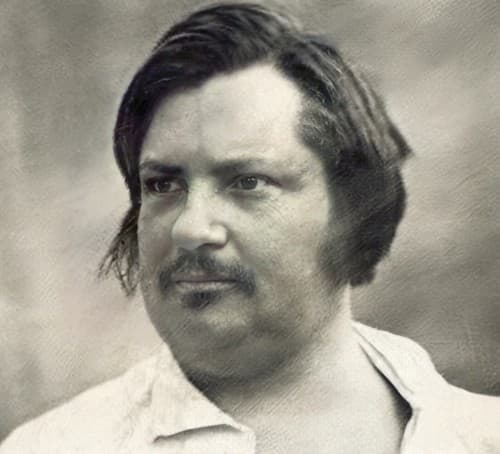
Honoré de Balzac was a French novelist and playwright. The novel sequence La Comédie humaine, which presents a panorama of post-Napoleonic French life, is generally viewed as his magnum opus.
Similar books
- A Christmas Carol
Charles Dickens
4.1 (600k) average on GoodreadsFantasyExplores the destructive nature of avarice and miserliness.
- Pride and Prejudice
Jane Austen
4.3 (3M) average on GoodreadsHistorical FictionExamines social conventions, marriage, and financial considerations in a romantic context.
- Silas Marner
George Eliot
3.6 (74k) average on GoodreadsHistorical FictionBoth Eugénie Grandet and George Eliot's Silas Marner depict protagonists whose lives are initially dominated by the hoarding of wealth and who experience a profound shift in their emotional landscape. However, the nature of their transformation differs significantly. Silas Marner's redemption comes through the unexpected arrival of Eppie, a child who brings him genuine human connection and love, replacing his gold with affection. Eugénie, while initially driven by love, ultimately finds herself isolated by her wealth and the betrayals she endures. While Silas finds solace and reintegration into his community, Eugénie remains solitary, her wealth offering little comfort. Eliot emphasizes the transformative power of love and community, whereas Balzac underscores the enduring, isolating legacy of wealth and societal corruption.
- Nineteen Eighty-Four
George Orwell
4.2 (5.5M) average on GoodreadsFictionWinston Smith dreams of truth and rebellion in a world where Big Brother watches all, but he confronts the terrifying power of a regime that controls not just actions, but thoughts.
- The Frozen River
Ariel Lawhon
4.4 (600k) average on GoodreadsFictionIn 1789 Maine, a heroic midwife's diary helps her expose a murder and get justice in a town that wants to silence her.
- A Man Called Ove
Fredrik Backman
4.4 (569k) average on GoodreadsFictionA stubborn widower, who lives by strict rules, finds his quiet world changed by a lively new family next door, making him face his past and find happiness in human connection.






Enjoyed the summary?
A summary gives you the shape of the book. The book itself has the detail, the examples and the voice.
Find Eugenie Grandet on AmazonAs an Amazon Associate, BookBrief earns from qualifying purchases. How we're funded