

Synopsis
Covers the whole plot, including the ending.
- Difficulty
- Hard
- Pacing
- Moderate
- Mood
- Dark, Disturbing, Transgressive, Grotesque
- Read it if
- You are looking for a dark, transgressive exploration of extreme sadism and the psychology of serial killers, with a strong focus on explicit and disturbing themes.
- Skip it if
- You are sensitive to graphic depictions of violence, torture, and sexual abuse, or prefer stories with clear moral boundaries and hope.
Exquisite Corpse Plot Summary
Covers the whole plot, including the ending.
Andrew Compton's Escape and Arrival in New Orleans
Andrew Compton, a British serial killer known for his artistic murders, escapes from prison by faking his death. He changes his face and travels to New Orleans under a new identity. Compton wants to take his 'art' to new levels. He is drawn to the city's decadent atmosphere, believing it will provide the perfect setting and new victims for his desires, especially his attraction to young men. His arrival begins a new period of violence, far from British authorities.
Introduction to Jay Byrne and His Disturbing Lifestyle
In New Orleans, Andrew Compton, while looking for victims, meets Jay Byrne. Byrne is a rich playboy who uses his inheritance to fund a lavish life and extreme sadism. Unlike Compton, whose murders are driven by art, Byrne's 'art' explores pain and death. He works from a secluded torture chamber in his mansion. Compton is at first fascinated and repulsed by Byrne's methods, seeing a similar spirit but also a rival in depravity. Their meeting starts a strange alliance based on their dark passions.
Tran's Desperate Existence and Luke Ransom's Despair
The story introduces Tran, a young Vietnamese-American runaway struggling on the streets of New Orleans. He is beautiful, fragile, and trying to escape his past and find safety. We also meet Luke Ransom, Tran's former lover, a radio host known as Lush Rimbaud. Luke is dying of AIDS and filled with rage and despair. He uses his radio show to talk about society's decay, his own death, and his past with Tran, whom he still loves but resents. Luke's broadcasts offer a dark commentary on the events, his pain reflecting the city's grim side.
Compton and Byrne's Unholy Alliance and First Joint Victim
Andrew Compton, initially watching Jay Byrne's methods, becomes an active part of Byrne's 'experiments.' Their collaboration deepens, with Compton finding himself both horrified and intrigued by Byrne's lack of artistic pretense and raw sadism. Byrne shows techniques and a level of cruelty Compton had not explored. Their first joint victim is a young drifter, whose death bonds the two killers. Compton, despite his artistic tastes, is drawn into Byrne's more extreme world, his own limits changing as he sees and takes part in acts beyond his previous idea of murder as art.
The Search for the 'Exquisite Corpse'
After their first joint murder, Compton and Byrne decide to find a victim who will embody their combined artistic vision — an 'exquisite corpse.' They want a young man whose beauty and innocence will make his destruction more profound. They search the French Quarter of New Orleans for their ideal subject. This search becomes a quest for perfection, each man projecting his desires onto potential candidates. They are looking for a canvas for their fantasies of possession and destruction, believing the perfect victim will elevate their 'art.'
Tran Becomes Their Target
During their hunt, Andrew Compton and Jay Byrne see Tran on the streets of the French Quarter. His delicate beauty, vulnerability, and innocence immediately capture both men. They see him as the perfect 'exquisite corpse' — a clean canvas for their dark art. Tran becomes their obsession. They begin to stalk him, planning his abduction and the 'project.' The story highlights Tran's unsuspecting nature, his fragility contrasting with the killers' predatory focus. His selection begins the convergence of all four main characters' fates toward a climax.
Tran's Abduction and Initial Captivity
Tran is abducted by Andrew Compton and Jay Byrne. The abduction is swift, taking Tran from his street life. He is brought to Jay Byrne's secluded, soundproofed torture chamber in his mansion. Here, Tran is subjected to the first stages of their 'artistic' process. The room is prepared with instruments of pain and restraint, designed to prolong suffering. Tran's fear is clear as he realizes the horror of his situation, his innocence now trapped by two depraved individuals. This begins his ordeal, a descent into terror.
Luke Ransom's Obsession Intensifies
As Tran disappears, Luke Ransom, despite his worsening health, becomes more agitated. His radio broadcasts, already full of despair, become more frantic and personal. He talks about Tran and expresses a growing dread that something terrible has happened. Luke's monologues become a desperate, public search for Tran, fueled by guilt, love, and a desire for redemption or vengeance before his own death. His words, though random to most, are a poignant cry for his missing lover, unknowingly echoing the dark events in Byrne's mansion.
The 'Exquisite Corpse' Project Begins in Earnest
Inside Byrne's chamber, Andrew Compton and Jay Byrne begin their 'exquisite corpse' project with Tran. The torture is methodical, increasing in psychological and physical brutality. They document their 'work,' treating Tran's body as a canvas. Compton, drawn to the aesthetic of death, is influenced by Byrne's scientific approach to pain, while Byrne gains appreciation for Compton's psychological manipulation. Tran endures horrors, his spirit breaking under their assault. The scenes are graphic, detailing the killers' satisfaction and Tran's descent, pushing the limits of depravity.
Luke Ransom's Final Broadcast and Confrontation
Driven by his dying rage and instinct, Luke Ransom, in his final hours, finds clues and tracks Tran to Jay Byrne's mansion. He makes a final, chilling broadcast, hinting at his intentions. Armed and fueled by love, despair, and vengeance, Luke enters Byrne's home. He finds Tran in the state left by Compton and Byrne. A violent confrontation happens between Luke and the two killers. The climax is chaotic and bloody, with Luke, Compton, and Byrne fighting in a struggle that brings their fates to an end, leaving death and destruction.
The Bloody Aftermath and Tran's Fate
The confrontation leads to a bloody and tragic end. During the struggle, Luke Ransom, despite his weak state, hurts both Andrew Compton and Jay Byrne. In the end, Luke, Compton, and Byrne are dead or dying. The story focuses on the aftermath of this violent collision. Tran, traumatized and brutalized, is found alive. His survival shows his resilience, but he is scarred by the horrors. The ending leaves Tran to deal with the trauma, his future uncertain but free from his tormentors, at a terrible cost.
Principal Figures
Andrew Compton
Protagonist/Antagonist
A British serial killer who views murder as an intimate art form.
Andrew Compton is a highly intelligent, aesthetic, and profoundly disturbed British serial killer. He is driven by a deep-seated desire to create 'art' through the murder of young men, finding intimacy and ultimate expression in their destruction. Compton is meticulous, calculating, and possesses a refined, if twisted, sensibility. He is initially repulsed by Jay Byrne's cruder methods but eventually finds himself drawn into a more extreme form of sadism through their collaboration. His journey to New Orleans is a quest for new inspiration and freedom to pursue his 'art' without constraints, reflecting his belief that his actions transcend mere crime. He is both fascinated and horrified by Byrne's depravity, yet ultimately succumbs to it.
Relationships: Jay Byrne (collaborator, rival, morbid fascination); Tran (victim, 'exquisite corpse' muse)
Jay Byrne
Antagonist
A wealthy, dissolute American sadist who pushes the boundaries of torture and murder.
Jay Byrne is a wealthy New Orleans playboy who inherited his fortune and uses it to fund his extreme sadism. Unlike Compton, Byrne's 'art' is less about aesthetic beauty and more about the scientific exploration of pain, endurance, and the grotesque. He is utterly devoid of empathy, charismatic but deeply disturbed, and operates from a lavishly equipped 'torture chamber.' Byrne is a powerful and corrupting influence on Compton, drawing him into more visceral and prolonged acts of cruelty. He represents the pinnacle of unbridled depravity, driven by a cold, intellectual curiosity about suffering and death, rather than Compton's more intimate, aesthetic impulse.
Relationships: Andrew Compton (collaborator, fellow killer, enabler); Tran (victim, subject of torture)
Tran
Protagonist/Victim
A young, vulnerable Vietnamese-American runaway who becomes the target of two serial killers.
Tran is a young, beautiful, and highly vulnerable Vietnamese-American runaway living on the streets of New Orleans. He is portrayed as delicate, innocent, and desperately seeking safety and a sense of belonging. Tran's past is hinted at, suggesting a history of abuse and abandonment, which contributes to his street-hardened yet fragile demeanor. His beauty makes him an irresistible target for both Andrew Compton and Jay Byrne, who see him as the ultimate 'exquisite corpse.' Tran endures unimaginable physical and psychological torture, embodying the innocence and vulnerability that the killers seek to corrupt and destroy. His survival, though deeply scarred, represents a faint glimmer of hope amidst the overwhelming darkness.
Relationships: Luke Ransom (Lush Rimbaud) (former lover, protector); Andrew Compton (tormentor); Jay Byrne (tormentor)
Luke Ransom (Lush Rimbaud)
Supporting/Avenger
Tran's ex-lover, a dying AIDS patient and radio host, consumed by rage and a desire for vengeance.
Luke Ransom, known by his radio persona Lush Rimbaud, is Tran's former lover. He is dying of AIDS and uses his late-night radio show as a platform for his bitter, nihilistic rants about society, his illness, and his past. Luke is consumed by a potent mix of love for Tran, guilt over their breakup, and an overwhelming rage at his own impending death. Despite his deteriorating health, he possesses a fierce loyalty and a desperate, almost psychic intuition that something is wrong with Tran. His broadcasts serve as a dark, prophetic chorus throughout the novel, and he ultimately becomes the unlikely, self-sacrificing avenger for Tran, driven by a final, desperate act of love and retribution.
Relationships: Tran (former lover, obsession, motivation for vengeance)
Detective Miles
Mentioned/Supporting
A British detective who investigated Andrew Compton's initial crimes.
Detective Miles is a British law enforcement officer who was deeply involved in the investigation and capture of Andrew Compton for his previous murders. Though not a primary character in the New Orleans events, he represents the forces of justice and order that Compton evaded. Miles's past dealings with Compton highlight the killer's cunning and the profound impact his crimes had on those who pursued him. His presence in the narrative, even if mostly in backstory or implied, serves to underscore Compton's notoriety and the chilling efficiency with which he operated.
Relationships: Andrew Compton (investigator/criminal)
The Butcher (unnamed victim)
Mentioned/Supporting
The first joint victim of Compton and Byrne in New Orleans.
The Butcher is an unnamed young drifter who becomes the first joint victim of Andrew Compton and Jay Byrne in New Orleans. His murder serves as a 'bonding' experience for the two killers, allowing Compton to witness Byrne's extreme methods firsthand and to participate in a new level of depravity. The Butcher's demise is significant not for his character, but for what it represents: the crossing of a new threshold for Compton and the solidification of the unholy alliance between the two murderers. He is a sacrificial lamb whose death paves the way for their ultimate 'exquisite corpse' project.
Relationships: Andrew Compton (killer/victim); Jay Byrne (killer/victim)
Themes & Insights
The Nature of Evil and Depravity
The novel explores human evil, showing two types of depravity in Andrew Compton and Jay Byrne. Compton's evil is aesthetic, an 'art' of murder, while Byrne's is a cold, scientific exploration of pain. The book looks at their motivations, pleasures, and the escalation of their cruelty when combined. It makes the reader confront the darkest parts of the human mind, suggesting that evil can be both calculated and wild, and that some people exist only to cause suffering. The graphic descriptions of torture show the violation of human dignity.
“Murder is the most intimate art. It is the art of possession, of absolute control, of creating something perfect and then destroying it.”
Art vs. Act: The Aestheticization of Violence
A main theme is Andrew Compton's attempt to make murder an art form. He plans his killings, seeing victims' bodies as canvases and their deaths as creative acts. The novel contrasts this with Jay Byrne's more practical, scientific approach to torture. This theme questions the line between artistic expression and sadism, and if such a line exists when 'art' involves destroying human life. It explores the psychological reasons killers use to justify their actions, framing cruelty within a twisted intellectual framework. The search for the 'exquisite corpse' shows this theme.
“He didn't want to simply kill; he wanted to create. To take something beautiful and perfect, and through its destruction, make it even more perfect.”
Love, Loss, and Redemption in Despair
Amidst the darkness, the novel explores a twisted love and the search for redemption through Luke Ransom. Luke's love for Tran, complicated by his bitterness and illness, drives his final, self-sacrificing act of vengeance. His rage against his death and the world's indifference fuels his radio rants, which are a cry for connection and meaning. His decision to confront Compton and Byrne, knowing it will likely kill him, is an attempt to make up for past failures and protect the person he cares for. This theme shows that even in despair, human connection and justice can last.
“I'm dying, so I don't give a damn anymore. But you... you took something from me. And I'm going to take it back.”
The Vulnerability of Innocence
Tran shows vulnerable innocence in a corrupt world. As a young, beautiful runaway, he is an easy target. His struggle for survival on the streets of New Orleans, against the hunt by Compton and Byrne, shows how easily the innocent can fall prey to extreme evil. The novel portrays Tran not just as a victim, but as a symbol of fragile goodness and the impact of depravity on the innocent. His ordeal shows the injustice of the killers' actions, making his survival, though scarred, a powerful statement.
“He was a flower, a delicate bloom tossed into a gutter, and they were the weeds that would choke him.”
The Decadence and Decay of Society
New Orleans is like a character, showing decadence, decay, and a gothic appeal that attracts and enables the killers. The French Quarter, with its hidden corners and debauchery, provides the perfect setting for Compton and Byrne's dark desires. Luke Ransom's radio rants often touch on society's moral decay, his illness reflecting the city's underbelly. The novel suggests that the environment can encourage evil, providing ground for serial killers to thrive, unseen, in its shadows and permissive atmosphere. The contrast between the city's surface and its grim depths is always present.
“New Orleans. A city built on rot and beauty, where the sacred and profane danced hand in hand.”
Plot Devices & Literary Techniques
Dual Perspective/Interweaving Narratives
Alternating focus between the killers, the victim, and the avenger.
The novel employs an interweaving narrative structure, shifting perspectives between Andrew Compton and Jay Byrne (the killers), Tran (the victim), and Luke Ransom (the avenger). This allows the reader to delve into the minds of the perpetrators, understand the terror of the victim, and feel the desperation of the one trying to save him. This device builds suspense, creates dramatic irony, and provides a comprehensive, though often disturbing, view of the unfolding tragedy. It also allows for the exploration of contrasting motivations and internal landscapes, from the killers' perverse rationalizations to Luke's grief-stricken rage.
The 'Exquisite Corpse' Metaphor
A central, gruesome metaphor for the killers' ultimate victim and joint artistic project.
The title itself, 'Exquisite Corpse,' functions as a central metaphor, deriving from the Surrealist game where artists contribute to a drawing without seeing the whole. In the novel, it represents Andrew Compton and Jay Byrne's ultimate victim, Tran. He is the 'exquisite corpse' they aim to create together, a masterpiece of suffering and destruction. The metaphor highlights their twisted view of murder as a collaborative art form, where Tran's body becomes a canvas for their combined depravity. It underscores the dehumanization of the victim and the killers' perverse aesthetic, making the concept both intellectually intriguing and profoundly horrifying.
Luke Ransom's Radio Show (Lush Rimbaud)
A Greek chorus and narrative commentary from a dying, enraged ex-lover.
Luke Ransom's radio show, under the persona of Lush Rimbaud, serves as a unique narrative device. It acts as a kind of modern Greek chorus, providing a running commentary on society's decay, the nature of evil, and Luke's personal despair. His broadcasts are filled with rants, prophecies, and desperate pleas, often unknowingly mirroring or foreshadowing the events unfolding with Tran. This device not only provides a distinct voice and perspective but also builds tension, highlights the theme of societal indifference, and ultimately becomes the catalyst for Luke's intervention, connecting the detached commentary to direct action.
New Orleans as a Character/Setting
The city's atmosphere and reputation as a backdrop and enabler of depravity.
New Orleans is not merely a setting but functions almost as a character in the novel. Its reputation for hedonism, its gothic charm, its hidden corners, and its underbelly of poverty and vice provide the perfect breeding ground for the events of the story. The city's atmosphere of decay and sensual indulgence mirrors the internal landscapes of the killers, making it a place where their dark desires can flourish unchecked. The French Quarter, in particular, becomes a labyrinth where innocence is lost and depravity finds its stage, enhancing the novel's dark, atmospheric tone.
Body Horror and Graphic Detail
Explicit and unflinching descriptions of violence, torture, and mutilation.
The novel extensively uses body horror and graphic detail to immerse the reader in the visceral reality of the torture and murder. Brite's unflinching descriptions of mutilation, pain, and the decaying body are central to conveying the extreme depravity of the killers and the profound suffering of their victims. This device is not merely for shock value but serves to underscore the novel's themes of evil, the violation of the human form, and the psychological impact of such acts. It forces the reader to confront the ugliness of the killers' 'art' directly, making the horror palpable and inescapable.
Exquisite Corpse Quotes
“The world was a dry, dead place, and he was the only living thing in it.”
“Beauty and death were brothers, inseparable, and he was their most devoted priest.”
“Some people collect stamps. Some people collect butterflies. He collected moments of perfection.”
“There was a certain honesty in a man who admitted his own monstrosity.”
“The city was a sprawling, festering wound, and he was one of its most industrious maggots.”
“He didn't want to possess them. He wanted to consume them, to make them a part of him.”
“Love was just another word for hunger, and he was always hungry.”
“The only true freedom was the freedom to destroy.”
“He was a connoisseur of decay, a gourmet of the grotesque.”
“To be truly alive, one had to embrace the darkness within.”
“The silence in the room was not empty, but full of terrible possibilities.”
“He moved through the city like a shark through water, unseen, unheard, but always present.”
“Some people were just born with a hole inside them, and they spent their lives trying to fill it.”
“There was a kind of peace in knowing you were beyond redemption.”
Quiz
10 questions on the plot and the characters. Each answer comes with a short explanation.
Question 1
Where does Andrew Compton first escape from prison before making his way to the United States?
- New Orleans
- London
- New York
- Miami
Show answer
B. London The book description states that Compton travels from the 'grimy streets of London's Piccadilly Circus' after feigning his death to escape from prison, indicating his escape occurred in London.
Question 2
What is the primary motivation for Andrew Compton's 'art'?
- Financial gain
- Political statement
- Perverse desires and the drive to possess and destroy young boys
- Revenge against society
Show answer
C. Perverse desires and the drive to possess and destroy young boys The description explicitly states Compton is 'tortured by his own perverse desires, and drawn to possess and destroy young boys,' which fuels his 'art' of murder.
Question 3
Who is Tran, the target of Compton and Byrne?
- A wealthy socialite
- A seasoned detective
- An exquisite young Vietnamese-American runaway
- A fellow serial killer
Show answer
C. An exquisite young Vietnamese-American runaway Tran is described as 'an exquisite young Vietnamese-American runaway' whom Compton and Byrne deem the perfect victim.
Question 4
What is Jay Byrne's role in the narrative?
- He is a police officer investigating Compton.
- He is a rival serial killer who tries to stop Compton.
- He is a dissolute playboy who pushes his 'art' to limits even Compton hadn't imagined, eventually joining forces with him.
- He is a journalist reporting on the murders.
Show answer
C. He is a dissolute playboy who pushes his 'art' to limits even Compton hadn't imagined, eventually joining forces with him. Jay Byrne is characterized as a 'dissolute playboy who has pushed his 'art' to limits even Compton hadn't previously imagined' and 'inadvertently joins forces' with Compton.
Question 5
What is the primary setting in the United States where much of the action unfolds?
- The deserts of Nevada
- The mountains of Colorado
- The decadence of the New Orleans French Quarter
- The bustling streets of New York City
Show answer
C. The decadence of the New Orleans French Quarter The book description explicitly mentions the story moving from London to 'the decadence of the New Orleans French Quarter,' indicating this as a key US setting.
Question 6
Who is Lush Rimbaud, also known as Luke Ransom, and what is his connection to Tran?
- He is Tran's current lover, trying to protect her.
- He is a police detective investigating Tran's disappearance.
- He is a radio talk show host, Tran's ex-lover, who is dying of AIDS and intends to wreak havoc.
- He is a rival serial killer who targets Compton and Byrne.
Show answer
C. He is a radio talk show host, Tran's ex-lover, who is dying of AIDS and intends to wreak havoc. Lush Rimbaud (Luke Ransom) is identified as a 'radio talk show host... Tran's ex-lover, who is dying of AIDS and who intends to wreak ultimate havoc before leaving this world.'
Question 7
What thematic element is highlighted by the author's description of the novel as 'a novel for those who dare trespass where the sacred and profane become one'?
- The contrast between urban and rural life.
- The exploration of extreme human depravity and the blurring of moral boundaries.
- The beauty of religious devotion.
- The importance of social justice.
Show answer
B. The exploration of extreme human depravity and the blurring of moral boundaries. The phrase 'where the sacred and profane become one' directly points to the novel's exploration of extreme moral ambiguity, depravity, and the transgression of traditional ethical lines, a core theme in the book's dark subject matter.
Question 8
How does the author characterize the convergence of the four main characters?
- They all meet for a peaceful resolution.
- They converge on a singular bloody night after which their lives will be irrevocably changed — or terminated.
- They form an unlikely alliance against a common enemy.
- They each find individual paths to redemption.
Show answer
B. They converge on a singular bloody night after which their lives will be irrevocably changed — or terminated. The text states, 'Ultimately all four characters converge on a singular bloody night after which their lives will be irrevocably changed — or terminated,' indicating a violent and climactic resolution.
Question 9
What unique perspective does the novel offer, according to the description?
- A traditional detective's point of view.
- An objective, third-person journalistic account.
- An invitation into the mind of a killer and a dissection of the landscape of torture.
- A romanticized view of serial murder.
Show answer
C. An invitation into the mind of a killer and a dissection of the landscape of torture. The description highlights that Poppy Z. Brite 'dissects the landscape of torture and invites us into the mind of a killer,' suggesting an intimate and disturbing psychological exploration.
Question 10
How does Andrew Compton manage to escape from prison?
- He is pardoned by the authorities.
- He bribes the prison guards.
- He feigns his own death.
- He tunnels out with the help of other inmates.
Show answer
C. He feigns his own death. The description explicitly states Compton 'feigning his own death to escape from prison,' which is how he gains his freedom.
Exquisite Corpse FAQ
What is Exquisite Corpse about?
Exquisite Corpse follows the sadistic serial killer Andrew Compton, who escapes prison and travels to New Orleans to find new victims. He encounters Jay Byrne, an equally depraved individual, and together they target Tran, a young Vietnamese-American runaway. The narrative also includes the perspective of Lush Rimbaud (Luke Ransom), Tran's dying ex-lover, who is broadcasting rants and seeking his own form of revenge.
Why should I read Exquisite Corpse?
You should read Exquisite Corpse if you are drawn to extreme psychological horror and transgressive fiction that explores the darkest corners of human depravity without compromise. It offers a disturbing, yet meticulously crafted, look into the minds of serial killers and the nature of obsession, set against the vivid backdrop of New Orleans and London.
What is the background/setting of Exquisite Corpse?
The novel is primarily set in the grimy, decadent French Quarter of New Orleans, known for its Gothic charm and dark underbelly, following Andrew Compton's arrival from London's Piccadilly Circus after his prison escape. This contrasts with the more sterile, yet equally disturbing, settings of the killers' hideouts and the radio station where Lush Rimbaud broadcasts his final tirades.
What writing style does the author use?
Poppy Z. Brite employs a visceral, unflinching, and often poetic prose style that delves deep into the grotesque and the beautiful simultaneously. Her language is highly descriptive, creating a palpable atmosphere of decay and depravity, while also giving voice to the internal monologues and twisted philosophies of her characters. The narrative is often graphic and confrontational.
What minor details add significant meaning?
The recurring motif of 'art' as applied to murder by Compton and Byrne is crucial, elevating their atrocities from mere violence to a philosophical, perverse endeavor. Also, the specific details of Tran's past as a runaway and his Vietnamese-American heritage subtly contribute to his vulnerability and the exoticization by his tormentors, adding another layer to the novel's themes of power and prey.
What are some subtle foreshadowing moments?
Early descriptions of Jay Byrne's apartment, with its macabre decor and hidden rooms, subtly foreshadow the extent of his depravity and the horrors that will unfold within its walls. Similarly, Lush Rimbaud's increasingly erratic and vengeful radio broadcasts hint at his ultimate plan to confront his past and wreak havoc, rather than simply fading away from AIDS.
What unexpected character connections exist?
The most significant unexpected connection is the perverse 'collaboration' between Andrew Compton and Jay Byrne, two seemingly independent killers who find a horrifying synergy in their shared desires. Also, the fact that Lush Rimbaud, Tran's ex-lover, becomes an active, albeit indirect, participant in the unfolding tragedy through his broadcasts and eventual actions, rather than just a passive observer, connects him deeply to the central conflict.
What are unspoken character motivations?
Beyond their explicit desire for murder, Andrew Compton's unspoken motivation seems to be a desperate search for a 'perfect' artistic expression and an ultimate connection through destruction, stemming from a profound emptiness. Jay Byrne, on the other hand, appears driven by a desire to push boundaries and experience ultimate sensation, viewing others as mere instruments for his own gratification and twisted enlightenment.
What psychological complexities do characters exhibit?
Andrew Compton exhibits a chilling blend of intellectualism and primal sadism, meticulously planning his 'art' while being driven by uncontrollable urges. Jay Byrne displays a more hedonistic and nihilistic complexity, finding beauty and meaning in absolute decay and suffering. Lush Rimbaud grapples with his own mortality and the desire for a final, impactful act of revenge and self-assertion, blurring the lines between victim and perpetrator.
What are the major emotional turning points?
A major emotional turning point is when Compton and Byrne fully embrace their partnership, realizing they can achieve new heights of depravity together, solidifying their bond. For Tran, the turning point is the complete loss of hope and agency, transitioning from a desperate runaway to a captive. For Lush Rimbaud, it's the decision to directly intervene in the unfolding horror rather than just comment on it, driven by his impending death.
How do relationship dynamics evolve?
The relationship between Compton and Byrne evolves from a tentative acquaintance into a deeply symbiotic, co-dependent partnership fueled by shared perversion, where they egg each other on to greater extremes. Tran's relationship with his captors is a brutal power dynamic of victim and tormentor, devoid of any genuine connection. Lush Rimbaud's relationship with Tran, though mostly in the past, influences his final actions, transforming from ex-lover to avenger.
Which parts remain ambiguous or open-ended?
The ultimate fates of some characters, particularly in the immediate aftermath of the climactic night, are left somewhat ambiguous, allowing readers to ponder the lasting consequences and whether true justice or escape is ever achieved. The precise nature of the 'art' Compton and Byrne sought to create, and whether they truly achieved it, also remains open to interpretation, given its abstract and horrifying nature.
What are controversial scenes or decisions?
The novel is inherently controversial due to its graphic depictions of torture, murder, and sexual violence, particularly involving young male victims, which challenges many readers' comfort zones. The author's decision to present the killers' perspectives with such depth and philosophical musings, without explicit moral condemnation, has also been a point of debate, prompting questions about the glamorization of evil.
Exquisite Corpse ending explained: how it ends & what it means
The novel culminates in a brutal, bloody confrontation where all four main characters converge. Tran, pushed to his limits, fights back, leading to a violent struggle. Lush Rimbaud, having tracked down the killers, also arrives to exact his revenge. The ending is chaotic and nihilistic, with multiple deaths and severe injuries, suggesting that while some might meet their end, the cycle of depravity and violence is never truly 'solved' or redeemed, leaving a lasting sense of unease and the corrosive nature of evil.
About the author

Poppy Z. Brite is an American author known for their work in horror and dark fiction. Their notable works include "Lost Souls," which explores themes of vampirism and identity, and "Exquisite Corpse," a novel that delves into obsession and the macabre. Brite's writing often features elements of the gothic and the grotesque.
Similar books
- American Psycho
Bret Easton Ellis
3.8 (242k) average on GoodreadsThrillerExplores the mind of a serial killer in a decadent setting with graphic violence and psychological depravity.
- The Killer Inside Me
Jim Thompson
3.8 (21k) average on GoodreadsThrillerFeatures a chilling first-person narrative from a psychopath, delving into the dark corners of the human mind.
- Haunted
Chuck Palahniuk
3.8 (6k) average on GoodreadsThrillerFeatures a collection of disturbing, interconnected stories with transgressive themes and grotesque imagery.
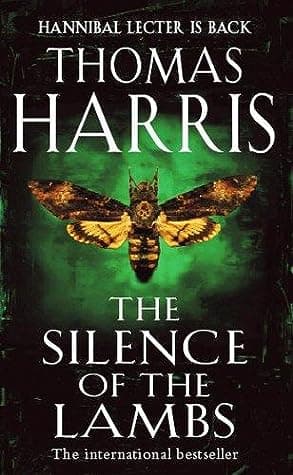
- The Silence of the Lambs
Thomas Harris
4.2 (464k) average on GoodreadsThrillerHarris's novel features a more traditional thriller structure with a clear protagonist (Clarice Starling) pursuing a serial killer. While it delves into psychological horror, it maintains a moral center and focuses on the investigation. Brite's 'Exquisite Corpse' directly immerses the reader in the killers' perspectives, offering no moral counterpoint and focusing purely on the pathology and internal world of the perpetrators rather than their pursuit.
- Angels & Demons
Dan Brown
3.9 (2.7M) average on GoodreadsThrillerA Harvard symbologist races through Rome's ancient sites, deciphering cryptic clues to unmask the Illuminati and stop a vengeful plot to destroy the Vatican with a stolen antimatter weapon.
- Gone Girl
Gillian Flynn
4.1 (2.3M) average on GoodreadsThrillerA wife's sudden disappearance on her fifth anniversary reveals a web of lies and psychological warfare, exposing the secrets within a seemingly perfect marriage.




Enjoyed the summary?
A summary gives you the shape of the book. The book itself has the detail, the examples and the voice.
Find Exquisite Corpse on AmazonAs an Amazon Associate, BookBrief earns from qualifying purchases. How we're funded