

Synopsis
Covers the whole plot, including the ending.
- Difficulty
- Hard
- Pacing
- Variable
- Mood
- Philosophical, Introspective, Cynical, Reflective, Transformative
- Read it if
- You enjoy philosophical novels exploring themes of detachment, morality, and personal transformation, with a non-linear narrative structure.
- Skip it if
- You prefer fast-paced, plot-driven stories with straightforward chronology and clear-cut resolutions.
Eyeless in Gaza Plot Summary
Covers the whole plot, including the ending.
A Flashback to Childhood and a Fateful Encounter
The novel starts with adult Anthony Beavis looking at old photographs, which begins a non-linear trip through his past. We meet his childhood friend Brian Foxe; they shared school and holiday experiences. A painful memory involves Anthony and Brian finding a dog caught in a trap, suffering greatly. Anthony, out of fear and a misguided try at mercy, shoots the dog. This decision haunts him. Brian sees this, and it hints at the moral problems and the effects of their actions on others that will shape their later lives. The story moves between these early memories and Anthony's present, showing his distant and cynical view of the world.
Adult Anthony and His World of Detachment
As an adult, Anthony Beavis is a successful writer and intellectual, but he is very detached from true emotional connection. He has several affairs, most notably with Helen Ledwidge and Joan Thursley, treating relationships casually. His intelligence protects him, letting him observe human foolishness without truly taking part or committing. He goes to social events, having clever but empty conversations. This time in his life shows his struggle with meaninglessness and his inability to form lasting bonds, a direct result of his past and his cynical philosophy. He seeks pleasure and intellectual fun, but a deep sense of emptiness remains.
The Brian Foxe Tragedy Unfolds
The story slowly reveals what happened to Brian Foxe, Anthony's childhood friend. Brian, a sensitive and idealistic young man, struggles deeply with the moral compromises and hypocrisy he sees in the world, especially after a disappointing experience in the Spanish Civil War. His relationship with Helen Ledwidge, which Anthony also affects, adds more complexity. Finally, overcome by despair and feeling betrayed, Brian commits suicide. This event is a major turning point for Anthony. While at first he processes it with his usual intellectual distance, Brian's death forces Anthony to confront the effects of his own emotional distance and how his actions (or lack of them) affected his friend, beginning to break down his cynical facade.
Anthony's Affair with Helen Ledwidge
Anthony's affair with Helen Ledwidge is a complex and destructive relationship. Helen is passionate but somewhat unstable, deeply affected by her own emotional problems. Anthony, while intellectually interested in her, treats her with some coldness and manipulation, using her for his own satisfaction without real emotional investment. This affair overlaps with Brian's life and adds to his despair, as Helen's feelings are split and her emotional state worsens. Anthony's casual cruelty toward Helen shows his moral failures and his inability to empathize, further isolating him in his intellectual world. Their interactions involve power imbalances and emotional exploitation.
Encounters with James Beavis and the Search for Meaning
Anthony meets his uncle, James Beavis, a man who lives a life of spiritual discipline and pacifism, rejecting the pleasure-seeking and intellectual pursuits that define Anthony's world. James lives simply, following his principles, and supports non-violence and a deeper connection to people. Anthony first meets these ideas with his usual skepticism, but James's calm belief and the stark difference in his lifestyle start to break down Anthony's defenses. James does not preach but lives his philosophy, offering Anthony a look at another way to find meaning and satisfaction beyond superficial pleasures and intellectual games. This guidance subtly plants doubts about Anthony's current path.
The Influence of Mark Rampion
Mark Rampion, a writer and artist, is an important intellectual opposite and friend to Anthony. Rampion supports a balanced approach to life, embracing both mind and body, art and nature, without giving in to strictness or pure pleasure-seeking. He criticizes Anthony's intellectual distance and his habit of living only in his head, urging him to engage with the world more fully and truly. Rampion's philosophy, often shown through lively discussions and observations, represents a vibrant view that challenges Anthony's cynical outlook. While Anthony respects Rampion, he at first finds it hard to adopt this more balanced approach into his own life, struggling to give up his ingrained habits of distance.
A Crisis of Conscience and a Shift in Perspective
After Brian's suicide and the general emptiness of his relationships, Anthony has a deep moral crisis. The intellectual games and casual affairs that once defined his life now seem meaningless. He begins to question his distant, cynical philosophy, seeing its destructive effect on himself and others. The memory of the dog in the trap, Brian's death, and his treatment of Helen combine into an unbearable weight. This inner turmoil shows a big change, as Anthony starts to truly look for a different way of living, moving beyond mere intellectual curiosity to a sincere desire for moral and spiritual change. He feels very unhappy with his past and present.
Embracing a New Philosophy: Non-Attachment and Peace
Driven by his crisis, Anthony begins to explore Eastern philosophy, especially ideas of non-attachment and inner peace, greatly influenced by his uncle James's example. He starts to meditate and purposely develops a sense of detachment from worldly desires and ego-driven pursuits, but this time with a spiritual rather than cynical aim. This new path involves a conscious effort to overcome his past emotional coldness and embrace compassion. He tries to connect his intellectual understanding with a more intuitive, complete way of being. This change is not quick or easy, but it marks a committed effort to rebuild his life on ethical and spiritual foundations, moving away from the purely intellectual and pleasure-seeking. He aims for a deeper, more meaningful life.
Practicing Non-Violence in a Violent World
As Europe's political situation worsens and war seems likely, Anthony's new philosophy of pacifism and non-violence is tested. He actively takes part in anti-war movements and supports peace, often facing skepticism and ridicule from his former intellectual friends. This commitment is not just theoretical; it involves public action and a willingness to stand by his beliefs despite social pressure. His change is clear in his willingness to act directly and to state his beliefs with conviction, a sharp contrast to his earlier distant observations. He accepts possible personal risks for his ethical stance, showing how deeply he has changed.
A Glimpse of Future Harmony
The novel ends with Anthony Beavis having found a good deal of inner peace and purpose. While his change continues and has its difficulties, he has moved past the cynicism and emotional emptiness that marked his early adult life. He is actively working to promote peace and live by his principles, finding satisfaction in service and spiritual practice rather than superficial pleasures. The story suggests a future where Anthony continues to seek a more compassionate and non-violent existence, having escaped the 'eyeless' state of his past. He has found a way to combine his intellect with his spirit, creating a path toward true meaning and connection, even in a world still full of conflict.
Principal Figures
Anthony Beavis
Protagonist
An intellectual writer who evolves from cynical detachment to spiritual engagement.
Anthony Beavis is the central character, an intelligent but emotionally detached writer and intellectual. In his youth, he is marked by a traumatic event involving a dog and a rabbit trap, which contributes to his later cynicism. As an adult, he engages in a series of superficial relationships and intellectual pursuits, using his intelligence as a shield against genuine emotion. He struggles with a sense of meaninglessness, which is exacerbated by the tragic suicide of his friend, Brian Foxe, and his manipulative affair with Helen Ledwidge. His journey throughout the novel is one of profound transformation, moving from a state of 'eyeless' moral blindness and intellectual pride to embracing a philosophy of non-attachment, pacifism, and spiritual awareness, heavily influenced by his uncle James and Eastern thought.
Relationships: Brian Foxe (Childhood friend, whose suicide deeply impacts Anthony); Helen Ledwidge (Lover, whom Anthony treats with detachment and manipulation); James Beavis (Uncle and spiritual mentor); Mark Rampion (Intellectual friend and philosophical foil); Joan Thursley (Another lover, part of his detached phase)
Brian Foxe
Supporting
Anthony's sensitive and idealistic childhood friend, whose tragic end serves as a catalyst for Anthony's change.
Brian Foxe is Anthony's childhood friend, a sensitive and idealistic young man. He is deeply affected by the world's injustices and personal betrayals, including his disillusionment with a cause in the Spanish Civil War and the complexities of his relationship with Helen Ledwidge, which is influenced by Anthony. Brian's inability to reconcile his ideals with the harsh realities of life leads him to a profound despair. His suicide is a pivotal event in the novel, forcing Anthony to confront the consequences of his own emotional detachment and the impact of his actions on others. Brian represents a path of emotional vulnerability and idealism that Anthony initially rejects but ultimately comes to understand.
Relationships: Anthony Beavis (Childhood friend); Helen Ledwidge (Lover, their relationship is complicated by Anthony)
Helen Ledwidge
Supporting
A passionate but emotionally volatile woman, involved in affairs with both Anthony and Brian.
Helen Ledwidge is a passionate, intelligent, but emotionally unstable woman who has affairs with both Anthony Beavis and Brian Foxe. She is deeply affected by her relationships and the emotional manipulations she experiences, particularly from Anthony. Her character embodies the destructive potential of unbridled passion and the vulnerability of those seeking genuine connection in a world of superficiality. Her emotional turmoil and her role in the lives of both friends contribute significantly to the tragic events of the novel, particularly Brian's despair. Helen's suffering highlights the moral vacuum in which Anthony initially operates, and her fate underscores the consequences of his detached approach to human relationships.
Relationships: Anthony Beavis (Lover, treated with detachment); Brian Foxe (Lover, their relationship is complicated)
James Beavis
Supporting
Anthony's uncle, a wise and principled man who embodies a philosophy of pacifism and spiritual non-attachment.
James Beavis is Anthony's uncle and a crucial spiritual mentor. He represents an alternative, more ethical way of living, having embraced a philosophy of pacifism, non-attachment, and spiritual discipline, drawing from Eastern thought. James lives a simple, principled life, contrasting sharply with Anthony's earlier hedonistic and intellectually cynical existence. He doesn't preach but rather embodies his beliefs, offering Anthony a quiet example of inner peace and purpose. His influence is instrumental in Anthony's transformation, guiding him towards a path of moral and spiritual awakening. James serves as the moral compass of the novel, demonstrating that a life of meaning is possible beyond intellectual games and superficial pleasures.
Relationships: Anthony Beavis (Nephew and spiritual mentee)
Mark Rampion
Supporting
A vitalist writer and artist, who serves as an intellectual and philosophical foil to Anthony.
Mark Rampion is a friend and intellectual peer of Anthony Beavis, a writer and artist who advocates for a holistic, vitalist philosophy. He believes in embracing all aspects of human experience—intellect, body, emotion, and instinct—without succumbing to extremes. Rampion is critical of Anthony's intellectual detachment and his tendency to live solely in his head, urging him to engage with life more fully. He represents a balanced perspective, rejecting both the asceticism of some spiritual paths and the pure hedonism of Anthony's early life. While Anthony respects Rampion's intellect, he initially struggles to integrate Rampion's more balanced approach, highlighting the difficulty of shedding ingrained habits of thought and feeling.
Relationships: Anthony Beavis (Friend and intellectual sparring partner)
Joan Thursley
Supporting
One of Anthony's many lovers, representing his early, emotionally detached phase.
Joan Thursley is one of Anthony Beavis's lovers during his period of emotional detachment and casual relationships. She is part of the social circle that Anthony frequents, characterized by witty conversation and superficial connections. Her relationship with Anthony, like many others during this phase, is based more on intellectual amusement and physical gratification than genuine emotional intimacy. Joan serves to illustrate Anthony's earlier inability to form deep bonds and his tendency to use others to fill his own intellectual and physical needs without true commitment. She is a reflection of the 'eyeless' state of his early adult life, where emotional depth is sacrificed for intellectual play and fleeting pleasure.
Relationships: Anthony Beavis (Lover during his detached phase)
Hugh Ledwidge
Mentioned
Helen Ledwidge's husband, whose presence complicates Helen's affairs.
Hugh Ledwidge is Helen Ledwidge's husband. While not a central character, his presence in Helen's life adds a layer of moral complexity and consequence to her affairs with Anthony and Brian. His existence underscores the societal norms and personal betrayals inherent in their relationships. Hugh represents the conventional world that the protagonists often try to circumvent or ignore, but whose existence still impacts their choices and the fallout of their actions. His role is primarily to provide context for Helen's emotional state and the illicit nature of her relationships.
Relationships: Helen Ledwidge (Husband)
Mary Amberley
Supporting
A woman connected to Anthony's social circle, representing the era's intellectual and social milieu.
Mary Amberley is a character within Anthony's social and intellectual circle. She represents the kind of educated, socially aware, but often morally ambiguous individuals who populate Anthony's world before his transformation. Her interactions with Anthony and others contribute to the novel's depiction of the intellectual and social milieu of the time. While not a major driver of the plot, she helps to flesh out the environment from which Anthony emerges, characterized by witty but often superficial discussions, and a certain detachment from deeper moral concerns.
Relationships: Anthony Beavis (Acquaintance in his social circle)
Themes & Insights
Identity and Self-Discovery
The novel shows Anthony Beavis's deep journey of self-discovery, moving from a self-imposed identity of cynical intellectual distance to one of spiritual involvement and moral responsibility. His early life involves intellectual pursuits and superficial relationships, but he feels an underlying emptiness. Brian Foxe's tragic suicide, along with his uncle James's influence and Eastern philosophy, makes Anthony question his identity and his past moral 'blindness.' He actively tries to redefine himself through pacifism and non-attachment, leaving his old self to embrace a more caring and purposeful existence. This change is central to the novel's exploration of identity.
“What was the good of being a man, if one were going to be no more than a walking conscience?”
The Dangers of Intellectual Detachment
Huxley criticizes the dangers of living a life only through the mind, separate from true emotion and moral involvement. Anthony Beavis at first represents this distance, using his intelligence to shield himself from the difficult realities of human suffering and connection. His cynical observations and casual approach to relationships, like with Helen Ledwidge, cause pain for others and a deep sense of meaninglessness for himself. The novel argues that while intelligence is valuable, it becomes harmful when it prevents empathy, moral responsibility, and a complete engagement with life. Brian Foxe's sensitivity, compared to Anthony's initial coldness, shows the human cost of such distance.
“He chose to be a spectator, to be a connoisseur of experiences, rather than an actor.”
Pacifism and Non-Violence
A main theme is the exploration and eventual acceptance of pacifism and non-violence as a workable and necessary philosophy for living. Influenced by his uncle James and Eastern spiritual traditions, Anthony Beavis moves from a passive observer of world conflicts to an active supporter of peace. This theme is especially important given the novel's setting just before World War II. Huxley uses Anthony's change to argue for the ethical need for non-violence, not just as a political stance but as a deeply personal spiritual practice. The contrast between the destructive forces in the world and Anthony's commitment to peace highlights the novel's message about the power of individual moral choice.
“Peace begins in the souls of individuals.”
The Search for Meaning and Spiritual Fulfillment
The novel looks at humanity's constant search for meaning beyond money, intellectual games, or short-lived pleasures. Anthony Beavis's early life of pleasure-seeking and cynicism leaves him feeling empty, despite his intellectual successes. His journey is a search for a deeper, more real form of satisfaction, which he eventually finds in spiritual practice, non-attachment, and compassionate engagement with the world. Eastern philosophy and James Beavis's example guide him to see that true meaning comes from within and through ethical action, rather than external achievements. This theme shows the limits of a purely secular or materialistic view.
“The secret of happiness, you see, is not found in seeking more, but in developing the capacity to enjoy less.”
Consequence and Responsibility
The story carefully explores how individual actions spread and the weight of moral responsibility. Anthony's early actions, such as shooting the dog and his distant treatment of Helen Ledwidge, have deep and often tragic results, most notably contributing to Brian Foxe's despair and suicide. The novel's non-linear structure emphasizes how past events continue to shape the present and demand accountability. Anthony's change is largely driven by his realization of his past irresponsibility and his later commitment to living a life of conscious ethical choice, showing that true freedom comes from accepting and acting on one's moral duties.
“Every act of ours affects the whole future. Every thought, every word, every deed.”
Plot Devices & Literary Techniques
Non-Linear Narrative Structure
The story is told out of chronological order, jumping between different time periods in Anthony's life.
Huxley employs a non-linear narrative, presenting events from Anthony Beavis's childhood, young adulthood, and present (1930s) in a fragmented, associative manner. This technique mimics the way memory works, with present triggers recalling past events, and allows Huxley to explore themes of consequence and the evolution of character over time. It prevents a simplistic cause-and-effect understanding, instead building a complex portrait of Anthony's development by revealing how past traumas and choices contribute to his present state and subsequent transformation. The reader pieces together the chronology, which enhances the sense of discovery and introspection central to Anthony's journey.
Epigraphs and Philosophical Interjections
Each chapter begins with a quote, often from a philosophical or spiritual text, and the narrative frequently includes Anthony's internal monologues.
Throughout the novel, Huxley uses epigraphs at the beginning of chapters, drawing from diverse sources like Eastern philosophy, poetry, and scientific texts. These quotes often foreshadow themes or provide a philosophical lens through which to interpret the upcoming section. Additionally, the narrative is rich with Anthony's internal monologues and intellectual discussions, which serve to articulate the various philosophical positions and ideas being explored. This device highlights the novel's intellectual depth, inviting the reader to engage with the philosophical underpinnings of the plot and Anthony's transformation, making the novel as much a 'novel of ideas' as it is a character study.
Symbolism of Sight and Blindness
The title itself, 'Eyeless in Gaza,' symbolizes moral and spiritual blindness.
The title 'Eyeless in Gaza' is a direct reference to Milton's 'Samson Agonistes,' where Samson is physically blinded and imprisoned. In Huxley's novel, this symbolizes Anthony Beavis's initial moral and spiritual blindness—his inability to truly 'see' the consequences of his actions or the deeper meaning of life beyond intellectual and hedonistic pursuits. His journey is one of regaining sight, moving from a detached, unseeing existence to one of compassionate awareness and ethical clarity. The imagery of sight and blindness is used metaphorically to represent enlightenment versus ignorance, and the struggle to perceive truth beyond superficial appearances.
The Dog in the Trap
A recurring traumatic memory that symbolizes Anthony's early moral failings and the origin of his detachment.
The incident of Anthony and Brian discovering a dog caught in a rabbit trap, and Anthony's subsequent decision to shoot it, is a powerful and recurring symbol. It represents Anthony's early exposure to suffering, his misguided attempt at mercy, and the traumatic impact of his actions. This memory haunts him, symbolizing his initial moral cowardice, his tendency to inflict pain, and the roots of his emotional detachment. Its recurrence emphasizes how this unresolved trauma contributes to his later cynicism and emotional distance, and how confronting it is essential for his eventual moral and spiritual awakening.
Eyeless in Gaza Quotes
“The only completely satisfying revenge is to become a better person.”
“That men do not learn very much from the lessons of history, is the most important of all the lessons that history has to teach.”
“Facts are ventriloquist's dummies. Sitting on a wise man's knee they may be made to utter words of wisdom; elsewhere, they say nothing, or talk nonsense, or make a fool of whoever tries to speak through them.”
“Happiness is a by-product of function, purpose, and successful activity; and where these are absent, all the cosmetics and stimulants in the world will not produce it.”
“Every man has a right to his own opinion, but no man has a right to be wrong in his facts.”
“Experience is not what happens to a man; it is what a man does with what happens to him.”
“The secret of happiness is to have a job that you love, and to have a life that is full of meaning.”
“Peace is not an absence of war, it is a virtue, a state of mind, a disposition for benevolence, confidence, justice.”
“”
“”
“”
“”
“”
“”
Quiz
10 questions on the plot and the characters. Each answer comes with a short explanation.
Question 1
Which character serves as the central protagonist whose life and moral evolution are explored non-chronologically?
- Brian Foxe
- Anthony Beavis
- Mark Staithes
- Helen Ledwidge
Show answer
B. Anthony Beavis Anthony Beavis is the central character, and the novel follows his life's journey, particularly his intellectual and spiritual transformation, presented through a fragmented, non-linear narrative.
Question 2
What significant event from Anthony's youth deeply affects him and contributes to his later disillusionment and cynicism?
- His failure to get into Oxford University.
- The suicide of his friend Brian Foxe, partly due to Anthony's actions.
- A severe financial crisis experienced by his family.
- A public scandal involving his parents.
Show answer
B. The suicide of his friend Brian Foxe, partly due to Anthony's actions. The suicide of Brian Foxe, prompted by Anthony's affair with Brian's girlfriend, Helen, is a pivotal traumatic event that haunts Anthony and influences his later moral development.
Question 3
The novel's title, 'Eyeless in Gaza,' is an allusion to which literary work?
- Homer's 'The Odyssey'
- Shakespeare's 'King Lear'
- Milton's 'Samson Agonistes'
- Goethe's 'Faust'
Show answer
C. Milton's 'Samson Agonistes' The title is a direct quote from John Milton's 'Samson Agonistes', referring to Samson's blindness and imprisonment, symbolizing Anthony's initial spiritual blindness and entrapment in his own ego.
Question 4
What philosophical or spiritual path does Anthony eventually embrace, largely influenced by the character Dr. Miller?
- Hedonism and aestheticism
- Marxist communism
- Pacifism and mysticism
- Nihilism and existentialism
Show answer
C. Pacifism and mysticism Towards the latter part of the novel, guided by Dr. Miller, Anthony moves towards a philosophy of pacifism, non-violence, and a form of mysticism, seeking to transcend his ego and connect with a larger reality.
Question 5
How does Huxley primarily structure the narrative of 'Eyeless in Gaza'?
- Strictly chronological, from birth to old age.
- Through a series of epistolary letters.
- Non-chronologically, jumping between different periods of Anthony's life.
- From the perspectives of multiple, unreliable narrators.
Show answer
C. Non-chronologically, jumping between different periods of Anthony's life. The novel is famously structured non-chronologically, with dates at the top of each chapter indicating jumps in time, reflecting the fragmented nature of memory and the process of self-discovery.
Question 6
What role does the character Mark Staithes play in Anthony's life and philosophical journey?
- He is Anthony's childhood mentor who introduces him to literature.
- He represents a cynical, politically radical, and ultimately violent ideology that Anthony initially flirts with.
- He is a rival academic who constantly challenges Anthony's intellectual pursuits.
- He is Anthony's long-lost brother who reappears later in life.
Show answer
B. He represents a cynical, politically radical, and ultimately violent ideology that Anthony initially flirts with. Mark Staithes is a charismatic but nihilistic and politically extreme figure who advocates for violence and social upheaval, representing a path Anthony considers and ultimately rejects in favor of pacifism.
Question 7
Which of these is a central theme explored through Anthony Beavis's transformation?
- The inevitable corruption of power.
- The conflict between individual desire and societal expectations.
- The journey from intellectual detachment and egoism to spiritual integration and active compassion.
- The futility of searching for meaning in a chaotic universe.
Show answer
C. The journey from intellectual detachment and egoism to spiritual integration and active compassion. A core theme is Anthony's arduous journey from a self-absorbed, intellectually detached individual, often causing harm to others, to a person seeking spiritual enlightenment, self-transcendence, and engaged pacifism.
Question 8
What is the primary significance of the 'dog falling from the sky' incident early in the novel?
- It symbolizes the randomness and absurdity of life.
- It foreshadows a later act of violence committed by Anthony.
- It is a dream sequence representing Anthony's subconscious fears.
- It introduces the theme of animal cruelty in society.
Show answer
A. It symbolizes the randomness and absurdity of life. The bizarre and sudden death of the dog, which falls from a plane, serves as a jarring, almost surreal, opening image that immediately establishes a sense of the arbitrary and often cruel nature of existence, setting a tone for Anthony's initial worldview.
Question 9
How does Anthony's relationship with Helen Ledwidge evolve throughout the non-linear narrative?
- They remain lifelong romantic partners, despite challenges.
- They have an affair in their youth, leading to tragedy, and later meet again as different people.
- Helen is Anthony's sister, and their bond strengthens over time.
- She is a symbol of unattainable love, whom Anthony idealizes but never truly connects with.
Show answer
B. They have an affair in their youth, leading to tragedy, and later meet again as different people. Anthony and Helen have an affair in their youth which directly contributes to Brian Foxe's suicide. Years later, they meet again, both changed by their experiences, with Helen having become a spiritualist and Anthony on his own path of transformation.
Question 10
What is Huxley's broader critique of modern society, as reflected through Anthony's early life and the other characters' struggles?
- The over-reliance on technology and scientific advancement.
- The superficiality, moral relativism, and spiritual emptiness of intellectual and social elites.
- The failures of political systems to address economic inequality.
- The decline of traditional family values and institutions.
Show answer
B. The superficiality, moral relativism, and spiritual emptiness of intellectual and social elites. Through Anthony's early detached and cynical life, and the various morally ambiguous or misguided characters, Huxley critiques the intellectual and social elites of his time for their superficiality, lack of genuine values, and spiritual void, which he contrasts with the possibility of spiritual transcendence.
Eyeless in Gaza FAQ
What is Eyeless in Gaza about?
Eyeless in Gaza" primarily follows the life and philosophical journey of Anthony Beavis, an intellectual who navigates through various relationships, political ideologies, and personal crises across different time periods. The narrative, presented non-chronologically, explores his disillusionment with society and his eventual turn towards a form of pacifist mysticism, influenced by his friend Miller. It's a deep dive into the human condition, memory, and the search for meaning.
Why should I read Eyeless in Gaza?
You should read "Eyeless in Gaza" for its profound philosophical exploration of pacifism, hedonism, and spiritual enlightenment, presented through a complex, non-linear narrative structure that challenges conventional storytelling. Huxley's sharp intellect dissects the social and political anxieties of the interwar period, offering a rich tapestry of ideas and human relationships that resonate with timeless questions about purpose and morality. It's a challenging yet rewarding read for those interested in intellectual fiction.
What is the background/setting of Eyeless in Gaza?
The novel is primarily set in England during the interwar period, roughly from the 1900s to the 1930s, with scenes also taking place in France and Mexico. This tumultuous era, marked by the aftermath of World War I and the looming threat of World War II, provides a backdrop for Anthony Beavis's personal and philosophical struggles. The social and political climate heavily influences the characters' worldviews and the novel's themes of war, peace, and societal decay.
What are the most memorable quotes?
One memorable quote is, "Experience is not what happens to a man; it is what a man does with what happens to him." This encapsulates the novel's focus on internal processing and philosophical growth. Another is, "The only way to make sense out of change is to plunge into it, move with it, and join the dance," reflecting Anthony's journey of self-discovery and adaptation.
What writing style does the author use?
Huxley employs a non-linear, fragmented narrative style that jumps between different periods of Anthony Beavis's life, demanding active engagement from the reader to piece together the chronology and character development. The prose is highly intellectual and analytical, filled with philosophical discourse, psychological insights, and vivid descriptions, often delivered with a detached, observational tone.
What minor details add significant meaning?
The recurring motif of the cat falling from the roof, observed by Anthony as a child and later referenced, symbolizes the arbitrary cruelty and indifference of the world, and Anthony's own detached observation of suffering before his transformation. This seemingly small detail underscores his early cynicism and later pursuit of compassion.
What are some subtle foreshadowing moments?
Early descriptions of Anthony's intellectual detachment and his tendency to observe life rather than fully participate in it subtly foreshadow his later spiritual crisis and eventual embrace of a more engaged, pacifist philosophy. His casual dismissal of personal connections in his youth hints at the emptiness he will later seek to fill.
What unexpected character connections exist?
One unexpected connection is between Anthony Beavis and his childhood friend Brian Foxe, whose tragic death deeply impacts Anthony, though the full extent of this impact is revealed gradually through the non-linear narrative. Another is the complex, often fraught relationship between Anthony and Helen Leadbetter, which spans years and undergoes significant shifts, highlighting the intricate web of personal histories.
What are unspoken character motivations?
Anthony Beavis's unspoken motivation for his initial cynicism and promiscuity seems to be a deep-seated fear of genuine emotional connection and a search for intellectual answers to existential dread, rather than emotional fulfillment. His pursuit of various women, like Mary Amberley and Helen Leadbetter, often serves as a distraction or an intellectual experiment, rather than a quest for love.
What psychological complexities do characters exhibit?
Anthony Beavis exhibits significant psychological complexity, moving from a detached, hedonistic intellectualism to a profound spiritual and ethical awakening. His journey involves grappling with guilt, memory, and the search for authentic meaning, showcasing the internal struggles of a man trying to reconcile his intellectual understanding with emotional and moral imperatives. Helen Leadbetter also shows complexity in her struggle with societal expectations and personal desires.
What are the major emotional turning points?
A major emotional turning point for Anthony is the suicide of his friend Brian Foxe, which leaves a lasting scar and forces him to confront the consequences of his own emotional detachment. Later, his encounter with Dr. Miller and his philosophy of non-attachment and pacifism marks a significant shift from his cynical worldview towards a more compassionate and spiritually engaged existence.
How do relationship dynamics evolve?
Relationship dynamics in the novel evolve significantly, particularly Anthony's. His early relationships, like those with Mary Amberley and Helen Leadbetter, are often marked by detachment, intellectual games, and a lack of deep emotional commitment. As he undergoes his spiritual transformation, his approach to relationships shifts towards greater empathy, understanding, and a desire for genuine connection, as seen in his later interactions with Helen.
Which parts remain ambiguous or open-ended?
The ultimate success or lasting impact of Anthony's newfound spiritual path remains somewhat ambiguous. While he embraces pacifism and non-attachment, the novel doesn't offer a definitive 'happily ever after,' leaving readers to ponder the practicalities and sustainability of his transformation in a turbulent world. The future of his relationship with Helen, despite its evolution, is also left open to interpretation.
What are controversial scenes or decisions?
Anthony's early decision to participate in a rather detached and exploitative relationship with Mary Amberley, and his general emotional coldness towards those around him, could be seen as controversial. His later, abrupt conversion to pacifism and mysticism, while central to the plot, might also be viewed as overly idealistic or convenient by some readers, sparking debate about its authenticity or effectiveness.
Eyeless in Gaza ending explained: how it ends & what it means
The novel ends with Anthony Beavis having fully embraced a philosophy of pacifism and non-attachment, dedicating himself to a more compassionate and spiritually aware way of living, largely influenced by Dr. Miller. He is actively engaged in promoting peace and understanding, having moved beyond his earlier cynicism and hedonism. The ending signifies his personal redemption and the triumph of spiritual enlightenment over material and intellectual disillusionment, suggesting a path to meaning even in a chaotic world.
About the author
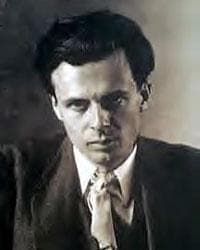
Aldous Leonard Huxley was an English writer and philosopher. His bibliography spans nearly 50 books, including novels and non-fiction works, as well as essays, narratives, and poems.
Similar books
- Point Counter Point
Aldous Huxley
3.9 (11k) average on GoodreadsLiterary FictionExplores similar themes of intellectualism, social critique, and complex character relationships in a non-linear style.
- The Razor's Edge
W. Somerset Maugham
4.2 (36k) average on GoodreadsLiterary FictionFeatures a protagonist's spiritual journey and search for meaning, moving away from conventional societal expectations.
- A Passage to India
E.M. Forster
3.7 (70k) average on GoodreadsHistorical FictionExamines complex human relationships and philosophical questions within a specific social and political context.
- A Handful of Dust
Evelyn Waugh
3.9 (23k) average on GoodreadsLiterary FictionWhile both novels critique societal decay in interwar England, Waugh's approach is primarily satirical and darkly comedic, focusing on moral absurdity and personal tragedy. Huxley's Eyeless in Gaza is more overtly philosophical and earnest, seeking a positive ethical solution rather than merely exposing flaws. Waugh's characters are often victims of circumstance or their own folly, whereas Huxley's protagonist actively seeks spiritual and moral transformation.
- Coming Up for Air
George Orwell
3.8 (12k) average on GoodreadsLiterary FictionOrwell's novel shares Huxley's pre-war anxieties and a sense of impending doom, but it grounds these concerns in the experiences of a middle-aged, working-class man nostalgic for a simpler past. Eyeless in Gaza operates on a more intellectual and philosophical plane, exploring abstract ideas of consciousness, responsibility, and spiritual enlightenment. Orwell's focus is on the loss of a specific English way of life, while Huxley's is on universal ethical principles and individual transformation.
- Nineteen Eighty-Four
George Orwell
4.2 (5.5M) average on GoodreadsFictionWinston Smith dreams of truth and rebellion in a world where Big Brother watches all, but he confronts the terrifying power of a regime that controls not just actions, but thoughts.



Enjoyed the summary?
A summary gives you the shape of the book. The book itself has the detail, the examples and the voice.
Find Eyeless in Gaza on AmazonAs an Amazon Associate, BookBrief earns from qualifying purchases. How we're funded