

Synopsis
Covers the whole plot, including the ending.
- Difficulty
- Medium
- Pacing
- Fast
- Mood
- Dark, Suspenseful, Intense, Psychological
- Read it if
- You enjoy dark, character-driven thrillers with a focus on psychological cat-and-mouse games and a determined, flawed protagonist.
- Skip it if
- You prefer less graphic violence or a lighter tone, or if you dislike intense psychological examinations of both heroes and villains.
Eyes of Prey Plot Summary
Covers the whole plot, including the ending.
The First Victim: A Grisly Discovery
The novel opens with the discovery of Dr. Carolyn Clay's body in her Minneapolis home. She has been meticulously murdered, with her eyes removed and placed on her chest. Lieutenant Lucas Davenport, still recovering mentally from a previous traumatic case, is called to the scene. The methodical nature of the crime, along with the victim's profession as a successful attorney, suggests an intelligent and deliberate killer. Davenport's initial assessment points to a deeply disturbed individual, and the unique signature of the eye removal leaves the police department, and Davenport specifically, unnerved and without immediate leads, setting a chilling tone for the investigation.
A Second Murder and a Pattern Emerges
Shortly after Dr. Clay's murder, a second victim, Dr. Julianne Holland, a well-known surgeon, is discovered under identical circumstances: her eyes removed and placed on her body. The similarities between the two crimes confirm Lucas Davenport's fears – a serial killer is operating in Minneapolis. The victims are both successful, professional women, suggesting a possible motive related to power, intellect, or a personal vendetta against women in prominent positions. Pressure mounts on Davenport and his team as the public becomes increasingly alarmed, demanding answers and a swift apprehension of the perpetrator. Davenport begins to investigate the victims' lives, searching for common threads.
Introducing the Killers: Michael and James
The story introduces the two perpetrators: Michael, a physically scarred and mentally unstable individual, and James Holland, a handsome and intelligent man who is the true mastermind. James is revealed to be Julianne Holland's brother, though this fact is initially hidden from the police. He manipulates Michael, who is devoted to him, into committing the murders. James plans the killings, choosing victims and details, while Michael carries out the gruesome acts. Their dynamic is one of control and subservience, with James feeding Michael's delusions and directing his violent impulses, making them a formidable and unpredictable duo.
Davenport's Personal Struggles and Growing Obsession
Lucas Davenport's personal life mirrors the darkness of the case. Still recovering from the mental strain of previous investigations, he finds himself drawn into the killers' twisted world. His relationships with his girlfriend, Carly, and his daughter, Sara, suffer as he becomes more withdrawn and focused. He experiences vivid nightmares and struggles with his own capacity for violence, seeing a dark reflection of himself in the killers' methodical nature. This internal conflict makes him both more effective in understanding the killers' psychology and more vulnerable to their manipulations, pushing him closer to the edge he fears.
The Killers' Game: Taunts and Misdirection
James Holland, enjoying the cat-and-mouse game, starts sending cryptic messages to the police, specifically targeting Lucas Davenport. These communications are designed to mislead and frustrate the investigation, while also subtly revealing James's narcissistic pleasure in his intellectual superiority. He provides just enough information to keep Davenport engaged but not enough to lead to an arrest. These taunts deepen Davenport's personal investment in the case, changing it from a professional duty into a personal battle of wits. James's deliberate misdirection makes it difficult for Davenport to piece together the full picture of the killers' motives and identities.
A Breakthrough and a Near Miss
Through painstaking detective work, Davenport and his team begin to uncover a tenuous link between the victims, possibly related to a past court case or professional network. This breakthrough leads them to a potential suspect, but it's a trap set by James. During an attempted apprehension, the killers manage to evade capture, leaving behind a trail of violence and further intensifying the chase. This near miss highlights the killers' dangerous capabilities and their ability to stay one step ahead, further frustrating Davenport and increasing the stakes of the investigation.
The Abduction of Carly
The killers escalate their game by abducting Carly, Lucas Davenport's girlfriend. This act changes the investigation from a professional pursuit into a personal vendetta for Lucas. The abduction is a direct message to Davenport, showing the killers' knowledge of his life and their willingness to target those closest to him. Carly's disappearance sends Lucas into a desperate race against time, his professional detachment replaced by raw, frantic determination. The stakes are now high, and Davenport is willing to break any rules necessary to save her.
The Hunt for Carly and the Killers' Lair
Driven by Carly's abduction, Lucas Davenport uses every resource at his disposal, both official and unofficial, to track the killers. His relentless pursuit leads him to a remote, isolated location where James and Michael have been hiding Carly. The journey to the lair is dangerous, and Davenport knows he is walking into a volatile situation. His focus is solely on Carly's rescue, pushing aside all fear and self-preservation. He prepares for a confrontation that he knows will be brutal and potentially fatal.
The Final Confrontation: Davenport vs. James
Davenport infiltrates the killers' hideout and confronts James Holland. A brutal and intense struggle ensues, a battle of both physical prowess and psychological will. James, despite his intellectual cunning, is no match for Davenport's raw determination and combat experience, especially with Carly's life on the line. During the confrontation, the twisted dynamic between James and Michael is fully revealed, as is James's deep psychopathy. Davenport manages to overpower James, but not without significant personal cost and the lingering trauma of the encounter.
Michael's Last Stand and Carly's Rescue
While Davenport deals with James, Michael, the physically scarred enforcer, makes his last stand. Davenport or his allies manage to neutralize Michael, ending his reign of terror. Carly is found alive, but deeply traumatized by her ordeal. Her rescue is a moment of profound relief for Davenport, but it's clear that the emotional scars will run deep for both of them. The immediate danger is over, but the lingering psychological impact of the case on Davenport and Carly will be immense, marking a significant turning point in their lives.
Aftermath and Lingering Trauma
In the wake of the killings and Carly's rescue, Lucas Davenport and Carly begin the difficult process of recovery. Carly is physically safe but psychologically shattered, requiring extensive support. Davenport, while successful in stopping the killers, is left profoundly changed. The case pushed him to his limits, forcing him to confront his own darkness and the fragility of his sanity. The ending suggests that while the external threat has been eliminated, the internal battles for both Lucas and Carly are far from over, leaving them with lasting emotional wounds and a new understanding of their own resilience.
Principal Figures
Lucas Davenport
Protagonist
A brilliant but troubled Minneapolis police lieutenant.
Lucas Davenport is a highly intelligent and unconventional police lieutenant with a knack for understanding the criminal mind. He is driven by a strong sense of justice but is often haunted by the psychological toll of his work. He's known for his sharp instincts, his willingness to bend rules, and his often-brooding demeanor. Despite his success, he struggles with depression and a fascination with the darker aspects of human nature, which sometimes blurs the line between his professional and personal life.
Relationships: Carly (Romantic partner, later abducted by the killers, intensifying Lucas's resolve.); Sara (His young daughter, a source of stability and love amidst his chaotic life.); James Holland (Primary antagonist, a psychological mirror and intellectual adversary.)
James Holland
Antagonist
The brilliant, manipulative mastermind behind the murders.
James Holland is a strikingly handsome, highly intelligent, and profoundly psychopathic individual. He is the true architect of the 'Eyes of Prey' murders, manipulating his disfigured brother, Michael, into committing the acts. James is driven by a deep-seated narcissism, a desire for control, and a fascination with death and power. He enjoys the intellectual game of taunting the police, particularly Lucas Davenport, viewing the investigation as a personal challenge to his superiority. He exhibits no remorse and sees others merely as pawns in his elaborate schemes.
Relationships: Michael Holland (His disfigured brother and subservient accomplice, whom he manipulates completely.); Lucas Davenport (His primary intellectual adversary and the target of his psychological games.)
Michael Holland
Antagonist
The disfigured, mentally unstable enforcer manipulated by his brother, James.
Michael Holland is James's younger brother, physically scarred and mentally unstable. He is deeply devoted to James, who exploits his psychological vulnerabilities and uses him to carry out the gruesome murders. Michael is capable of extreme violence but lacks the intellectual capacity or independent will of his brother. He is a tragic figure, a tool in James's hands, driven by a warped sense of loyalty and a desperate need for acceptance from his manipulative sibling. His disfigurement contributes to his isolation and dependence on James.
Relationships: James Holland (His manipulative older brother and master, whom he blindly obeys.)
Carly
Supporting
Lucas Davenport's girlfriend, who becomes a victim of the killers.
Carly is Lucas Davenport's girlfriend, a kind and supportive presence in his often-turbulent life. She provides a grounding influence for Lucas, offering him emotional stability. She is initially unaware of the full extent of the darkness Lucas faces in his work, but her own abduction by James and Michael thrusts her directly into the heart of his dangerous world. Her strength and resilience are tested to their limits during her captivity, and her survival becomes Lucas's primary motivation.
Relationships: Lucas Davenport (Romantic partner, deeply loved and protected by Lucas.)
Delaware
Supporting
A trusted detective on Lucas Davenport's team.
Detective Delaware is a reliable and competent member of Lucas Davenport's homicide team. He is pragmatic, hardworking, and provides a steady hand in the often-chaotic environment of a major police investigation. While not as flashy or intuitive as Davenport, Delaware's methodical approach and loyalty are invaluable. He serves as a foil to Davenport's more maverick style, often keeping him grounded and ensuring that proper police procedures are followed, even if Lucas frequently pushes the boundaries.
Relationships: Lucas Davenport (Colleague and subordinate, highly respects Davenport's abilities.)
Sara Davenport
Supporting
Lucas Davenport's young daughter.
Sara is Lucas Davenport's young daughter, a bright and innocent child who represents a source of light and normalcy in Lucas's dark world. She is largely protected from the horrors of her father's work, but her presence serves as a constant reminder of what Lucas is fighting for. Her well-being is a deep concern for Lucas, and thoughts of her often pull him back from the brink when he is consumed by the darkness of his cases. She embodies the hope and future Lucas is striving to preserve.
Relationships: Lucas Davenport (Daughter, deeply loved and protected by her father.)
Dr. Carolyn Clay
Mentioned
The first victim of the 'Eyes of Prey' killer.
Dr. Carolyn Clay was a prominent and successful attorney in Minneapolis. Her brutal murder, with her eyes removed, is the catalyst for the entire investigation. She represents the initial shock and horror of the killer's methods, setting the tone for the dark and methodical nature of the crimes. Although she is only seen in death, her professional standing and the manner of her killing immediately raise questions about the killer's motives and targets.
Dr. Julianne Holland
Mentioned
The second victim, a respected surgeon and sister to James Holland.
Dr. Julianne Holland was a respected surgeon and the second victim of the 'Eyes of Prey' killer. Her murder, mirroring that of Dr. Clay, confirms the presence of a serial killer and intensifies the police investigation. Her connection as James Holland's sister is a crucial, though initially hidden, piece of information that eventually helps Lucas Davenport understand the killer's twisted motivations and personal vendettas. Her death highlights the personal nature of James's crimes.
Relationships: James Holland (Her brother, and ultimately, her murderer.)
Themes & Insights
The Nature of Evil and Psychopathy
The novel explores the chilling depths of psychopathy through James Holland, who embodies pure evil. James is intelligent, charismatic, and completely without empathy, seeing others as mere objects for his amusement and power games. His manipulation of Michael shows the insidious nature of his influence. The theme appears in his calculated cruelty, his enjoyment of psychological torture, and his lack of remorse, forcing Lucas Davenport to confront a form of evil that defies conventional understanding and moral boundaries. It questions whether such evil can truly be understood or only contained.
“'He wasn't just a killer; he was a craftsman of fear, an artist of the void.'”
The Psychological Toll of Police Work
Lucas Davenport's internal struggles are central to this theme. He is shown as a man on the edge, still recovering from past traumas, and this case pushes him further. The gruesome nature of the murders, the personal attacks by the killer, and the abduction of Carly all contribute to Davenport's psychological unraveling. The novel portrays the constant battle police officers face to maintain their sanity and personal lives while confronting the darkest aspects of humanity daily, showing how the line between justice and obsession can blur, especially when the case becomes intensely personal.
“'Sometimes, he thought, the only way to catch a monster was to become a little monstrous yourself.'”
Manipulation and Control
Manipulation is a pervasive theme, primarily shown through James Holland's control over his brother, Michael. James exploits Michael's vulnerabilities, disfigurement, and desperate need for acceptance to orchestrate the murders. This extends to his psychological games with Lucas Davenport and the police, where he manipulates information and perceptions to his advantage. The theme highlights the power dynamics within abusive relationships and how one individual can completely dominate another's will, blurring the lines of responsibility and agency, turning Michael into an extension of James's twisted desires. It underscores the danger of unchecked influence.
“'He didn't need to hold a gun; his words were the most lethal weapon he possessed.'”
The Nature of Identity and Reflection
The theme of identity and reflection is subtly woven throughout the narrative, particularly in the symbolic act of removing the victims' eyes and placing them on their bodies. This act forces the victims, in death, to 'look' at themselves, perhaps a twisted commentary from the killer on their perceived flaws or a desire to strip them of their ability to 'see' the world. For Lucas Davenport, the killer acts as a dark mirror, reflecting his own capacity for obsession and violence. The novel explores how people define themselves, how others perceive them, and the profound impact when those perceptions are violently distorted or challenged.
“'The eyes were gone, but their absence stared back, a deeper, more profound form of seeing.'”
Plot Devices & Literary Techniques
The Killer's Signature: Eye Removal
A gruesome and symbolic act that defines the killer's method.
The removal of the victims' eyes and their placement on the body serves as the primary, chilling signature of the 'Eyes of Prey' killer. This device immediately establishes the extreme depravity and methodical nature of the perpetrator. Symbolically, it strips the victims of their ability to perceive, and in a twisted way, forces them to 'look inward' or at their own demise. For Lucas Davenport, it's a unique and terrifying calling card that both repels and fascinates him, driving his obsession to understand the killer's warped psychology and adding a layer of profound symbolic horror to the crimes.
The Cat-and-Mouse Game
The psychological battle between Lucas Davenport and James Holland.
The 'cat-and-mouse game' is a central plot device, manifesting as a psychological duel between Lucas Davenport and the mastermind killer, James Holland. James actively taunts Davenport with cryptic messages and calculated misdirections, enjoying the intellectual challenge. This device elevates the conflict beyond a simple police procedural, turning it into a personal battle of wits and wills. It allows for the exploration of both characters' intelligence and psychological vulnerabilities, increasing tension and making the resolution intensely personal for Davenport, as he is forced to delve into the mind of a truly evil adversary.
Davenport's Internal Conflict/Past Trauma
Lucas's ongoing struggle with his mental health and previous cases.
Davenport's internal conflict and unresolved trauma from previous cases serve as a significant plot device, adding depth to his character and raising the stakes. His mental fragility makes him susceptible to the psychological manipulation of James Holland and intensifies the personal toll of the investigation. This device allows the author to explore the darker side of detective work and the cost of confronting evil. It also provides a relatable human element to the protagonist, making his struggles and eventual triumph more impactful, as he battles not only the external killers but also his own inner demons, making his journey one of both external and internal survival.
Eyes of Prey Quotes
“The thing about being a cop, the thing about being a detective, is that you see the worst of humanity. And if you let it, it eats at you.”
“He didn't just kill them. He collected them. Like butterflies.”
“There are people who are broken, and then there are people who are just evil. The trick is knowing the difference, and sometimes, there isn't one.”
“The city was a beast, always hungry, always taking. And sometimes, it gave back something terrible.”
“He had a way of looking at you, like he was seeing all the way through to your bones.”
“The dead don't talk, but they scream. If you know how to listen.”
“Fear was a cold, sharp thing, and it cut through everything else.”
“He was good at what he did, terrifyingly good. And that made him dangerous, even to himself.”
“The line between hunter and hunted was thin, and sometimes, it disappeared entirely.”
“Some secrets are meant to stay buried. Until someone decides to dig them up.”
“He felt the weight of the city's darkness, the unspoken crimes that lurked beneath the surface.”
“The truth was a messy thing, full of sharp edges and unexpected turns.”
“You never really know a person until you see what they're capable of when pushed to the edge.”
“The quiet ones are often the most dangerous. They have more time to think.”
Quiz
10 questions on the plot and the characters. Each answer comes with a short explanation.
Question 1
What is the primary physical characteristic that distinguishes one of the two main killers, Julian and Michael, from the other?
- Julian is exceptionally tall.
- Michael has a distinctive limp.
- Julian is hideously scarred.
- Michael has a missing finger.
Show answer
C. Julian is hideously scarred. The book description explicitly states that one of the killers is 'hideously scarred,' referring to Julian, while the other, Michael, is 'strikingly handsome.'
Question 2
What is the professional background or role of Lieutenant Lucas Davenport in the novel?
- FBI Profiler
- Private Investigator
- Homicide Lieutenant
- District Attorney
Show answer
C. Homicide Lieutenant The book's synopsis clearly identifies the protagonist as 'Lieutenant Davenport,' indicating his role in law enforcement, specifically homicide.
Question 3
What is the central conflict or challenge Davenport faces in 'Eyes of Prey' that is presented as potentially worse than his previous cases?
- A single, highly intelligent serial killer.
- Two separate, unrelated murder sprees.
- Two distinct killers working together or in parallel.
- A political conspiracy involving high-ranking officials.
Show answer
C. Two distinct killers working together or in parallel. The synopsis states Davenport faces 'Two killers. One hideously scarred. The other strikingly handsome,' highlighting the primary challenge of two distinct antagonists.
Question 4
What specific aspect of the handsome killer, Michael, is noted as his particular fascination?
- Psychology of fear
- All aspects of death
- Art of deception
- Human anatomy
Show answer
B. All aspects of death The description characterizes the handsome killer as 'a master manipulator fascinated with all aspects of death.'
Question 5
How did Davenport's previous two murder investigations impact his mental state prior to the events of 'Eyes of Prey'?
- They left him feeling invigorated and confident.
- His sanity was nearly shattered.
- He became indifferent to human suffering.
- They led to his promotion within the department.
Show answer
B. His sanity was nearly shattered. The opening line of the synopsis clearly states, 'Lieutenant Davenport's sanity was nearly shattered by two murder investigations.'
Question 6
The synopsis describes one of the killers as 'the dark mirror of Davenport's soul.' What does this thematic statement imply about the relationship or dynamic between Davenport and this killer?
- They are physically identical.
- They share similar backgrounds or upbringings.
- The killer embodies aspects of Davenport's own darker impulses or potential.
- They are long-lost brothers.
Show answer
C. The killer embodies aspects of Davenport's own darker impulses or potential. The phrase 'dark mirror of Davenport's soul' suggests a profound psychological connection, where the killer reflects aspects of Davenport's own internal struggles, temptations, or potential for darkness, making the case deeply personal.
Question 7
What is the ultimate stakes for Davenport's personal well-being, as presented by the novel's description regarding this particular case?
- He will either receive a commendation or a demotion.
- He will either retire or be fired.
- He will either be brought back to life or pushed over the edge.
- He will either find love or remain alone.
Show answer
C. He will either be brought back to life or pushed over the edge. The very last line of the synopsis explicitly states, 'This is the case that will bring Davenport back to life. Or push him over the edge,' indicating the extreme personal stakes.
Question 8
Given the description of the 'hideously scarred' killer and the 'strikingly handsome, master manipulator,' what kind of dynamic is most likely between these two antagonists?
- They are competing against each other to commit more murders.
- The handsome killer likely uses the scarred killer as a tool or subordinate due to his manipulative nature.
- They are entirely independent and unaware of each other's existence.
- They are estranged brothers who coincidentally commit crimes.
Show answer
B. The handsome killer likely uses the scarred killer as a tool or subordinate due to his manipulative nature. The description highlights the handsome killer as a 'master manipulator,' suggesting he would likely exert control over others, potentially including the scarred killer, rather than them being equal partners or independent.
Question 9
The title 'Eyes of Prey' hints at a thematic element. Considering the nature of the killers and Davenport's role, what does 'Prey' most likely refer to in the context of the novel?
- The animals hunted by one of the killers as a hobby.
- The innocent victims targeted by the killers.
- Davenport's own internal struggles, which are preying on his mind.
- The police force being hunted by a corrupt organization.
Show answer
B. The innocent victims targeted by the killers. In a thriller/mystery about murder investigations, 'prey' most commonly refers to the victims of the predators (the killers). The 'eyes' likely refer to the perspective of the killers or Davenport observing the situation.
Question 10
How does the detailed characterization of the two killers (one scarred, one handsome manipulator) immediately set up a specific challenge for Davenport beyond merely identifying them?
- It suggests they will operate in completely different geographical locations, complicating the search.
- It implies they will use vastly different methods and likely target different types of victims, making a unified profile difficult.
- It indicates they are members of rival gangs, requiring Davenport to mediate a truce.
- It means one killer will be easily caught, while the other will be impossible to find.
Show answer
B. It implies they will use vastly different methods and likely target different types of victims, making a unified profile difficult. The distinct descriptions of the killers – one physically disfigured and the other a charming manipulator fascinated by death – strongly suggest they will have different MOs, victim preferences, and possibly even motivations, making it harder for Davenport to connect their crimes or predict their actions with a single profile.
Eyes of Prey FAQ
What is the central premise of 'Eyes of Prey' and what makes this case particularly challenging for Lucas Davenport?
The central premise involves Lucas Davenport investigating two seemingly unrelated murder sprees, one by the hideously scarred serial killer known as 'The Bat' (Randall Sims) and another by the charismatic and manipulative killer, Michael Gibson. This case is particularly challenging because Davenport is still recovering from past traumas, and Gibson's fascination with death and psychological games directly mirrors and threatens to exploit Davenport's own fragile mental state, pushing him to his limits.
Who are the two primary antagonists Davenport faces in 'Eyes of Prey' and what are their defining characteristics?
Davenport faces Randall Sims, known as 'The Bat,' a physically scarred and brutally violent killer who disfigures his victims, and Michael Gibson, a strikingly handsome and intelligent psychopath who orchestrates elaborate, ritualistic murders and enjoys psychological manipulation. Sims is driven by rage and a desire for revenge against those he perceives as having wronged him, while Gibson is motivated by a cold, intellectual curiosity about death and control.
How does the investigation begin, and what are some of the initial clues that point to multiple killers?
The investigation begins with the discovery of a brutally murdered and disfigured woman, a victim of 'The Bat.' Soon after, other bodies start appearing, bearing different hallmarks—more ritualistic and less overtly violent disfigurement, often with symbolic elements. The initial clues involve the distinct M.O.s and victim profiles, making it clear to Davenport and his team that they are dealing with at least two separate, highly dangerous individuals.
What role does Lily, the prostitute, play in the unfolding of the plot, particularly regarding Michael Gibson?
Lily, a high-class prostitute, becomes a crucial link in the investigation, particularly concerning Michael Gibson. She initially encounters Gibson as a client and, due to his charisma and her own vulnerabilities, becomes entangled in his world. She provides Davenport with critical insights into Gibson's personality, methods, and potential targets, eventually becoming a target herself and a catalyst for Davenport's desperate pursuit.
How does Michael Gibson specifically try to 'mirror' or manipulate Lucas Davenport throughout the novel?
Michael Gibson specifically tries to mirror Davenport by engaging him in psychological games, sending cryptic messages, and even attempting to frame Davenport for one of his own murders. He studies Davenport's profile and past cases, using this knowledge to exploit his vulnerabilities and push him to the brink of his sanity, aiming to prove that Davenport is not so different from himself—a man fascinated by death and control.
Are there any subtle clues about the shared past or connection between Randall Sims ('The Bat') and Michael Gibson?
While not explicitly stated as having a shared past in the traditional sense, a subtle connection can be inferred through their parallel existence in the criminal underworld and their eventual, albeit indirect, intersection through Davenport's investigation. Gibson, with his vast network and knowledge, is aware of Sims's activities, and there's a sense that these two distinct forces are moving towards a collision, observed and manipulated by Gibson.
What is the significance of the scar motif in the novel, both literally and metaphorically?
The scar motif is highly significant, literally embodied by Randall Sims's hideous facial disfigurement, which fuels his rage and desire for revenge. Metaphorically, scars represent the emotional and psychological wounds carried by Lucas Davenport from past cases, and the 'scars' left on society by the killers. It symbolizes the lasting damage of violence and trauma, and the internal battles individuals face.
Does the book hint at any prior connections between Michael Gibson and any of his victims, beyond his general fascination with death?
The book hints that Michael Gibson meticulously selects his victims not just for their symbolic value but often for their specific roles in society or their perceived 'perfection,' which he aims to corrupt. While not always a direct personal connection, there's a premeditated, almost artistic selection process that suggests a deeper, intellectual link to his victims rather than random chance, often involving their status or perceived innocence.
How does the author use the setting of Minneapolis to enhance the mood and plot of 'Eyes of Prey'?
Sandford uses the urban setting of Minneapolis to create a gritty, realistic backdrop for the violence and psychological tension. The contrast between the city's seemingly ordinary facade and the brutal crimes committed within its shadows amplifies the horror. The specific locations, from affluent neighborhoods to seedier parts, reflect the diverse victimology and the wide reach of the killers, grounding the narrative in a tangible, relatable environment.
How does Lucas Davenport's past trauma from previous cases influence his decision-making and emotional state during this investigation?
Davenport's past trauma, specifically from the 'Prey' series, makes him more volatile and susceptible to Gibson's psychological games. He struggles with anger, self-doubt, and a precarious hold on his sanity, leading to impulsive decisions and a deeper, more personal investment in the case. This vulnerability, however, also makes him uniquely equipped to understand the dark minds he pursues, albeit at great personal cost.
What psychological factors drive Randall Sims's extreme violence and disfigurement of his victims?
Randall Sims's extreme violence and disfigurement of his victims are primarily driven by deep-seated rage, resentment, and a desire for revenge stemming from his own physical disfigurement and perceived injustices. His actions are a twisted attempt to project his inner pain and ugliness onto the world, seeking to make others feel the same horror and powerlessness he experiences, particularly targeting those he associates with his past suffering.
Analyze Michael Gibson's psychopathy. What are his core motivations and how does he differ from a more typical serial killer?
Michael Gibson's psychopathy is characterized by extreme narcissism, a lack of empathy, and an intellectual fascination with death and control, rather than purely sexual or rage-driven motives. His core motivations are to exert absolute power, to explore the boundaries of human experience, and to engage in a 'game' with Davenport. He differs from typical serial killers by being highly sophisticated, charismatic, and driven by a cold, calculated curiosity, viewing his victims as pawns in his elaborate psychological experiments.
How does the dynamic between Davenport and Rose Marie Roux evolve throughout the novel, and what does it reveal about Davenport?
The dynamic between Davenport and Rose Marie Roux, his superior, is often strained but ultimately built on a foundation of mutual respect. Roux is initially wary of Davenport's unconventional methods and fragile mental state, but she trusts his instincts. Their evolution shows Roux giving Davenport more latitude as the case progresses, recognizing his unique ability to track the killers, while also serving as a grounding force, revealing Davenport's need for both autonomy and external validation.
In what ways does this case force Lucas Davenport to confront his own 'dark mirror,' as suggested in the synopsis?
This case forces Davenport to confront his own 'dark mirror' through Michael Gibson, who embodies the intellectual fascination with death and the desire for control that Davenport himself, in a warped way, possesses as a hunter of killers. Gibson's attempts to manipulate Davenport and highlight their perceived similarities make Davenport question his own motives and sanity, pushing him to acknowledge the thin line between hunter and hunted, and the seductive nature of extreme violence.
Is Michael Gibson a truly unique villain in the thriller genre, or does he draw on established archetypes? Discuss.
Michael Gibson is a unique villain due to his combination of extreme intellectualism, charisma, and a cold, almost philosophical approach to murder, which sets him apart from more rage- or sexually-driven antagonists. While he draws on archetypes like the master manipulator and the 'evil genius,' his specific blend of aesthetic appreciation for death and his profound psychological engagement with the protagonist makes him stand out. He's not just a killer; he's an artist of death and a dark mirror for Davenport, pushing the boundaries of the psychological thriller.
How does the ending of 'Eyes of Prey' impact Davenport's character moving forward in the series?
The ending of 'Eyes of Prey' leaves Davenport profoundly shaken but also, paradoxically, re-energized. While he is pushed to the edge of his sanity, surviving the ordeal and ultimately defeating Gibson brings him back from the brink of emotional numbness. This case, though traumatic, serves as a dark crucible that solidifies his resolve and reaffirms his purpose as a hunter of the most dangerous criminals, albeit with new, deeper scars that will influence his future cases.
Could 'The Bat' (Randall Sims) have been caught earlier if the initial investigation had focused more on his personal history?
Yes, it is plausible 'The Bat' could have been caught earlier if the initial investigation had more thoroughly delved into the personal histories of those who might harbor extreme grudges. Sims's motivations are deeply rooted in past perceived wrongs and his own disfigurement. A more proactive focus on individuals with such grievances or those connected to his victims' pasts might have provided earlier leads, though his reclusive nature made him a difficult target.
What is the broader thematic message about good versus evil that 'Eyes of Prey' conveys through the contrast between Davenport and Gibson?
'Eyes of Prey' conveys a complex thematic message about good versus evil, suggesting that the line between them can be disturbingly thin, especially for those who confront evil regularly. Through Davenport and Gibson, the book explores how fascination with death and control can manifest in drastically different ways. It argues that while evil can be seductive and intellectual, true 'good' requires constant vigilance, self-awareness, and a willingness to stare into the abyss without becoming it.
Is there a sense of catharsis for Davenport by the end of the novel, or is his struggle an ongoing one?
While there is a temporary sense of catharsis for Davenport in the immediate aftermath of defeating Gibson, his struggle is ultimately an ongoing one. He has survived, but the psychological scars from confronting such profound evil and his own 'dark mirror' will remain. The novel suggests that for someone like Davenport, who deals with the darkest aspects of humanity, true peace is elusive, and each case, while offering temporary resolution, adds to his cumulative burden.
About the author

John Sandford is an American author known for his work in the thriller genre. He is best recognized for his "Prey" series, which includes notable titles such as "Rules of Prey," "Winter Prey," "Buried Prey," and "Eyes of Prey." Sandford's writing often features complex characters and intricate plots, contributing to his reputation in contemporary fiction.
Similar books
- The Silence of the Lambs
Thomas Harris
4.2 (464k) average on GoodreadsThrillerFeatures a brilliant, manipulative serial killer and a driven investigator in a high-stakes psychological thriller.
- Kiss the Girls
James Patterson
4.0 (313k) average on GoodreadsThrillerInvolves a genius serial killer playing mind games with an FBI profiler, with multiple victims and a race against time.
- Red Dragon
Thomas Harris
4.0 (274k) average on GoodreadsThrillerExplores a damaged but brilliant profiler hunting a unique and disturbing serial killer with a complex psychological profile.
- The Black Echo
Michael Connelly
4.1 (155k) average on GoodreadsThrillerConnelly's The Black Echo is more grounded in meticulous police procedure and Harry Bosch's internal moral compass, depicting the bureaucratic grind and the toll of police work. Sandford's Eyes of Prey prioritizes the cat-and-mouse game and the visceral thrill of the hunt over detailed procedural realism.
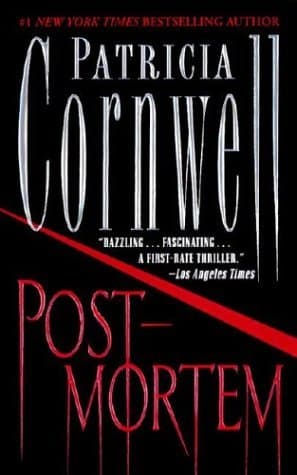
- Postmortem
Patricia Cornwell
4.0 (212k) average on GoodreadsThrillerCornwell's Postmortem revolutionized forensic thrillers with its detailed scientific investigations and a protagonist who is a forensic pathologist. Sandford's Eyes of Prey relies less on forensic science and more on traditional detective work and psychological profiling, featuring a street-smart, rule-bending cop in Davenport.
- Angels & Demons
Dan Brown
3.9 (2.7M) average on GoodreadsThrillerA Harvard symbologist races through Rome's ancient sites, deciphering cryptic clues to unmask the Illuminati and stop a vengeful plot to destroy the Vatican with a stolen antimatter weapon.





Enjoyed the summary?
A summary gives you the shape of the book. The book itself has the detail, the examples and the voice.
Find Eyes of Prey on AmazonAs an Amazon Associate, BookBrief earns from qualifying purchases. How we're funded