

Synopsis
Covers the whole plot, including the ending.
- Difficulty
- Easy
- Pacing
- Moderate
- Mood
- Lighthearted, Humorous, Romantic, Witty
- Read it if
- You enjoy lighthearted YA romance with family drama, a touch of humor, and a protagonist trying to navigate chaotic circumstances.
- Skip it if
- You prefer high-stakes drama, complex character studies, or stories without a strong romantic focus.
Fancy White Trash Plot Summary
Covers the whole plot, including the ending.
The One True Love Plan
Abby, a high school junior living in a trailer park, wants to avoid the relationship mistakes of her older sisters, Shelby and Kait. Shelby dates many unsuitable men, and Kait, who is pregnant, doesn't know who the father is. Abby believes she can find 'one true love' with her 'One True Love Plan.' The most important rule is 'Rule #1: Find Someone New.' This means dating a guy who hasn't been involved with either of her sisters. Her best friend, Sarah, doubts the plan but supports it. Abby's goal is to find a suitable partner outside her sisters' social circles to stop the cycle of complicated relationships in her family.
Meet the New Neighbors
Abby's trailer park gets new residents: the wealthy Miller family, who move into a large mobile home. Abby is immediately drawn to their son, Ethan Miller, who is new to town and hasn't dated either of her sisters. He is charming and intelligent, seeming like the perfect person for her One True Love Plan. Their first meetings go well, and Abby feels a strong connection. She believes she has found someone who fits her rules. She is excited about a fresh start and a drama-free relationship, which is a big contrast to the chaotic romantic lives of Shelby and Kait that surround her.
Kait's Baby Daddy Drama
Kait's pregnancy becomes a main focus for the family as she tries to identify the father. Two main people are involved: Jesse, a local mechanic Kait has an on-again, off-again relationship with, and then, surprisingly, Ethan's older brother, Shane Miller. The news about Shane shocks Abby. This directly threatens her relationship with Ethan, as their families might become connected, and more importantly, Ethan is now linked to one of Kait's past relationships, even if indirectly. Abby struggles with what this means for her One True Love Plan and her growing feelings for Ethan.
The Bowling Alley Date
Abby and Ethan go on their first date to a bowling alley, which seems like a normal teenage outing. However, the evening is far from typical because of the ongoing drama with Kait's pregnancy. Jesse, one of the possible fathers, shows up, causing tension and an awkward confrontation. This public display of her family's 'white trash' reputation deeply embarrasses Abby, making her want to escape her family's messy relationships even more. Despite the disruption, Ethan is kind and understanding, which makes Abby like him more. She wants her plan to work and for them to have a 'normal' relationship, free from her family's chaos.
Shane's Involvement
The chance that Shane Miller is the father of Kait's baby becomes more real, causing conflict between the Miller family and Abby's family. The Millers, especially Ethan's mother, are at first dismissive and somewhat superior towards Kait and her family, adding to Abby's embarrassment and stress. This situation puts Abby in a difficult position, as her new relationship with Ethan is now tied to her sister's complicated past and a possible family conflict. Abby struggles to balance her feelings for Ethan with the fact that his brother might be Kait's baby's father, questioning if her One True Love Plan can work.
Confrontation and Confusion
Abby, feeling overwhelmed, confronts Ethan about his family's dismissive attitude towards Kait and the paternity drama. She feels caught between her loyalty to her sister and her growing feelings for Ethan. Ethan, in the middle, tries to handle his family's biases while supporting Abby. This confrontation shows the class differences and social tensions between the two families. Abby's frustration grows as her 'One True Love Plan' seems to be falling apart, making her wonder if any relationship can truly be free from her family's unique chaos, especially when that chaos now involves Ethan's family.
The DNA Test
To solve the paternity question and bring some clarity, Kait agrees to a DNA test. The waiting period is full of tension for both families, especially for Abby, who feels the outcome's weight on her relationship with Ethan. The results will not only name the baby's father but also greatly affect the dynamic between the Millers and Abby's family, and by extension, Abby and Ethan's future. Abby hopes for a resolution that will somehow keep her relationship with Ethan, even as she secretly fears the worst: that Shane will be confirmed as the father, making her 'Rule #1' impossible to follow.
The Results Are In
The DNA test results arrive, showing that Jesse, not Shane Miller, is the father of Kait's baby. This news brings a mix of relief and disappointment. While it means Abby's 'Rule #1' about Ethan is technically safe (Shane is not the father, so Ethan is not directly linked to a sister's ex), it also means Kait is now connected to Jesse, whom Abby dislikes. More importantly, the news changes the Miller family's view, as they realize their assumptions about Kait were wrong. Abby thinks about what this means for her family's future and her relationship with Ethan, which now has a clearer, though still complicated, path forward.
Reconciliation and Realizations
With the paternity issue settled, the immediate pressure on Abby and Ethan's relationship lessens. They get back together, and their connection grows as they deal with what happened. Abby starts to realize that her strict 'One True Love Plan' might have been too simple. She understands that love and relationships are messy, and trying to control everything might be impossible and even unhelpful. She begins to accept that her family, with its quirks and dramas, is part of who she is, and true love might mean embracing, not escaping, that reality. She sees Ethan's continued acceptance as a sign that some rules can be broken.
Shelby's New Path
Shelby, Abby's other sister, who has a history of poor choices in men, makes a surprising decision: she decides to go to college. This unexpected event further challenges Abby's ideas about her sisters and their futures. Shelby's choice shows a desire for personal growth and a change from her usual patterns, showing Abby that people, even her sisters, can change. This adds another layer to Abby's understanding of family, love, and life's unpredictability, reinforcing the idea that everyone, including herself, is on a unique path, regardless of any 'plan.'
Embracing the Mess
Abby fully accepts that her family is messy, different, and ultimately, her own. She realizes that while her 'One True Love Plan' gave her a framework, true love is not about strict rules or escaping her identity. Instead, it is about finding someone who accepts her and her family for who they are. Her relationship with Ethan continues to grow, built on mutual understanding and acceptance. Abby learns that love is not about being perfect, but about dealing with imperfections together. She finds peace in no longer trying to control every part of her romantic life, letting real connection grow amidst the beautiful chaos of her world.
Principal Figures
Abby
Protagonist
A high school junior determined to break her family's romantic cycle.
Abby is a bright, observant, and somewhat anxious teenager living in a trailer park. Driven by a fear of repeating her older sisters' chaotic romantic lives, she devises the 'One True Love Plan' to find a stable, drama-free relationship. She is fiercely loyal to her family despite being embarrassed by their 'white trash' reputation. Abby longs for a sense of normalcy and control in her life, often overthinking situations and striving for an idealized version of love.
Relationships: Shelby (Older sister, source of romantic drama); Kait (Older sister, pregnant, source of paternity drama); Ethan Miller (Love interest, new neighbor); Sarah (Best friend, confidante)
Ethan Miller
Love Interest
Abby's charming new neighbor from a wealthier family.
Ethan is the new kid in town, moving into the trailer park with his seemingly perfect, wealthier family. He is kind, understanding, and genuinely interested in Abby, despite the class differences and the chaos surrounding her family. He is often caught between his family's prejudices and his growing feelings for Abby, demonstrating a mature and empathetic nature. Ethan represents the 'new' and 'different' that Abby seeks in her One True Love Plan, offering a stark contrast to her sisters' usual partners.
Relationships: Abby (Love interest); Shane Miller (Older brother); Miller Family (Family, initially judgmental of Abby's family)
Kait
Supporting
Abby's pregnant older sister, unsure of her baby's father.
Kait is Abby's older sister, who is pregnant and uncertain about the baby's paternity. She is somewhat naive and prone to impulsive decisions in her romantic life, which often creates drama for the family. Despite her struggles, she is trying to figure out her life and make the best decisions for her unborn child. Her situation is a primary catalyst for Abby's 'One True Love Plan' and the central conflict of the story.
Relationships: Abby (Younger sister); Shelby (Sister); Jesse (On-again, off-again boyfriend, baby's father); Shane Miller (Potential baby's father, Ethan's brother)
Shelby
Supporting
Abby's other older sister, known for her questionable romantic choices.
Shelby is Abby's other older sister, characterized by her frequent and often inappropriate romantic entanglements with older men. She is free-spirited and doesn't conform to traditional expectations, often causing Abby embarrassment. While her choices are a source of frustration for Abby, Shelby also demonstrates a surprising capacity for growth and self-improvement, showing that she is not entirely defined by her past mistakes. She acts as a cautionary tale for Abby, but also a figure of unexpected change.
Jesse
Supporting
Kait's on-again, off-again boyfriend and the baby's father.
Jesse is a local mechanic and Kait's on-again, off-again boyfriend. He is one of the potential fathers of Kait's baby and represents the kind of 'white trash' stereotype Abby is desperate to avoid. He is somewhat immature and contributes to the public drama surrounding Kait's pregnancy, further embarrassing Abby. His presence highlights the messy realities of Kait's life and the challenges Abby faces in trying to separate herself from her family's reputation.
Relationships: Kait (On-again, off-again boyfriend, baby's father)
Shane Miller
Supporting
Ethan's older brother and a potential father of Kait's baby.
Shane is Ethan's older brother, and for a significant portion of the story, is considered a potential father of Kait's baby. He embodies some of the perceived snobbery of the wealthier Miller family, initially dismissive of Kait and her situation. His involvement creates a direct conflict for Abby's 'One True Love Plan,' as it links Ethan's family directly to her sister's romantic past. He is a source of tension and a symbol of the class divide.
Relationships: Ethan Miller (Younger brother); Kait (Potential past romantic partner)
Sarah
Supporting
Abby's best friend and confidante.
Sarah is Abby's loyal best friend, who often provides a grounded and humorous perspective on Abby's romantic dilemmas and family drama. She is supportive of Abby's quest for love but also offers realistic advice and gentle skepticism towards the more rigid aspects of the 'One True Love Plan.' Sarah serves as a sounding board for Abby, helping her process her feelings and the chaotic events unfolding around her.
Relationships: Abby (Best friend)
Themes & Insights
Breaking the Cycle vs. Embracing Identity
Abby wants to break free from the 'white trash' romantic cycle she sees in her family. She makes the 'One True Love Plan' as a strict guide to avoid her sisters' mistakes, especially Kait's unplanned pregnancy and Shelby's many unsuitable boyfriends. However, as the story unfolds, trying to escape her identity makes her feel fake. The paternity drama involving Ethan's brother forces her to face the fact that her family's messiness is a part of her life. Ultimately, Abby learns that true love is not about escaping who she is or where she comes from, but finding someone who accepts her and her family as they are. This is clear in her acceptance of her family's quirks and her realization that Ethan loves her despite, or perhaps because of, her background.
“Maybe the plan wasn't about finding someone new, but about finding someone who could handle the old.”
Class and Social Perception
The novel shows class differences and the judgments that come with them, especially through Abby's 'trailer park' identity. Abby is very aware of her family's 'white trash' label and tries to distance herself from it, especially when interacting with the wealthier Miller family. The Millers' initial condescension towards Kait and their assumptions about her family show the social biases. Abby's embarrassment during the bowling alley scene, caused by her family's public drama, highlights her fear of being judged. The story suggests that true connection goes beyond surface-level class differences, as Ethan's love for Abby lasts despite the social gap and family drama.
“Just because we live in a trailer park doesn't mean we're all trash.”
The Nature of Love and Relationships
Abby at first believes love can be planned and controlled, a perfect, drama-free equation. Her 'One True Love Plan' tries to bring order to the chaos of romance. However, events, especially Kait's paternity crisis and her feelings for Ethan, challenge this simple view. She learns that relationships are messy, unpredictable, and often involve dealing with difficult family dynamics. The idea that 'rules are meant to be broken' becomes a main lesson, as she realizes that real love needs flexibility, acceptance, and a willingness to embrace imperfections. Her journey shows that love is not about avoiding problems, but about finding someone to face them with.
“Sometimes, the best plans are the ones you don't even make.”
Family Loyalty and Acceptance
Despite her embarrassment and frustration with her sisters' choices, Abby has a deep loyalty to her family. She often defends them, even when she wishes they were different. The paternity drama makes her choose between her own romantic hopes and supporting her sister. Her journey involves not just finding love, but also accepting her family's unique dynamics. Shelby's unexpected decision to go to college further shows that family members can change, and that love and acceptance within a family are important, even when they don't fit ideal expectations. Abby's eventual peace comes from accepting her family for who they are, rather than always wishing they were someone else.
“You can pick your friends, but you can't pick your family, and sometimes, that's just how it is.”
Plot Devices & Literary Techniques
The 'One True Love Plan'
Abby's rigid set of rules for finding a perfect, drama-free boyfriend.
The 'One True Love Plan' serves as a central ironic plot device. It is Abby's attempt to control the uncontrollable aspects of love and avoid her sisters' mistakes. The plan's most crucial rule, 'Find Someone New' (meaning someone who hasn't dated her sisters), directly drives the initial attraction to Ethan. However, the unfolding plot, particularly Kait's paternity drama involving Ethan's brother, constantly challenges and ultimately dismantles the plan, forcing Abby to learn that love cannot be contained by strict rules. It functions as a symbol of Abby's desire for control and her eventual realization that life and love are messy.
The Paternity Mystery
Kait's pregnancy and the uncertainty of the baby's father.
Kait's unplanned pregnancy and the mystery surrounding the baby's father (Jesse vs. Shane Miller) act as the primary catalyst for the story's conflict and character development. This device directly interferes with Abby's 'One True Love Plan' by linking Ethan's family to her sister's past. It creates dramatic tension, highlights class differences between the families, and forces Abby to confront her family's reputation. The resolution of the paternity mystery (via DNA test) provides a turning point, allowing Abby to re-evaluate her approach to love and family, ultimately leading to her growth.
The Trailer Park Setting
The physical and social environment that defines Abby's family.
The trailer park setting is more than just a backdrop; it is a significant plot device that defines Abby's social identity and fuels her desire to escape her perceived 'white trash' status. It provides a constant reminder of the class divide between her family and the wealthier Millers, intensifying Abby's self-consciousness and embarrassment. The setting underscores the theme of social perception and influences the characters' interactions and motivations. It is the environment Abby longs to escape, yet ultimately learns to accept as part of who she is, contributing to her journey of self-acceptance.
Fancy White Trash Quotes
“I was a connoisseur of trash. I knew trash like a sommelier knew wine.”
“Love was a cheap tattoo you got when you were drunk, and then regretted the next morning.”
“Sometimes the best way to get over someone was to get under someone else. Or so I'd heard.”
“He looked at me like I was something shiny he'd found on the side of the road, and wasn't quite sure if it was valuable or just really interesting junk.”
“Being poor wasn't just about not having money. It was about a certain kind of hunger that never really went away.”
“He didn't try to fix me. He just sat with me in the broken parts.”
“Maybe fancy white trash wasn't a bad thing. Maybe it was just... me.”
“My life was a dumpster fire, but at least it was a well-lit one.”
“Sometimes you had to burn down everything to see what was worth saving.”
“He wasn't my knight in shining armor. He was my fellow survivor in the apocalypse.”
“The thing about secrets was, they always stank eventually, no matter how well you tried to bury them.”
“You can take the girl out of the trailer park, but you can't take the trailer park out of the girl.”
“Hope was a dangerous thing to hold onto when you lived in a place where dreams went to die.”
“I didn't need a prince. I needed someone who wasn't afraid to get a little dirty.”
“Turns out, even trash can sparkle if you look at it right.”
Quiz
10 questions on the plot and the characters. Each answer comes with a short explanation.
Question 1
What is the primary goal of Abby's 'One True Love Plan'?
- To find a wealthy boyfriend who can support her family.
- To find a guy who hasn't dated either of her sisters, Shelby or Kait.
- To marry before she turns eighteen.
- To move out of her current town and start fresh.
Show answer
B. To find a guy who hasn't dated either of her sisters, Shelby or Kait. Abby's 'One True Love Plan' is explicitly designed to avoid the romantic entanglements her sisters have experienced, with Rule #1 being 'Find Someone New,' meaning someone who hasn't dated Shelby or Kait.
Question 2
Which of Abby's sisters is potentially pregnant?
- Shelby
- Kait
- Neither
- Both
Show answer
B. Kait The book description states that Abby starts falling for 'the possible father of Kait's baby,' indicating Kait is the sister who might be pregnant.
Question 3
What is the central conflict Abby faces regarding her 'One True Love Plan'?
- She struggles to find any boys in her town who haven't dated her sisters.
- She falls for a guy who might be the father of her sister Kait's baby.
- Her sisters actively try to sabotage her romantic relationships.
- She realizes she doesn't actually want a 'one true love' after all.
Show answer
B. She falls for a guy who might be the father of her sister Kait's baby. The core conflict arises when Abby 'starts falling for the possible father of Kait's baby,' directly violating Rule #1 of her plan.
Question 4
What is the general reputation or characteristic of Abby's sisters, Shelby and Kait?
- They are considered prim and proper, setting a good example.
- They are described as not exactly prim and proper, indicating a more unconventional lifestyle.
- They are highly successful in their careers and financially independent.
- They are reclusive and rarely interact with others.
Show answer
B. They are described as not exactly prim and proper, indicating a more unconventional lifestyle. The description states, 'Shelby and Kait aren't exactly prim and proper,' implying they have a reputation for being less conventional or rule-abiding than Abby aspires to be.
Question 5
What is the specific 'Rule #1' of Abby's One True Love Plan?
- Date only guys from outside her hometown.
- Find someone new who hasn't dated Shelby or Kait.
- Avoid falling in love too quickly.
- Ensure her chosen partner has a stable job.
Show answer
B. Find someone new who hasn't dated Shelby or Kait. The most important part of Abby's plan is 'Rule #1: Find Someone New. This means finding a guy who hasn't already dated Shelby or Kait.'
Question 6
What genre classification is 'Fancy White Trash' given in the description?
- Historical Fiction
- Young Adult, Romance
- Mystery, Thriller
- Science Fiction, Fantasy
Show answer
B. Young Adult, Romance The provided information explicitly states the book's genre as 'Young Adult, Romance.'
Question 7
What overarching theme does Abby's internal struggle with her 'One True Love Plan' and her feelings for Kait's baby's possible father represent?
- The importance of strict adherence to personal rules.
- The conflict between idealistic plans and unpredictable reality in matters of the heart.
- The idea that family always comes before personal happiness.
- The societal pressure to conform to traditional romance narratives.
Show answer
B. The conflict between idealistic plans and unpredictable reality in matters of the heart. Abby's plan is an idealistic attempt to control her romantic life, but her feelings for a forbidden person force her to confront the reality that 'some rules are meant to be broken,' highlighting the tension between plans and real-life complications.
Question 8
The book is described as a 'modern comedy of errors.' What does this classification suggest about the narrative style and events?
- It will feature dark humor and tragic misunderstandings.
- It implies a lighthearted tone with humorous situations arising from mistaken identities or miscommunications.
- It will be a serious drama with ironic twists.
- It suggests a satirical commentary on social class.
Show answer
B. It implies a lighthearted tone with humorous situations arising from mistaken identities or miscommunications. A 'comedy of errors' typically involves humorous situations stemming from mistaken identities, confusions, and misunderstandings, fitting the 'lighthearted and irreverent' description of the novel.
Question 9
How does Abby's determination 'not to follow in their footsteps' (referring to her sisters) influence her creation of the One True Love Plan?
- It makes her reject the idea of love entirely.
- It motivates her to create a structured, rule-based approach to dating to avoid their perceived mistakes.
- It leads her to date only much older, more stable men.
- It causes her to move away from her family to find love elsewhere.
Show answer
B. It motivates her to create a structured, rule-based approach to dating to avoid their perceived mistakes. Abby's desire 'not to follow in their footsteps' directly leads her to create the 'One True Love Plan' with its specific rules, like 'Find Someone New,' as a way to differentiate her romantic life from her sisters'.
Question 10
The title 'Fancy White Trash' is described as 'lighthearted and irreverent.' How does this title, combined with the plot summary, hint at the novel's thematic approach to social class and aspiration?
- It suggests a serious critique of socioeconomic disparities and their impact on romance.
- It implies a humorous and perhaps self-aware exploration of perceived lower-class status contrasting with romantic ideals.
- It indicates a story where characters try to escape their social class through deceit.
- It foreshadows a tragic downfall due to class-based prejudices.
Show answer
B. It implies a humorous and perhaps self-aware exploration of perceived lower-class status contrasting with romantic ideals. The juxtaposition of 'Fancy' and 'White Trash' with a 'lighthearted and irreverent' tone suggests the novel playfully tackles the stereotypes or realities of their social standing, likely through Abby's attempts to 'fancy' up her life and relationships despite her family's 'white trash' reputation.
Fancy White Trash FAQ
What is the core premise of 'Fancy White Trash' and Abby's main goal?
The core premise revolves around Abby trying to avoid the romantic pitfalls and reputation of her two older sisters, Shelby and Kait. Her main goal is to find a 'One True Love' using her meticulously crafted 'One True Love Plan,' which includes the crucial Rule #1: Find Someone New, meaning a guy who hasn't dated either of her sisters.
Who are Abby's sisters and what are their general reputations?
Abby's sisters are Shelby and Kait. They are depicted as less concerned with societal expectations and have a history of dating many of the local boys, often leading to drama and a 'not exactly prim and proper' reputation that Abby is desperate to escape.
What is Rule #1 of Abby's One True Love Plan and why is it so important to her?
Rule #1 is 'Find Someone New,' specifically a guy who has not dated Shelby or Kait. This rule is paramount to Abby because she believes following it is the only way to differentiate herself from her sisters and avoid repeating their romantic histories, thus securing a unique and stable relationship for herself.
What significant romantic conflict arises for Abby in the story?
Abby finds herself falling for a guy who is potentially the father of Kait's baby. This creates a major conflict because he directly violates Rule #1 of her One True Love Plan, forcing her to confront whether her carefully constructed rules are truly serving her best interests or just holding her back.
How does the 'comedy of errors' aspect manifest in the plot?
The 'comedy of errors' arises from Abby's attempts to navigate her romantic life according to her strict plan while simultaneously dealing with the chaotic and unpredictable lives of her sisters. Misunderstandings, mistaken identities (regarding the baby's father), and ironic twists of fate frequently derail Abby's intentions, leading to humorous and often embarrassing situations.
What subtle clues suggest the true paternity of Kait's baby before it's explicitly revealed?
The narrative drops hints through character reactions and Abby's observations about who Kait spends time with, who shows unusual concern, or who seems to be avoiding the topic. Look for specific interactions between Kait and various male characters that might suggest a deeper, more complicated history than initially presented, subtly pointing towards the eventual revelation.
Are there any recurring symbols or motifs related to Abby's desire for order versus her sisters' chaos?
Abby's meticulously organized 'One True Love Plan' itself acts as a symbol of her desire for control and order, often juxtaposed against the messy, spontaneous, and often loud environment created by Shelby and Kait. Her bedroom, perhaps, might be described as neat, contrasting with shared family spaces that reflect her sisters' disarray.
How does the small-town setting influence the characters' reputations and Abby's struggles?
The small-town setting amplifies the impact of the sisters' reputations, as gossip spreads quickly and everyone knows everyone's business. This makes it incredibly difficult for Abby to establish her own identity and escape the 'white trash' label associated with her family, as potential suitors are already prejudiced by her sisters' pasts.
What unstated expectations or pressures does Abby feel from her family, beyond just her sisters' reputations?
Beyond her sisters' reputations, Abby likely feels an unspoken pressure to 'rise above' her family's perceived social standing. This could manifest as a desire for financial stability, a respectable career, or simply a 'normal' life, all of which she believes a stable, rule-abiding relationship will help her achieve, contrasting with her family's more free-spirited approach.
How does Abby's rigid adherence to her plan reflect her underlying fears?
Abby's rigid adherence to her 'One True Love Plan' stems from a deep-seated fear of failure, embarrassment, and becoming 'just like' her sisters. It's a coping mechanism to exert control over her life in an environment she perceives as chaotic and unpredictable, hoping to avoid the heartbreak and drama she's witnessed.
In what ways do Shelby and Kait, despite their chaotic lives, exhibit their own form of resilience or self-acceptance?
Shelby and Kait, while perhaps not conforming to societal norms, often display a remarkable resilience and self-acceptance. They seem less concerned with external judgment and more focused on living authentically, even if it means navigating messy situations. They might show a loyalty to each other or a carefree attitude that Abby initially lacks.
How does Abby's perception of love evolve throughout the story, moving from a 'plan' to something more organic?
Abby initially views love as a quantifiable outcome of following a strict plan, a logical progression of rules. As she falls for the 'forbidden' guy, her perception shifts towards understanding love as an emotional, often illogical, and uncontrollable force that transcends rules and expectations, requiring vulnerability and adaptability.
Is Abby's 'One True Love Plan' ultimately portrayed as a necessary stepping stone or an entirely misguided approach to romance?
The plan is likely portrayed as a necessary stepping stone. While misguided in its rigidity, it serves as a framework for Abby to articulate her desires and fears. Ultimately, the story suggests that while intentions are good, real love requires breaking free from such strictures and embracing the messiness of genuine connection, rather than being an entirely wrong concept.
What message does the book convey about societal judgments and labels like 'white trash'?
The book challenges societal judgments and labels by showing the complexity and humanity behind them. It suggests that such labels are superficial and fail to capture the full story of individuals and families, encouraging readers to look beyond appearances and preconceived notions to understand characters on their own terms.
How does the book balance its 'lighthearted and irreverent' tone with the more serious themes of identity and family conflict?
The book balances its tone by using humor, wit, and a fast-paced narrative to deliver its more serious messages. The 'comedy of errors' style keeps the reader engaged and entertained, while the underlying conflicts – Abby's search for identity, her family's reputation, and the complexities of love – provide depth and emotional resonance without becoming overly heavy.
Could Abby have achieved her goals without creating such a rigid plan, or was it a necessary part of her growth?
It's debatable, but likely the plan was a necessary part of her growth. While rigid, it provided Abby with a sense of control and a clear objective. Her journey of discovering its limitations and ultimately breaking her own rules is what forces her to mature and understand love and herself more deeply, rather than just stumbling into it without reflection.
What is the significance of the title 'Fancy White Trash' for the book's themes?
The title 'Fancy White Trash' is deeply significant. It's an oxymoron that perfectly encapsulates Abby's internal conflict and the book's central theme: her desire to elevate herself and her life ('fancy') while grappling with the perceived stigma and reality of her family's background ('white trash'). It highlights the struggle between aspiration and reality, and societal labels versus personal identity.
Similar books
- Anna and the French Kiss
Stephanie Perkins
4.0 (364k) average on GoodreadsYoung AdultBoth are YA romances featuring a relatable protagonist experiencing first love and navigating personal challenges.
- Save the Date
Morgan Matson
3.8 (20k) average on GoodreadsYoung AdultFeatures family chaos, sibling relationships, and a touch of romance and humor in a contemporary YA setting.
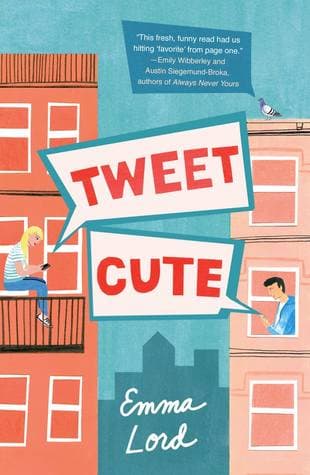
- Tweet Cute
Emma Lord
4.0 (20k) average on GoodreadsYoung AdultA modern YA romance with a witty tone, relatable characters, and a focus on navigating new relationships.
- The Hate U Give
Angie Thomas
4.5 (504k) average on GoodreadsYoung Adult'Fancy White Trash' explores class and family drama, but 'The Hate U Give' by Angie Thomas offers a more robust and critically acclaimed examination of systemic issues, particularly race and social justice, while still grounding its narrative in a compelling YA voice. Thomas's novel is praised for its intricate character development and its ability to spark important conversations, often exceeding the depth of social commentary found in Geerling's work.
- To All the Boys I've Loved Before
Jenny Han
4.2 (490k) average on GoodreadsYoung AdultWhile both 'Fancy White Trash' and 'To All the Boys I've Loved Before' are YA romances, Han's novel is often celebrated for its lighter, more charming tone and its focus on an endearing protagonist navigating family and first love with less intense drama. Geerling's book, with its 'Baby Daddy Drama' and 'DNA Test,' delves into more serious, potentially grittier themes, offering a different kind of emotional landscape compared to Han's more whimsical approach to romance.
- Harry Potter and the Sorcerer's Stone
J.K. Rowling
4.5 (7M) average on GoodreadsFantasyRescued from a miserable life under the stairs, an orphaned boy discovers he's a wizard destined for a magical school, where he uncovers a dangerous secret tied to the dark wizard who murdered his parents.





Enjoyed the summary?
A summary gives you the shape of the book. The book itself has the detail, the examples and the voice.
Find Fancy White Trash on AmazonAs an Amazon Associate, BookBrief earns from qualifying purchases. How we're funded