

Synopsis
Covers the whole plot, including the ending.
- Difficulty
- Easy
- Pacing
- Moderate
- Mood
- Melancholy, Hopeful, Introspective, Emotional
- Read it if
- You enjoy emotional young adult mysteries with a focus on family drama, grief, and unexpected connections.
- Skip it if
- You prefer fast-paced thrillers with high stakes and minimal emotional introspection.
Far from You Plot Summary
Covers the whole plot, including the ending.
The Weight of Loss and New Beginnings
Years after her mother's death from cancer, sixteen-year-old Alice still struggles with grief. She copes by writing music, spending time with her boyfriend, Ben, and avoiding her father, David, and his new wife, Elaine. Alice resents Elaine, seeing her as a replacement for her mother, and struggles to connect with her infant half-sister, Lily. Her father's attempts to connect are often met with Alice's coldness, as she feels he moved on too quickly. This emotional distance defines her daily life, making her feel isolated even at home.
A Looming Storm and Trapped Circumstances
As winter deepens, a snowstorm is predicted. Alice's plans to spend the weekend with Ben are ruined when the storm worsens, making travel impossible. Her father, David, is called away for an urgent work commitment just before the worst of the weather hits, leaving Alice trapped at home with Elaine and baby Lily. The forced time with her stepmother, whom she dislikes, creates immediate tension. Alice retreats to her room, trying to ignore the situation, but the storm's force outside makes her aware of their isolation and vulnerability.
The Power Outage and Growing Unease
The snowstorm rages, bringing down power lines and plunging their house into darkness. The loss of electricity cuts them off from the outside world, intensifying the feeling of being stranded. With no internet or television, Alice is forced out of her room and into the common areas, where she can no longer avoid Elaine and Lily. The first interactions are strained and awkward, marked by Alice's resentment. However, their shared situation begins to slowly break down Alice's defenses as the power outage demands some cooperation.
A Cry in the Night and Shared Responsibility
During the night, baby Lily's cries become more insistent. Elaine struggles to comfort her, and the lack of electricity means no warm bottles or easy distractions. Alice, at first reluctant, finds herself drawn into the situation, offering a suggestion or a small helping hand. This shared concern for Lily acts as a temporary truce between Alice and Elaine. For the first time, Alice sees Elaine not just as her father's new wife, but as a mother struggling in difficult circumstances, which sparks a flicker of empathy.
Unearthing Old Memories
While looking through old boxes in the attic for candles or blankets, Alice finds a small, dusty box she has never seen. Inside, she finds her mother's old journals, letters, and mementos. This discovery is a significant moment for Alice, offering a direct link to her mother she thought was lost. As she reads, she uncovers intimate thoughts and feelings, gaining new insights into her mother's life, struggles, and dreams. The box's contents begin to change Alice's understanding of her past and her mother's legacy.
The Journal's Revelation
Alice reads deeper into her mother's journals and is surprised to find entries detailing her mother's interest in astronomy and her belief in a spiritual connection to the cosmos. Her mother wrote about finding comfort and guidance by looking at the stars, feeling a sense of peace and connection to something larger. This discovery is unexpected for Alice, who had always seen her mother as practical. The journals describe her mother's quiet spiritual journey, a side of her Alice never knew, offering a new view of her mother's inner world.
Elaine's Confession and Shared Grief
As the storm continues to isolate them, the forced closeness leads to a breakthrough. Elaine, seeing Alice's deep connection to her mother's journals, finally opens up. She reveals that she and Alice's mother were not just acquaintances but had formed a bond through a support group during their battles with illness. Elaine confesses her admiration for Alice's mother and explains how she hesitated to pursue a relationship with David out of respect for her memory. This confession shatters Alice's ideas, showing Elaine as a woman who understood her mother's struggle, not simply a replacement.
Looking Up to the Heavens
Inspired by her mother's journals and new understanding, Alice goes outside during a break in the storm. Despite the cold, she looks up at the vast, star-filled sky. She remembers her mother's words about finding guidance and peace among the constellations. In that moment, Alice feels a deep connection to her mother, a sense of her presence that goes beyond physical absence. This act becomes a personal ritual, a way for Alice to process her grief and feel closer to her mother, embracing the spiritual legacy her mother left behind.
Mending Fences and New Bonds
The shared experience during the storm, Elaine's revelations, and Alice's personal breakthrough lead to a significant change in her attitude. Alice starts to see Elaine in a new light, recognizing her kindness and desire to be a good stepmother. She also feels drawn to baby Lily, experiencing moments of warmth and affection she hadn't expected. The resentment that once defined her relationship with her father's new family begins to disappear, replaced by a new sense of connection and acceptance. A new, fragile family unit starts to form as the snow melts.
The Storm's Aftermath and Renewed Hope
Finally, the snowstorm breaks, and the world outside the house is revealed, transformed by pristine white snow. David returns home, relieved to find his family safe and surprised by the noticeable shift in the atmosphere. Alice, no longer the withdrawn, angry teenager, greets him with new openness. The experience of being trapped has forced her to confront her grief, understand her family, and find a new way to connect with her mother's memory. The book ends with Alice looking towards the future with hope, ready to embrace the complexities of her family and her own path forward.
Far from You Characters
Alice
Protagonist
A grieving teenager struggling to accept her father's new family.
Alice is a sixteen-year-old girl profoundly affected by her mother's death. She uses music as a creative outlet and a shield, often retreating into herself. She harbors deep resentment towards her father, David, for remarrying Elaine and struggles to connect with her infant half-sister, Lily. Her grief manifests as anger and withdrawal, making her emotionally distant from her family. She is initially stubborn and resistant to change, clinging to the past and idealizing her deceased mother.
Relationships: David (Strained, distant, resentful); Elaine (Hostile, resentful, later understanding and accepting); Lily (Indifferent, later affectionate and protective); Ben (Supportive boyfriend, source of comfort)
Elaine
Supporting
Alice's stepmother, trying to navigate a new marriage and family while facing Alice's resentment.
Elaine is David's new wife and Lily's mother. She is depicted as patient, kind, and genuinely trying to connect with Alice, despite the teenager's coldness. She carries her own past struggles, including a battle with illness, which gives her a unique perspective on Alice's mother's life. Elaine is initially portrayed through Alice's biased lens as a 'replacement,' but her true character emerges during the storm, revealing her strength, vulnerability, and capacity for empathy.
Relationships: Alice (Strained, later understanding and accepting); David (Loving wife); Lily (Loving mother)
David
Supporting
Alice's father, attempting to balance his new family with his grieving daughter.
David is Alice's father, who, after grieving the loss of his first wife, found love again with Elaine. He genuinely loves Alice and tries to bridge the gap between her and his new family, but often struggles with Alice's resistance and anger. He is a caring father, albeit sometimes overwhelmed by the emotional complexities of his household. His work commitments sometimes take him away, leaving Alice to confront her issues more directly.
Relationships: Alice (Loving but strained); Elaine (Loving husband); Lily (Loving father)
Lily
Supporting
Alice's infant half-sister, an innocent catalyst for change.
Lily is Alice's newborn half-sister. As an infant, she is largely unaware of the family dynamics but serves as a crucial catalyst for Alice's emotional development. Her vulnerability and needs during the storm force Alice and Elaine to interact and cooperate, breaking down barriers. Lily represents the new life and future of the family, a symbol of hope and the possibility of a new beginning.
Relationships: Alice (Initially ignored, later a source of affection); Elaine (Daughter); David (Daughter)
Ben
Supporting
Alice's supportive and understanding boyfriend.
Ben is Alice's boyfriend and her primary source of emotional support outside of her immediate family. He is patient, understanding, and provides a safe space for Alice to express her feelings. While not directly involved in the main conflict during the storm, his presence in Alice's life highlights her ability to form healthy attachments and offers a glimpse into her life beyond her grief and resentment. He represents stability and unconditional care for Alice.
Relationships: Alice (Supportive boyfriend)
Alice's Mother
Mentioned
The deceased mother whose memory profoundly impacts Alice.
Alice's mother, though deceased, is a central figure in the story. Her memory, particularly through her journals, drives much of Alice's internal conflict and eventual healing. She is initially idealized by Alice, but her journals reveal a more complex woman with her own spiritual journey and struggles. Her love for astronomy and her search for meaning in the stars provide a legacy that ultimately helps Alice cope with her loss.
Relationships: Alice (Deceased mother, idealized, later understood); David (Deceased wife); Elaine (Acquaintance from a support group)
Far from You Themes
Grief and Healing
The main theme is Alice's long grief over her mother's death and her difficult journey toward healing. Her initial coping methods—withdrawal, resentment, and idealizing the past—are challenged by the forced closeness during the storm. The discovery of her mother's journals (Scene 5) and Elaine's confession (Scene 7) make Alice confront her grief in a new way, allowing her to move past anger and find a healthier connection to her mother's memory. The theme shows that healing is not about forgetting but about re-understanding loss and finding new ways to remember and connect.
“Maybe it wasn't about forgetting, but about finding a new way to remember.”
Family and Acceptance
This theme explores the complexities of blended families and accepting new family members. Alice's initial rejection of Elaine and Lily comes from her inability to accept that her father has moved on. The isolating snowstorm acts as a test, forcing Alice to interact with her stepmother and half-sister. Through shared vulnerability and Elaine's surprising revelations (Scene 7), Alice's view changes. She learns to see Elaine as a person with her own story, not just a 'replacement,' and begins to form a bond with Lily (Scene 9), showing her acceptance of her new family.
“Family wasn't always blood, but sometimes, it was about who you found yourself with when the world outside went dark.”
Connection and Spirituality
The theme of connection is explored through Alice's changing relationship with her mother's memory and her discovery of a spiritual side. Her mother's journals reveal a deep connection to the stars and a belief in finding guidance in the cosmos (Scene 6). Alice initially feels lost and alone, but by embracing her mother's practice of looking to the heavens (Scene 8), she finds a deep sense of connection to her mother that goes beyond physical presence. This offers Alice a new way to cope with her loss, suggesting that connection can be found in unexpected places, both earthly and celestial.
“And there, in the vast, silent expanse of the night sky, she felt her mother, not gone, but everywhere.”
The Power of Perspective
This theme shows how changing one's perspective can greatly alter understanding and relationships. Alice's initial, rigid view of Elaine as an unwelcome intruder fuels her resentment. However, the crisis of the snowstorm and the revelations in her mother's journals (Scene 6) and from Elaine herself (Scene 7) force Alice to reconsider. She learns that her mother and Elaine shared a past, and that her father's remarriage was not a betrayal but a continuation of life. This shift in perspective allows Alice to let go of her anger and embrace a more empathetic view of her family and her own situation.
“Sometimes, all it took was a shift in the light to see things for what they truly were, not just what you wanted them to be.”
Plot Devices & Literary Techniques
The Snowstorm
An external force that isolates and creates internal conflict.
The severe snowstorm serves as a classic 'bottle' plot device, trapping Alice, Elaine, and Lily together in the house. This forced isolation eliminates external distractions (like Ben) and prevents Alice from escaping her uncomfortable reality. The power outage further intensifies their predicament, pushing characters to interact and cooperate out of necessity. It symbolizes the emotional 'storm' within Alice and acts as a catalyst for her internal and external conflicts to come to a head, ultimately fostering an environment for healing and reconciliation.
The Mother's Journals
A posthumous voice and source of revelation.
The discovery of Alice's mother's journals is a crucial plot device. They serve as a direct, intimate link to the deceased character, allowing her voice and perspective to continue influencing the narrative long after her death. The journals provide Alice with new, unexpected insights into her mother's life, her spiritual beliefs, and her struggles, challenging Alice's idealized memory. This device directly drives Alice's personal growth, offering her guidance and a sense of connection she desperately needs, and ultimately helps to bridge the emotional gap between Alice and Elaine by revealing a shared history.
Symbolism of Stars/Heavens
A recurring motif representing connection, guidance, and peace.
The stars and heavens function as a powerful symbolic plot device throughout the story. Initially, they are simply part of the night sky, but through her mother's journals, Alice learns that her mother found profound spiritual comfort and a sense of connection by looking at the stars. This transforms the celestial bodies into a symbol of her mother's enduring presence and a source of guidance. When Alice finally looks to the stars (Scene 8), she is not just observing; she is engaging in a ritual that connects her to her mother, providing her with solace and a sense of belonging in the vastness of the universe.
Far from You Quotes
“I used to think that the worst thing in life was to end up all alone. It's not. The worst thing in life is to end up with people who make you feel all alone.”
“Sometimes the truth is messy, and it doesn't always make sense, and it's not always fair.”
“Trust is a funny thing. You give it away so freely, and then once it's broken, it's almost impossible to get back.”
“Fear can make you do things you never thought you were capable of, both good and bad.”
“It's amazing how much you can miss someone you thought you hated.”
“The past isn't always gone. Sometimes it just waits for you to catch up.”
“Every secret has a shelf life, even the ones you think you'll take to your grave.”
“Sometimes the people who are supposed to protect you are the ones you need to be protected from.”
“Hope is a dangerous thing. It can keep you alive, but it can also tear you apart.”
“We all have a story, and sometimes, the most important parts are the ones we're too afraid to tell.”
“Love isn't always easy. Sometimes it's the hardest thing you'll ever do.”
“It's hard to move forward when you're constantly looking over your shoulder.”
“Sometimes, the biggest monsters aren't under your bed, they're inside your head.”
Quiz
10 questions on the plot and the characters. Each answer comes with a short explanation.
Question 1
What significant event from Alice's past continues to deeply affect her at the beginning of the story?
- Her parents' divorce
- Her mother's death from cancer
- Moving to a new town
- A major accident she was involved in
Show answer
B. Her mother's death from cancer The synopsis explicitly states, 'Years have passed since Alice lost her mother to cancer, but time hasn't quite healed the wound.' This event is central to her initial emotional state.
Question 2
How does Alice primarily cope with her grief and emotional struggles before the snowstorm?
- By spending time with her father and stepmother
- By focusing on her schoolwork and friends
- By writing music and immersing herself in her relationship with her boyfriend
- By volunteering in her community
Show answer
C. By writing music and immersing herself in her relationship with her boyfriend The synopsis mentions, 'Alice copes the best she can by writing her music, losing herself in her love for her boyfriend, and distancing herself from her father and his new wife.'
Question 3
What specific natural event triggers the main conflict and forces Alice to confront her issues?
- A sudden earthquake
- A deadly snowstorm
- A massive flood
- A widespread power outage
Show answer
B. A deadly snowstorm The synopsis clearly states, 'But when a deadly snowstorm traps Alice with her stepmother and newborn half sister, she'll face issues she's been avoiding for too long.'
Question 4
Who are the other two individuals trapped with Alice during the snowstorm?
- Her father and boyfriend
- Her stepmother and newborn half sister
- Her best friend and a neighbor
- Her boyfriend and a local doctor
Show answer
B. Her stepmother and newborn half sister The synopsis states Alice is trapped 'with her stepmother and newborn half sister,' indicating these are the key characters she must interact with during the storm.
Question 5
What is Alice's initial attitude towards her father and his new wife?
- She embraces them as a new family.
- She is indifferent and rarely thinks of them.
- She actively distances herself from them.
- She is openly hostile and confrontational.
Show answer
C. She actively distances herself from them. The synopsis states she copes by 'distancing herself from her father and his new wife,' suggesting an active avoidance rather than mere indifference or open hostility.
Question 6
What does Alice discover 'looking to the heavens for guidance' during her ordeal?
- A new career path
- Something wonderful, suggesting she is not alone
- The true identity of her mother's killer
- A way to escape the snowstorm immediately
Show answer
B. Something wonderful, suggesting she is not alone The synopsis concludes with, 'As Alice looks to the heavens for guidance, she discovers something wonderful. Perhaps she's not so alone after all....' This points to an internal or spiritual discovery.
Question 7
The phrase 'down the rabbit hole' in the book's description typically implies what kind of journey or experience?
- A simple, straightforward path to resolution
- A descent into a bizarre, confusing, or complex situation
- A journey to a peaceful, idyllic setting
- A physical exploration of an underground cave system
Show answer
B. A descent into a bizarre, confusing, or complex situation The idiom 'down the rabbit hole,' popularized by 'Alice in Wonderland,' signifies entering a perplexing, difficult, or surreal situation, which aligns with the thriller/mystery genre.
Question 8
Given the genres (Thriller, Mystery, Young Adult, Romance), which element is *least likely* to be a primary focus of the 'something wonderful' Alice discovers?
- A newfound connection with her stepfamily
- A deeper understanding of her own emotions
- A direct, supernatural message from her deceased mother
- A realization about the nature of love and family
Show answer
C. A direct, supernatural message from her deceased mother While 'looking to the heavens' suggests a spiritual element, the genres (especially Young Adult and Romance) typically ground such discoveries in emotional growth, relationships, and self-realization rather than overt supernatural communication, which would lean more into fantasy.
Question 9
The synopsis mentions Alice 'distancing herself from her father and his new wife.' What does this imply about her relationship with her father, specifically?
- She has cut off all communication with him.
- She is actively avoiding emotional intimacy and connection with him.
- She is physically living far away from him.
- She blames him directly for her mother's death.
Show answer
B. She is actively avoiding emotional intimacy and connection with him. Distancing herself 'from her father and his new wife' in the context of coping with grief suggests an emotional withdrawal and avoidance of the new family unit, rather than a literal physical separation or direct blame.
Question 10
Considering the 'Thriller' and 'Mystery' genres, what kind of 'issues' is Alice most likely forced to confront during the snowstorm, beyond her personal grief?
- Solving a complex mathematical problem to escape the house.
- Uncovering a secret or danger related to her family or the situation.
- Debating philosophical questions with her stepmother.
- Learning a new practical skill like carpentry.
Show answer
B. Uncovering a secret or danger related to her family or the situation. The genres 'Thriller' and 'Mystery' strongly suggest that the 'issues she's been avoiding' will likely involve uncovering hidden truths, secrets, or facing a dangerous situation, rather than purely emotional or mundane problems, especially given the 'deadly snowstorm' context.
Far from You FAQ
What is the central conflict Alice faces at the beginning of 'Far from You'?
Alice is deeply grieving the loss of her mother to cancer years prior. This unresolved grief manifests as emotional distance from her father and his new wife, and she struggles to accept her new stepmother and infant half-sister, creating significant family tension.
How does Alice typically cope with her grief before the snowstorm?
Alice primarily copes by immersing herself in her music, using songwriting as a creative outlet for her emotions. She also finds solace and distraction in her relationship with her boyfriend, which helps her avoid confronting her difficult home life.
What event forces Alice to confront her family issues directly?
A severe snowstorm traps Alice, her stepmother, and her newborn half-sister together in their isolated home. This forced proximity eliminates Alice's usual escape routes and compels her to interact with the family members she's been avoiding.
Who are the key family members Alice is trapped with during the storm?
Alice is trapped with her stepmother, Sarah, and her newborn half-sister, Lily. This confinement with them is particularly challenging for Alice, as she resents Sarah for 'replacing' her mother and struggles to connect with the new baby.
What 'wonderful' discovery does Alice make during her time trapped, as hinted in the synopsis?
During her isolation, Alice looks to the heavens for guidance and discovers a profound connection or realization that suggests she is 'not so alone after all.' This likely refers to a spiritual connection, a newfound understanding of her mother's enduring presence, or a realization of the love around her.
Does Alice's music play a significant role beyond just coping?
Yes, Alice's music is not just a coping mechanism; it often becomes a way for her to process and express her deepest feelings, and potentially a conduit for the 'wonderful discovery' mentioned. Her songs might contain hidden messages or serve as a narrative device for her emotional journey.
Are there any symbolic elements related to the 'rabbit hole' phrase in the description?
The phrase 'down the rabbit hole' suggests Alice's journey might involve an unexpected, disorienting, and perhaps surreal exploration of her own mind or a mystery. It could symbolize her descent into grief, memory, or an unraveling of family secrets.
Is there a specific 'thriller' element or mystery beyond Alice's internal struggles?
While the core is Alice's internal struggle, the 'thriller' and 'mystery' tags imply external events or secrets might emerge during the snowstorm. This could involve an unexpected threat, a hidden truth about her mother, or a revelation about her stepmother's past that adds tension.
How does Alice's grief for her mother manifest psychologically beyond sadness?
Alice's grief manifests as a deep-seated resentment and rejection of her father's new family, an inability to move forward, and possibly survivor's guilt. She might idealize her mother to an unhealthy degree, making it impossible for anyone else to measure up.
What psychological barrier does Alice need to overcome regarding her stepmother, Sarah?
Alice needs to overcome her perception of Sarah as a 'replacement' or competitor for her father's affection and her mother's memory. She likely harbors anger and jealousy, preventing her from seeing Sarah as an individual with her own struggles or potential for connection.
How does the isolation of the snowstorm psychologically impact Alice?
The isolation, while initially frustrating, forces Alice to confront her avoidance behaviors. Without external distractions, she's compelled to sit with her emotions, process her grief, and engage with her stepfamily, which can be both terrifying and ultimately cathartic.
What is the psychological significance of Alice looking to the 'heavens for guidance'?
This act signifies a moment of desperation, vulnerability, and a search for transcendent meaning or connection. Psychologically, it represents Alice's readiness to open herself to spiritual comfort, a deeper understanding of life and death, or a connection to her mother's memory beyond the physical realm.
Is the 'romance' aspect central to Alice's journey or a secondary plot point?
While Alice has a boyfriend, the synopsis suggests the primary focus is her internal struggle and family dynamics. The romance likely serves as a support system or a point of contrast, but the core 'love story' seems to be Alice learning to love and accept her new family and herself.
How might the 'wonderful discovery' impact Alice's relationship with her half-sister, Lily?
The discovery will likely soften Alice's heart towards Lily, helping her see the baby not as a symbol of her mother's replacement, but as an innocent new life. This could lead to Alice developing a protective or loving bond with her sister, a significant step in her healing.
What kind of 'guidance' might Alice receive from the heavens, literally or figuratively?
Figuratively, this guidance could be an epiphany, a memory of her mother, or an internal voice of wisdom. Literally, it might involve a symbolic natural phenomenon during the storm, or even a message that feels divinely inspired, helping her reframe her understanding of loss and love.
Does the book suggest a definitive closure for Alice's grief, or a path towards healing?
Given the 'Young Adult' categorization, it's more likely the book offers a path towards healing and acceptance rather than a complete, definitive closure. Alice will learn to live with her grief, integrate her past, and embrace her present and future family.
How might the title 'Far from You' relate to multiple characters or themes?
The title could refer to Alice feeling far from her deceased mother, far from her true self, or far from her father and his new family emotionally. It might also imply that someone else is 'far from' understanding Alice's pain, creating a sense of isolation that needs to be bridged.
Similar books
- If I Stay
Gayle Forman
3.9 (712k) average on GoodreadsYoung AdultExplores grief and family bonds in a young adult context with emotional depth.
- Wintergirls
Laurie Halse Anderson
4.0 (108k) average on GoodreadsPsychologyDeals with heavy themes of loss and self-discovery in a young adult setting.
- One of Us Is Lying
Karen M. McManus
4.0 (216k) average on GoodreadsThriller"Far from You" shares the YA mystery and thriller elements with McManus's "One of Us Is Lying," particularly the focus on uncovering secrets after a tragic event. However, Schroeder's novel places a heavier emphasis on the emotional weight of grief and the internal journey of healing, whereas McManus's work leans more heavily into a 'whodunit' structure with multiple perspectives and social commentary on high school cliques. "Far from You" is more introspective, with the external mystery serving primarily to facilitate the protagonist's emotional growth, while "One of Us Is Lying" prioritizes the unraveling of a complex criminal plot.
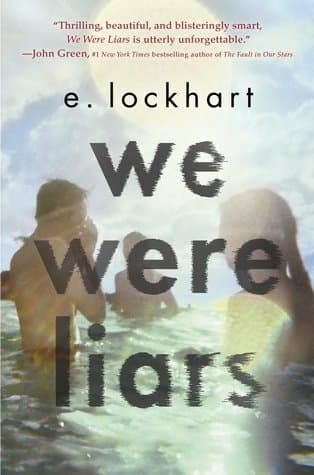
- We Were Liars
E. Lockhart
3.8 (465k) average on GoodreadsThrillerBoth "Far from You" and Lockhart's "We Were Liars" explore the unearthing of old, painful memories and the impact of past trauma on present relationships. However, "We Were Liars" delves into psychological suspense with an unreliable narrator and a shocking twist that recontextualizes the entire narrative, focusing on themes of privilege, denial, and familial dysfunction. Schroeder's book, while mysterious, maintains a more straightforward narrative perspective and a gentler approach to its revelations, with a clearer path toward emotional resolution and hope, making it less unsettling and more emotionally direct than Lockhart's intricate and often disturbing plot.
- Angels & Demons
Dan Brown
3.9 (2.7M) average on GoodreadsThrillerA Harvard symbologist races through Rome's ancient sites, deciphering cryptic clues to unmask the Illuminati and stop a vengeful plot to destroy the Vatican with a stolen antimatter weapon.
- Gone Girl
Gillian Flynn
4.1 (2.3M) average on GoodreadsThrillerA wife's sudden disappearance on her fifth anniversary reveals a web of lies and psychological warfare, exposing the secrets within a seemingly perfect marriage.





Enjoyed the summary?
A summary gives you the shape of the book. The book itself has the detail, the examples and the voice.
Find Far from You on AmazonAs an Amazon Associate, BookBrief earns from qualifying purchases. How we're funded