

Synopsis
Covers the whole plot, including the ending.
- Difficulty
- Medium
- Pacing
- Moderate
- Mood
- Dark, Haunting, Intense, Somber
- Read it if
- You are interested in a raw, unflinching look at the psychological and physical tolls of anorexia, told with poetic prose and a touch of the supernatural.
- Skip it if
- You are sensitive to graphic descriptions of eating disorders, self-harm, or find supernatural elements in a contemporary setting jarring.
Wintergirls Plot Summary
Covers the whole plot, including the ending.
Cassie's Death and Lia's Guilt
The novel opens with Lia Overbrook getting a phone call late at night. She learns her former best friend, Cassie, has died. Lia immediately feels guilty because Cassie had called her 33 times that night, and Lia ignored all the calls. Lia and Cassie had a pact, a competition to be the thinnest. Lia thinks Cassie died alone, possibly from bulimia or anorexia. Lia's parents, divorced and often distant, react with worry and helplessness. Lia, who already has severe anorexia and self-harms, feels her need to starve herself grow stronger as Cassie's death becomes a constant, haunting presence in her mind, feeding her existing problems.
The Haunted Motel and Cassie's Ghost
Lia becomes focused on how Cassie died, learning she was alone in a motel room. Lia visits the motel, finds a key, and enters the room. She feels Cassie's presence strongly there. This starts Lia being actively haunted by Cassie's ghost, who appears to her, taunting her and telling her to keep starving herself. Cassie's ghost shows Lia's huge guilt and her own self-destructive urges. Lia's self-harm also gets worse, as she carves words into her skin, showing her internal pain and the control she feels she lacks in other parts of her life.
Family Struggles and Stepmother's Efforts
Lia's family life is broken. Her mother, a successful professor, is often emotionally distant and focused on her career, though she tries to help. Her father, a doctor, is also overwhelmed and struggles to connect with Lia. Lia's stepmother, Jennifer, makes the most consistent and often desperate tries to reach Lia, preparing meals and trying to talk to her. Lia, however, resents Jennifer's efforts and often pushes her away, seeing her attempts as threats to her control. The family's inability to talk effectively and help shows how isolating Lia's illness is.
Meeting Elijah and the Pressure to Conform
During her struggles, Lia meets Elijah, a new student who genuinely likes her. Their new connection offers a small hope, but Lia's anorexia and self-harm make it hard for her to form healthy relationships. She constantly worries about her looks and calorie intake, often making excuses to avoid social situations with food. High school social dynamics, especially cruel comments from other girls and the pressure to be thin, worsen Lia's body image issues and strengthen her belief that her worth depends on her weight. She often stays alone, preferring Cassie's ghost to real human connection.
The 'Skinny Jeans' Incident and Hospitalization
Lia goes to a party where she tries on 'skinny jeans' that are too big for her. This causes a severe panic attack and a new resolve to starve herself. Her physical condition quickly gets worse, and she eventually collapses. This incident forces her parents to act more seriously, and Lia is admitted to a residential treatment facility for severe anorexia. The hospitalization is a harsh reality check for Lia. She sees other girls with similar illnesses, but she still resists treatment, holding on to her control over food and her body.
Flashes of the Past and the Pact
Throughout the story, Lia has fragmented memories that show the toxic history of her friendship with Cassie. These memories reveal how their shared body image struggles became a dangerous competition, a 'pact' to become 'wintergirls' — thin, cold, and in control. They would weigh themselves often, compare calorie counts, and encourage each other's self-destructive behaviors, believing that thinness would solve all their problems. These memories show how deep their codependency was and how their illness became part of who they were, making it very hard for Lia to separate herself from Cassie's influence even after her death.
Escaping Treatment and Escalating Self-Harm
Unable to handle the structured environment and the loss of control at the treatment center, Lia escapes and returns to her father's house. Her short time in treatment does little to change her mind; instead, her resolve to starve herself grows stronger. She continues to see Cassie's ghost, who becomes more insistent, urging Lia to join her in death. Lia's self-harm also gets worse, becoming more frequent and severe, as she continues to carve words and images into her skin to express her pain and control her body, further isolating herself from her worried family.
The Truth About Cassie's Death
Through her continued obsession and Cassie's haunting presence, Lia eventually understands the truth about Cassie's last moments. She learns that Cassie died not from starvation, but from internal bleeding caused by a ruptured esophagus, likely from severe bulimia. This discovery shatters Lia's previous ideas and adds another layer to her guilt and sadness. The truth is a brutal reminder of the physical dangers of their shared illness and the tragic, lonely end Cassie met, which Lia feels she could have prevented if she had answered the phone.
A Final Confrontation and the Scarring
Driven by guilt and Cassie's constant presence, Lia returns to the motel room where Cassie died. In a dramatic and difficult scene, Lia confronts Cassie's ghost, who keeps tempting her towards death. Lia, at her most vulnerable and malnourished, gives in to a powerful urge to self-harm. She uses a piece of glass to carve the word 'FAT' into her stomach, a desperate act of self-punishment and an attempt to fully control her perceived flaws. This act is a turning point, pushing her to the edge of physical and psychological collapse.
The Awakening and Hope for Recovery
After the extreme self-harm at the motel, Lia is found by her stepmother, Jennifer, who has been searching for her. Lia is rushed to the hospital, where her physical condition is critical. During her recovery, something inside her begins to change. Cassie's vivid, chilling ghost starts to fade as Lia slowly begins to accept her own desire to live. She starts to accept the help from her family and medical staff. The novel ends with Lia still on a difficult path to recovery, but with a new, fragile hope and a promise to choose life over the destructive pull of her eating disorder, showing a tentative embrace of her own future.
Wintergirls Characters
Lia Overbrook
Protagonist
A teenage girl battling severe anorexia and self-harm, haunted by the death of her best friend.
Lia is a seventeen-year-old girl consumed by anorexia nervosa, who meticulously counts calories, avoids food, and engages in self-harm. She is intelligent and perceptive, but her illness distorts her perception of herself and the world. Lia is deeply introverted and isolated, struggling to connect with her divorced parents and new stepmother. Her guilt over Cassie's death fuels her self-destructive behaviors, as she feels responsible for her friend's demise. Lia's internal monologue is filled with calorie counts, body checks, and the constant, taunting voice of Cassie's ghost, representing her own destructive thoughts. She craves control and sees her starvation as the only way to achieve it.
Relationships: Cassie (Best friend and competitor in an eating disorder pact, now a haunting presence); Dr. Overbrook (Father) (Distant but worried parent); Mother (Emotionally distant but concerned parent); Jennifer (Stepmother) (Caring but often rebuffed parent figure); Elijah (New acquaintance and potential romantic interest)
Cassie
Supporting/Antagonist (as a ghost)
Lia's deceased best friend, who haunts Lia and embodies her self-destructive urges.
Cassie is Lia's former best friend and fellow 'wintergirl' who died from complications related to an eating disorder (ruptured esophagus due to bulimia). Although deceased at the story's start, Cassie's presence is central to the narrative as a ghost who constantly appears to Lia, taunting her, reminding her of their 'pact,' and encouraging her to continue starving herself. Cassie represents Lia's internalized self-hatred, guilt, and the seductive, destructive allure of their shared illness. Through flashbacks, Cassie is shown as equally competitive and driven by the desire to be thin, making their friendship a toxic dynamic that ultimately led to both their near-deaths.
Relationships: Lia Overbrook (Best friend and rival in a deadly eating disorder pact)
Dr. Overbrook (Lia's Father)
Supporting
Lia's busy, often overwhelmed father, who struggles to connect with his daughter.
Lia's father is a doctor, intelligent but often emotionally distant and preoccupied with his work. He is divorced from Lia's mother and has remarried Jennifer. He cares for Lia but often struggles to understand the depth of her illness, oscillating between concern, frustration, and a desire to fix things medically. He relies heavily on Jennifer to manage Lia's daily care and often defers to her judgment. His inability to effectively communicate with Lia or enforce boundaries contributes to her isolation and the progression of her anorexia. He represents the well-meaning but often ineffective parent in the face of a severe mental illness.
Relationships: Lia Overbrook (Father-daughter); Jennifer (Wife/Stepmother to Lia); Lia's Mother (Ex-wife)
Jennifer
Supporting
Lia's compassionate and persistent stepmother, who tries to nurture Lia.
Jennifer is Lia's stepmother, a kind and dedicated woman who genuinely cares for Lia despite Lia's often hostile rejection of her efforts. She is the most hands-on parent figure, attempting to prepare meals, engage Lia in conversation, and provide emotional support. Jennifer often feels caught between Lia's resistance and her husband's occasional helplessness. Her persistence and unwavering concern, even when met with resentment, highlight her crucial role in Lia's eventual path towards recovery. She represents unconditional love and the struggle of a step-parent to gain acceptance and provide care.
Relationships: Lia Overbrook (Stepmother-stepdaughter); Dr. Overbrook (Father) (Husband)
Lia's Mother
Supporting
Lia's intelligent but emotionally reserved mother, a university professor.
Lia's mother is a university professor, described as intelligent and successful, but often emotionally distant and absorbed in her own academic pursuits. She is divorced from Lia's father. While she expresses concern for Lia and participates in her treatment decisions, her approach is often more intellectual than emotional, and she struggles to provide the direct, nurturing support Lia desperately needs. Her past, particularly her own struggles with body image, is hinted at, suggesting a generational pattern. She represents the challenges of a busy professional parent trying to navigate a child's severe illness.
Relationships: Lia Overbrook (Mother-daughter); Dr. Overbrook (Father) (Ex-husband)
Elijah
Supporting
A new student who shows genuine interest in Lia, offering a glimpse of external connection.
Elijah is a new boy at Lia's school who shows genuine interest in her, despite her withdrawn and often erratic behavior. He is kind, patient, and observant, seeing beyond Lia's illness to the person underneath. His presence offers Lia a potential connection to the outside world and a reason to consider recovery, though her illness often prevents her from fully engaging with him. He represents a glimmer of hope and the possibility of a healthy relationship, contrasting sharply with the toxic dynamic she shared with Cassie. Elijah's interest is a catalyst for Lia to question her isolation.
Relationships: Lia Overbrook (Acquaintance/potential romantic interest)
Emma
Mentioned
Lia's younger half-sister, living with her mother and stepfather.
Emma is Lia's younger half-sister from her mother's second marriage. She is only mentioned briefly and doesn't play a direct role in the plot, serving primarily to highlight the fractured nature of Lia's family and her sense of isolation from a 'normal' family life. Lia sometimes reflects on Emma, seeing her as innocent and untouched by the darkness that consumes her own life.
Relationships: Lia Overbrook (Half-sister); Lia's Mother (Mother)
Shelley
Supporting
A girl at the treatment center who struggles with her own eating disorder.
Shelley is one of the girls Lia encounters at the residential treatment facility. She is also battling an eating disorder, and her presence shows Lia that she is not alone in her struggles, but also highlights the pervasive nature of these illnesses. Shelley's character provides a glimpse into the broader community of individuals fighting similar battles, and her interactions with Lia, though brief, are meant to challenge Lia's isolation and self-absorption.
Relationships: Lia Overbrook (Fellow patient at treatment center)
Wintergirls Themes
Identity and Self-Destruction
The novel deeply explores how Lia's identity becomes tied to her eating disorder. She defines herself by her weight, calorie count, and control over her body, seeing thinness as a way to power and acceptance. Cassie's ghost constantly strengthens this distorted identity, pushing Lia further into self-destruction. Lia's self-harm, carving words into her skin, also shows this theme. She literally writes her pain and self-hatred onto her body, trying to control her physical form as part of her psychological distress. Getting better means Lia must break down this harmful self-image and build a new, healthier identity.
“I am that girl. I am the space between my thighs, daylight shining through. I am the bones they want, wired on a porcelain frame.”
Guilt and Grief
Lia's story is deeply shaped by her huge guilt and unresolved sadness over Cassie's death. She thinks she could have saved Cassie if she had answered the phone, leading to a strong feeling of responsibility. Cassie's ghost constantly reminds Lia of this guilt, tormenting her and stopping her from moving on. This sadness is made more complex by the toxic nature of their friendship, where their shared illness created a destructive bond. Lia's self-destructive behaviors can be seen as self-punishment for her perceived failure to save Cassie. Her journey involves learning to process this complex grief without letting it destroy her.
“Thirty-three calls. I didn't answer one. What could I have done? What should I have done?”
The Illusion of Control
For Lia, her eating disorder is mainly about control. In a life where she feels her parents are distant and her emotions are overwhelming, controlling her food intake and weight becomes her only source of perceived power. This theme is clear in her careful calorie counting, her strict eating rules, and her resistance to any family attempts to help. However, the novel shows that this 'control' is an illusion; Lia is actually controlled by her illness, which dictates her every thought and action, leading her deeper into a dangerous and isolating spiral. Her path to healing involves giving up this false sense of control.
“I am stronger than my body. I am stronger than hunger. I am stronger than the fear of being fat.”
Family Dysfunction and Communication
The novel shows how family problems and poor communication affect Lia's mental health. Her parents' divorce, their emotional distance, and their inability to effectively deal with Lia's illness all add to her isolation and the worsening of her anorexia. While they care for her, their individual struggles and lack of united action leave Lia feeling unheard and alone. Jennifer, Lia's stepmother, makes the most consistent efforts, but Lia's illness creates a barrier. The family's journey involves learning to talk more openly and to work together to support Lia, suggesting that healing requires a group effort.
“My father calls me 'skin and bones,' a medical term. My mother calls me 'fragile,' a porcelain doll. No one calls me Lia.”
The Physical and Psychological Toll of Eating Disorders
Wintergirls clearly shows the harsh physical and psychological realities of anorexia and bulimia. Lia's internal thoughts are a constant stream of calorie counts, body checks, and self-hatred, showing the psychological pain. Physically, the novel describes her very thin state, constant cold, hair loss, and the ever-present danger of organ failure. Cassie's death, from a ruptured esophagus, is a stark and tragic reminder of the ultimate physical results. The book does not make the illness seem romantic but exposes its devastating impact on the body and mind, emphasizing that it is a life-threatening disease, not a choice.
“My body is a map of scars, each one a story. A story I don't want to tell.”
Plot Devices & Literary Techniques
First-Person Narrative with Stream of Consciousness
Provides direct access to Lia's distorted thoughts, calorie counts, and internal struggles.
The story is told entirely from Lia's first-person perspective, often employing a stream-of-consciousness style. This allows the reader to directly experience Lia's obsessive thoughts about food, weight, and self-harm, as well as her internal dialogue with Cassie's ghost. The fragmented, repetitive, and often non-linear nature of her thoughts mirrors the disordered thinking patterns of someone with anorexia. This device immerses the reader in Lia's psychological state, making her struggles visceral and immediate, rather than simply observed from an external viewpoint.
Cassie's Ghost
A manifestation of Lia's guilt, self-destructive urges, and the internalized voice of her eating disorder.
Cassie's ghost is a central supernatural element that functions as a powerful psychological device. She is not a literal ghost but rather a projection of Lia's guilt, grief, and the insidious voice of her eating disorder. Cassie appears to Lia, taunts her, and encourages her to continue starving herself, representing the internalized pressure and destructive 'pact' they shared. As Lia begins to heal, Cassie's presence fades, symbolizing Lia's gradual release from the hold of her past and her illness. This device externalizes Lia's internal conflict, making her struggle more concrete and dramatic.
Flashbacks and Fragmented Memories
Reveals the toxic history of Lia and Cassie's friendship and their shared eating disorder pact.
The narrative uses non-chronological flashbacks and fragmented memories to slowly reveal the history of Lia and Cassie's friendship, their competitive 'pact' to be thin, and the events leading up to Cassie's death. These glimpses into the past are often triggered by current events or Lia's emotional state, mirroring how traumatic memories can intrude on the present. This device builds suspense and allows the reader to understand the roots of Lia's current struggles without disrupting the immediate narrative flow, gradually piecing together the full, tragic picture of their intertwined lives.
Metaphor of 'Wintergirls'
Symbolizes the cold, emaciated, and lifeless state Lia and Cassie aspire to achieve through starvation.
The term 'wintergirls' is a powerful metaphor used by Lia and Cassie to describe their desired state of being: thin, cold, untouchable, and ultimately lifeless, like figures sculpted from ice. It encapsulates their shared delusion that extreme thinness grants them control and a unique, almost ethereal beauty. The metaphor highlights the destructive nature of their goal, as 'winter' implies dormancy, death, and a lack of warmth and life. As Lia begins to recover, she slowly sheds the identity of a 'wintergirl,' moving towards warmth, life, and genuine connection, signifying her embrace of recovery and vitality.
Self-Harm (Carving)
A physical manifestation of Lia's internal pain, need for control, and self-punishment.
Lia's self-harm, specifically carving words and images into her skin, serves as a significant plot device. It is a coping mechanism she uses to externalize her emotional pain, exert control over her body when she feels she has none elsewhere, and punish herself for her perceived failures, particularly regarding Cassie's death. The scars become a physical record of her suffering and her battle. This device starkly illustrates the depth of her psychological distress and the destructive lengths she goes to manage her overwhelming emotions, making her internal world visible on her body.
Wintergirls Quotes
“I am a wintergirl, and wintergirls are always cold.”
“I am a ghost with a beating heart.”
“Tell me I'm a good person. I'm a good person, right?”
“I can feel the bones of my wings.”
“There is a beast in my gut, and it is hungry. It is always hungry.”
“I am a good liar. I am a great liar. I am a professional liar.”
“Grief is a house where the rooms are always changing.”
“The scale is a liar.”
“I don't have a soul. I'm just a collection of cells and chemical reactions.”
“I am not strong enough to be weak.”
“I want to be clean. I want to be healthy. I want to be alive.”
“The trick is to live your life so that you don't have to be afraid of death.”
“I don't want to die. I want to live.”
Quiz
10 questions on the plot and the characters. Each answer comes with a short explanation.
Question 1
What is the primary competition Lia and Cassie are engaged in?
- Who can get the best grades in school
- Who can be the skinniest
- Who can keep the most secrets from their parents
- Who can run the fastest mile
Show answer
B. Who can be the skinniest Lia and Cassie are 'wintergirls' who compete to be the skinniest, driving each other deeper into their eating disorders.
Question 2
What event triggers Lia's intense guilt and the feeling of being haunted?
- Lia's parents getting divorced
- Lia being hospitalized for her eating disorder
- Cassie's death
- Lia failing a major exam
Show answer
C. Cassie's death Cassie's death is the central event that plunges Lia into a deeper struggle with her anorexia and the feeling of being haunted by her friend's spirit.
Question 3
What is one of Lia's internal struggles, as described in the book's excerpt?
- Her desire to become a professional dancer
- Her obsession with her body's thinness, seeing 'daylight shining through' her thighs
- Her struggle to connect with her new stepsister
- Her academic pressure to get into an Ivy League school
Show answer
B. Her obsession with her body's thinness, seeing 'daylight shining through' her thighs The excerpt explicitly states Lia's self-perception: 'I am the space between my thighs, daylight shining through,' highlighting her severe body image distortion and obsession with thinness.
Question 4
What is the metaphorical significance of the term 'wintergirls'?
- It refers to girls who enjoy winter sports and activities.
- It symbolizes girls who are emotionally cold and distant.
- It represents girls 'frozen in matchstick bodies,' suggesting the coldness, fragility, and lifelessness associated with severe anorexia.
- It describes girls who were born in the winter months.
Show answer
C. It represents girls 'frozen in matchstick bodies,' suggesting the coldness, fragility, and lifelessness associated with severe anorexia. The term 'wintergirls frozen in matchstick bodies' metaphorically conveys the emaciated, fragile, and often emotionally numb state of those suffering from severe eating disorders, like a landscape frozen and barren in winter.
Question 5
How does the book describe the effect of the eating disorder on Lia's physical appearance?
- She appears muscular and athletic.
- She is described as 'wired on a porcelain frame' and having 'matchstick bodies.'
- She has a healthy glow and vibrant energy.
- She is depicted as plump and well-nourished.
Show answer
B. She is described as 'wired on a porcelain frame' and having 'matchstick bodies.' The description 'wired on a porcelain frame' and 'matchstick bodies' vividly portrays the extreme emaciation and fragility caused by the eating disorder, making her seem delicate and brittle.
Question 6
What is the significance of the boys calling Lia 'Dead girl walking'?
- It's a reference to a popular movie they all watched.
- It highlights Lia's withdrawn nature and lack of social interaction.
- It underscores the severe, life-threatening nature of her eating disorder, suggesting she is barely alive.
- It implies she is a ghost haunting the school halls.
Show answer
C. It underscores the severe, life-threatening nature of her eating disorder, suggesting she is barely alive. The phrase 'Dead girl walking' is a stark commentary on Lia's emaciated state, indicating that her eating disorder has brought her to the brink of death, making her appear lifeless despite still being alive.
Question 7
What does the phrase 'the bones they want' imply about Lia's self-perception and the external pressures she feels?
- It refers to her desire to become an archaeologist.
- It suggests an internal and external pressure to be skeletal, fulfilling an unhealthy ideal of extreme thinness.
- It alludes to her interest in anatomy and biology.
- It's a metaphor for her strong will and determination.
Show answer
B. It suggests an internal and external pressure to be skeletal, fulfilling an unhealthy ideal of extreme thinness. The line 'I am the bones they want' reveals Lia's internalized pressure and perception that extreme thinness (to the point of being skeletal) is desirable, both to herself and perhaps to others in her competitive world with Cassie.
Question 8
The book explores the destructive nature of competition between Lia and Cassie. What is a key psychological aspect of this dynamic?
- Their competition pushes them to achieve academic excellence.
- Their competition, rather than being healthy, fuels their shared eating disorder, driving them to increasingly dangerous extremes.
- Their competition is a healthy way for them to motivate each other in sports.
- Their competition helps them overcome their individual insecurities.
Show answer
B. Their competition, rather than being healthy, fuels their shared eating disorder, driving them to increasingly dangerous extremes. The excerpt states they are 'competitors in a deadly contest to see who can be the skinniest,' indicating that their friendship dynamic, rather than being supportive, exacerbates their eating disorders and pushes them towards fatal outcomes.
Question 9
What does the question 'But what comes after size zero and size double-zero?' imply about the nature of anorexia?
- It suggests that there are even smaller clothing sizes being introduced to the market.
- It highlights the insatiable and ultimately self-destructive nature of the pursuit of extreme thinness, where the goal post constantly shifts to an unreachable, fatal extreme.
- It questions the fashion industry's sizing standards.
- It implies a desire to move beyond physical appearance to focus on inner beauty.
Show answer
B. It highlights the insatiable and ultimately self-destructive nature of the pursuit of extreme thinness, where the goal post constantly shifts to an unreachable, fatal extreme. This rhetorical question underscores the relentless and ultimately unsustainable nature of anorexia. There is no 'enough' or 'end' to the pursuit of thinness, only further emaciation, implying death is the only 'after' these extreme sizes.
Question 10
How does Lia perceive Cassie's presence after her death?
- She feels a sense of relief and freedom.
- She views Cassie's death as a lesson to embrace health.
- She feels she is being 'haunted by her friend’s restless spirit,' intensifying her guilt and struggles.
- She completely forgets about Cassie and moves on.
Show answer
C. She feels she is being 'haunted by her friend’s restless spirit,' intensifying her guilt and struggles. The excerpt explicitly states that 'Lia feels she is being haunted by her friend’s restless spirit,' indicating that Cassie's death does not bring closure but rather deepens Lia's psychological torment and guilt.
Wintergirls FAQ
What is 'Wintergirls' about?
'Wintergirls' is about Lia, a high school girl battling severe anorexia and self-harm, who is haunted by the recent death of her former best friend, Cassie. Cassie also struggled with an eating disorder and died alone in a motel room, leaving Lia to grapple with guilt, grief, and the intensifying voices of her own illness.
Why should I read 'Wintergirls'?
You should read 'Wintergirls' for its raw, unflinching, and poetic portrayal of a young girl's descent into anorexia and self-harm. Laurie Halse Anderson uses a unique narrative style to vividly convey Lia's distorted thoughts and the psychological torment of the illness, offering a crucial, empathetic, and eye-opening perspective on eating disorders.
What is the background/setting of 'Wintergirls'?
The story is set in a contemporary suburban American town, primarily focusing on Lia's home life, school, and her internal world. The narrative frequently shifts between Lia's present struggles, fragmented memories of her past with Cassie, and vivid hallucinations of Cassie's ghost, creating a disorienting and intimate setting.
What are the most memorable quotes?
Memorable quotes include 'I am the space between my thighs, daylight shining through,' which encapsulates Lia's body dysmorphia, and 'I am a wintergirl, and wintergirls are always cold,' reflecting the isolation and physical toll of her illness. These lines powerfully convey the internal struggles of the protagonist.
What writing style does the author use?
Laurie Halse Anderson employs a distinctive, fragmented, and poetic writing style, often using striking metaphors, lists, and visual typography (like strikethroughs) to represent Lia's disordered thoughts and hallucinations. The narrative is immersive, written in the first person, and deeply psychological, mirroring Lia's internal chaos.
What minor details add significant meaning?
Minor details like Lia's constant counting of calories and 'tallies' of her self-harm scars, or the specific foods she obsessively avoids (like butter or chocolate), deeply illustrate the pervasive, ritualistic nature of her eating disorder. The recurring image of Lia's 'ghost house' also symbolizes her internal emptiness and isolation.
What are some subtle foreshadowing moments?
Subtle foreshadowing includes Lia's repeated mentions of Cassie's 'secret' and the ominous feeling surrounding Cassie's death, hinting at the tragic circumstances and Lia's hidden knowledge. Lia's increasing isolation and refusal to eat, even before Cassie's death, also foreshadow her own near-fatal decline.
What unexpected character connections exist?
An unexpected connection is between Lia and Elijah, a kind-hearted motel employee who found Cassie's body. Their shared connection to Cassie's death creates a unique, fragile bond, allowing Lia a rare moment of genuine, albeit painful, human interaction outside her family and illness.
What are unspoken character motivations?
Lia's unspoken motivation for continuing her 'contest' with Cassie, even after Cassie's death, is a desperate attempt to maintain control and a twisted form of loyalty. Her mother's unspoken motivation for focusing on her new family seems to be a coping mechanism for her inability to help Lia, rooted in fear and helplessness.
What psychological complexities do characters exhibit?
Lia exhibits severe psychological complexities, including body dysmorphia, obsessive-compulsive tendencies related to food and exercise, self-harm, and vivid hallucinations of Cassie, representing her guilt and the 'eating disorder voice.' Her stepmother, Jennifer, struggles with her own anxieties and feelings of inadequacy in caring for Lia.
What are the major emotional turning points?
A major emotional turning point is when Lia finally admits to herself and to others that she found Cassie dead and lied about it, releasing a torrent of guilt. Another is when she experiences a near-death state, prompting a profound internal shift towards wanting to live and fighting her illness.
How do relationship dynamics evolve?
Lia's relationship with her mother is strained and distant, marked by a history of miscommunication, but shows glimmers of hope by the end. Her relationship with her stepsister, Emma, evolves from resentment to a fragile understanding, as Emma's innocent concern occasionally breaks through Lia's defenses. The ghost of Cassie remains a constant, evolving presence, representing Lia's internal battle.
Which parts remain ambiguous or open-ended?
The long-term prognosis for Lia's recovery remains somewhat open-ended; while she makes a conscious choice to fight for her life, the book concludes with her just beginning this arduous journey. The exact nature of Cassie's 'haunting' is also ambiguous, leaving readers to interpret whether it's supernatural or a manifestation of Lia's fractured psyche.
What are controversial scenes or decisions?
A controversial decision is Lia's choice to not call for help immediately after finding Cassie's body, driven by her own illness and fear, which profoundly impacts her guilt and the narrative. The graphic descriptions of self-harm and extreme caloric restriction can also be controversial for their intensity and realism.
'Wintergirls' ending explained: how it ends & what it means
The book ends with Lia choosing to live. After a harrowing near-death experience, where she confronts Cassie's ghost and her own desire to succumb, Lia decides to fight for recovery. She begins to eat small amounts of food and makes a conscious effort to engage with the world, signifying a fragile but determined step towards healing and a rejection of the 'wintergirl' identity.
About the author

Laurie Halse Anderson is an American author known for her impactful young adult fiction. Her notable works include "Speak," which addresses themes of trauma and recovery, "Wintergirls," exploring issues of eating disorders, and "Chains," a historical novel set during the American Revolution. Anderson's writing often tackles difficult subjects and has received significant recognition in the literary community.
Similar books
- Speak
Laurie Halse Anderson
4.0 (485k) average on GoodreadsPsychologyExplores trauma and mental health in a young adult protagonist with a distinct, internal voice.
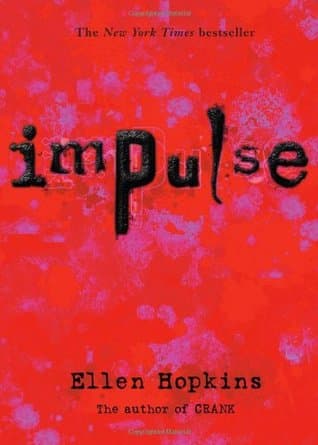
- Impulse
Ellen Hopkins
4.3 (70k) average on GoodreadsPsychologyImpulse uses verse to explore a range of mental health issues in a psychiatric hospital setting, sharing Wintergirls's commitment to depicting the internal lives of struggling teens. However, Wintergirls's singular focus on anorexia allows for a more concentrated and in-depth exploration of the specific psychological mechanisms and daily realities of that particular eating disorder, rather than a broader spectrum of conditions.
- The Perks of Being a Wallflower
Stephen Chbosky
4.2 (1.3M) average on GoodreadsPsychologyThrough letters, a shy high school freshman learns to navigate first love, trauma, and self-discovery, stepping off the sidelines and into life.
- Eleanor Oliphant Is Completely Fine
Gail Honeyman
4.3 (708k) average on GoodreadsLiterary FictionA lonely woman's structured life changes when an IT guy and an elderly man help her learn to open her heart.
- One Flew Over the Cuckoo's Nest
Ken Kesey
4.2 (631k) average on GoodreadsPsychologyIn a mind-bending asylum, the boisterous Randle McMurphy wages a defiant war against the tyrannical Nurse Ratched, inspiring his fellow inmates, including the seemingly catatonic Chief Bromden, to reclaim their lost humanity.
- The Bell Jar
Sylvia Plath
4.0 (591k) average on GoodreadsPsychologyIn the suffocating grip of 1950s expectations, a brilliant young woman's descent into mental illness is painted with such vivid, internal clarity that her 'insanity' feels terrifyingly rational and inevitable.





Enjoyed the summary?
A summary gives you the shape of the book. The book itself has the detail, the examples and the voice.
Find Wintergirls on AmazonAs an Amazon Associate, BookBrief earns from qualifying purchases. How we're funded