
Core Idea
- Difficulty
- Medium
- Read it if
- You are seeking inspiration to confront your past traumas, understand the power of your own story, or navigate the journey of self-acceptance and liberation from societal expectations.
- Skip it if
- You prefer highly academic or theoretical self-help books over personal narratives, or if you are not open to exploring difficult childhood experiences and systemic challenges.
Key Takeaways from Finding Me
Embrace the Unvarnished Truth of Your Past
Radical honesty about your origins is the foundation for genuine self-love.
Viola Davis believes that true self-acceptance starts by facing and owning every part of your past, even the painful or difficult parts. She rejects the pressure to clean up or change one's story to meet outside expectations. Instead, she supports 'radical honesty' that acknowledges the tough realities of childhood, poverty, and systemic disadvantages without shame. This honest storytelling is not about staying a victim but about seeing how these experiences shaped you, understanding the strength they built, and fitting them into a complete and real sense of self. Only by fully seeing where you came from can you truly value how far you have come and build a future based on real self-worth.
“This is my story, from a crumbling apartment in Central Falls, Rhode Island, to the stage in New York City, and beyond. This is the path I took to finding my purpose but also my voice in a world that didn't always see me.”
In the book: Davis explicitly states her intention to share 'a more intimate, unpolished account' of her life, contrasting it with typical, often ghost-written, celebrity memoirs. Her narrative directly confronts her upbringing in extreme poverty in Central Falls, Rhode Island, and the challenges faced by her family.
Try this: Reflect on aspects of your past you've felt compelled to hide or downplay. Write a 'truth letter' to yourself, detailing these experiences without judgment. Share your unvarnished story with a trusted friend or therapist, practicing vulnerability and acceptance.
Related ideas: radical-honesty, self-acceptance, personal-narrative
Your Voice Matters, Even When Unseen
Finding your authentic voice is a journey of self-discovery, not external validation.
Davis's memoir shows the struggle and success of finding one's voice, especially when the world seems to deny your existence or value. She talks about living in a world that didn't always 'see' her, whether due to race, poverty, or societal expectations. The book stresses that developing a real voice is an inner process, a shedding of false fronts, rather than waiting for permission or recognition from others. It means speaking your truth, expressing your creative spirit, and asserting your presence, even when faced with resistance. This inner validation is the true source of power and purpose.
“I wrote this for anyone running through life untethered, desperate and clawing their way through murky memories, trying to get to some form of self-love. For anyone who needs reminding that a life worth living can only be born from radical honesty and the courage to shed facades and be . . . you.”
In the book: Davis highlights her journey from feeling unseen to finding her voice and purpose, particularly in her acting career. The book's very existence as an 'unpolished account' serves as an act of asserting her authentic voice.
Try this: Identify situations where you feel your voice is stifled. Practice speaking up in small, low-stakes environments. Journal regularly to articulate your thoughts and feelings, strengthening your internal voice before externalizing it.
Related ideas: authentic-voice, self-expression, internal-validation
Shedding Labels is Liberation
Reclaim your identity by discarding societal expectations and pre-assigned roles.
Davis strongly suggests removing the labels that society, family, or we ourselves have put on us. These labels—like 'poor,' 'unworthy,' 'victim,' or even 'celebrity'—can become limiting, stopping real self-discovery and creative expression. The book encourages readers to peel back these layers to reconnect with their true self, the person they were before outside judgments took hold. This process of shedding is not just about rejecting negative labels, but also about not being defined only by success or public image, allowing for a more open understanding of self.
“My hope is that my story will inspire you to light up your own life with creative expression and rediscover who you were before the world put a label on you.”
In the book: The book's overarching theme is 'rediscovering who you were before the world put a label on you,' directly addressing the restrictive nature of labels and the journey to shed them.
Try this: List all the labels you feel define you. For each, ask: 'Is this truly me, or something I've adopted?' Actively challenge one label this week by doing something that contradicts it or by reframing your internal narrative.
Related ideas: identity-reclamation, societal-expectations, self-discovery
Creativity as a Path to Self-Love
Artistic expression is a vital tool for processing pain and illuminating one's true self.
For Viola Davis, creative expression is not just a job; it is a way to heal, understand, and love herself. Her acting journey, from small beginnings to the top of her field, is a way to process her difficult past, voice unsaid emotions, and find her true self. The book implies that engaging with creativity, in any form, lets people explore their inner lives, turn pain into purpose, and 'light up their own life.' It is an active form of self-care and self-discovery that is more than just entertainment.
“My hope is that my story will inspire you to light up your own life with creative expression and rediscover who you were before the world put a label on you.”
In the book: Davis's entire career as an actress is the central narrative, demonstrating how her art allowed her to navigate and ultimately transcend her challenging upbringing. Her storytelling itself is an act of creative expression.
Try this: Engage in a creative activity you enjoy, even if you feel you're not 'good' at it (e.g., drawing, writing, singing, dancing). Focus on the process and emotional release, not the outcome. Use creative journaling to explore difficult emotions.
Related ideas: creative-expression, healing-through-art, self-care
The Power of Decision to Stop Running
Consciously choosing to face your past is the first step towards a liberated future.
Davis points to a key, conscious choice in her life: the moment she decided to stop running from her past. This is not a passive realization but an active, 'life-changing decision' to face things instead of avoiding them. This act of stopping the 'running' means committing to deal with memories, trauma, and unresolved issues, no matter how uncomfortable. It marks a shift from a reactive, fear-driven life to a proactive, intentional journey of self-integration. This decision is shown as the start of all later growth and the eventual 'finding' of herself, highlighting the control one has in shaping their own story.
“In my book, you will meet a little girl named Viola who ran from her past until she made a life-changing decision to stop running forever.”
In the book: The very first sentence of the book summary highlights this 'life-changing decision to stop running forever,' making it a central thematic anchor of the memoir.
Try this: Identify one aspect of your past you've been avoiding. Make a conscious decision to address it, perhaps by journaling, seeking therapy, or talking to someone you trust. Take a small, concrete step towards facing it this week.
Related ideas: personal-agency, trauma-integration, conscious-choice
Redefining Success Beyond External Metrics
True fulfillment comes from internal alignment, not just achievements or accolades.
While Viola Davis's career is successful by normal standards, her memoir redefines what true success means. It is not just about awards, fame, or going from poverty to prominence. Instead, Davis sees success as living authentically, finding one's purpose, and using one's voice in a world that might not initially 'see' you. This inner measure of success—based on self-love, honesty, and shedding false fronts—is more valuable and lasting than any outside approval. It suggests that the journey of 'finding me' is the ultimate accomplishment.
“Her gorgeous storytelling will inspire anyone wishing to shed old labels.”
In the book: The book's title, 'Finding Me,' and its focus on personal journey rather than just career highlights, suggests a redefinition of success. The narrative prioritizes her internal growth over external achievements.
Try this: Create a personal definition of 'success' that prioritizes internal well-being, authenticity, and purpose over external achievements. Regularly check in with yourself: 'Am I living in alignment with my definition of success?'
Related ideas: internal-success, purpose-driven-life, authenticity
The Courage to Be 'You'
Living authentically demands bravery in the face of a judgmental world.
Davis notes that the path to self-love and an authentic life takes courage. It requires immense 'courage to shed facades' and to simply 'be...you' in a world often quick to judge, criticize, or try to fit people into certain groups. This courage is not about being fearless, but about acting despite fear—speaking your truth, embracing your weaknesses, and standing firm in your unique identity even when it goes against the norm. It is an ongoing act of resistance against outside pressures and inner doubts, a commitment to self-preservation and real connection.
“For anyone who needs reminding that a life worth living can only be born from radical honesty and the courage to shed facades and be . . . you.”
In the book: The repeated emphasis on 'courage' and 'shedding facades' throughout the book's description, combined with Davis's own raw and unpolished storytelling, demonstrates this theme.
Try this: Identify one area where you feel you're wearing a 'facade.' Take a small, courageous step to reveal a more authentic part of yourself in that area. Practice saying 'no' to things that don't align with your true self.
Related ideas: vulnerability, self-preservation, courage
Stories Shape Us—Examine Them Critically
Challenge the narratives you've been told and those you tell yourself.
Viola Davis highlights an important lesson learned while writing her memoir: the tendency to accept or force-fit our personal stories to conform. She believes that society often pushes us to change our stories to fit into 'a crazy, competitive, judgmental world,' which disconnects us from our true selves. The book urges readers to question the stories they've been told about themselves and the ones they tell themselves. This means questioning assumptions, challenging limiting beliefs, and taking back control to narrate one's own life from a place of authenticity, rather than outside demands or inner fear.
“As I wrote Finding Me, my eyes were open to the truth of how our stories are often not given close examination. We are forced to reinvent them to fit into a crazy, competitive, judgmental world.”
In the book: Davis explicitly states her realization about how 'our stories are often not given close examination' and are 'forced to reinvent them.' Her memoir itself is an act of re-examining and reclaiming her own story.
Try this: Write down the dominant narrative of your life. Then, identify any parts that feel inauthentic or were influenced by external pressure. Rewrite those parts from a place of radical honesty and self-compassion.
Related ideas: narrative-reclamation, limiting-beliefs, self-reflection
Finding Me Quotes
“Every single thing that happened to me, good and bad, was a prerequisite for me to be here.”
“You can't be an artist and not know how to feel. You can't be an artist and not be willing to tell the truth.”
“The only thing that separates women of color from anyone else is opportunity.”
“I started to understand that my story, my trauma, my pain, my joy, my everything was valid.”
“You have to be willing to lose everything to gain yourself.”
“I didn't want to just survive; I wanted to live. I wanted to thrive.”
“My voice was given to me to speak for those who cannot.”
“Shame is a prison. It keeps you from living your authentic life.”
“The work that you do on yourself is the most important work you will ever do.”
“My worth was not determined by my circumstances, but by my spirit.”
“Don't let anyone define you. Define yourself.”
“I found my power in my vulnerability, not in hiding it.”
“Every scar tells a story. And every story has a lesson.”
“You have to be willing to fail to succeed. You have to be willing to fall to rise.”
Quiz
10 questions on the main ideas. Each answer comes with a short explanation.
Question 1
Viola Davis describes her childhood home as a 'crumbling apartment' in which city?
- Providence, Rhode Island
- New York City, New York
- Central Falls, Rhode Island
- Boston, Massachusetts
Show answer
C. Central Falls, Rhode Island The book description explicitly states her journey 'from a crumbling apartment in Central Falls, Rhode Island, to the stage in New York City, and beyond.'
Question 2
What is the core message Viola Davis aims to convey to readers who are 'running through life untethered'?
- That success is only achievable through relentless competition.
- That self-love is born from radical honesty and shedding facades.
- That one must always reinvent their story to fit societal expectations.
- That escaping one's past is the only way to find purpose.
Show answer
B. That self-love is born from radical honesty and shedding facades. Davis states, 'For anyone who needs reminding that a life worth living can only be born from radical honesty and the courage to shed facades and be . . . you.'
Question 3
Viola Davis describes 'Finding Me' as a 'love letter of sorts' to whom?
- Her family
- Her fans
- Her past self
- Self
Show answer
D. Self The description explicitly states, 'Finding Me is a deep reflection, a promise, and a love letter of sorts to self.'
Question 4
According to the book's description, what did Viola Davis initially do regarding her past before making a life-changing decision?
- She embraced it openly.
- She ran from it.
- She ignored it completely.
- She tried to rewrite it.
Show answer
B. She ran from it. The book description states, 'you will meet a little girl named Viola who ran from her past until she made a life-changing decision to stop running forever.'
Question 5
What does Viola Davis hope her story will inspire readers to do regarding their own lives?
- To achieve fame and success in acting.
- To conform to societal expectations and labels.
- To light up their lives with creative expression and rediscover their true selves.
- To hide their true feelings and maintain facades.
Show answer
C. To light up their lives with creative expression and rediscover their true selves. Davis states, 'My hope is that my story will inspire you to light up your own life with creative expression and rediscover who you were before the world put a label on you.'
Question 6
The USA Today review highlights that 'Finding Me' reads like Viola Davis is doing what with the reader?
- Delivering a formal lecture.
- Sitting you down for a one-on-one conversation.
- Presenting a carefully curated public statement.
- Performing a theatrical monologue.
Show answer
B. Sitting you down for a one-on-one conversation. USA Today states, 'Finding Me reads like Davis is sitting you down for a one-on-one conversation about her life, warts and all.'
Question 7
Viola Davis observes that in a 'crazy, competitive, judgmental world,' our stories are often not given close examination. What does she say we are forced to do with them?
- Cherish them privately.
- Forget them entirely.
- Reinforce their original truth.
- Reinvent them to fit in.
Show answer
D. Reinvent them to fit in. Davis writes, 'We are forced to reinvent them to fit into a crazy, competitive, judgmental world.'
Question 8
What key element did Viola Davis find on her path from Central Falls to New York City, beyond just purpose?
- Financial independence.
- Her voice.
- Universal acceptance.
- A new identity.
Show answer
B. Her voice. She states, 'This is the path I took to finding my purpose but also my voice in a world that didn't always see me.'
Question 9
The Los Angeles Times review praises Viola Davis's 'gorgeous storytelling' and suggests it will inspire whom?
- Only aspiring actors.
- Anyone wishing to shed old labels.
- Only those who have experienced similar childhoods.
- Only readers interested in celebrity gossip.
Show answer
B. Anyone wishing to shed old labels. The Los Angeles Times review states, 'Her gorgeous storytelling will inspire anyone wishing to shed old labels.'
Question 10
What is the primary characteristic that distinguishes 'Finding Me' from a typical celebrity memoir, according to USA Today?
- Its focus solely on her acting career.
- Its formal and polished language.
- Its intimate, unpolished account, rather than a typical, often ghost-written one.
- Its reliance on external interviews and research.
Show answer
C. Its intimate, unpolished account, rather than a typical, often ghost-written one. USA Today notes, 'It's clear from the first page that Davis is going to serve a more intimate, unpolished account than is typical of the average (often ghost-written) celebrity memoir.'
Finding Me FAQ
What is 'radical honesty' as discussed in 'Finding Me'?
'Radical honesty' in 'Finding Me' refers to the profound courage to confront one's past, shed facades, and embrace one's authentic self, even when it's uncomfortable. It's about acknowledging your true story without reinvention to fit societal expectations.
Does 'Finding Me' offer practical steps for self-love?
While 'Finding Me' is a memoir, it implicitly offers a path to self-love through Viola Davis's personal journey of overcoming adversity and embracing her authentic self. Readers can find inspiration and a framework for self-reflection to apply to their own lives.
How does 'Finding Me' differ from other celebrity memoirs?
'Finding Me' stands apart by offering a remarkably intimate and unpolished account of Viola Davis's life, focusing on raw honesty and deep reflection rather than a curated celebrity narrative. It delves into her struggles and growth with a vulnerability often absent in typical celebrity biographies.
Who is the target audience for 'Finding Me'?
'Finding Me' is intended for anyone who feels untethered, struggles with their past, or seeks to rediscover their authentic self beyond societal labels. It's a book for those on a journey toward self-love and finding their voice.
What role does creative expression play in 'Finding Me'?
Creative expression, particularly through acting, is central to Viola Davis's journey in 'Finding Me' as a means of finding purpose and voice. The book encourages readers to use their own forms of creative expression to illuminate their lives and rediscover themselves.
Does 'Finding Me' address overcoming childhood trauma?
Yes, 'Finding Me' candidly addresses Viola Davis's experiences with a challenging childhood, including growing up in poverty and facing adversity. Her journey details how she confronted these memories and ultimately stopped running from her past.
What is the main message or takeaway from 'Finding Me'?
The core message of 'Finding Me' is that a truly fulfilling life is born from radical honesty and the courage to shed facades to be your authentic self. It's a powerful reminder that our stories, in their truest form, are our greatest strength.
How does Viola Davis define 'finding your voice' in the book?
In 'Finding Me,' 'finding your voice' is depicted as the process of acknowledging and expressing your true self and story in a world that might not always see or understand you. It's about speaking your truth and asserting your presence and value.
About the author

Viola Davis is an American actress and producer known for her powerful performances in film, television, and theater. In her memoir, "Finding Me," she shares her personal journey and experiences, offering insight into her life and career. Davis has received numerous awards, including an Academy Award, making her one of the few individuals to achieve the Triple Crown of Acting.
Similar books
- Educated
Tara Westover
4.5 (796k) average on GoodreadsBiographyA memoir about overcoming a challenging past and finding one's own identity and voice through education and self-discovery.
- Outliers: The Story of Success
Malcolm Gladwell
4.2 (556k) average on GoodreadsBusinessMalcolm Gladwell argues that true success is not just about individual talent, but about the hidden advantages of culture, opportunity, and unique experiences that shape extraordinary lives.
- The Subtle Art of Not Giving a F*ck: A Counterintuitive Approach to Living a Good Life
Mark Manson
3.9 (530k) average on GoodreadsBusinessEmbrace your flaws and stomach life's lemons, because true happiness isn't about relentless positivity, but about choosing what truly matters to give a f*ck about.
- The 7 Habits of Highly Effective People: Powerful Lessons in Personal Change
Stephen R. Covey
4.1 (524k) average on GoodreadsBusinessThis book presents seven habits that help people live more effective, purposeful lives.
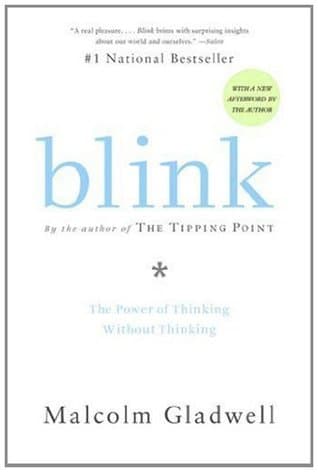
- Blink: The Power of Thinking Without Thinking
Malcolm Gladwell
3.9 (487k) average on GoodreadsBusinessExplore the hidden power of quick judgments and how 'thin-slicing' information helps skilled decision-makers succeed instantly, often without conscious thought.
- Rich Dad, Poor Dad
Robert T. Kiyosaki
4.1 (369k) average on GoodreadsBusinessRobert Kiyosaki explains that financial literacy, owning assets instead of liabilities, and making money work for you are the real ways to build wealth, lessons he learned from his biological 'poor dad' and his best friend's entrepreneurial 'rich dad.'





Enjoyed the summary?
A summary gives you the shape of the book. The book itself has the detail, the examples and the voice.
Find Finding Me on AmazonAs an Amazon Associate, BookBrief earns from qualifying purchases. How we're funded