
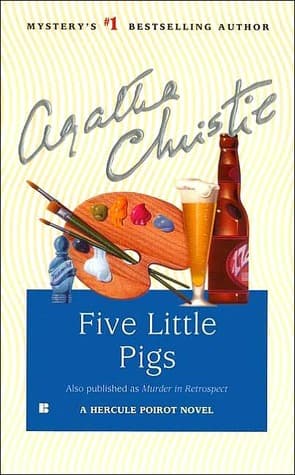
Synopsis
Covers the whole plot, including the ending.
- Difficulty
- Medium
- Pacing
- Moderate
- Mood
- Introspective, Deductive, Suspenseful, Psychological
- Read it if
- You enjoy classic 'whodunit' mysteries with psychological depth, intricate plotting, and a limited cast of suspects whose testimonies are meticulously dissected.
- Skip it if
- You prefer fast-paced thrillers with constant action, explicit violence, or a detective who physically confronts suspects.
Five Little Pigs Plot Summary
Covers the whole plot, including the ending.
Lucy Crale's Plea to Hercule Poirot
Sixteen years after her mother, Caroline Crale, was convicted of poisoning her artist husband, Amyas Crale, Lucy Crale approaches Hercule Poirot. Lucy has recently received a letter from her deceased mother, written shortly before her death in prison, in which Caroline states her innocence. This letter has disturbed Lucy, causing her to ask Poirot for help. Poirot, initially hesitant to reopen such a cold case, is interested in the psychological challenge and agrees to investigate. He understands that solving the mystery depends on the memories and views of the five other people present the day Amyas Crale died.
The Five 'Little Pigs' Identified
Poirot begins his investigation by finding the five people who were at Alderbury, the Crale estate, the day Amyas Crale was poisoned. These five become his 'five little pigs,' each a potential suspect or witness whose testimony is important. They are: Philip Blake, a stockbroker and Amyas's half-brother; Meredith Blake, Philip's reclusive brother and an amateur herbalist; Elsa Greer (now Lady Dittisham), a socialite who was sitting for a portrait by Amyas and was openly in love with him; Cecilia Williams, a governess; and Angela Warren, Caroline's disfigured younger half-sister. Poirot decides to interview each of them separately, asking them to write their accounts of the events before and after Amyas's death, focusing on their individual views and memories.
Philip Blake's Account
Philip Blake, Amyas's half-brother, gives his account, describing Amyas and Caroline's difficult marriage. He recalls Amyas's many affairs, which Caroline usually tolerated with cynical amusement. He also notes that Caroline was possessive of her husband. Philip describes the tension during Elsa Greer's stay, as Amyas was openly planning to leave Caroline for Elsa. He recounts seeing Caroline upset the day of the murder and hearing an argument between the couple. He believes Caroline killed Amyas out of jealousy and because Amyas was finally leaving her for Elsa, which Philip felt was different from previous affairs.
Meredith Blake's Perspective
Meredith Blake, Philip's brother and a botanist, offers a more detached account. He admits to having a quiet affection for Caroline and recalls seeing her upset but also resigned. His testimony focuses on details about the poison, coniine, which he kept in his laboratory. He describes how the coniine was stored and how it could have been accessed. Meredith also recalls seeing Caroline handle a glass of beer that Amyas later drank. He remembers Amyas complaining of a bitter taste before collapsing. He notes Caroline's calm after Amyas's death, which he found chilling, supporting the general belief in her guilt.
Elsa Greer's Bitter Recollection
Elsa Greer, now Lady Dittisham, gives a passionate and self-serving account. She openly admits her intense love for Amyas and her belief that he genuinely intended to leave Caroline for her. Elsa describes Caroline as cold and calculating, seemingly not bothered by the affair, which she found unsettling. She recalls Amyas telling her he would tell Caroline that very day. Elsa's story is filled with triumph and anger, portraying Caroline as a woman who killed out of possessive jealousy rather than true love, to stop Amyas from leaving her. She saw Caroline's calm exterior as a mask for her murderous intent.
Cecilia Williams's Loyal Defense
Cecilia Williams, the governess, gives a sympathetic account of Caroline. She describes Caroline as a woman of great inner strength and loyalty, who, despite her outwardly cynical appearance, truly loved Amyas. Cecilia portrays Amyas as a selfish genius who used Caroline's support. She recalls Caroline's distress over Amyas's affair with Elsa, seeing it as a particularly painful betrayal. Cecilia's testimony shows Caroline's protective nature towards her younger sister, Angela, and suggests that Caroline would never intentionally harm anyone, let alone commit murder. She struggles to reconcile the Caroline she knew with the murderer she was convicted of being.
Angela Warren's Childhood Memory
Angela Warren, Caroline's younger half-sister, gives a fragmented but important account. Her testimony is poignant as she was only a child at the time of the murder, and her face was disfigured in an incident involving Amyas and Caroline years before. Angela remembers Caroline's deep protectiveness and her own resentment towards Amyas, whom she blamed for her disfigurement. Importantly, Angela recalls seeing Caroline handle a glass of beer that day. She also remembers a distinct argument between Caroline and Amyas earlier, where Amyas threatened to send her away, which Caroline strongly opposed. Angela's story hints at a deeper, more complex dynamic between the sisters and Amyas.
Poirot's Deductions and Hypotheses
After receiving and carefully analyzing the five written accounts, Poirot finds several inconsistencies and psychological details. He notes that while all five accounts suggest Caroline's guilt, they offer very different ideas of her character and motives. He focuses on the timing of events, the nature of the arguments, and the specific details surrounding the poison. Poirot considers each of the five individuals as a potential killer and begins to build a timeline of events, paying close attention to who had access to the poison and a plausible motive. He examines the 'psychology' of each individual, not just their stated facts.
The Key to the Past: Angela's Bottle
Poirot's investigation uncovers an important detail about Angela Warren's disfigurement. He learns that the accident was not, as commonly believed, caused by Amyas throwing a paperweight at Caroline, which accidentally hit Angela. Instead, Caroline, in a fit of rage after Amyas confessed to an affair and mocked her, threw a bottle at him, missing and hitting Angela instead. This revelation changes how Caroline's character is seen, showing a passionate, volatile side often hidden. It also provides a possible reason for Angela to resent Amyas, or for Caroline to feel immense guilt, making the simple murder story more complicated.
The Truth Revealed: Meredith's Motive
Poirot carefully reconstructs the day of the murder, revealing the truth. He concludes that Meredith Blake, who had a long, unreturned love for Caroline, was the murderer. Meredith had fallen in love with Caroline and was deeply distressed by Amyas's affair and his plan to leave Caroline for Elsa. The day of the murder, Meredith, alone with Amyas, saw an opportunity. He knew Amyas would drink a beer before lunch. He swapped Amyas's usual tonic for a glass containing coniine, which he had available. He then subtly implicated Caroline by making sure she was seen handling a glass of beer, knowing her reputation for cynicism would make her seem capable of the crime. His motive was a twisted act of 'love' to save Caroline from further heartbreak and to remove the man he saw as her tormentor.
The Final Confession and Justification
When confronted by Poirot's logic and psychological insights, Meredith Blake confesses to the murder. He explains that he had loved Caroline for years and could not watch Amyas destroy her. He saw Amyas's decision to leave Caroline for Elsa as the final insult, a cruelty Caroline could not endure. Meredith believed he was protecting Caroline and acting out of a misguided sense of chivalry. He describes how he carefully planned the poisoning, using his knowledge of herbal toxins and ensuring that Caroline would be framed. He had carefully planted the seeds of suspicion, knowing that Caroline's calm exterior and her history of arguments with Amyas would make her the obvious suspect. His confession brings a difficult end to the sixteen-year-old mystery.
Five Little Pigs Characters
Hercule Poirot
Protagonist
Belgian detective, renowned for his 'little grey cells' and psychological insight.
Hercule Poirot is the brilliant Belgian detective tasked with solving the cold case of Amyas Crale's murder. He is characterized by his fastidious nature, his reliance on psychological understanding, and his belief that truth can be found by dissecting human nature and motives. Despite the conventional wisdom of Caroline's guilt, Poirot approaches the case with an open mind, meticulously gathering individual perspectives and sifting through conflicting memories. He is driven by a desire for justice and truth, even when the facts are obscured by time and emotion. His 'little grey cells' are his primary tool, allowing him to piece together the emotional puzzle of the past.
Relationships: Lucy Crale (client who hires him); Caroline Crale (the deceased, whose innocence he seeks to prove)
Caroline Crale
The Deceased Accused
Artist's wife, convicted of his murder, whose posthumous letter triggers the investigation.
Caroline Crale is the central figure of the mystery, having been convicted of poisoning her husband, Amyas Crale. She is portrayed through the conflicting memories of the 'five little pigs' as a complex woman: outwardly cynical and composed, yet capable of deep passion and fierce protectiveness, particularly towards her sister, Angela. She tolerated Amyas's numerous affairs with a detached amusement, but his decision to leave her for Elsa Greer was a profound betrayal. Her posthumous letter declaring her innocence is the catalyst for Poirot's investigation, revealing a woman who, despite her conviction, maintained her truth until the end. Her true character is gradually revealed as Poirot uncovers the hidden layers of her past relationships.
Relationships: Amyas Crale (her philandering artist husband); Angela Warren (her beloved younger half-sister); Meredith Blake (the man who secretly loved her and murdered her husband)
Amyas Crale
The Victim
Brilliant and charismatic painter, known for his genius and his numerous affairs.
Amyas Crale is the victim of the murder, a celebrated and charismatic painter whose genius was matched only by his profound selfishness and philandering nature. He was a man who lived life on his own terms, pursuing artistic inspiration and romantic liaisons with equal fervor, often at the expense of those around him. While he loved Caroline in his own way, he was openly unfaithful, and his decision to leave her for Elsa Greer was the final catalyst for the events of the novel. His character is largely constructed through the subjective lenses of the other characters, each revealing a different facet of his personality – from brilliant artist to cruel manipulator.
Relationships: Caroline Crale (his wife); Elsa Greer (his mistress and latest muse); Philip Blake (his half-brother)
Lucy Crale
Supporting
Daughter of Amyas and Caroline, who initiates Poirot's investigation.
Lucy Crale is the grown daughter of Amyas and Caroline Crale. Having lived her life believing her mother was a murderer, she is deeply unsettled by Caroline's posthumous letter asserting her innocence. Lucy is driven by a profound need for truth and peace regarding her family's past. Her decision to approach Hercule Poirot demonstrates her courage and her determination to uncover the sixteen-year-old secret, even if it means disturbing painful memories. She represents the new generation seeking closure from the past's unresolved traumas, and her quiet desperation motivates Poirot to take on the seemingly impossible case.
Relationships: Hercule Poirot (her detective, hired to solve the case); Caroline Crale (her mother); Amyas Crale (her father)
Philip Blake
Supporting
Stockbroker and Amyas's half-brother, who provides a cynical view of the Crale marriage.
Philip Blake is Amyas Crale's half-brother and a successful stockbroker. He presents himself as a shrewd, worldly observer of human nature, particularly the volatile relationship between Amyas and Caroline. His account of the murder day is colored by his cynical view of their marriage, seeing Caroline as capable of murder out of possessive jealousy. Philip's testimony highlights the public perception of Caroline's guilt and the common understanding of Amyas's philandering ways. He is one of the 'five little pigs,' and his perspective, while seemingly objective, is ultimately shaped by his own biases and observations of the Crale household dynamics.
Relationships: Amyas Crale (his half-brother); Meredith Blake (his brother); Caroline Crale (his sister-in-law)
Meredith Blake
Antagonist
Reclusive brother of Philip, an amateur herbalist, and the true murderer.
Meredith Blake is Philip's reclusive brother, an amateur herbalist with a quiet, observant nature. He harbored a deep, unrequited love for Caroline Crale, which he kept hidden. His testimony initially appears to be a detached, factual account, focusing on the details of the poison, coniine, and its accessibility. However, his suppressed emotions and his desire to 'save' Caroline from Amyas's cruelty ultimately led him to commit the murder. He meticulously planned the poisoning and subtly framed Caroline, believing he was acting for her greater good. His character embodies the quiet danger of hidden passions and misguided devotion.
Relationships: Philip Blake (his brother); Caroline Crale (the woman he secretly loved); Amyas Crale (the victim he murdered)
Elsa Greer (Lady Dittisham)
Supporting
Beautiful socialite and Amyas's mistress, who was with him at the time of his death.
Elsa Greer, later Lady Dittisham, is a striking socialite who was Amyas Crale's latest muse and mistress. She was deeply in love with Amyas and believed he was genuinely going to leave Caroline for her. Her account is filled with a sense of passionate ownership over Amyas and a bitter resentment towards Caroline, whom she perceived as cold and indifferent. Elsa's testimony focuses on Caroline's apparent lack of emotion, which she interpreted as sinister, reinforcing the idea of Caroline's guilt. Her perspective is crucial for understanding the emotional intensity surrounding Amyas's final days and the perceived motives for murder.
Relationships: Amyas Crale (her lover); Caroline Crale (her romantic rival)
Cecilia Williams
Supporting
The governess, loyal to Caroline and offering a sympathetic view of her character.
Cecilia Williams served as the governess to Angela Warren and was deeply loyal to Caroline Crale. Her account provides a stark contrast to the more cynical perspectives, portraying Caroline as a woman of integrity, kindness, and deep inner strength, despite her outward cynicism. Cecilia saw Caroline's quiet suffering and her unwavering devotion to Amyas, despite his flaws. She struggles with the idea of Caroline as a murderer and champions her character, highlighting Caroline's protective nature towards Angela. Her testimony is vital in presenting a more human and sympathetic image of Caroline, challenging the prevailing narrative of her guilt.
Relationships: Caroline Crale (her employer and friend); Angela Warren (her charge)
Angela Warren
Supporting
Caroline's disfigured younger half-sister, whose childhood memory holds a key detail.
Angela Warren is Caroline Crale's younger half-sister, whose face was disfigured in a childhood accident involving Amyas and Caroline. She carries the emotional scars of this event, which deeply impacted her relationship with both her sister and brother-in-law. Her account is fragmented, drawn from a child's memory, but contains crucial details about the dynamics within the Crale household and the true nature of her injury. Angela's perspective reveals Caroline's fierce protectiveness and also her capacity for extreme emotion. Her story is pivotal in unraveling the long-held secrets and understanding the complex web of relationships that led to the murder.
Relationships: Caroline Crale (her half-sister and protector); Amyas Crale (her brother-in-law, whom she resented)
Five Little Pigs Themes
Truth vs. Perception
The novel explores how individual perceptions and biases can change the truth over time. Each of the 'five little pigs' tells their story of the murder day, but their accounts are colored by their personal relationships with Amyas and Caroline, their own desires, and how they understand events. For example, Elsa Greer sees Caroline as cold and calculating, while Cecilia Williams sees her as strong and loyal. Poirot's job is to look past these subjective memories to find the objective truth, showing that what people believe happened is often different from what actually occurred.
“'There are five people,'' said Poirot, ''who can tell us what happened. But what they tell us will not be the same. Each will tell us what they saw, what they thought, what they believed. And in that way, each will tell us a different truth.'”
The Nature of Love and Obsession
The book examines different kinds of love: the difficult, often cruel love between Amyas and Caroline; Elsa Greer's passionate, possessive love for Amyas; Cecilia Williams's loyal, platonic affection for Caroline; and most importantly, Meredith Blake's unrequited, obsessive love for Caroline that leads him to murder. Each character's actions and memories are shaped by their emotional attachments, showing how love, when twisted or not returned, can lead to destructive outcomes. Meredith's 'love' for Caroline is so strong that he believes killing Amyas is an act of chivalry to save her from more pain. This shows the thin line between devotion and dangerous obsession.
“'Love is not a gentle thing, Mademoiselle. It can be fierce, demanding, cruel.'”
Memory and Time's Influence
Sixteen years have passed since the murder, and the passage of time is a central theme. Poirot knows he cannot rely on new evidence, but rather on the witnesses' memories. The novel shows how memory can fade, be added to, or be selectively remembered to fit a personal story. The 'five little pigs' are asked to write their accounts, allowing Poirot to analyze not just what they remember, but how they remember it and what emotional importance they give to certain events. The challenge is to find the consistent truths within these different and old recollections, proving that time can obscure but not erase the truth.
“'Time... Time is a great revealer, Mademoiselle. But it is also a great concealer.'”
Art and Life
Amyas Crale's identity as a talented artist is important to the plot. His artistic nature, his need for muses, and his disregard for usual morality are often mentioned. The novel explores how artistic talent and personal behavior connect, suggesting that great art can sometimes be made by people with deep flaws. The portraits Amyas painted, especially those of Caroline and Elsa, symbolize his relationships and how he saw these women. The artistic setting also provides a background for the bohemian lifestyle and emotional intensity in the Crale household, which contributed to the unstable atmosphere that led to the murder.
“'He was a genius, yes. But a cruel genius. He took life and twisted it to his own ends, to make his art.'”
Plot Devices & Literary Techniques
The Five 'Little Pigs' Structure
A nursery rhyme device used to categorize the five main witnesses/suspects.
This is the central narrative device, inspired by the nursery rhyme 'This Little Piggy.' Poirot identifies the five individuals present at Alderbury on the day of the murder as his 'five little pigs.' Each 'pig' represents a different perspective and a potential suspect or key witness. By interviewing each one separately and asking them to write down their accounts, Poirot gathers five distinct, often conflicting, narratives. This structure allows the reader to experience the story from multiple viewpoints, highlighting the subjective nature of memory and contributing to the gradual unveiling of the truth, as Poirot sifts through each 'pig's' story.
Retrospective Narrative / Multiple Perspectives
The entire plot is reconstructed through individual, written accounts of past events.
The entire investigation is conducted retrospectively, sixteen years after the crime. Poirot does not uncover new physical evidence but relies entirely on the memories of the five key individuals. Each 'pig' writes their personal account of the day Amyas Crale was murdered, providing a unique and subjective perspective on the events, the characters involved, and their motives. This device creates a complex tapestry of conflicting viewpoints, forcing Poirot (and the reader) to piece together the objective truth from a mosaic of biased, emotional, and sometimes unreliable recollections. It emphasizes the psychological aspect of the mystery, as Poirot analyzes the 'why' behind each person's memory.
The Posthumous Letter
Caroline Crale's letter declaring innocence, which initiates the entire investigation.
Caroline Crale's letter, written shortly before her death in prison and delivered to her daughter Lucy sixteen years later, serves as the primary catalyst for the entire plot. Without this letter asserting her innocence, Lucy would never have approached Poirot, and the case would have remained closed. The letter introduces doubt into a seemingly clear-cut conviction and provides the initial motive for Poirot to delve into the past. It acts as a powerful symbol of a mother's last attempt to clear her name and give her daughter peace, setting the stage for the dramatic re-evaluation of the murder.
The Locked Room Mystery (Psychological)
A 'locked room' scenario where the physical facts are known, but the psychological truth is hidden.
While not a literal 'locked room' in terms of physical impossibility, 'Five Little Pigs' functions as a psychological locked room mystery. The 'who' (Caroline Crale) and 'how' (poison) were seemingly established during the original trial. However, the 'why' and the 'true who' remain hidden within the confines of the past and the minds of the witnesses. Poirot's investigation is about unlocking the psychological 'room' of the past, dissecting motives, emotions, and hidden relationships to reveal the true perpetrator. The physical facts are known, but the psychological truth, the sequence of intentions and actions, is what Poirot must uncover.
Five Little Pigs Quotes
“The past is the past. It cannot be changed.”
“There is nothing so dangerous for anyone who has something to hide as conversation!”
“I have always been of the opinion that the truth, however painful, is better than a lie.”
“The little grey cells—they are what matter.”
“One must always consider the psychology.”
“It is the little things that are significant.”
“The poison was in the bottle, but the motive was in the heart.”
“Memory is a tricky thing. It can play tricks on you.”
“Jealousy is a green-eyed monster which doth mock the meat it feeds on.”
“The truth is like a jigsaw puzzle. You must fit all the pieces together.”
“In crime, as in life, it is the unexpected that often happens.”
“A woman scorned is a dangerous thing.”
“The dead cannot speak, but they leave behind clues.”
“It is not always the obvious suspect who is guilty.”
Quiz
10 questions on the plot and the characters. Each answer comes with a short explanation.
Question 1
What was Caroline Crale convicted of in the original trial?
- Forging her husband's will
- Poisoning her husband, Amyas Crale
- Stealing valuable paintings
- Kidnapping her daughter
Show answer
B. Poisoning her husband, Amyas Crale Caroline Crale was convicted of poisoning her husband, the painter Amyas Crale, with coniine from hemlock. The case seemed straightforward at the time, with all evidence pointing to her.
Question 2
Who asks Hercule Poirot to reinvestigate the case sixteen years later?
- Caroline Crale's lawyer
- Amyas Crale's brother
- The police inspector from the original case
- Carla Lemarchant, the Crales' daughter
Show answer
D. Carla Lemarchant, the Crales' daughter Carla Lemarchant (originally named Carla Crale) is the daughter of Caroline and Amyas Crale. After receiving a posthumous letter from her mother claiming innocence, she hires Poirot to uncover the truth.
Question 3
What poison was used to kill Amyas Crale?
- Arsenic
- Cyanide
- Coniine from hemlock
- Strychnine
Show answer
C. Coniine from hemlock Amyas Crale was poisoned with coniine, which is derived from hemlock. This detail is crucial to the investigation, as it relates to how the poison was administered.
Question 4
Why does Poirot ask each of the five witnesses to write an account of the fatal day?
- To compare their handwriting with the anonymous letter
- To see how their memories differ and reveal psychological truths
- To determine who has the best alibi
- To find out who profited financially from the death
Show answer
B. To see how their memories differ and reveal psychological truths Poirot uses this method to understand the subjective perspectives and biases of each witness. The discrepancies in their accounts help him piece together what really happened, based on human psychology rather than just physical evidence.
Question 5
Which character was Amyas Crale painting on the day he died?
- His wife, Caroline
- His daughter, Carla
- Elsa Greer, his young mistress
- His brother, Philip
Show answer
C. Elsa Greer, his young mistress Amyas was painting a portrait of Elsa Greer, with whom he was having an affair. This painting and the dynamics around it are central to the events of the fatal day.
Question 6
What significant action does Caroline Crale take with the beer glass on the day of the murder?
- She washes it thoroughly to remove fingerprints
- She throws it at Elsa Greer in a fit of anger
- She empties it and refills it with fresh beer
- She hides it in her pocket to dispose of later
Show answer
C. She empties it and refills it with fresh beer Caroline is seen emptying Amyas's beer glass and refilling it. This action initially seems suspicious and contributes to her conviction, but Poirot later reinterprets its meaning.
Question 7
Which of the five witnesses had a motive related to unrequited love?
- Philip Blake, Amyas's friend
- Meredith Blake, Philip's brother
- Angela Warren, Caroline's younger sister
- Cecilia Williams, the governess
Show answer
B. Meredith Blake, Philip's brother Meredith Blake was secretly in love with Caroline Crale. His unrequited feelings and jealousy toward Amyas gave him a potential motive, though he is not the murderer.
Question 8
How does Poirot ultimately determine the identity of the real murderer?
- By finding a hidden suicide note from Amyas
- By analyzing the chemical composition of the poison residue
- By noticing a psychological inconsistency in one witness's account
- By discovering a secret will that names the beneficiary
Show answer
C. By noticing a psychological inconsistency in one witness's account Poirot identifies the murderer by recognizing a subtle psychological flaw in their story. The killer's account includes an emotional reaction that doesn't align with human behavior, revealing guilt.
Question 9
What was the real reason Caroline Crale handled the beer glass on the fatal day?
- To poison her husband as revenge for his affair
- To dispose of poison she thought her sister had put in it
- To frame Elsa Greer for the murder
- To drink from it herself in a moment of distress
Show answer
B. To dispose of poison she thought her sister had put in it Caroline believed her younger sister, Angela, had put poison in the beer. She emptied the glass to protect Angela, not to kill Amyas. This self-sacrificing act was misinterpreted as guilt.
Question 10
Which theme is most prominently explored through the conflicting witness accounts?
- The corruption of the legal system
- The unreliability of memory and subjective truth
- The dangers of artistic obsession
- The economic inequalities of the era
Show answer
B. The unreliability of memory and subjective truth The novel delves into how memory is shaped by personal biases, emotions, and time. Each witness remembers events differently, showing that truth is often subjective and must be pieced together through psychological insight.
Five Little Pigs FAQ
What is 'Five Little Pigs' about?
Sixteen years after Caroline Crale was convicted of poisoning her painter husband Amyas, her daughter Carla receives a posthumous letter claiming her mother's innocence. Carla hires Hercule Poirot to reinvestigate the case, leading him to interview the five other people present that day and uncover the true killer through psychological analysis of their conflicting testimonies.
Why should I read 'Five Little Pigs'?
This novel showcases Agatha Christie's mastery of psychological mystery, with Poirot solving a cold case purely through interviewing witnesses and analyzing human nature rather than physical evidence. The structure of five conflicting testimonies creates a compelling puzzle about memory, perception, and hidden motives.
What is the background/setting of 'Five Little Pigs'?
The story alternates between 1940s England (when Poirot investigates) and flashbacks to 1929 at Alderbury, the Crales' country estate where Amyas Crale was poisoned. The artistic bohemian atmosphere of the Crale household contrasts with the formal legal proceedings that followed.
What are the most memorable quotes?
Key quotes include Poirot's observation 'The truth, however ugly in itself, is always curious and beautiful to seekers after it' and Caroline Crale's alleged last words to her husband 'Very well, you can have your damned convention' - both revealing character motivations central to the mystery.
What writing style does the author use?
Christie employs a nested narrative structure with Poirot's present-day investigation framing five separate witness accounts of the same events. This creates a Rashomon effect where readers must discern truth from biased recollections, emphasizing psychological depth over action.
What minor details add significant meaning?
The painting Amyas was working on - a portrait of his mistress Elsa Greer - becomes crucial evidence. His insistence on finishing it despite knowing he was being poisoned reveals his artistic obsession, while the painting's composition later provides Poirot with visual clues about the crime scene.
What are some subtle foreshadowing moments?
Early mentions of Amyas's 'constitutional inability to leave any task unfinished' foreshadow why he continued painting while being poisoned. Caroline's comment about 'the bottle being in the wrong place' on the mantelpiece seems trivial initially but becomes critical evidence.
What unexpected character connections exist?
Meredith Blake's unrequited love for Caroline and his brother Philip's secret resentment of Amyas create hidden tensions. Elsa Greer's youthful obsession with Amyas masks her calculating nature, while Miss Williams's protective attitude toward Carla conceals her own guilty knowledge.
What are unspoken character motivations?
Caroline's apparent jealousy masks her protective love for her younger sister Angela, whom she believed Amyas might corrupt. Elsa Greer's obsession with Amyas stems less from love than from wanting to possess a famous artist as a trophy. Meredith Blake's testimony is colored by his lifelong romantic idealization of Caroline.
What psychological complexities do characters exhibit?
Amyas Crale embodies artistic selfishness, valuing his painting above all human relationships. Caroline displays contradictory traits - capable of violent jealousy yet also self-sacrificing protection. The five witnesses each reconstruct memories through their own emotional filters, making objective truth nearly impossible.
What are the major emotional turning points?
The discovery that Caroline moved the coniine bottle to protect her sister Angela from suspicion. Poirot's realization that Amyas knew he was being poisoned but continued painting anyway. Carla's emotional journey from seeking vengeance to understanding her mother's sacrificial love.
How do relationship dynamics evolve?
Carla's relationship with her mother transforms from doubt to understanding as she learns Caroline sacrificed herself for Angela. Poirot's interactions with the witnesses shift from formal interviews to psychological confrontations that expose hidden truths. The love triangle between Amyas, Caroline, and Elsa is revealed as more complex than simple adultery.
Which parts remain ambiguous or open-ended?
Whether Caroline would have confessed if not for her fatal illness remains unclear. The exact nature of Amyas's feelings for Elsa versus his artistic obsession is deliberately ambiguous. Some witnesses' later lives are left unresolved, emphasizing how the past continues haunting the present.
What are controversial scenes or decisions?
Caroline's decision not to defend herself at trial, allowing her conviction to protect Angela, raises ethical questions about maternal sacrifice versus justice. Amyas continuing to paint while being poisoned challenges conventional morality about artistic dedication. Poirot's decision to reveal the truth decades later forces debate about whether some secrets should remain buried.
'Five Little Pigs' ending explained: how it ends & what it means
Poirot reveals that Elsa Greer (now Lady Dittisham) poisoned Amyas after he told her he would return to Caroline. The murder weapon was coniine from Meredith Blake's laboratory, placed in Amyas's beer by Elsa. Caroline discovered this but took blame to protect her sister Angela, whom she mistakenly thought might be involved. The ending emphasizes how love and protection can manifest as destructive sacrifices.
What psychological insight does Poirot use to solve the case?
Poirot recognizes that each witness's testimony reveals more about their own character than objective facts. He analyzes why Caroline would move the poison bottle (to protect someone), why Amyas would continue painting (artistic obsession), and why Elsa would murder (possessive rage), constructing the truth from psychological patterns rather than physical evidence.
How does the title 'Five Little Pigs' relate to the story?
The title refers to the nursery rhyme about five little pigs going to market, metaphorically representing the five witnesses Poirot interviews. Each 'pig' (witness) brings something different to the investigation's 'market,' and like the rhyme's sequential structure, their testimonies build upon one another to reveal the complete picture.
What role does memory play in the investigation?
Memory becomes the central evidence, with each witness providing contradictory accounts of the same events. Poirot must distinguish between genuine recollection, subconscious distortion, and deliberate deception, showing how time and emotion reshape our understanding of the past.
How does Christie subvert typical mystery tropes?
Unlike most whodunits with fresh crime scenes, this cold case relies entirely on human testimony without physical evidence. The solution emerges from psychological analysis rather than forensic clues, and the killer isn't brought to legal justice but must live with the moral consequences.
About the author
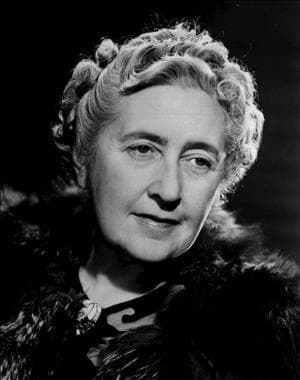
Dame Agatha Mary Clarissa Christie, Lady Mallowan, was an English writer known for her 66 detective novels and 14 short story collections, particularly those revolving around fictional detectives Hercule Poirot and Miss Marple. She also wrote the world's longest-running play, the murder mystery The Mousetrap, which has been performed in the West End since 1952. A writer during the "Golden Age of Detective Fiction", Christie has been called the "Queen of Crime". She also wrote six novels under the pseudonym Mary Westmacott. In 1971, she was made a Dame (DBE) by Queen Elizabeth II for her contributions to literature. Guinness World Records lists Christie as the best-selling fiction writer of all time, her novels having sold more than two billion copies.
Similar books
- THE MURDER OF ROGER ACKROYD
Agatha Christie
4.2 (153k) average on GoodreadsThrillerFeatures Hercule Poirot, a closed circle of suspects, and a clever twist in the narration.
- A is for Alibi
Sue Grafton
3.9 (162k) average on GoodreadsThrillerA private investigator reopens a cold case, relying heavily on interviews with key players to uncover the truth.
- An Unsuitable Job for a Woman
P.D. James
3.8 (14k) average on GoodreadsThrillerA detective unravels a complex mystery by examining the psychological motivations and past events surrounding a death.
- Angels & Demons
Dan Brown
3.9 (2.7M) average on GoodreadsThrillerA Harvard symbologist races through Rome's ancient sites, deciphering cryptic clues to unmask the Illuminati and stop a vengeful plot to destroy the Vatican with a stolen antimatter weapon.
- Gone Girl
Gillian Flynn
4.1 (2.3M) average on GoodreadsThrillerA wife's sudden disappearance on her fifth anniversary reveals a web of lies and psychological warfare, exposing the secrets within a seemingly perfect marriage.
- The Girl on the Train
Paula Hawkins
3.9 (2.1M) average on GoodreadsThrillerA woman’s fascination with a seemingly perfect couple she watches from her daily train commute leads her into a dark investigation when she witnesses something that shatters their idyllic image.




Enjoyed the summary?
A summary gives you the shape of the book. The book itself has the detail, the examples and the voice.
Find Five Little Pigs on AmazonAs an Amazon Associate, BookBrief earns from qualifying purchases. How we're funded